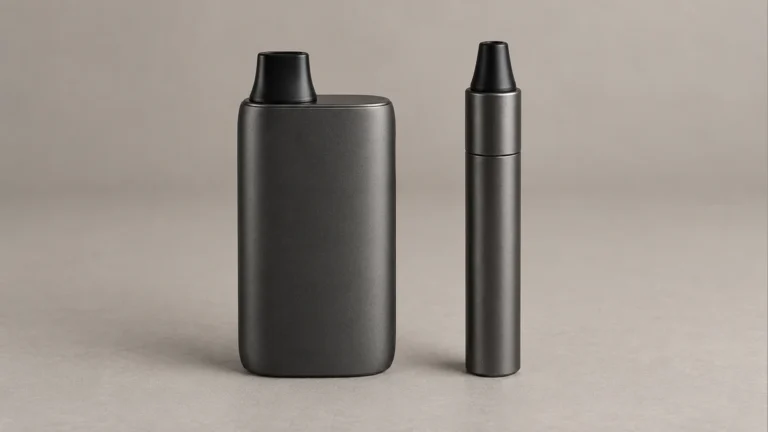
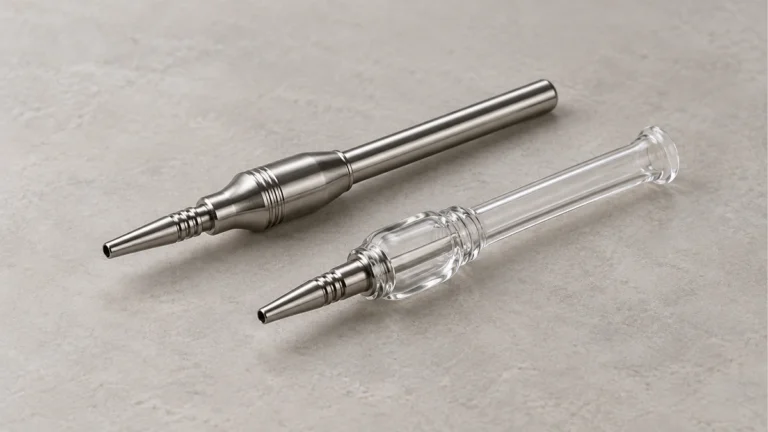
Every concentrate device asks the same underlying question before you ever hit power: how does the material get to the heat? An electric nectar collector answers it by putting a heated tip directly onto the concentrate — you dab the tool like a soldering iron meeting solder. A wax pen answers it differently, asking you to pack or drop a small amount into an enclosed chamber first, then draw through a mouthpiece the way you would with a cartridge vape. That single mechanical difference cascades into almost everything else worth comparing: how messy a session gets, how you clean up afterward, how a device travels in a bag, and which parts you’ll eventually need to replace.
This isn’t a “which one wins” argument. Plenty of experienced concentrate users own both and reach for whichever one matches the moment — a fast solo dab at a workbench versus a slower, shared session on a porch. The goal here is to walk through the real differences in handling, upkeep, and ownership so you can match the format to your actual routine instead of guessing from a spec sheet.
⚡ 1. How Material Actually Reaches the Heat
The mechanical logic of each device shapes every decision that follows, so it’s worth sitting with the contrast for a moment before comparing anything else.
🧩 1.1 Touching Tip to Concentrate: The Nectar Collector Motion
An electric nectar collector heats a tip — usually quartz, titanium, or ceramic — that you touch directly to a dab of concentrate sitting on a silicone mat, a jar lid, or wherever you’ve staged it. Puffco’s own guidance on using a hot-knife-style tool describes this as touching the heated tip to the concentrate and inhaling as it vaporizes on contact, rather than loading anything into an enclosed space first. That contact-based approach is what gives nectar collectors their reputation for speed: there’s no chamber to fill, no lid to seal, just tip-to-dab-to-inhale in one continuous motion.
🧩 1.2 Loading a Chamber: The Wax Pen Motion
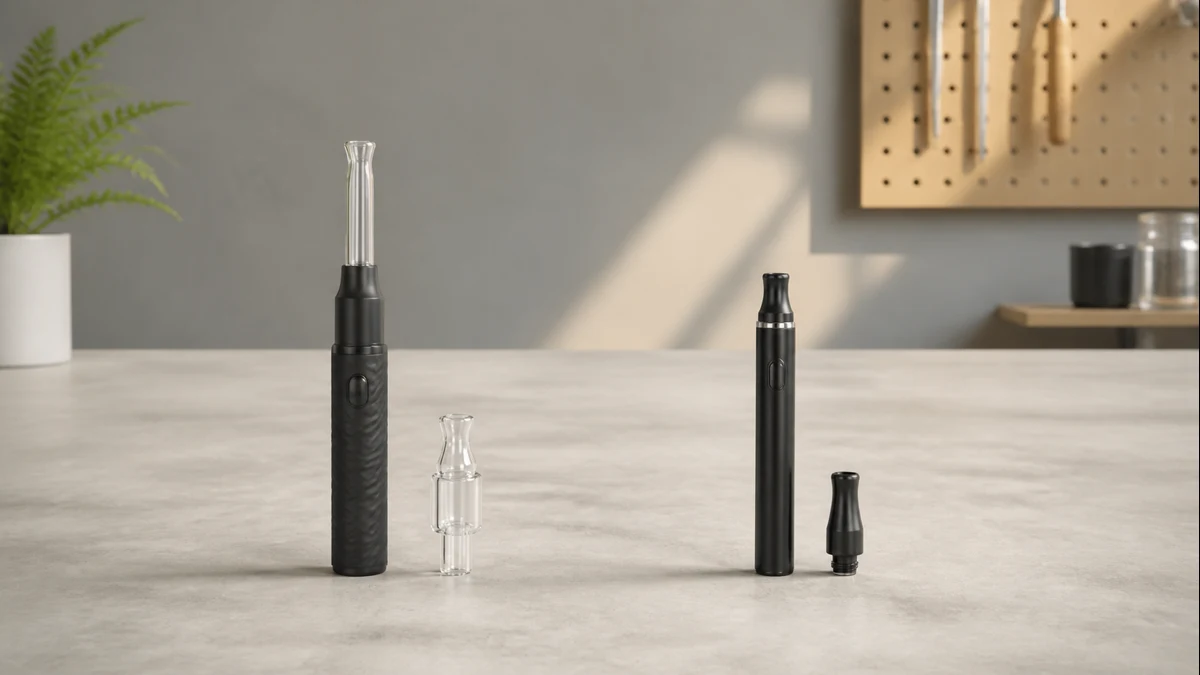
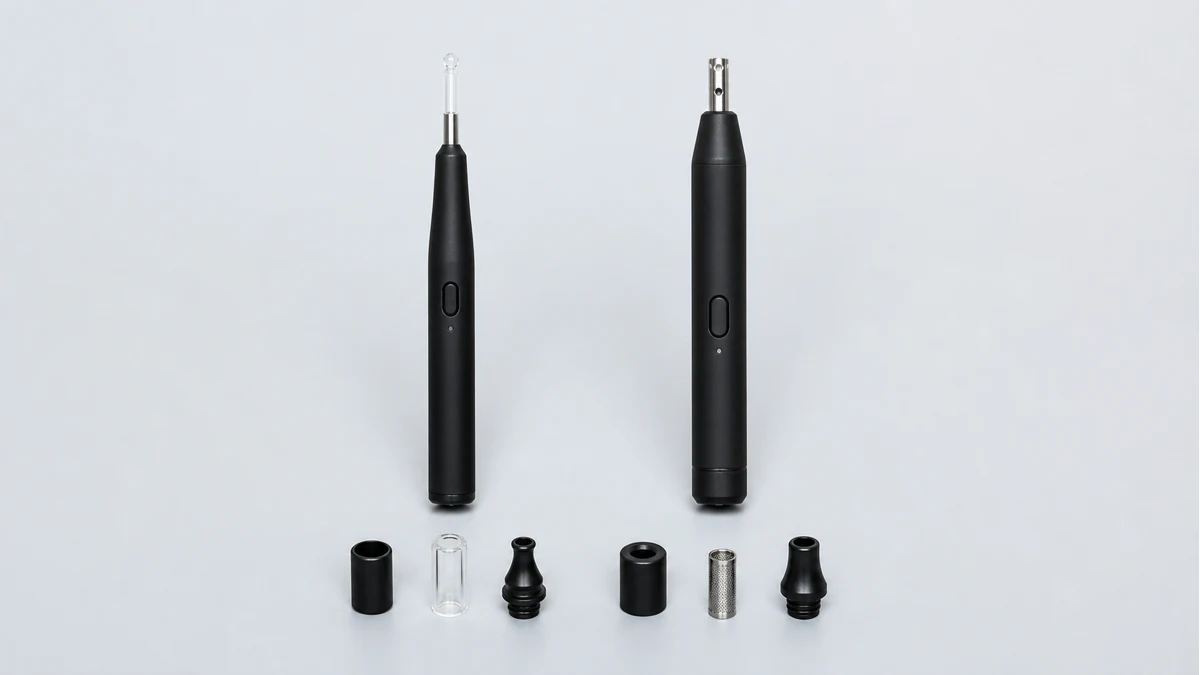
A wax pen flips that order. You open a small chamber, usually with a coil made from quartz, ceramic, or a ceramic-coated wire, and use a dab tool to place a bit of concentrate onto or around that coil before closing everything up. Heat then builds inside an enclosed space rather than on an exposed tip, and vapor travels up through a mouthpiece. If you’ve used a 510-thread vape before, the draw pattern will feel familiar, since many wax pen designs borrow the same battery-and-atomizer relationship you’d find in oil cartridges — just swapped for a wax-rated chamber.
⚙️ 2. Spill Risk and Mess Control
Because a nectar collector’s tip is exposed, the concentrate itself has to stay put on a separate surface until the moment of contact. That means a dab mat or parchment underneath, steady hands, and some awareness that a hot tip set down carelessly can scorch a table or a bag lining. The upside is that nothing sticky ever goes inside the device — the mess, if there is any, stays external and wipeable.
A wax pen internalizes that same risk instead of eliminating it. Loading the chamber means getting concentrate onto a dab tool and into a small opening, which for very soft or oily extracts can mean some sticking to the threads or the chamber walls. Once it’s sealed, though, you’re not carrying an exposed heated point around — the mess is contained rather than avoided. Readers comparing the two often frame it as “mess before you heat it” versus “no exposed mess, but a fussier load,” and that framing tends to hold up: it’s not that one format is cleaner overall, it’s that the mess shows up at a different step.
🧼 3. Tip Care, Coil Care, and Cleaning Habits
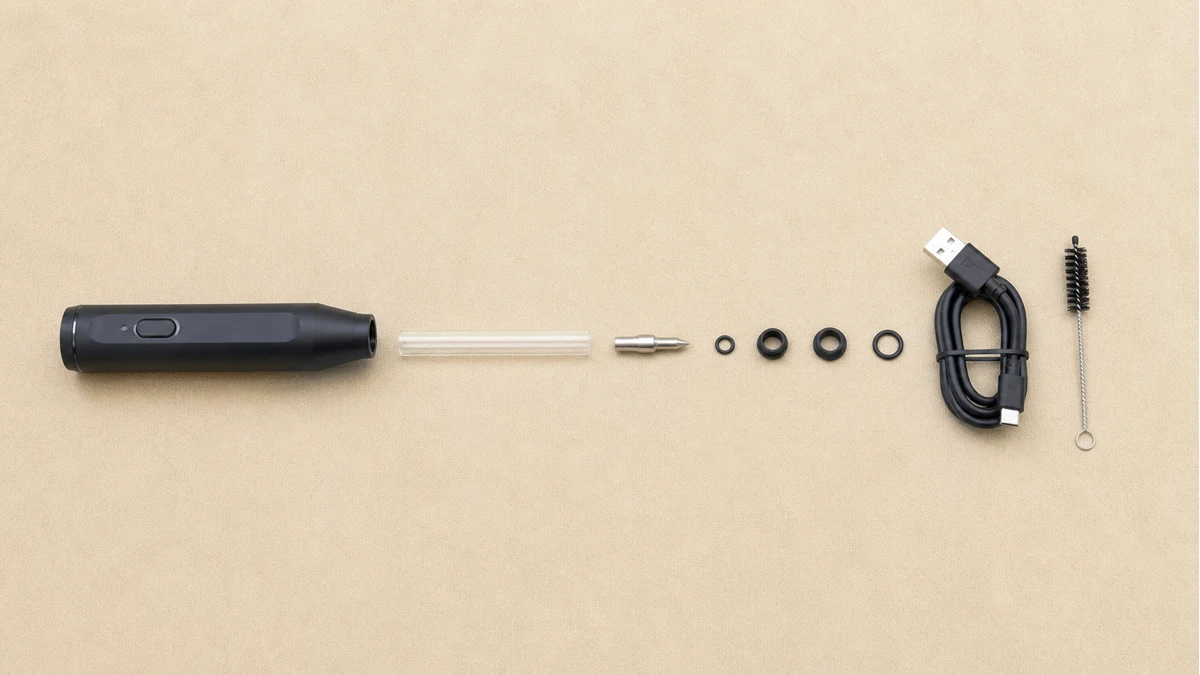
Upkeep follows the same split. A nectar collector’s tip accumulates residue on its outside surface, where it’s visible and easy to reach with a cotton swab or a quick torch-free burn-off, depending on the material. Because the tip isn’t enclosed, checking its condition is as simple as looking at it.
A wax pen’s coil lives inside the chamber, out of sight, which means buildup can go unnoticed longer and eventually affect flavor or draw resistance. Most manufacturers recommend periodic disassembly and cleaning of the chamber and mouthpiece with isopropyl alcohol and cotton swabs, similar in spirit to the routine described in general guides on cleaning dab rig components — the tools differ, but the underlying habit of regular alcohol-based maintenance carries over. Users who skip this step on a wax pen tend to notice performance drop off well before a nectar collector user would notice the same neglect, simply because the coil isn’t sitting in plain view as a reminder.
🧰 4. Session Style: Quick Dabs vs. Paced Draws
Session pacing is where the two formats feel most different in practice. A nectar collector rewards short, deliberate hits — heat the tip, touch it to the concentrate, inhale, done. There’s not much room for a long, slow pull because the vaporization happens the instant contact is made, which naturally keeps sessions brisk and somewhat performative if you’re doing it in front of others.
A wax pen, by contrast, supports the kind of paced, sip-style draw that cartridge users are used to. Once the chamber is loaded and closed, you can take several shorter pulls over a stretch of time without reloading, and many pens hold enough residual heat or offer low-voltage settings that make a slower approach comfortable. If your routine looks more like intermittent draws throughout an evening rather than one focused dab, that chamber-based pacing tends to fit better than the tip-and-go rhythm of a nectar collector.
🛠️ 5. Portability and Discretion on the Go
Both formats are meaningfully more portable than a rig-and-torch setup, but they’re not portable in the same way. A nectar collector still needs a place to stage the concentrate — a small dab mat or lid — which means slightly more setup even in a bag or a car. It also means carrying a container of concentrate separately from the device itself.
A wax pen sidesteps that by keeping the material sealed in the chamber between hits, closer to how a portable vaporizer is used generally: load once, then pocket it and go. That self-contained quality is a big part of why wax pens tend to show up more often as the daily-carry option, while nectar collectors get reserved for moments when you’re already set up somewhere stationary — a desk, a kitchen counter, a spot where a mat and a jar aren’t an inconvenience.
📌 6. Replaceable Parts and Long-Term Ownership
Ownership costs come down to what wears out and how easily it’s swapped. Nectar collector tips take direct, repeated thermal cycling and physical contact with concentrate, so the tip itself is the primary wear part — check whether a given device sells replacement tips separately before buying, since not all do.
Wax pens spread that wear across a coil and sometimes a separate chamber or mouthpiece, all of which typically screw into the battery the same way a cartridge would. That modularity is one reason the broader vape parts ecosystem exists — coils, chambers, and mouthpieces are usually sold as standalone components precisely because they’re expected to need replacement before the battery does. Coil material matters here too: ceramic coils, as outlined in comparisons of quartz coil vs. ceramic designs, tend to heat more evenly and gently than raw quartz, which can extend how long a coil stays usable. CCELL’s own cartridge documentation points to ceramic heating elements as a way to reduce burnt or “dry hit” flavor over repeated use, which is the same underlying logic that carries over into ceramic-coil wax pen chambers.
Batteries are the other long-term consideration, and they behave similarly across both formats since most rely on lithium-ion cells. The U.S. Consumer Product Safety Commission’s guidance on high-energy batteries recommends inspecting for swelling or damage, avoiding extreme heat, and using the charger designed for the device — advice worth following whether you’re charging a nectar collector base or a wax pen battery. A closer look at battery and charger care is worth a read for anyone planning to keep either device in daily rotation for more than a season, since charging habits do more to determine battery lifespan than almost anything else in the routine.
🔍 7. Side-by-Side at a Glance
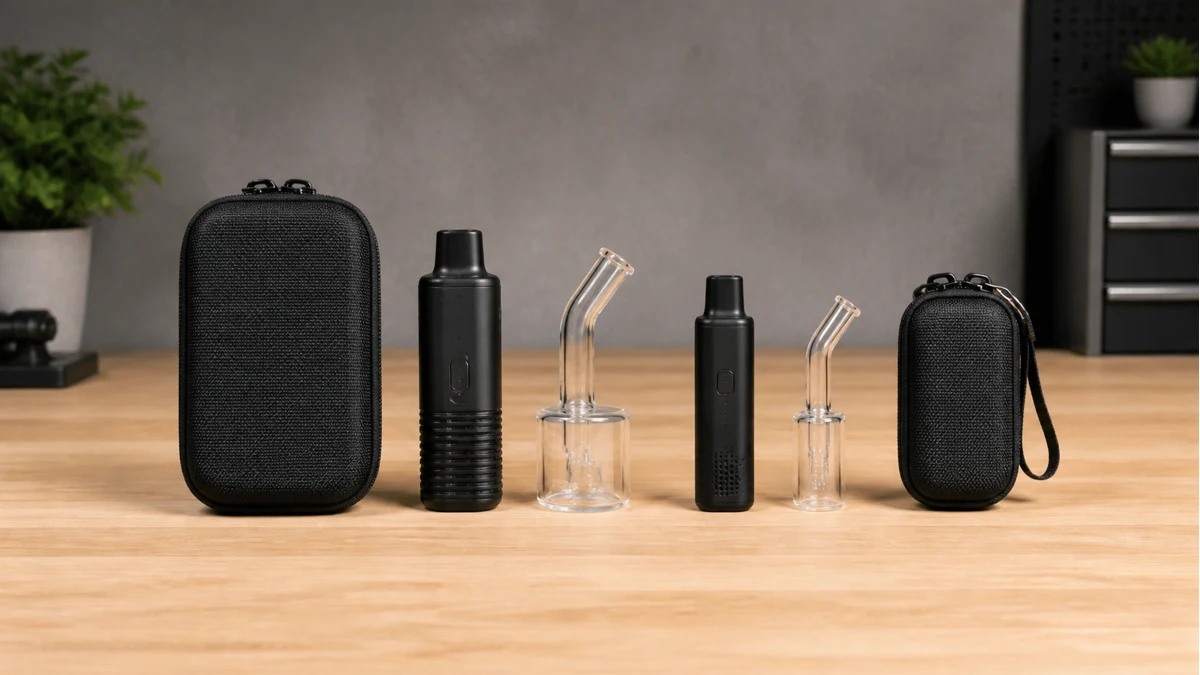
None of these differences are absolute — build quality varies a lot within each category — but this is the general pattern reported across both formats.
| Factor | Electric Nectar Collector | Wax Pen |
|---|---|---|
| Material contact | Heated tip touches concentrate directly | Concentrate loaded into enclosed chamber |
| Mess timing | Before heating, on a separate surface | During loading, inside the chamber |
| Cleaning visibility | Tip residue is visible and easy to check | Coil buildup is hidden until disassembly |
| Session pace | Quick, one-motion dabs | Slower, multi-draw sessions |
| Setup while traveling | Needs a mat or lid on hand | Self-contained once loaded |
| Primary wear part | Heated tip | Coil, chamber, or mouthpiece |
❓ 8. Frequently Asked Questions
Can a nectar collector tip be swapped like a wax pen coil?
Some models sell replacement tips as standalone accessories, but not all do — it’s worth confirming this before buying if you expect to replace the tip down the road rather than the whole unit.
Does one format waste less concentrate than the other?
It depends more on user technique than device type. A nectar collector’s exposed tip can leave a thin residue on the dab surface, while a wax pen’s chamber can trap small amounts against the coil or walls — both are largely a function of how carefully the material is loaded or applied.
Is a wax pen easier for someone switching from a 510 cartridge?
Generally yes, since the draw motion and chamber-based loading feel closer to cartridge use than the tip-touching motion of a nectar collector. Reviewing a 510 cartridge guide can help clarify how similar the battery and threading conventions really are.
Do accessories from dab rigs work with either device?
Some do — dab tools and silicone mats are shared across both formats, and a broader look at dab rig accessories shows how much overlap exists in the supporting gear even when the heating hardware itself is completely different.
✅ 9. Making the Call for Your Routine
If your sessions tend to be quick, solo, and stationary — a dab at a desk before you get back to something else — the tip-touch simplicity of an electric nectar collector will likely feel faster and less fussy than loading a chamber every time. If your routine is more about carrying one device through the day and taking a few draws here and there without reloading, a wax pen’s enclosed chamber and cartridge-like pacing will fit more naturally into that rhythm. Neither format is a compromise version of the other; they’re built around genuinely different physical motions, and the right one is whichever motion matches how you actually use concentrate, not which one sounds more advanced on paper.
A practical sample test should mirror the routine that matters most. Set both devices on the same protected surface, note how many parts must be opened before loading, then count what must be capped, wiped or stored afterward. The point is not to declare a winner after one draw. It is to notice which workflow creates fewer interruptions for the way the device will actually be carried and maintained. A format that feels fast at a desk can become awkward in a bag, while a chamber that takes longer to load may keep the tip and concentrate container better separated.
📚 10. Sources
- Puffco — How to Use the Puffco Hot Knife
- U.S. Consumer Product Safety Commission — High-Energy Batteries Safety Education
- CCELL — Cartridge Technology Overview