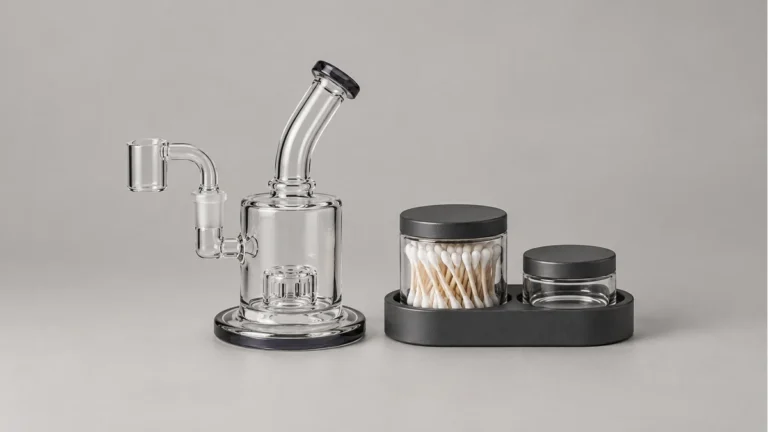
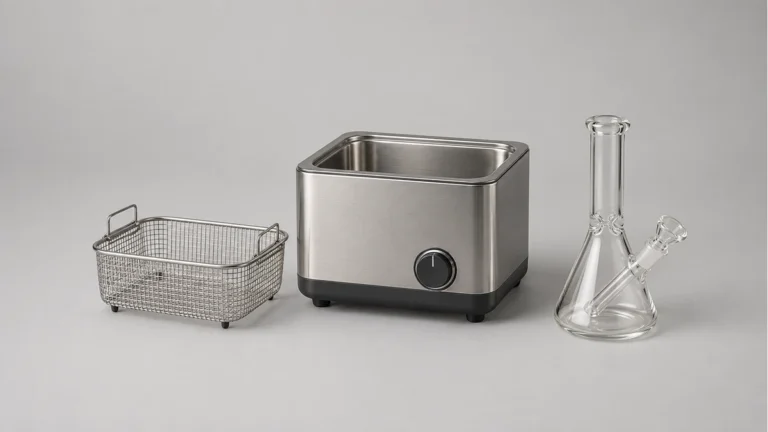
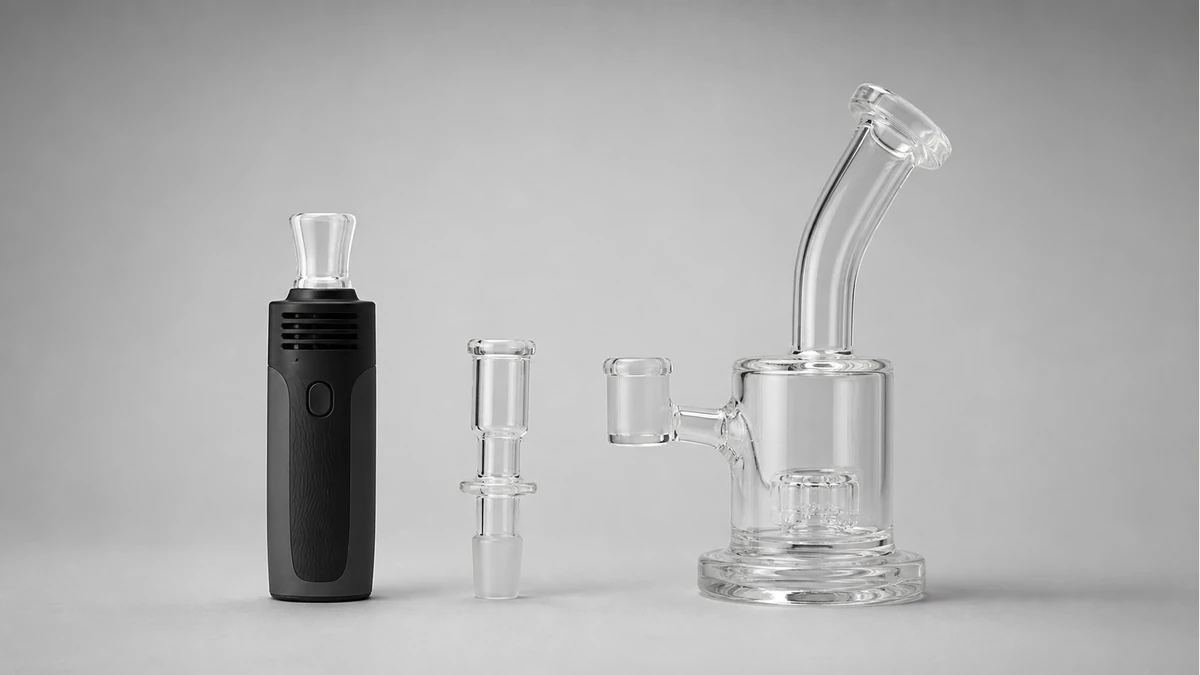
You finally have all three pieces on the table: a dry-herb vaporizer with a nice, snug mouthpiece; a glass adapter that slides onto the vape without any fuss; and a water piece with a joint that looks like a match. Individually, everything seems right. Then you put the whole stack together, and the vape tips a few degrees to the left every time you touch it, the adapter rocks in the joint, and you find yourself holding the base of the bong with one hand just to keep the rig from tipping over during a single draw. Nothing is broken. Nothing is defective.
🔍 1. What a Vape-to-Bong Adapter Actually Connects
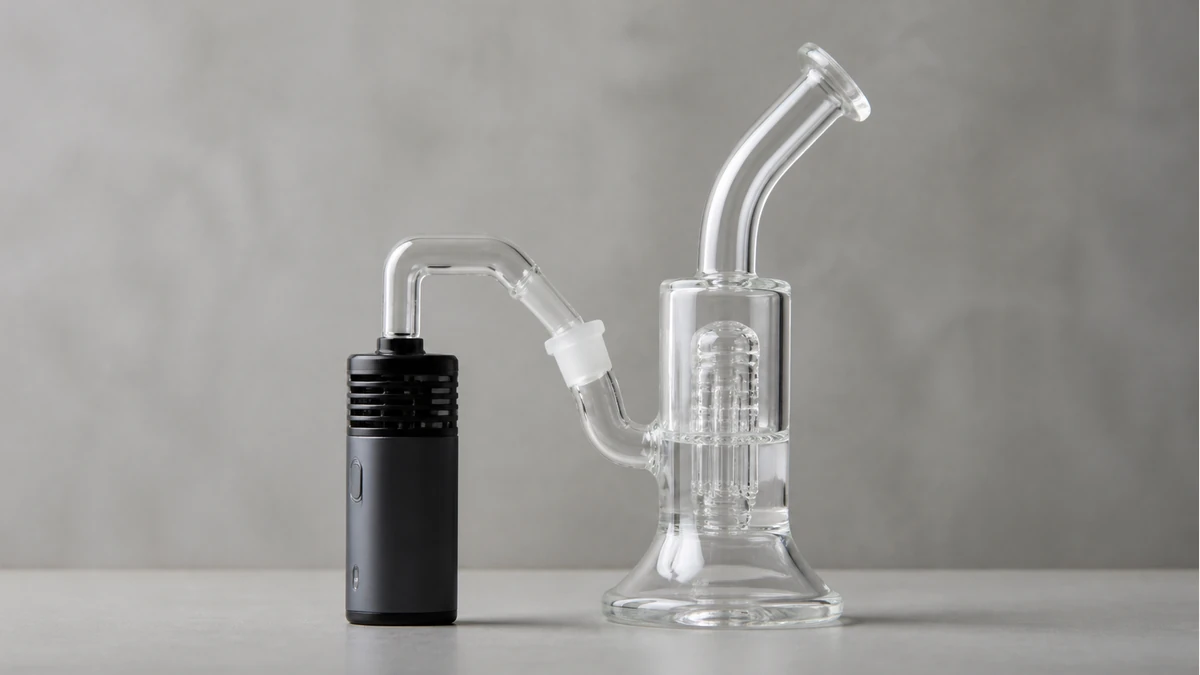
A vape-to-bong adapter is a small glass fitting, sometimes reinforced with a rubber or silicone collar, that bridges two components never designed by the same manufacturer to share airflow: a portable or desktop dry-herb vaporizer’s mouthpiece or whip end, and the joint on a glass water piece. The vaporizer heats material and produces vapor; the adapter carries that vapor into the water piece’s downstem or joint opening; the water piece cools and filters it before it reaches you. Without the adapter, most dry-herb vaporizers have no way to interface with standard glass joints at all. Vaporizer mouthpieces are shaped for a mouth or a whip hose, not for the ground-glass taper used in bong joints.
If you’re still deciding whether routing vapor through water is worth the extra glass and cleaning in the first place, it’s worth reading through a comparison of a dab rig vs bong setup, since the tradeoffs in filtration, drag, and maintenance are similar whether the vapor source is a torch-heated rig or a battery-powered vaporizer.
🧭 2. Joint Size Is Where Most Fit Problems Start
Glass joints are made to a small number of standard diameters, and this is the first place a mismatch shows up. The three sizes you’ll encounter most often on bongs, rigs, and adapters are 10mm, 14mm, and 18mm, measured at the joint opening. A joint that’s even one size off will either refuse to seat at all or will seat so loosely that it can’t seal, no matter how carefully you set it.
| Joint Size | Typical Use | Common Mismatch Symptom |
|---|---|---|
| 10mm | Smaller water pieces, some compact rigs | Adapter feels tiny and unstable, prone to tipping |
| 14mm | Most common size on mid-size bongs and rigs | Loose or overly tight fit when mismatched with 18mm hardware |
| 18mm | Larger bongs, some percolator-heavy pieces | Adapter looks correct but sits shallow and rocks |
The practical takeaway is simple: measure the joint on your water piece before buying an adapter, rather than assuming that “standard” means one specific number. Sellers and manufacturers are not always consistent about listing this measurement clearly, and a joint that’s described only as “standard size” without a millimeter figure is a red flag worth asking about before you buy.
If your vaporizer’s adapter and your water piece’s joint are two different sizes, a stepped or reducing adapter, one end at 14mm and the other at 18mm, for example, is a legitimate fix rather than a workaround. The key is buying a stepped adapter for the exact two sizes involved, not a generic one and hoping it lands close enough. A reducer that’s off by even a millimeter on either end reintroduces the same wobble and leak problems you were trying to solve.
⚙️ 3. Gender Matching Determines Which Way the Taper Goes
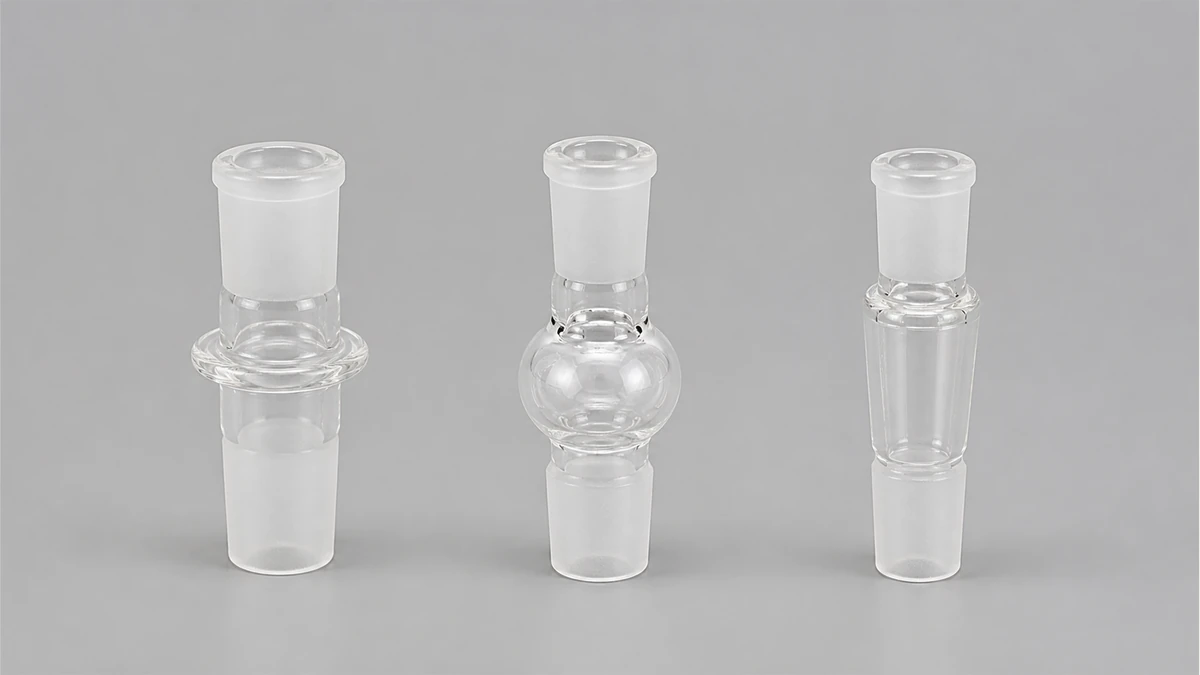
Beyond size, every glass joint has a gender. A male joint is the tapered piece that inserts into another fitting. A female joint is the recessed opening that receives a tapered piece. This matters because a vape-to-bong adapter has to be the opposite gender of the joint it’s paired with on the water piece.
🧩 3.1 Reading Your Existing Setup
Most bongs sold with a bowl or downstem use a female joint at the mouth, which means the downstem itself is male, tapering down into the water chamber. If your water piece has a female joint, you need an adapter with a male ground-glass end to seat into it. If your water piece instead has an exposed male joint sticking up from the neck, which is less common on bongs but does happen on some rigs, you’ll need a female adapter.
This is a frequent point of confusion when people buy adapters online without checking their own piece first. Getting the size right but the gender wrong produces a very specific failure: the pieces won’t nest together at all, or they nest so shallowly that even light contact knocks them apart. If you’re unsure which joint type your current bowl uses, a walkthrough on bong bowl fitting covers how to identify male and female glass on a piece you already own, and the same logic carries over directly to adapter shopping.
🧩 4. Why Leverage and Device Weight Change the Fit
Size and gender get you a seal that works when the setup is sitting still. Leverage is what determines whether that seal survives actual use. A dry-herb vaporizer, especially a portable one with a battery and heating chamber built into the body, is not a light, evenly balanced piece of glass. It’s a dense, top-heavy object being asked to balance on a narrow ground-glass joint, often at an angle, while you’re pulling on it, adjusting it, or setting it down between draws. A desktop unit connected by a whip introduces a different version of the same problem: the hose itself can tug the adapter sideways every time it’s handled.
Every bit of that weight and every degree of that angle turns into torque at the joint. A joint that seals perfectly when you set the pieces together gently can still leak, loosen, or slip if the vaporizer’s weight is pulling sideways on it during the draw. This is exactly the complaint that shows up again and again from people combining vaporizers with water pieces: the connection tests fine sitting on a table, then fails the moment it’s actually held at a normal drawing angle.
A few adjustments reduce this stress without requiring different hardware:
- Keep the water piece low and stable, with a wide, weighted base if you have the option, so it isn’t the thing doing the balancing.
- Support the vaporizer’s weight with your hand rather than letting the joint carry it, particularly with heavier desktop-style units.
- Choose an adapter length that keeps the vaporizer as close to vertical as your piece allows, since a steep sideways angle multiplies leverage on the seal.
- Avoid pulling the vaporizer straight up or sideways to remove it; lift it out along the same angle it went in, so you’re not twisting a loaded joint.
None of this is about buying a stronger adapter. It’s about recognizing that the adapter is a pivot point under load, not a rigid, load-bearing shelf, and treating it accordingly.
🛠️ 5. The Seal Itself: What Actually Keeps Air From Leaking
Ground-glass joints are designed to seal by close-tolerance contact between two tapered glass surfaces, and that contact is what keeps outside air from being pulled in around the connection instead of through the device. Some adapters and joints also use a rubber or silicone grommet at the joint opening as a supplementary seal, particularly on pieces designed for easy, tool-free removal. A grommet-sealed adapter tends to be more forgiving of small size discrepancies, but it isn’t a substitute for correct sizing; it just masks a mismatch until the grommet itself wears out.
A joint that’s correctly sized and gendered can still leak if the glass surfaces are dirty, scratched, or coated in old residue, because that buildup keeps the two tapered surfaces from making full contact. This is a separate problem from size or gender mismatch, and it’s one that’s easy to misdiagnose as a fit issue when it’s actually a cleaning issue.
📐 6. Clean and Dry Everything Before You Assemble
Residue is one of the most overlooked causes of a wobbly or leaking connection, and it’s worth checking before you assume the hardware itself is wrong. Both the adapter’s ground-glass surface and the joint it’s going into should be free of buildup and completely dry before you put them together.
- Wipe down both joint surfaces, removing any visible residue, dust, or old grease with a lint-free cloth or a cotton swab.
- If either joint has been recently cleaned with a soaking solution, rinse it thoroughly and let it air dry completely, since trapped moisture can affect how the surfaces seat.
- Check the joint surfaces under decent light for any resin film, which reduces the surface contact the seal depends on even when the glass looks clean at a glance.
- Assemble the pieces dry, without forcing a rotation, and check that the adapter seats fully rather than stopping short on a bit of leftover residue.
- Only after confirming a snug, wobble-free fit should you add water to the piece, since a partially seated joint is much easier to notice and correct before there’s liquid involved.
A joint that’s clean, dry, and correctly matched in size and gender should seat with light, even resistance and stay put without you holding it. If it doesn’t, the problem is almost never the adapter alone; it’s usually one of the variables above still unaccounted for.
🧼 7. Orientation, Downstem Depth, and Airflow
Once the joint itself is sealed, the last variable is how the adapter positions the vaporizer relative to the water piece’s internal airflow. Some adapters are straight, holding the vaporizer at roughly the same angle as the joint itself. Others are angled or have a right-angle bend, which changes how far the vaporizer sits from the water piece and can make the whole assembly easier to balance depending on the shape of your piece. A right-angle adapter, in particular, lets a top-heavy vaporizer rest closer to horizontal, which shifts weight off the joint rather than stacking it directly overhead.
Downstem depth also matters here, though it’s a property of the water piece rather than the adapter. If your setup uses a separate downstem, it should extend a reasonable distance into the water without being so deep that it restricts flow or so shallow that it doesn’t diffuse properly. This isn’t something a vape-to-bong adapter changes on its own, but a mismatched downstem depth can make an otherwise well-fitted adapter connection feel like it’s dragging or gurgling unevenly, which people sometimes trace back to the wrong part of the setup. Checking the downstem separately, by pulling it and confirming it sits at a consistent depth on its own, is a quick way to rule it out before troubleshooting the adapter further.
If you’re new to dry-herb vaporizers generally and are still working out which device shapes pair sensibly with water pieces at all, a broader look at dry herb vaporizers is a useful starting point before you invest in adapters and glass to go with one.
🔌 8. Quick FAQ
Does every dry-herb vaporizer need an adapter to work with a bong?
Any vaporizer without a joint built directly into its mouthpiece will need an adapter to interface with standard glass joints, since the two components aren’t shaped to connect on their own.
Can I use one adapter across different water pieces?
Only if every piece shares the same joint size and gender at the connection point. If your pieces vary, you’ll need an adapter, or a stepped adapter, matched to each one.
Why does my adapter fit fine by hand but leak once I’m actually using it?
This is usually a leverage issue rather than a sizing issue. Weight and angle from the vaporizer during a draw can loosen a seal that looked fine when the pieces were simply set together.
Is a wobbly connection ever normal?
No. A correctly matched, clean, dry joint should sit snugly without you holding it in place. Persistent wobble points to a size, gender, or residue issue worth checking before you use the piece further.
Will a grommet or rubber gasket fix a size mismatch?
Only within a narrow margin. A grommet can take up small tolerances, but it can’t bridge a full size difference, like 14mm hardware paired with an 18mm joint, without straining the seal.
📦 9. The Fix Is in the Measurements, Not the Grip
A vape-to-bong adapter only has three jobs: match the joint size, match the gender, and hold a clean seal under the real weight and angle of your vaporizer. Get those three right, and the wobble, the leaking, and the two-handed balancing act disappear on their own. Skip any one of them, and no amount of careful handling will make the connection behave. Measure before you buy, check male against female, and clean and dry both surfaces every time you reassemble, and the adapter stops being the weak point in your setup.