You’re scrolling a listing at midnight, comparing photos of a replacement bowl against a piece that’s been sitting on a shelf with a broken original. The new bowl looks right. The joint diameter matches what the listing says, the color’s fine, the price is reasonable. It arrives, you go to seat it, and it either spins loose in the joint or won’t slide past the first quarter inch. Nothing about the transaction was dishonest — the numbers on both ends were technically correct. The problem is that “matches what the listing says” and “will actually seat and hold” are two different questions, and most buyers only answer the first one before checking out.
A bong bowl is a simple piece of glass, but it only works if four separate things line up: the joint diameter, the joint gender, the bowl’s internal depth and airflow, and how the shape supports handling and cleaning. Get any one of those wrong and you’ve bought glass that doesn’t function with the piece you already own. This guide walks through each variable in the order it should be checked, so fit verification — not bowl style — is the decision that actually gets made.
🔍 1. Joint Diameter: The Number on the Listing Isn’t the Whole Story
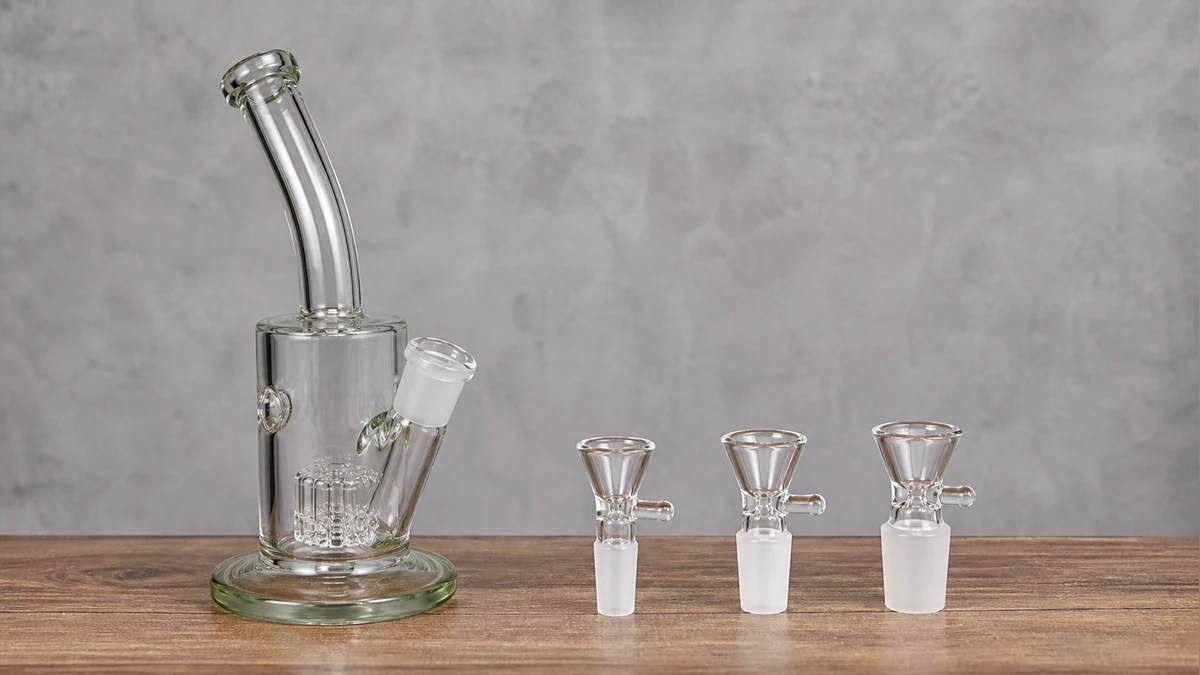
Every ground-glass joint on a water pipe has a diameter, and that diameter is the first filter a bowl has to pass. It’s also where the most confusion starts, because sellers don’t all round the same way. A joint that measures roughly 18.8 mm gets listed by different sellers as “18 mm,” “18.8 mm,” or “19 mm” depending on which convention the seller’s copywriter grew up with. None of those listings are lying — they’re describing the same physical joint family with different rounding habits — but if you’re comparing an “18 mm” bowl against a “19 mm” joint on your own piece and assuming they’re incompatible, you might pass over a bowl that would have fit fine, or buy one that’s actually a different size dressed up in the same label.
🧩 1.1 The 18.8 mm Family Hiding Behind “18 mm” and “19 mm” Labels
The practical fix is to stop trusting the rounded number alone and treat it as a starting point. If a listing says “18 mm” or “19 mm,” read the rest of the description or photos for the more precise figure, and compare it against a measurement you’ve taken yourself, not against a number from a different listing. Two “18 mm” bowls from two different sellers can still differ enough to bind or rattle if the underlying joint isn’t actually the same ground-glass standard.
🧩 1.2 The Other Common Sizes: 10 mm and 14 mm
Diameter confusion isn’t limited to the 18 mm range. Smaller pieces commonly use 10 mm or 14 mm joints, and because those numbers are further apart from each other, mix-ups there tend to be more obvious — a 10 mm bowl won’t come close to seating in a 14 mm joint. The risk at the smaller end isn’t misreading the size so much as forgetting to check it at all, because the piece “looks small” and buyers assume standard sizing without confirming which of the two common small-joint diameters they actually own.
🧩 2. Gender: Male and Female Joints Aren’t Interchangeable
Diameter gets a bowl into the right size category. Gender determines whether it can physically go in at all. A ground-glass joint is either male (the tapered piece that inserts) or female (the piece with the recess that receives it), and a bowl has to be the opposite gender of the joint it’s going into. This sounds obvious stated plainly, but it’s the single most common reason a technically correct-diameter bowl still doesn’t work.
🧩 2.1 Reading a Listing for Gender Correctly
Most listings will state the bowl’s gender directly, but the language varies — “male bowl,” “male joint,” or sometimes just a diagram. The rule to hold onto is that the bowl’s gender has to be the opposite of the joint gender on your pipe. If your pipe’s joint is female (a recessed opening at the top of the neck), you need a male bowl to insert into it, and vice versa. Confirm your own pipe’s joint gender by looking at whether the glass at the top of the neck flares out to receive something, or narrows to a ground taper that inserts into something else.
🧩 2.2 Why This Trips Up More Orders Than Bowl Style
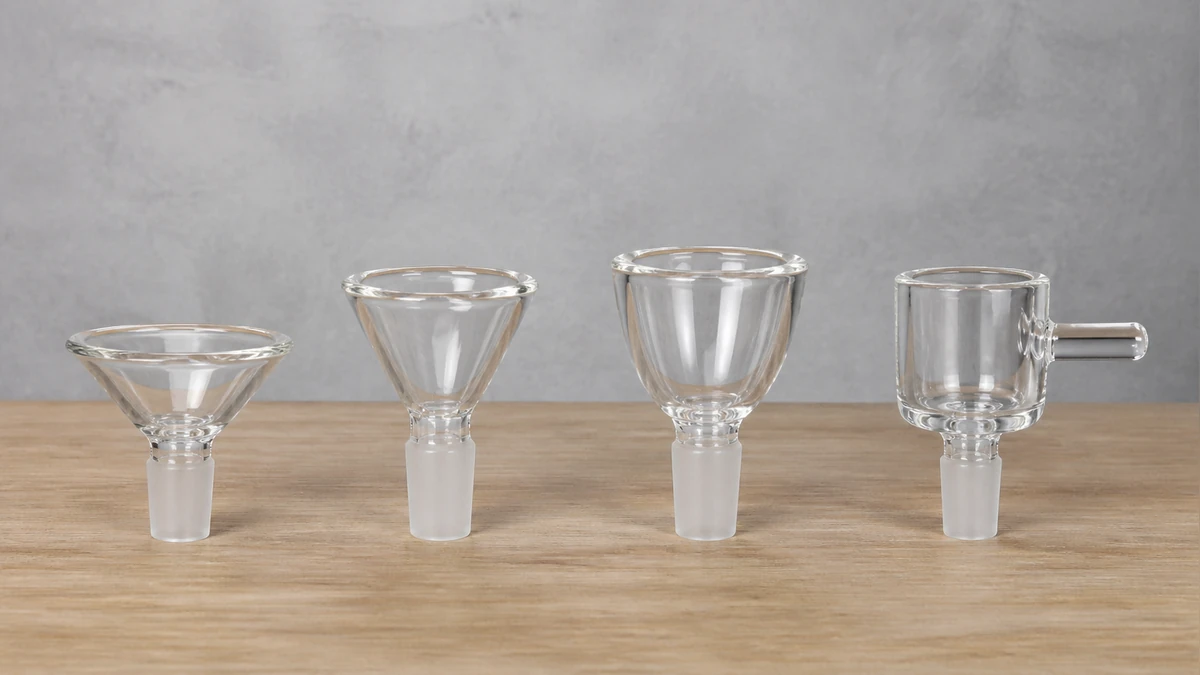
Style choices — a flat disc bowl versus a bowl with a handle, a single hole versus a slitted design — are visible in photos and rarely cause returns. Gender is easy to get backwards precisely because it isn’t visually dramatic; a male and female joint of the same diameter can look similar in a small product photo. Buyers scanning quickly for size and price skip past the gender field, and that’s the mismatch that generates the most “this doesn’t fit” returns, more often than any disagreement over bowl shape or depth.
🌊 3. Bowl Depth and Airflow: Chamber Size Changes How the Bowl Smokes
Once diameter and gender are settled, the bowl will physically seat — but depth and airflow decide whether it performs the way you expect once it’s in place. The chamber is the cavity that holds material, and its depth relative to its width changes how densely material packs and how evenly air pulls through it.
🧩 3.1 Shallow vs Deep Bowls
A shallow, wide bowl spreads material in a thin layer, while a deep, narrow bowl stacks it more vertically. Neither is inherently better — the right depth depends on how much material you typically load and how your existing piece is proportioned. A bowl that’s much deeper than what a piece was designed around can sit awkwardly high or low in the joint, changing the piece’s balance and, in some cases, how close the bowl sits to the water level below.
🧩 3.2 Airflow Through the Slits or Holes
Bowls draw air through a pattern of holes or slits cut into the base of the chamber. The number, size, and placement of those openings affects how much resistance the bowl offers. A bowl with very few small holes will pull harder than one with a wider slitted pattern. This is a real functional difference between bowls of identical diameter and gender, and it’s worth checking in product photos or descriptions before assuming any bowl of the right size will feel the same as the one it’s replacing.
🧼 4. Handle and Cleaning Access
Handles are the most visible style choice on a bowl — a horn, a knob, or no handle at all — but their function goes beyond looks. A handle keeps fingers away from hot glass and hot material while you’re placing or removing the bowl, which matters most the more frequently a piece is used and handed between people.
🧩 4.1 Handles, Horns, and Grip
A handle also changes how easily a bowl can be pulled and set down without disturbing the joint seal, which matters if the bowl is removed often to clear the chamber or draw air through the neck. Bowls without handles rely on grip directly on the glass base, which is fine for occasional use but less convenient for pieces that get handled frequently.
🧩 4.2 Cleaning Access Shapes Long-Term Ownership
Shape also determines how easily the chamber can be cleaned. Wider, shallower bowls are generally easier to reach into and wipe out; narrow, deep bowls trap residue in corners that a brush or pipe cleaner can’t always reach. If you’re buying a bowl to keep long-term rather than replace again in a few months, cleaning access is worth weighing against depth preference. For a full walkthrough of cleaning methods and what they’re each suited for, AOVAPE’s bong cleaner guide covers the process in more detail.
🔄 5. When a Downstem or Reducer Changes the Bowl You Actually Need
The joint a bowl needs to match isn’t always the joint built into the pipe itself. Many pieces use a removable downstem, and some use reducers or adapters to connect components of different sizes. Any of these can quietly change what joint the bowl actually has to fit.
🧩 5.1 Downstems Set the Joint the Bowl Has to Match
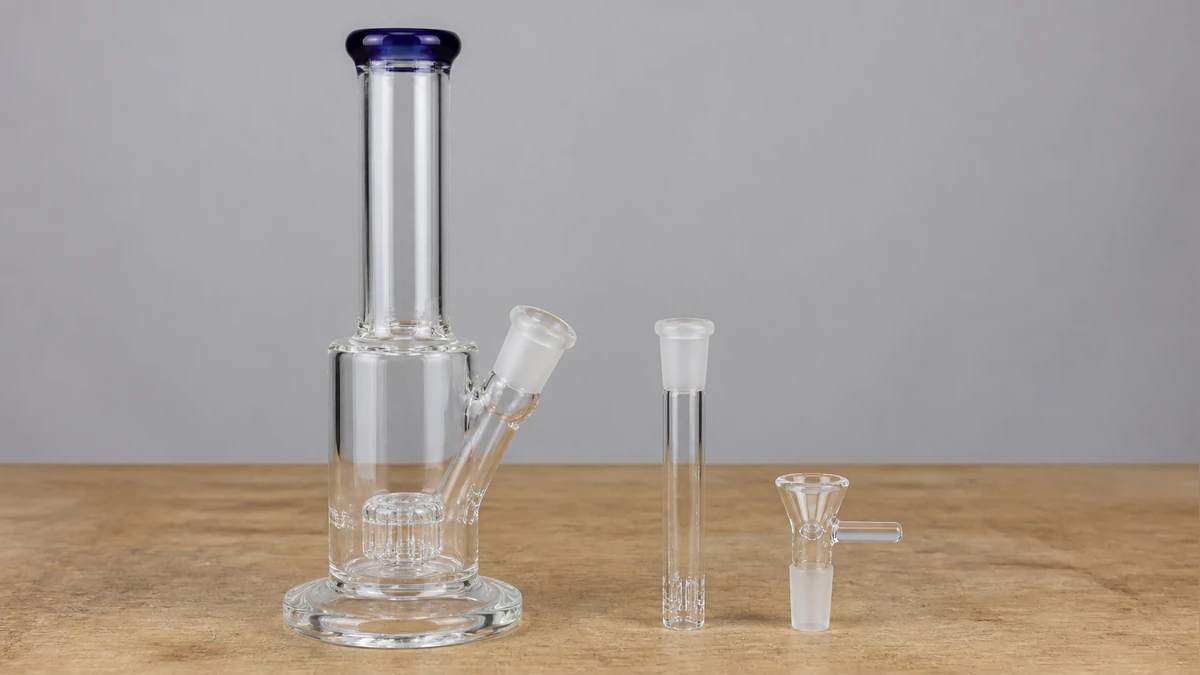
A downstem sits between the bowl and the water chamber, and it has a joint size and gender at its top end just like the pipe’s neck does. If a downstem is swapped — say, for one with different diffusion slits — the replacement downstem’s top joint has to match the bowl going into it, not necessarily the original downstem’s specs. Anyone comparing a bong to other water-filtration pieces, or considering how a downstem’s role differs from a fixed stem, may find the comparison in AOVAPE’s dab rig vs bong guide useful for understanding how these joint relationships vary by piece type.
🧩 5.2 Reducers and Adapters Add a Second Point of Failure
A reducer lets a larger joint accept a smaller bowl, or the reverse. That’s useful when a pipe’s joint doesn’t match the bowl you want to use, but it also means there are now two seals to get right instead of one — the reducer has to fit the pipe’s joint, and the bowl has to fit the reducer’s opposite end. If you’re unsure whether your piece uses a reducer or a direct joint, it helps to understand how joint sizing differs across smaller, portable pieces as well; AOVAPE’s bubbler vs bong comparison walks through how joint scale tends to shift with piece size.
✅ 6. Verifying Fit Before You Order
Everything above points to the same conclusion: don’t buy a bowl off a size label alone. Verify fit against your own piece before checkout, especially if you’re replacing a broken original and no longer have it to compare against directly.
🧩 6.1 Measuring an Existing Joint
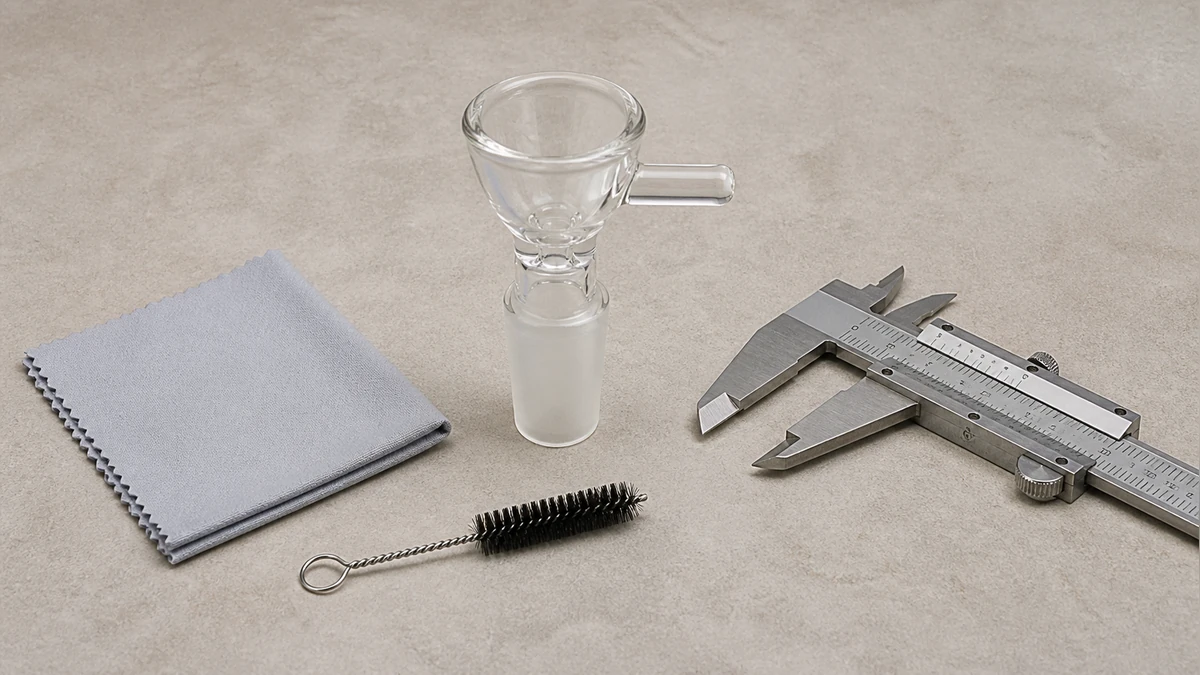
If you still have a bowl or downstem that fits, measure its ground-glass section directly with calipers rather than relying on memory or an old listing. If you don’t have a working reference piece, measure the pipe’s joint opening itself — the outer diameter for a female joint, the tapered section for a male joint — and compare that figure against the seller’s stated measurement rather than their rounded label.
🧩 6.2 What Distributors and Private-Label Buyers Should Confirm With a Supplier
For distributors, wholesalers, and private-label buyers specifying bowls at volume, the same verification applies at scale: confirm exact joint diameter and gender tolerances with the supplier before committing to a production run, rather than relying on a nominal size category. Requesting sample units to test against the downstems or joints your customers actually use is the most reliable way to catch a mismatch before it becomes a return-rate problem across an entire order.
🧭 7. Conclusion
A bong bowl only does its job if diameter, gender, depth, and airflow all line up with the piece it’s going into — and any of those can shift silently when a downstem or reducer changes. The fastest way to avoid a bowl that looks right but won’t seat is to measure your own joint before you shop, read past the rounded size label, and confirm gender explicitly rather than assuming it from a photo. Fit verification, not bowl style, is what actually determines whether a replacement works.
📚 8. Sources
This guide is based on standard ground-glass joint sizing and gender conventions used across the glass water-pipe industry. No specific product, manufacturer, or third-party technical publication was cited or relied on as evidence in this article.