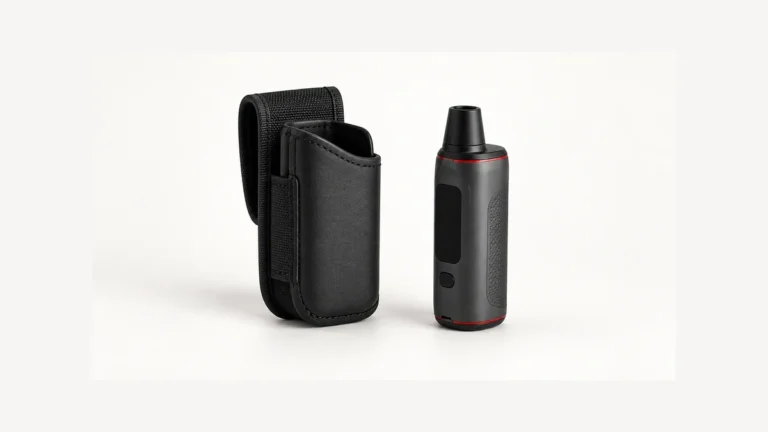
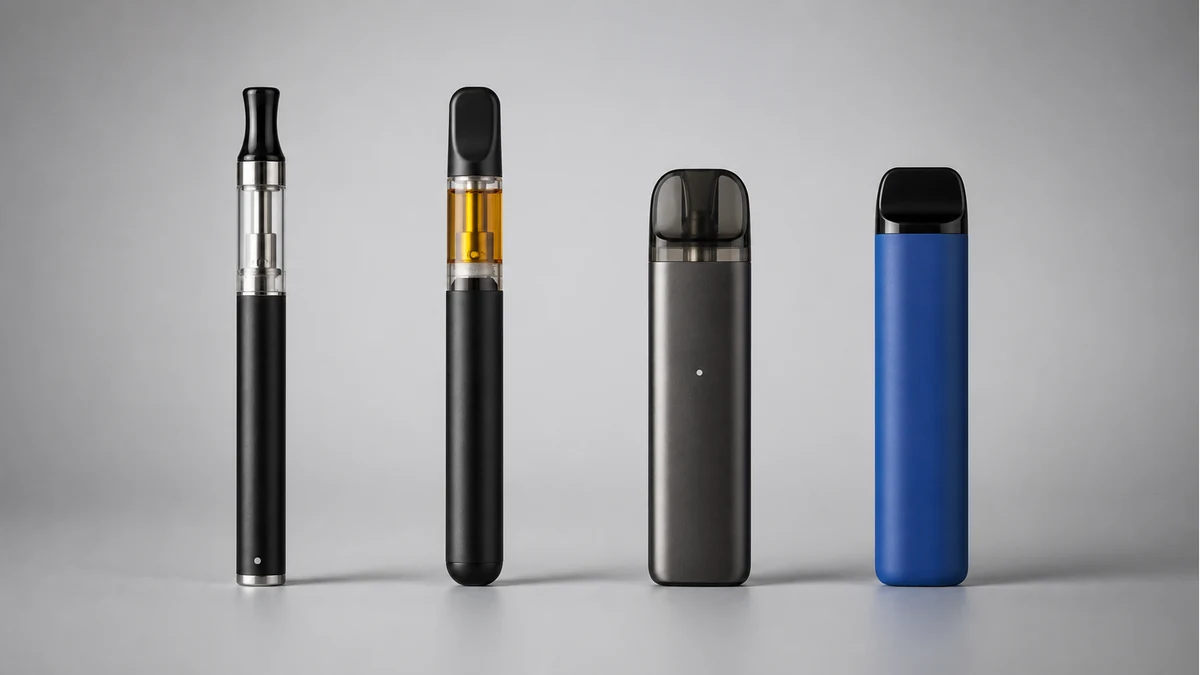
A vape pen typically looks like a slim cylinder split into two connected pieces: a battery section with a button or airflow slit on the bottom half, and a cartridge or tank on the top half that narrows toward a mouthpiece. That silhouette is the most common shape, but it is not the only one. Box-shaped batteries, pod systems, disposables, and concentrate (“dab”) pens can all fall under the “vape pen” umbrella while looking quite different from the classic pen shape, which is why identifying a device by its connections and airpath is more reliable than judging it by color or outline alone.
This guide walks through what the standard pen-style vape looks like, how to tell its parts apart, and how other common formats vary from that baseline so you can recognize a device even when it doesn’t match the shape you expected.
🧭 1. The classic vape pen has two visible sections
The device that gave “vape pen” its name is a two-piece cylinder roughly the size and shape of a fountain pen or a small marker. The lower section is the battery: a straight tube, often with a metal or plastic body, sometimes textured for grip. The upper section is the cartridge or tank, which is usually a bit narrower and tapers toward a mouthpiece at the very top. Where the two sections meet is a threaded connection, and that seam is usually visible as a slight ridge or color change around the middle of the device.
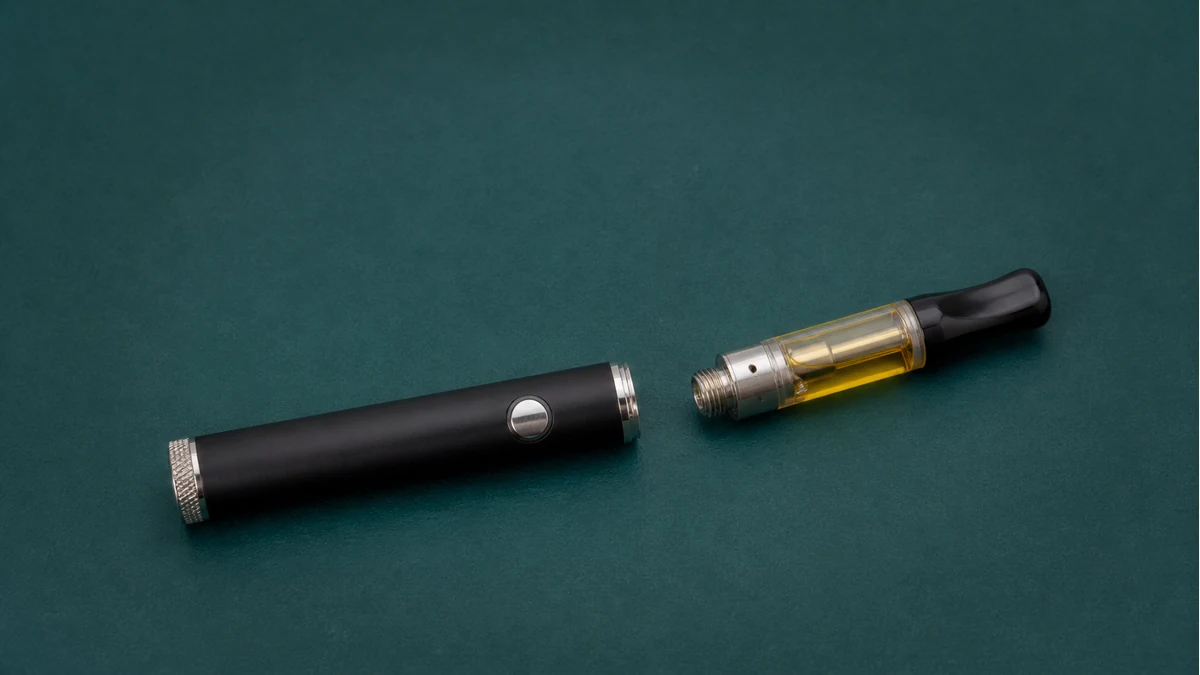
Not every pen-style device is perfectly symmetrical. Some batteries flare out slightly at the base for stability, and some cartridges are wider than the battery they sit on, creating a small step where the two parts join. Despite these variations, the core visual cue stays the same: a battery half below, a cartridge or tank half above, and a threaded or snap-fit connector holding them together. If you’re holding something that resembles a chunky pen or a slim cylinder with a mouthpiece at one end, you’re very likely looking at this classic format.
🧩 2. Identify the battery and its controls
The battery is the part that stores power and, in most designs, includes some way to activate the heating element in the cartridge above it. Look for one or more of the following features on the lower half of the device: a single button (often used for both power and firing), a small LED indicator near the button, a charging port on the side or bottom (commonly USB-C or micro-USB), and possibly a airflow slit if the battery also regulates airflow. Some batteries are “draw-activated,” meaning there’s no visible button at all — the only external features are the charging port and the connector on top where the cartridge attaches.
Button placement and shape vary by manufacturer, so a button alone doesn’t confirm what a device does or how it should be used. If you’re trying to identify an unfamiliar battery, our vape pen battery guide covers the common control layouts and what each visible feature typically indicates, but the maker’s manual is always the final word for any specific device.
🛠️ 3. Identify a screw-on cartridge
A cartridge is the smaller, top-half component that connects to the battery. In the classic pen format, this connection is a screw thread — turn the cartridge clockwise onto the battery and it tightens into place. Visually, a cartridge usually has a clear window or translucent body (so contents are visible from the outside), a narrow mouthpiece at the top, and a metal connector ring at the bottom where the threading sits.
The size of that connector ring matters more than the cartridge’s overall shape or color when it comes to compatibility. Threaded cartridges are commonly built to a standard connector size, which is why they can often be swapped between different pen batteries that use the same thread pattern. Our 510 cartridge guide explains how to recognize that connector and what to check before assuming a cartridge will fit a given battery. One important caveat: a cartridge’s outward appearance — its color, window shape, or branding — cannot verify what’s inside it, whether it’s authentic, or whether it’s safe to use. Visual identification tells you about form factor and fit, not contents.
🌡️ 4. Recognize pod, concealed-cart, and disposable shapes
Plenty of devices marketed or referred to as vape pens don’t follow the two-piece cylinder look at all. Pod systems typically have a flatter, more rectangular body with a pod that slides or clicks into a slot on the side or top, rather than screwing on. The pod itself is often a small, squared-off cartridge with exposed contacts instead of a threaded connector.
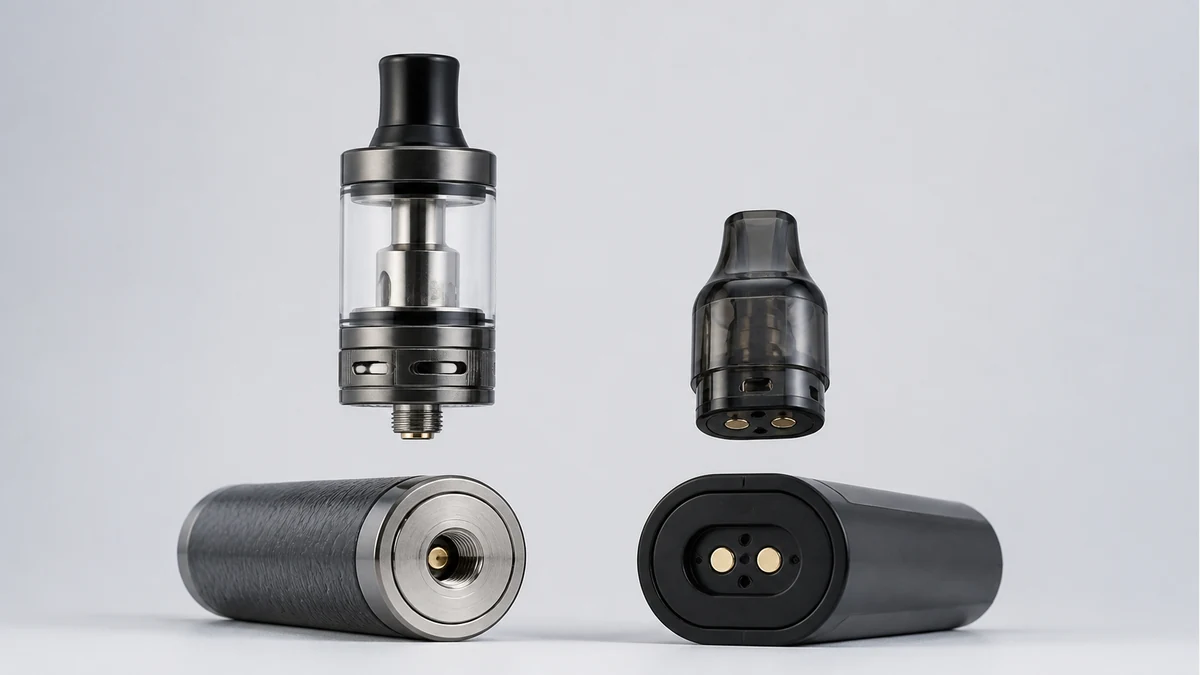
Concealed-cart devices hide the cartridge inside an outer sleeve or shell, so from the outside you may only see a single continuous body with no visible seam between battery and cartridge — you’d need to unscrew or slide off an outer cover to see the cartridge underneath. Disposables go a step further and combine the battery, cartridge, and coil into one sealed unit with no separable parts at all; they’re built to be used until depleted and then discarded as a single piece, with no threading, charging port, or refill point visible on the outside in many designs. Because these formats prioritize a compact or minimal look, they can be harder to identify at a glance than a classic pen, and the safest approach is to look for any manufacturer markings or an included manual rather than guessing from shape alone.
💨 5. A dab pen looks similar but has a different chamber
Concentrate vaporizers, often called dab pens, frequently borrow the same slim cylindrical silhouette as a classic vape pen, which is a common source of confusion. The visible difference is usually in the top section: instead of a cartridge with a window and wicking material, a dab pen has an atomizer chamber, often with a small screw-on or twist-off lid, designed to hold a different type of material and heat it directly rather than drawing through a wick.
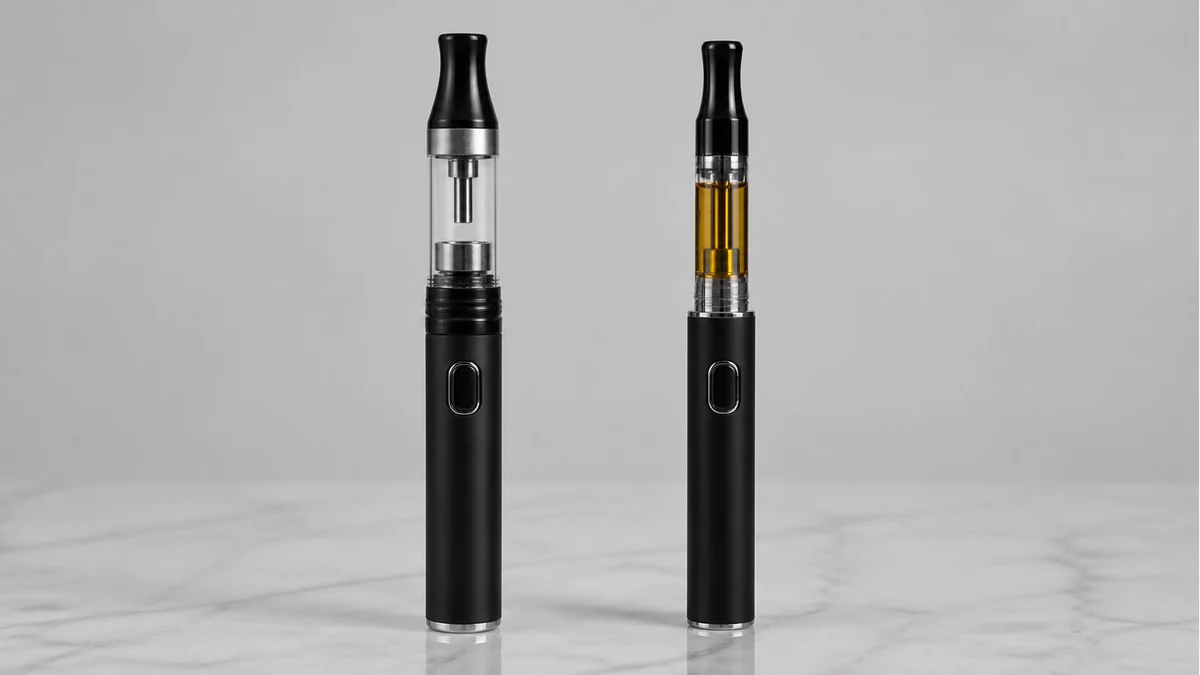
Because dab pens and cartridge-based pens can look nearly identical from a few feet away — same size, same general shape, sometimes even the same battery — the only reliable way to tell them apart is to look closely at the top component’s chamber design and any labeling, or to check the maker’s documentation. For a more detailed side-by-side comparison of how these two device types differ and what each one is built to do, see our dab pen vs. vape pen guide.
🧼 6. Labels and connectors matter more than silhouette
Color, size, and general outline are the least reliable way to identify a vape device, because manufacturers reuse similar shells across very different product lines. Two devices that look almost identical side by side can have different connector types, different chamber designs, or different intended uses. What’s far more diagnostic is a closer look at three things: any printed labeling or model markings on the device itself, the type of connector joining its parts (threaded, snap-fit, magnetic, or sealed with no visible connector at all), and the airpath — whether air is drawn through a wick-and-coil cartridge, a pod with exposed contacts, or an open atomizer chamber.
If a device has no labeling and you’re not certain what it is or how its parts are meant to go together, the safest step is to stop and consult the manufacturer’s manual or product listing rather than assume compatibility based on how similar it looks to something you’ve used before.
🧩 6.1 Use a five-point identification check
First, find the power section: a charging port, removable battery door, or contact area for a proprietary charger. Second, find the material container: a screw-on cartridge, snap-in pod, refillable tank, or chamber under a mouthpiece. Third, locate the air inlets. Fourth, look for controls such as a button, voltage dial, or screen. Fifth, read every model and electrical marking you can find. Together those clues are more reliable than deciding that every slim cylinder is a vape pen.
A classic 510 setup often separates cleanly into a narrow battery and a cartridge with a threaded metal base. A concealed-cartridge battery may hide most of that cartridge inside a box-shaped body, leaving only the mouthpiece visible. A pod system usually uses a molded pod that clicks or magnets into place instead of screwing onto a 510 thread. A disposable typically has no intended replacement connection even when it includes a charging port.
🧩 6.2 Appearance cannot identify what is inside
Clear oil, dark oil, a colored mouthpiece, or a familiar cartridge shell does not prove the contents, formulation, potency, or source. Hardware manufacturers may supply similar empty components to many brands, and counterfeit packaging can imitate legitimate products. Use licensed labeling and the seller’s traceable information where applicable; do not infer safety or authenticity from the silhouette.
The same caution applies to a device found loose in a drawer. Do not attach an unknown cartridge simply because the threads start to engage. Contamination, damaged contacts, incompatible voltage requirements, or a mismatched proprietary connection may not be visible at first glance.
🧩 6.3 A dab pen has a different working section
A concentrate pen may share the same battery-like lower body, but its top usually contains a loadable chamber or atomizer under the mouthpiece instead of a prefilled oil cartridge. Opening the mouthpiece may reveal a small cup, exposed coil, or ceramic chamber. That difference changes loading, cleaning, and replacement work even when both products are called “pens.”
Before buying a replacement, name the connection and the consumable part separately. “I need a pen top” is not enough. Record the device model, thread or pod family, cartridge or chamber type, and the power range in the manual. Those details turn a visual guess into a compatibility check.
Photograph the model marking and connection before visiting a retailer or ordering online. A straight-on image of the contact and a side view of the installed part are more useful than a distant photo of the whole device. Keep the battery powered off and the contacts clean while inspecting it. If the marking is missing or the connection is damaged, replacement by visual similarity alone is a poor bet.
⚖️ 7. Check compatibility before attaching unfamiliar parts
Even when a cartridge appears to thread onto a battery, a visual match doesn’t guarantee the connection is correct or that the battery’s output is appropriate for that cartridge. Thread patterns can look similar without being identical, and forcing a connection that doesn’t seat properly can damage the threading or the connector contacts on either part. Before pairing any battery and cartridge — or battery and pod, or battery and atomizer chamber — that didn’t come packaged together, confirm compatibility using the manufacturer’s specifications rather than relying on the parts simply looking alike or screwing on without resistance.
This is especially important when a part was given to you, found without its original packaging, or purchased separately from the device it’s paired with. Appearance can tell you what category of device you’re likely holding, but it can’t confirm fit, function, or safety on its own — that confirmation comes from the maker’s documentation for the specific parts involved.
📚 8. Sources and Reader Questions Reviewed
Reddit discussions informed reader questions and failure scenarios only; they were not used as proof of technical, health, safety, or legal claims. Technical statements follow manufacturer-specific instructions where applicable.