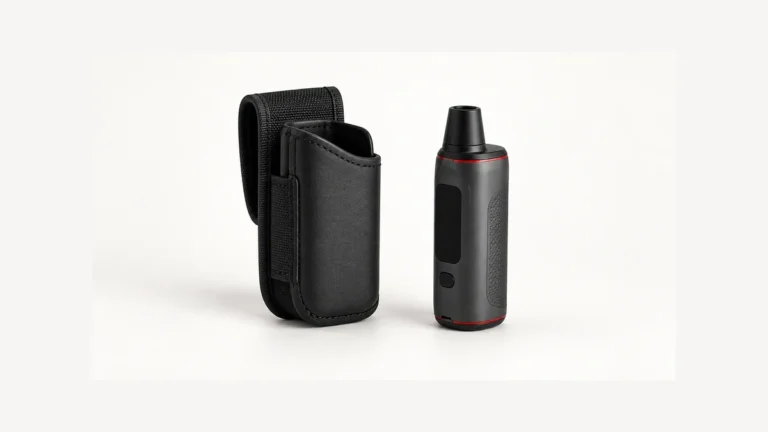
Someone walks into a shop, sees a slim pastel-colored pen labeled “hookah pen” next to a rack of vape pens and pod systems, and asks the reasonable question: is this actually a different kind of device, or just a vape with different branding? In almost every case on the market today, a hookah pen is a battery-powered, coil-based e-cigarette wearing hookah-flavored packaging — not a miniaturized version of a charcoal waterpipe. The real distinction shoppers need isn’t “hookah pen vs vape,” it’s “what’s inside this specific unit,” because the name on the box doesn’t reliably tell you.
This guide breaks the confusion down by mechanism instead of marketing: what a hookah pen actually contains, how it compares to the broader vape category it belongs to, and why traditional hookah — the charcoal-and-water-bowl setup — is a separate device family entirely. If you want the deeper comparison between hookah and vaping at the culture and use-case level, see hookah vs. bong for that side of the conversation. Here, the focus stays narrow: hardware.
🧭 1. Hookah pen is usually a label, not a separate mechanism
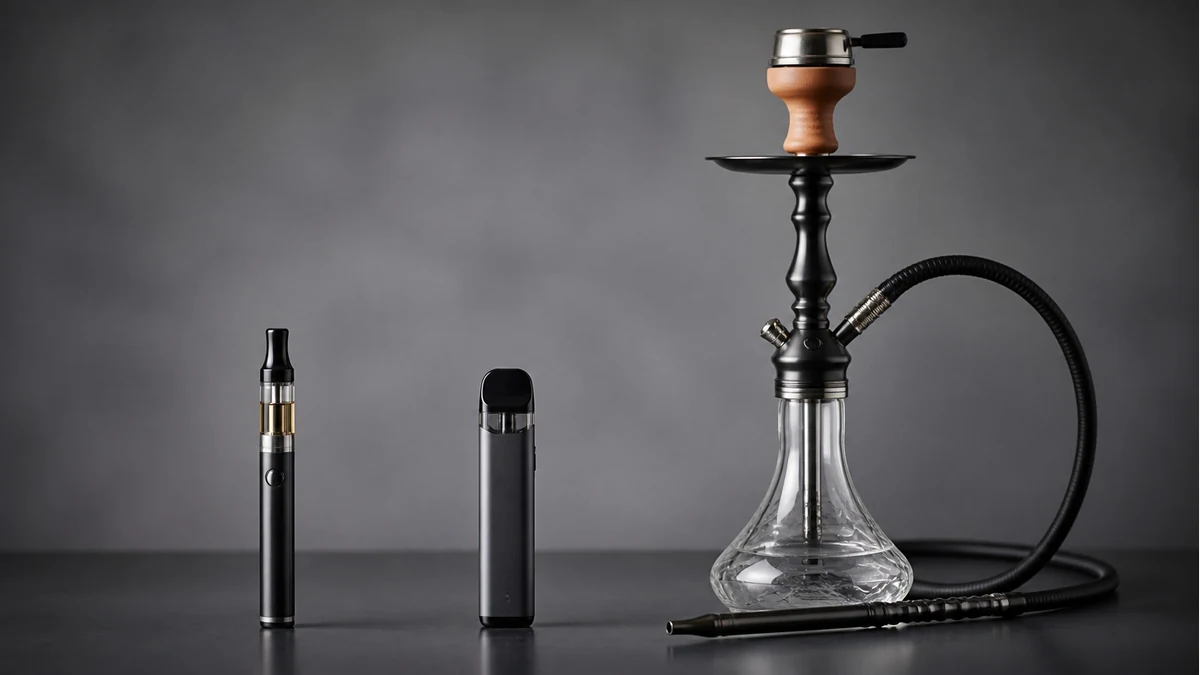
“Hookah pen” isn’t a regulated engineering term with a fixed spec sheet. It’s a category name manufacturers apply to slim, pen-style vaping devices that are flavored, colored, or marketed to evoke the taste of shisha (flavored hookah tobacco) — think fruit blends, mint, or dessert notes that mirror popular hookah lounge flavors. Underneath that branding, the components are the same building blocks used in ordinary vape pens: a battery, a heating coil or wick assembly, a liquid or oil reservoir, and a mouthpiece.
Because “hookah pen” describes a marketing angle rather than a fixed mechanism, two products sold under that name can differ significantly from each other — one might be a rechargeable pod system with a refillable tank, another might be a sealed, non-rechargeable disposable meant to be thrown away once the liquid runs out. The only way to know which one you’re holding is to look at the actual construction, not the label printed on the front.
🧩 2. How a typical hookah pen works
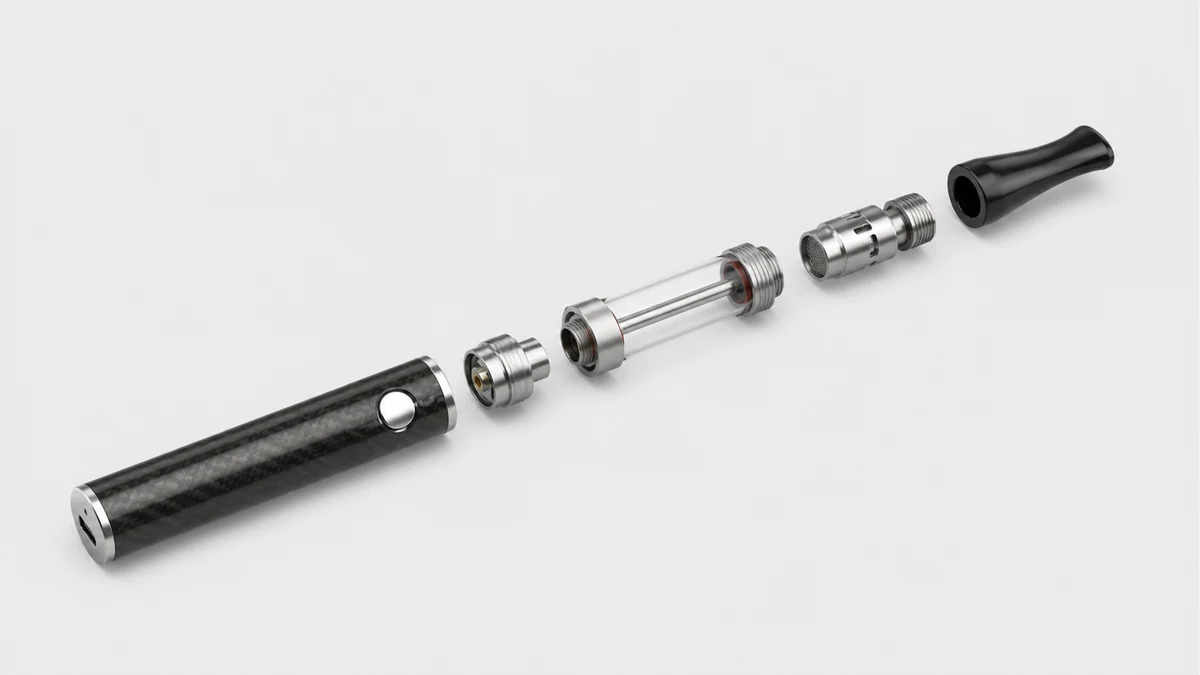
Strip away the branding and a hookah pen follows the same basic operating sequence as any small vape device. A battery — often built into the body and either rechargeable via USB or single-use — supplies power to a coil. The coil heats a liquid or oil that sits in a small reservoir or wicking material threaded through the coil. When you draw on the mouthpiece, either a button activation or the airflow from your inhale (draw-activation) triggers the coil, the liquid vaporizes, and you inhale the resulting vapor.
Some hookah pens are built as sealed, disposable units: the reservoir isn’t meant to be opened or refilled, and the whole device is discarded once it’s empty or the battery dies. Others are built with a removable cap or refillable pod, closer in design to a standard vape pen or pod system. This distinction — sealed and disposable versus refillable and rechargeable — matters more for how you’ll actually use and maintain the device than whether it’s called a “hookah pen” or a “vape pen.” For a closer look at how battery type and charging cycles affect device life across this whole category, the vape pen battery guide covers that ground in more depth.
🛠️ 3. How the broader vape category works
“Vape” is the umbrella term, and a hookah pen sits inside it rather than beside it. The broader vape category includes disposable pens, refillable pod systems, and more advanced mod-style devices with replaceable tanks, adjustable airflow, and swappable coils. All of them share the same core loop as a hookah pen — battery powers coil, coil heats liquid, liquid becomes vapor — but they vary in how much of that hardware is user-serviceable.
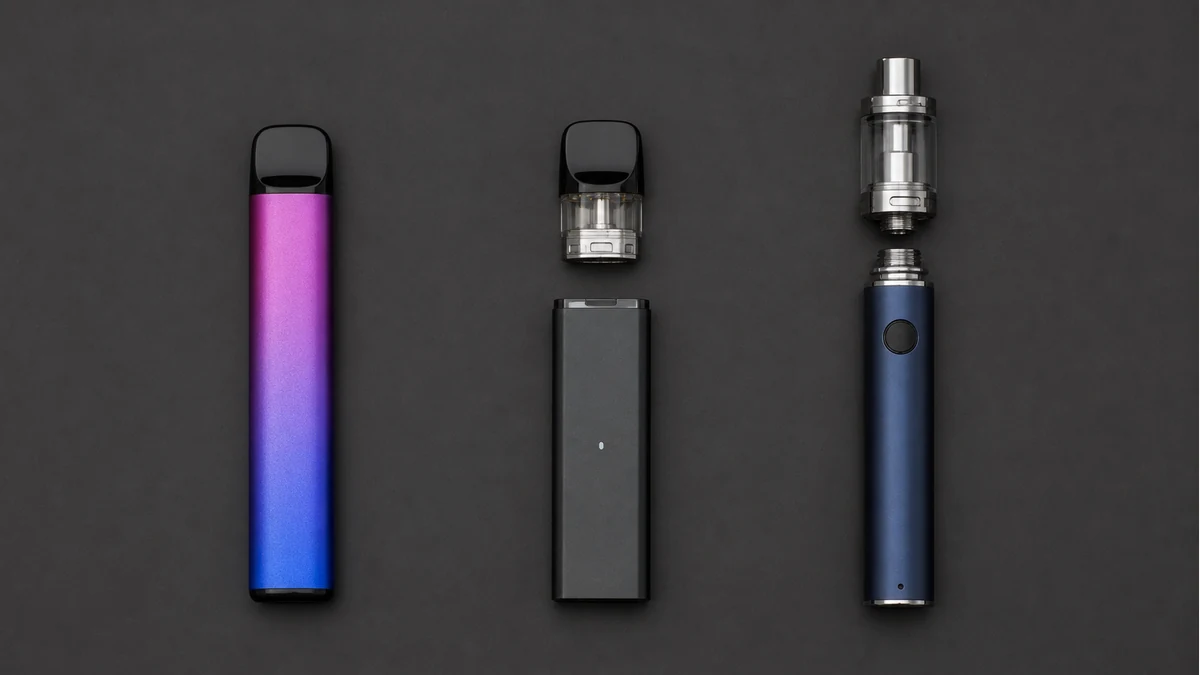
Pod systems and mod devices typically expose their internals: you can see or access the tank, swap the coil when it wears out, and refill the reservoir with liquid of your choice. Disposables, hookah pens included, usually hide that hardware inside a sealed shell specifically so nothing needs to be opened, refilled, or maintained. If you’re trying to understand what’s actually inside any vape device — coils, tanks, drip tips, batteries — vape parts breaks down each component individually, which is useful context whether the device in front of you is labeled “vape pen” or “hookah pen.”
🌡️ 4. Traditional hookah is a different device entirely
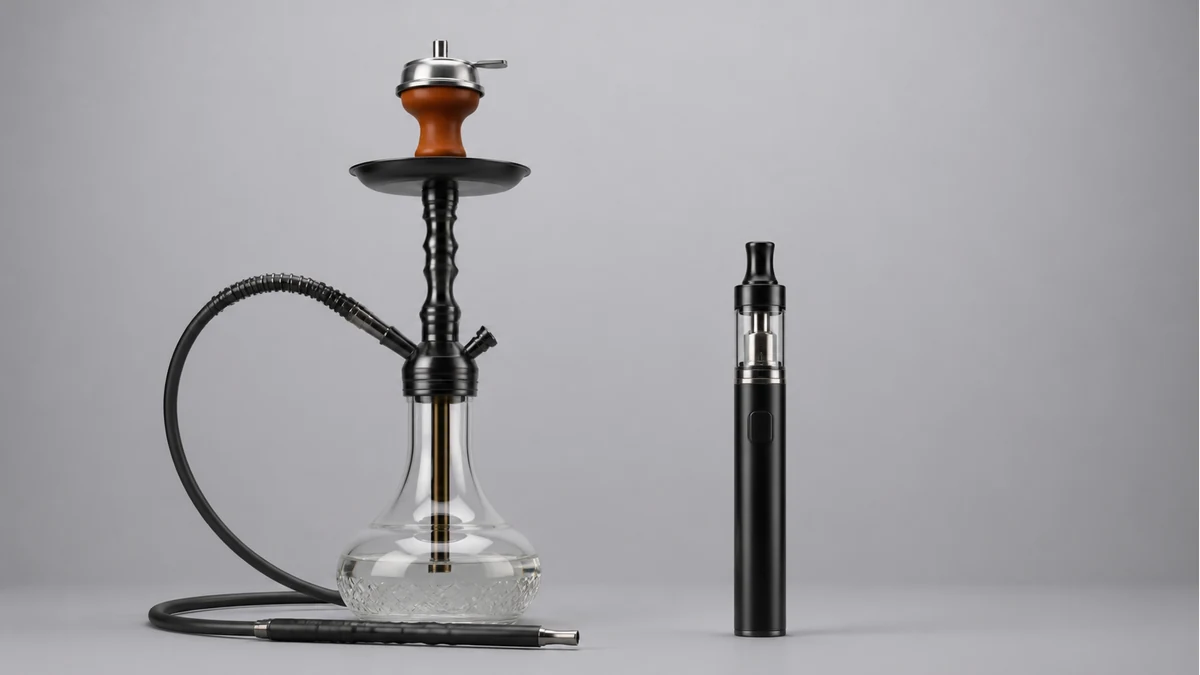
This is the point where the “hookah” in “hookah pen” becomes misleading if taken literally. A traditional hookah (also called a waterpipe or shisha pipe) has no battery and no electronic coil. It’s built around a water-filled base, a body stem, a bowl that holds shisha tobacco, a heat management device or foil, and a hose with a mouthpiece. Heat is generated externally — typically with charcoal placed on or near the bowl — and that heat warms the tobacco, which produces smoke that passes down through the water and up through the hose to be inhaled.
Because combustion and charcoal are involved, traditional hookah smoke carries combustion byproducts that a coil-based vape device does not produce in the same way. The CDC has published guidance specifically distinguishing hookah smoking from other tobacco and vaping products, noting that hookah use involves burning charcoal and tobacco together, which is a fundamentally different process from heating a liquid with an electric coil (CDC, Preventing Chronic Disease). The FDA’s page on hookah tobacco similarly describes shisha as tobacco product regulated and characterized separately from e-cigarette liquids (FDA, Hookah Tobacco). Neither of those distinctions depends on branding — they come from what’s physically generating the vapor or smoke: charcoal combustion in one case, an electric coil in the other.
So when a product is called a “hookah pen,” it is not a portable version of that charcoal-and-water setup. It’s an electronic device that borrows hookah’s flavor profile and, sometimes, its name — not its heat source or its hardware.
💨 5. Compare airflow, controls, and refillability
Once you set traditional hookah aside as its own category, comparing a hookah pen to other vape devices comes down to a handful of practical hardware differences.
🧩 5.1 Airflow
Traditional hookah airflow is shaped by the water bowl, hose length, and how tightly the bowl is packed and covered — smokers can adjust draw resistance somewhat through the setup itself. Electronic devices, hookah pens included, control airflow through small intake vents near the coil or through the mouthpiece design; some allow the vents to be adjusted or covered, while sealed disposables usually have fixed, non-adjustable airflow.
🧩 5.2 Controls
A hookah pen is typically either button-activated (press to heat) or draw-activated (inhaling triggers the coil automatically), with no separate temperature or wattage settings on simpler models. More advanced vape devices in the broader category may include adjustable wattage, temperature control, or on-screen settings — features that have nothing to do with whether a device is called a hookah pen and everything to do with its build tier.
🧩 5.3 Refillability
This is often the most practical difference shoppers care about. A sealed, disposable hookah pen is discarded once empty; there’s no reservoir to reopen. A refillable hookah pen or standard pod system has a removable cap, pod, or tank that accepts more liquid once the original supply runs low, and in some cases a replaceable coil once the original wears out. Refillability is a hardware feature, not something the name “hookah pen” guarantees one way or the other — some are refillable, many are not.
🧼 6. Read the package instead of trusting the name
Because “hookah pen” doesn’t map to one fixed spec, the packaging and product listing are more reliable than the name on the front. A few things worth checking before assuming what you’re getting:
- Does the listing say “disposable” or “rechargeable”? That tells you whether there’s a battery to charge or a fixed one-time charge built in.
- Is there a visible cap, pod slot, or fill port? That indicates whether the reservoir is meant to be refilled.
- What ingredients are listed on the liquid or the packaging? Manufacturers vary in how much detail they disclose, and the ingredient list is the only place that information reliably lives — not the product name.
- Does the manual or box mention coil replacement? If so, the device has a serviceable heating element rather than a fully sealed one.
These details are what actually determine how a device will behave day to day — how long it lasts, whether it can be topped up, and what’s being heated — regardless of whether the box says “hookah pen,” “vape pen,” or something else entirely.
🧩 6.1 Translate the package language into hardware questions
If a package says “hookah pen,” look past the cloud imagery and ask what can actually be replaced. Is the liquid sealed in the device, contained in a removable pod, or held in a refillable reservoir? Does the power section recharge? Is the heater integrated with the pod, or is there a separate coil? Those answers place the product within familiar vape architectures even when the front label avoids standard terminology.
Next, check the intended liquid and ingredient label. The word hookah does not guarantee shisha, a charcoal heat source, or a water-filled base. It also does not guarantee that a product is nicotine-free. Names such as e-hookah, hookah stick, and hookah pen have been used broadly, so the label and manufacturer instructions matter more than the nickname.
🧩 6.2 Cloud style is not a device category
A more open airpath and higher power can change draw resistance and visible aerosol, but “makes big clouds” does not make a device a traditional hookah. Traditional hookah hardware routes heated smoke through a stem and water base into a hose. A portable electronic pen uses a battery-powered heater and does not recreate that system merely by using a long mouthpiece or sweet flavor.
This also explains why a person looking for the social ritual of preparing a bowl and sharing a hose may be disappointed by a hookah pen, while someone seeking a compact electronic form may find a traditional waterpipe irrelevant. Compare the routine, not just the flavor description.
🧩 6.3 Compatibility still follows the connector
Some hookah-labeled pens are closed disposables; others use proprietary pods; still others resemble ordinary threaded batteries. Do not move a cartridge or charger between them based on diameter alone. Confirm polarity, contact layout, accepted charging input, airflow path, and the exact family named by the manufacturer.
When two products use the same underlying hardware, the honest conclusion may be that there is no meaningful mechanical difference. The distinction can be branding, liquid formulation, draw tuning, or mouthpiece shape. That is useful information: it keeps shoppers from paying for a category name when the practical features are what determine maintenance and fit.
⚖️ 7. Choose by the actual hardware and intended material
The most useful question isn’t “is a hookah pen different from a vape,” since a hookah pen generally is a vape by mechanism — it’s “what does this specific device do, and does that match what I’m looking for?” If you want a device with adjustable airflow, a refillable tank, and a replaceable coil, look for those features explicitly rather than assuming a hookah-branded product includes them. If you’re comparing a hookah pen to the traditional charcoal-and-water hookah experience, understand that they’re not interchangeable — one is a battery-and-coil device, the other burns charcoal over tobacco through a water-filled base.
Whatever device you’re evaluating, always follow the manufacturer’s manual for charging, filling, and coil maintenance specifics — hardware principles like “battery powers coil, coil heats liquid” are consistent across the category, but exact charging times, fill lines, and coil replacement intervals vary by model and are set by the maker, not by the general category the device is marketed under.
📚 8. Sources and Reader Questions Reviewed
Reddit discussions informed reader questions and failure scenarios only; they were not used as proof of technical, health, safety, or legal claims. Technical statements follow manufacturer-specific instructions where applicable.