No—the cloud that comes out of a vape is not plain water vapor. It looks similar to your breath fogging up on a cold morning or the mist that rolls off a hot shower, but what you’re seeing is an aerosol: a mix of tiny liquid droplets suspended in air, carrying flavorings, propylene glycol or vegetable glycerin, and often nicotine. Water vapor is involved, but it’s one ingredient among several, not the whole picture.
That distinction matters because the phrase “it’s just water vapor” gets repeated so often that it starts to sound like a settled fact. It isn’t. Understanding what actually happens between the coil and your lungs helps you read product labels, device manuals, and health guidance more accurately, without needing to memorize any chemistry.
🧭 1. No—the visible cloud is an aerosol, not plain water vapor
An aerosol is a suspension of fine liquid or solid particles in a gas. Fog, hairspray mist, and the exhaust from a vape all fall into that category. Plain water vapor, by contrast, is water in its gaseous state—invisible, the way humidity in the air is invisible even on a muggy day. The moment you can see a cloud, you’re looking at something with particles in it, not a pure gas.
This is the core reason the “just water vapor” description falls apart under scrutiny. If a vape produced only water vapor, there would be nothing to see: water vapor doesn’t scatter light the way a cloud of droplets does. The visible plume itself is evidence that the cloud contains suspended liquid, not water in its gas phase. For a closer look at how this compares to the smoke from combustion, our guide on vapor vs. smoke breaks down the differences in how each is produced and what each contains.
🧩 2. Gas, vapor, and aerosol are not the same thing
These three words get used interchangeably in casual conversation, but they describe different physical states, and mixing them up is where a lot of confusion starts.
A gas is a substance that exists in its gaseous form at room temperature and pressure—oxygen and carbon dioxide are common examples. A vapor is the gaseous phase of a substance that is normally a liquid or solid at room temperature; water vapor is water that has evaporated into a gas. An aerosol is neither a pure gas nor a pure vapor—it’s a cloud of tiny liquid or solid particles carried within a gas. Perfume mist, spray paint, and cooking steam that you can see are all aerosols, because you’re seeing suspended droplets, not the gas itself.
When someone calls the output of a vape “vapor,” they’re using a shorthand that has stuck around since early e-cigarette marketing. Scientifically, what you exhale is closer to an aerosol. The name “vape” comes from that shorthand, not from a precise description of the physics involved.
🛠️ 3. What the device heats
To understand why the cloud isn’t plain water, it helps to know what’s actually inside the tank or pod before it gets heated. Most e-liquids are a blend of propylene glycol (PG) and vegetable glycerin (VG), along with flavoring compounds and, in many products, nicotine. Water is sometimes present as a minor component, but it is not the base of most e-liquid formulas—PG and VG are.
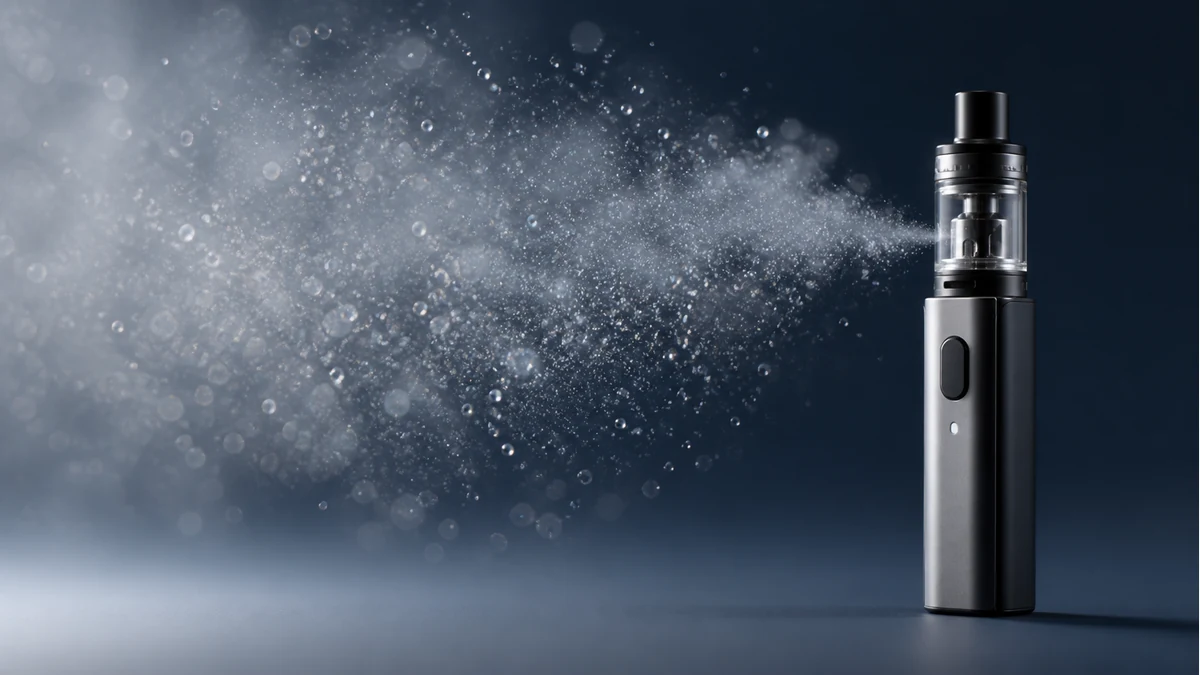
Inside the device, a heating element—commonly a coil wrapped around or embedded in a wicking material—warms this liquid until it turns into vapor. As that vapor moves away from the heat source and mixes with cooler ambient air, it condenses back into countless microscopic liquid droplets. That condensation is what creates the visible cloud. If you want a deeper look at the hardware itself, our explainer on how an atomizer works walks through the coil, wick, and heating cycle in more detail. The general principle—liquid heated into vapor, then condensed into an aerosol—applies broadly, but exact heating temperatures, wattage ranges, and coil designs vary by device, so always follow the specific instructions in your device’s manual rather than assuming one setup behaves like another.
🌡️ 4. How droplets form and become visible
The everyday mist analogy is useful here. Think about what happens when you exhale on a cold day: warm, moist breath meets cold air, water vapor condenses into tiny droplets, and you see your breath as a small cloud. A vape cloud forms through a similar condensation process, just triggered by heat rather than cold.
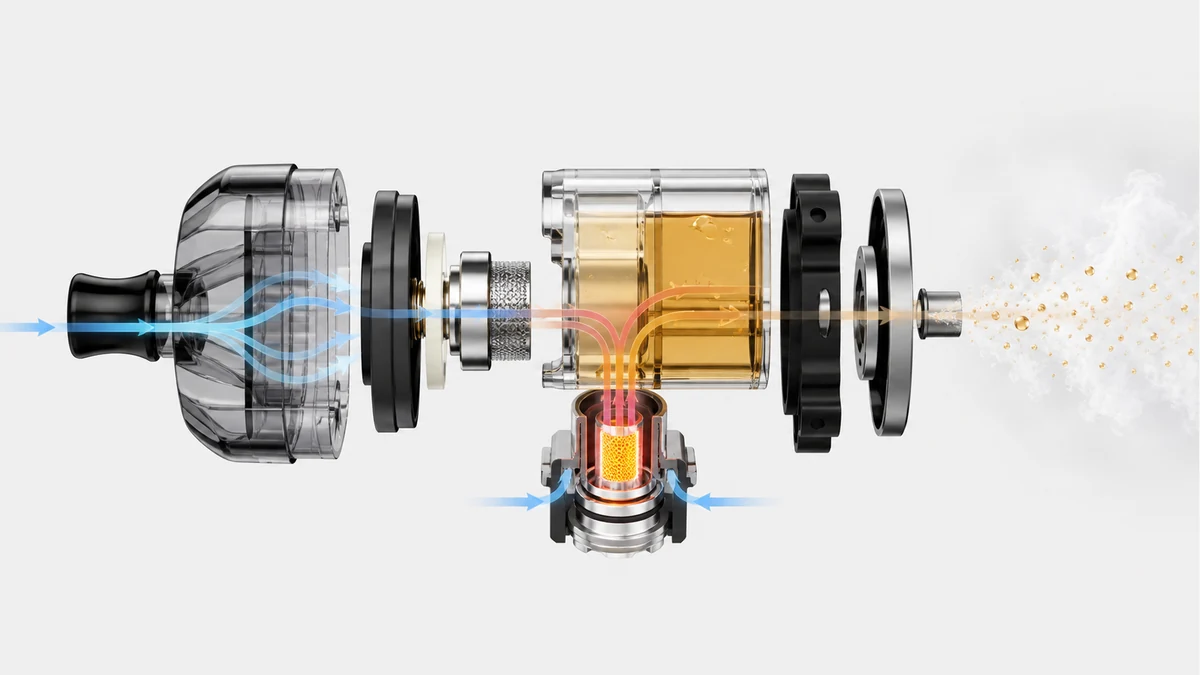
PG and VG have a particular advantage for this kind of cloud production: they are hygroscopic and tend to condense readily into fine droplets at room temperature after being heated and released. That’s part of why vape aerosol tends to look denser and linger a bit longer than a simple breath-fog cloud, even though both are built on the same basic physics of vapor cooling into liquid droplets suspended in air.
The size and density of those droplets—and therefore how thick or visible the cloud appears—depend on factors like the VG-to-PG ratio in the liquid, the heat applied by the device, and the surrounding air. None of that changes the underlying category: it’s an aerosol, a suspension of liquid particles, not a gas.
💨 5. Why the cloud fades but can leave residue
A vape cloud usually disperses within seconds, the same way fog burns off or breath-fog fades in warmer air. That fast disappearance is often cited as proof that “it was just water,” but disappearing quickly doesn’t tell you what something was made of—it tells you that the droplets evaporated or dispersed into the surrounding air. Water vapor disperses quickly too, but so do many other fine aerosols once they’re no longer confined and concentrated.
What’s left behind can be more telling than the cloud itself. Some vaping aerosols leave a thin film on nearby surfaces, particularly in enclosed spaces where the aerosol has less room to disperse. That residue is generally attributed to the glycerin, propylene glycol, and flavoring compounds in the liquid, rather than to water, since water alone would evaporate away without leaving a film. If a cloud were composed only of water vapor, there would be no reason to expect any surface residue in the first place.

For readers interested in the health and composition side of this topic, the CDC’s overview of e-cigarette health effects and its 2019 report on vaping-associated lung injury are useful starting points for further reading. Both address aerosol exposure directly rather than treating vaping output as equivalent to plain water vapor.
🧼 6. Water may be present without defining the whole cloud
None of this means water is entirely absent. Trace amounts of water can be present in some e-liquid formulations, and the combustion or heating process can generate small amounts of water as a byproduct, similar to how burning a candle or boiling a kettle produces water alongside other substances. The presence of water doesn’t make it accurate to describe the whole aerosol as “water vapor,” any more than steam rising off a pot of soup would be an accurate description of everything in the soup.
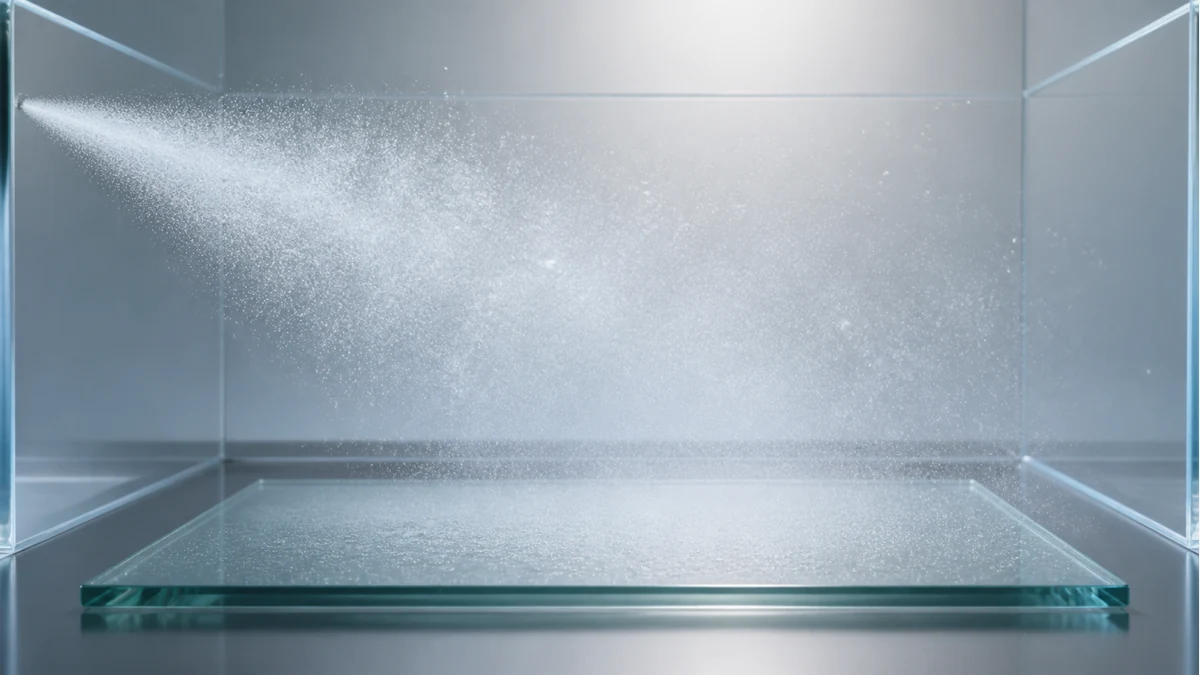
This is where the “just water vapor” phrase misleads people the most: it takes one possible minor component and presents it as the defining characteristic of the entire cloud, when PG, VG, flavorings, and nicotine (where present) are the dominant contributors to both the visible aerosol and any lingering residue.
🧩 6.1 Use the bathroom-mirror test carefully
A hot shower can fog a mirror with condensed water. A vape cloud can also make a surface hazy, but the similarity is visual rather than compositional. E-liquid commonly uses aerosol-forming carriers such as propylene glycol and glycerin. Heating creates a mixture that cools into suspended droplets; depending on the product and operating conditions, other constituents may be carried with those droplets. Calling the entire cloud “water vapor” hides that mechanism.
The surface film discussed by users is another clue. Pure water condensation usually evaporates without leaving the same persistent oily or tacky layer. A film does not identify every chemical present, and a clean-looking window does not prove clean air, but residue is consistent with an aerosol containing more than water.
🧩 6.2 Why temperature does not turn the question into a simple boiling chart
A heater operates inside a moving liquid-and-air system, not a beaker containing one pure substance. The coil or heating surface, liquid supply, airflow, and draw continuously change local conditions. A screen setpoint, if the device has one, may not equal the temperature of every droplet or every point on the heater. That is why a single boiling point cannot describe the full cloud.
The visible portion is also only what scatters enough light for your eyes to see. As droplets evaporate, disperse, or settle, the cloud fades. Disappearance is not proof that nothing contacted nearby surfaces or that the starting aerosol was harmless. It simply means the concentration and droplet size no longer produce the same visible plume.
🧩 6.3 Choose precise words because they improve decisions
“Aerosol” is the accurate general term for fine liquid droplets and particles suspended in a gas. “Smoke” usually points to combustion products, while “steam” commonly describes gaseous water and the condensed mist around it. Everyday speech blurs these terms, but a hardware guide should not. Clear language helps readers understand why ventilation rules, cleaning needs, and secondhand-exposure policies still apply when no combustion flame is present.
The safest concise answer is not alarmist: a vape cloud is not simply water vapor, and its exact composition depends on the liquid, device, settings, and use. That leaves room for product-specific evidence without making the opposite mistake of claiming every aerosol is identical.
⚖️ 7. Use precise language without making safety shortcuts
Getting the terminology right isn’t just a pedantic exercise—it changes how you read a product label, a device manual, or a health advisory. Calling the output “aerosol” rather than “water vapor” is a more accurate description of the physical process: liquid ingredients heated into vapor, then condensed into suspended droplets carried in air.
At the same time, precise language doesn’t automatically translate into a specific health or safety conclusion, and this article isn’t the place to draw one. What it does support is a more accurate mental model: the cloud you see is a mixture, its ingredients come from the liquid in the tank or pod, and the hardware that produces it—coils, wicks, tanks, and pods—works through the same general heating principle across most devices, even though specific components vary by model. If you’re curious about how those components fit together, our guide to vape parts covers the tank, coil, battery, and other pieces that make up a typical setup.
The next time you see someone describe a vape cloud as “just water vapor,” you’ll have a more precise way to think about it: it’s an aerosol, built from heated liquid ingredients that condense into visible droplets, with water as, at most, a minor and situational component rather than the defining one.
📚 8. Sources and Reader Questions Reviewed
Reddit discussions informed reader questions and failure scenarios only; they were not used as proof of technical, health, safety, or legal claims. Technical statements follow manufacturer-specific instructions where applicable.