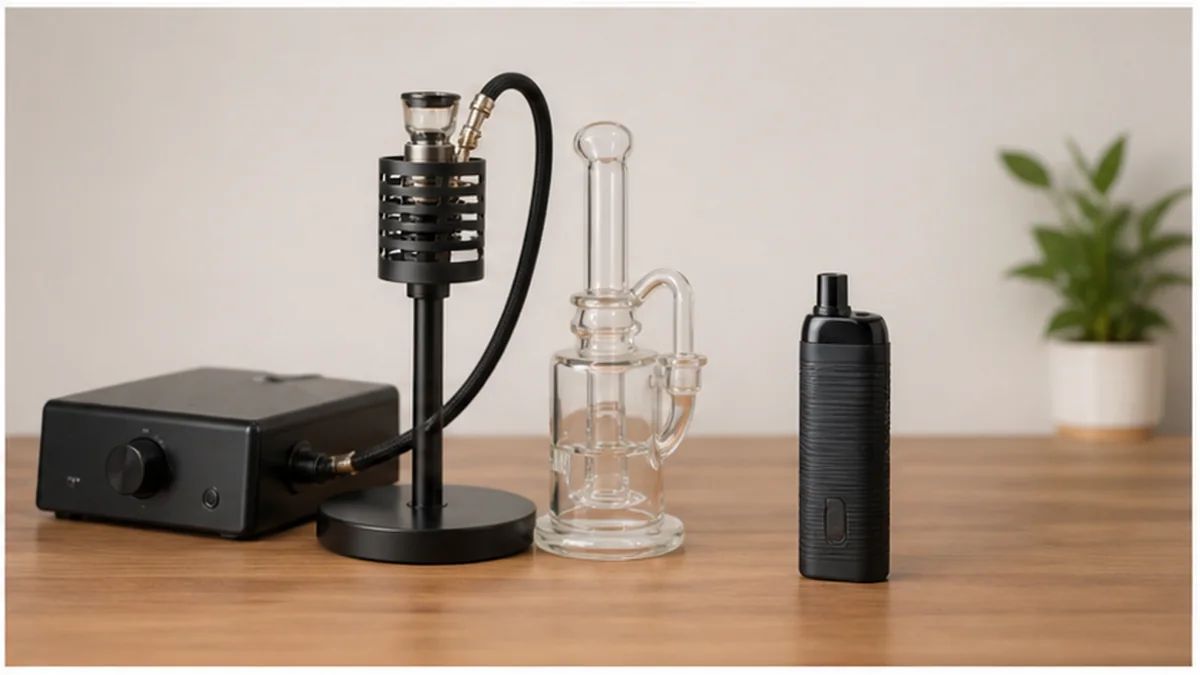
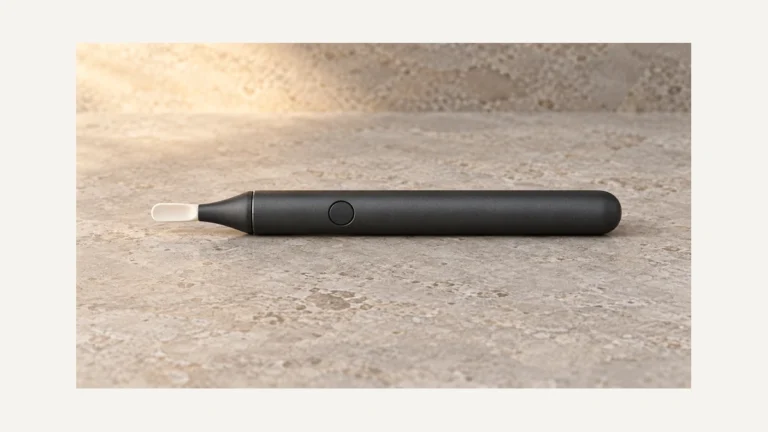
It’s a Tuesday night, the kitchen table is cleared off, and there’s a small glass-and-metal rig sitting next to a laptop, plugged into the wall like a soldering iron. You lower a glass mouthpiece toward it, the herb sizzles almost imperceptibly, and the vapor that comes off is thicker and more immediate than anything a battery-powered handheld ever produced. Then you look at the cord running across the table, the exposed heating element two inches from your fingers, and the fact that this thing isn’t going anywhere near your pocket, and you start to understand why people talk about ball vapes the way they do: with real enthusiasm, and with real caveats.
A ball vape (sometimes called a bead vape or e-nail-style dry herb rig) is a desktop dry-herb vaporizer built around a heater head containing heat-retaining balls, rather than a fully enclosed portable oven. It’s a different species from the pocket vaporizers most people start with, and it rewards a different kind of user. This piece walks through how the heated bead system actually works, why the vapor experience feels different from a portable, what setup and daily use actually involve, the real risks around exposed heat, how cleaning works, and who should honestly just stick with a portable instead.
🔥 1. What a Ball Vape Actually Is
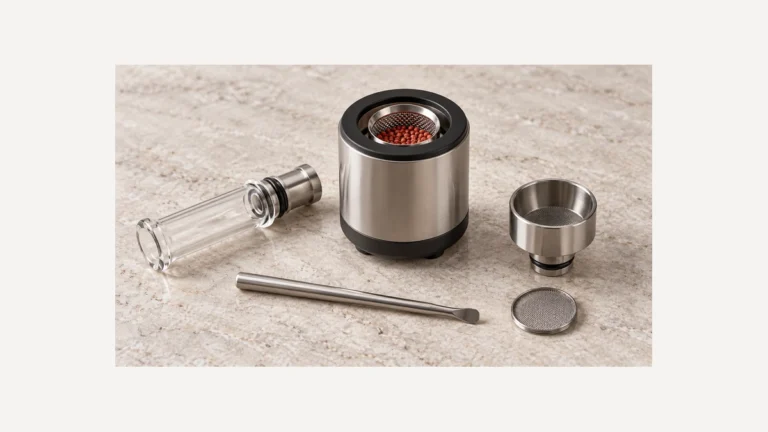
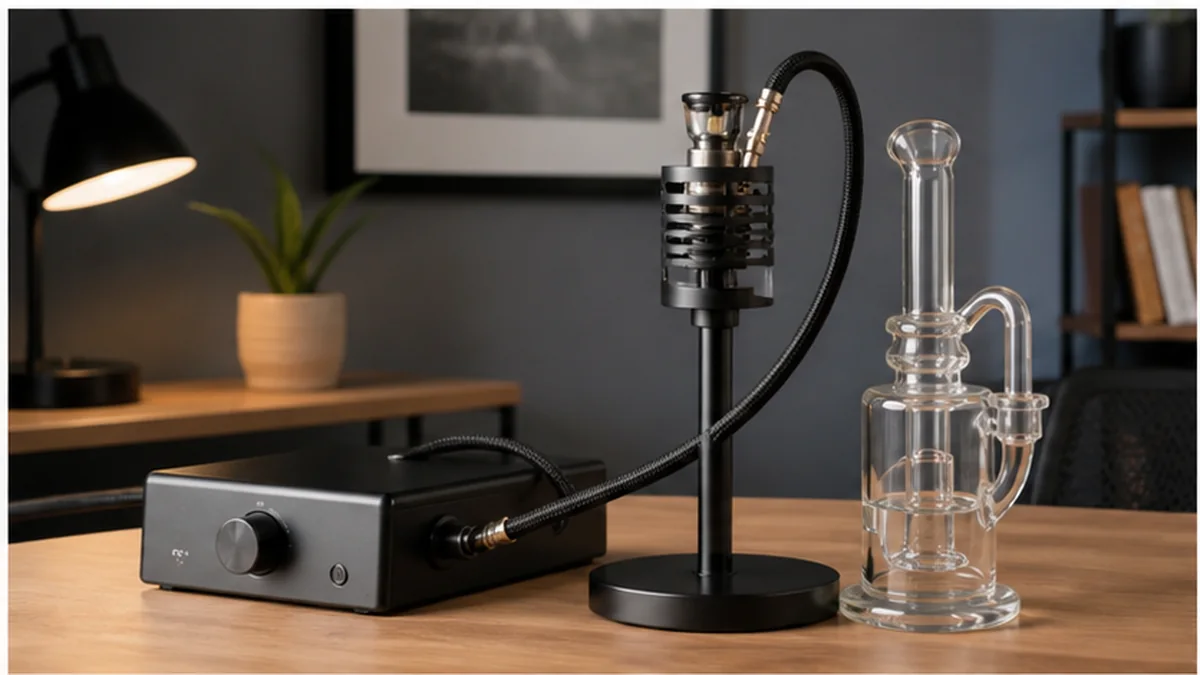
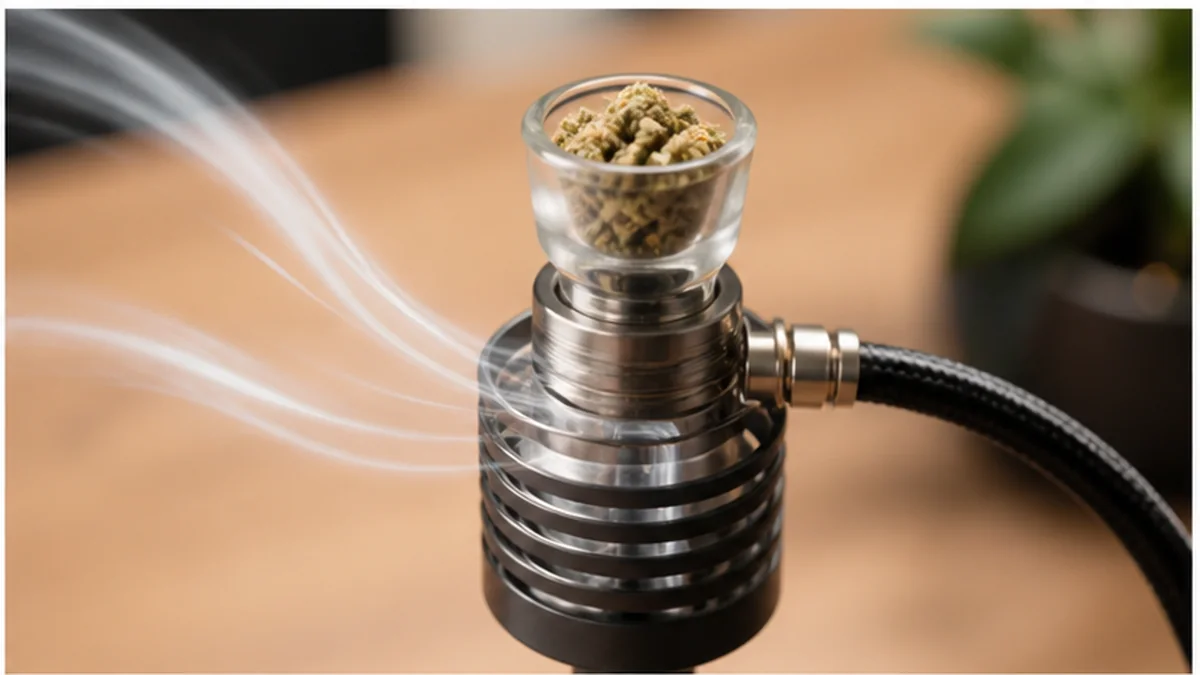
At its core, a ball vape is a desktop unit with four connected parts: a power base, a heater head containing heat-retaining balls, a head or bowl that holds the herb, and an airflow path that pulls air across the bead and through the material. It’s mechanically closer to a nail-and-banger dab setup than to a sealed-chamber portable vaporizer, which is exactly why it feels unfamiliar the first time you use one.
🧩 1.1 The Heated Bead
The bead — usually ceramic or quartz — sits on a coil and heats up when the base is powered on. Unlike the fully enclosed heating chambers in most portable vaporizers, the bead is exposed to open air on at least one side. That’s intentional: the design pulls air directly across the hot surface, which is part of how these units generate vapor so quickly and how how dry-herb vaporizers work in this heating style differs from convection-only portables. It’s also the single detail that shapes almost every tradeoff discussed later in this article.
🧩 1.2 The Head and Bowl
The bowl or head is the small glass or ceramic piece that actually holds your ground herb. In most ball vape designs, the head sits just above or around the bead, close enough that heat transfers efficiently but not so close that the herb sits directly on the glowing surface. Getting this positioning right — and understanding how your specific head is meant to seat — is one of the first things new users have to learn, because a poorly seated head changes the draw, the heat exposure, and the flavor all at once.
🧩 1.3 Airflow and Draw
Airflow on a ball vape is usually manual and mechanical rather than app-controlled. You typically pull air past the bead, through the herb, and up through a glass stem, sometimes with an accessory like a bubbler or water piece attached downstream to cool the vapor. There’s no sealed chamber trapping vapor between draws, which means draw technique — how hard, how long, how you time the pull relative to the herb combustion point — has a much bigger effect on the outcome than it does on a portable with fixed convection settings. New users regularly ask how to actually draw on these units correctly, and the honest answer is that it takes several sessions of trial and error to find a rhythm that produces good vapor without scorching the material.
🧠 2. Why the Heater Feels Different
Portable vaporizers, especially convection or hybrid models, are engineered around consistency: a sealed oven, a regulated heat curve, and airflow that’s designed to stay within a narrow, repeatable range. A ball vape trades that consistency for immediacy. Because the bead is exposed and heats a small surface area very directly, the heat transfer to your herb happens fast and close to the source, rather than being buffered through a chamber wall. That’s part of why long-time users often describe the vapor as denser or more potent-feeling per pull compared to portables — you’re pulling air across an intensely hot point source rather than through a larger, more evenly heated volume.
The flip side is that this immediacy is much less forgiving. On a portable, if your draw is a little too fast or slow, the oven’s design usually compensates. On a ball vape, timing matters constantly. Pull too long or hold the herb too close to the bead for too many sessions in a row and you’ll taste it — a harsher, more combustion-leaning flavor rather than clean vapor. This is a large part of why some longtime users call a well-dialed-in ball vape their “end game” setup: once you’ve learned the timing, the payoff in vapor density and flavor can feel like a real step up. But that description only applies after the learning curve, not on day one, and it’s worth remembering that “end game” is a personal preference judgment from experienced users, not a technical claim about superiority.
⚡ 3. Setup and the Learning Curve
Unboxing a ball vape is more involved than unboxing a portable. You’re generally assembling a base, seating a bead and coil assembly, attaching a glass head, and often connecting a separate water piece or stem for cooling and filtration. None of this is difficult in the way that, say, home electrical wiring is difficult, but it is fiddly, and glass-on-glass connections need to be handled with care.
The bigger learning curve is behavioral, not mechanical. New users typically need to work out:
- How close to hold the head relative to the bead for their particular unit and accessory setup
- How to pace a draw so the herb heats evenly instead of scorching in one spot
- How much herb to load and how finely to grind it, since airflow and packing density change how efficiently the bead’s heat gets used
- How to tell, mostly by taste and vapor color, when a session has gone from vaporization into light combustion
Step-by-step walkthroughs from experienced community members exist for exactly this reason — the mechanical parts are simple, but nobody gets the draw technique right on the first try. Expect the first week of ownership to feel more like learning an instrument than operating an appliance.
🛠️ 4. Exposed Heat, Burn Risk, and Stability
This is the part of the ball vape conversation that deserves the most candor. Because the bead is an exposed heating element, not sealed inside a housing the way a portable’s oven is, it presents a real and ongoing burn risk during normal use. The glass head gets hot. The bead itself gets very hot. And because sessions often involve leaning in with a lighter-close proximity, reaching across the unit to adjust something, or handling glass pieces that have been sitting near the heat source, the opportunities for an accidental brush against a hot surface are more frequent than with a portable you simply hold in your hand.
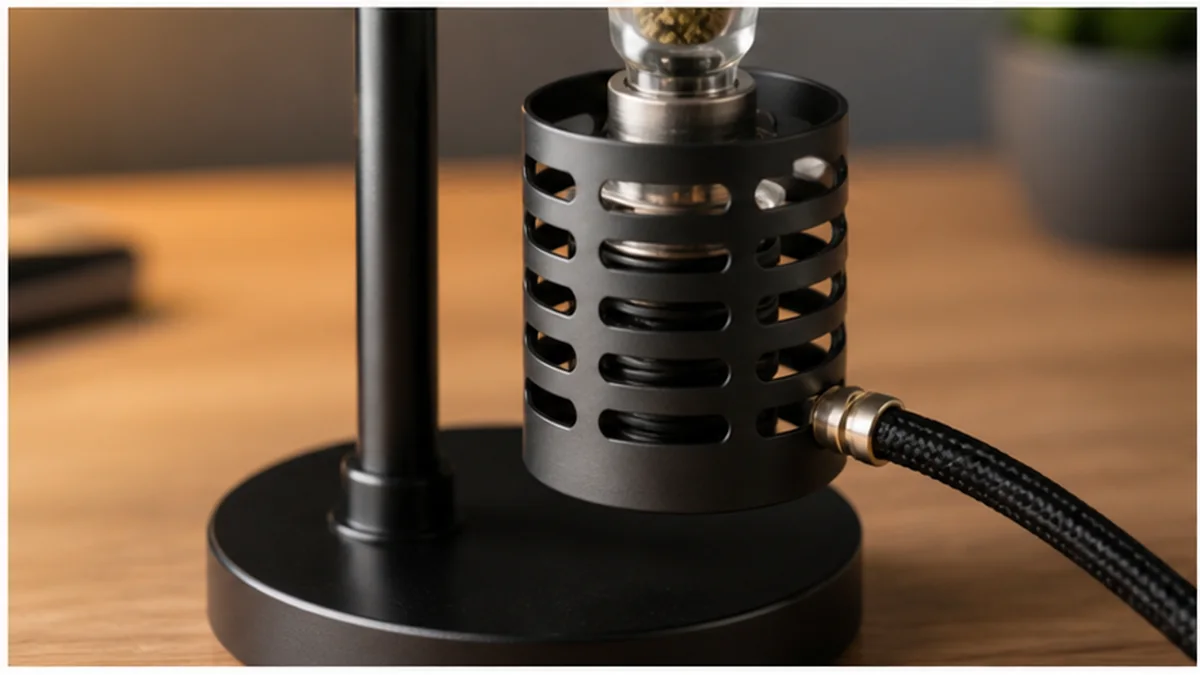
Community discussion around these units is fairly consistent on this point: people who’ve used ball vapes for a while have, more often than not, burned themselves at least once, usually in a small and forgettable way — a fingertip against a hot stem, a wrist grazing the coil housing while reaching for something else on the desk. It’s rarely dramatic, but it happens often enough that it’s worth planning around rather than dismissing. Some setups include a coil guard or cage around the heating element specifically to reduce this risk, and if you’re prone to knocking things over or handling gear while distracted, treating a guard as a near-requirement rather than an accessory is the sensible call.
Stability is the other half of this. A desktop ball vape lives on a table or desk, tethered by its power cord, and it’s not designed to be picked up mid-session the way a portable is. That means the whole setup — base, cord, glass head, water piece if you’re using one — needs a stable, cleared surface and a spot where the cord isn’t a tripping hazard and where pets or kids can’t reach a hot bead. None of this is exotic home-safety thinking, but it’s a categorically different set of considerations than “does this fit in my pocket.”
🧯 5. Cleaning a Ball Vape
Cleaning a ball vape is closer to cleaning dab rig glass than to wiping out a portable’s chamber. The glass head and stem accumulate resin and need regular soaking and rinsing — isopropyl alcohol and coarse salt is the standard approach for glass, the same method used across most of dry-herb vaporizer cleaning guide accessory care, followed by a thorough rinse and full dry before reassembly. The bead and coil assembly itself generally shouldn’t be soaked or submerged; residue there is usually managed by burning it off briefly on a low setting or wiping carefully when the unit is cool, following whatever guidance came with your specific base.
Because there are more individual parts — bead, coil housing, head, stem, and any water piece — there are more surfaces that need attention, and more chances for a piece to end up in the wrong hands (literally) mid-cleaning if it’s still warm. Building a simple routine, cleaning glass after every few sessions rather than letting resin build up, saves real time and keeps the flavor from going stale over weeks of use.
🧼 6. Who Should Choose a Portable Vaporizer Instead
A ball vape is a strong choice for someone with a dedicated space to use it, patience to learn draw technique, and a preference for a home-ritual session over grab-and-go convenience. It’s a poor fit for anyone who needs discretion, portability, or a low-maintenance appliance-style experience.
If you travel, use vapor in shared or public spaces, live with people or pets who’d be at risk around an exposed heating element, or simply want something you press a button on and use without a warm-up ritual, a portable vaporizer is the more honest recommendation. The broader world of AOVAPE vaporizers includes plenty of portable options that deliver clean, consistent vapor with a sealed chamber, no cord, and none of the burn exposure that comes with an open bead. Portables also tend to be far more forgiving of imperfect technique, which matters if you’re not interested in spending a few weeks dialing in a draw.
| Factor | Ball Vape (Desktop) | Portable Dry Herb Vaporizer |
|---|---|---|
| Heating element | Exposed heated bead/coil | Enclosed, sealed chamber |
| Power source | Wall outlet, cord required | Rechargeable battery |
| Portability | Stays on a desk or table | Fits in a pocket or bag |
| Learning curve | Steep; draw technique matters a lot | Shallow to moderate; mostly plug-and-use |
| Burn/heat exposure | Real and ongoing; coil guards help | Minimal; housing stays cool to the touch |
| Cleaning | Multi-part glass care, similar to rig maintenance | Simple chamber and mouthpiece wipe-downs |
| Best for | Home sessions, hands-on users, flavor/vapor enthusiasts | Discretion, travel, low-maintenance daily use |
🎯 7. Frequently Asked Questions
Is a ball vape harder to use than a portable vaporizer?
Yes, at least at first. The exposed bead and manual draw mean technique has a much bigger effect on the outcome than it does with a portable’s more automated heating and airflow.
Do all ball vapes have a coil guard?
Not by default — some setups include one, others treat it as an optional accessory. If burn risk is a concern for you or your household, look for a unit with a guard or plan to add one.
Why do people describe ball vapes as an “end game” setup?
It reflects personal preference among experienced users who’ve put in the time to learn draw technique and value the vapor density and flavor once everything is dialed in — not a technical claim that it outperforms every portable for every user.
Can I move a ball vape around my house during a session?
Not really. It’s tethered to a power outlet and designed to sit in one place, which is part of why it suits a dedicated setup rather than casual, room-to-room use.
How often does a ball vape’s glass need cleaning?
Light rinsing every few sessions and a fuller isopropyl-and-salt soak periodically keeps flavor from degrading and resin from building up, similar to routine dab rig glass care.