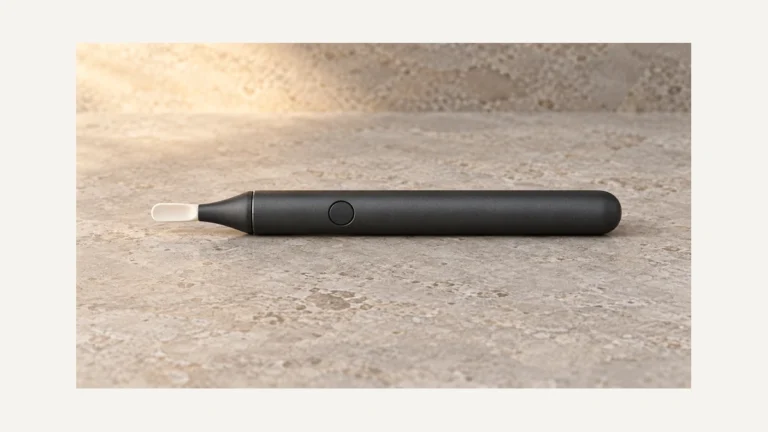
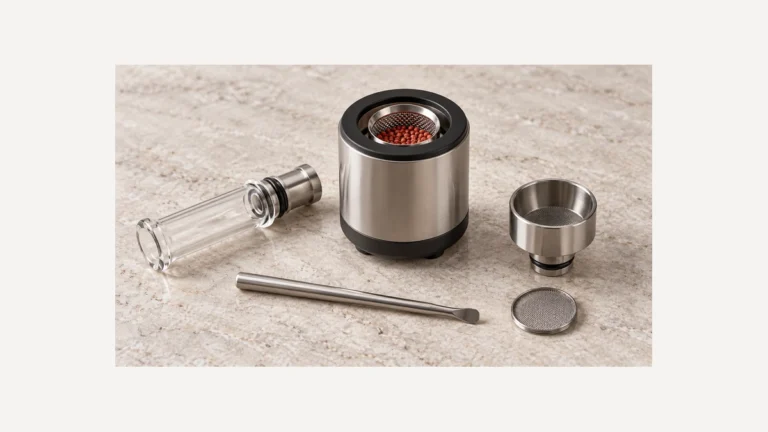
The first time most people load a dab, they find out the hard way that the rig itself is only half the equation. You heat the nail, you watch the oil disappear off the tip of the tool, and then either nothing happens, or way too much happens at once and the hit is a coughing fit instead of a clean pull. That gap between “I bought a rig” and “I can actually use this well” is almost always an accessories problem, not a technique problem. A handful of small tools control heat, protect surfaces, keep things clean, and make the whole setup repeatable instead of a gamble every session. Before diving into pieces and parts, it helps to know what kind of setup you’re working with in the first place — our types of dab rigs breakdown covers that groundwork. What follows is organized by the job each accessory actually does, starting with the one category that trips up almost every beginner: controlling heat and air.
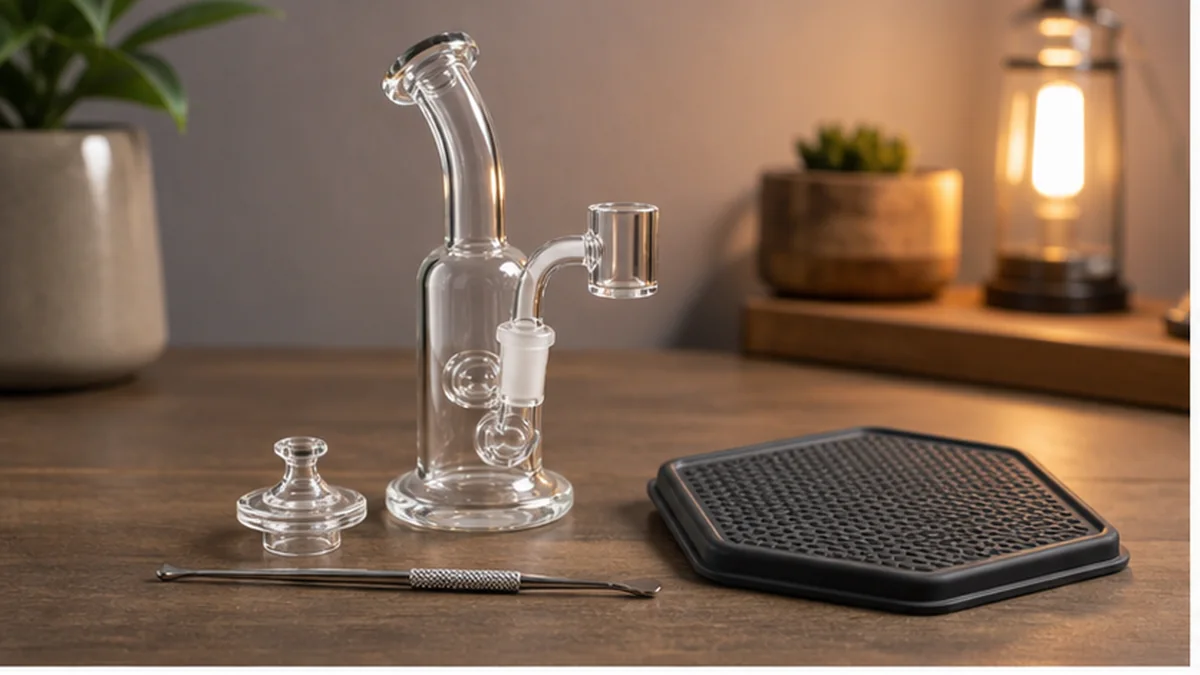
🔥 1. Heat and Airflow Control
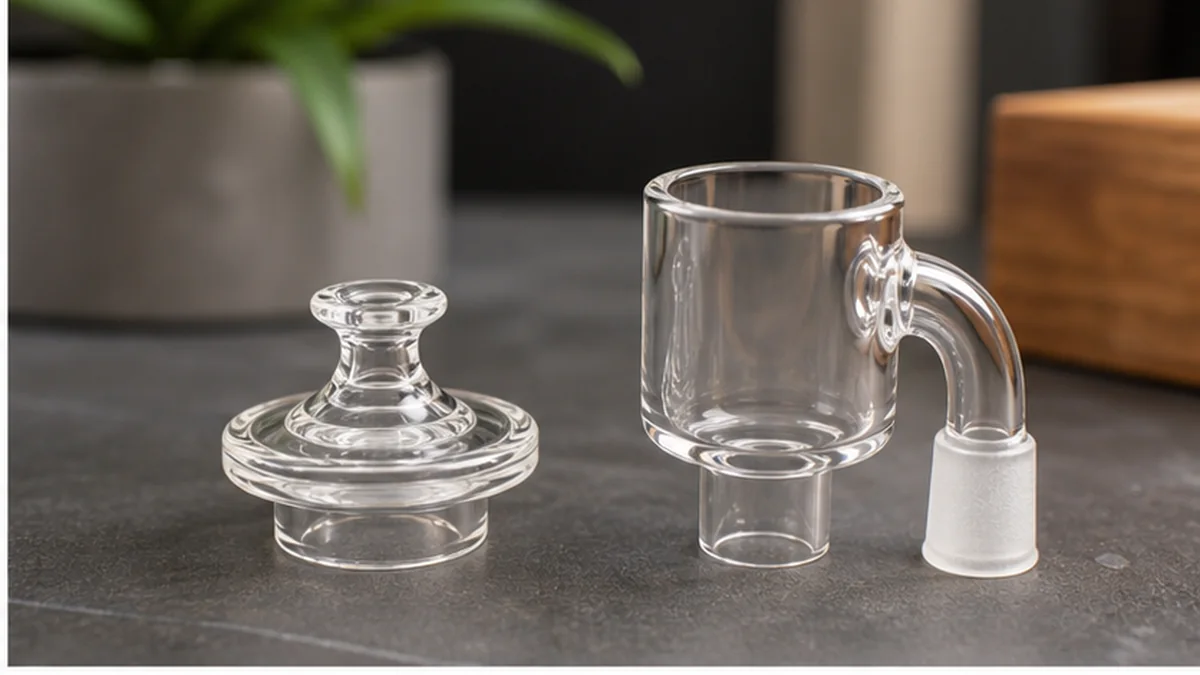
Beginners often assume the banger or nail does all the work and treat the carb cap as decoration. For bangers designed to be capped, the cap is part of the airflow system rather than a cosmetic extra.
🌀 1.1 Why a Matching Carb Cap Matters
A compatible cap restricts and directs incoming air across the heated surface. That changes how air moves through the bucket and can help vapor leave the surface more consistently at the operating range intended for that banger. The useful point is not that every cap improves every setup; it is that a cap and bucket are a pair. If the banger was designed around a particular cap style, leaving it open or using a poor seal changes the airflow the maker expected.
📐 1.2 Getting the Fit Right Without Guessing
The fit question comes up constantly, and for good reason — caps aren’t universal, and a cap that doesn’t seat right on your banger either lets too much air in or doesn’t seal at all, which defeats the point. The practical fix is simpler than it sounds: caps are sized to match banger bucket openings, and most manufacturers list the diameter their caps and bangers are built for. If you bought a rig with a banger already attached, check what diameter that banger’s bucket is before ordering a cap separately, rather than guessing based on the rig’s overall size. Bubble caps, directional caps, and spinner caps all handle airflow a little differently, but none of that matters if the base size is wrong. When in doubt, buying a cap from the same maker as your banger, or explicitly listed as matching that bucket diameter, saves you a return.
🥄 2. Loading and Handling Tools
The second thing that trips people up is handling the concentrate itself. Sticky, runny, or crumbly material behaves differently depending on what it is, and the tool that works for one consistency can be genuinely frustrating for another.
🧲 2.1 Matching the Tool to the Material
A pointed dabber works fine for firmer shatter or budder you can scoop and drop cleanly. Runnier oils tend to slide right off a flat tip and are easier to manage with a tool that has a small scoop or paddle end. Crumbly or drier concentrates sometimes do better with something closer to a small spatula than a pick. If you’ve only ever tried one style and found loading frustrating, the tool might be the mismatch rather than your technique. This is worth sorting out early, because it’s exactly the kind of consistency-driven decision covered in more detail in our wax pen guide, which walks through how different concentrate types behave and what handles them best.
🧰 2.2 What a Starter Set Should Actually Include
People frequently ask for a budget starter set recommendation, and the honest answer is that a good one doesn’t need to be elaborate — it needs to cover the actual bases. That means a rig with a banger that’s already sized to a cap (or a cap bought to match), one loading tool suited to the concentrate you plan to use, and nothing else pretending to be essential. A lot of bundled “complete kits” pad the box with extra tools you won’t reach for and skip the one thing that actually matters, which is confirming the banger and cap are compatible sizes. If a kit doesn’t specify that, it’s worth checking before buying rather than after.
🛡️ 3. Surface Protection
This is the category beginners skip most often, right up until they melt a spot on a table or scorch a stain into a rug that won’t come out.
🛡️ 3.1 Why a Mat Earns Its Spot Early
A non-slip mat can catch sticky residue and define the area around a stable rig, but do not assume every silicone mat is rated for direct contact with a hot banger or torch. Use a manufacturer-rated heat-resistant work surface and a proper stand for any hot component. Keep flame and hot glass away from alcohol, fabric, paper, finished furniture, and the edge of the table.
⏳ 3.2 What Can Reasonably Wait
Where people overspend early is on decorative accessories that don’t change function — patterned mats in premium materials, matching carrying trays, display stands. None of that changes how the rig performs, and it’s fine to skip all of it until the functional side is dialed in. The distinction that matters is protection versus presentation: a mat protects a surface, a stand just displays the rig. Buy the first category first.
🧽 4. Cleaning Gear
This is the accessory category people consistently buy too late, and it’s a pattern worth naming directly: most beginners don’t think about cleaning until residue has already built up enough to affect flavor or airflow, and by then it’s a bigger job than it needed to be.
🧼 4.1 The Swab Habit
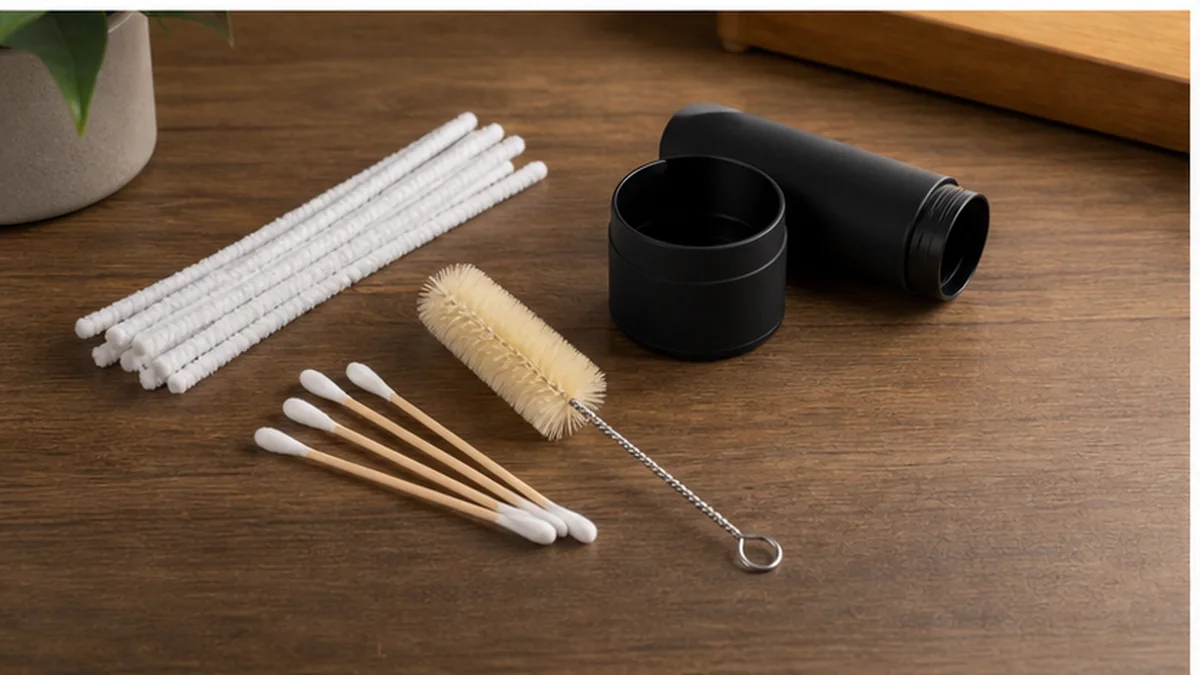
Swabs are useful for removing residue before it hardens, but timing and solvent use must follow the banger maker’s instructions. Never apply flammable isopropyl alcohol near an active torch, flame, hot surface, battery, or energized electronic rig. Extinguish the heat source, let components reach the specified cleaning temperature, ventilate the area, and allow every cleaned part to dry fully before reassembly or heating.
🫧 4.2 Deep Cleaning, on Its Own Schedule
Recycler chambers, percs, and the rig body itself need a less frequent but more thorough clean using a cleaning solution and, ideally, a specific technique to avoid leaving streaks or dulling glass over time. That process is different enough from the daily swab habit that it deserves its own explanation — our dab rig cleaning guide guide covers the full method, including what to avoid so you don’t damage joints or glass finishes. The short version for now: don’t wait until visible residue is heavy to start either habit, because both jobs get harder the longer they’re put off.
📦 5. Storage, Cases, and Replacement Parts
The last category is the one that matters most once you’re past the first few sessions and figuring out how this fits into daily life, especially if you’re not always dabbing in the same spot.
🧳 5.1 Portable Setups and Compatibility
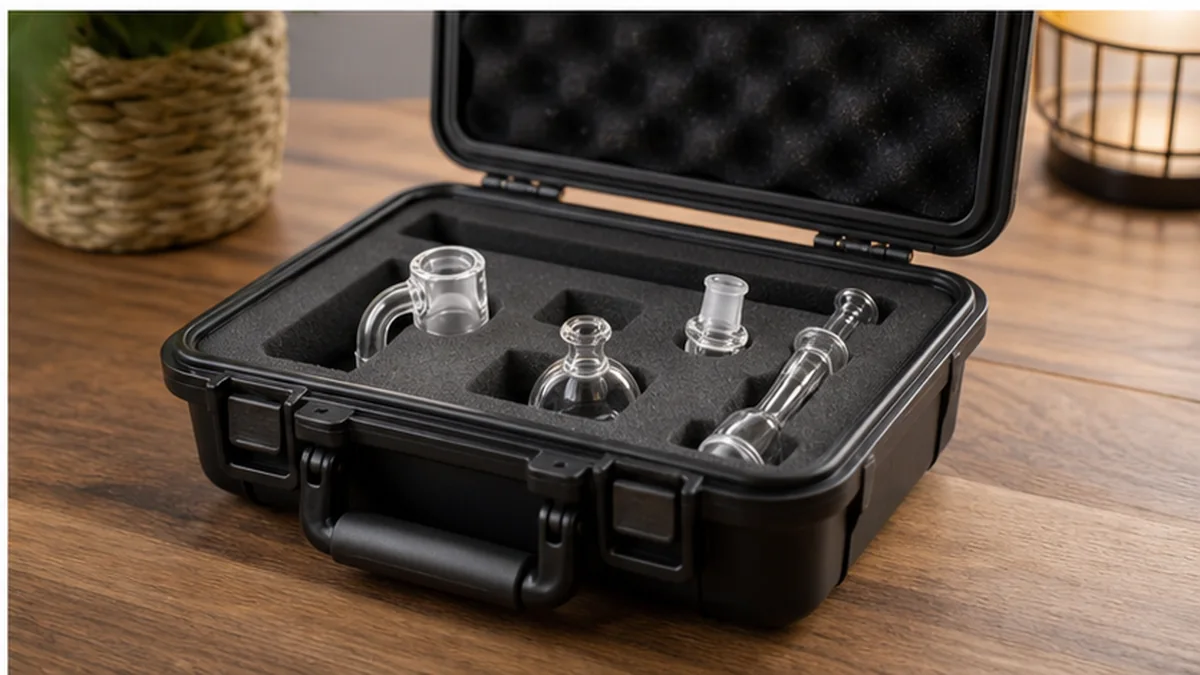
There’s a recurring theme in beginner discussions about piecing together a portable setup from parts bought separately — a smaller rig from one listing, a nectar collector tip from another, a torch that doesn’t quite match either. The appeal is obvious: it’s cheaper and feels customizable. The problem is that joint sizes, banger buckets, and attachment points aren’t standardized across every brand, so a mix-and-match portable kit can end up with pieces that don’t actually seat together correctly. If you’re building a travel or portable setup, it’s worth buying the core connecting pieces — the rig, the banger, and the cap — as a matched set, or at minimum double-checking listed dimensions before combining parts from different sellers. Once that core is confirmed compatible, adding a padded case to protect it during transport is a reasonable next step, and a genuinely useful one if you’re moving the rig around often.
🧩 5.2 Replacement Parts Worth Having on Hand
Glass bangers and caps can chip or break, and seals used by some electronic or modular designs can eventually require replacement. None need to be bought in bulk, but recording the joint, bucket, and manufacturer part details turns a replacement into a deliberate match rather than another guess. Do not keep using chipped glass or a seal that no longer seats correctly. Once the essentials work reliably, custom dab rig guide explains where design choices can be customized without losing compatibility.
✅ 6. A Starter Accessory Plan That Avoids Duplicate Purchases
Before ordering a bundle, write down the rig type, joint connection, banger opening, cap style, and whether any component is electronic. Then assign every proposed accessory a job. If two pieces solve the same problem, buy the simpler compatible option first. If a tool has no clear job in your routine, leave it out until experience proves otherwise.
| Job | Start with | Verify before buying |
|---|---|---|
| Control airflow | One compatible carb cap | Bucket opening and cap profile |
| Handle material | One suitable loading tool | Tip shape and material compatibility |
| Protect the work area | Stable non-slip base and rated hot-part stand | Heat rating and safe clearances |
| Routine cleanup | Approved swabs and cleaning supplies | Manufacturer instructions and solvent safety |
| Store components | Padded case with separated compartments | Internal dimensions and dry storage |
This plan also makes upgrades easier. You can tell whether a new cap changes airflow, a different tool makes loading cleaner, or a case actually protects the fragile pieces because each purchase has a defined purpose. Decorative trays, extra cap shapes, and display pieces can wait until the basic system is compatible, stable, and easy to clean.
❓ 7. Quick Questions Before You Complete the Kit
🧢 7.1 Can One Carb Cap Fit Every Banger?
No. Caps differ in base diameter, profile, seal, and the direction in which they move air. Match the cap to the specific bucket or use the pairing stated by the manufacturer. A cap that merely rests on top is not necessarily controlling airflow as intended.
🧴 7.2 Do You Need Solvent for Every Cleanup?
Not necessarily. Fresh residue may be removable with an approved dry swab, while cured buildup may require a solvent or soak allowed by the component maker. The important distinction is not “daily versus monthly”; it is whether the chosen method is compatible with the material, seals, electronics, and temperature of the part. Keep flammable solvent away from ignition sources and let parts dry completely.
🧳 7.3 What Should a Dab Rig Case Separate?
A useful case prevents glass, metal tools, and powered components from striking one another. It should hold the rig without pressure on joints, isolate the banger and cap, contain cleaned tools, and keep batteries or electronic bases away from loose metal objects. Store only cool, clean, dry parts; a padded case does not make hot or leaking hardware safe to pack.
The pattern across all of this is the same: the accessories that matter early are the ones tied to function — airflow, loading, surface protection, and cleaning — while anything purely decorative can wait indefinitely. Get the carb cap and banger matched, get a mat under the rig, keep swabs within reach, and confirm sizing before combining parts from different sources. Everything past that is refinement, not requirement. If you’re ready to put together a setup with pieces that are sized to work together from the start, AOVAPE’s dab rig accessories selection is a straightforward place to start.