🔍 1. The Inbox Flood That Follows a Single Wholesale Inquiry
Send one message asking about wholesale vape suppliers and watch what happens next. Within a day, a dozen new contacts appear — some through the original platform, others through WhatsApp numbers nobody gave out, still others through cold emails that somehow have your company name spelled correctly. Every one of them claims to be “the factory.” Every one of them can ship “this week.” Every one of them has a price that beats the last one by a few cents.
This is the normal opening move in vape hardware sourcing, and it is also where a lot of buyers get into trouble. The flood isn’t a sign of a competitive market working in your favor. It’s a sign that inquiry data gets shared, resold, and re-quoted by parties who may never touch a production line. Somewhere in that pile of messages there might be a genuine manufacturer, a legitimate distributor, or a trading company with a real relationship to a factory. There might also be a reseller repackaging someone else’s stock, a broker with no fixed address, or an outfit that will happily take a deposit and go quiet.
The skill that separates experienced buyers from first-timers isn’t knowing a secret list of good factories. It’s knowing what to ask before money moves, and knowing which answers actually reduce risk versus which ones just sound reassuring. That’s what the rest of this piece walks through. For more context, see the related AOVAPE hardware guide.
🧩 2. What to Verify Before You Ever Request a Production Order
A low unit price is the easiest number in a quote to fake, understate, or attach conditions to later. Before a production order gets discussed, there’s a shorter and more useful list of things worth confirming first.
🧩 2.1 Legal Identity and Registered Scope
Ask for the company’s registered business name, registration number, and the address tied to that registration — not a showroom address, the legal one. A real manufacturer or distributor will provide this without hesitation, because it’s public information in most jurisdictions anyway. What you’re checking for is consistency: does the name on the business license match the name on the bank account you’d be wiring to? Does the registered scope of business actually cover electronics manufacturing or vape hardware trading, or is it registered for something unrelated, with vape sales added informally?
This single step filters out a surprising share of the inbox flood. Traders operating without a matching legal entity, or asking you to wire funds to a personal account “for convenience,” are showing you exactly how much protection you’d have if something went wrong.
🧩 2.2 Product Scope and Manufacturing Reality
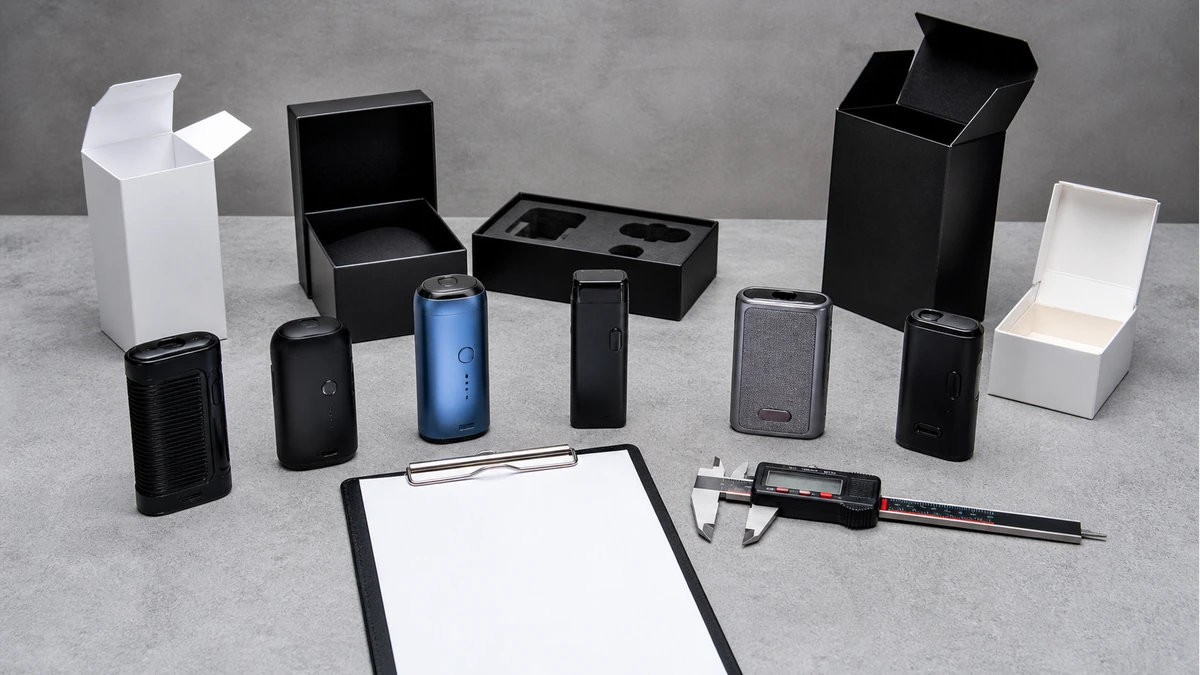
The next question is simpler than it sounds: does this supplier actually make what they’re quoting, or are they reselling someone else’s catalog under their own name? Ask directly which product categories are made in-house versus sourced from other factories and relabeled. Neither answer disqualifies a supplier automatically — plenty of legitimate distributors resell hardware they didn’t manufacture — but you need to know which one you’re dealing with, because it changes who’s actually responsible when a batch has a defect rate problem or a component substitution nobody mentioned.
If you’re evaluating a supplier that claims direct manufacturing capability, it’s worth reviewing how to evaluate a vape hardware manufacturer’s actual production setup rather than taking the claim at face value, since photos of a factory floor prove very little on their own.
🧩 2.3 Communication Patterns Before Commitment
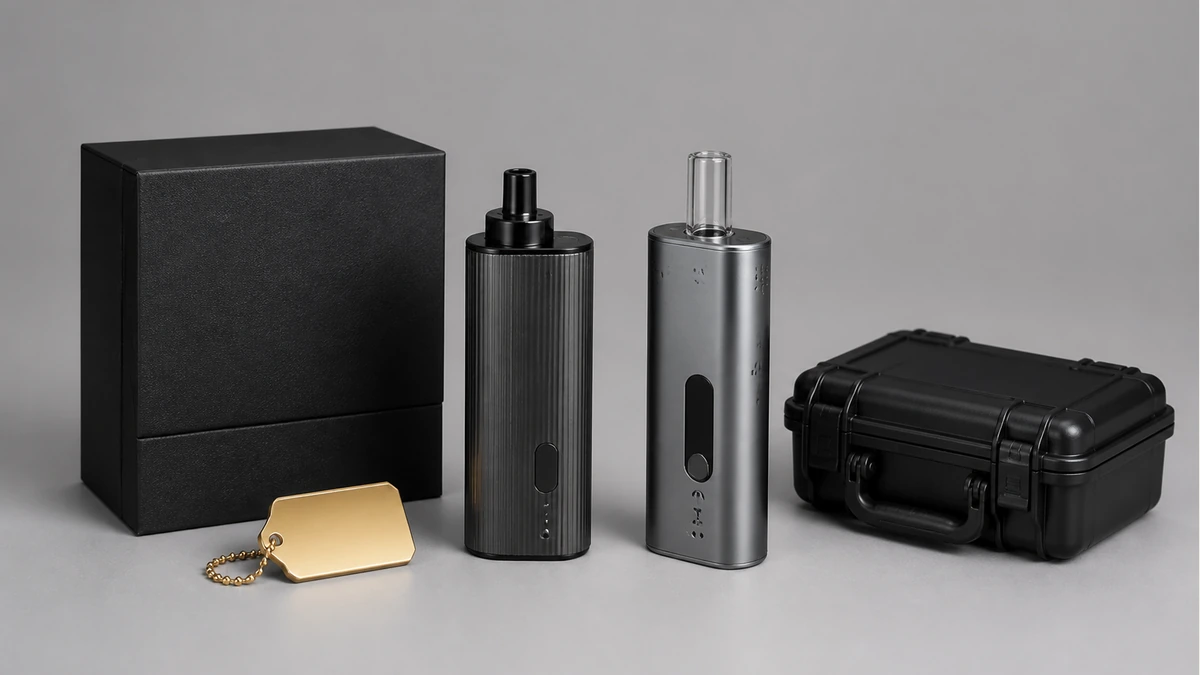
Pay attention to how a supplier answers technical questions, not just how fast they reply. A supplier who can tell you which specific components vary between two similar-looking devices, or who pushes back on an unrealistic timeline instead of agreeing to everything, is signaling operational knowledge. A supplier who answers every question with the same enthusiastic “yes, no problem” regardless of what you asked is not.
⚙️ 3. Why Samples Are Necessary but Never Sufficient
Every serious sourcing conversation eventually gets to samples, and for good reason — there’s no substitute for holding the actual product, checking the fit and finish, and running it through basic use. But samples answer a narrower question than most buyers assume. A sample tells you what one unit, built with above-average care and likely hand-selected, looks and performs like. It does not tell you what unit number 4,000 in a production run of 5,000 will look like, and it does not tell you whether the factory that built the sample is the same one that will build your order.
This gap is one of the most common frustrations that shows up in retailer and distributor discussions online: a sample arrives, everyone is satisfied, an order is placed, and the bulk shipment doesn’t match — different internals, a supplier substitution nobody disclosed, or a quality drop that only becomes visible at volume. None of that means online complaints should be treated as proof of a technical standard or a specific failure rate; anecdotal accounts vary wildly in reliability and context. What they do reliably show is a pattern worth planning around: sample approval and bulk consistency are two separate problems, and treating them as one is where buyers get caught.
A few practices close some of that gap, though none close it completely:
- Request that the sample come from current production stock rather than a specially built unit, and ask directly whether it did.
- Keep a labeled, dated reference sample on hand so any bulk shipment can be compared side by side, not from memory.
- Ask what inspection step happens between the sample approval and the start of mass production — is there a pre-production sample, a golden sample, or nothing at all between “yes we can make this” and “here’s your container”?
- Clarify in writing that the approved sample is the binding reference for the order, so any deviation has a documented baseline to be measured against.
None of this replaces a real relationship with a supplier who has a reason to protect their reputation with you over multiple orders. Samples are the entry point to that relationship, not proof that it exists.
🧼 4. Local Distributors vs. Direct Factories
One of the more persistent questions among buyers exploring wholesale vape suppliers is whether it’s better to work through a local or regional distributor, or to go directly to an overseas factory. There isn’t a universally correct answer — it depends on order volume, how much customization is needed, how much time the buyer has to manage the relationship, and how much risk tolerance the business actually has, not how much it thinks it has on paper.
| Factor | Local / Regional Distributor | Direct Factory |
|---|---|---|
| Minimum order size | Usually lower, more flexible | Typically higher, less negotiable early on |
| Unit pricing | Includes distributor margin | Generally lower per unit at volume |
| Customization / OEM options | Limited to what the distributor already stocks or can arrange | Broader, since production decisions happen on-site |
| Communication and time zone | Usually easier, faster response times | Often slower, more time-zone friction |
| Legal recourse if something goes wrong | May be easier under local jurisdiction | More complex, often depends on contract terms |
| Inventory lead time | Faster if distributor holds local stock | Longer, tied to production and shipping schedules |
Buyers running smaller retail operations or testing a new product category before committing to volume often find a distributor relationship easier to manage, even at a higher per-unit cost, simply because the operational overhead is lower. Buyers building a private-label program, or ordering at a scale where per-unit savings compound meaningfully, tend to move toward direct factory relationships — often exploring what’s actually achievable through options like OEM and ODM manufacturing once they understand their own volume and customization needs well enough to negotiate from a position of knowledge rather than guesswork.
Neither path is inherently safer. A distributor with a vague return policy and no real accountability is not a lower-risk choice just because it feels closer. A factory with a poorly drafted contract and no dispute resolution clause isn’t automatically riskier just because it’s farther away. The comparison that matters is specific, not geographic.
📏 5. Records, Change Control, and the Costs Nobody Quotes Up Front
Once a supplier clears the basic legitimacy checks and a sample has been approved, the remaining risk lives in the details that don’t show up in a quote. This is where recurring stories among distributors and retailers — the kind that circulate in trade forums and online communities — tend to converge on the same handful of pain points, even though individual accounts should never be treated as confirmed technical fact.
🧩 5.1 Change Control
Ask directly: if a component, supplier, or manufacturing process changes after an order is approved, will you be notified before it ships? A surprising number of quality complaints trace back not to a defect, but to an undisclosed substitution — a different battery cell, a revised heating element, a plastic supplier swap — made without the buyer’s knowledge because nobody had agreed it required one. Getting this in writing, even informally, gives you something to point to later.
🧩 5.2 Packaging and Compliance Documentation
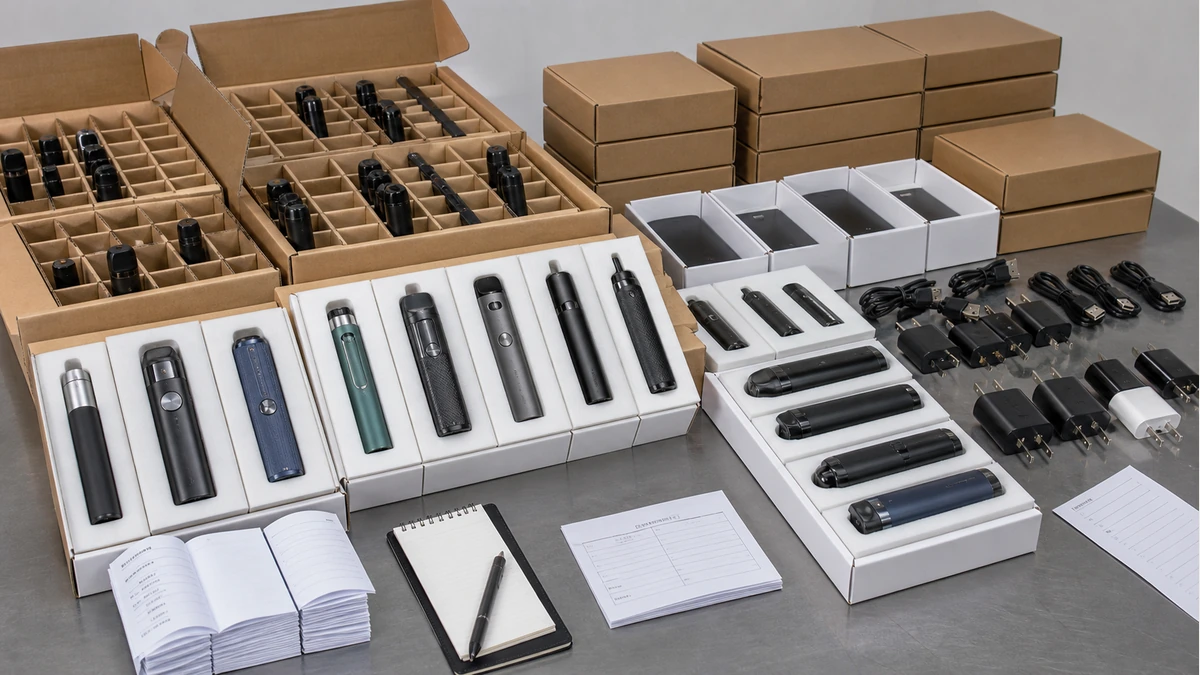
Packaging is not cosmetic. Ask what documentation accompanies a shipment, what packaging specifications are locked in versus flexible, and whether private-label packaging changes require a separate approval round. Confirm who is responsible for ensuring packaging and product documentation meet the requirements of the destination market — this is a shared responsibility in practice, but it should not be an assumed one.
🧩 5.3 Landed Cost, Not Unit Cost
The quoted unit price is the beginning of a cost conversation, not the end of one. Freight, duties, insurance, payment terms, and any inspection fees change the real number substantially, and suppliers vary widely in how transparent they are about which of these costs fall on the buyer by default. Asking for a landed-cost breakdown before comparing two quotes side by side avoids the common trap of choosing the “cheaper” supplier only to find the actual delivered cost was higher once every line item is accounted for.
🧩 5.4 Support After the Order Ships
Ask what happens after the container leaves the port. Is there a named contact for post-shipment issues, or does support disappear once payment clears? For buyers building out a retail or distribution line, understanding what ongoing support looks like — including how a supplier handles questions about specific hardware like vape pens already in market — is a reasonable thing to ask about before the first order, not after a problem forces the question.
🔄 6. Frequently Asked Questions
Is the lowest quoted price ever a reliable signal of quality?
Not on its own. Price needs to be evaluated alongside legal identity, product scope, sample consistency, and landed cost together, not as a standalone number.
How many samples should a buyer request before placing a bulk order?
There’s no fixed number that applies to every situation. What matters more is confirming the sample came from current production and establishing it as the documented reference point for the eventual bulk order.
Should a buyer avoid suppliers who resell rather than manufacture?
Not automatically. Many legitimate distributors resell hardware they didn’t build. The important part is knowing which role a supplier plays, since that affects accountability if something goes wrong.
Are online complaints about wholesale vape suppliers a reliable technical reference?
No. They’re useful for spotting recurring patterns and vocabulary buyers use to describe problems, but individual accounts vary in accuracy and context and shouldn’t be treated as verified fact.
🧰 7. The Decision That Actually Matters
Finding wholesale vape suppliers isn’t difficult — the inbox proves that within a day. Finding one worth a second order is the actual task, and it comes down to a short set of concrete checks: a verifiable legal identity, an honest answer about what’s manufactured versus resold, a sample treated as a documented baseline rather than a final answer, and clear terms on change control, packaging, and landed cost before any deposit moves. Buyers who work through those points methodically end up with fewer surprises than buyers who simply wait for the best price to arrive in their inbox.
📚 8. Sources and Reader Questions Reviewed
- U.S. CPSC: Business Guidance
- Reddit discussion 1mr3mja (reader-language research only)
- Reddit discussion 129db7j (reader-language research only)
- Reddit discussion 1tgp9q7 (reader-language research only)
- Reddit discussion 1ve71ge (reader-language research only)
- Reddit discussion 1upajyo (reader-language research only)