🔍 1. A Wall of Coils That Look the Same but Aren’t
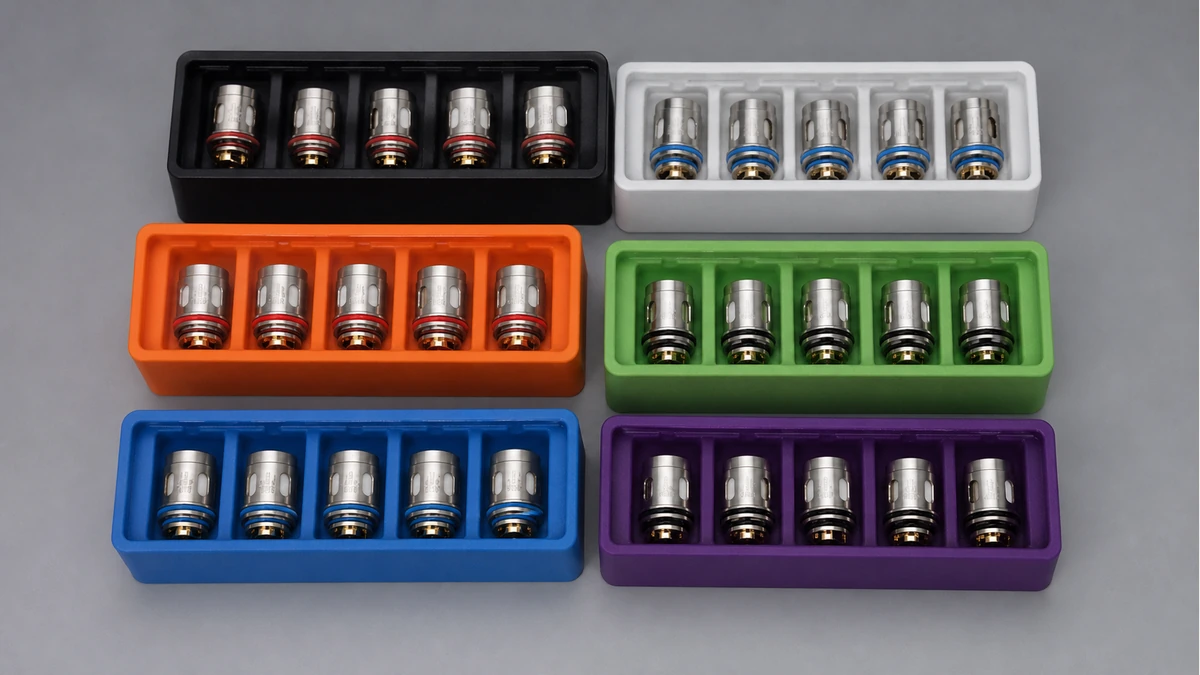
Stand in front of a well-stocked vape counter and you’ll see it: a pegboard covered in small cardboard boxes, each holding a coil that looks, from three feet away, essentially identical to the one next to it. Same general shape, same brass base, same faint gleam of metal mesh or wicking material visible through the airholes. The resistance value is printed in tiny text somewhere on the box, along with a wattage range and a coil code that means nothing until you already know what it means. It’s easy to grab the one that seems close enough to what you remember buying last time and assume it will work. That assumption is where most coil-compatibility problems start.
Coils for a vape are not a universal category the way batteries or micro-USB cables have become. A coil is a small, precisely engineered subassembly: a resistance wire wound to a specific value, a wicking material sized to a specific liquid-flow rate, a base with contact points positioned to match a specific device’s pins, and an outer housing with o-rings cut to a specific tank diameter. Every one of those dimensions has to agree with the device you’re putting it into. Visual resemblance tells you almost nothing about whether they actually will.
🧩 2. Platform Family Comes First, Not Package Art
Manufacturers design coils around a platform — a specific tank or pod system, sometimes shared across a handful of related devices, sometimes exclusive to one. Coils in the same family typically share a base diameter, a threading or snap-fit method, a contact-pin layout, and a housing shape, even when the internal resistance and wicking vary from one variant to the next within that family. This is why a store shelf can display six or eight different coils that are all, technically, compatible with the same tank, alongside coils that look almost the same but belong to an entirely different platform and won’t seat correctly no matter how hard you press.
The safest way to think about it isn’t “which coil fits this hole” but “which coil family does this device belong to.” That’s a decision made by the tank or pod manufacturer, not by coil shape alone. Two coils can share a diameter and a thread pitch and still be electrically or mechanically wrong for each other’s devices, because the pin depth, the airflow channel position, or the wicking geometry doesn’t line up. If you’re unsure whether a device even uses a separate atomizer coil in the traditional sense — some simpler pod systems integrate the coil into a sealed pod rather than a swappable head — it’s worth understanding what the device is actually built around before shopping for parts; a general primer on vape pens and how their component layout differs from box-mod tank systems is a reasonable starting point if you’re not sure which category your device falls into.
Retailers and packaging usually identify the family by referencing the tank or pod line the coil was designed for, not by a generic descriptor like “sub-ohm coil” or “mesh coil.” Those terms describe a coil’s electrical and structural style, not its fitment. A mesh coil built for one platform and a mesh coil built for another can be electrically similar and physically incompatible at the same time.
⚙️ 3. Reading the Markings That Actually Matter
Once you’ve confirmed the family, the packaging and the coil itself carry a small set of markings that tell you whether a specific unit is the right one. Learning to read them takes the guesswork out of a purchase that otherwise relies on memory and assumption.
🧩 3.1 The Coil Code or Model Designation
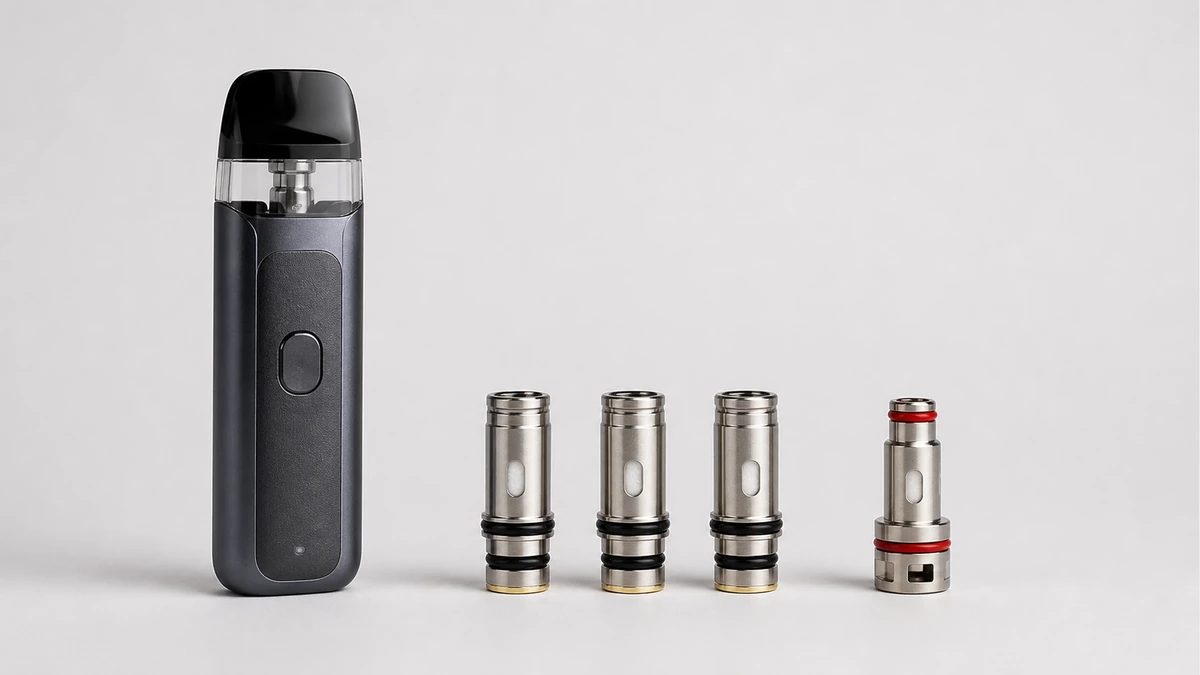
Most coils are stamped or printed with an alphanumeric code — sometimes on the coil base itself, sometimes only on the box. This code is the actual identifier a store clerk or a manufacturer’s support line will ask for. It’s more reliable than resistance value alone, because a single platform often sells several coils at different resistances under the same family code, distinguished only by a suffix or a final digit. If you’ve lost the original packaging, the coil base is the next place to check; a magnifying glass or a phone camera zoomed in on a well-lit photo is often enough to make out worn text.
🧩 3.2 Resistance Value
The resistance, expressed in ohms, is printed on the coil and its box and tells you how much electrical resistance the heating element presents to the battery. This number matters for two reasons: it determines whether the coil is suited to a direct-lung or mouth-to-lung style of draw, and it determines the power range the device should be set to when firing it. A resistance value alone doesn’t confirm fitment — a coil can carry the “correct” resistance for your habits and still be the wrong physical part for your tank — but it’s essential once you’ve already confirmed the family match, because it tells you how to power the coil safely and effectively.
🧼 4. Matching Resistance to a Power Range
Every coil is designed to operate within a manufacturer-recommended wattage window, and that window is tied directly to its resistance. Lower-resistance coils, generally used for sub-ohm, direct-lung vaping, are built to handle and typically require higher wattage to vaporize liquid efficiently through their wicking. Higher-resistance coils, more common in mouth-to-lung and pod-style setups, are designed around lower wattage and lower airflow, matching a tighter, cigarette-like draw.
The recommended range printed on the coil or its packaging isn’t a marketing suggestion — it reflects testing done by the coil’s manufacturer to determine where the wicking material can keep the wire saturated with liquid without scorching, and where the wire itself performs consistently without excessive current draw. Running a coil meaningfully below its recommended range often produces weak vapor production and an underwhelming draw because the wire isn’t reaching an effective operating temperature. Running it above the range risks dry, burnt hits as the wicking fails to deliver liquid fast enough to keep pace with the heat, and in poorly designed or already-worn coils, it can shorten the coil’s working life considerably.
This is also where device and coil have to agree in a second, separate way from physical fitment. A mod or pod system has its own supported wattage range, and if that range doesn’t overlap comfortably with the coil’s recommended window, the pairing won’t perform well even when the coil fits perfectly and reads the correct resistance on a meter. Before buying replacement coils in bulk for a device, it’s worth confirming that the device’s output range and the coil’s recommended range actually intersect, rather than assuming any coil rated for “the same tank” will behave identically at the wattage you’re used to running.
Coil construction also affects how a given resistance behaves in practice. Ceramic and quartz heating elements, both used across different coil styles, distribute heat differently and respond differently to a given wattage setting even at similar resistance values — a distinction covered in more detail in this comparison of quartz coil vs ceramic heating elements, which is useful context if you’re choosing between coil styles rather than just replacing a worn one with an identical part.
📏 5. Why a Coil That Fits Can Still Leak or Fail to Make Contact
This is the scenario that generates most of the confused questions in online vaping forums: a coil that appears to match everything — the tank, the resistance, the code on the box — installed correctly, and the device still leaks, gurgles, or shows an error instead of firing. The physical dimensions being correct doesn’t guarantee a correct seal or a correct electrical connection, and there are a few specific reasons why.
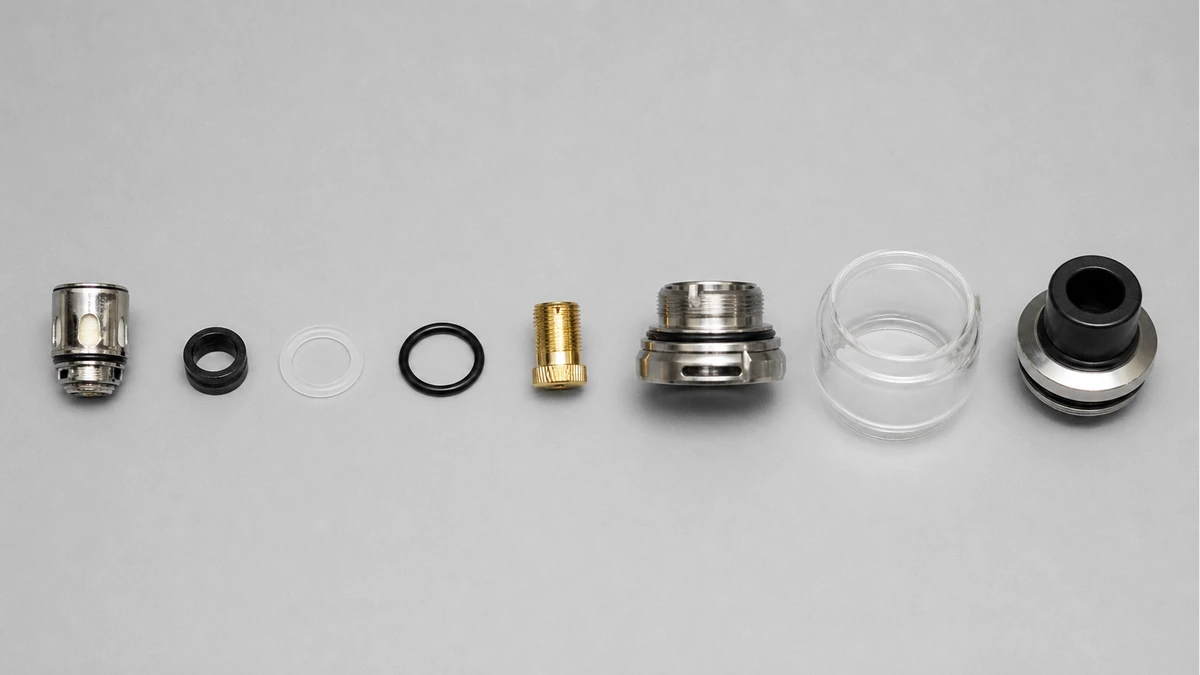
- Worn or misseated o-rings. The rubber seals around the coil base and the tank’s glass section compress slightly every time a coil is swapped. A coil from a slightly different production batch, or one that’s been sitting in stock for a while, can have o-rings just firm enough or just soft enough to leave a microscopic gap. Liquid finds that gap before you notice it visually.
- Incomplete threading or seating. Coils that thread or snap in can feel “seated” a half-turn before they’re actually fully home, especially if there’s a slight resistance from a stiff new o-ring. A coil that isn’t fully seated won’t complete the electrical contact reliably, which is often what triggers a no-atomizer or connection error rather than the device simply refusing to fire. If you’ve seen that specific message on a screen and weren’t sure what it meant or what it implied about the coil versus the device, this explanation of what “no atomizer” means walks through the most common causes.
- Priming that wasn’t actually complete. A new coil needs its wicking fully saturated before first use. A coil that looks correctly filled from the outside can still have a dry patch inside the wick channel, which produces a burnt taste on the first few pulls that has nothing to do with fitment or resistance and everything to do with not waiting long enough after filling.
- Liquid viscosity mismatch. Coils with tighter airflow and smaller wicking ports, generally built for mouth-to-lung use, don’t always keep pace with thicker liquids the way a wider-port, direct-lung coil does. This isn’t a defect in either coil — it’s a mismatch between the wicking design and what’s being poured through it.
None of these issues show up when you’re simply checking whether the box says the right tank name. They show up during use, which is why a coil that passes every check on the shelf can still disappoint once it’s installed.
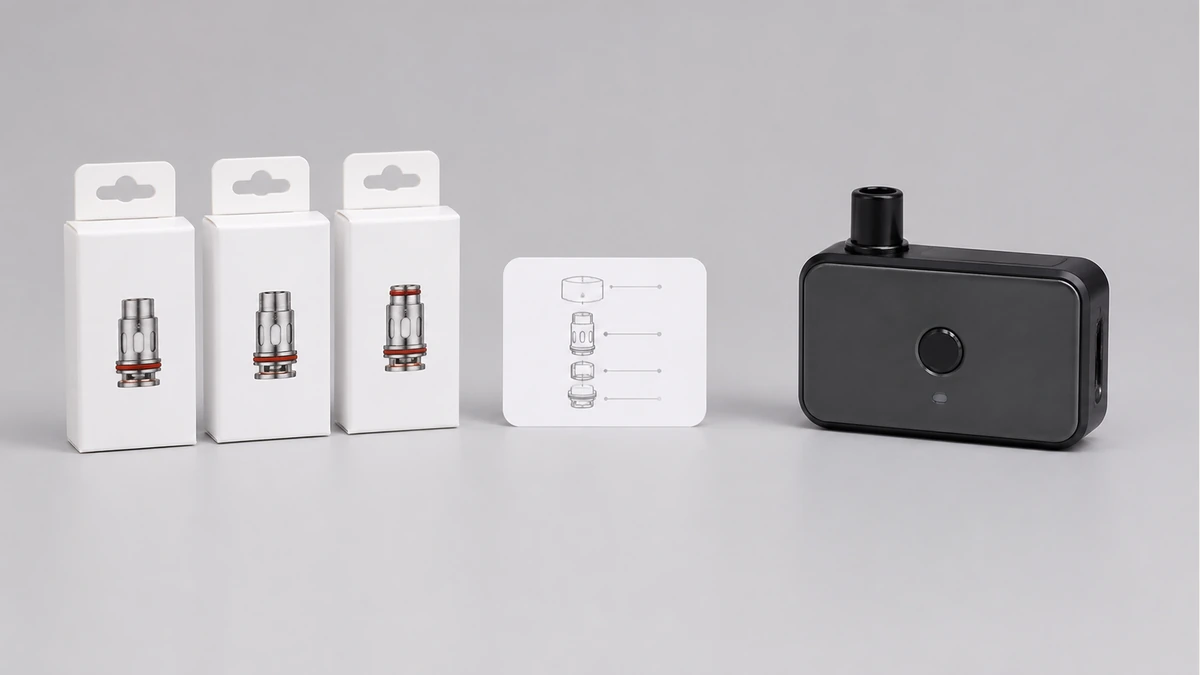
🔄 6. A Short Sequence Before You Buy Replacement Coils
A few minutes of checking before purchase avoids most of the frustration described above. It’s a short sequence, and once you’ve done it for a given device once, you generally only need to repeat step three when you’re ready to try a different resistance.
- Identify the exact tank or pod name your device uses — not the device’s own model name, since one device can sometimes be sold with different tank options.
- Confirm the coil family or code printed on your current coil, or on the box it came in, matches what you’re about to buy.
- Check the resistance value against the wattage range your device supports, and against the draw style — mouth-to-lung or direct-lung — you actually use.
- Inspect the new coil’s o-rings before installing it; replace them from a spares kit if they look dry, cracked, or oddly stiff.
- Install the coil fully, prime it by adding a few drops of liquid directly into the wicking ports, and let it sit for several minutes before the first pull.
🧰 7. Frequently Asked Questions
Are vape coils interchangeable across devices?
Only within the same coil family. Devices that share a tank or pod platform can usually share coils across resistance variants, but coils are not interchangeable across unrelated devices even when the outer shape looks similar.
How do I know which coil family my device uses?
Check the tank or pod name — not the device’s marketing name — and look for that name or its associated coil code on the coil packaging. The original box that came with the device is the most reliable reference if you still have it.
Does a higher resistance always mean lower vapor production?
Not directly. Vapor production depends on the wattage actually applied, the wicking design, and airflow, not resistance alone. Resistance mainly tells you what wattage range the coil was engineered to run within.
Can I run a coil outside its recommended wattage range if the device allows it?
The device may allow it, but performance and coil life are likely to suffer — either weak vapor at too-low wattage or dry, burnt hits at too-high wattage, since the wicking wasn’t designed to keep pace outside that window.
The coil wall at a shop isn’t confusing because the products are poorly made — it’s confusing because compatibility is decided by several independent factors at once: platform family, physical seals, electrical range, and liquid path, all of which have to agree before a coil that merely fits will actually perform. Check the family first, read the resistance and wattage markings second, and treat a snug physical fit as necessary but never sufficient. That order of operations is what separates a coil swap that just works from one that leaves you troubleshooting a leak or an error message an hour later.