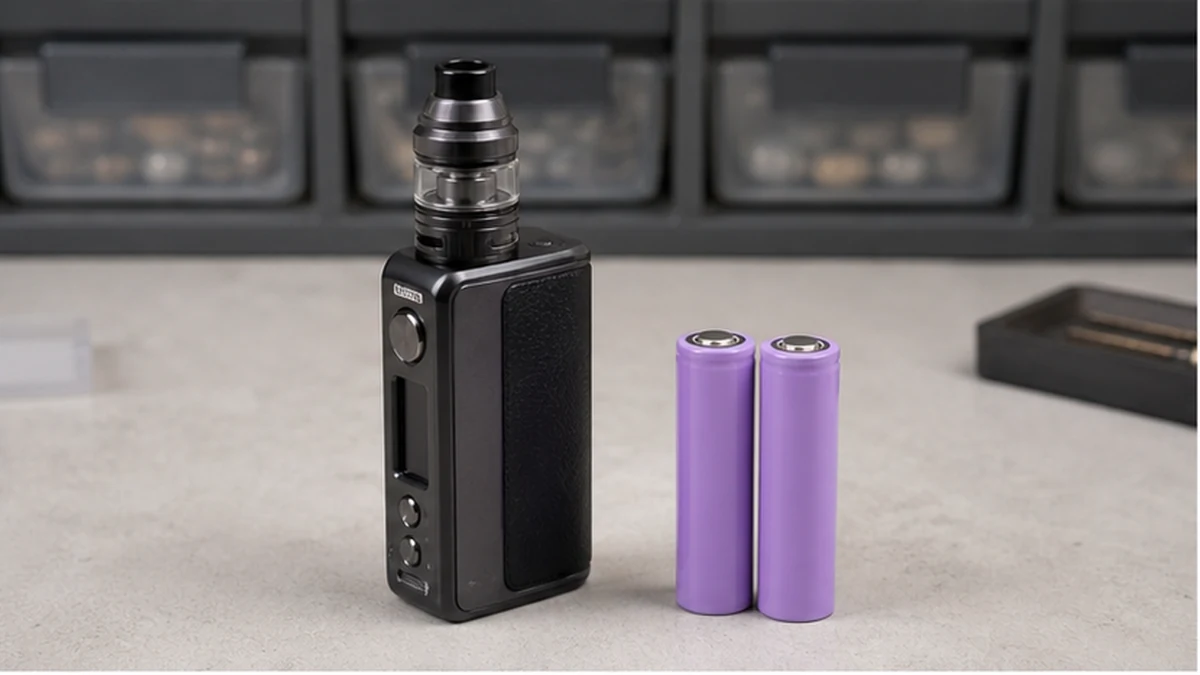
🔍 1. What “18650” Actually Describes
You pop the door on a mod, pull out the cell, and see a wall of options online—flat top, button top, high drain, “high capacity,” wrapped in half a dozen different colors and brand names you don’t recognize. None of that visual noise tells you what the number stamped on the wrap actually means. It’s a size code, not a performance grade.
18650 is a physical format: roughly 18mm in diameter and 65mm long, with the trailing zero indicating a cylindrical cell. That’s it. The designation says nothing about chemistry, continuous discharge capability, or how the cell will behave under load in a specific device. Two 18650 cells from two different manufacturers can share the exact same dimensions and be built for entirely different jobs—one engineered for steady, moderate current in a flashlight, the other engineered for the sharp current pulls a regulated or mechanical vape device asks for.
This is where a lot of confusion starts, and it’s a recurring theme in battery discussions among vape hardware owners: people assume that because a cell physically fits the battery bay, it’s appropriate for the device. Fit and suitability are two different questions. The format tells you the cell will sit in the tray correctly. It tells you nothing about whether the manufacturer built that cell to deliver the current your device draws, or whether the wrap and internal protection are intact enough to do so safely.
Every legitimate 18650 cell carries manufacturer specifications—capacity, continuous discharge rating, and sometimes pulse discharge figures—published by the actual cell manufacturer, not by whoever printed the outer wrap. If you can’t trace a cell back to a real manufacturer datasheet, you’re buying a guess with a size code on it.
🧭 2. Why the Printed mAh Number Isn’t the Whole Story
Capacity, measured in milliamp-hours, tells you how much energy a cell can store—essentially how long it can run before it needs a recharge. It’s the number most people fixate on when comparing cells, because it’s the easiest one to understand at a glance: bigger number, more juice. But capacity and current delivery are two separate engineering properties, and cell manufacturers routinely trade one for the other.
A cell built for high capacity generally uses a chemistry and internal construction optimized for energy density, not for pushing large amounts of current quickly. A cell built for high continuous discharge is optimized to deliver current steadily without excessive heat buildup, often at the cost of some capacity. This is a well-established tradeoff in cylindrical cell design, and it’s why a cell with a large capacity figure isn’t automatically the “better” choice for every device.
For vape hardware specifically, the number that matters alongside capacity is the continuous discharge rating, typically expressed in amps. This figure represents the current a cell is rated to sustain continuously without exceeding its safe operating limits. A device that draws current at or near a cell’s continuous rating for extended periods is operating that cell at its designed edge; a device that regularly exceeds it is asking the cell to do something the manufacturer didn’t build it to do safely.
The practical takeaway is that mAh and discharge rating need to be read together, not in isolation, and both numbers should come from the actual cell manufacturer rather than from resealed packaging. If you want a deeper breakdown of what the capacity figure specifically measures and how it relates to runtime, this explanation of what mAh means on batteries covers that ground in more detail.
🧩 2.1 Reading a Cell Beyond the Headline Number
When you’re evaluating a cell for a specific device, a few habits help separate real specifications from marketing wrap text:
- Look for a manufacturer name and model number you can independently trace, not just a capacity figure printed on the wrap.
- Check whether the continuous discharge rating is stated in amps, not just implied by vague marketing language like “high drain.”
- Treat any cell where capacity and discharge rating both seem unusually high as worth scrutinizing further—those two properties don’t typically maximize together in the same cell.
- Remember that a device manual’s stated minimum discharge rating is a floor, not a suggestion.
⚙️ 3. Wraps, Insulators, and Vents — Reading the Outside of the Cell
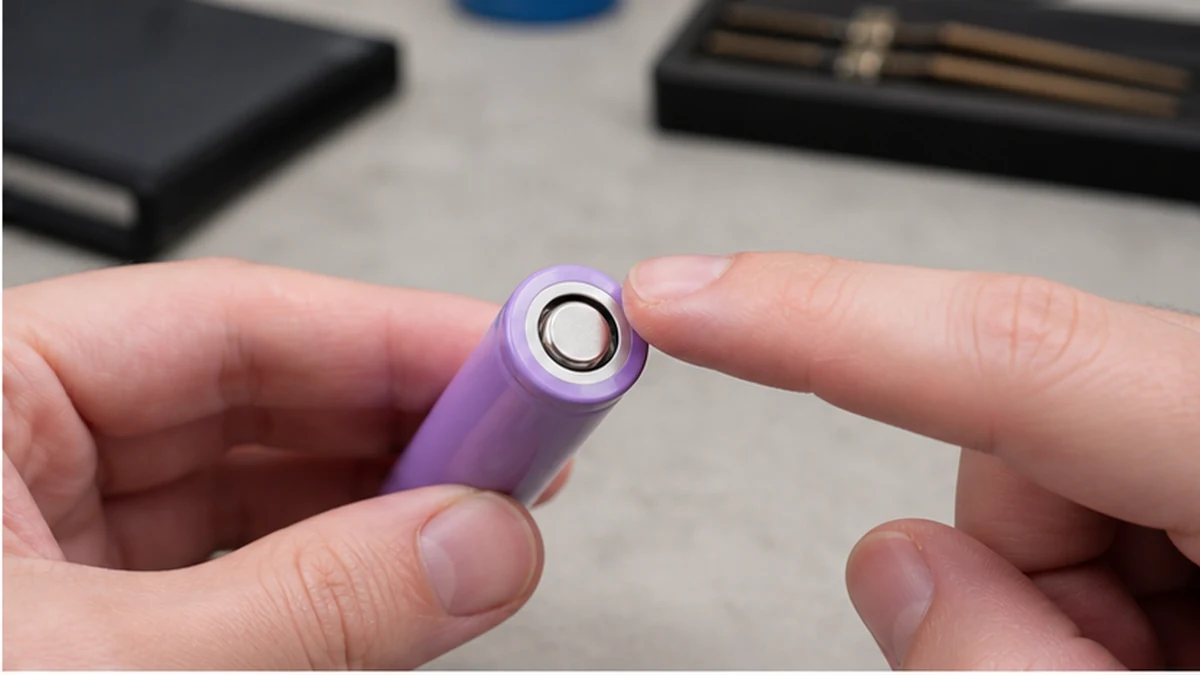
The outer wrap on an 18650 cell isn’t cosmetic. It’s a thin plastic sleeve, usually heat-shrunk, that electrically isolates the cell’s metal can from the device’s battery contacts and from any other cell sitting next to it. That wrap is also the first thing that degrades with regular handling—sliding cells in and out of a mod, dropping one in a pocket with keys, or storing loose cells in a bag with metal objects.
A wrap that’s torn, split, bubbled, or peeling isn’t just an aesthetic issue. Any point where bare metal is exposed is a point where an unintended short circuit can occur if that metal contacts another conductive surface. This is one of the more common failure scenarios discussed among people who handle removable cells regularly: a nicked wrap that seemed minor turns into a hot cell or a device that won’t behave normally.
None of this requires special equipment to check. A quick visual and tactile inspection before a cell goes back into a device—wrap intact, no discoloration, no bulging at the flat ends, insulating ring present and undamaged—takes a few seconds and is worth building into a habit every time you handle removable cells.
🧩 4. What Damage Means It’s Time to Stop Using a Cell
Not every mark on a cell is disqualifying, but certain signs mean the cell should be retired rather than returned to service. Knowing the difference matters more than any single spec on a datasheet, because a damaged cell with impressive numbers is still a damaged cell.
Stop using a cell if you observe any of the following:
- Torn or exposed wrap that reveals bare metal, especially near the edges where it could contact device contacts or another cell.
- Bulging or a deformed shape at either end of the cell, which indicates internal changes that make continued use unpredictable.
- Visible discoloration, residue, or an unusual smell around the cell, which can indicate internal electrolyte issues.
- Damage to the insulating ring around the positive terminal, even if the rest of the wrap looks fine.
- A cell that feels unusually warm during storage, when it isn’t in a device and isn’t charging.
- Visible corrosion on the terminals, which suggests moisture exposure or an internal seal issue.
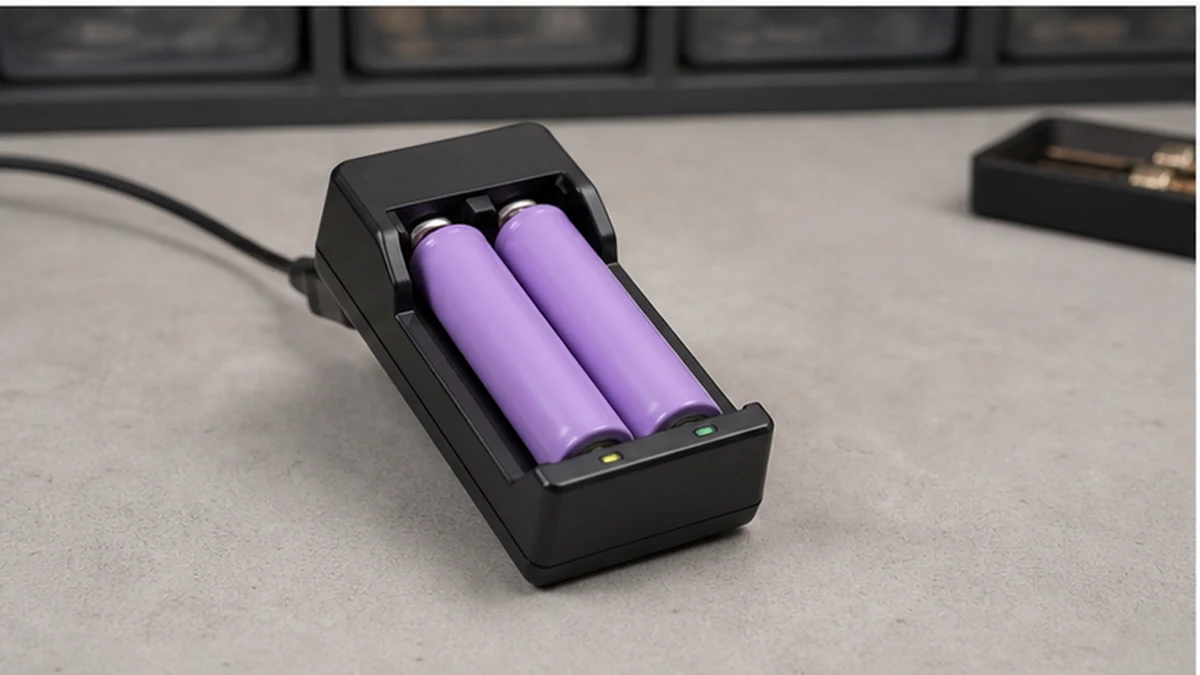
If a cell shows any of these signs, the correct response is to stop using it and dispose of it through a battery recycling point that accepts lithium cells—not to keep using it because it still seems to hold a charge. A cell that still “works” in the sense of powering a device isn’t the same as a cell that’s still safe to use. This is also where charging habits intersect with cell condition: a charger that doesn’t properly terminate or that pushes current inconsistently can accelerate the kind of internal stress that leads to these symptoms, which is worth understanding on its own—this guide to vape battery chargers goes into how charger behavior affects cell health over time.
🛠️ 5. Matched Pairs — When and Why to Marry Cells
Devices that run on two cells in series or parallel need those cells to behave as closely to identically as possible. This is the concept of “marrying” or matching a pair: buying two cells of the same manufacturer, same model, and same production batch where possible, then keeping that pair together for the life of the cells—same charge cycles, same usage, never swapped individually with a cell from a different set.
The reason this matters comes down to how dual-cell devices distribute load. If one cell in a pair has slightly more capacity, a different discharge characteristic, or more wear than the other, the device doesn’t necessarily balance the difference out. Over repeated charge and discharge cycles, that imbalance tends to widen rather than correct itself, with one cell doing more work than the other. Over time this can mean one cell degrades faster, and a mismatched pair is harder to read accurately for early warning signs, since you’re no longer comparing two cells that started from the same baseline.
Marrying cells isn’t necessary for single-cell devices, where there’s only one cell managing the full load and no partner cell to fall out of sync with. It becomes relevant specifically for devices designed around two or more cells working together.
A few practical points on maintaining a matched pair:
- Buy pairs at the same time, from the same listing, ideally the same manufacturer batch.
- Keep a simple marker—a dot of nail polish, a small label—so the pair doesn’t get separated during storage or charging.
- Charge and discharge the pair together rather than splitting them between different devices or charging sessions.
- If one cell in a pair shows any of the damage signs covered above, retire both cells rather than trying to introduce a single replacement into an already-cycled pair.
That last point trips people up. It feels wasteful to discard a cell that still looks fine because its partner failed, but introducing a fresh cell alongside a used one recreates the exact mismatch problem marrying was meant to prevent.
📐 6. Why the Device Manual Is the Final Word
With all of the above in mind, the single most reliable source for what cell belongs in a given device is the manufacturer’s manual for that specific device, not a general rule of thumb pulled from a forum thread. Manuals typically specify the minimum continuous discharge rating a cell needs to carry, whether the device is single-cell or multi-cell, and the physical cell format the battery bay accepts.
Device design varies enough between manufacturers that assumptions carried over from a previous mod can be wrong for a new one. A device that regulates output and manages current draw internally places different demands on a cell than a device with a more direct connection between the cell and the atomizer. Understanding how a given device manages power, protects itself, and communicates cell status is worth doing before assuming any 18650 cell that fits the bay is an appropriate match—this guide to vape mod controls and safety walks through how those systems typically work and what to look for in a manual before pairing hardware with cells.
Treat the manual as the ceiling and floor for compatibility: it defines the minimum discharge rating the device expects, the physical format it accepts, and whether it’s built for one cell or a matched pair. Everything covered in this guide—reading a discharge rating, inspecting a wrap, retiring a damaged cell, keeping a pair together—only works as intended when the underlying device specification is respected first.
🔋 7. Frequently Asked Questions
Does a higher mAh number always mean a better 18650 cell?
Not for every use case. Higher capacity often comes with a lower continuous discharge rating, so the better cell for a given device depends on matching both figures to what that device actually draws, not maximizing capacity alone.
Can I mix flat top and button top cells in the same device?
The device’s battery contacts and manual will indicate which top style it’s designed for. This is a physical fit question specific to each device’s contact spacing, not a universal rule.
How often should I inspect my cells?
A quick visual check each time a cell goes in or out of a device is a reasonable habit, along with a closer look any time a cell has been dropped, exposed to moisture, or stored loosely with metal objects.
Is it ever fine to use a single unmarried cell as a temporary replacement in a two-cell device?
Introducing one cell with different wear or capacity into an otherwise matched pair reintroduces the exact imbalance that marrying is meant to avoid, so it’s not a practice to rely on even temporarily.
🧼 8. The Bottom Line
18650 tells you what shape and size cell fits your device—nothing more. Everything that determines whether a cell is right for a specific mod lives in the manufacturer’s discharge rating, the physical condition of the wrap and insulators, and the device manual that spells out what the hardware actually needs. Read those together, retire cells the moment they show damage, keep matched pairs together, and the size code on the wrap stops being a source of confusion and starts being exactly what it was always meant to be: a fit specification, not a performance guarantee.
📚 9. Sources and Reader Questions Reviewed
- CPSC High-Energy Battery Safety
- FDA: Tips to Help Avoid Vape Battery Fires or Explosions
- Reddit discussion 41zi3h (used for reader-language research, not technical proof)
- Reddit discussion 55mqep (used for reader-language research, not technical proof)
- Reddit discussion 1l5phz (used for reader-language research, not technical proof)