“`html
💡 1. The Box Just Got Bigger — Now What
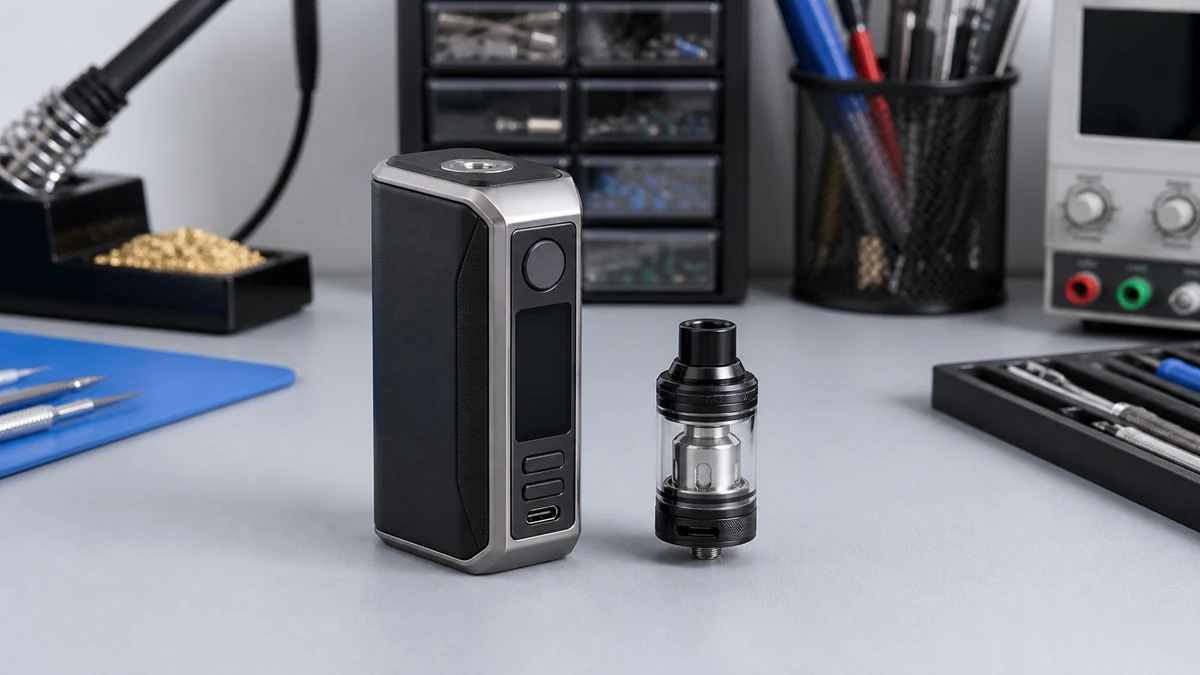
Most people who move up from a simple vape pen or pod system remember the same moment: they open a new box and the device inside is noticeably heavier, wider, and covered in more than one button. Instead of a single glowing light, there’s a small screen with numbers on it. Instead of one control, there might be three — a fire button and two arrows, sometimes a wheel, sometimes a menu you have to press and hold to unlock. The instinct is to assume something has gone wrong, or that the product is simply more complicated than it needs to be.
In most cases neither is true. The added size and the added controls exist because the device is doing more work than a pod system does, and it needs somewhere to put the parts that do that work. A pod system hides almost everything behind a fixed, non-adjustable circuit tuned to one cartridge. A regulated mod, by contrast, is built to run a range of tanks, coils, and battery configurations, and it needs a display and a set of controls to tell the user what it’s currently doing and to let them change it. The rest of this guide walks through what that extra hardware is actually for, where it earns its keep, and where it’s more complexity than a given buyer will ever use.
⚙️ 2. Regulated Circuits vs Mechanical Tubes
Almost every mod sold through mainstream retail and distribution today is a regulated device. Inside the body sits a small circuit board — often called a chipset — that sits between the battery and the atomizer. When the fire button is pressed, the chip reads the resistance of the connected coil, calculates how much current is needed to reach the wattage or temperature the user has set, and delivers exactly that. It also watches for conditions outside safe operating limits and can cut the circuit before those limits are exceeded.
A mechanical mod skips that circuit entirely. It’s essentially a metal tube that connects the battery directly to the atomizer through a mechanical switch, with no chip translating or limiting the current in between. There’s no screen because there’s nothing to display: no wattage setting, no resistance reading, no protection status. Whatever the battery and the coil are physically capable of is what happens when the switch closes.
🧩 2.1 Why Regulated Devices Took Over
The reason regulated architecture became the default for general-purpose devices is straightforward: it removes guesswork from the user’s side of the equation. The chipset handles the calculations that would otherwise require the user to manually match battery output to coil resistance, and it can respond to fault conditions — like a short or an atomizer connection outside expected range — automatically. For anyone building a retail or wholesale catalog aimed at a general adult audience rather than an enthusiast niche, this is the category that carries the assortment.
🧩 2.2 Where Mechanical Architecture Still Shows Up
Mechanical mods haven’t disappeared, but they’ve become a narrow, enthusiast-oriented category rather than a mainstream one, largely because they place all of the calculation and all of the responsibility on the user instead of the circuit. This guide isn’t the place to explain how to build, wire, or safely operate one — that depends entirely on the specific hardware and battery involved, and the margin for error without a protective chip is much smaller. Anyone sourcing or selling in that category should point buyers to the manufacturer’s own documentation rather than general guidance.
🔍 3. Getting the Tank to Match the Mod
A regulated mod is only half of a working setup — the other half is the tank or atomizer sitting on top of it, and the fit between the two matters in more than one way.
🧩 3.1 Threading and Physical Fit
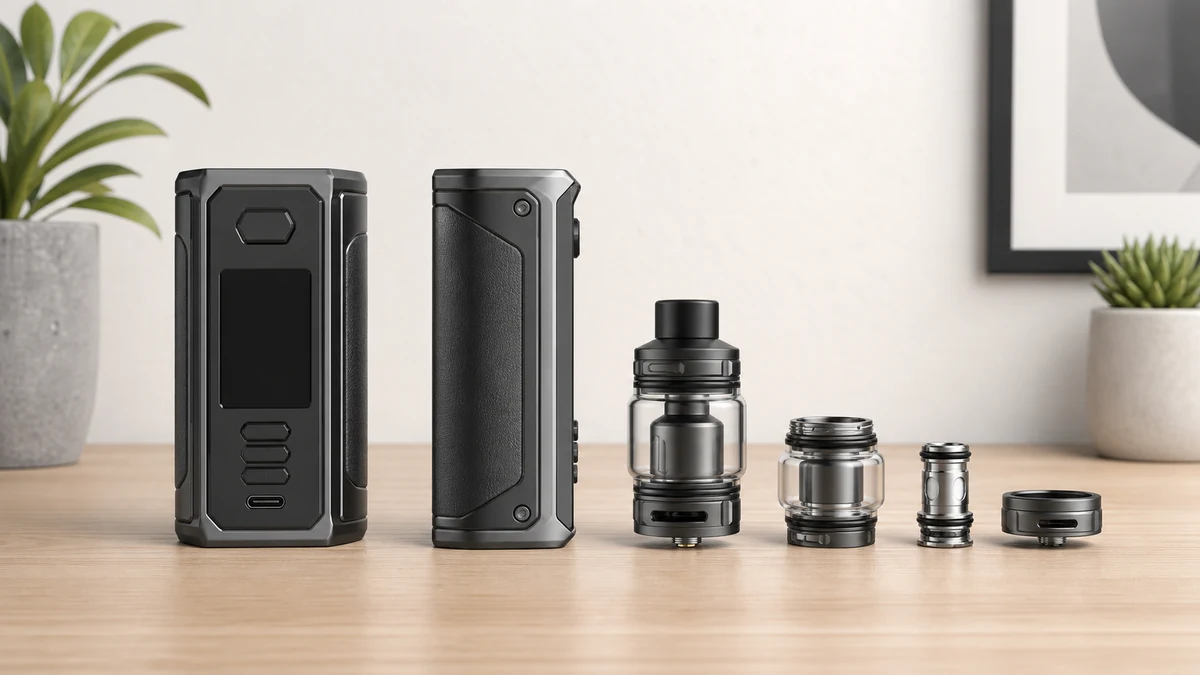
Most current mods and tanks use a standard 510 connector, which is what allows a wide range of atomizers from different lines to physically thread onto a wide range of mods. Standard threading is what makes an assortment workable at retail: a buyer isn’t locked into a single paired tank the way they would be with a sealed pod. For a closer look at how connector types, deck styles, and airflow components vary across atomizer categories, see the guide to vape parts.
🧩 3.2 Reading Resistance and Power on the Screen
Physical fit only gets a tank onto the mod — it doesn’t guarantee the two are set up correctly together. Every coil has a resistance rating, usually printed on the coil itself, and the mod’s screen displays that resistance the moment the atomizer is connected. That number is what the chipset uses to calculate safe and appropriate wattage. This is also where the screen earns its keep for the user directly: instead of guessing at a power level, they can see the coil’s resistance, select a wattage within the range the coil is rated for, and confirm the mod is firing at that setting before they take a draw. Buyers who are new to reading this information may want to walk through the screen display guide alongside the explanation of resistance, since the two numbers on the screen — resistance and power — only make sense together.
🧭 4. Removable Batteries, Internal Batteries, and Charging
Battery configuration is one of the clearest dividing lines between a pod system and a mod, and it’s also one of the areas where buyers most often carry over assumptions from one category to the other that don’t hold.
🧩 4.1 Removable Cells and External Chargers
Some mods are built around one or more removable cylindrical cells that the user takes out to charge, typically in a dedicated external charger, and reinserts once charged. This design lets the user carry a spare cell and swap it in the field rather than waiting for the device itself to recharge, and it separates the battery’s lifespan from the device’s lifespan — a worn cell can be replaced without replacing the mod. It also means the cell has to be handled correctly on its own: oriented the right way when inserted, charged on a charger designed for that cell type, and inspected for damage before use. The U.S. Consumer Product Safety Commission maintains general guidance on handling high-energy battery cells safely, and it’s a useful reference point for anyone building documentation or packaging inserts around removable-cell products. The full charging workflow — what a charger indicator is telling the user, how long a charge cycle typically takes, and what to check before charging — is covered in the battery and charger guide.
🧩 4.2 Internal Batteries and Onboard Charging
Other mods use an internal battery that isn’t meant to be removed, charged instead through a port on the device itself, usually via USB. This trades the flexibility of a swappable cell for a simpler day-to-day routine — there’s no separate charger to carry, no cell to seat correctly, and less chance of a user mismatching a cell with the wrong charger. The tradeoff shows up at the end of the device’s usable life, when the battery is no longer separable from the rest of the hardware. Neither configuration is objectively better; they suit different buying patterns, and a distributor stocking both should expect the internal-battery models to skew toward buyers who want fewer things to manage, and removable-cell models to skew toward buyers who value uptime and are willing to handle a spare cell correctly.
🧩 5. Ergonomics, Buttons, and Menus
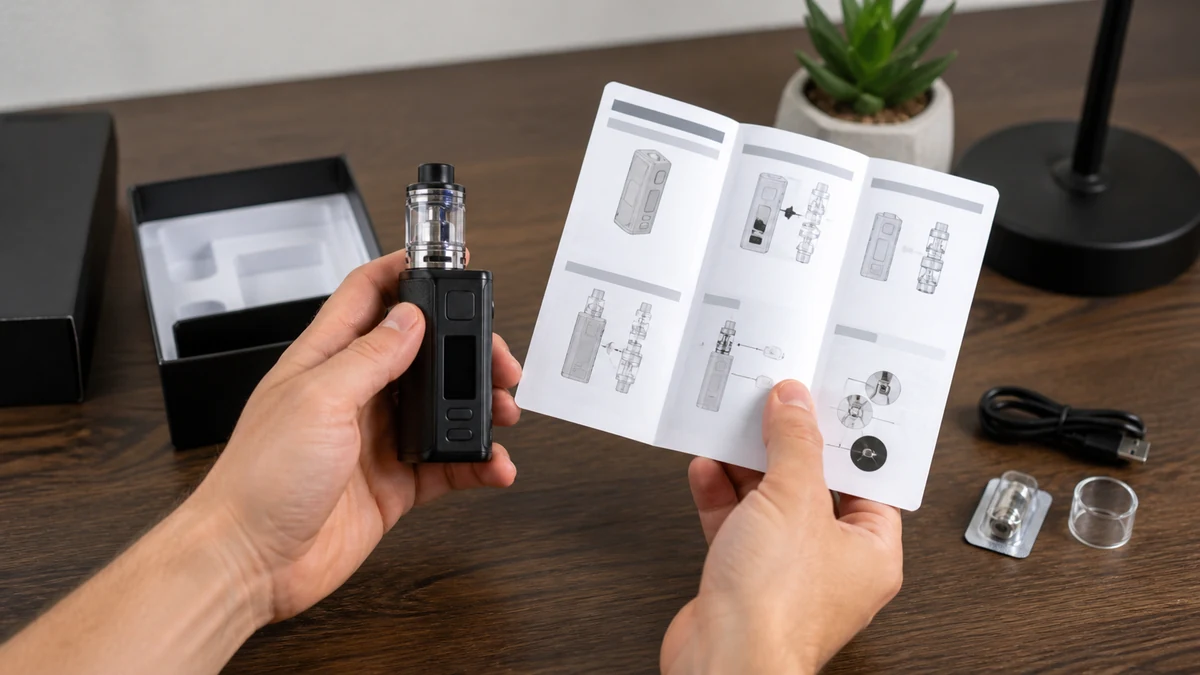
A pod system usually asks the user to learn one gesture: draw, or press one button. A regulated mod asks for more, and the layout of that “more” is a real part of the product, not an afterthought. The fire button is typically the largest and most reachable control, since it’s used constantly; adjustment buttons or a scroll wheel are placed nearby for changing wattage or temperature without shifting grip. Most devices also include a way to lock the settings — often five quick presses of the fire button — so the wattage can’t be bumped or the device fired accidentally in a pocket or bag.
Screen menus vary by manufacturer, but the general pattern is a home screen showing resistance, wattage or temperature, and battery level, with a secondary menu reachable by holding a button that exposes mode switching and any additional settings the device supports. For a first-time mod buyer, the ergonomics worth checking before purchase are simple: can the fire button be reached and held comfortably during a normal grip, are the adjustment controls distinguishable by feel, and does the lock function actually prevent the wattage from changing when engaged. These are functional questions, not aesthetic ones, and they affect daily use more than any spec sheet.
🛠️ 6. When the Extra Control Doesn’t Actually Help
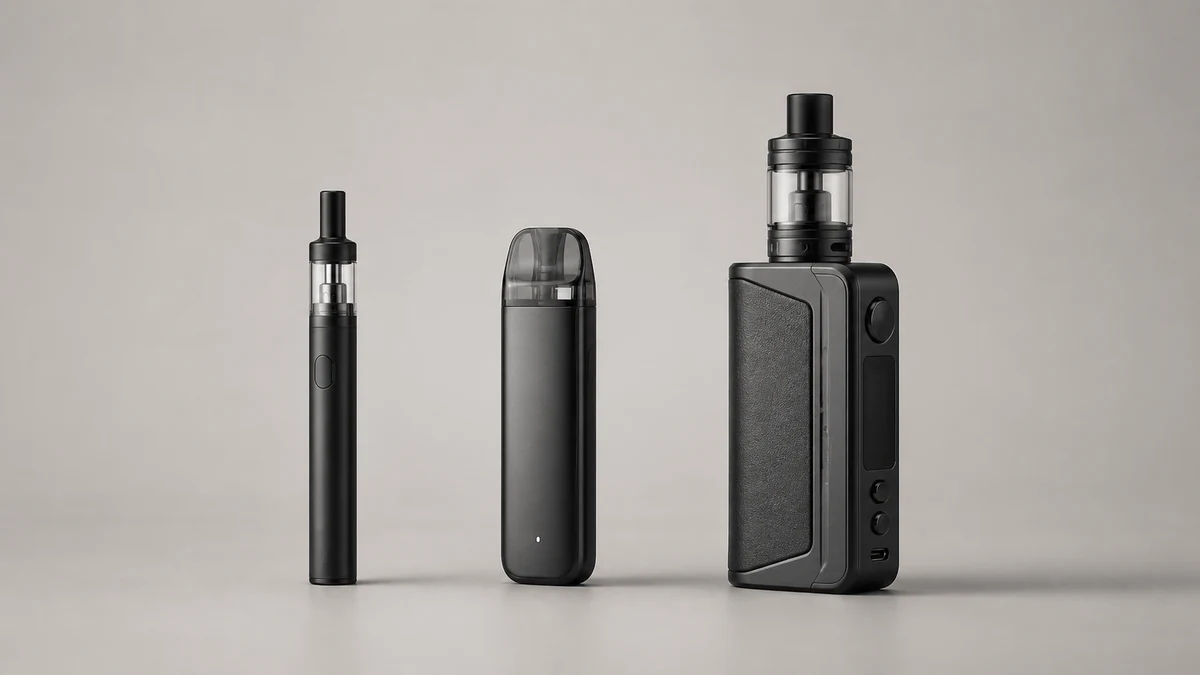
Not every buyer benefits from the full range of adjustment a regulated mod offers, and it’s worth being honest about that rather than selling complexity as a universal upgrade. A buyer who settles quickly into one coil type and one wattage range, and has no interest in switching between multiple tanks or chasing a specific setting, is paying for flexibility they won’t use. For that buyer, a simpler regulated device with a narrower wattage range and a smaller screen — or in some cases a well-built pod system — does the same practical job with less to learn and less that can be misconfigured.
The point at which extra control starts paying off is when the use case actually changes: switching between coils with meaningfully different resistance ratings, running tanks from more than one line that expect different power ranges, or wanting visibility into resistance and battery status rather than trusting a sealed system’s internal defaults. Distributors building an assortment for a broad adult customer base generally do better offering both tiers clearly labeled — straightforward regulated devices for buyers who want simplicity with a bit more visibility than a pod gives them, and fuller-featured mods for buyers who’ve already identified a reason to want the extra range — rather than presenting every device as if more settings is automatically the better choice.
🧼 7. Matching the Mod to the Buyer
The screen, the buttons, and the menu on a regulated mod aren’t decoration and they aren’t complexity for its own sake — they exist because the device is coordinating a battery, a chip, and a swappable atomizer instead of running one fixed, sealed circuit. Understanding what each piece is doing, from how resistance and wattage are read off the display to how a removable cell differs from an onboard charge port, is what turns that larger box from an intimidating upgrade into a tool the buyer actually knows how to use. For catalog and content purposes, the most useful thing a distributor or brand can do is pair each mod with plain guidance on its specific fit, its battery configuration, and its charging method, rather than assuming every buyer wants — or needs — every feature the category has to offer. Where a device’s exact controls, indicator behavior, or compatible parts aren’t confirmed, the manufacturer’s own manual remains the authoritative source.
📌 8. 📚 Sources
- U.S. Consumer Product Safety Commission — High-Energy Batteries Safety Education Center
“`