A balloon vaporizer’s collection bag, valve and mouthpiece form a particular accessory system. If a replacement bag looks right but its collar is unfamiliar, identify that complete system before trying to attach it. A similar-looking opening is not enough to establish compatibility.
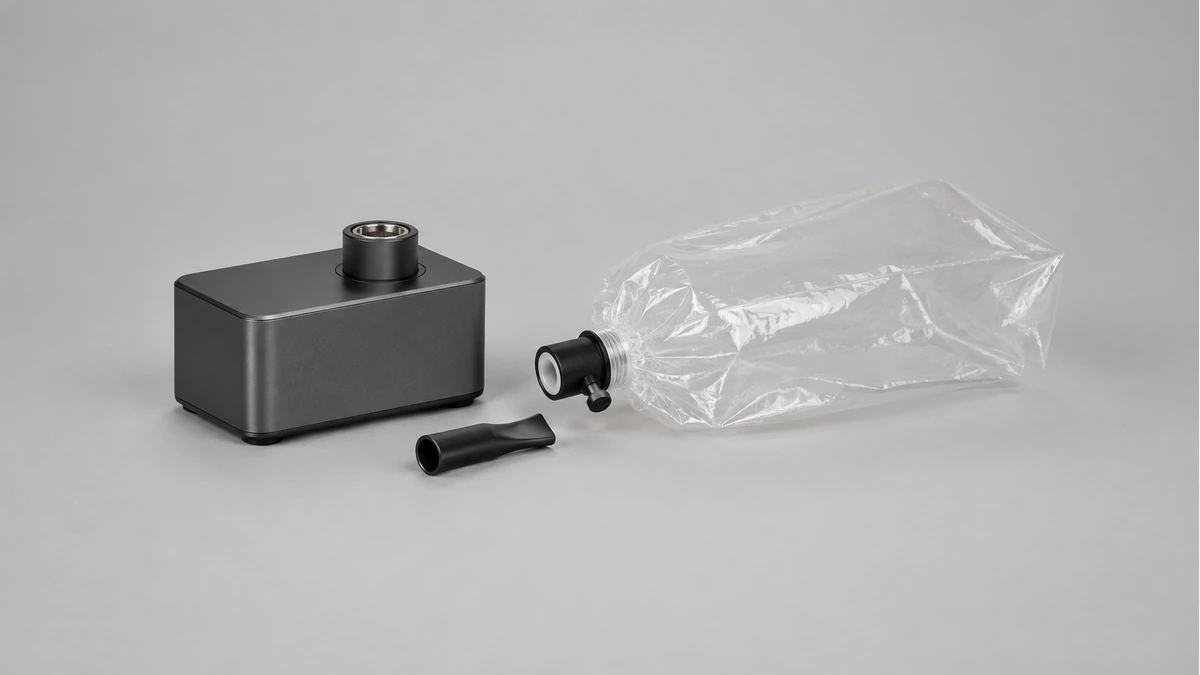
This becomes especially relevant with secondhand desktop equipment. The base may have a clear model label while the loose bag assembly has none. Start with what you can identify, keep uncertain parts separate and obtain the matching accessory information. Pulling an unknown assembly apart can make an ordinary replacement question harder to resolve.
🎈 1. What belongs to the balloon vaporizer system?
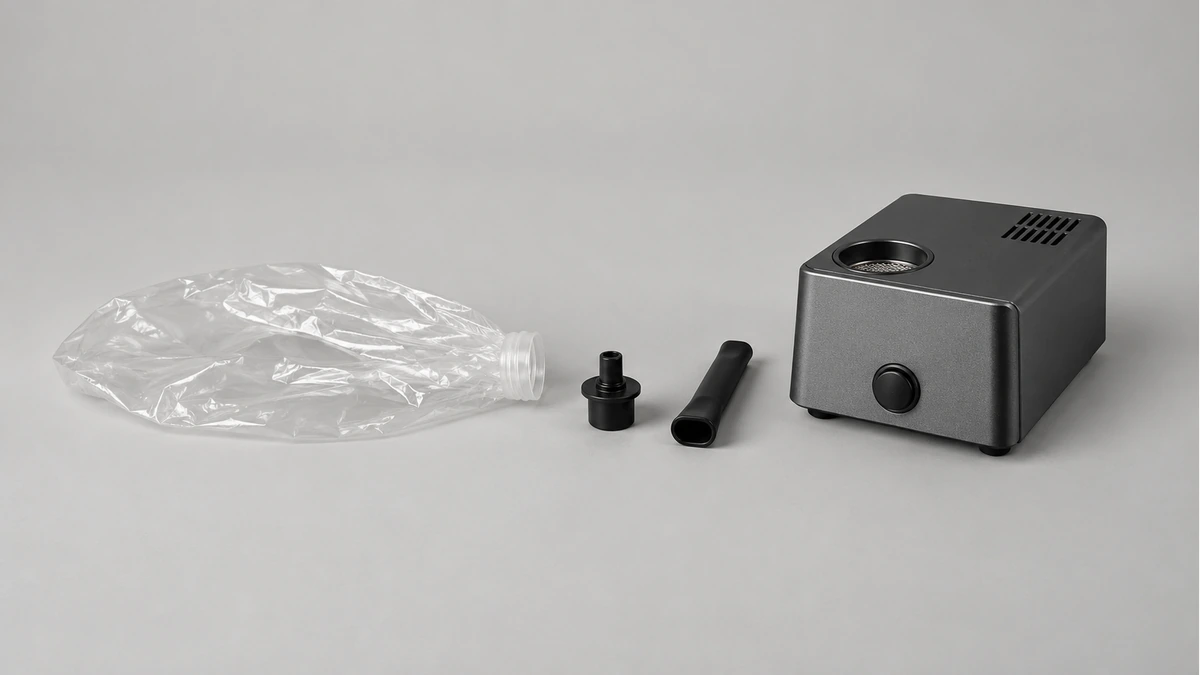
The bag is a collection component; it is not the powered base or the heating chamber. The valve assembly and mouthpiece have separate roles in the connection. Exactly how those pieces attach, and which are supplied together, depends on the documented system.
One manufacturer’s desktop operating documentation distinguishes its valve-balloon arrangement from a separate hose arrangement. That is a useful example of two accessory paths on one machine. It does not establish that another desktop unit accepts either path, or that the connections can be mixed.
Look at your equipment while it is switched off, disconnected and cool, following its handling directions. Identify the base, the removable parts the documentation actually permits and the collection assembly. Do not turn this identification task into a filling or heating test.
If the desktop unit also has a whip, keep that hose identified separately. Our whip-tube guide addresses its tube and end fittings. A hose connector’s care or fit does not automatically describe a bag collar, even when the accessories share a storage drawer.
🧩 2. Find the assembly name before separating its parts
Check the base’s actual model and revision, then compare the accessory illustrations supplied for it. Note any visible part codes on the loose assembly without dismantling it to search for hidden markings. A complete side view can be more useful than an extreme close-up of an anonymous black ring.
Some replacement listings describe an entire assembly; others describe only a component used within one. Read the contents description. A bag-only item does not necessarily include the valve or the mouthpiece visible in a general product photograph.
Make a simple parts record in your notes: the identified base, the identified accessory system and the item whose identity remains uncertain. This keeps “I need a bag” from becoming an accidental order for an incomplete or unrelated replacement.
For example, an owner may have a labeled desktop base and a loose mouthpiece inherited with it. That history is useful, but it is not proof that the mouthpiece belongs to the base’s current accessory system. Confirm the connection rather than treating everything in the same box as a matched set.
🔀 3. An open-and-close valve is not a universal fitting
Readers in older Reddit discussions asked whether a valve from another product could solve an open-bag problem. Replies included guesses and unrelated accessories. Those discussions identify a real frustration, but they do not establish a compatible replacement.
There are two questions to keep separate: what the valve is intended to do, and what it is intended to connect to. A part described as a valve does not automatically have the same attachment, operating motion or assembly arrangement as another valve.
Do not infer one-way behavior merely from the name. Find the actual description of the identified part. Similarly, a collar that appears to hold a bag is not necessarily a separate shutoff mechanism. Avoid diagnosing its function by blowing through it or connecting it to an improvised pump.
Physical fit alone leaves intended use unresolved. An opening that accepts an unrelated fitting has not thereby become an approved interface. Obtain confirmation of the complete combination instead of using a tight feel as the final compatibility test.
🔎 3.1 Describe what is loose without guessing the cause
If an assembly no longer connects as described, state where the movement occurs. Is the mouthpiece loose in its documented connection, or is the bag neck moving at the collar? Those observations are more useful than declaring the entire bag defective.
Do not add tape, glue or another ring to tighten an uncertain connection. Photograph the accessible area and ask which component should be inspected or replaced. An improvised repair can hide the original condition while introducing another unidentified material.
🔧 4. Bag-only replacement and assembly replacement differ
Think about the difference between a spare bag and a spare complete assembly. If the maker supplies a bag-only replacement, you still need the correct documented reusable parts and replacement procedure. If the maker supplies a complete assembly, transferring pieces from the old one may be unnecessary or inappropriate. The package name alone should not decide which task you perform.
Write down what is actually included before placing the old and new parts together. Keep their packaging separate until the contents have been checked. This prevents an unmarked older mouthpiece from being mistaken for a newly supplied one simply because both are now on the same tray.
If the instructions refer to a component name you cannot match to the illustration, ask about that exact label. Guessing which ring it means can lead you to work on the wrong connection.
Before attempting a bag change, establish whether that exact assembly is designed for it. A visible retaining ring does not prove user removal is permitted. Nor does a forum video showing another version provide the missing instructions for yours.
When bag replacement is documented, follow that procedure and its specified parts. This guide does not provide a general ring-removal motion, tightening force or neck-folding method. Those details belong to the actual assembly, rather than to the word balloon.
If a component resists the documented movement, stop. Do not pry with a blade or heat the collar to make it release. The next useful step is a support question that identifies the assembly and the precise point at which the instructions no longer match what you can do.
Keep the old part available for identification until the replacement is confirmed. Avoid cutting an unidentified bag away merely to see how the collar works. A complete photograph may preserve information that disappears once the original connection is disturbed.
Check what arrives before starting any permitted replacement. Compare the package’s part number and contents with the confirmed assembly, including whether a mouthpiece is supplied. Resolving an incomplete delivery is easier while the existing equipment remains intact and identified.
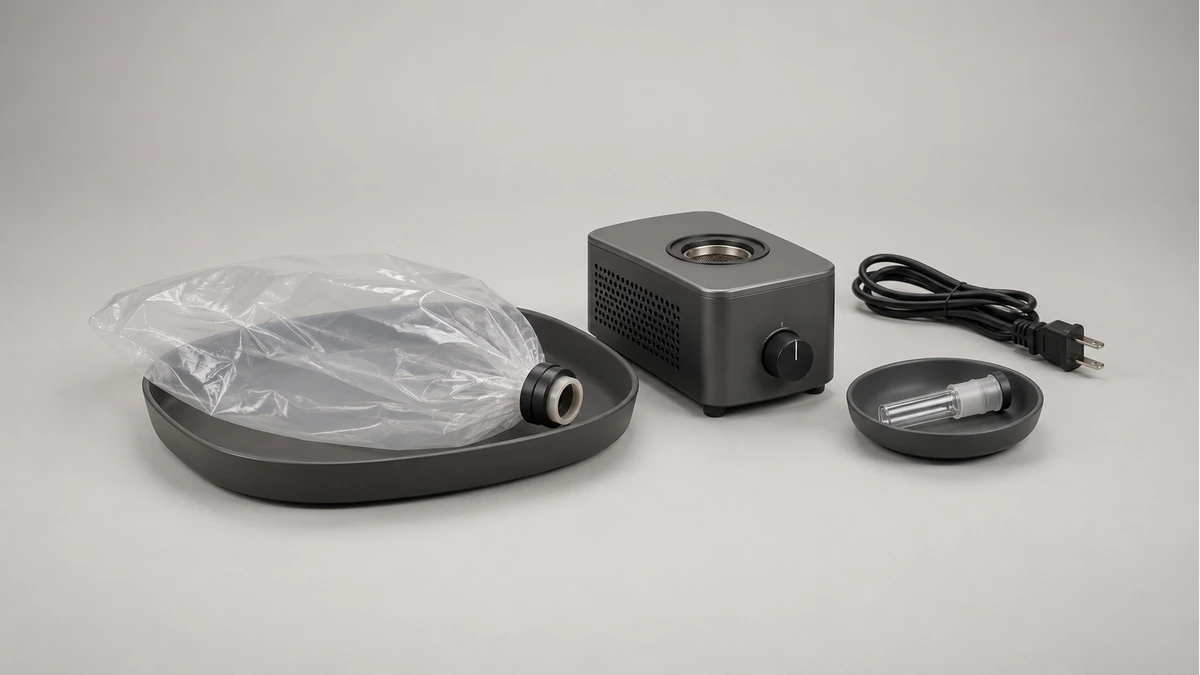
🧴 5. Cleaning instructions belong to each component
A collection bag, a valve body, a mouthpiece and a heating chamber should not inherit one generic cleaning recipe. Establish which parts are maintained and which are replaced. The difference matters before any cleaner or tool comes near them.
For a narrow example, Storz & Bickel’s current cleaning guidance treats its specified balloon and mouthpiece as replacement items, while giving separate care instructions for other components. This is that manufacturer’s system-specific guidance, not a universal schedule for every vaporizer bag.
Do not assume that a bag can be soaked because a nearby glass component permits soaking. Likewise, a mouthpiece looking clean does not establish that it can be retained indefinitely. Follow the actual replacement and care requirements for the identified part.
Our mouthpiece-cleaning guide discusses why access and component identity matter. It concerns a different form of equipment and cannot authorize a cleaning method for an unknown balloon mouthpiece. Use it to understand the distinction, then return to the correct documentation.
If care information is absent, keep the part out of use until the requirement is resolved. Ask whether the supplied item is intended to be cleaned, replaced as a complete assembly or maintained only at specified points. That question is more productive than asking which household solvent is strongest.
🫧 6. Treat a water attachment as another complete interface
A Reddit discussion about a bag-mounted bubbler raised a different concern: the owner would be handling more than a bag and mouthpiece. Additional glass and connections change the objects that need support, storage and identification.
That observation does not establish the performance or compatibility of the pictured accessory. Before adding anything, obtain documentation for the exact arrangement from the relevant makers. The ability to fit two openings together does not answer how the combined assembly should be supported.
Think about where each detached component would rest while cool. A glass attachment needs an appropriate place of its own; the bag neck should not become an improvised handle or support for it. Do not plan to carry a collection assembly by an accessory whose handling role is unspecified.
A water attachment also has separate care requirements. Keep those instructions distinct from bag replacement. If the combined setup leaves a connection or handling question unanswered, return to the confirmed arrangement instead of adding another adapter to make it work.
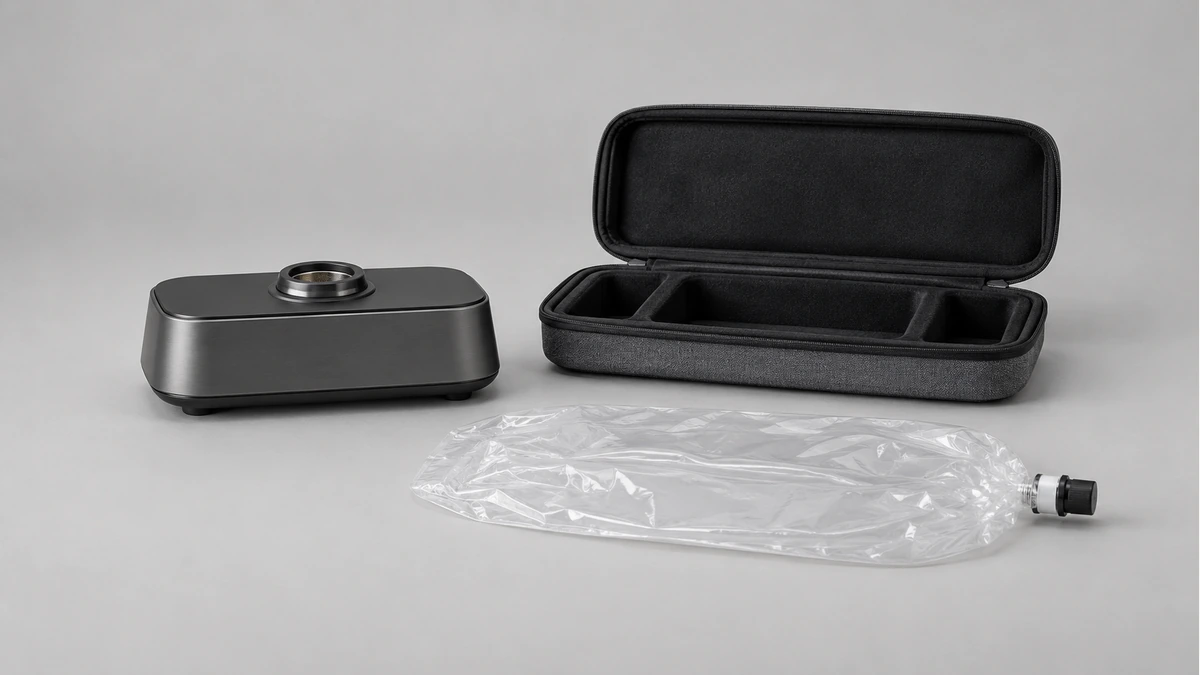
📦 7. Give the empty assembly a deliberate storage place
Follow the equipment’s cooling, emptying and storage directions before putting parts away. Do not use an improvised heating or forced-air process to dry a component. A bag’s translucent appearance cannot establish that its entire assembly is ready for closed storage.
Assess the complete outline in the intended compartment. Include the valve and mouthpiece, not only the flexible section. A drawer may accept a loose bag while pressing on the rigid connection when the drawer closes.
Keep unrelated hard parts from resting on the collection material. If the maker permits separate storage, identify the parts so they do not become mixed with similar accessories. Store replacement components in their labeled packaging where practical rather than discarding the only remaining part identification.
The same principle applies if the desktop system includes dosing capsules and a separate chamber. Those small components have their own fit and storage requirements. A compatible chamber accessory does not identify a bag valve, and keeping the two sets organized prevents that confusion later.
When moving the equipment, follow its transport instructions rather than using a display arrangement as packing. Check that the compartment closes normally without compressing an uncertain connection. If it does not, choose a suitable storage arrangement instead of forcing the lid.
📋 8. Ask a specific replacement question
Include whether the assembly arrived with the machine or was obtained separately. That history helps explain why compatibility is still uncertain.
Send the maker the base identification, clear photographs of the complete loose assembly and any visible part numbers. Explain which component needs attention and which information you have already found. You do not need to dismantle the equipment to make that request useful.
Ask whether the intended replacement is a bag, a valve assembly, a mouthpiece or a complete matched set. Also ask whether the identified base revision supports that accessory system. Those answers resolve the actual replacement task without turning it into a search for vaguely similar fittings.
Keep the response with the equipment’s care information. The next time a loose component needs attention, you will have the assembly name and its documented requirements available. That is a better starting point than another guessed valve, an improvised collar repair or an unmarked bag from the back of a drawer.