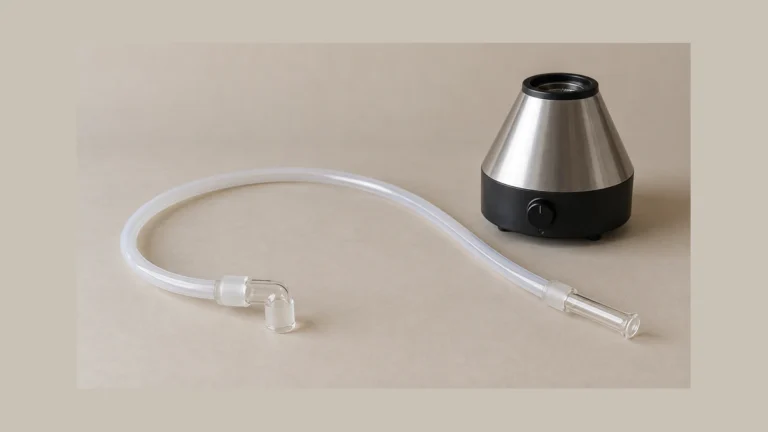
A whip tube is the flexible hose in a desktop vaporizer’s whip assembly. When an end slips off, a bend gets trapped behind the desk or cleaning advice seems contradictory, separate the hose from the other parts in the kit. The glass elbow, mouthpiece and screen may each have different fit and care requirements.
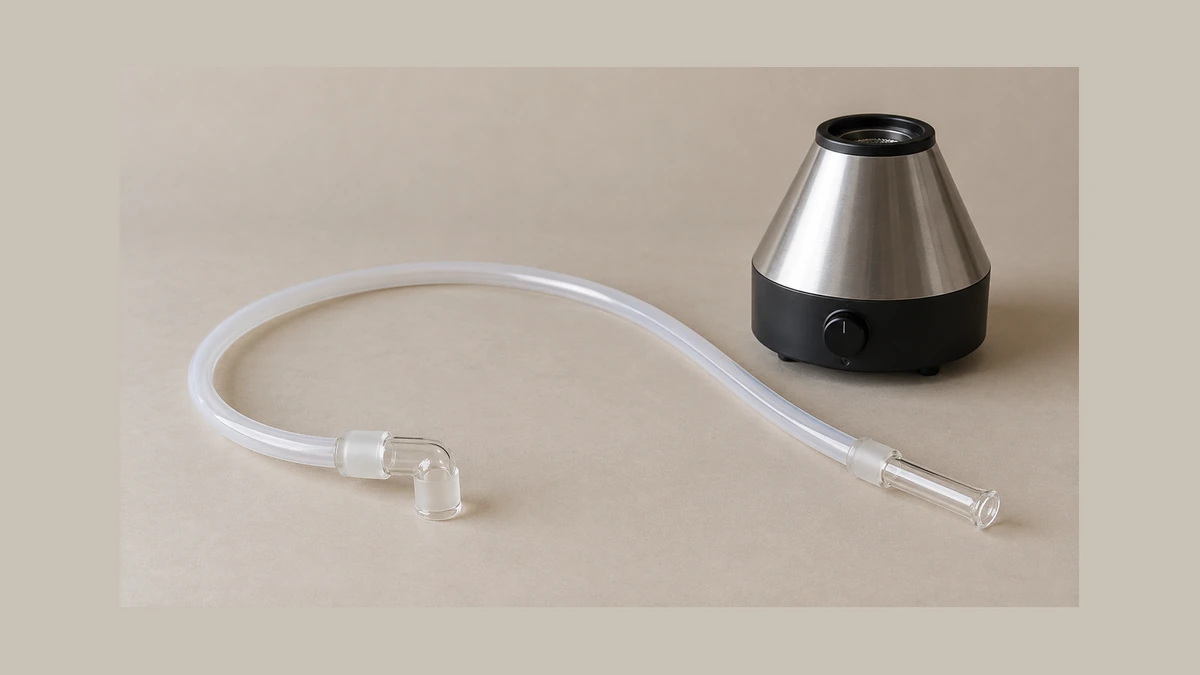
Start with the device switched off, disconnected from power and cool before handling the assembly as its instructions allow. Identify the exact tube and fittings rather than assuming every clear hose uses the same material. A replacement that looks similar does not, by appearance alone, establish compatibility.
This guide concerns desktop dry-herb vaporizer accessories. It does not cover nicotine tanks, liquid feed lines or unrelated industrial tubing. “Whip” is also used for a complete accessory assembly, so the first useful step is naming the particular piece that needs attention.
🔍 1. Identify the tube separately from its fittings
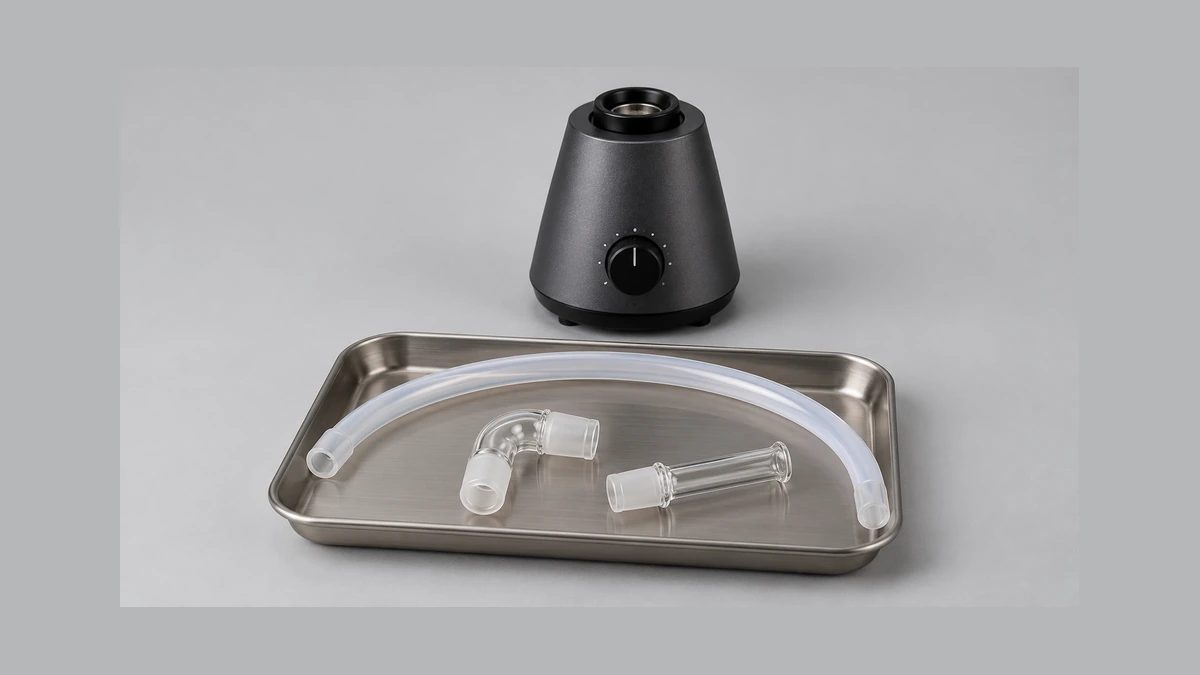
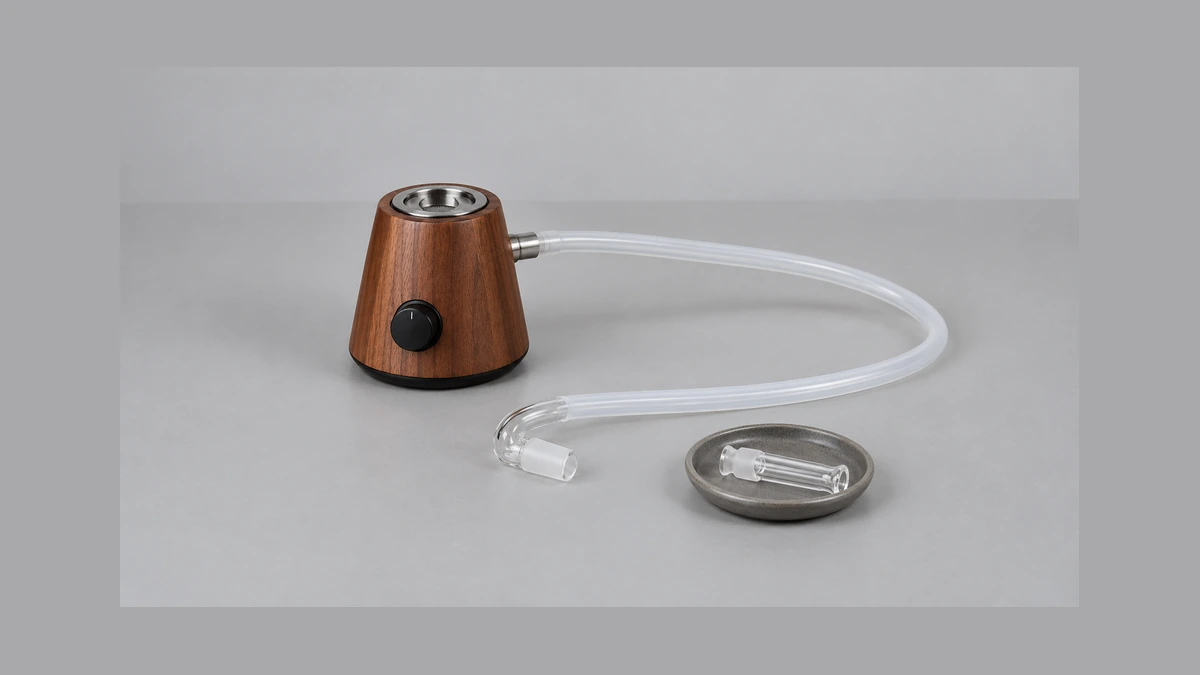
Lay out only the components the maker permits you to remove, keeping them organized on a stable surface. Distinguish the flexible length, the device-side fitting and the mouthpiece. If a screen belongs to a glass elbow or another rigid component, keep its location identified rather than treating it as part of the hose.
For example, Arizer’s whip listing names tubing, a glass elbow, a dome screen and a mouthpiece, and currently offers silicone and PVC options. That illustrates two separate points: a whip listing can include more than a tube, and the material needs to be specified. It does not identify an unknown hose from another kit.
Save the part description and compatible-device information with the accessory. When asking about a replacement, state whether you need the bare hose or the complete assembly. Otherwise a request for a “new whip” can leave unresolved whether the original fittings are being retained.
Photographs help describe the layout, but they are not a material test. Clear, cloudy, soft or springy are observations, not a reliable polymer identification. Likewise, a general food-contact label on unrelated tubing does not establish its intended use in a particular vaporizer accessory.
🧩 2. A loose end needs a fit check, not an improvised fastener
If the hose end no longer stays in its intended position, leave the assembly disconnected while you investigate. Look at accessible surfaces without stretching the end or forcing it onto the fitting. A visible split is a different observation from an intact replacement tube that has never fitted correctly.
Compare the exact part identifiers and the assembly directions. Was the tube replaced recently? Was a different mouthpiece added? Does the problem concern the hose-to-fitting connection or a separate rigid joint farther along the assembly? Naming the location prevents a general “loose whip” complaint from sending you toward the wrong replacement.
🔎 2.1 Keep the original condition visible
Do not add tape, adhesive or an improvised clamp to make an uncertain fit stay together. Those additions change the interface without confirming that the parts belong together. They also make it harder to photograph the original condition when seeking help.
A torn or visibly damaged tube should be taken out of use while you obtain the correct replacement guidance. An unexplained loose connection also needs resolution before the assembly is used again. There is no general instruction here to trim off the end, stretch it over a larger fitting or compensate with more force.
Ask for the specified inside and outside dimensions if the manufacturer uses those measurements to identify a service part. Keep those two dimensions distinct, and do not substitute a measurement from a different kit. A part number and confirmed compatibility are more useful than guessing from a photograph beside a ruler.
🔄 3. Give the hose an unobstructed route
Look at the complete route across the workspace while everything is cool and disconnected. A tube caught under an organizer or pressed between a tray and wall has a placement problem before any device setting becomes relevant. Remove the obstruction instead of trying to pull the tube through it.
Leave a relaxed route that does not force a sharp fold. A broad curve on a suitable clear surface is easier to account for than a length disappearing behind a monitor or between furniture. This is a layout choice, not a measured claim about airflow or performance.
Check moving objects nearby. A drawer, swivel chair or adjustable monitor arm can change the available space after the initial setup. Keep the hose away from those paths, and reconsider the arrangement whenever the furniture moves. Do not leave a loop under a chair simply because it seems out of sight.
If a section remains visibly distorted after the obstruction is removed, stop and ask about that condition. Heating, stretching or squeezing it back into shape would introduce another unverified procedure. Document the affected area and the way it had been routed rather than assuming the appearance is harmless.
📏 4. Solve a reach problem by planning the whole workspace
A tube must reach its intended position without pulling on a fitting or crossing a walking route. Compare the approved accessory length with the actual distance between the device and the seating. Include the bends required by the layout, not merely a straight line across an empty desk.
Extra length also needs a place. Keep it supported and clear of feet, chair mechanisms and other equipment. Do not wind it around the device, tuck it into a narrow gap or let it hang where it can be caught. If there is nowhere suitable for the hose, change the arrangement before returning the equipment to use.
For insufficient reach, consider an appropriate device or seat position within the equipment’s instructions. A taut hose is not a useful way to hold a device or fitting in position. Use a compatible alternative length only when the maker confirms it; adding an unverified extension introduces another connection to identify.
The desktop vaporizer format guide explains how a tabletop setup differs from other hardware arrangements. A whip accessory does not remove the need for stable device placement, access to controls and a suitable power-cord route. Plan all of those together.
🔒 5. Stop when a glass fitting resists normal removal
A new mouthpiece can feel firmly seated, leaving an owner unsure whether it is meant to separate for cleaning. Check the instructions before increasing force. Establish whether that component is user-removable and what handling method the maker describes.
Support the assembly in the documented way. Do not use the device body as an anchor while pulling the hose, or grip a narrow glass section with a tool. If normal permitted removal does not work, stop with the part still intact and contact support.
Explain whether the resistance existed from first use or appeared later, and whether the fitting or tube has been changed. Include a photograph of the connection and the accessory identifier. Those details give the maker a clearer starting point than a general request for a way to free “stuck glass.”
Do not transfer a remedy for a different glass joint to a hose connection. Warming, lubricating, cutting or prying would each change the problem without confirming that the method applies. The rig-adapter guide concerns rigid accessory interfaces; it should not be treated as removal instructions for flexible tubing.
🧼 6. Cleaning permission belongs to the named component
When a kit contains glass, flexible tubing and other parts, read the care instructions component by component. A method allowed for a glass elbow does not automatically cover the tube attached to it. Nor does a restriction for one polymer establish what another polymer will tolerate.
For a narrow example, STORZ & BICKEL’s cleaning support page, updated October 9, 2026, specifies switching off and unplugging before cleaning, cooling before disassembly and care for named components. Its directions for the Tube Flexer and mouthpiece should not be read as a blanket solvent-soaking instruction for any flexible hose.
This is where community advice often becomes confusing. One person describes a glass part, another describes a clear hose, and a third assumes both use the same material. Their methods can sound contradictory because the objects and assumptions differ. None of those replies identifies your accessory or overrides its actual care directions.
Before starting, confirm what the maker allows inside the tube, how it should be rinsed if applicable and whether it is intended to be cleaned or replaced under the present circumstances. Keep cleaners away from the powered body and follow the actual directions for that body separately.
🧽 6.1 A narrow passage is not permission to force a tool through
Do not improvise a dowel, skewer or metal wire to push material through the hose. If a specific cleaning tool is approved, use its stated method rather than substituting something that merely fits the opening. Stop if you cannot complete the documented procedure without force.
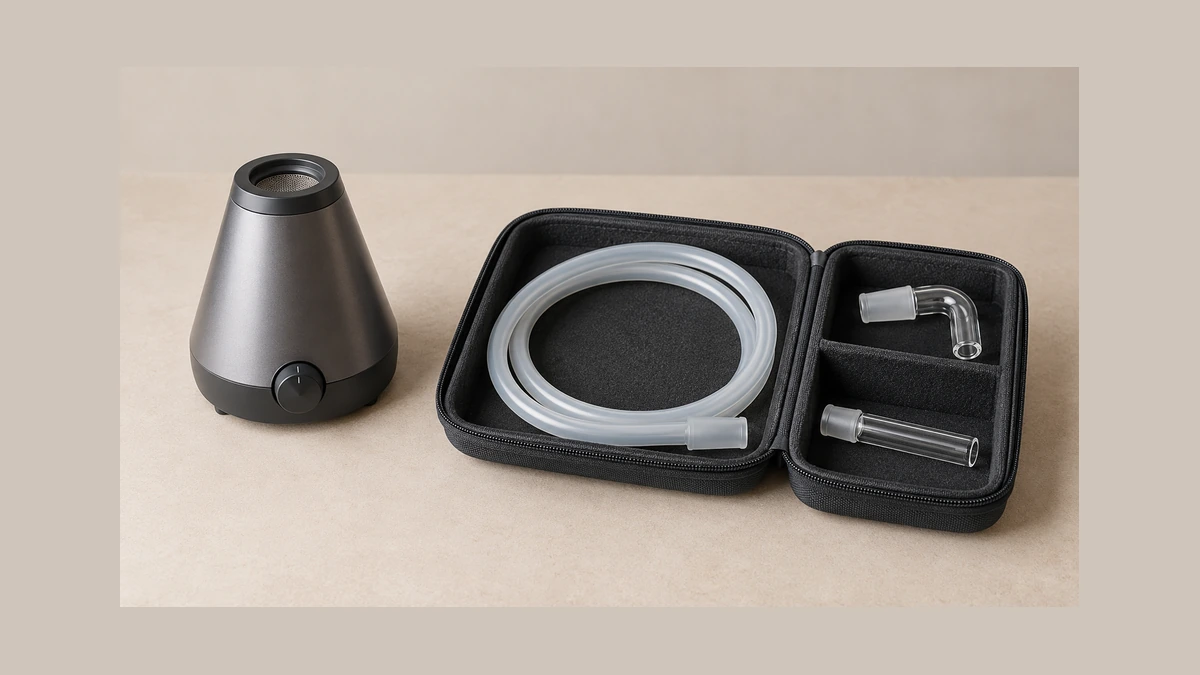
Our vaporizer cleaning-tool guide discusses organizing supplies around different components. A larger kit does not resolve missing compatibility information. The appropriate tool and cleaner still depend on the exact accessory, not the number of items in the pouch.
☀️ 7. Leave time for the approved drying method
Plan the drying space before cleaning. Keep the permitted detached parts identified and protected from being crushed or mixed with unrelated spares. Follow the maker’s method for drying the inside of the tube as well as its outside, rather than treating a dry exterior as proof that the whole passage is ready.
A common scheduling problem is cleaning late and expecting the assembly to be ready immediately. Resolve that by planning earlier or leaving the equipment out of use until the required process is complete. Do not add a hair dryer, heat gun, compressed air or a device heating cycle simply to meet your preferred timetable.
Smelling or tasting the tube is not a reliable substitute for the required cleaning and drying process. Do not deliberately inhale through it to assess an unknown residue. If you are unsure whether the approved method was completed, keep it out of use and ask about the specific remaining uncertainty.
Do not leave a freshly cleaned tube tightly bundled with wet fittings in a closed case. Use the documented drying arrangement first, then store the parts as directed. Separate storage should not require unnecessary disassembly: remove only the components the maker says may be removed.
🗄️ 8. Replace a documented wear part without inventing a lifespan
A visible tear, damaged end or unexplained change in texture calls for taking the tube out of use and seeking the correct replacement or assessment. Color alone does not tell this article what happened to a particular material. Record what changed and any care method used before the change appeared.
There is no universal replacement interval for every whip tube. Use the actual maker’s guidance and the condition criteria it specifies. A forum user’s number of months is an account of that person’s accessory, not a service schedule for yours.
When storing confirmed serviceable parts, leave the tube in an approved relaxed arrangement with nothing heavy resting on it. Protect separate glass fittings appropriately and keep replacement tubing labeled. Retaining the original part information makes the next fit or care question much easier to answer.
If the problem remains unresolved, ask one precise question: which tube fits this assembly, which method cleans this material, or what should happen to this visibly changed part? That gives you a workable next step while preserving the distinction between the flexible hose and everything attached to it.