Pass-through charging does not, by itself, tell you that a vaporizer’s battery is bypassed. In a vaporizer description, the phrase may refer to permission to operate while external power is connected. Whether the battery also gains charge, supplies part of the load or must retain a minimum charge is a separate device-specific question.
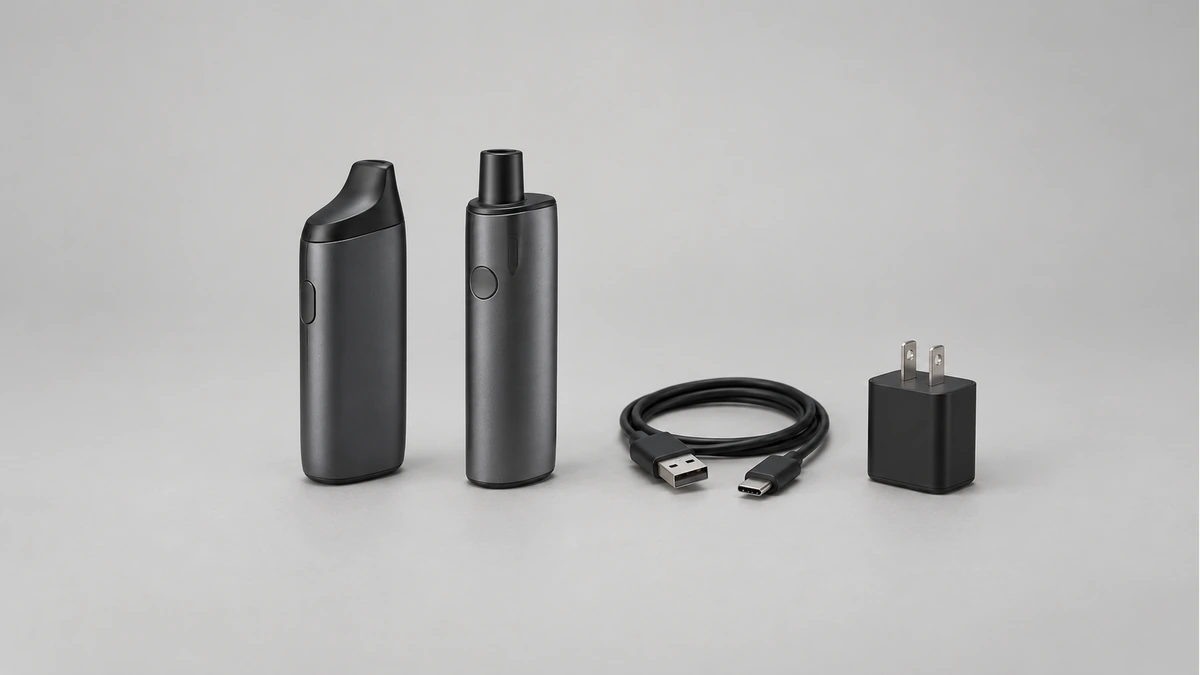
That distinction answers the common “can I treat it as a desktop?” question more accurately than a yes-or-no guess. Find the instructions for your exact equipment and approved supply. A cable remaining attached is visible; the internal power arrangement is not.
🔌 1. Read the pass-through charging claim in its actual device context
Start with the manufacturer’s wording rather than expanding a short feature label into several promises. “Can be used while connected” describes an operating condition. It does not automatically say that a depleted battery can be ignored, that charging speed stays unchanged or that permanent connection is intended.
The phrase also appears on power banks, where the connected load may be a separate device. That is a different context from a portable vaporizer operating its own electronics while connected. Identify which product the statement describes before applying it to the rest of your equipment.
Keep the connector question separate. A USB-C socket tells you which physical connector is present, but it cannot confirm support for simultaneous operation and charging. Our USB-C battery guide covers that interface distinction; the pass-through feature still needs its own documentation.
If you find only a retailer’s short bullet point, look for the manufacturer’s matching instructions. Do not turn the absence of an explicit prohibition into approval. An unanswered question about connected operation remains unanswered until the relevant source explains it.
📋 2. Identify the version and the permitted power source
Save the relevant manual revision or support response with the device identification. If a search result later describes a newer edition, you can distinguish the two without relying on memory. Where the label and manual appear inconsistent, provide both to support and ask which instruction applies before treating the feature as confirmed.
Check the actual model and any revision information the maker provides. An older forum discussion may use one name for several versions, while replies refer to different equipment. A statement about another edition cannot settle the requirements of the one on your desk.
Record the supplied or specified adapter and cable as well as the device. If the instructions identify an accessory or input condition for connected operation, keep that condition attached to the feature in your notes. “Supports pass-through” without the accompanying requirement is an incomplete description.
Do not assume a higher number on a replacement adapter adds a feature the device lacks. Nor should an adapter change be the first response to uncertain documentation. Establish the permitted combination before connecting equipment, rather than using trial and error to discover its limits.
A useful example is an owner with a used device, a replacement cable and a manual downloaded for a similarly named model. Each item may be identifiable on its own, but the collection still needs confirmation as a combination. Start by resolving the model mismatch.
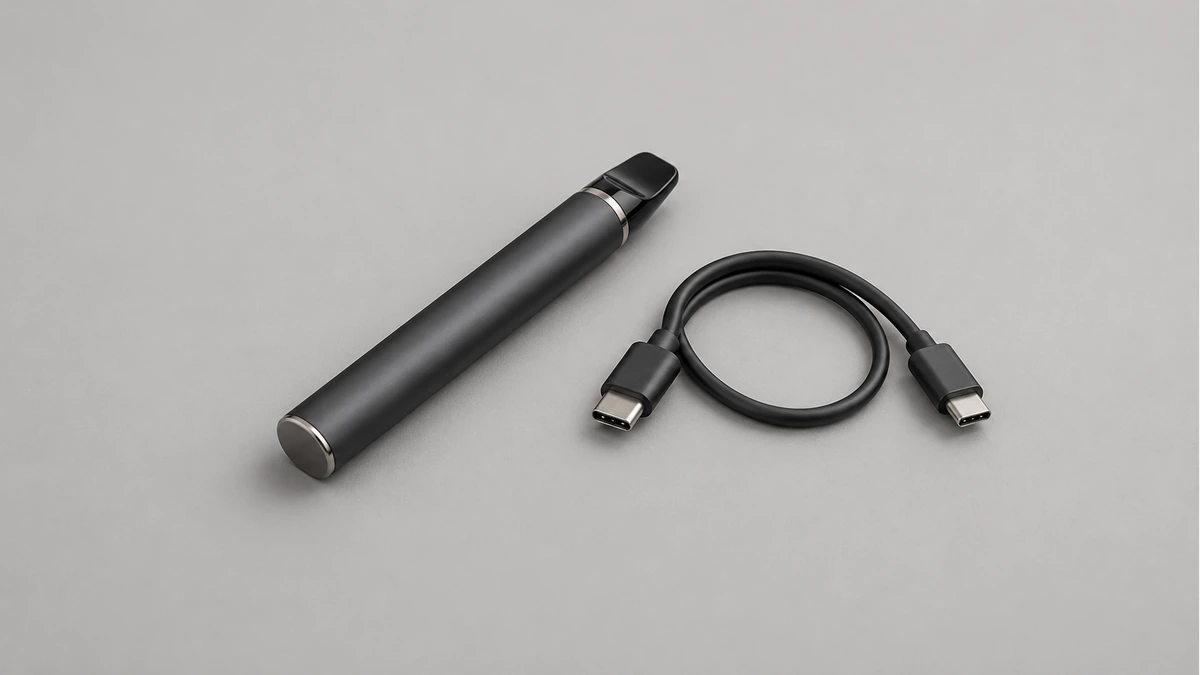
🔋 3. Connected operation and battery charging are different claims
It helps to read three possible statements separately. A manual might permit operation while connected. It might also describe whether charging continues during that operation. Finally, it might address operation from a depleted battery. An answer to the first question does not automatically answer the other two.
Imagine finding a feature label on the box and a separate note in the manual saying charging pauses under a specified condition. Those statements need not contradict one another: one describes permitted operation, while the other describes battery replenishment. Read them together rather than choosing the more convenient sentence. This is an illustrative reading example, not a claim about your equipment.
Conversely, if the documentation does not explain the battery’s behavior, do not invent a pause or a bypass to complete the story. Report the gap plainly. An accurate description can be as limited as “the maker permits connected operation with this supply; net battery charging is not specified in the information I have.”
That wording is useful when comparing instructions or asking for help. It separates a documented feature from an unanswered technical detail without pretending that the owner has measured the internal power path.
The device’s operating load and its battery-charging function are separate subjects. Permission to operate while connected does not establish that the battery’s charge level will rise throughout that operation. It also does not reveal how the maker manages competing demands.
Texas Instruments documents one power-path charging component that can supply a system and charge a battery independently, reducing charging current as system demand rises. This illustrates a real design approach. It is not evidence that your vaporizer contains that component or behaves in the same way.
Keep the distinction in ordinary terms: supplying the equipment and replenishing the cell are two jobs. A statement that one can continue does not fully describe the other. The relevant device documentation must explain any operating restrictions or expected charging behavior.
Our charge-time guide concerns the separate question of recharging. A charging-time statement should not be transferred to connected operation unless its stated conditions include that use. Otherwise, you would be comparing two different situations.
🖥️ 3.1 A screen is not an internal wiring diagram
A charging symbol, percentage or status message should be interpreted as the maker describes it. A visible icon does not identify the route taken by current inside the equipment. Likewise, a number remaining steady does not prove that the battery is disconnected from the system.
A forum report based on a USB meter is an observation about one setup, not confirmation of another device’s architecture. Do not add meters, improvised leads or electrical tests simply to resolve a feature description. Ask for the documented behavior of the exact combination instead.
🚫 4. Do not infer batteryless operation
“Runs while connected” and “runs without a working battery” are different statements. Some power-management designs have capabilities that others do not; a broad label cannot tell you which design is installed. Avoid both assumptions: that every device bypasses the battery, or that every device handles it identically.
If the instructions specify a minimum charge before connected operation, follow that requirement. If they do not address an empty battery, ask. A device not starting immediately after connection is not an invitation to remove the cell or find a bypass sequence.
Battery removal is governed by the equipment’s actual design and instructions. An internal cell should not be disconnected to test whether an external supply can run the device. Keep a service question separate from ordinary owner operation.
The same applies to a worn or damaged battery. A pass-through label is not a repair method. Follow the maker’s service guidance rather than trying to keep equipment operating around an unresolved component problem.
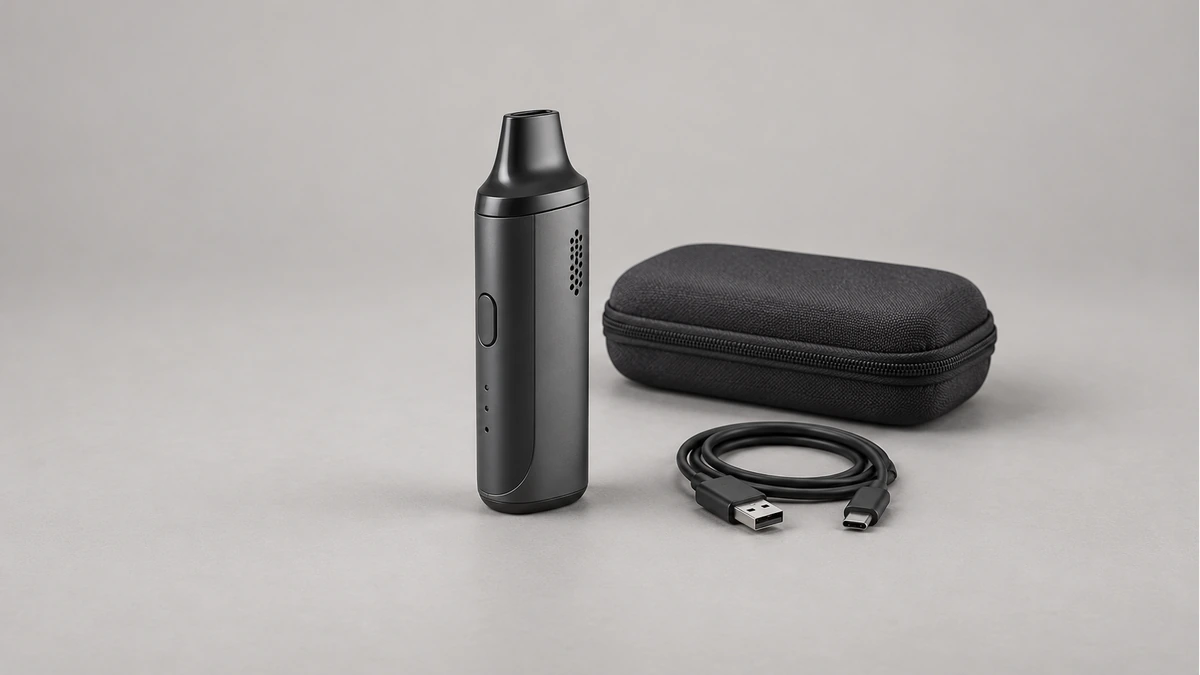
🔀 5. A power bank adds a second set of requirements
Consider the words on the power bank and the words on the vaporizer separately. A bank’s pass-through feature concerns its own supported input-and-output arrangement. It cannot grant the connected vaporizer permission to operate while receiving power.
For a narrow example, Anker’s 733 FAQ distinguishes pass-through through its AC input from simultaneous recharging and output through USB-C, which it does not support. This is a power-bank example of input-specific behavior, not a recommendation or a compatibility statement for a vaporizer.
Adding a bank therefore does not eliminate the need to confirm both ends of the arrangement. Identify the approved output and cable for the receiving equipment, and the permitted use of the bank itself. Do not assume that a chain of connected products inherits every feature named anywhere in the chain.
If a dock, cradle or magnetic charging accessory is involved, identify it too. An alternate charging route needs its own supported configuration. A statement covering the device’s wired input should not automatically be applied to every accessory that can supply it.
⏳ 6. Permanent connection is another unanswered question
A Reddit owner who kept equipment connected at home asked whether doing so helped battery life. Replies offered incompatible percentage rules. Those comments show why owners want clarity, but they do not establish a charging schedule or lifespan for your device.
Separate three questions when reading the manual: when ordinary charging should end, whether operation while connected is permitted and what storage requires. They may appear in different sections. One short pass-through statement should not replace the other two.
Do not convert the feature into a promise of unlimited operation, unchanged runtime or a particular number of battery cycles. Those would require their own evidence under stated conditions. This article provides no universal percentage target or recommendation to leave equipment connected indefinitely.
If your intended routine is mostly stationary, explain that to support. Ask whether the maker documents that pattern and what limits apply. A clear answer about the routine is more useful than asking only whether the device has pass-through.
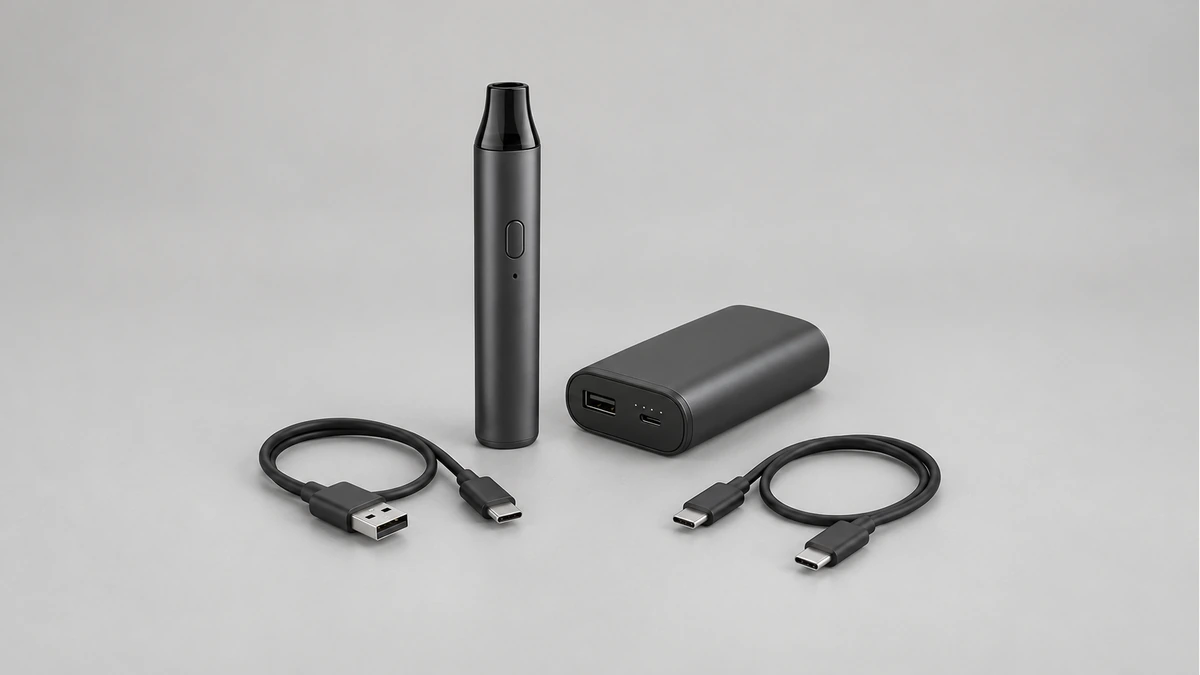
🧰 7. Keep the physical charging arrangement suitable
Before using an approved charging arrangement, prepare the location specified by the equipment instructions. Keep the connector accessible without wedging the device into a case or forcing a cable around a sharp bend. A feature description does not establish that a cramped storage pocket is an appropriate operating location.
The FDA’s e-cigarette battery guidance emphasizes manufacturer instructions and a clean, flat, visible charging surface away from flammable items. That guidance concerns electronic nicotine-delivery products; it is not approval of a wax or dry-herb vaporizer or its pass-through feature.
If a connector is damaged, the device reports an error or its behavior differs from the documented arrangement, stop and follow the relevant troubleshooting or service instructions. Do not interpret every change as normal power sharing, and do not force a connection to keep the equipment running.
Our charging-troubleshooting guide addresses the separate fault question. Keep a report of the exact supply, cable and device message. That makes it easier to distinguish an ordinary charging problem from a misunderstanding of connected operation.
❓ 8. Ask for the condition behind the feature
A support request can be short and specific: identify the equipment revision and supply, then ask whether operation while connected is permitted with that combination. If approved, ask whether a minimum charge or another restriction applies.
Next ask what the maker documents about battery charging during that operation. Does the feature only permit connected use, or does the documentation also describe net charging? Do not supply your own answer based on the word direct, a steady icon or another owner’s meter reading.
Keep the response with the matching manual rather than as an isolated screenshot of a marketing phrase. If you later change the supply or charging accessory, reconsider the configuration. The original answer described a particular arrangement, not every cable that happens to fit.
Once those points are clear, follow the documented routine. Until then, keep ordinary charging and operation within the instructions you can verify. The useful outcome is a precise understanding of what the feature permits, without asking an unknown power path to stand in for a missing specification.