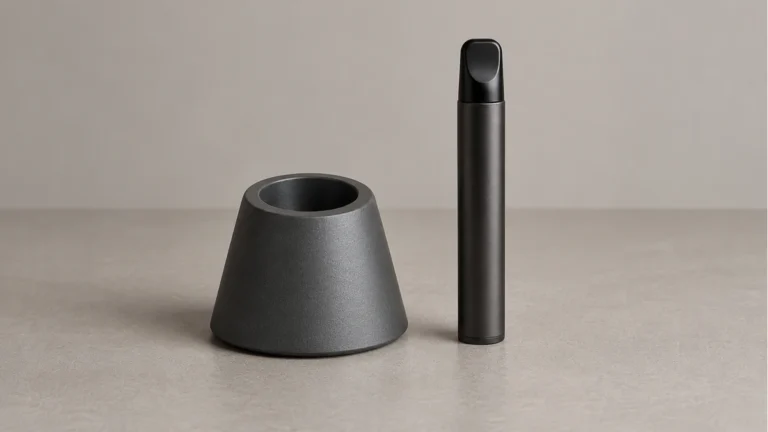
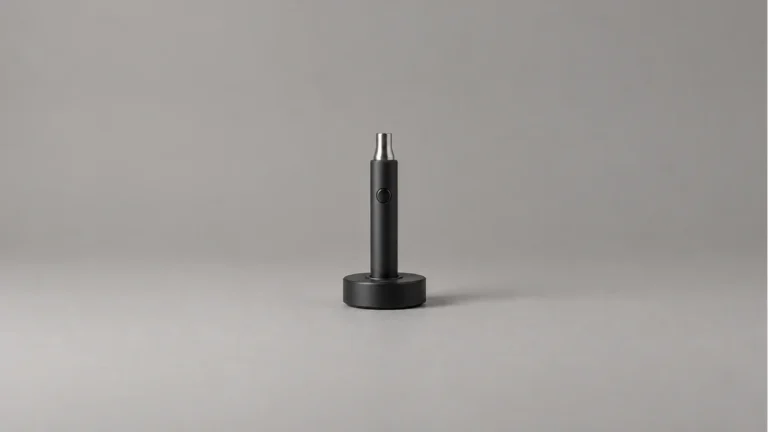
A vape holder for car storage has two separate fits to get right: the holder must suit the vehicle’s intended storage space, and its inner opening must suit the complete device. A cup-shaped accessory that drops into the console can still press a pen’s button, sit on the wrong part of its body or interfere with a lid.
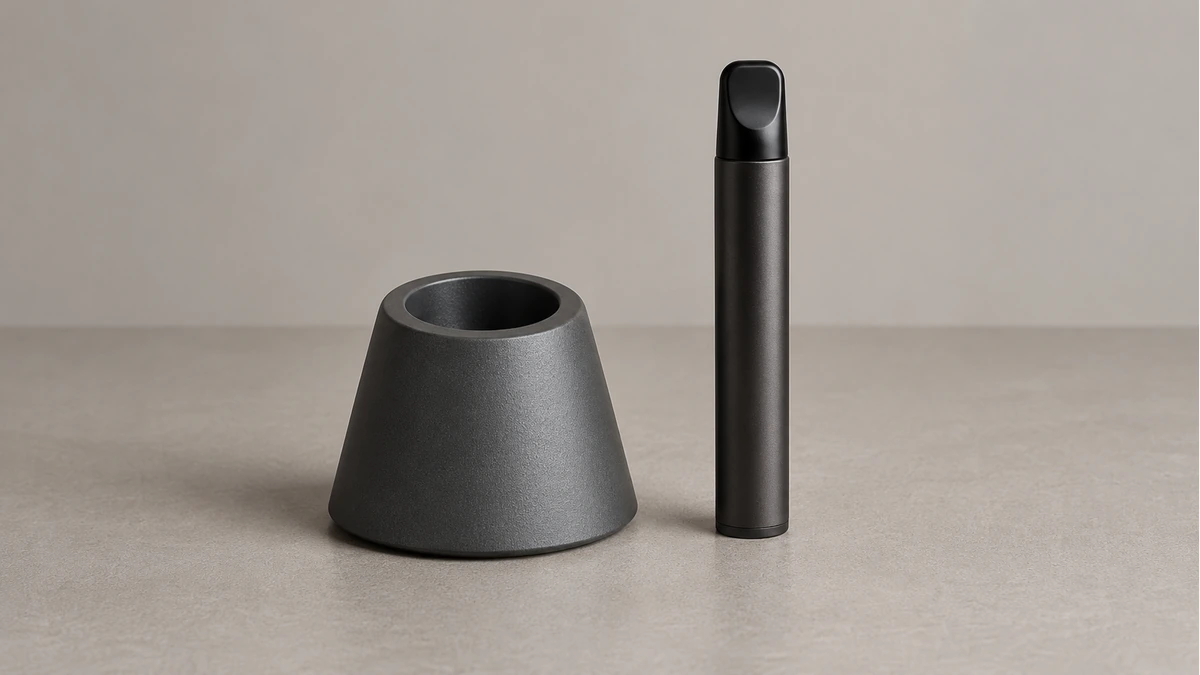
Assess the arrangement while parked, with the equipment powered off, cool and disconnected. Follow the vehicle’s accessory-placement instructions and the device’s transport directions. A passive holder does not establish collision restraint, temperature control or permission to operate equipment while driving. Its physical fit is only one part of a suitable storage arrangement.
🧩 1. Where would a vape holder for car storage fit?
Identify the actual location before considering the holder’s shape. A shallow console recess, a square cubby and a round cup holder are different spaces. A product photo taken in another vehicle does not establish that the accessory will seat correctly in yours.
Check the vehicle handbook for restrictions on the location and on accessories around controls. Do not use an airbag area, an instrument view or an operating control as a convenient mounting surface. If you cannot establish that a location is suitable, leave it out of the plan.
Look for an existing removable vehicle insert and identify it before lifting or modifying anything. A visible seam does not mean a console part should be removed. Avoid drilling, cutting or adding homemade wedges to make an accessory match a space it was not designed for.
An older Reddit discussion began with exactly this mismatch: the owner had a square cubby and wanted a round holder to fit it. That is useful as a question about geometry. The improvised modifications described in the replies do not provide installation instructions or verified compatibility.
📏 2. Check the holder’s outside shape and seating depth
Compare the documented holder dimensions with the permitted storage space. Include the lower section, upper rim and any flange, rather than measuring only the widest visible opening. Where ordinary external measurement is appropriate, keep tools away from controls, electrical openings and moving mechanisms.
Depth matters independently of width. A holder may stop on a shoulder above the bottom of a recess, or descend far enough that its upper edge is difficult to grasp. Determine where the accessory is designed to rest. Do not assume contact at any point is the intended support.
With the vehicle parked and the holder empty, follow the permitted fitting procedure. It should not require force or alteration of the console. If it rocks, catches or cannot be removed as directed, stop and resolve the mismatch instead of loading it with equipment.
A snug-looking rim does not establish the fit below it. Likewise, an accessory that can be placed inside a recess has not thereby been assessed for movement during travel. Physical seating and the manufacturer’s intended use are separate pieces of information to obtain.
🔎 2.1 Keep adapters identifiable
If the holder uses a removable adapter, establish which part belongs to the accessory and which belongs to the vehicle. Follow the documented combination. Do not borrow a similar-looking ring from an unrelated holder because it happens to occupy the gap.
Record the configuration that fits: the vehicle space, the holder and any specified insert. This makes it easier to notice a change after cleaning or moving the accessory to another vehicle. A setup that fit one console should be assessed again in a different one.
🔘 3. Match the inner opening to the complete device
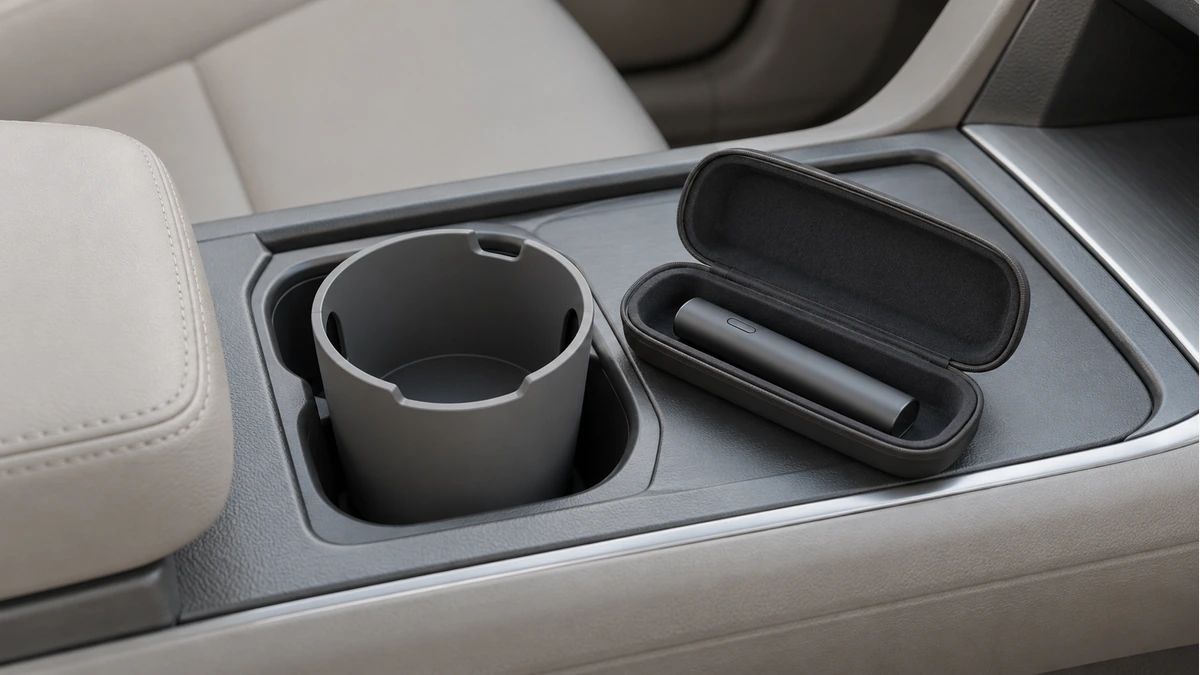
Now consider the object inside the holder. A solid-body wax pen, a dry-herb device and an assembled battery with an attachment can have different outlines. Use the complete permitted storage configuration, including any required cap or sleeve, when comparing dimensions.
Identify the intended support area on the device. The holder should not depend on a mouthpiece, removable cap or electrical connector as a load-bearing stop unless the relevant maker explicitly designs for that arrangement. Do not press equipment deeper just because the upper body still protrudes.
Check the location of buttons, ports and vents around the whole body. A button can be clear at the front while another feature meets the wall behind it. Keep the device disconnected and follow its power-off procedure during the assessment; those steps do not make unwanted pressure acceptable.
Look at removal as well as insertion. Can you grasp the intended body section without pulling on a cap or dragging a connector against an edge? If not, the opening may be too deep or the support may be intended for a different object.
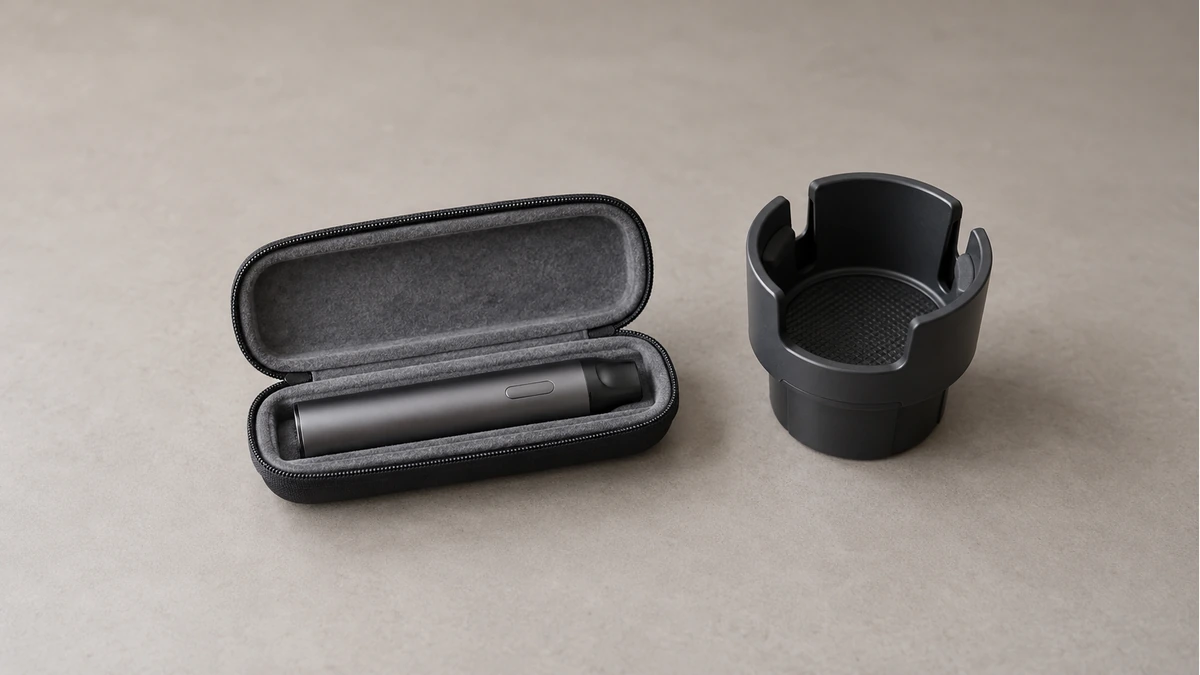
A case for a complete vape pen needs its own fit assessment. Moving the equipment into a case does not make the case suitable for the same open holder. Compare the configuration you actually intend to transport, rather than alternating between bare-device and cased measurements.
🚗 4. Review the surrounding console without creating a driving task
The holder occupies space beside other equipment. Check its relationship to lids, armrests and seat movement using the vehicle’s documented procedures while parked. Keep the device away from controls and resolve any interference before travel, rather than planning to adjust it on the road.
A Reddit owner described a shallow recess near a shifter where movement could contact a device button. That is a reason to reconsider the location. It is not a reason to practice operating the shifter around the pen or to create a special orientation that must be maintained during a trip.
Do not infer load retention from a phone-mount description. A mount’s intended device, attachment and installation conditions need their own documentation. The fact that a clip or suction cup can grip an object in a parked vehicle does not establish what it will retain during movement or a collision.
If equipment moves or falls during travel, leave retrieval until you can stop and park appropriately. Do not reach under a seat or rearrange the holder while driving. An accessory that adds an ongoing adjustment task has not solved the storage problem.
Keep a familiar vehicle routine intact. If a holder displaces a drink into an unsuitable location, prevents a lid from closing or occupies an area you need for normal controls, find another documented arrangement. Making everything just barely fit is different from leaving the space usable.
🌡️ 5. Fit does not answer the temperature question
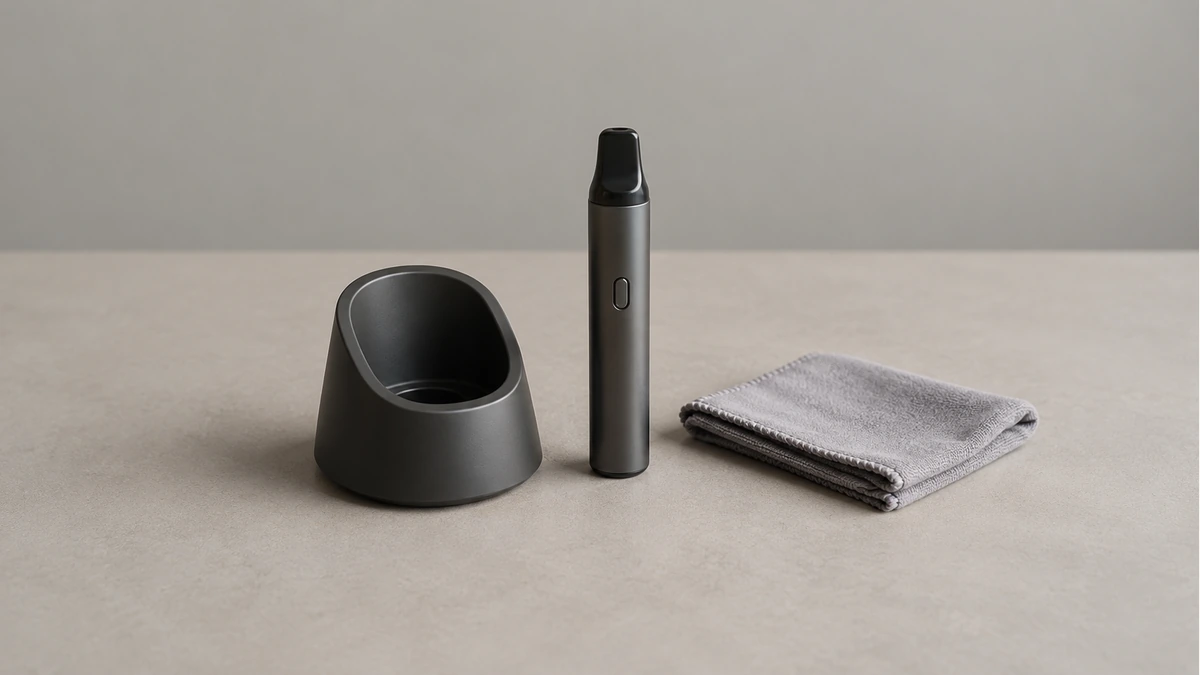
A passive holder has no demonstrated temperature-control function simply because it surrounds part of a device. Neither an open socket nor a closed carrying case establishes that equipment can remain in a parked car. Follow the actual device’s storage-temperature and transport instructions.
The FDA’s e-cigarette battery guidance cautions against extreme temperatures, including a hot car and freezing overnight conditions, and against charging in extremes. This guidance concerns electronic nicotine-delivery products; it is not certification of a non-nicotine device, holder or installation.
Plan what happens when you arrive before placing equipment in the vehicle. If you will leave the car, take the device to a location consistent with its storage instructions. Do not rely on moving the holder to a shaded part of the console as a substitute for those instructions.
Keep equipment out of direct sunlight as directed by its maker. A compartment lid may hide an object from view, but visibility and temperature suitability are separate questions. If the required conditions cannot be maintained, change the transport plan rather than assuming the holder provides protection.
🔌 6. Keep storage separate from charging
A notch for a cable is not charging approval. Identify whether the accessory is only a passive holder or an actual powered accessory with documented compatibility. Do not add a cable simply because a port remains accessible above the rim.
The device’s specified supply, cable and charging conditions still apply. Our USB-C vape pen charging guide explains the distinction between a connector’s appearance and the equipment’s charging requirements. A vehicle socket or adapter is another component to verify, not a universal charging solution.
For this storage assessment, keep the device disconnected. If its instructions require charging elsewhere, do that in the specified setting. Avoid building the holder placement around a cable stretched across the console or near controls, even when the disconnected device itself fits.
When packing cables separately, protect their ends and keep them identified with the appropriate equipment. A loose cable in the bottom of a cup holder changes the support surface. It should not serve as padding beneath a pen or as a makeshift way to raise the device above a deep rim.
🧼 7. Clean an empty holder and reassess its fit
Remove the equipment before attending to debris or a spill. Follow the vehicle’s cleaning directions for the console and the holder maker’s directions for the accessory. Do not assume that a cleaner suitable for one surface is appropriate for a liner, adhesive section or nearby vehicle trim.
If the holder is designed to be removed, take it out by the documented method. Keep any separate insert identified. Do not pull at a fixed console part to reach underneath, and do not spray liquid into a space containing the device or electrical connections.
Return equipment only when the relevant surfaces are ready under their care instructions, with no liquid or debris left against the device. Inspect the empty holder for a shifted insert or damage. Cleaning can reveal a fit problem that was previously hidden by crumbs or a misplaced part.
A stationary accessory table at home offers a different workspace for sorting permitted parts after the trip. Keep maintenance in an appropriate setting, rather than treating the car console as a workbench for disassembly and cleaning.
📦 8. Make arrival and removal part of the plan
Consider a trip with several stops. The equipment still needs suitable storage each time you leave the vehicle; the presence of a familiar holder does not remove that task. Keep the required case accessible when parked, rather than buried beneath luggage that would tempt you to leave the device behind. If the day’s plan cannot accommodate the maker’s transport and storage conditions, leave the equipment in appropriate storage elsewhere. That decision follows the actual trip and device requirements, not the convenience of an available console opening.
Prepare any required protective case before departure, with compartments suited to the equipment’s complete outline. A holder and a case can have different roles, but neither should contradict the device’s transport instructions. If enclosed transport is required, an open console rest does not override it.
Once parked at the destination, remove the equipment as directed and take it to suitable storage. Keep it inaccessible to children and pets. Check that no loose accessory or cable remains in a control area before leaving the vehicle.
If you later change the device’s sleeve, cap or body, reassess the inner fit. If you move the holder to a different console, reassess the outer fit. Treat each change as a new combination rather than assuming that a holder described as universal covers every variation.
The useful outcome is a storage arrangement you can set up and leave alone for the journey, then remove when parked. If the location needs constant adjustment, presses a control or depends on an unsupported mounting claim, resolve that particular problem before relying on it again.