Dosing capsules solve a handling problem before they solve a vaporizer problem. They can keep small loads organized and reduce direct contact with the oven, but only when the capsule is sized for the chamber and leaves the intended airflow path open.
Dry-herb vaporizer owners eventually run into the same fork in the road: load directly into the chamber every session, or use dosing capsules that snap in and out as a preloaded unit. Neither approach is universally better. A dosing capsule vape setup trades some of the tactile control of direct loading for speed and containment, but only if the capsule actually fits the chamber it’s meant for. Get the fit wrong and you lose airflow, heat transfer, and vapor quality all at once.
This guide walks through what a dosing capsule really is, how fit and material affect performance, and the maintenance habits that keep capsules working instead of degrading. It’s written for people comparing capsules against loading straight into the oven, not for anyone deciding whether to vaporize at all — if you’re still weighing that question, this overview of whether a dry-herb vaporizer is worth it is a better starting point.
🧩 1. A Dosing Capsule Is a Removable Mini Chamber, Not an Upgrade
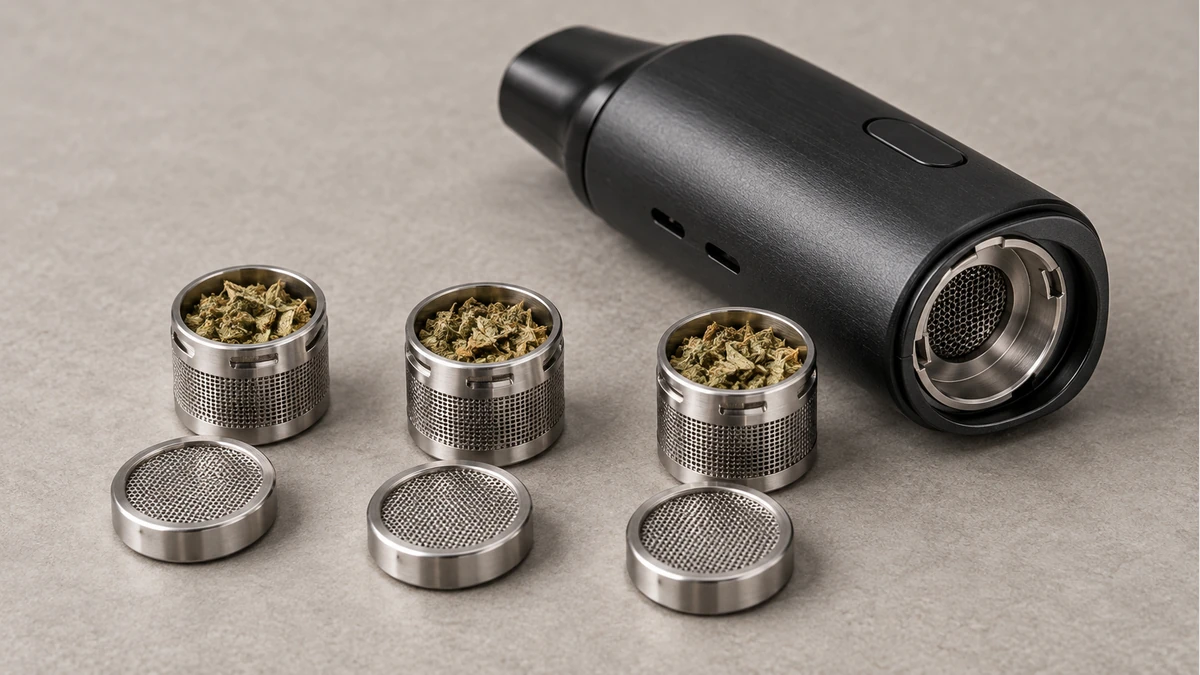
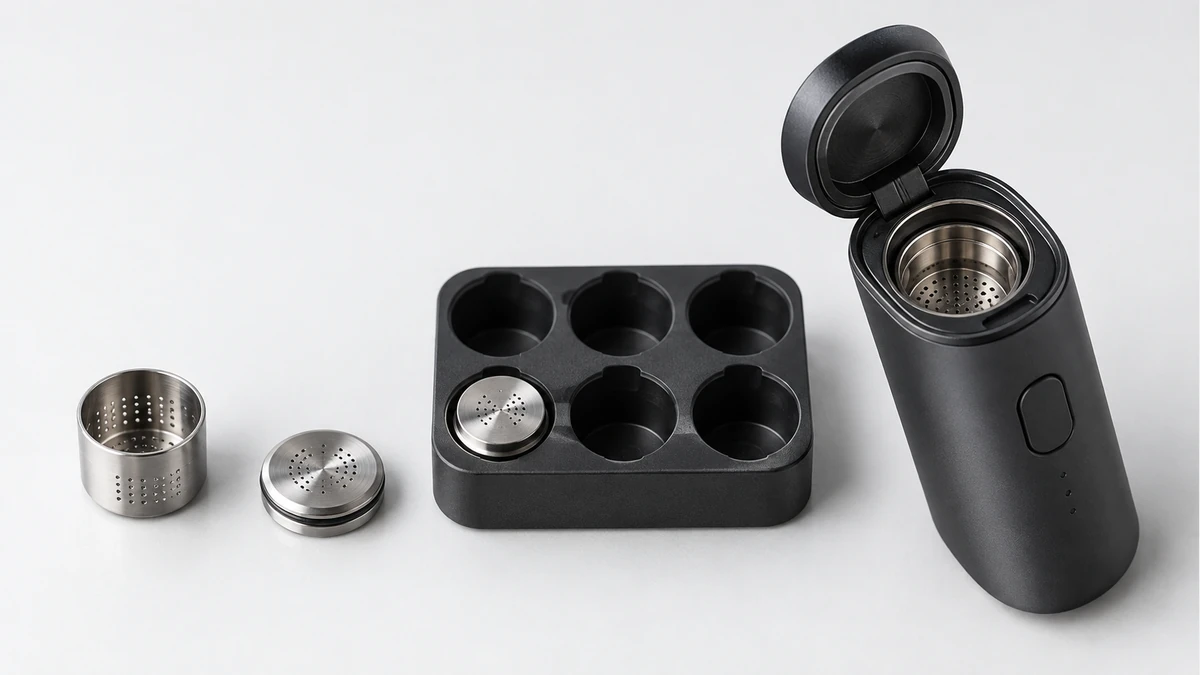
The most common misunderstanding is treating a dosing capsule as a performance accessory, something that inherently improves flavor, efficiency, or vapor density. It doesn’t. A capsule is a small perforated or vented container, usually metal or plastic, sized to sit inside your device’s existing oven or chamber. It holds ground material in place so you can preload it outside the device, then drop it in and pull it out again in seconds.
Everything a capsule does, the chamber itself already does. The capsule doesn’t add heating elements, doesn’t change your device’s convection or conduction profile, and doesn’t compress or grind material better than your hands would. What it changes is workflow: less fumbling with loose herb at the moment you want to use the device, and a sealed unit you can carry preloaded. If you’re unclear on how your device actually generates vapor in the first place, this explainer on conduction versus convection heating is useful context before you start comparing accessories.
🔍 1.1 Why Reddit Threads Disagree About Flavor
Search any vaporizer forum and you’ll find users insisting direct-chamber loading tastes better, right next to others swearing capsules are indistinguishable. Both camps are usually reporting real experiences, just from different variables. Direct loading lets you pack density precisely, fill irregular chamber shapes completely, and skip an extra layer of metal or plastic between the heating surface and your material. Capsule loading introduces a thin wall, a lid, and small tolerances around the capsule’s fit in the chamber, and any of those can blunt heat transfer if the capsule doesn’t match the device well. The disagreement isn’t really about capsules versus no capsules; it’s about fit quality, which varies a lot between third-party capsules and OEM ones.
📏 2. Fit, Dimensions, and Lid Seating
Fit is the single biggest variable in whether a dosing capsule performs close to direct loading or noticeably worse. A capsule needs to match three dimensions closely: outer diameter, height, and wall thickness relative to the chamber’s clearance. Too loose, and air bypasses the ground material through the gap between capsule and chamber wall, thinning out every draw. Too tight, and you risk cracking the capsule or scratching the chamber coating trying to force it in or out.
Lid seating matters just as much as the capsule body. A lid that doesn’t seat flush leaves a gap where air short-circuits past the herb instead of pulling through it, which is one of the most common reasons people report capsules feeling “airy” or weak compared to direct loading. Manufacturer-branded capsules are engineered against the exact chamber tolerances of a specific device, which is why they tend to seal more consistently than generic ones bought separately. Third-party capsules can work, but only if someone has actually measured them against your device’s chamber dimensions, not just assumed a “standard size” exists across brands, because it doesn’t.
🧵 2.1 Signs a Capsule Doesn’t Fit Your Device
A capsule that rattles slightly when the chamber is closed, sits proud of the chamber opening instead of flush, or requires noticeable force to remove are all signs of a dimensional mismatch. Weak draw resistance right after loading, before any material has combusted or degraded, points to air bypass rather than a clog. If you’re chasing inconsistent hits and you recently switched to a non-OEM capsule, checking fit before troubleshooting anything else will save time.
🌡️ 3. Material Choices and How They Move Heat
Dosing capsules are typically made from stainless steel, aluminum, or heat-resistant plastic like PCTG or Delrin-style polymers. Material affects two things: how quickly the capsule reaches the chamber’s temperature, and how much thermal mass sits between the heating element and the herb.
Metal capsules, particularly thin stainless steel, transfer heat faster and more evenly than plastic ones, which means the material inside comes up to temperature closer to how it would with direct chamber contact. Plastic capsules insulate slightly more, which can mean a softer, slower ramp-up and sometimes a session that runs a touch cooler than the displayed chamber temperature would suggest for direct loading. Neither is objectively better; it depends on whether you’re using a conduction-heavy device, a convection-heavy one, or a hybrid, since capsule material interacts differently with each heating style. This is another place where understanding your device’s heating mechanism pays off before choosing a capsule material.
⚙️ 3.1 Heat-Up Response: Capsule vs Direct Chamber
Because a capsule adds a layer between the heating surface and the herb, even a well-fitted one usually needs a slightly longer or gentler ramp to reach comparable vapor production versus loading directly against the chamber wall. Some devices compensate with a preheat cycle; others don’t, and the difference shows up as the first few draws feeling thinner than usual. This isn’t a malfunction. It’s the extra thermal step the capsule introduces, and it’s more pronounced with plastic capsules and less pronounced with thin, well-fitted metal ones.
💨 4. Airflow and Loading Density
Draw resistance in a capsule system is a function of two things working together: the capsule’s own vent geometry and how densely the herb is packed inside it. Overpacking a capsule is one of the most frequently reported problems among users who switch from direct loading. Because you’re filling the capsule outside the device, without the tactile feedback of pressing material against a visible chamber floor, it’s easy to compress ground herb more tightly than you would loading directly, especially if you’re using a capsule press or tamper.
Dense packing restricts airflow through the material, which increases draw resistance and can lead to uneven heating, since air isn’t moving through the load evenly. The fix is loading to a consistent, moderate density every time rather than pressing material down as hard as it will go. If you’re grinding fresh material for each capsule, grind consistency matters here too; uneven particle size, from a mix of coarse chunks and fine powder, packs unpredictably even at the same volume. A guide like this breakdown of grinder sizing and consistency is worth a look if your capsules are producing inconsistent draws session to session.
🌬️ 4.1 Matching Grind to Capsule Volume
Smaller capsules are more sensitive to grind inconsistency than larger chambers because there’s less total volume to average out coarse and fine particles. A fine, even grind loaded to a light-to-moderate density tends to produce more consistent draw resistance in a small capsule than a coarser, unevenly sized grind loaded to the same weight.
🎒 5. Portability and Residue Containment
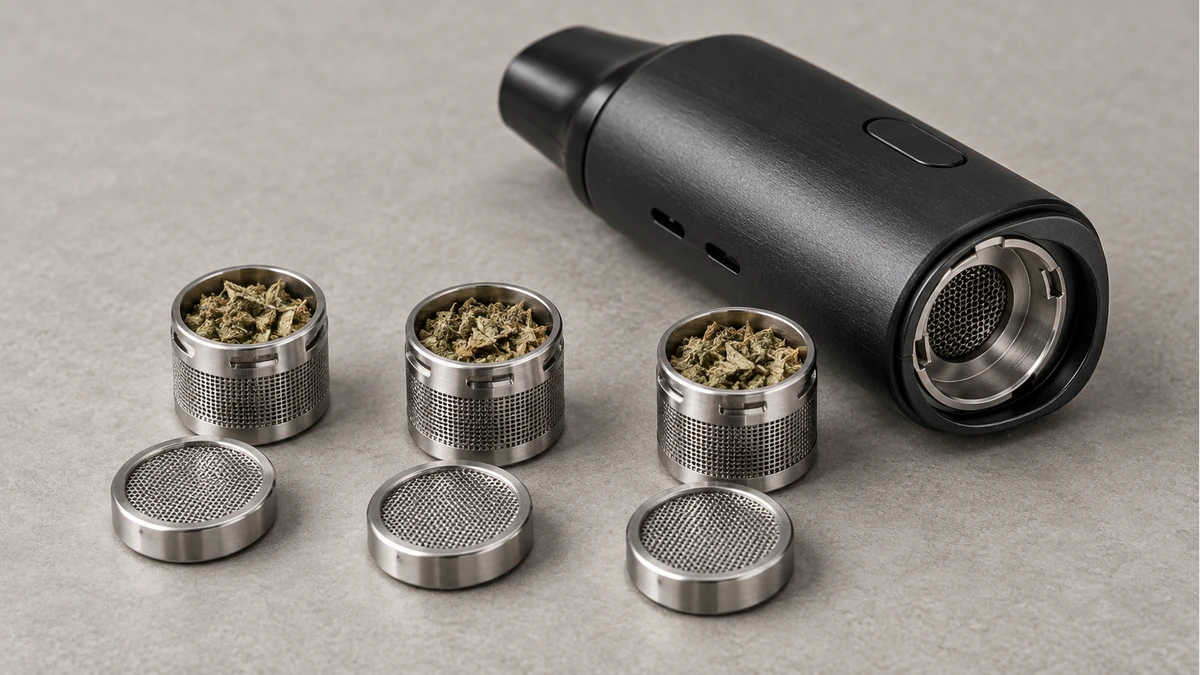
The practical case for capsules is almost entirely about workflow, not performance. Preloading several capsules ahead of time means you’re not carrying loose ground herb, grinding on the go, or handling material in public or awkward settings. Swapping a capsule takes a few seconds, compared to emptying, wiping, and reloading a chamber directly.
Capsules also contain residue better than an open chamber. Oils and fine particulate that would otherwise build up on chamber walls stay mostly inside the capsule and its lid, which can mean less frequent deep cleaning of the device’s actual oven, even if the capsules themselves need regular attention. For anyone who vapes in varied settings, carrying preloaded capsules in a small case is a meaningfully different experience from carrying a grinder and loose material everywhere.
🧴 6. Cooling, Cleaning, and Drying
Capsules get hot during use, and handling one immediately after removing it from the chamber risks burns or accidentally deforming a plastic capsule while it’s still soft from heat. Letting a capsule cool fully on a heat-safe surface before touching it, emptying it, or cleaning it is a basic but frequently skipped step, especially when someone is trying to reload quickly between sessions.
Cleaning should follow whatever the manufacturer specifies for that capsule’s material, since metal and plastic capsules don’t always tolerate the same cleaning methods. Many brands recommend a brief soak in isopropyl alcohol followed by a rinse and thorough air-drying, but concentrations, soak times, and whether alcohol is safe for a given plastic at all vary by manufacturer. Always check the documentation that came with your specific capsules rather than assuming a method that worked for one brand is safe for another. Skip anything involving direct heat to speed up cleaning or drying; applying heat to a capsule that’s wet with solvent isn’t a shortcut worth taking, and manufacturers don’t recommend it.
💧 6.1 Drying Fully Before Reuse
A capsule that goes back into rotation before it’s completely dry can trap moisture against the herb, affecting how it heats and tastes, and repeated moisture exposure can accelerate wear on metal capsules through oxidation or on plastic ones through material breakdown. Air-drying on a clean towel for several hours, or overnight for a full clean between multiple capsules, is a safer bet than assuming a quick wipe is sufficient.
🔧 7. Deformation, Wear, and Knowing When to Replace
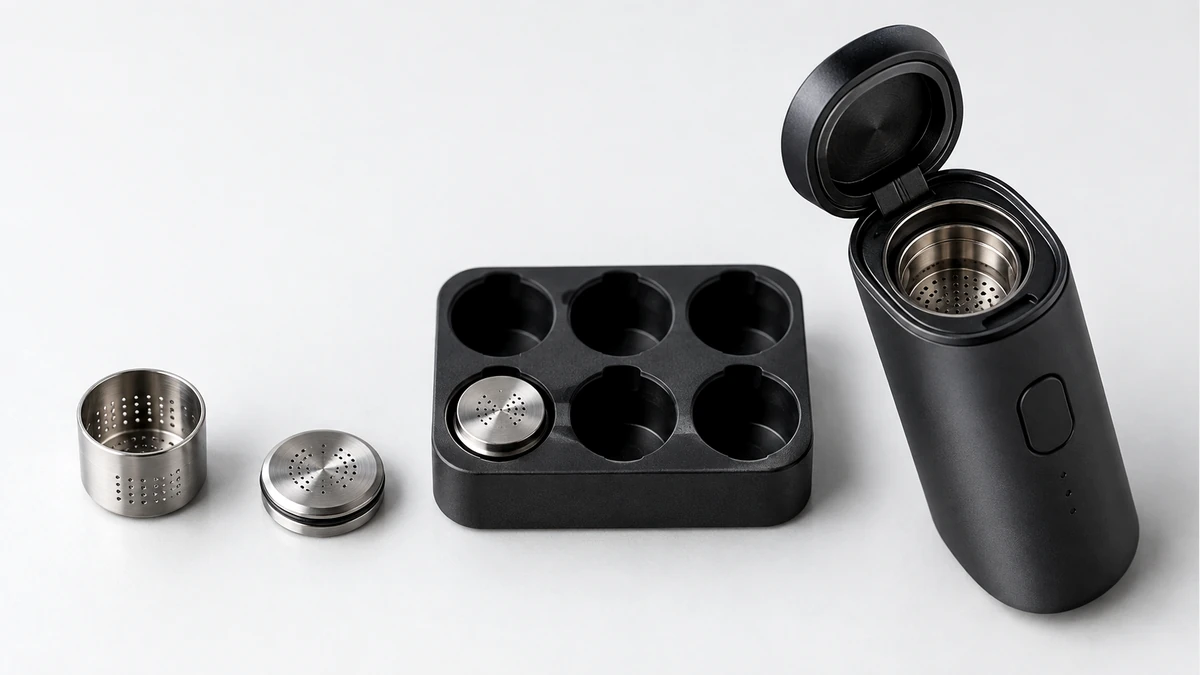
Capsules are consumable parts, not permanent ones. Plastic capsules can warp slightly from repeated heat cycling, especially if they’re set down on hot surfaces or handled before fully cooling, and a warped capsule is exactly the kind of fit problem described earlier: it no longer seats flush, and draw quality drops. Metal capsules are more heat-stable but can develop scratched or worn vent holes over time, or lids that no longer click into place securely after repeated use.
Visible warping, a lid that won’t seat flush, cracks, or a noticeably looser or tighter fit than when the capsule was new are all signs it’s time to replace it rather than keep troubleshooting draw or flavor issues elsewhere. Since capsules are inexpensive relative to the device itself, replacing a worn one is usually a faster fix than chasing a performance problem that’s actually a fit problem.
📊 8. Capsule Compatibility Table
Fit and material tendencies vary enough across capsule types that a general comparison is more useful than device-specific claims, which change often as manufacturers update product lines. Use this as a framework for evaluating any capsule against your own device rather than a definitive spec sheet.
| Capsule Type | Typical Material | Heat Transfer | Fit Tolerance | Best Suited For |
|---|---|---|---|---|
| OEM branded capsule | Stainless steel or engineered plastic | Close to direct loading | Tight, device-specific | Owners prioritizing consistency and sealed fit |
| Third-party metal capsule | Stainless steel or aluminum | Good, if dimensions match | Variable, verify before buying | Budget-conscious users willing to check measurements |
| Third-party plastic capsule | PCTG or similar polymer | Slower ramp, more insulation | Often looser, prone to warping | Light, occasional preloading rather than daily use |
| Universal/adjustable capsule | Mixed materials | Inconsistent across devices | Rarely sealed as well as fitted options | Testing the concept before committing to a set |
✅ 9. Decision Checklist: Capsules or Direct Loading
Before committing to a set of dosing capsules, it helps to weigh what you actually value in a session against what capsules realistically deliver. This checklist covers the questions that tend to matter most based on how owners actually use their devices day to day.
- Do you value speed and portability over maximum flavor precision? Capsules favor quick swaps and preloading; direct loading favors fine control over pack density and chamber fill.
- Have you confirmed the capsule’s dimensions match your device’s chamber? A capsule advertised for a similar model isn’t guaranteed to fit yours at the tolerances that matter.
- Are you loading to a consistent, moderate density rather than pressing material in tightly? Overpacked capsules restrict airflow regardless of how well they otherwise fit.
- Are you letting capsules cool fully before handling or cleaning them? Skipping this risks burns and can deform plastic capsules while they’re still warm.
- Are you cleaning and drying capsules according to the manufacturer’s instructions for that specific material? Metal and plastic capsules don’t always tolerate the same cleaning approach.
- Are you inspecting capsules periodically for warping, cracks, or loose lids? Worn capsules cause the same draw and flavor problems people often blame on the device itself.
- Would a consistent grind improve your results either way? Grind consistency affects packing density in both capsules and direct-loaded chambers, so it’s worth solving independent of which loading method you choose.