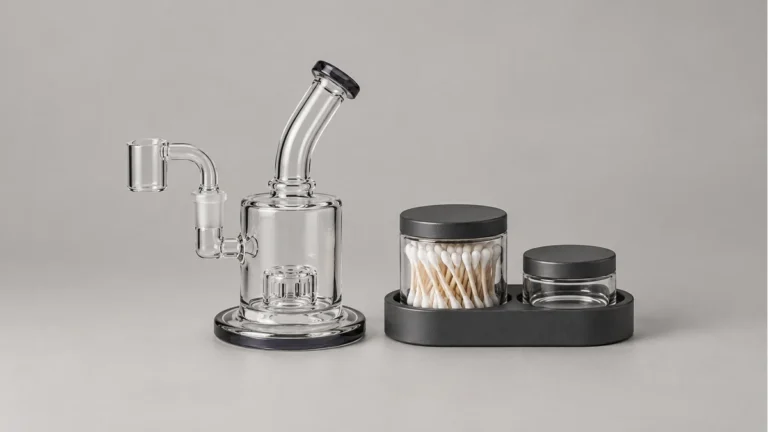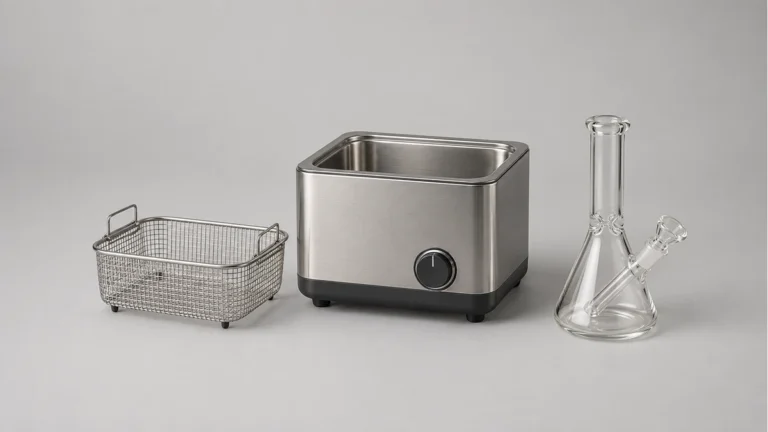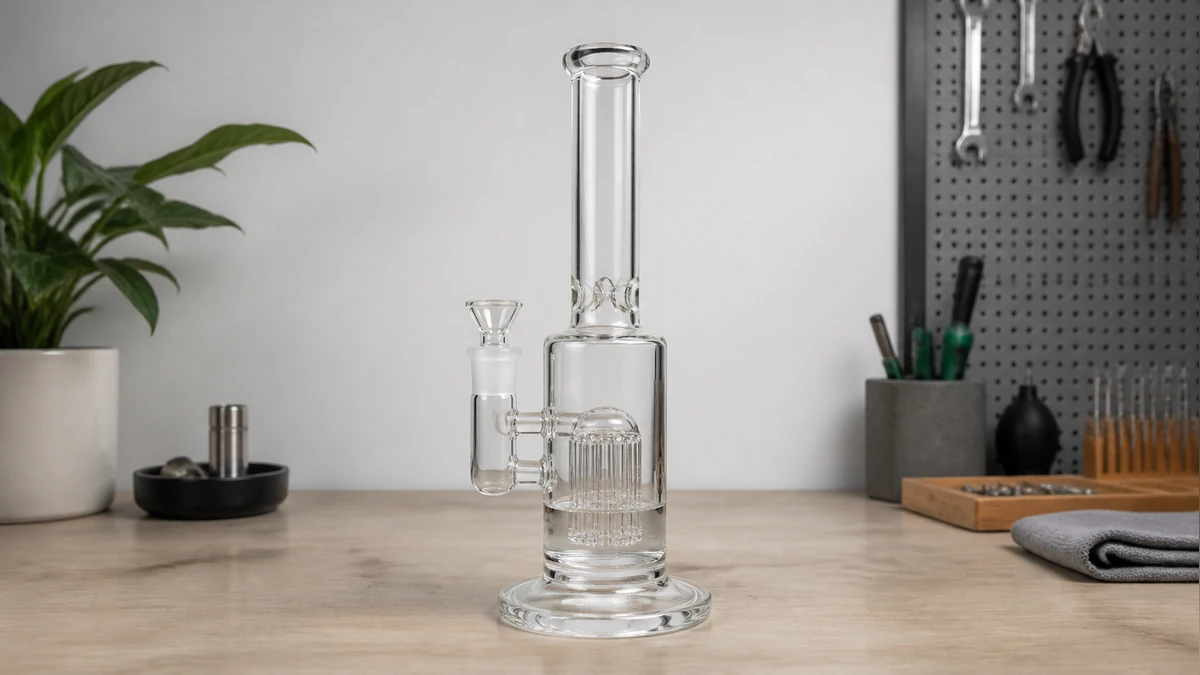
You finish rinsing a piece after a proper cleaning, refill it the way you always do, and take the first hit — and something is off. The drag pulls harder than usual, or water spits up toward the mouthpiece on every pull, or a percolator that used to bubble evenly along its whole length only fires from one side. Nothing about the glass has changed. What changed is the water level, and it changed because cleaning resets the one variable most owners never actually measure: how much water was in there to begin with.
Most people fill by eye, using the shape of the base or the position of a percolator as a rough guide. That works fine as a habit, right up until the piece is empty and freshly dried on a towel, with no wet line or residue left to eyeball against. The fix isn’t complicated, but it does mean understanding what the water is actually doing inside the chamber — not just how much of it there is, but where the surface needs to sit relative to the openings built into the glass.
🔍 1. Why the Same Bong Suddenly Feels Different
Water level in a bong isn’t a single number so much as a relationship between the water’s surface and the slits, holes, or diffuser teeth built into the downstem or percolator. Smoke and air travel down through the stem, get forced through those openings, and bubble up through the water on their way to the mouthpiece. If the openings sit above the waterline, air passes through them without resistance, which feels like an unusually easy, almost hollow draw and produces little to no filtration. If the openings sit well below the waterline, the same air has to push through more water to escape, which is what most people register as heavy drag.
After a deep clean, the piece is bone dry, and the wet-line habits people rely on — filling until it “looks right” — no longer have any reference point. That’s usually the moment owners notice the difference most clearly, not because the glass is behaving differently, but because they’re rebuilding a water level from memory instead of from a visible mark.
🧩 1.1 What “Covering the Percolator” Actually Means
The common shorthand — “cover the percolator” — means the water surface should sit high enough that the diffuser slits or holes are submerged, so air is forced to bubble through them rather than slipping past above the waterline. It doesn’t mean submerging the entire percolator body, and it doesn’t mean filling until the chamber looks full. Pieces with a single percolator generally need less water than multi-chamber designs, where each additional percolator has its own set of openings that need to sit under its own local waterline. Owners moving between a straight tube and a bubbler-style piece often notice this most, since the smaller, single-chamber build of a bubbler behaves differently from a bonged piece with several percolators stacked in sequence — a distinction covered in more detail in this comparison of bubblers and bongs.
🧩 2. Drag and Splashback: Reading the Signs
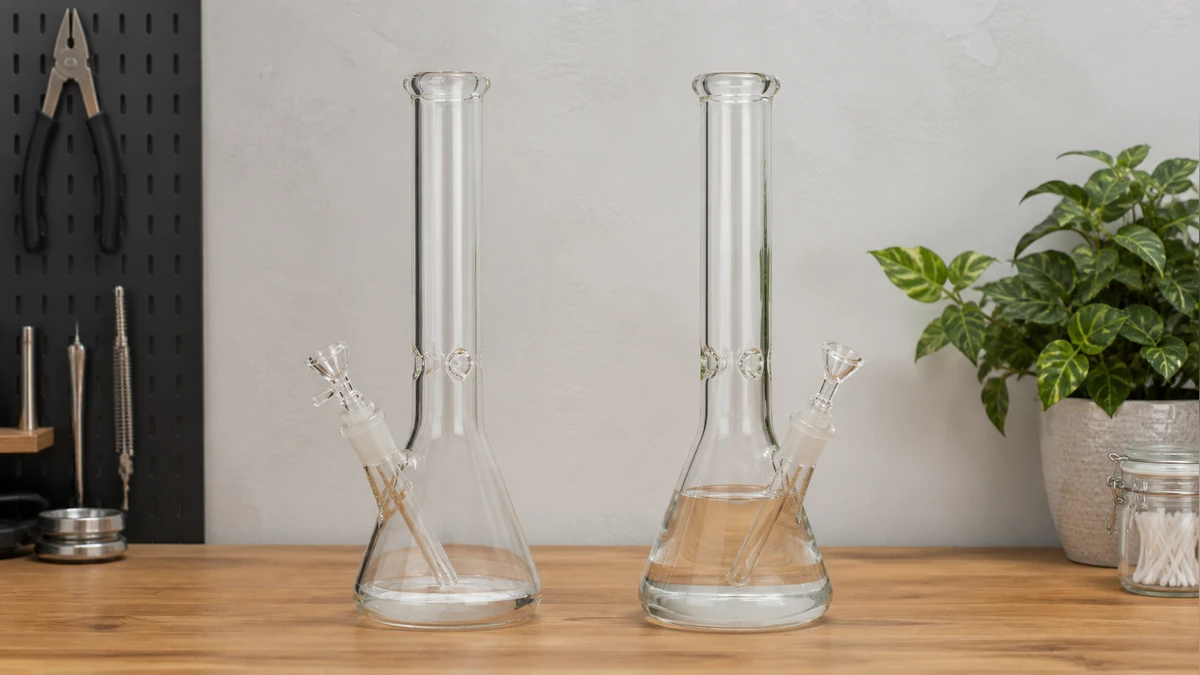
Once the water level is off, the piece usually tells you which direction it’s off in. Drag and splashback aren’t random annoyances — they’re fairly direct feedback about whether there’s too much water in the chamber or not quite enough.
🧩 2.1 Too Much Water
Overfilling raises the distance air has to travel through water before it reaches open space, which is what makes a draw feel unusually heavy or effortful. It also raises the water level closer to the mouthpiece or the top of the chamber, so a firm pull can send droplets up the neck and into the user’s mouth — the splashback most owners are trying to avoid. This is more noticeable on percolated pieces, where multiple diffusion points are already adding resistance; a little extra water compounds rather than simply adding on top of that.
🧩 2.2 Too Little Water
Underfilling has the opposite problem. If the water sits below the percolator’s openings, air escapes above the waterline instead of bubbling through it, so the draw feels unusually loose and the visible bubbling looks thin, uneven, or one-sided. It can also mean smoke reaches the mouthpiece with less contact with water than intended, since the diffusion openings aren’t doing the job they’re shaped for. Neither extreme is a fault in the glass — it’s a mismatch between the fill and the specific geometry of that piece, which is why a level that works for one design won’t necessarily transfer to a different percolator count or chamber shape.
🌊 3. Mineral Content and That Cloudy Film
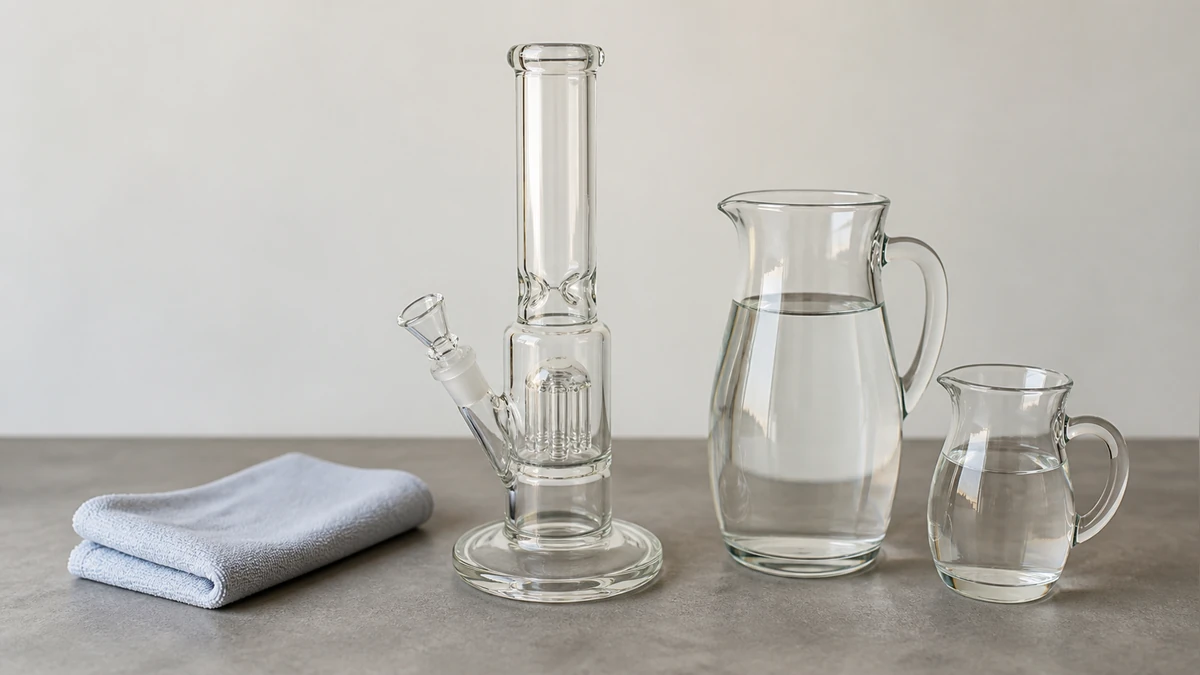
Water level explains most day-to-day drag and splash complaints, but a second, slower-moving issue shows up over weeks and months: a hazy or chalky film that builds up on the inside of the glass, especially around the waterline and in tight percolator slits. Owners frequently assume this is permanent damage to the glass itself, when in many cases it’s closely related to what’s in the water rather than what’s happening to the glass.
🧩 3.1 Hard-Water Film vs. Permanent Clouding
Tap water carries dissolved minerals — calcium and magnesium are the most common contributors to what’s generally called water hardness — and as water evaporates or sits in a chamber, those minerals can be left behind as a thin film on the glass surface. This film tends to be visible as spotting or a light haze concentrated where the waterline repeatedly sat, and around narrow percolator openings where water lingers longest between cleanings. Genuine, permanent clouding is different: it’s typically the result of micro-abrasion inside the glass from repeated scrubbing with abrasive materials, and it doesn’t wipe or soak away the way mineral film does. The practical distinction matters because one is a routine cleaning issue and the other isn’t something a refill routine can fix. A structured cleaning pass — the kind outlined in this bong cleaning guide — is generally enough to tell the two apart, since mineral film responds to soaking and light agitation while true clouding does not.
🧩 3.2 Distilled Water as a Maintenance Choice, Not a Guarantee
Because mineral film comes from dissolved minerals in the water itself, some owners switch to distilled or filtered water specifically to reduce how much film accumulates between cleanings. That’s a reasonable maintenance choice, but it’s worth being precise about what it does and doesn’t do: distilled water has had most dissolved minerals removed, so it leaves less residue behind as it evaporates, which can mean less frequent or lighter film buildup over time. It is not a filtration upgrade, it doesn’t change drag or bubbling behavior, and it doesn’t prevent the piece from needing regular cleaning — it simply changes one input into how quickly mineral spotting reappears after a clean.
🧼 4. Changing Water and Building a Repeatable Refill Routine
The through-line connecting water level and mineral buildup is the same: both are easier to manage with a routine than with guesswork, especially for owners rotating between a bong and other water-cooled pieces like dab rigs, where percolator placement and chamber size vary just as much and reset the same way after cleaning.
🧩 4.1 Finding and Marking Your Level
The most reliable way to stop re-guessing water level after every clean is to establish it once, deliberately, and mark it. Fill slowly with the piece upright on a flat surface, watching the percolator openings as the water rises, and stop as soon as the lowest row of slits or holes is just submerged — not buried under an inch of extra water, just covered. From there, note the level against a fixed reference point on the glass, such as a printed logo, a seam, or the base of a joint, so it can be matched by eye on future refills without repeating the trial-and-error. For multi-percolator pieces, this means checking each chamber independently, since a level that covers the lowest percolator won’t automatically be correct for the one above it.
🧩 4.2 A Routine That Sticks
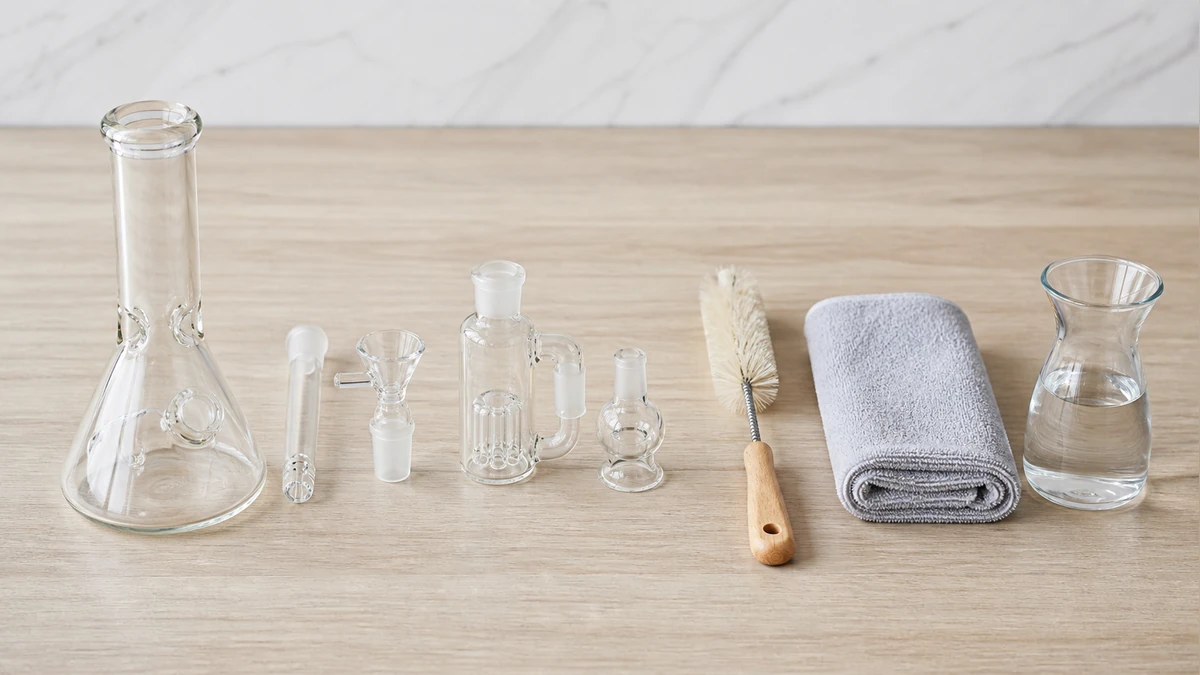
Stale bong water collects ash, resin, and dissolved residue fairly quickly, and it’s generally worth swapping out well before it looks visibly dirty — waiting for obvious discoloration means the water has already been doing a worse job of filtering for a while. A practical routine is to empty and refresh the water after every few sessions, or daily for frequent use, and to keep it separate from the deeper cleaning schedule that addresses resin buildup on the glass itself. Rinsing the chamber with plain water before each refill also helps prevent old residue from mixing into the fresh fill and shortening how long it stays clear. None of this needs to be complicated — the goal is just consistency, so the piece behaves the same way from one session to the next instead of surprising the owner every time it comes out of a proper clean.
Temperature can change the feel slightly, so compare like with like. A piece refilled immediately after a warm rinse may not feel identical to one sitting at room temperature. Make adjustments slowly and judge the complete routine rather than chasing a single draw.
If the same measured fill begins to pull differently, something else changed: an opening may be partly blocked, a removable part may not be seated, or mineral film may have narrowed a small passage. Empty and inspect the piece rather than compensating with ever more or less water. A stable routine makes those changes easier to notice.
🧩 4.3 Treat a Sudden Change as a Diagnostic Clue
A phone photo taken square to the piece, with the base on the same counter, is usually enough to preserve the reference. You can also note how far the water sits above a visible percolator seam. Avoid permanent markings or adhesive placed where it can heat, collect residue, or interfere with cleaning. The useful record is the relationship between water and the internal openings, not a number copied from another design.
🧩 4.4 Record the Level Without Marking the Glass Permanently
That method is intentionally unglamorous. It gives you a repeatable baseline without pretending that more water means more filtration or that one person’s preferred draw is universal. If a tiny change produces a dramatic increase in drag, inspect for a blocked slit or trapped debris before blaming the water level.
A single fill line cannot be transferred from one piece to another. The useful range is created by the lowest functional openings, the volume above them, the angle of the neck, and the distance between the water surface and the mouthpiece. Begin with clean glass on a level counter. Add only enough water to cover the working openings, then make a gentle unheated test draw. Add water in small increments until bubbling is even without water climbing toward the mouthpiece.
🔄 5. Let the Glass Tell You Where the Useful Range Is
✅ 6. Conclusion
A bong that suddenly feels harder to pull, splashes more than usual, or looks hazy along the waterline usually isn’t showing a flaw in the glass — it’s showing an unmarked water level or a buildup of dissolved minerals, both of which are ordinary maintenance issues with straightforward fixes. Marking a known-good level once, refreshing the water on a regular schedule, and knowing the visual difference between mineral film and true clouding covers the vast majority of day-to-day complaints owners run into. The routine doesn’t need to be elaborate; it just needs to be repeated.
📚 7. Sources
- U.S. Geological Survey — Water Hardness and Alkalinity