🔎 1. The Bowl Snapped, and the Replacement Still Doesn’t Sit Right
The bowl piece is usually the first thing to break. It takes the direct hit when a bong tips off a table edge, gets knocked against the sink during a rinse, or develops a hairline crack after one too many swings between a cold piece and a hot flame. So you do the sensible thing: measure the joint, order a bowl that claims to match, and it arrives looking right. Then you set it in place and something is off. It sits too high. It wobbles when you tap the handle. Or it drops in so far that the stem nearly touches the downstem below it, choking off airflow before you’ve packed anything.
This is one of the most common frustrations in glass ownership, and it’s almost never a defective product. It’s a mismatch between what “matching size” actually means and what most buyers assume it means. Diameter is only one variable in the equation. A bong bowl piece is defined by a combination of measurements and a fit relationship, not a single number, and skipping the rest of that relationship is exactly how people end up with a bowl that technically fits the joint size but still doesn’t seat correctly.
If you’ve never had to think about this before, that’s normal — a bowl usually comes as part of a set, and nobody has to reason about joint mechanics until the original piece is gone. Once you’re shopping for a replacement on its own, joint size, gender, taper, stem depth, and even the angle of the bowl all start to matter at the same time, and getting any one of them wrong is enough to throw off the fit.
🧩 2. What Measurements Actually Identify a Bong Bowl Piece
A bowl piece and the joint it sits in are described using a small, consistent set of measurements. Understanding what each one controls makes it much easier to read a product listing correctly instead of guessing from a photo.
🧩 2.1 Joint Size: The Diameter Everyone Talks About First
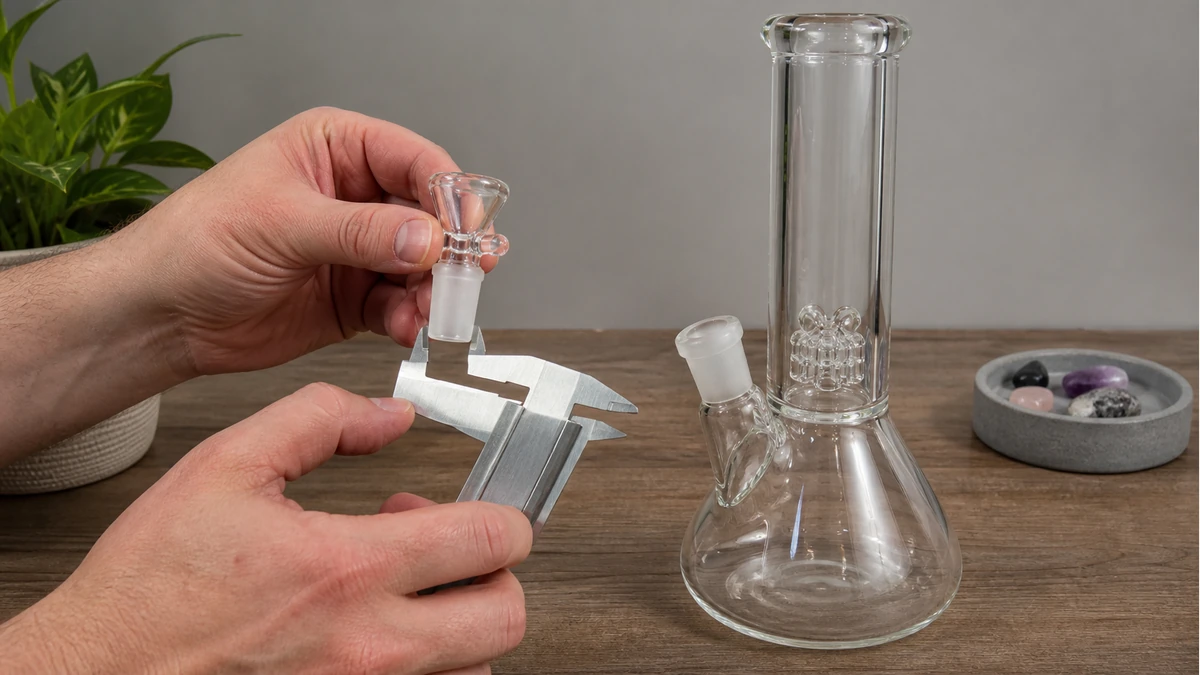
Joint size refers to the diameter of the ground-glass connection point, most commonly seen in the familiar 10mm, 14mm, and 18mm categories used across borosilicate glass water pipes. This number tells you whether a bowl piece is even in the right size family for your bong’s joint. It does not, on its own, tell you whether the bowl will seat properly, sit at a usable angle, or clear the downstem underneath it. Diameter narrows the search; it doesn’t finish it.
It’s worth measuring rather than assuming, especially on pieces that have changed hands, been given as gifts, or bought without documentation. Two joints that look similar at a glance can be a full size apart, and a bowl purchased on a visual guess is one of the most common return reasons in glass hardware. For a broader walkthrough of how joint sizing is typically read off an existing piece, AOVAPE’s bong bowl guide covers the process in more detail than fits naturally here.
🧩 2.2 Depth, Taper, and Why the Ground Section Matters
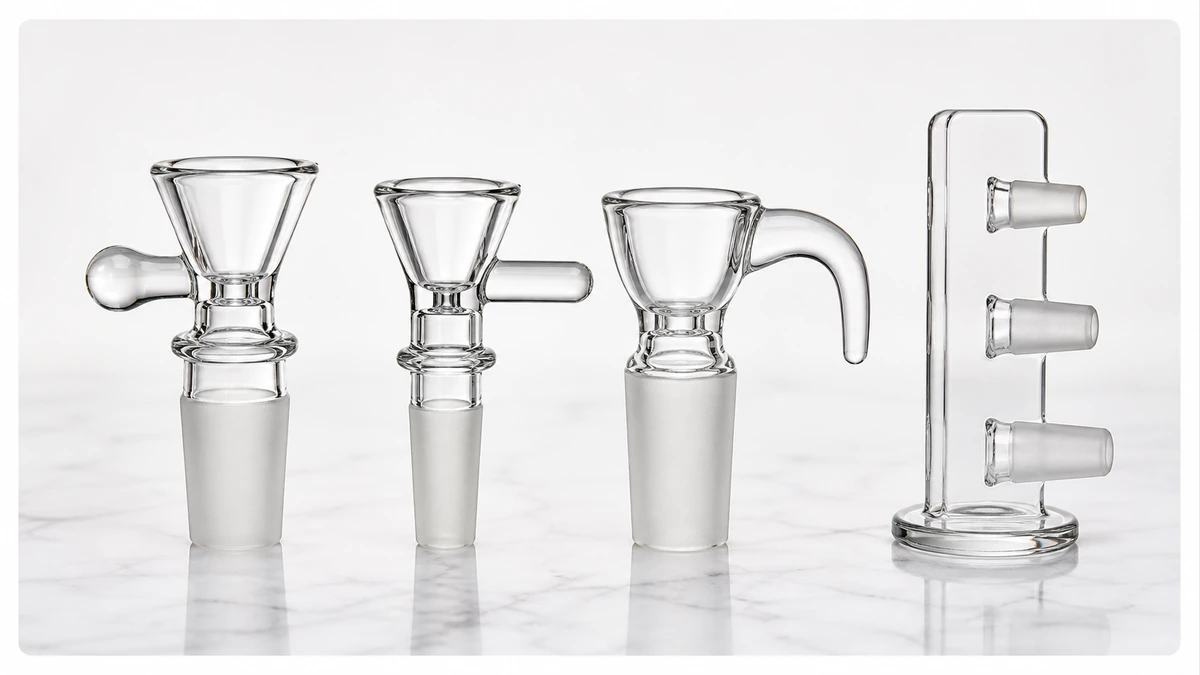
Beyond diameter, the ground-glass section has a taper — a gradual narrowing that lets the male and female pieces wedge together securely rather than just resting loosely against each other. The length of that ground section, and how deep the bowl’s stem is cut, determines how far the bowl sinks into the joint before it stops. Two bowls with identical joint diameter can have different stem lengths, which is why one might sit flush with the joint opening while another sits noticeably higher, even though both are sold under the same size label.
This is also where handle clearance comes in. A bowl handle that’s angled or shaped a certain way can catch on a nearby feature of the bong — a percolator arm, an ice pinch, or a second joint on a recycler — before the bowl itself has fully seated. The bowl can be the right diameter and the right gender and still be the wrong bowl for that particular piece, simply because of how it’s shaped around the joint opening.
🧩 2.3 Bowl Angle: The Detail That Gets Overlooked
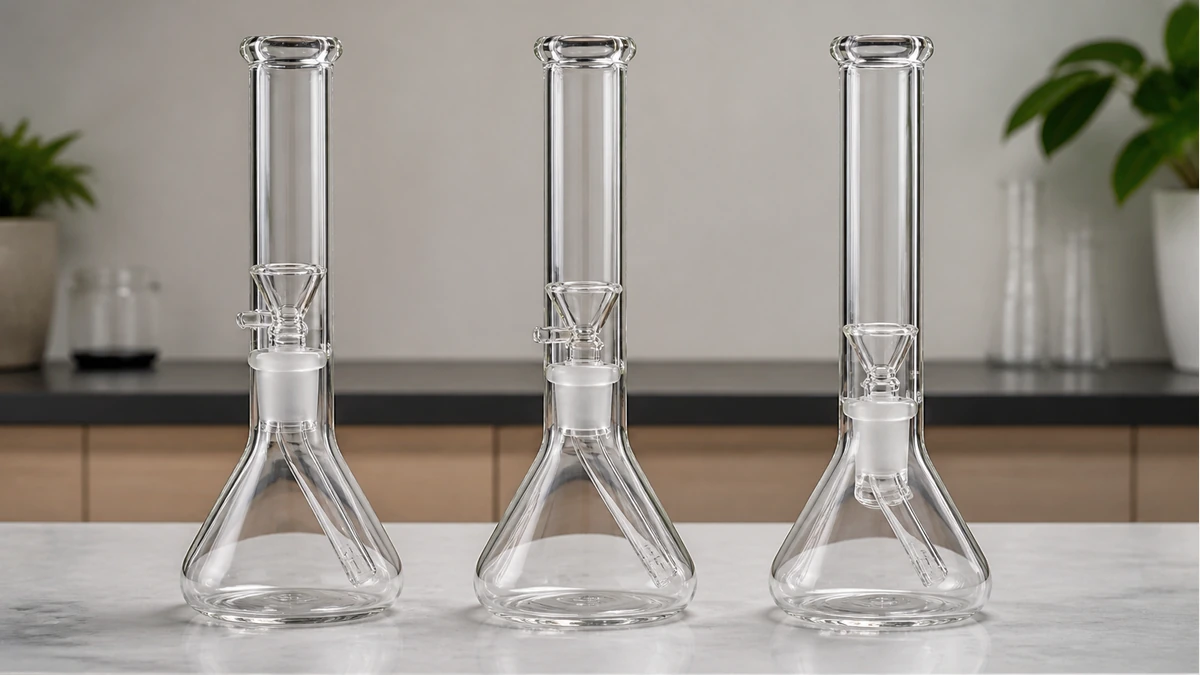
Joints aren’t only cut at a single fixed angle, and the bowl’s own geometry has to match the angle it’s being seated into or the fit will look and feel wrong even when every other measurement checks out. Many bongs use a joint angled around 45 degrees off the tube, while others — particularly straight tubes and some beaker designs — use a joint set closer to 90 degrees, sitting almost perpendicular to the main chamber.
⚙️ 3. How Joint Gender Works, and Why Getting It Backward Is an Easy Mistake
Every ground-glass joint has a gender: male or female. A female joint has the wider opening — it’s recessed into the glass and receives the mating piece. A male joint protrudes outward and inserts into a female opening. On most standard bongs, the joint at the top of the tube is female, which means it needs a bowl piece with a male joint to insert into it. The confusion tends to show up on downstems, recyclers, or dab-rig-style setups, where male and female fittings can appear on both ends of a single piece, and where a bowl that’s correctly sized still won’t go in because the gender is reversed.
It’s worth double-checking gender any time you’re buying a bowl for a bong that isn’t a straightforward single-joint tube — recyclers, multi-chamber pieces, and rigs adapted from other setups are the most common places this trips people up. If you’re working with a rig-style setup or comparing water-pipe formats more broadly, AOVAPE’s dab rig vs bong comparison is a useful reference for how joint conventions can differ between the two.
| Fit Variable | What It Controls | Common Mismatch Symptom |
|---|---|---|
| Joint diameter | Whether the bowl fits the joint family at all | Bowl won’t insert, or is loose enough to fall out |
| Gender (male/female) | Which piece inserts into which | Bowl and joint press against each other without seating |
| Taper and stem depth | How far the bowl sinks before it stops | Bowl sits too high, too low, or feels unstable |
| Joint angle | How the bowl orients relative to the tube | Handle points the wrong way, or bowl won’t sit flush |
| Handle clearance | Whether the bowl physically clears nearby glass features | Bowl won’t seat flush, or wobbles against another arm |
🧰 4. Why a “Correctly Sized” Bowl Can Still Wobble or Bottom Out
🧩 4.1 Wobble: A Loose Ground-Glass Seal
Wobble happens when the taper of the bowl’s ground section doesn’t match the taper of the joint closely enough to create a snug seal. This can occur even when both pieces are labeled the same nominal size, because manufacturing tolerances and glassblowing style vary between makers. A bowl blown for one manufacturer’s joint geometry won’t always seat with the same tightness in another manufacturer’s joint, even at an identical diameter rating.
Before assuming a loose bowl means the wrong piece was ordered, it’s worth checking whether resin buildup or dried residue on either the joint or the bowl’s ground section is the actual cause. A layer of grime on either surface changes how the two pieces contact each other and can make a properly sized bowl feel unstable. If a clean joint and a clean bowl still wobble against each other, a keck clip — a simple spring clip that fits over both sides of the joint — is a common, inexpensive way to hold a slightly loose bowl in place without replacing it, though it addresses stability rather than the underlying taper mismatch.
🧩 4.2 Bottoming Out: When the Bowl Interferes With the Downstem
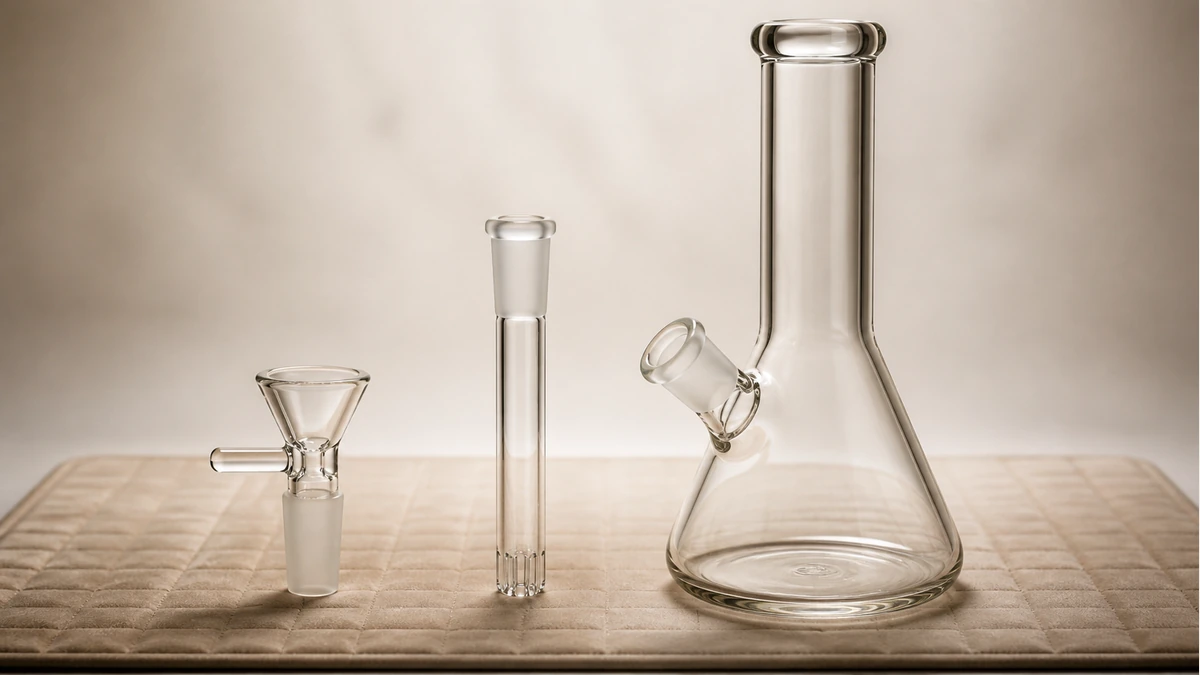
Bottoming out is the opposite problem: the bowl’s stem goes in too far and makes contact with the top of the downstem, restricting or blocking airflow entirely. This is a depth and clearance issue rather than a diameter issue, which is why measuring joint size alone isn’t a reliable predictor of fit. A bowl with a longer-than-average stem, paired with a downstem that already extends high into the joint, can create exactly this kind of interference even when the diameter match is perfect.
People troubleshooting this on their own setups often end up cycling through several bowls before finding one that seats correctly. That works as a short-term fix, but it isn’t a substitute for measuring the joint and checking downstem clearance up front. If airflow feels restricted after swapping in a new bowl, checking for physical contact between the bowl stem and the downstem is usually the fastest way to confirm what’s happening, and a quick way to check is holding the downstem in place with the bowl removed, then lowering the bowl in slowly to see where the two pieces first touch.
🔋 5. What to Inspect Before You Order a Replacement
Before ordering a new bong bowl piece, it helps to work through the joint methodically rather than relying on a single diameter figure from memory. A short, deliberate check at this stage prevents most of the fit problems described above.
- Measure the joint opening directly. Use calipers if you have them, or compare against a bowl or downstem you already know fits correctly, rather than estimating by eye.
- Confirm the gender of the joint. Check whether the joint on your bong is recessed (female) or protruding (male), and order a bowl with the opposite gender.
- Note the joint’s angle. Look at whether the joint sits closer to 45 degrees or closer to 90 degrees relative to the tube, since a bowl built for the wrong angle can still insert but won’t sit flush or point in a usable direction.
- Check the downstem’s height in the joint. Note roughly how far the downstem extends upward, since this affects how much room the new bowl’s stem has before making contact.
- Clean both surfaces before judging fit. Residue on the joint or on a used bowl can mimic a sizing mismatch, so rule this out before assuming the piece itself is wrong.
- Look at handle orientation and nearby glass features. If the bong has percolator arms, ice pinches, or other glasswork near the joint, note their position so the new bowl’s handle has room to clear them.
- Decide whether you actually need a bowl or an adapter. If the replacement bowl you want is a different joint size than your bong, an adapter may solve the mismatch without requiring a new downstem as well. AOVAPE’s vape to bong adapter guide is a useful reference if you’re bridging joint sizes rather than replacing like-for-like.
Working through this list takes only a few minutes and removes nearly all the guesswork that leads to a bowl arriving with the wrong seat depth, the wrong gender, or a handle that catches on the glass around it.
🧪 6. Frequently Asked Questions
Does a slightly loose bowl always need to be replaced?
Not necessarily. Minor looseness from small tolerance differences between manufacturers is common and doesn’t always affect function, but a bowl that shifts or tips on its own during use should be addressed rather than left as-is — either with a better-fitting bowl or a simple clip for stability.
Can I tell joint gender just by looking at the bong?
Usually, yes — a female joint has a recessed opening, and a male joint protrudes outward. The uncertainty tends to come up on rigs or multi-piece setups where both genders appear in the same system.
Is a bowl that bottoms out a sign the joint size is wrong?
Not always. Bottoming out is more often a depth and downstem-clearance issue than a diameter mismatch, which is why it can happen even with a bowl that’s labeled the correct joint size.
Do all bowls of the same nominal size have the same stem length and angle?
No. Stem length, taper detail, and joint angle can all vary between makers even at the same nominal joint size, which is why physical fit should be confirmed rather than assumed from the label alone.
Will a keck clip fix a bowl that’s the wrong size?
No. A clip can stabilize a bowl that’s slightly loose due to tolerance differences, but it won’t correct a genuine gender, depth, or angle mismatch — those still require the correct replacement piece.
📐 7. The Short Version
A bong bowl piece isn’t matched by diameter alone. Joint size gets you into the right size family, gender determines which piece goes where, and taper, stem depth, angle, and handle clearance decide whether the bowl actually seats the way it should once it’s in the joint. A bowl that looks correct in a listing photo can still wobble or bottom out if any one of those details is off.