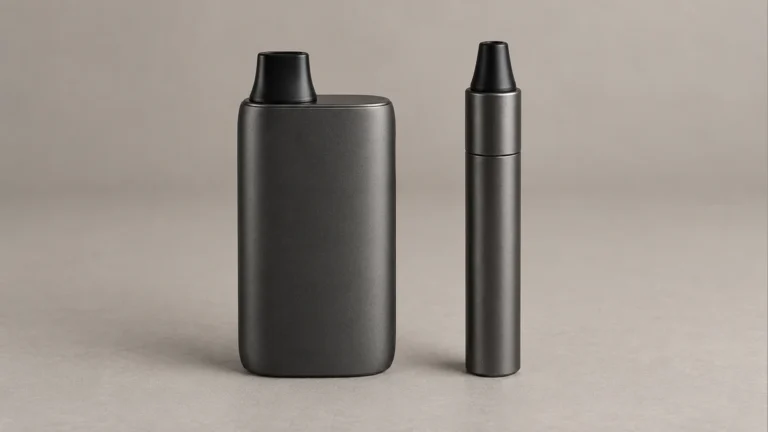
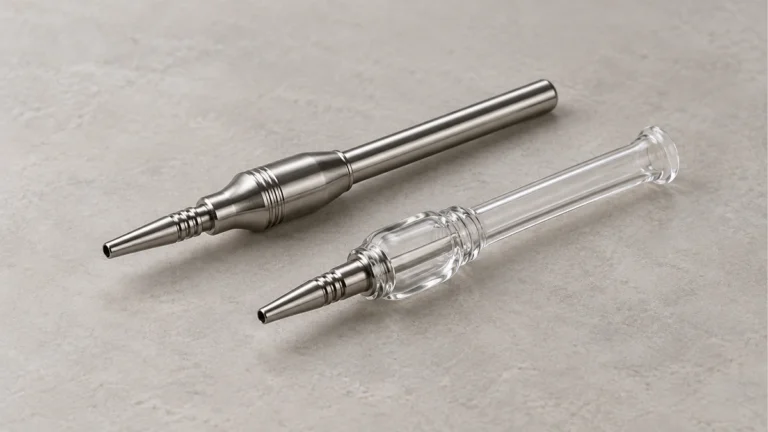
A bong mouthpiece is the section of the tube where a person’s lips actually meet the glass or acrylic. It sits at the opposite end from the bowl and downstem, and its only job is to shape and direct airflow as smoke or vapor travels up the neck. Because it’s the last surface between the piece and the user, small differences in its shape, size, and condition change how a hit feels far more than most people expect.
This guide breaks down the physical variables that actually matter: bore diameter, rim geometry, neck diameter for replacement fit, cleanliness, and the point where damage stops being cosmetic and starts affecting structural integrity. None of this is about brand preference. It’s about the hardware itself and how its geometry behaves.
🧭 1. What Counts as the Mouthpiece, Specifically
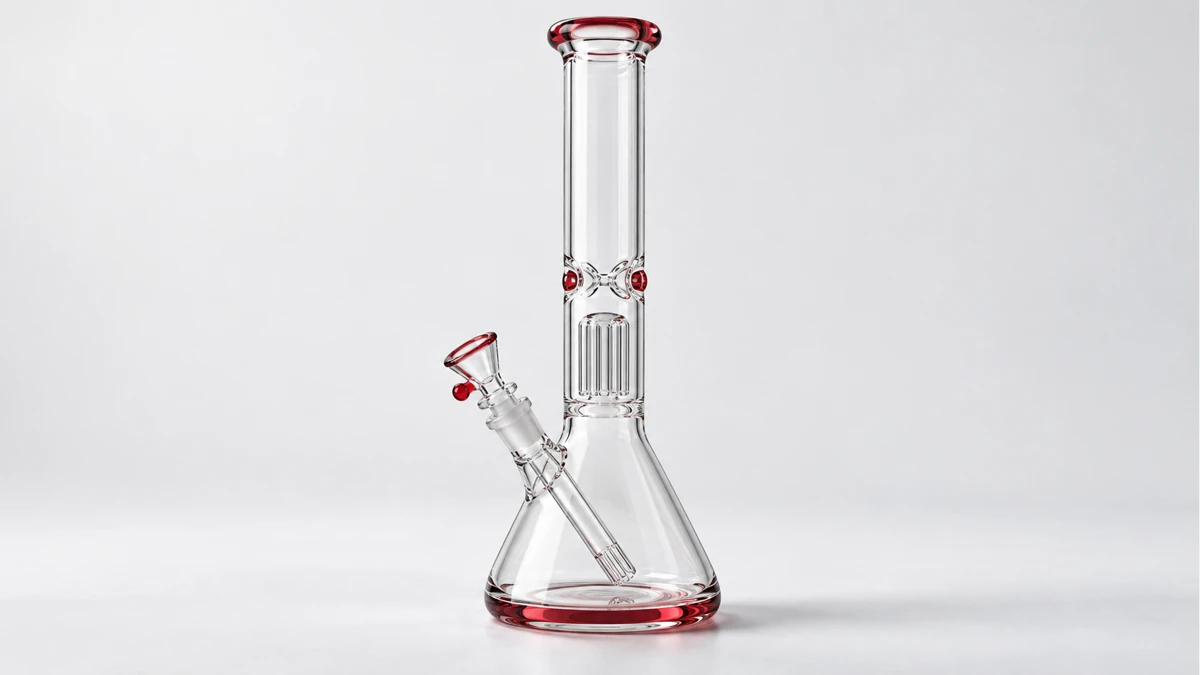
On most bongs, the mouthpiece is not a separate part. It’s simply the terminal few centimeters of the main tube, sometimes flared outward, sometimes left straight. Because it’s continuous with the tube, “replacing the mouthpiece” usually means replacing the entire neck or tube assembly, not swapping out a discrete piece. This distinction matters when someone assumes a cracked rim can be fixed with a small clip-on part, because on the vast majority of designs, no such part exists.
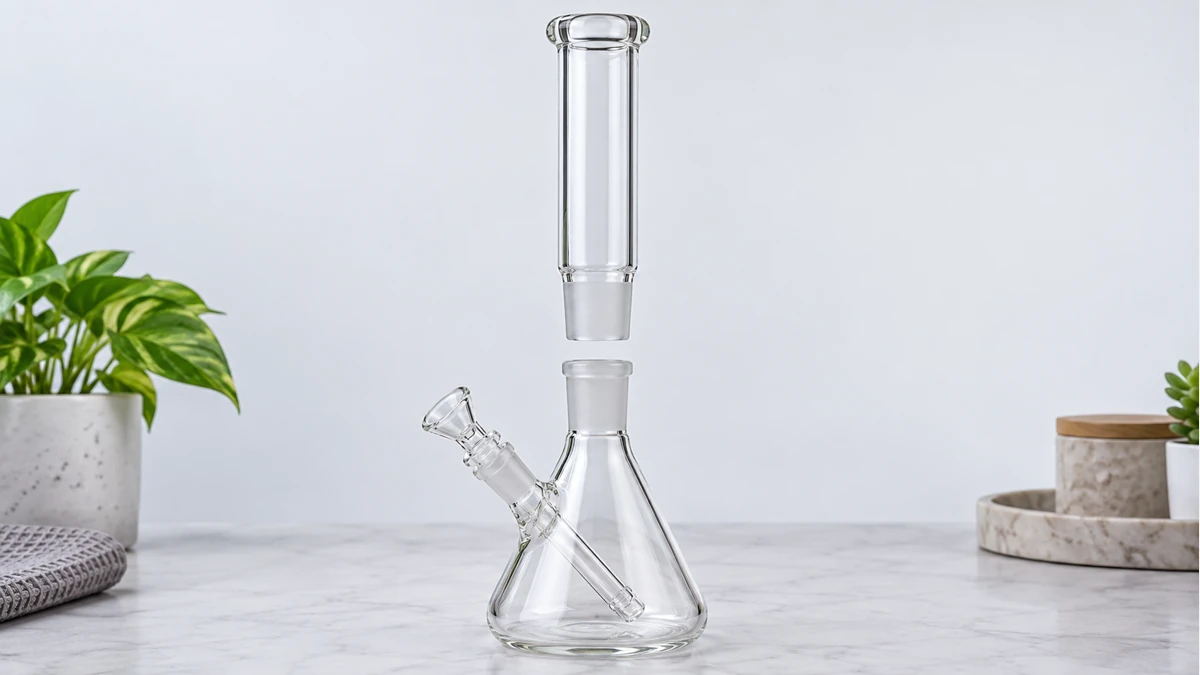
A smaller number of bongs, particularly some percolator and multi-chamber designs, use a removable mouthpiece adapter that slides or seats into the top of the tube via a ground-glass joint. On these models, the mouthpiece genuinely is a separate component and can be swapped independently. Whether a given bong falls into one category or the other is model-specific and worth confirming before assuming a repair or replacement path.
📐 2. Bore Diameter and How It Shapes Airflow
Bore diameter is the internal width of the tube at the point where air passes through the mouthpiece. This is the single biggest factor in how much resistance a hit has, and it’s a straightforward cause-and-effect relationship: a narrower bore forces air through a smaller channel, increasing velocity and the sensation of resistance, while a wider bore lets air move more freely with less perceived pull.
🔎 2.1 Wide Bore vs Narrow Bore
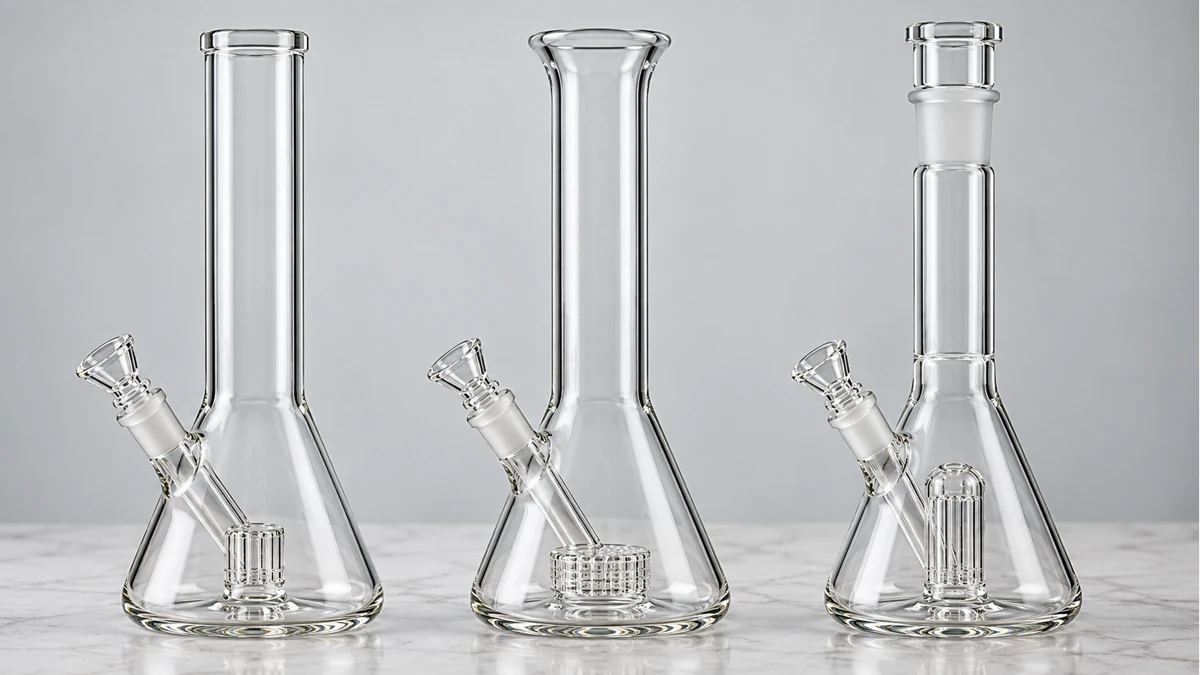
Wide-bore mouthpieces are common on bigger tubes and beaker-style bases, where the larger internal volume needs a correspondingly open path to clear efficiently. Narrow-bore designs show up more on compact or portable pieces, where a smaller diameter helps concentrate airflow and can make a smaller water volume function more consistently.
Neither is objectively better. They’re suited to different tube sizes and different water volumes, and mismatching them, such as pairing a very wide bore with a very small base, is one of the more common reasons a piece pulls unevenly.
📏 2.2 Why Draw Resistance Changes With Wear
Bore diameter is fixed by the glassblowing or molding process and doesn’t change under normal use. What does change is anything that narrows the effective opening: residue buildup along the inner wall, a percolator slit that’s partially clogged, or debris lodged near the mouthpiece opening itself. Any of these can make a piece feel like it has a narrower bore than it was manufactured with, even though the glass hasn’t changed shape at all.
🌬️ 3. Lip Shape and Rim Geometry
The rim is the very edge of the mouthpiece, and its cross-sectional shape determines how it contacts the lips. This is a separate variable from bore diameter. Two mouthpieces can have identical internal widths but feel completely different depending on how the glass is finished at the edge.
🔎 3.1 Rolled Rims vs Flat-Cut Rims
A rolled rim is heated and folded back on itself during fabrication, creating a smooth, rounded lip with no exposed raw edge. This is the more common finish on hand-blown glass because it removes the sharp edge that a straight cut would leave behind. A flat-cut rim, by contrast, is simply the tube cut and lightly polished, which is more typical on molded acrylic or budget glass where rolling isn’t part of the production process.
The practical difference is contact area and edge feel. A rolled rim distributes contact over a rounded surface, while a flat-cut rim presents a thinner edge. Neither shape indicates overall build quality on its own, but the manufacturing method behind each does correlate with different price points and production techniques.
📏 3.2 Wall Thickness at the Rim
Glass thickness right at the mouthpiece is often different from the thickness of the tube further down, because the rim is the section most exposed to heating and reshaping during fabrication, and the point most likely to take an impact during use. Thicker glass at the rim generally means more resistance to chipping from a knock against a table or sink edge, while thinner glass at that same point is more vulnerable to hairline cracking from that kind of contact.
This is one of the details that varies the most between individual pieces, even within the same product line, since hand-finishing at the rim isn’t always perfectly uniform.
identifying replaceable bong glass pieces
🧩 4. Neck Diameter and Replacement Fit
When a mouthpiece section is damaged beyond repair, the relevant measurement for finding a compatible replacement neck or tube is the outer diameter where it would connect to the rest of the piece, not the bore diameter at the very top. These are frequently confused, but they describe two different points on the same piece.
🔎 4.1 Measuring Before Buying a Replacement
For pieces where the mouthpiece is part of an interchangeable neck assembly, the connection point is usually a ground-glass joint sized to a standard, most commonly 14mm or 18mm. Confirming that number, along with whether the joint is male or female, is the first step before assuming any replacement neck will fit. A joint that’s the wrong size or wrong gender simply won’t seat, regardless of how closely the rest of the tube resembles the original.
📏 4.2 Why “Close Enough” Doesn’t Work
Ground-glass joints rely on a close mechanical tolerance between male and female surfaces to form an airtight seal. A joint that’s even slightly undersized will leak air around the connection, which shows up as a hit that never builds proper draw no matter how the bowl is packed. This is a mechanical fit issue, not a suction or technique issue, and it’s worth ruling out early since it’s easy to mistake for a clogged bowl or bore.
matching a bong bowl and joint
🧼 5. Cleanliness and Its Effect on Draw
Residue buildup at or near the mouthpiece is a common and preventable source of restricted airflow. Resin accumulates fastest where airflow slows down or changes direction, which often includes the inner curve just below the rim. Over time this narrows the effective bore, exactly as described in section 2.2, and produces the same symptom as a mismatched joint: a harder, less satisfying draw that has nothing to do with the piece’s actual geometry.
Separately, anything placed directly over or into the mouthpiece opening between uses, intentionally or not, can obstruct airflow the next time the piece is used. A completely blocked opening produces a very different sensation from a partially clogged bore. It’s a sudden, total loss of draw rather than a gradual decline, and it’s usually resolved simply by clearing the obstruction rather than by cleaning the glass itself.
🔍 6. Cracks, Chips, and Where Repair Stops Being Reasonable
Because the rim is thin, exposed, and handled directly, it’s one of the more common failure points on a bong. Understanding how damage typically starts helps distinguish a cosmetic chip from a structural crack.
🔎 6.1 How Cracks Typically Start at the Rim
Most rim damage begins as a small chip from an impact, such as knocking the piece against a sink or countertop. A chip on its own is a localized loss of material, but glass under repeated thermal cycling from heating and cooling during use can develop a stress fracture that radiates outward from that original chip. This is why a small, seemingly minor chip at the mouthpiece can, over time and continued use, turn into a longer crack running down the neck.
📏 6.2 Why Adhesives Aren’t a Structural Fix
When a crack appears in the mouthpiece area specifically, rather than lower in the piece near the water chamber, it’s tempting to treat it as a simple cosmetic problem to seal with a general-purpose adhesive. The issue is that most household adhesives, including cyanoacrylate and epoxy products not engineered for repeated heat exposure, aren’t rated for the thermal cycling a mouthpiece goes through during normal use. A bond that holds at room temperature can soften, become brittle, or fail outright once it’s repeatedly heated and cooled, which means an adhesive repair at this specific location is a durability gamble rather than a structural fix. This is a mechanical and materials limitation, not a judgment about whether someone should attempt it.
For a crack at the mouthpiece, replacing the affected section, where the design allows it, is the more reliable path compared to bonding it, since the rim experiences more direct mechanical stress from handling than almost any other part of the piece.
🛠️ 7. Diagnose the Mouthpiece Before Replacing the Whole Piece
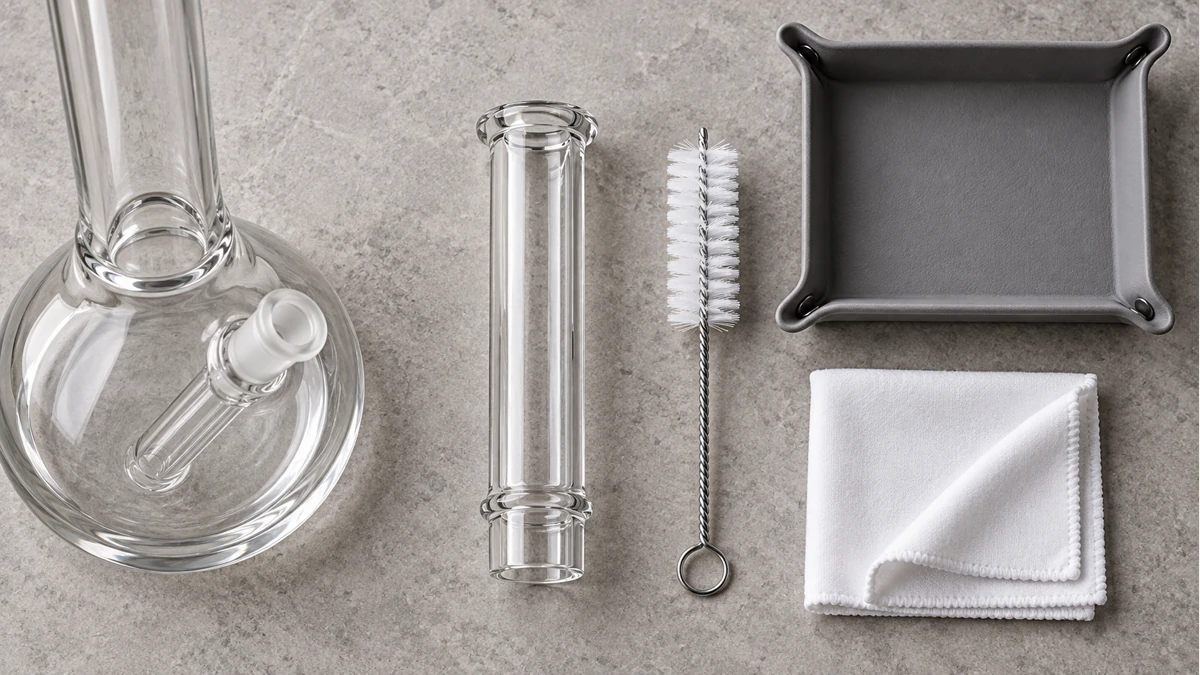
A restricted draw does not automatically mean the mouthpiece opening is too small. The narrowest point may be the downstem slit, a percolator, the bowl opening, or residue at a bend in the neck. Remove only the detachable parts the piece was designed to release, then inspect the air path from inlet to rim. Changing the mouthpiece cannot correct a restriction farther upstream.
🔎 7.1 Compare the Rim, Bore, and Neck Separately
The rim is the surface that meets the lips, the bore is the open cross-section, and the neck is the longer tube below it. A chip at the rim is a structural defect even when the bore still looks open. A clean rim with a dirty neck can feel restricted despite having unchanged geometry. Naming the location keeps a cosmetic observation from being confused with a fit or airflow problem.
📏 7.2 Measure a Removable Mouthpiece at Its Joint
When the mouthpiece is detachable, measure the ground-glass joint rather than the widest decorative flare. Confirm joint diameter, male or female orientation, insertion depth, and whether the original part sits vertically or at an angle. Two parts can share a nominal joint size yet place weight differently on the neck. Dry-fit without force and verify that glass surfaces seat evenly.
🧪 7.3 Treat Cracked Glass as a Replacement Boundary
Adhesive, tape, and clip-on covers do not restore the original strength or cleanability of cracked glass. Heat changes, washing, and ordinary handling can extend a crack that initially looks stable. If the rim or neck is chipped, cracked, sharp, or loose, stop using it and replace the serviceable component or have the piece evaluated by a qualified glass repairer. A smooth cover does not repair the glass below it.
🧷 7.4 Clean to Restore the Designed Bore, Not to Enlarge It
Use the cleaning method appropriate to the confirmed material and keep abrasive tools away from finished rims. A brush should pass without being forced into a bend. Rinse and dry detachable parts fully before reassembly. If resistance remains after the visible path is clean, inspect the next restriction in the system instead of scraping the mouthpiece wider.
✅ 8. Identifying Your Mouthpiece Before Replacing Anything
Before shopping for a replacement part or assuming a piece is beyond use, it helps to work through a short identification checklist:
- Is the mouthpiece a fixed part of the tube, or a separate piece connected by a ground-glass joint?
- What is the bore diameter at the opening, and does draw resistance match what that diameter would suggest?
- Is the rim rolled or flat-cut, and is the glass thickness there consistent with the rest of the tube?
- If a joint connection is involved, what is its size and gender?
- Is any change in draw caused by residue, an obstruction, or an actual dimensional mismatch?
Answering these in order, from geometry to fit to condition, is the most direct way to figure out whether a piece needs cleaning, a properly sized replacement neck, or simply a clear opening. Treating the mouthpiece as a set of measurable physical features, rather than a single generic part, is what actually determines whether a fix or a replacement will work.