Yes, bongs smell—even ones that look perfectly clean. Set a bong down after a session, walk away for an hour, and come back to the room, and there’s a good chance you’ll catch a stale, faintly sour odor before you even pick the piece up. That odor usually points to water and residue left in the base, bowl, or downstem, plus damp surfaces that were stored before they dried.
The good news is that the odor is traceable. It comes from specific parts, in a specific order of intensity, and it responds to specific cleaning and storage habits. This guide walks through where bong smell actually comes from, why a quick water change often isn’t enough, how cleaning approach depends on the material you own, and what airflow can and can’t do once the odor sources are handled.
🧭 1. Why a clean-looking bong can still smell
A bong can look spotless and still carry a noticeable smell, and the reason comes down to what “looks clean” actually means. Glass that appears clear has been rinsed of visible residue, but rinsing with plain water moves loose particles out of the chamber—it doesn’t necessarily strip the thin film of resin and oils that cling to glass surfaces, especially in the narrower sections like the downstem and joint. That film is where a lot of the lingering smell originates, and it’s often invisible until you hold the piece up to bright light or run a finger along the inside of the tube.
Owners who’ve dealt with this often describe a pattern: they rinse the piece, set it in a corner to dry, and later notice the room still smells faintly of stale smoke near where the bong sits. That’s a fair description of what’s happening chemically—the visible cleaning step removed surface debris, but the odor sources underneath were still active.
🧩 2. Fresh smoke versus odor stored in water and residue
It helps to separate two different kinds of smell that get lumped together as “bong smell.” The first is fresh smoke odor—the smell that fills a room during active use, which dissipates on its own once airflow moves it out and no new smoke is being produced. The second is stored odor, which comes from water and residue that have absorbed smoke byproducts and continue releasing them slowly over time, even when nobody is smoking.
Stored odor is the more persistent problem, and it’s the one owners tend to underestimate. Water in a bong isn’t neutral—as smoke passes through it, water absorbs some of the compounds carried in that smoke, along with fine particulate matter. That water doesn’t smell fresh for long. Left sitting for hours, it can start to smell stale or sour, and that smell radiates outward from the base even if the water hasn’t been disturbed.
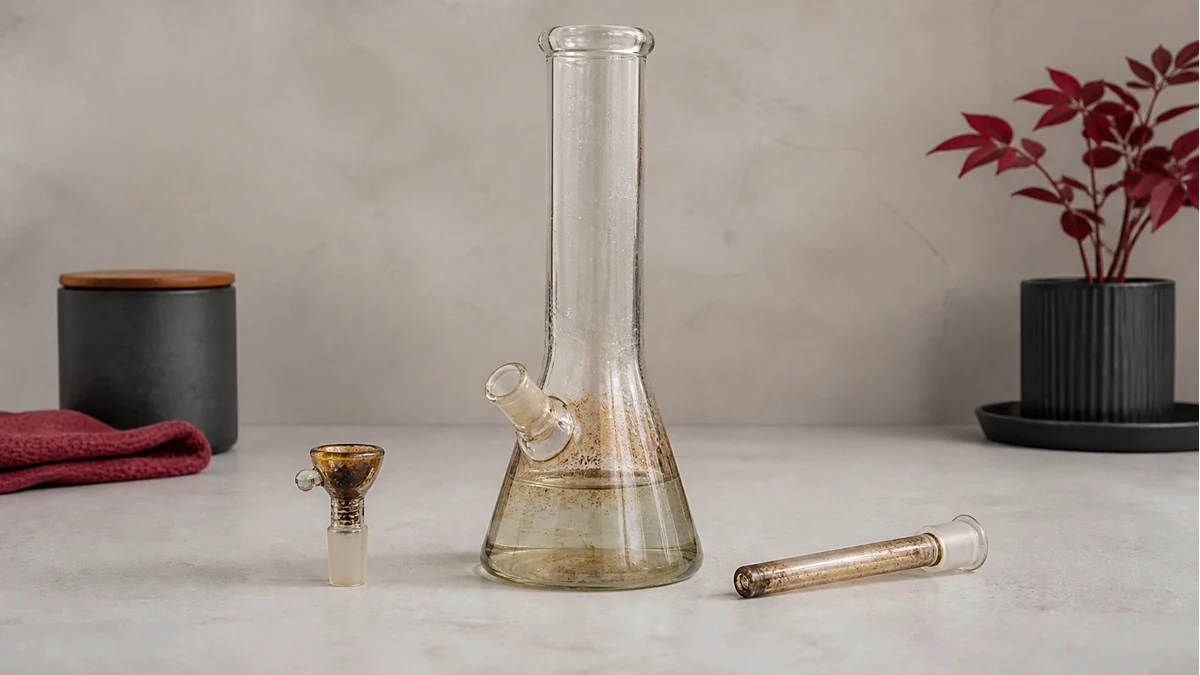
This is why simply refreshing the water is often treated as “cleaning” when it’s really just delaying the problem. Swapping stale water for clean water removes the smell coming from that specific batch of liquid, but it does nothing about residue coating the inside of the chamber, the bowl, or the downstem. A user who changes water regularly but never addresses those other surfaces will keep smelling something, because the water was never the only source—it was just the most obvious one. For a deeper look at how water choice and water changes affect a bong’s overall performance and cleanliness, the water for bongs guide covers how different water types interact with residue buildup over repeated use.
🛠️ 3. The bowl and downstem are often the strongest source
If you’re trying to figure out where a bong’s smell is concentrated, the bowl and downstem are usually the first places to check. These two components sit closest to the point of combustion, which means they accumulate resin and ash residue faster than any other part of the piece. Because they’re also smaller and narrower than the main chamber, that residue tends to build up in a more concentrated layer relative to the surface area involved.
Reddit threads discussing this exact issue have noted that a bong can be rinsed thoroughly through the main chamber and still smell strongly, specifically because the bowl and downstem were left untouched. That pattern lines up with how these parts function: they’re removable on most pieces, which means they’re easy to overlook during a quick rinse that only runs water through the tube itself. If the bowl piece and downstem aren’t pulled out and cleaned separately, they can sit with old residue for days, continuing to release odor the entire time.
The residue itself is sticky and doesn’t rinse away with water alone in most cases—it usually needs some kind of cleaning solution to break down, since it’s built from oils and tars that don’t dissolve easily in plain water. This is one of the reasons dedicated cleaning products exist specifically for glass pieces rather than relying on dish soap or an all-purpose cleaner. The bong cleaner guide goes into more detail on how these solutions work on resin buildup and what to expect in terms of contact time, since that can vary by product and by how much residue has accumulated.
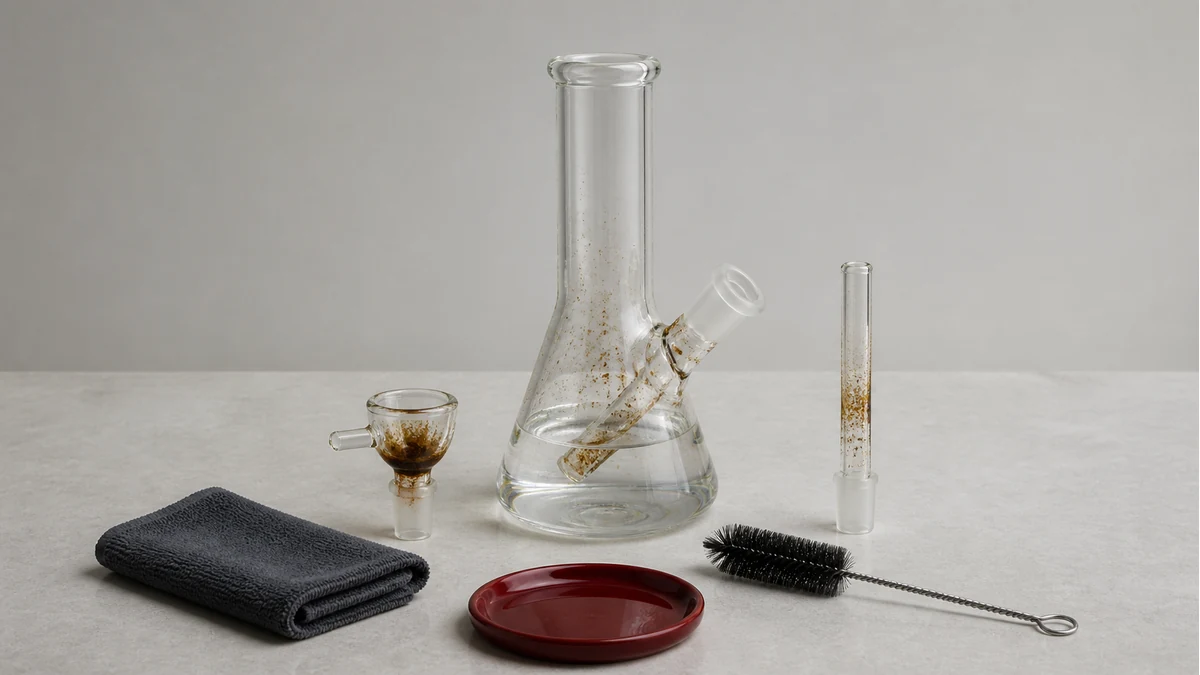
Because the bowl and downstem are usually the most odor-dense parts of the setup, addressing them first tends to produce the most noticeable improvement. A bong with a spotless main chamber but a neglected bowl will often still smell strongly, while a bong with a slightly under-cleaned chamber but a properly cleaned bowl and downstem tends to smell far less overall. That’s not a universal rule for every piece, but it reflects where the concentrated residue typically sits.
🌡️ 4. Rinse, deep clean, and dry according to material
Cleaning frequency and method aren’t one-size-fits-all, and they shouldn’t be treated that way. What works for a straightforward glass piece isn’t necessarily appropriate for silicone, and what’s safe for silicone isn’t necessarily the right approach for glass with delicate percolators or intricate joint work. Exact soak times, cleaning solvent choices, and water levels used during cleaning are model-specific, and checking manufacturer guidance or product instructions for your specific piece is worth doing before assuming a method that worked on one bong will work identically on another.
That said, there’s a general rhythm that applies across most bong ownership: a quick rinse after each use to clear out loose ash and prevent residue from setting, and a more thorough deep clean on a less frequent basis to actually break down the buildup that a rinse can’t touch. The rinse step is about maintenance—it slows down how fast residue accumulates. The deep clean step is about removal—it’s what actually addresses the odor sources that have already built up.
Glass generally tolerates a wider range of cleaning approaches, including soaking with cleaning solutions and using tools like brushes or pipe cleaners to reach into narrow sections like the downstem. Silicone pieces often handle cleaning differently, since the material’s texture and flexibility change how residue clings to it and how it responds to certain solvents. Because these details vary by manufacturer and by product line, it’s worth treating any cleaning approach as something to verify against the specific piece you own rather than applying a blanket method across every bong you’ve ever had.
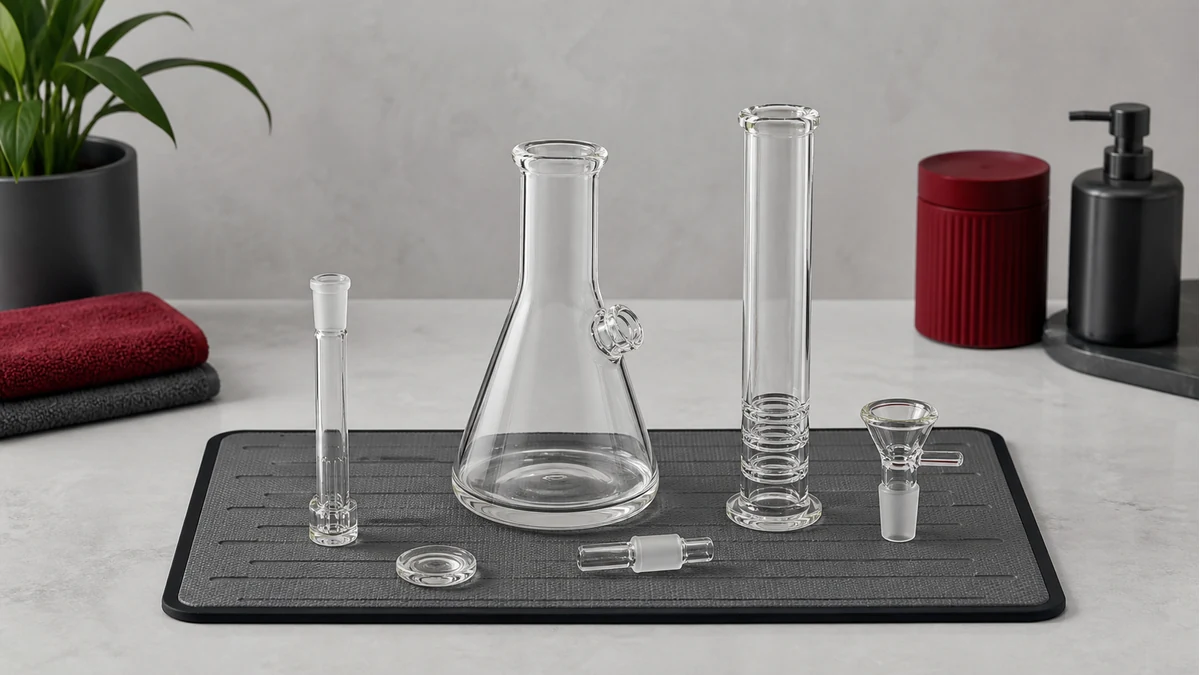
Drying matters just as much as the cleaning step itself, and it’s a part of the process that’s easy to rush. A bong that’s been cleaned but not properly dried can still develop odor issues, because moisture left inside a chamber or downstem creates conditions where residual smell lingers longer and where the piece takes on a damp, stale character even without visible dirt. Standing pieces upright with airflow reaching the interior, rather than laying them flat where water pools, tends to help moisture clear out more completely. Having the right tools on hand for both the cleaning and drying steps makes the whole process more consistent, and the bong cleaning kit guide breaks down what a typical kit includes and how those tools fit into a regular cleaning routine.
💨 5. Storage contains odor only after the source is addressed
A common assumption is that the right storage container will solve odor problems on its own. In practice, storage can only manage smell that’s already been reduced at the source—it can’t neutralize odor that’s actively being produced by wet residue or standing water inside the piece. Putting a dirty, damp bong into a sealed container doesn’t stop the odor; it just concentrates it inside a smaller space, which can make the smell more noticeable the next time that container is opened.
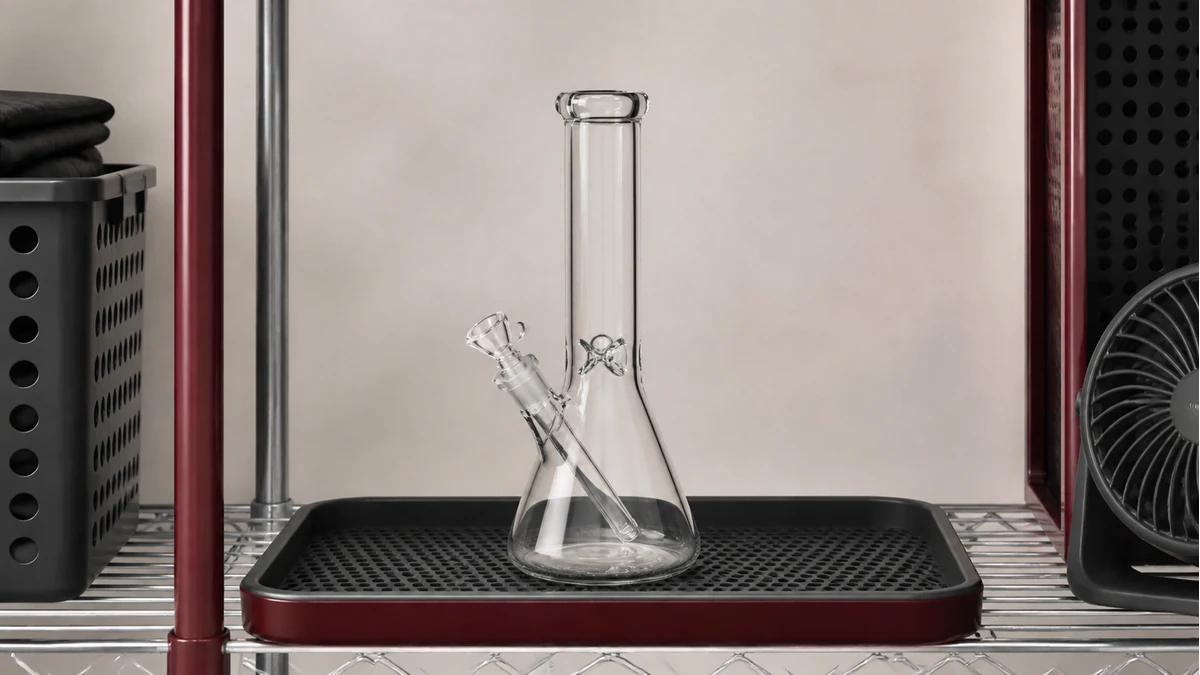
This distinction came up in discussions among apartment-based bong owners weighing how to store a piece between uses without letting smell spread through a shared space. The general shape of that concern is a fair one: storage location and container choice do matter, but only as a second step after the piece itself is clean and dry. A bong that’s rinsed, deep cleaned on a regular basis, and properly dried before storage will sit far more neutrally in a closet or cabinet than one that’s stored damp with residue still coating the bowl and downstem.
🧼 6. What ventilation can and cannot do
Ventilation—open windows, fans, air purifiers, exhaust systems—plays a real role in managing bong smell, but it’s important to understand what it’s actually doing. Airflow moves odor molecules that are already in the air out of a space and replaces them with fresh air. That’s genuinely useful for clearing the smell of fresh smoke during and immediately after a session, when the odor is airborne and moving air disperses it effectively.
What ventilation doesn’t do is reach into a bong’s water, bowl, or downstem and remove the residue sitting there. A fan can clear smoke out of a room in a matter of minutes, but it has no effect on stale water sitting in the base or resin coating the inside of a bowl piece. Those sources will keep releasing odor into the room regardless of how much air is moving through the space, because the smell is being continuously generated rather than just lingering from a single burst of smoke.
This distinction matters because it’s easy to treat ventilation as a full solution when it’s really addressing only one side of the problem. A well-ventilated room with a bong that has stale water and dirty bowl residue will still develop a noticeable smell over time—the airflow just delays how quickly that smell becomes obvious, rather than stopping it from being produced. Combining good ventilation with regular cleaning and proper drying covers both sides: ventilation handles the airborne smoke from active use, while cleaning and drying handle the ongoing odor sources that exist independent of whether anyone is actively smoking.
For anyone trying to minimize how much a bong affects the smell of a room, the most reliable approach isn’t picking one tactic and relying on it exclusively. It’s treating water changes, bowl and downstem cleaning, material-appropriate deep cleaning, thorough drying, sensible storage, and ventilation as parts of the same routine, each addressing a different piece of where the smell actually comes from. Skipping any one of them tends to leave a gap that the others can’t fully cover, which is consistent with what shows up repeatedly in owner discussions about why a bong that seems clean on the surface still ends up smelling in practice.
📚 7. Sources and Reader Questions Reviewed
Technical guidance was checked against the manufacturer material below where applicable. Reddit discussions were used only to identify reader questions and failure scenarios, not as proof of technical, health, safety, or legal claims.