🧭 1. The Moment a New Bowl Piece Doesn’t Fit
A bong sits on the table with an empty joint, and the replacement bowl piece that showed up in the mail either drops in loose and won’t seat, or refuses to slide past the first few millimeters. That single moment of confusion traces back to four separate variables: joint diameter, joint gender, ground-glass taper angle, and bowl depth. Miss any one of them and the piece looks close enough in a product photo but behaves wrong in hand. Understanding how these variables interact turns a frustrating return into a five-minute measurement.
What makes this confusing is that a bowl piece can fail in two opposite directions. Too small, and it wobbles, leaks air around the taper, and never pulls smoke cleanly. Too large, and it either won’t seat at all or jams partway in, risking a chipped joint on removal. Neither problem is obvious from a listing photo, since most images show the piece alone with nothing to indicate scale.
🔍 2. Joint Diameter: 10mm, 14mm, 18mm
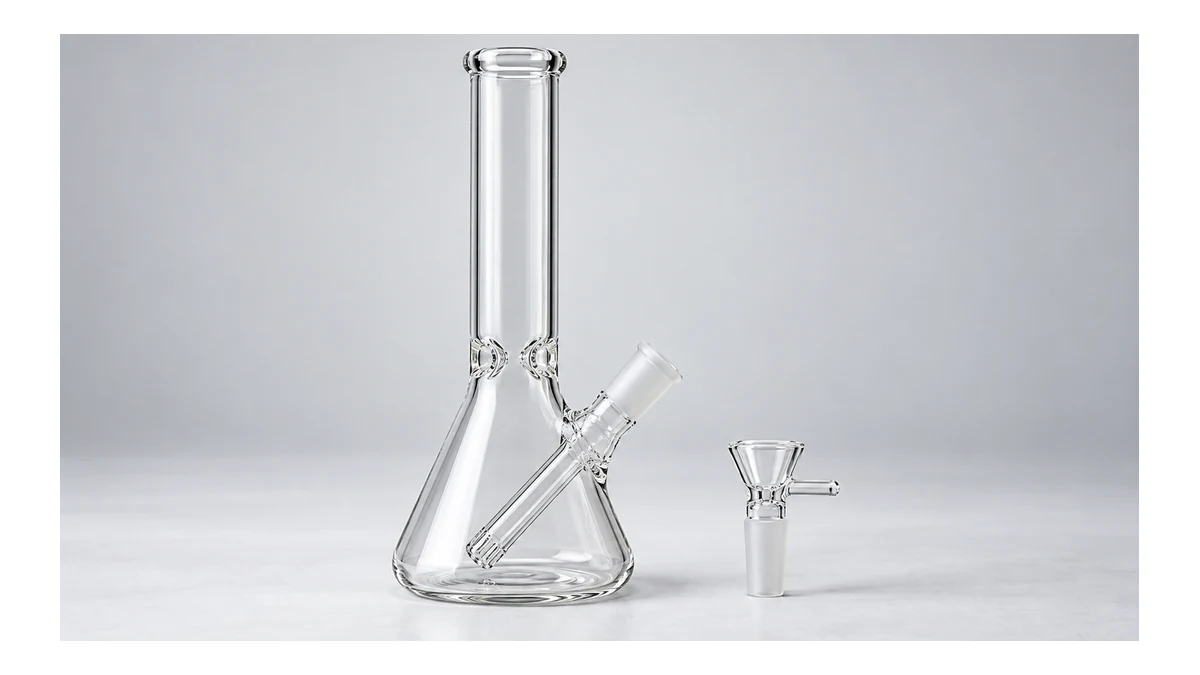
Most glass bongs sold today use one of three standard joint diameters: 10mm, 14mm, and 18mm. These numbers describe the outer diameter of the ground-glass taper at its widest point, not the bowl piece’s bore or bowl width. A bowl piece rated for a 14mm joint will not stay seated in an 18mm joint no matter how hard it’s pushed, and forcing a 10mm piece into a 14mm joint just produces a loose, rattling connection with no seal.
| Joint Size | Typical Bong Type | Feel When Seated |
|---|---|---|
| 10mm | Small bubblers, compact rigs | Snug, minimal wiggle |
| 14mm | Standard mid-size bongs | Firm stop with slight resistance |
| 18mm | Larger bongs, percolator pieces | Noticeably wider taper, heavier piece |
When a listing doesn’t specify diameter, measuring the joint opening with a ruler across the glass rim (not the bowl piece) is the only reliable way to confirm size before buying.
🧩 2.1. Male vs Female Joints (Gender)
Diameter alone doesn’t guarantee a fit. Joints also come in male and female configurations, and this is where a lot of the confusion in online buying threads originates. A female joint is the one with an opening that a piece slides into; a male joint is the tapered piece that slides into something else. Bongs are manufactured with either a male or female joint at the point where the bowl piece attaches, and the bowl piece must be the opposite gender to mate correctly.
A bong with a female joint needs a male bowl piece, which is the common configuration on most modern water pipes. A bong with a male joint needs a female bowl piece, which has a socket that the joint slides into rather than a stem that slides out. Buying a piece of the wrong gender is the single most common reason a “correctly sized” replacement still won’t seat, since 14mm male and 14mm female pieces look similar in a thumbnail photo but are physically incompatible with each other.
🧩 3. Ground Glass Fit and Seal Quality
Diameter and gender get a piece into the joint; the ground-glass taper is what makes it seal. Both surfaces, the joint and the bowl piece stem, are ground to a matching frosted angle so they mate almost airtight without any additional gasket. This is why two pieces can share the same labeled size and gender yet still feel different once inserted, since manufacturing tolerances on the taper angle vary slightly between brands.
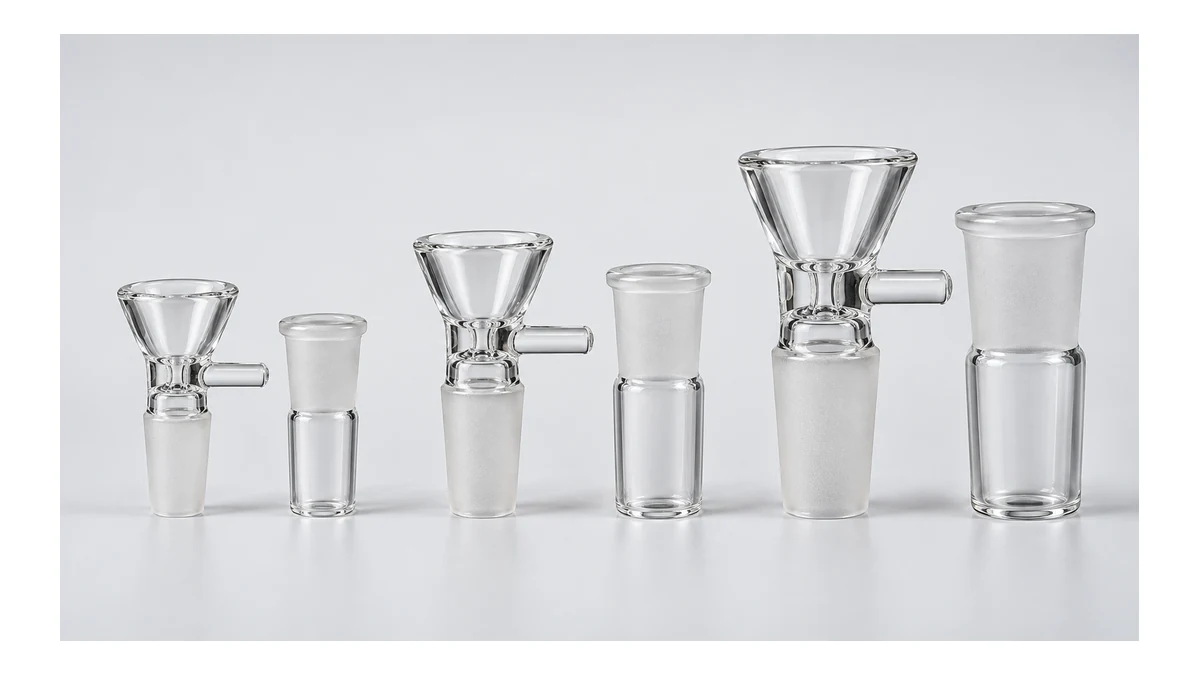
A properly matched ground-glass joint should seat with light, even resistance and stop naturally rather than bottoming out with a hard clack. If a piece spins freely with no friction, air is leaking around the taper rather than pulling through the bowl. If it binds unevenly or grinds, the taper angle likely doesn’t match, even if the millimeter rating printed on the packaging does. A mismatched taper is also the most common source of a persistent whistling sound during a pull, independent of anything happening in the bowl itself.
🌬️ 4. Bowl Depth and Chamber Volume
Bowl depth is the dimension buyers overlook most often, because two bowl pieces with identical joint size and gender can still hold very different amounts of material. A shallow bowl piece has a wide, flat chamber close to the joint; a deep bowl piece extends the chamber further down the stem before the airflow hole. Depth affects both how much fits in a single load and how the piece balances once attached.
- Shallow bowls: easier to clear in one pull, sit closer to the joint, lower center of gravity
- Deep bowls: hold more material, extend further from the bong, shift the balance point outward
A deep bowl piece on a bong built for a shallow one can change how the piece hangs, sometimes putting more torque on the joint when the bong is tilted, which is part of why swapping styles occasionally introduces a wobble that wasn’t there with the original piece.
⚙️ 5. Handle Clearance and Ergonomics
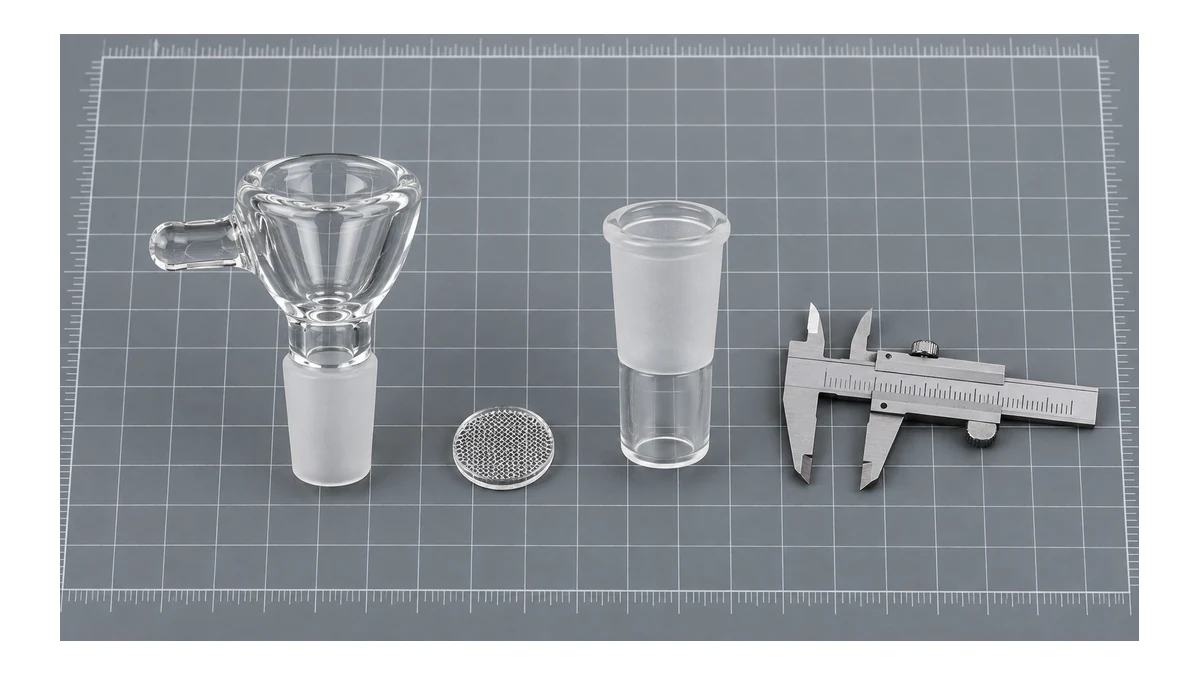
The handle, whether it’s a pulled glass horn, a flat tab, or a ring, needs enough clearance from the bong’s body to grip without scraping knuckles against the glass. This becomes relevant mainly on smaller bongs or bubblers where the joint sits close to the base or a percolator chamber. A bowl piece with a long handle that was fine on a tall bong can crowd against the body of a shorter one, making it harder to pull out cleanly for clearing a hit.
Handle length also interacts with bowl depth: a deep bowl piece with a short handle can put fingers closer to the heat source than a shallow bowl piece with a long handle, which is worth factoring in alongside pure fit.
🧼 6. Screens: Built-in vs Removable
Screens keep loose material from being pulled through the airflow hole and into the water chamber. Some bowl pieces come with a built-in screen, either a pinched section of glass or a permanent metal mesh fused into the piece, while others rely on a separate removable screen, typically a small metal or glass disc, set into the bottom of the bowl by the user.
- Built-in glass pinches are permanent and can’t be swapped if they clog or wear out
- Built-in metal mesh is durable but harder to fully clean over time
- Removable screens can be replaced cheaply and pulled out for cleaning
Neither style changes the joint fit, but it’s worth checking before buying if a specific screen type is a requirement, since it’s rarely obvious from diameter and gender specs alone. A piece with a built-in screen that clogs generally has to be replaced outright, while a removable screen just gets swapped for a new one.
📏 7. Airflow and Carb Considerations
Airflow through a bowl piece is controlled almost entirely by the size and number of holes drilled into the chamber floor, and this is a separate question from joint fit. A piece with a single narrow airflow hole restricts draw more than one with several wider holes, independent of how deep or wide the bowl itself is. This is also where some of the vocabulary in online forum threads gets mixed up: a “carb,” the small airflow hole on some pipes used to clear smoke by covering and releasing it with a finger, is a different feature from the bowl piece’s own airflow holes, and most modern bongs don’t use a carb at all since the bowl piece itself lifts out to clear the chamber.
If a swapped bowl piece suddenly makes a bong noticeably harder or easier to pull through, the airflow hole configuration, not the joint size, is usually the reason.
🧪 8. Thermal Stress and Material Choices
Bowl pieces are exposed to more direct, repeated heat than almost any other part of a bong, which makes material and wall thickness relevant to long-term durability rather than just aesthetics. Borosilicate glass is the standard choice because it resists thermal shock far better than soda-lime glass, which can crack when it heats and cools quickly. Thicker glass at the bowl’s rim and floor spreads heat more evenly and slows the buildup of stress cracks compared to thin-walled pieces.
Rapid temperature swings, like running a piece under cold water right after use, are the most common cause of hairline cracks regardless of glass quality, and this has nothing to do with joint fit but everything to do with how long a given piece lasts once it does fit correctly.
🔄 9. Measuring for a Replacement Bowl Piece
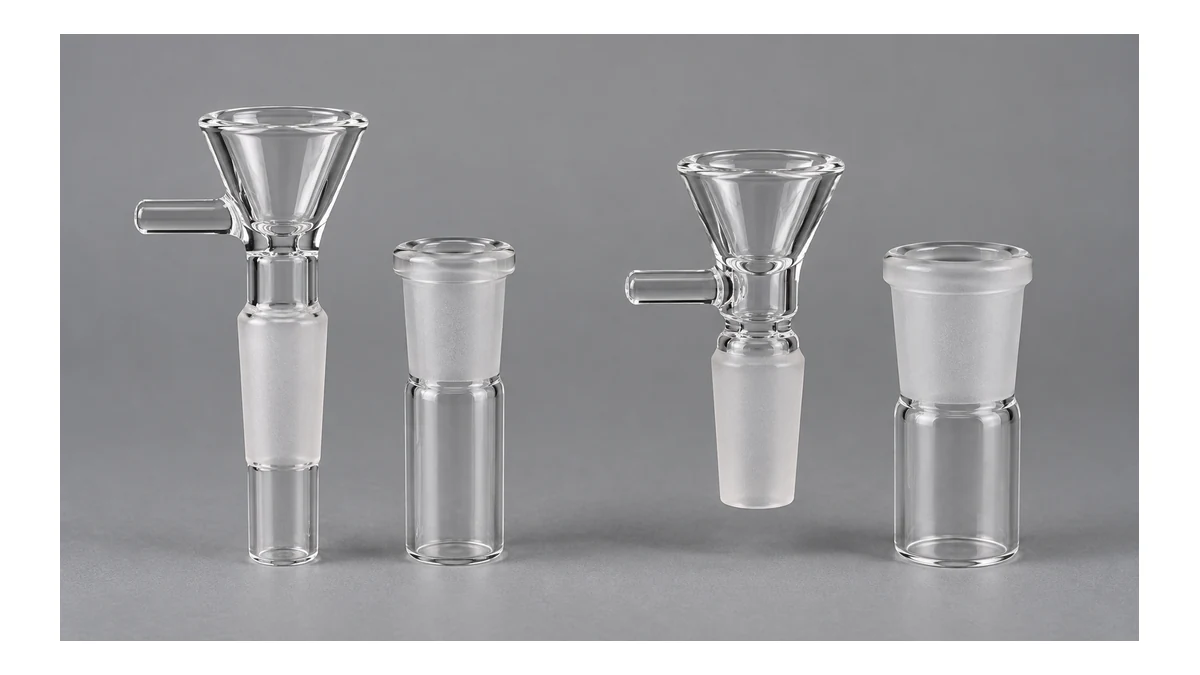
When the original bowl piece is lost or broken and there’s nothing to compare a new one against, measuring the bong’s joint directly is the most reliable method. A caliper gives the cleanest reading, but a ruler works if it’s placed across the widest point of the joint’s opening rather than along the glass itself.
- Measure the outer diameter of the joint opening at its widest point
- Note whether the joint is male (a tapered stem sticking out) or female (a hollow socket)
- Check the joint angle, since most are either straight up at 90 degrees or angled off to the side, which affects how the bowl piece sits and how easily it’s reached but not whether it physically fits
- Round the diameter measurement to the nearest standard size: 10mm, 14mm, or 18mm
Buying the opposite gender of what was measured is the most frequent mistake at this stage, since a hastily measured female joint often gets paired with another female bowl piece by mistake when the buyer forgets which direction the taper goes. Writing down both the diameter and the gender before shopping, rather than relying on memory, avoids most of this back-and-forth.
✅ 10. Quick Identification Takeaway
Before ordering a replacement, confirm four things in order: the joint diameter (10mm, 14mm, or 18mm), the gender needed, which is the opposite of what’s on the bong, the ground-glass taper feel, meaning light even resistance rather than a loose spin or a hard grind, and the bowl depth relative to how the original piece balanced on the bong. Diameter and gender determine whether a piece goes in at all; taper quality determines whether it seals; depth and handle clearance determine whether it’s comfortable to use once it’s seated. Checking all four against the actual joint, not just a product listing’s stated size, is what separates a piece that fits from one that merely looks like it should.
🧱 11. 📏 Measure the Joint, Not the Opening You Can See
A bowl is specified by the ground-glass joint that mates with the water pipe. Measure the narrow sealing section rather than the flared lip, handle, or outer wall. Common nominal sizes can look close in a photograph, so a ruler placed across the top is not a dependable substitute for a caliper or the original documentation.
Gender matters too. A male bowl enters a female joint; a female bowl surrounds a male joint. An adapter can change size or gender, but it also adds height and leverage. The more parts stacked above the joint, the more important base stability and clearance become.
🔌 11.1. 🌀 Airflow Depends on the Whole Assembly
A deep bowl, narrow outlet, dense screen, and long downstem can each add resistance. Replacing one component may expose a restriction somewhere else. Test the clean, empty assembly with a dry pull before loading anything. If resistance is already high, inspect the joint seal, outlet bore, and screen placement rather than assuming the bowl volume is the cause.