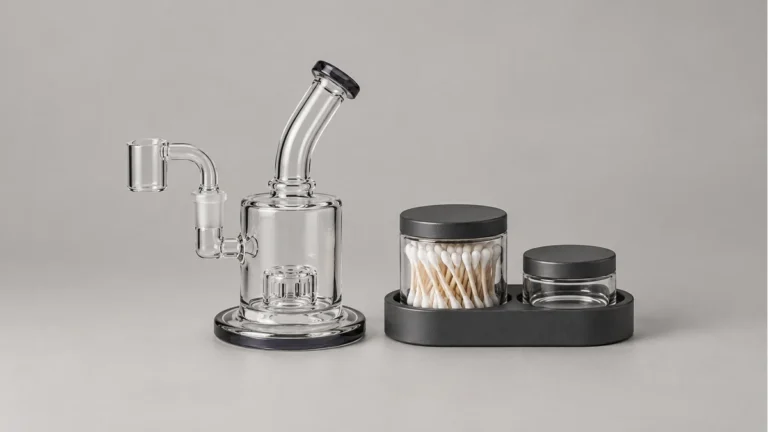
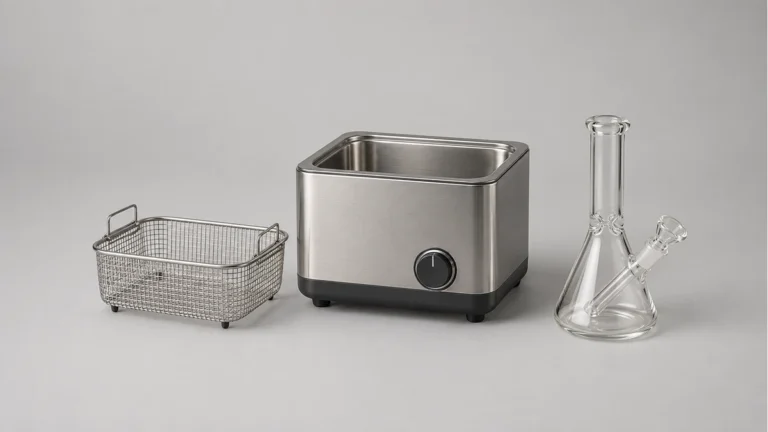
There’s a specific moment every glass owner eventually hits: the piece looks clean after a shake with alcohol and salt, the visible glass is clear, but the joint where the downstem seats still smells faintly of old resin, and a thin brown ring persists right where the percolator slits meet the tube wall. Shaking moves liquid past the obvious surfaces. It does almost nothing for the tight, low-flow pockets where residue actually accumulates — joints, stem slits, perc arms, and the underside of a showerhead disc. That gap is the entire reason purpose-built cleaning tools exist, and it’s also why so many of them turn out to be unnecessary. A useful bong cleaning kit solves specific access problems. Everything else is packaging.
🔍 1. What Actually Belongs in a Useful Kit
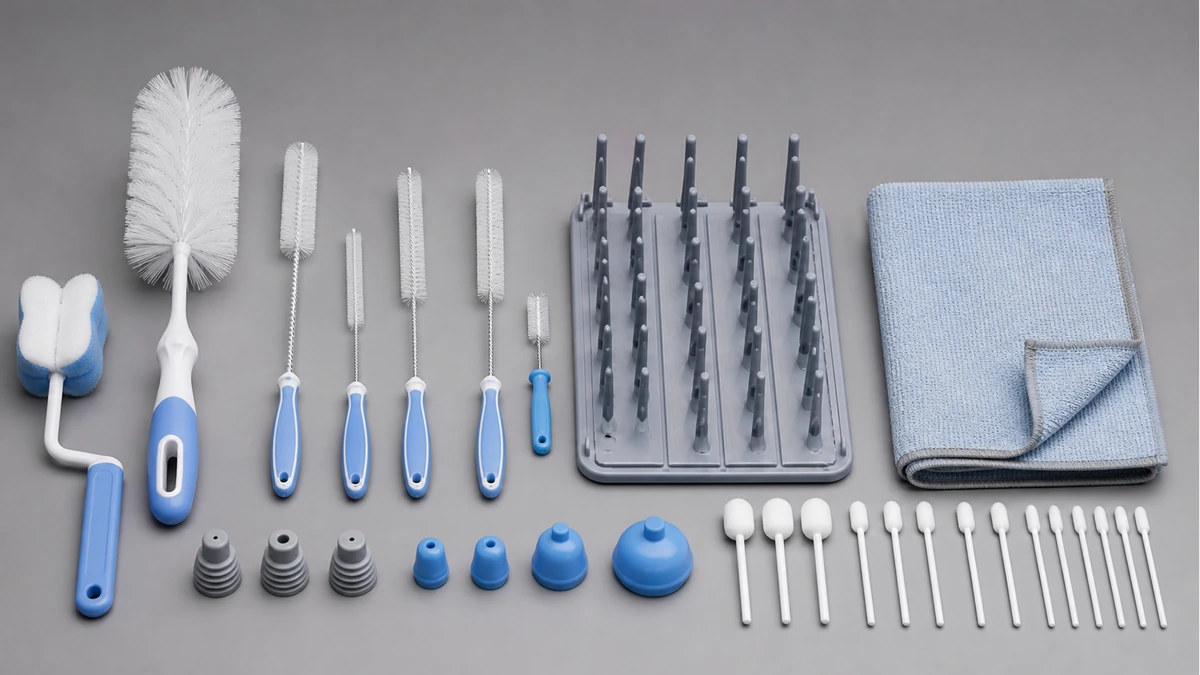
Strip away the marketing bundles and a genuinely functional kit narrows to four categories: something to seal openings for a soak (plugs), something flexible to reach curved or narrow passages (brushes and pipe cleaners), something rigid and fine for pinpoint spots (swabs or picks), and something to hold the piece upright while it dries without recontaminating itself. A magnetic retrieval tool is a fifth, situational addition for anyone who has ever dropped a stir stick or a stray perc marble into a chamber they can’t reach by hand.
The tools themselves need a little upkeep too. A brush left damp and coiled in a drawer between uses can start growing its own film, and eventually its own smell, which defeats the point of owning it. Rinsing bristles clean of solution and letting them air out fully before the next use keeps an inexpensive brush from becoming the thing that recontaminates a piece you just spent ten minutes cleaning.
None of this replaces a proper soak. For a full breakdown of what cleaning agents actually loosen resin versus what just smells like they do, the bong cleaner guide covers that ground in detail. The tools discussed here are what you use before, during, and after that soak to get into the places liquid alone won’t fully clear.
🧩 2. Plugs: When They Beat Another Brush
Plugs — rubber or silicone stoppers sized to joints and mouthpieces — solve a problem no brush can: containment. Once a bong has multiple chambers, a percolator arm, or an ash catcher joint, cleaning solution poured in one opening will just run out another unless every port is sealed. Plugs let you fill the piece, agitate it, and actually submerge internal features like slits and diffuser holes long enough for the solution to work, instead of relying on repeated shakes that only wet the surface briefly.
They’re most valuable on pieces with recessed percolators or fixed downstems, where a brush physically can’t reach the internal geometry but a contained soak can dissolve buildup evenly. They’re less useful on simple straight-tube pieces with a single removable joint, where you can just cap one end with your palm or a stopper and shake normally. The rule of thumb: the more chambers and internal features a piece has, the more a plug earns its spot in the kit, because it turns a brief rinse into an actual soak.
⚙️ 3. Flexible Brushes and Pipe Cleaners for the Parts You Can’t See
🧩 3.1 Downstem and Joint Brushes
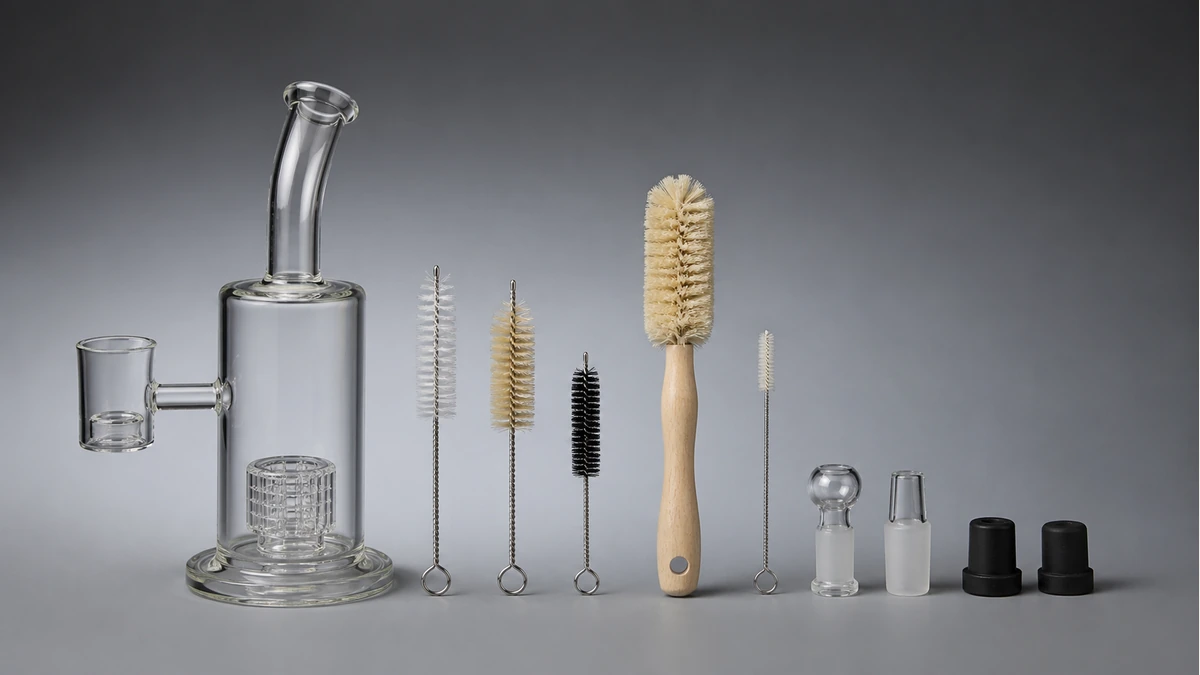
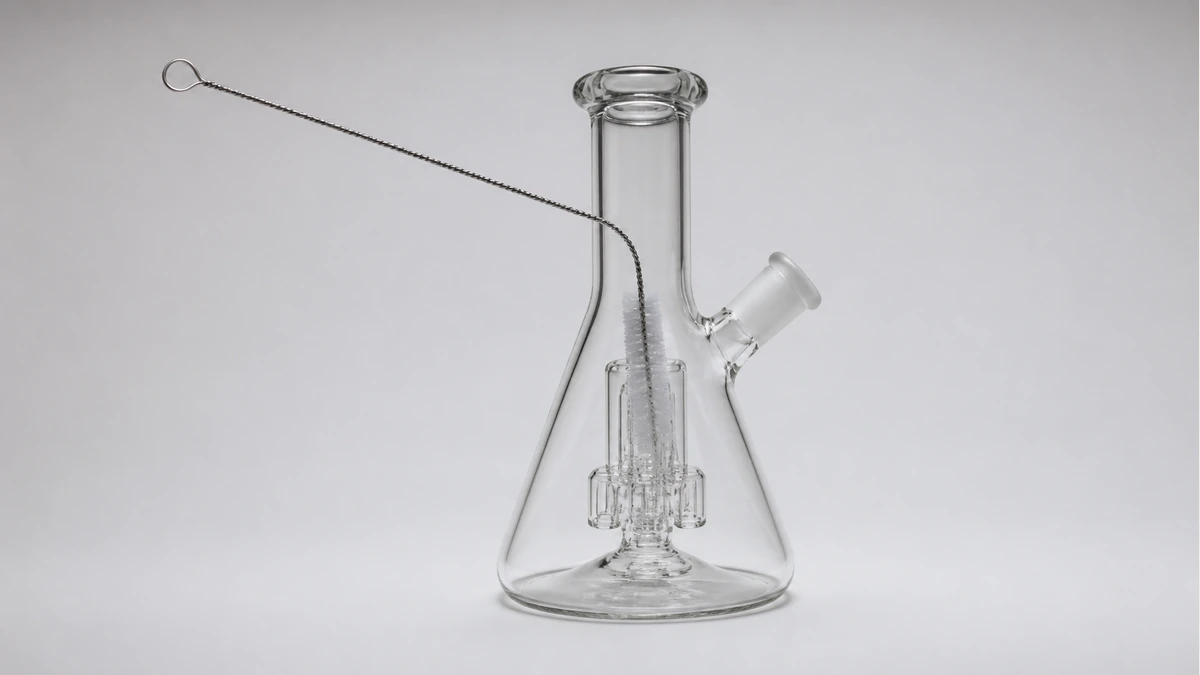
A downstem is a narrow tube with holes or slits near the bottom end, and that’s precisely where residue concentrates — right at the transition from air to water, where vapor condenses first. A narrow bottle-brush style tool with bristles sized to the stem’s inner diameter can be worked in and out to physically dislodge buildup at the slits, something no amount of soaking alone reliably finishes on a heavily used stem. Joints benefit from a slightly stiffer, angled brush that can reach the ground-glass seat without scratching it; the female joint receiving that stem is a critical component covered more thoroughly in the bong bowl guide, since a scratched or gunked-up joint affects both seal and airflow, not just appearance.
Bristle material matters more than most buyers assume. Stiff nylon bristles clear caked residue fastest but can leave fine drag marks on soft or thin glass over repeated use; silicone-tipped brushes are gentler and better suited to delicate joints, though they take more passes to fully clear heavier buildup. Neither is wrong — the choice just depends on how thick the glass is and how aggressive the residue has gotten.
🧩 3.2 Percolator and Chamber Access
Fixed percolators are the hardest feature to clean because they’re permanently attached inside the tube and often have small holes or slits that a rigid brush simply cannot enter at the right angle. This is where flexible, wire-core pipe cleaners earn their keep. They bend to follow the internal shape of a perc arm or a honeycomb disc’s underside, working into gaps a straight brush handle would just push past. For anyone dealing with a similarly awkward internal geometry on a dab rig, the same flexible-tool logic applies, and the how to clean a dab rig guide walks through comparable access challenges around recyclers and internal percs.
The failure mode worth naming here is using a brush that’s too stiff or too large for the passage. Forcing an oversized brush into a narrow perc slit is a common way people crack fixed percolators, and once that happens there’s no repair — only replacement or a piece that no longer diffuses properly.
🧼 4. Swabs and Picks for Detail Work
Brushes cover reachable interior surfaces; swabs handle the small, exposed spots that a brush is too bulky for. Cotton swabs dipped in isopropyl alcohol are genuinely useful around the outside of a joint, the rim of a bowl, the base of a stem where it meets glass, and any splash zone just outside the water line where resin dries in a visible ring. A wooden or plastic pick — not metal — can lift stubborn dried residue from a bowl’s carb hole or the inside edge of a joint without scoring the glass.
This is also where restraint matters. A swab or pick is for spot-treating a small, visible patch of residue, not for scrubbing an entire chamber. If you find yourself picking at buildup across a large interior surface, that’s a sign the piece needs a proper soak first; picking at dried resin without softening it first is slow, incomplete, and more likely to leave scratch marks from repeated pressure in one spot.
📏 5. Drying Racks and Stands: Stopping Recontamination
A cleaned bong set mouth-down on a towel or left standing in a sink is quietly picking up whatever’s on that surface, and residual moisture sitting in a joint or chamber is exactly the environment that lets mold or mildew start. A simple stand or rack that holds the piece inverted, with the joint suspended in open air rather than resting on cloth or countertop, lets water drain and air circulate through the same passages that were just cleaned. Most pieces are dry to the touch within a few hours on a rack; a fixed percolator can take noticeably longer, since trapped pockets have no direct airflow and rely on slow evaporation through the joint opening.
This step matters more for multi-chamber and percolator pieces than for simple straight tubes, precisely because that trapped water has nowhere else to go. A stand isn’t glamorous, but skipping it undoes a meaningful part of the work a soak and brush just did.
🔄 6. Magnetic Tools for Bases and Stuck Debris
Magnetic retrieval tools are a narrow-use item, but for the specific problem they solve, nothing else works as well. A stir stick, a small metal pick, or a dropped screen that falls into a chamber with no removable base becomes genuinely difficult to retrieve by hand, especially in a beaker or straight tube with a narrow neck. A thin magnetic wand can be lowered in to draw a ferrous object back up along the glass wall without needing to tip or shake the piece, which reduces the risk of the object scratching the interior on its way out.
This tool only works on metal items, and only in pieces without a fixed, unreachable pocket the object has settled into. It’s worth owning if you routinely use metal screens or picks near the piece; it’s not something every kit needs.
🧰 7. Improvised Tools That Scratch Glass or Leave Residue
The improvised side of bong cleaning is where most preventable damage happens, and it’s a recurring theme in owner discussions online: people reach for whatever’s on hand, and some of those substitutes cause more harm than the residue they’re meant to remove.
- Metal utensils and wire brushes used inside a joint or chamber can leave fine scratches in the glass. Those scratches aren’t just cosmetic — they become new places for residue to catch, making the piece harder to clean the next time.
- Coarse abrasive salts used excessively, or ground too fine to actually agitate residue, either scratch soft or thin glass or simply sit inert without doing meaningful cleaning work.
- Random household brushes not sized to the joint or stem diameter tend to either miss the contact area entirely or get stuck, sometimes breaking off bristles inside the piece.
- Paper towel or tissue fragments pushed into a stem or chamber to dry it can shred and leave lint behind, which then needs its own removal step.
None of these are dangerous to attempt, but they tend to trade a short-term shortcut for a longer-term problem: a scratched joint that no longer seals cleanly, a stem with lodged bristles, or a chamber that now needs an extra pass just to remove the residue left by the first cleaning attempt. A correctly sized brush or pipe cleaner costs little and avoids all of it.
📦 8. FAQ
Do I need a full kit, or can I just buy a brush?
For a simple straight-tube piece with no fixed percolator, a single flexible brush and some cotton swabs cover most needs. Kits earn their price on pieces with multiple chambers, joints, or fixed percs, where plugs and shaped brushes solve access problems a single tool can’t.
How often do I actually need to use these tools versus just soaking?
Soaking loosens residue; tools remove what soaking softens but doesn’t fully dissolve, particularly at slits and joints. A regular soak reduces how much scrubbing is needed each time.
Can I use the same brushes on a dab rig?
Sizing matters more than the tool category. Rig joints and recyclers often have tighter passages, so check diameter before assuming a bong brush fits comfortably.
Is a magnetic tool worth buying if I don’t use metal screens?
Not really. It solves one specific problem — retrieving ferrous objects from an unreachable chamber — and has no other function in a cleaning routine.
Do the cleaning tools themselves need cleaning?
Yes, if they’re being reused. Rinse bristles and pipe cleaners of solution and residue after each session and let them dry fully before storing them; a brush stored wet can pick up its own buildup and pass it back to the piece next time.
✅ 9. The Bottom Line
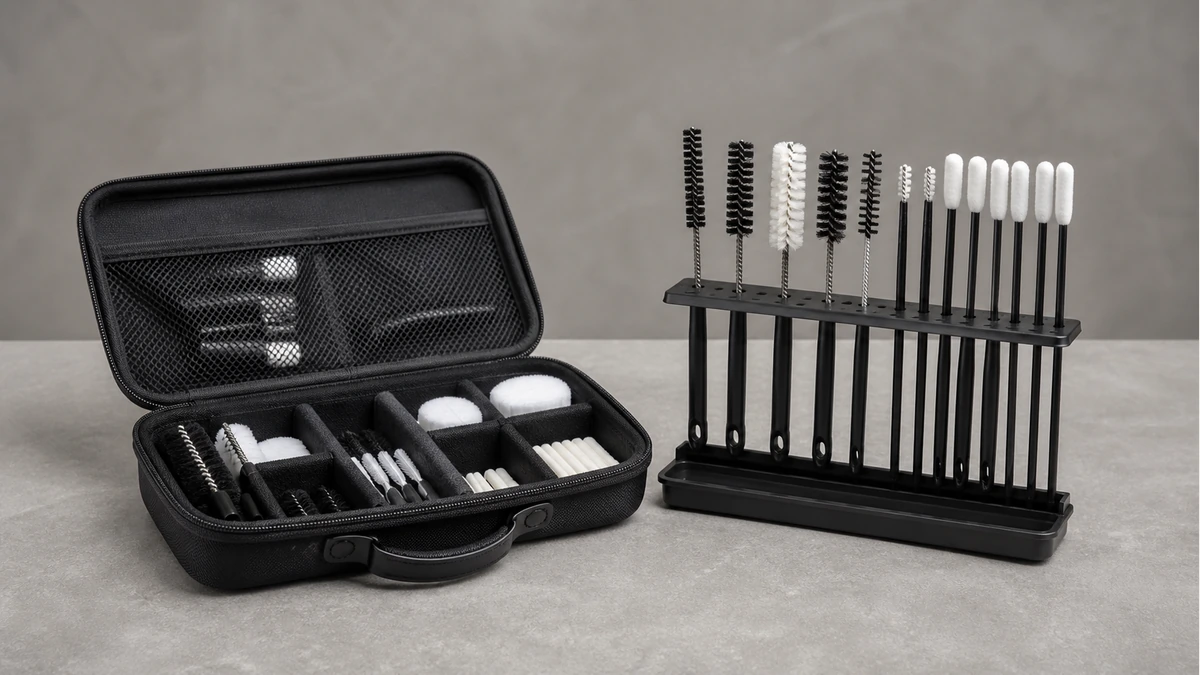
A bong cleaning kit is worth assembling when it’s built around actual access problems: plugs for containment on multi-chamber pieces, flexible brushes and pipe cleaners for joints and percs, swabs for detail spots, a stand for proper drying, and a magnet only if metal parts are part of the routine. Skip the improvised metal picks and undersized household brushes; they cause the exact scratching and residue problems a good kit is meant to prevent. Match the tool to the passage it needs to reach, and the awkward spot that survives every shake finally gets clean.