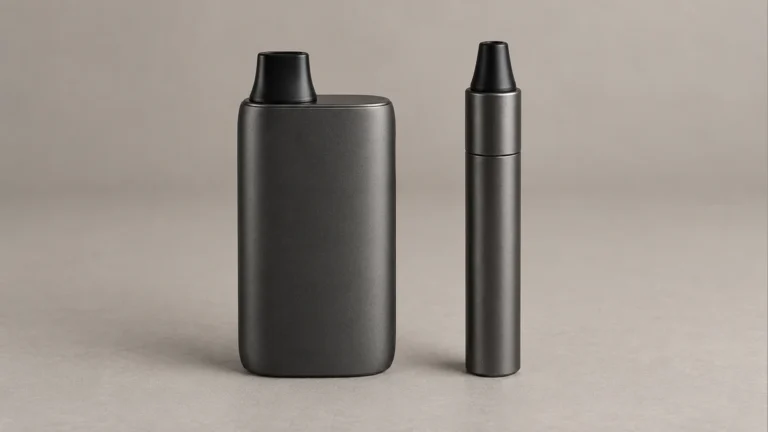
Someone posts that their 510 battery has “stopped drawing” out of nowhere — it only fires if they hit the button hard, or in the case of a buttonless pen, only after pulling so hard it feels like the airflow is half-blocked. Another person with a Lost Vape Prana describes a loose draw-activation fit that stopped registering pulls altogether until they found a workaround. These are two versions of the same underlying question: what is actually happening inside a buttonless vape pen when a draw succeeds, and what has to go wrong for it to fail?
A buttonless design removes the manual switch and replaces it with a sensor that detects the act of inhaling. That sounds simple from the outside, but it depends on a chain of physical events — airflow, pressure change, and electrical contact — all lining up correctly. When any one link in that chain is off, even slightly, the device either won’t fire, fires late, or only fires under unusually hard pulls. Understanding that chain is the fastest way to tell a normal design limitation from an actual hardware fault.
🧭 1. What “Buttonless” Actually Means Inside the Battery
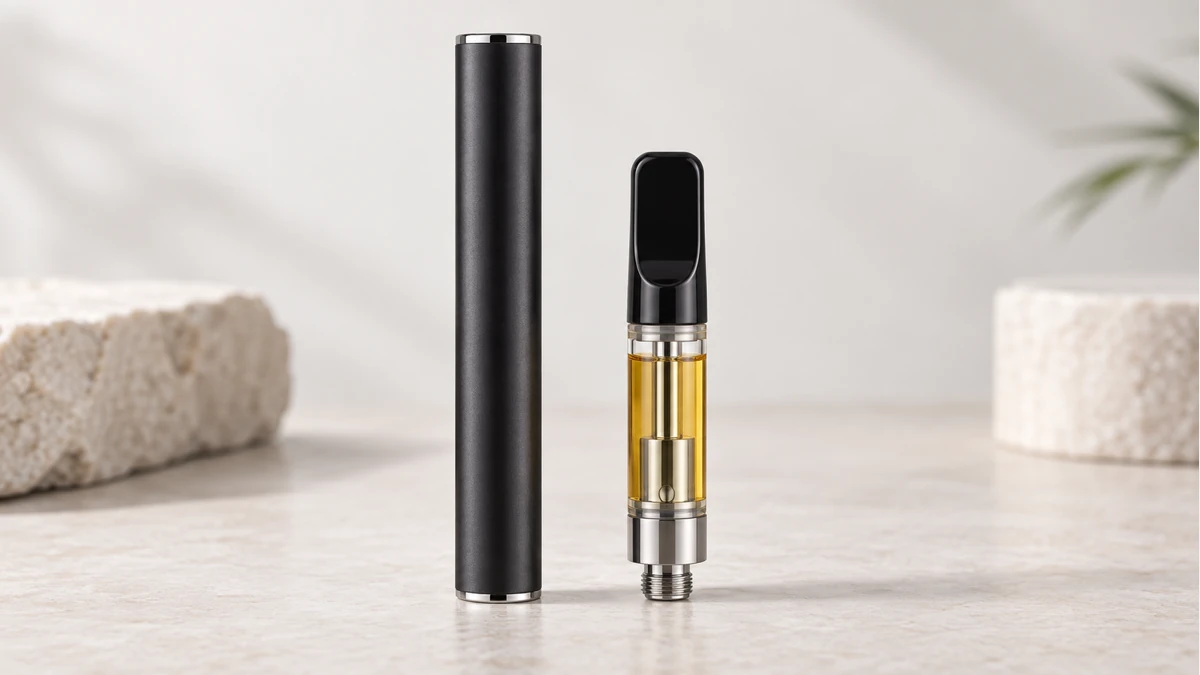
Every 510-threaded vape pen needs some way to know when to send power to the coil. A manual button is a mechanical switch: pressing it physically closes a circuit. A buttonless battery replaces that switch with a component that reacts to something happening during inhalation, rather than to a finger. That “something” is either a change in air pressure or a change in airflow, depending on the sensor type built into the battery.
🔎 1.1 Pressure-Sensing vs. Airflow-Sensing Designs
Most draw-activated 510 batteries use a pressure sensor sitting near the base of the battery, below where the cartridge threads on. When a person inhales, air is pulled through the cartridge and down through the battery’s internal air path. That movement creates a small drop in air pressure inside a sealed chamber next to the sensor. The sensor detects that drop and closes the circuit, which is functionally the same end result as pressing a button — it just uses air pressure as the trigger instead of a finger.
A smaller number of designs use an airflow-based microswitch instead: a tiny flap or diaphragm that physically moves when air passes over it, and that movement itself trips the switch. The distinction matters less for everyday use than the fact that both designs depend entirely on air actually moving through a defined path inside the device. If that path is blocked, restricted, or leaking somewhere it shouldn’t, the sensor has nothing to react to — which is the root cause behind most “won’t fire” reports, including the hard-pull cases described above.
📐 2. How Airflow Reaches the Sensor
The physical geometry here is well established and consistent across brands: a 510-threaded cartridge screws into the battery, and the two pieces share a single continuous air channel. Air enters through an intake hole near the mouthpiece end of the cartridge, travels down through the cartridge’s internal chamber, passes through the threaded connection point, and reaches the sensor housed in the battery body. Every buttonless pen relies on this same basic path, even though the exact chamber shape, sensor placement, and sensitivity threshold vary by manufacturer.
🔎 2.1 Cartridge Fit and Air Path Alignment
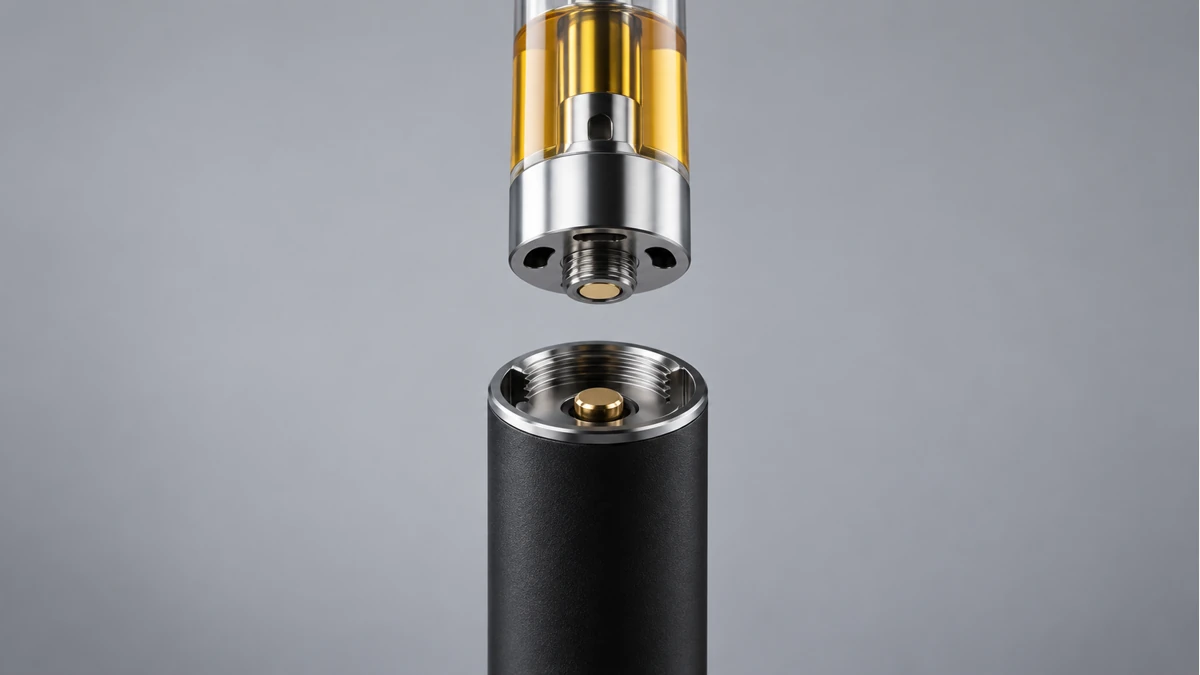
Because the air channel crosses the threaded joint between cartridge and battery, that connection point is a mechanical seam, not a single molded piece. If the cartridge isn’t threaded on fully, or the threading is slightly worn, a gap can form at that seam. Air then has two options: continue down the intended path toward the sensor, or leak out through the gap instead. When a meaningful amount of air escapes through the seam, less pressure change reaches the sensor, and the draw either fails to trigger or requires an unusually forceful pull to compensate — precisely the “only fires if I hit it hard” pattern.
📏 2.2 Why a Loose Connection Breaks the Signal
This is also the mechanical explanation behind draw-activation fixes that involve reseating or re-threading a cartridge, similar to the loose-connection fix some Prana owners have described. A loose thread doesn’t just risk a weak electrical contact at the base pins; it also compromises the air seal that the pressure sensor depends on. Tightening the connection can resolve both problems at once, because both the electrical contact and the air seal live at the same threaded joint. This is a mechanical explanation of why reseating often helps, not a claim that it works for every model or every failure.
🌬️ 3. Reading the Indicator Light
Most buttonless batteries include a small LED that blinks to communicate status, since there’s no button to hold down for a battery check. The presence of an indicator light is close to universal on 510-threaded draw-activated pens, but the exact blink patterns, colors, and their meanings are set by each manufacturer and are not standardized across the category.
🔎 3.1 What Blinking Patterns Usually Signal
In general terms, a light that blinks a set number of times when a draw is attempted but the battery fails to fire is usually communicating a fault condition — commonly low charge, a connection issue, or in some designs, a safety cutoff triggered by drawing for too long in one pull. A light that doesn’t respond to a draw attempt at all points toward either a dead battery or a sensor that isn’t detecting airflow in the first place. Because the specific pattern-to-meaning mapping is model-specific, the physical cause has to be inferred from behavior — does it light up at all, does it light up but not fire, does firing require extra effort — rather than from the blink count alone.
📏 3.2 Limits of Automatic Draw Activation
Draw activation has a built-in sensitivity trade-off. A sensor set to trigger on very light airflow is more convenient but more prone to accidental firing from bumping the mouthpiece or from residual pressure changes. A sensor set to require a firmer pull is less prone to accidental activation but produces exactly the “have to hit it hard” experience some users report even on a fully functional unit. This means a buttonless pen that needs a firm draw isn’t necessarily broken — it may simply sit at the firmer end of that sensitivity range by design. Distinguishing a design characteristic from an actual fault usually comes down to whether the required draw strength has changed over time on the same device, which points toward wear or debris rather than the original calibration.
🧩 4. Troubleshooting a Battery That Won’t Draw
Because the sensor sits at the end of a chain — air intake, internal channel, threaded seam, pressure or airflow detection, electrical contact — a systematic check works better than guessing at a single cause. The following order moves from the easiest points to check to the ones that require more disassembly-level reasoning.
- Confirm the cartridge is threaded on fully and squarely, not just resting on the first few threads.
- Check the intake holes on the cartridge and battery for visible blockage from residue or debris.
- Inspect the center contact pin on the battery for buildup, since a coated or recessed pin can interrupt the circuit even when airflow is normal.
- Note whether the indicator light responds at all when a draw is attempted, versus lighting up without the coil firing.
- Test with a different, known-working cartridge on the same battery to isolate whether the fault follows the battery or the cartridge.
🔎 4.1 Contact and Connection Checks
A surprising number of “sensor failure” reports trace back to something far simpler: oxidation or built-up residue on the center pin, which sits at the same threaded joint carrying the air path. Because this pin handles the actual electrical connection, even a thin film of residue can raise resistance enough to prevent firing, independent of whether air is reaching the sensor normally. For a deeper walkthrough of cleaning and reseating this contact point safely, see the complete 510 battery compatibility guide.
📏 4.2 When the Sensor Itself Is the Problem
If airflow is confirmed to be unobstructed and the electrical contact is clean, but the battery still won’t fire reliably, the sensor component itself may be degrading. Pressure sensors and micro-switches are mechanical or semi-mechanical parts with a finite lifespan, and repeated exposure to condensation or e-liquid vapor near the threaded joint can affect their responsiveness over time. This is a case where the fault sits inside the battery body rather than at the cartridge connection, and it’s generally not something that reseating or cleaning the contact point resolves.
🧼 5. Troubleshoot the Activation Path in a Fixed Order
A buttonless vape pen starts only when a pressure or airflow change reaches its sensor. That means a failure to activate can originate before the battery electronics ever make a decision. The cartridge inlet may be blocked, the center air tube may be restricted, the threaded connection may sit too tightly, or the battery contacts may not meet. Treating every no-fire symptom as a dead cell skips most of the activation path.
🔎 5.1 Confirm That Air Can Move Through the Cartridge
Remove the cartridge from the battery and follow its manufacturer’s inspection guidance. If airflow is restricted while detached, the battery cannot fix it. Do not force pins, needles, or liquid into an airway. A cartridge designed with bottom inlets also needs those openings to remain exposed after installation; overtightening or a surrounding collar can cover them.
📏 5.2 Reattach Only Until the Contacts Seat
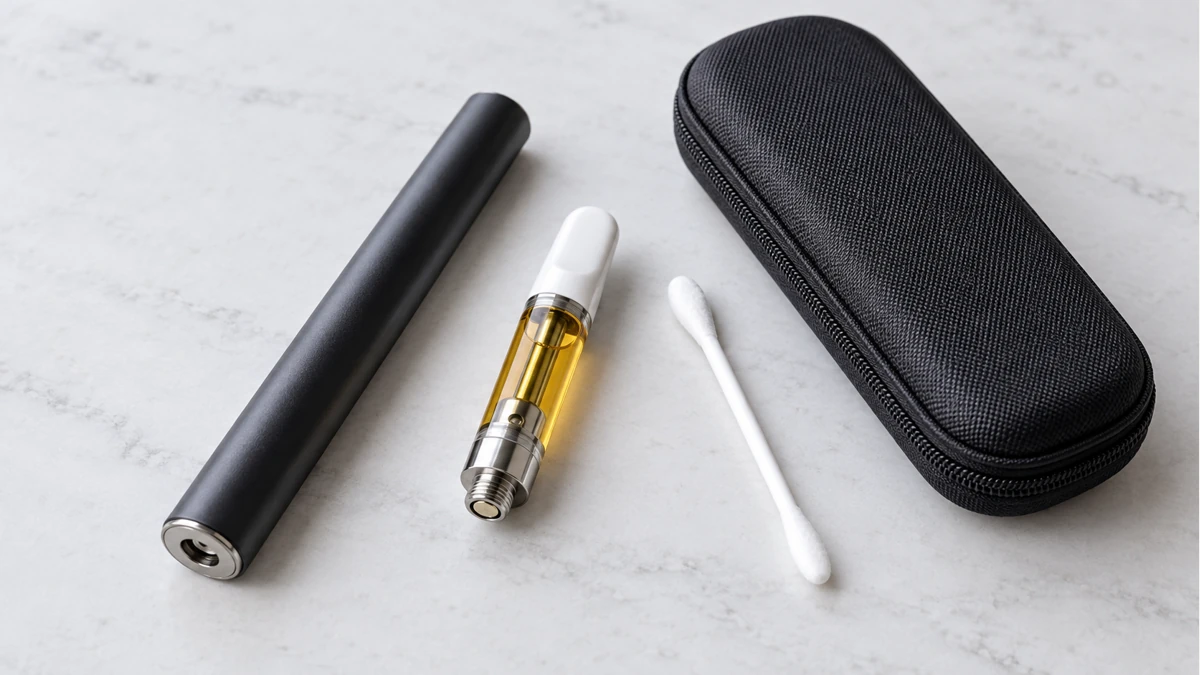
A 510 thread provides mechanical attachment, while the center and outer contacts complete the circuit. Tightening harder does not improve an already seated contact and can alter center-pin depth or cover an inlet. Wipe accessible contacts with a dry lint-free swab, attach finger-tight, and observe the documented indicator. Never pry the battery center pin or stack unknown adapters to chase contact.
🧪 5.3 Read the Light as Model-Specific Evidence
Some buttonless batteries illuminate during a draw, charging, an error, or a timeout. The same color and blink count can mean different things on different models. Record the exact pattern and consult the battery documentation rather than importing a code from another brand. No light can indicate that the sensor never detected airflow, but it can also reflect charge state or an internal fault.
🧷 5.4 Keep Condensation Away From the Sensor Path
Condensation and residue can migrate toward air inlets and contacts. Store the battery and compatible cartridge as documented, keep the connector dry, and clean only accessible surfaces. If the device activates without a draw, remains active, becomes unusually warm, or shows physical damage, disconnect the cartridge when safe and stop using the battery. Automatic activation is a control feature, not permission to bypass abnormal behavior.
🌬️ 5.5 Use a Known-Compatible Pair for Isolation
When documentation permits, compare the battery with one known-compatible cartridge and compare the cartridge on one known-compatible battery. Change only one component at a time. This reveals whether the symptom follows the air path, cartridge contacts, or battery. A successful thread connection alone does not prove electrical, airflow, or control compatibility.
🔍 6. Buttonless vs. Button-Activated: Compatibility Notes
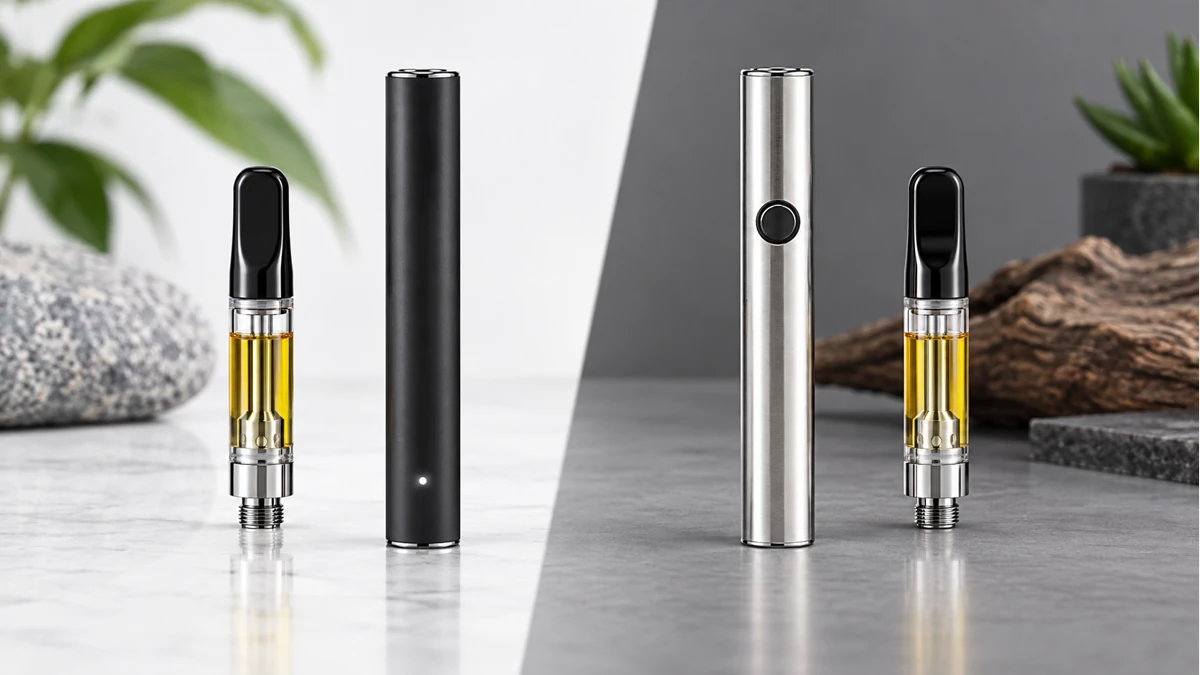
Both buttonless and button-activated batteries use the same 510 threading standard, so a cartridge that physically screws onto one will generally screw onto the other. What differs is how the circuit gets closed — a physical button press versus a detected draw — which means the compatibility question isn’t about the threading, it’s about whether a given cartridge’s airflow design produces enough of a pressure or airflow change for a specific buttonless sensor to detect reliably.
🔎 6.1 Matching Cartridge Threading and Airflow
A cartridge built with very open, low-resistance airflow can, in some cases, let air pass through without creating enough pressure differential for a sensitive draw sensor to register — the opposite problem from a blocked air path, but with a similar end symptom of inconsistent firing. This is one of the more model-specific aspects of buttonless hardware, since sensor sensitivity thresholds vary by manufacturer and aren’t published as a standard specification. Anyone comparing a specific cartridge against a specific buttonless battery is better served checking manufacturer compatibility notes for that pairing than assuming all 510-threaded parts will behave identically once installed; a broader compatibility overview is available at diagnosing a pen that will not activate after charging.
For readers weighing whether a buttonless or button-activated battery fits their needs going forward, the reading battery indicators without guessing covers how the rest of the 510-thread battery category handles related build differences, including contact pin styles and voltage regulation, that sit alongside the draw-activation question covered here.
The practical takeaway is a simple identification habit: if a buttonless pen ever needs a harder pull than it used to, or stops firing altogether, check the threaded connection and center pin first, since that single seam carries both the air path and the electrical contact the sensor depends on. Only after confirming that seam is clean, seated fully, and free of blockage does it make sense to treat the sensor itself as the likely point of failure. Knowing which of those two categories a symptom falls into is what separates a five-minute fix from a battery that’s actually reached the end of its usable life.