The banger looks perfect. It’s a flat-top quartz bucket, freshly torched, cooling on the rig’s joint while you wait for the color to shift from angry orange to a dull, ready glow. You drop in the material, and for a second everything about the setup seems finished — the glass is clean, the joint is tight, the water level is right. Then you take the pull and something is off. The vapor comes up thin in one breath and scorched in the next, like the heat is arriving all at once instead of settling in. Nothing about the banger changed. What’s missing is sitting in a drawer three feet away: the cap.
It’s a strange thing to explain to someone new to quartz, because a carb cap doesn’t look like it should matter that much. It’s small, it has no batteries, no display, no moving electronic parts. But a flat-top or bucket-style banger is an open system — heat radiates out, air moves through unpredictably, and the oil sits exposed to whatever draft happens to be in the room. The cap is what turns that open system into something closer to a controlled one. Understanding what it actually does, mechanically, is the difference between treating it as an accessory and treating it as the missing half of the airflow path.
🌬️ 1. What a Carb Cap Actually Changes in the Airflow Path
A carb cap’s job is airflow management, not decoration, and that distinction matters more than most first-time buyers expect.
🧩 1.1 Quartz Airflow Before a Cap
An uncapped bucket banger relies entirely on ambient air pulled in through the top opening and the carb hole on the joint, if the rig has one. That air moves fast and cools unevenly. Heat that was carefully built up in the quartz gets diluted the instant the chamber opens to the room, and the material at the edges of the bucket behaves differently than the material pooled at the center. The result is a session that front-loads flavor and then flattens out, because the airflow has no consistent path — it’s whatever the room’s air currents happen to allow.
🧩 1.2 The Moment a Cap Enters the Picture
Set a cap over that same banger and the physics change immediately. The cap traps a column of heated air directly above the oil instead of letting it dissipate outward. Depending on the cap’s design, that trapped air either recirculates through directional holes, spins through an offset chamber, or simply seals long enough to hold temperature steady for a few extra seconds. None of that requires the banger itself to change. The cap is doing the airflow work that the open bucket design was never built to do on its own — which is also why swapping a cap can make an otherwise identical banger perform noticeably differently from one session to the next.
🔒 2. Why Fit and Seal Outrank Novelty
Buyers new to quartz tend to shop for caps the way they’d shop for a phone case — by looks first. But a cap that doesn’t seal against its banger is functionally closer to no cap at all.
🧩 2.1 The Seal Problem
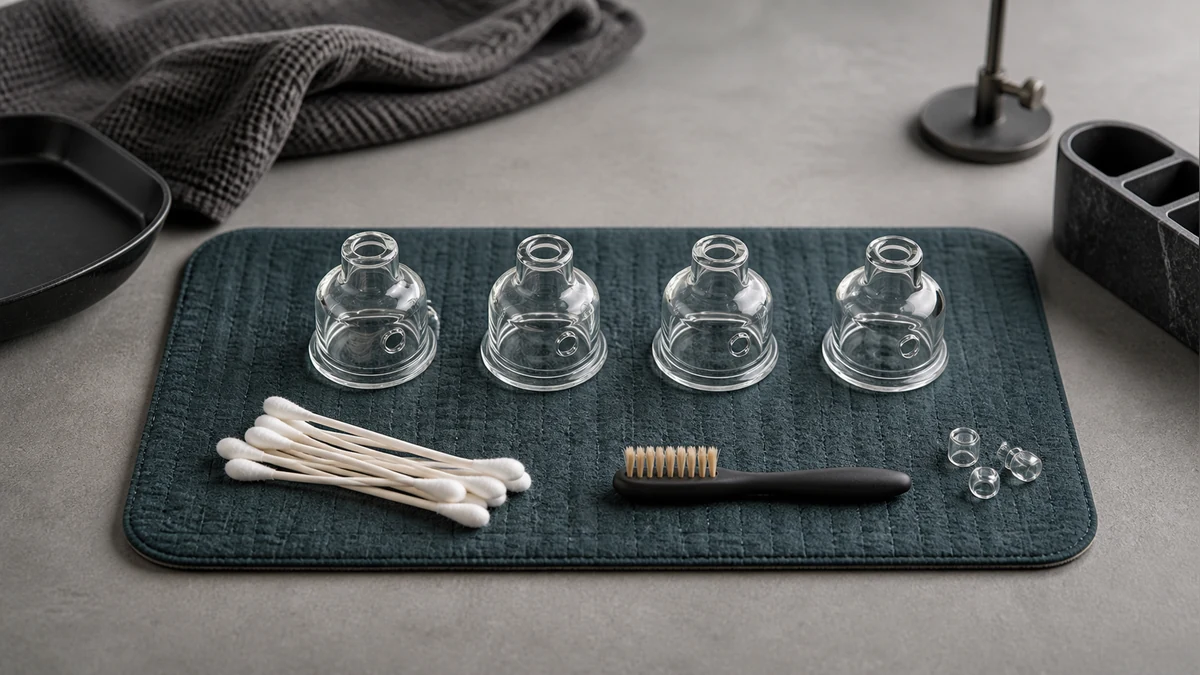
Every carb cap depends on a close, stable relationship with the rim or bucket wall it sits against. If the cap’s diameter is even slightly mismatched to the banger’s opening, air leaks around the edge instead of moving through the cap’s intended path. That leak defeats the entire mechanism — directional holes stop directing anything meaningful, and a bubble cap stops holding the dome of air it’s designed to trap. This is the exact situation a lot of new buyers run into: a rig that’s nominally the right joint size, paired with a cap that technically fits over the banger but never actually seals against it.
🧩 2.2 What a Loose Cap Actually Costs You
A poor seal doesn’t just reduce a session’s consistency — it changes cleanup and maintenance too. Oil that would normally recirculate inside a sealed chamber instead spatters past a gapped cap, landing on the outer banger wall or the joint itself. Over repeated sessions that means more residue to clean, more frequent torch-and-wipe maintenance, and a banger that looks used well before it should. None of that is a defect in the banger or the cap individually — it’s a mismatch between the two, and it’s solvable by treating the cap as a fitted part rather than a universal add-on.
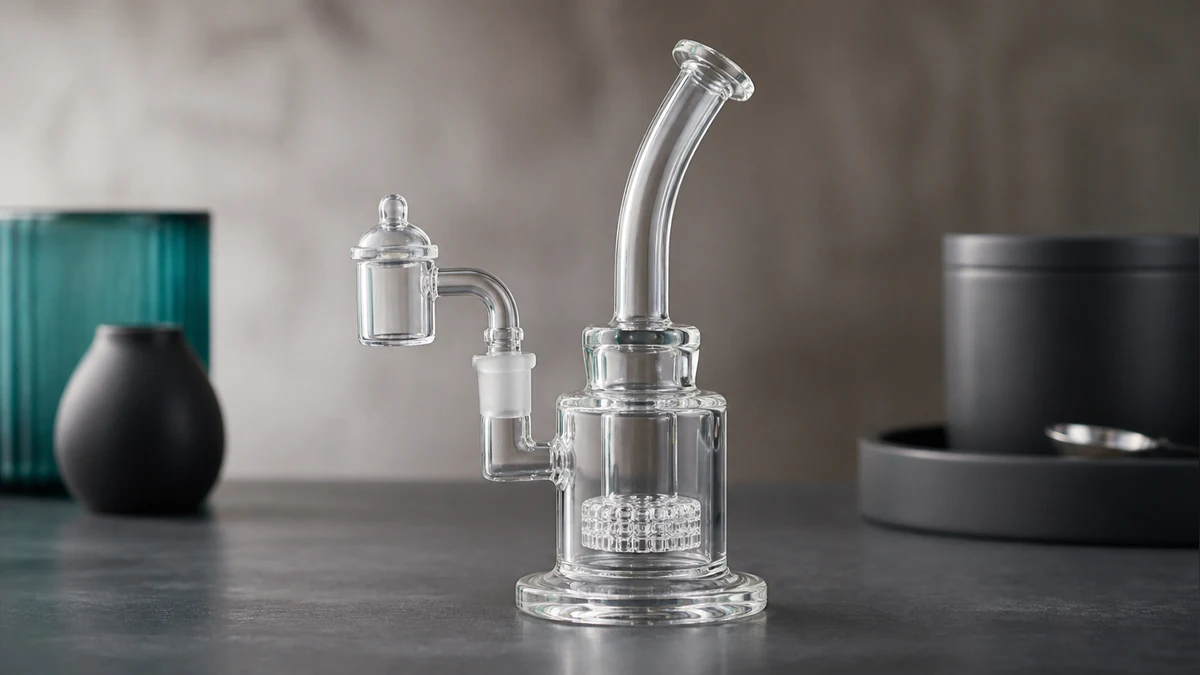
🌀 3. Directional, Bubble, and Spinner Caps Compared
Once fit is settled, the next real decision is shape. The three common carb cap families move air differently, and none of them is a strict upgrade over the others — they solve different problems.
🧩 3.1 Directional Caps
A directional cap has one or more angled holes on its side, positioned so that air entering the cap gets pushed in a specific direction across the oil rather than dropping straight down onto it. The practical effect is that material spread across the bottom of the bucket gets pulled evenly instead of concentrating heat on whatever sits directly under the opening. This style rewards a banger with a wide, flat bucket floor, since the moving air has more surface to travel across.
🧩 3.2 Bubble Caps
A bubble cap is closer to a dome — it sits over the banger opening and traps a pocket of air with a small carb hole, sometimes on the side, sometimes on top. Instead of directing airflow across the chamber, it holds a stable reservoir of heated air in place. It’s a simpler mechanism with fewer moving variables, which is part of why it tends to be the more forgiving option for someone still learning how banger heat and airflow interact.
🧩 3.3 Spinner Caps
Spinner caps add angled fins or vanes to the airflow path so that the air entering the cap doesn’t just move in a straight line — it rotates. That rotation is meant to pull material around the bucket wall rather than leaving it pooled at the center. Spinners tend to be the most sensitive to fit of the three styles, because the spinning motion only happens correctly when the cap sits centered and sealed. A spinner that’s slightly off-axis on a mismatched banger often ends up behaving more like a loosely sealed bubble cap — spinning inconsistently, if at all.
None of these three is objectively best. A directional cap suits a wide flat-top bucket, a bubble cap suits a smaller or more standard bucket where simplicity is the priority, and a spinner suits a setup where the buyer already has the fit dialed in and wants more active movement. For a broader look at how caps fit into a full setup alongside torches, dab tools, and storage, the dab rig accessories guide covers the supporting pieces that round out a rig beyond the banger and cap themselves.
📐 4. How Banger Geometry Decides Compatibility
Cap shape only matters once geometry has already ruled a cap in or out. This is the step buyers skip most often, and it’s the one that actually determines whether a cap will work at all.
🧩 4.1 Bucket Diameter and Wall Angle
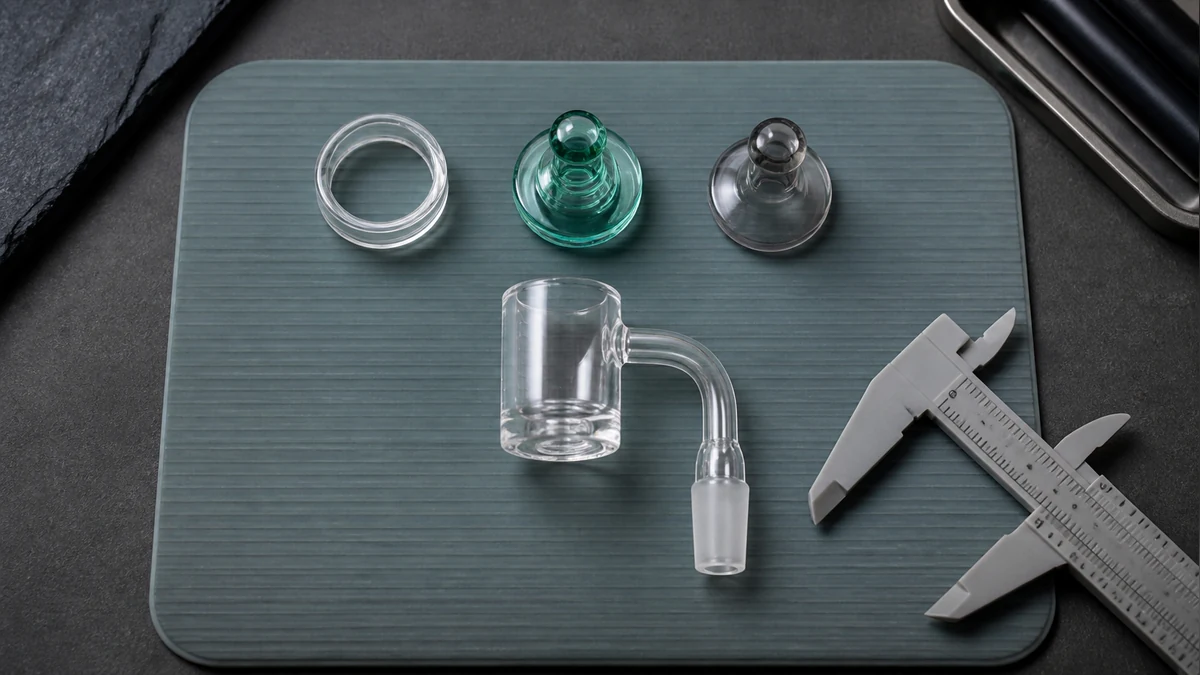
A bucket banger’s opening diameter sets the outer limit for cap fit, but the wall angle matters just as much. Some buckets flare outward from the base, others run nearly straight up. A cap sized correctly for a straight-walled bucket can sit too high or too loose on a flared one, because the point of contact between cap and quartz shifts depending on that angle. This is why a cap that’s listed as fitting a given joint size doesn’t automatically fit a given banger — joint size describes the rig connection, not the bucket the cap actually needs to seal against.
🧩 4.2 Flat Top vs. Beveled Lip
Flat-top bangers give a cap a level surface to rest on, which is part of why they’re a common pairing for directional and spinner caps that depend on consistent centering. Beveled or angled-lip bangers change that contact point, and a cap resting on a bevel can sit slightly tilted even when its diameter is technically correct. Buyers comparing banger styles for the first time often benefit from stepping back to the broader question of nail, banger, and enail differences before narrowing in on cap shape — the comparison in the dab nail vs. banger vs. enail guide lays out how bucket style connects to the rest of that decision.
🧩 4.3 Electric Rig Chambers
Electric or e-rig setups introduce another layer, since the heating chamber and coil housing are built to the manufacturer’s own dimensions rather than the more standardized shapes common to torched quartz. A cap that fits a traditional flat-top bucket won’t necessarily fit an e-rig’s chamber, and forcing one to sit on top rather than seat properly usually means giving up the sealed-airflow benefit entirely. Checking chamber diameter against cap diameter before purchase — rather than assuming a universal fit — avoids ending up with a cap that never actually engages with the chamber it was bought for.
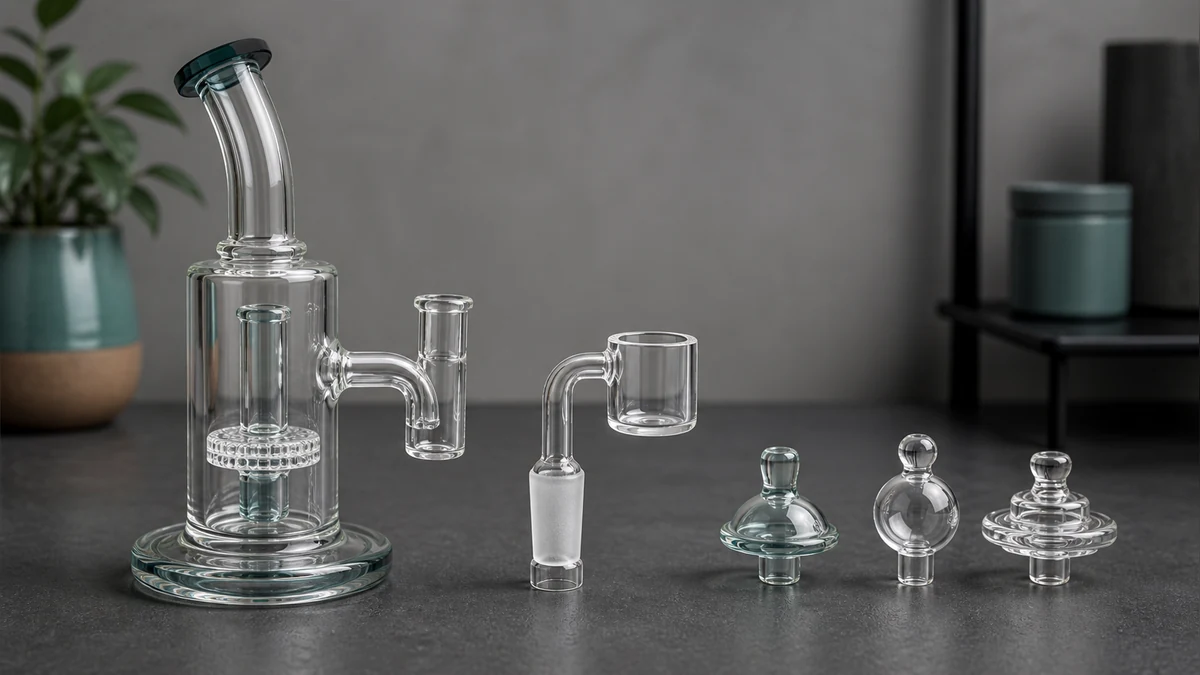
None of this makes carb caps complicated so much as it makes them dependent on a detail buyers don’t always think to check first: does this cap actually seal against this specific banger, on this specific rig. A cap purchased for its shape alone, without confirming that fit, tends to end up back in the drawer next to the banger it never quite matched. For anyone building a rig from scratch rather than adding a cap to an existing setup, working through banger, cap, and accessory choices together — rather than one at a time — tends to avoid this mismatch altogether, which is the approach laid out in the dab rig kit guide.
The flat-top banger from the opening scene wasn’t broken, and neither was the cap sitting in the drawer. They just hadn’t been introduced to each other with fit and geometry in mind. Once that pairing is right — diameter matched to bucket, wall angle accounted for, and a cap style chosen for the airflow behavior it’s actually built to produce — the difference shows up immediately, not because the quartz changed, but because the airflow path finally has a second half.
Spinner action and movable directional caps can be helpful, but movement is not automatically better. If a simple cap makes a stable seal and gives the airflow pattern the bucket needs, more pieces add cleanup and more fit variables. Choose the least complicated cap that works with the actual banger, not the cap that produces the busiest demonstration.
🧩 4.4 Decide Whether Extra Motion Solves a Real Problem
Small passages make a cap useful, and they also make residue disproportionately important. A film around an inlet or seal can turn a controlled stream into an inconsistent one. Let parts cool, follow the material-specific cleaning instructions, and inspect the opening under good light. Do not drive wire or sharp tools through a passage unless the manufacturer explicitly designed it for that service.
🧩 4.5 Keep the Air Holes and Seal Surfaces Boringly Clean
Test the unheated pieces together before assuming compatibility. The cap should sit predictably, move the way its design requires, and lift away without scraping the quartz. If the only way to make it seal is to press hard, hold it at an awkward angle, or let glass grind against glass, the pairing is wrong. The goal is controlled air, not physical force.
Bring the banger—or its exact dimensional drawing—into the decision. “Fits a 14 mm rig” describes the joint below the banger, not the rim the cap must cover. What matters at the top is the bucket opening, lip profile, wall angle, any insert or pearl inside, and the clearance the cap needs to move without binding. A cap that balances beautifully on one flat top can rock, leak, or sit too deep on another.