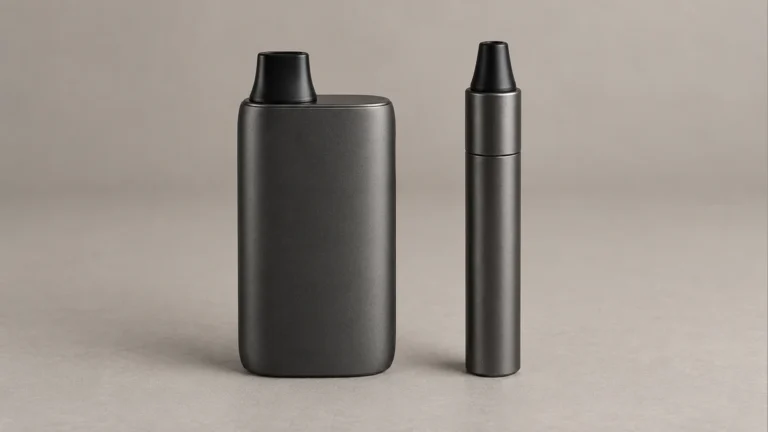
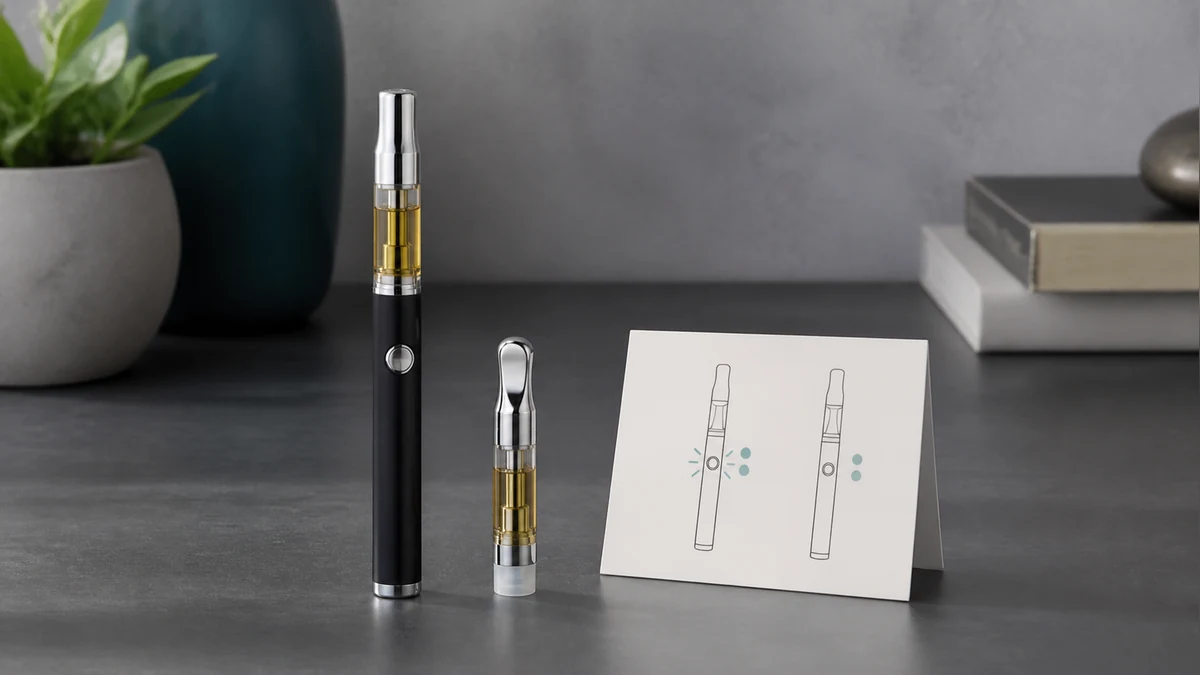
You pick up a cartridge pen for the first time in weeks, and the instruction card tucked into the box says: “click power button five times to activate, two clicks to preheat.” Two clicks. Not two seconds, not a long press — two clicks. It reads more like a riddle than an instruction, and it’s easy to see why so many people interpret it as “click and hold” instead of “press twice in quick succession.” That confusion is the actual starting point for most preheat questions, because before you can even ask whether preheating helps, you have to figure out how to trigger it in the first place.
The honest answer is that there’s no universal preheat gesture. Some devices use two rapid clicks, some use three, some require holding the button for a set number of seconds, and a few skip the feature entirely and rely on variable voltage instead. The button sequence, the light pattern that confirms it’s active, and the duration of the warm-up cycle are all specific to the device in your hand. None of that is guesswork you should have to do — it’s printed in the manual that came with your exact model, and that document is the only source that should settle the question.
🌬️ 1. The Confusing Instruction: What “Two Clicks” Actually Means
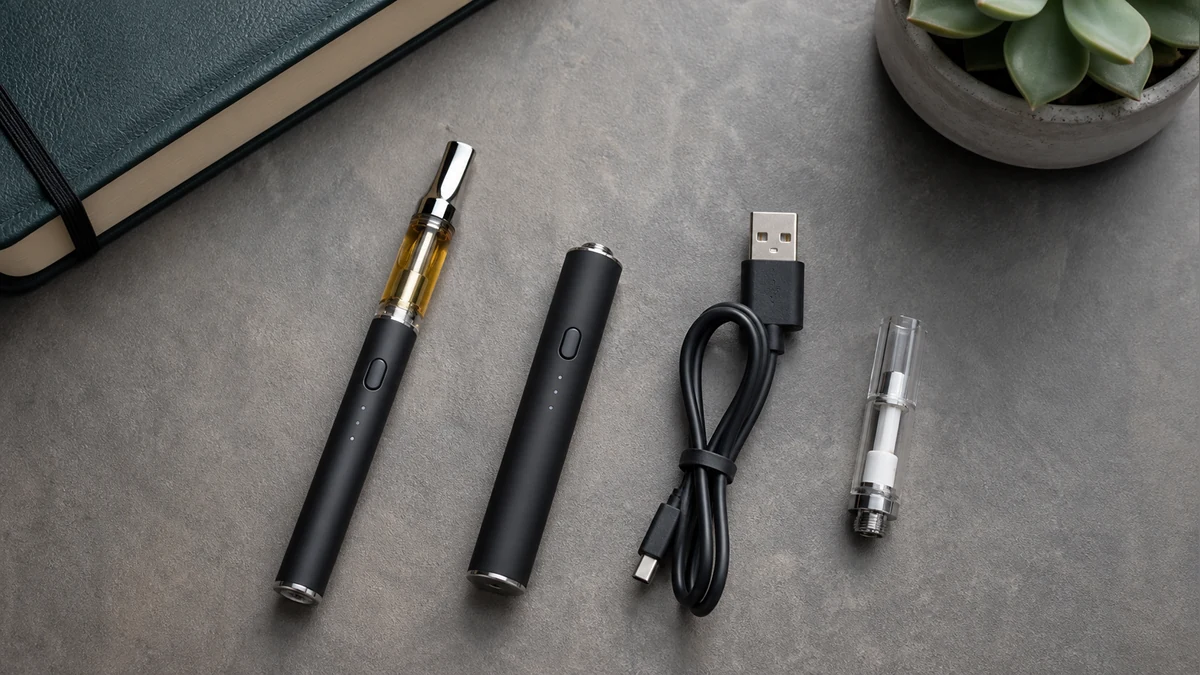
Preheat controls exist because oil-filled cartridges don’t all draw the same way. A device that’s built around 510-thread carts, rather than a sealed all-in-one, has to accommodate whatever cartridge gets screwed onto it — thick, thin, old stock, fresh stock — and preheat mode is the manufacturer’s way of giving the user a small amount of control over that variability. The click pattern is simply how you tell the battery to enter that mode before you take a normal draw.
🧩 1.1 Reading the Manual Correctly
When a manual says “two clicks to preheat,” it almost always means two separate, quick presses of the power button, similar to the double-click you’d use on a computer mouse — not a press-and-hold. A press-and-hold on most of these devices does something else entirely, commonly locking the device or, on button-activated models, firing the heating element for as long as the button is held. Confusing the two isn’t a small mistake: holding the button when the manual meant “click twice” can produce a much longer and hotter activation than intended, which is part of why some users describe accidentally scorching a draw right after trying to “preheat.” The fix isn’t a universal rule — it’s simply reading the light behavior described for your specific model. A confirmation light that blinks a certain color or pulses for a set number of seconds is the device telling you preheat is active, and that signal, like the click pattern itself, is defined in the manual and should not be assumed from a different device you’ve used before.
It’s also worth separating preheat mode from the general activation sequence. Many devices require five clicks just to turn the battery on or off, and it’s easy to lose count and end up in an unintended state. If a cart seems unresponsive afterward, the issue may not be preheat at all — it could be a connection or airflow problem, which is a different troubleshooting path covered in this breakdown of carts that aren’t hitting despite open airflow. Preheat won’t fix a poor connection between the cartridge and battery; it only affects how the oil itself behaves once power is already reaching the coil correctly.
🔒 2. What Preheat Mode Actually Does
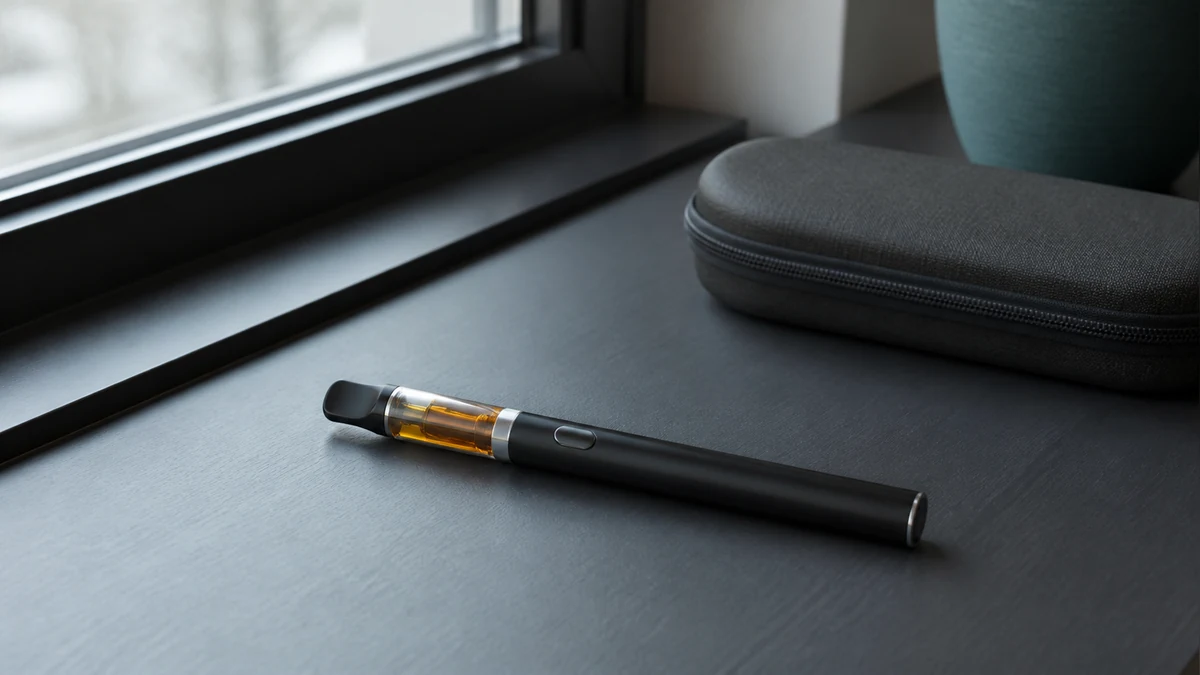
Once you’ve got the click sequence right, what’s actually happening during those few seconds of amber or blue light? In broad terms, preheat runs the atomizer at a lower wattage than a normal draw, without airflow, for a short fixed window — often somewhere in the range of ten to fifteen seconds, though the exact duration and power level are set by the device’s firmware and vary by model. The idea is to introduce gentle warmth to the oil sitting in the chamber and wick before you pull vapor through it, rather than asking the coil to do both jobs — warming cold, thick oil and vaporizing it — in the same instant a normal draw would demand.
🧩 2.1 Low Power, Short Warm-Up
This is meaningfully different from just taking a longer or harder draw. A normal draw activates full power and pulls air across the heating element at the same time, so any resistance from thick oil is fighting against both heat and airflow simultaneously. Preheat isolates the heat portion and lets it work on the oil in place, with no draw involved, so that by the time you do inhale, the oil has already had a head start on becoming less viscous. It’s a bit like letting a cold jar of honey sit near a warm stove for a minute before trying to pour it, instead of just tipping the jar harder. The mechanism only works within the bounds the manufacturer built into the firmware, though — some devices offer a single fixed preheat cycle, others let you choose a preheat temperature alongside your draw temperature, and a few tie preheat behavior to the voltage or temperature setting you’ve already selected. If your device supports adjustable output, it’s worth pairing that understanding with a guide like this overview of voltage selection for live resin carts, since preheat and base voltage work together rather than as separate, unrelated settings.
🌀 3. When Preheating Helps
The most common scenario where preheat genuinely earns its place is cold storage. Oil that’s been kept in a car overnight during winter, in a bag that sat outside, or in a refrigerator for preservation purposes will be noticeably thicker than oil at room temperature. Viscosity changes are a basic property of the concentrate itself, and cold oil moves more slowly through the wicking material regardless of how good the coil or cartridge design is. In that situation, a short preheat cycle gives the oil time to loosen up before the actual draw asks it to flow through the wick and vaporize, which can mean the difference between a thin, sputtering first pull and a normal one.
🧩 3.1 Viscosity, Not Just Temperature
Viscosity isn’t only about ambient temperature, either. Certain extraction types and certain cartridge fill levels naturally sit thicker than others, and oil near the bottom of a cartridge — closer to the mouthpiece end on some vertical designs, or simply the last remaining bit in general — can behave differently than oil at the top when the cartridge was fresh. In both of these cases, the underlying issue is the same: the oil needs help moving before it needs help vaporizing, and preheat targets exactly that step. This is also where cartridge construction plays a role. A cartridge built around a ceramic heating element distributes warmth differently than a coil-and-wick design, and the practical effect preheat has can shift depending on that construction — a topic covered in more detail in this explanation of how ceramic cartridges function. None of this changes the fact that the manual for your specific battery and cartridge combination is the final word on what preheat duration or intensity is appropriate; it simply explains why the same click sequence can feel more or less useful depending on what’s actually inside the cartridge.
📐 4. When Preheating Isn’t Necessary
Here’s where the interface language causes a second kind of confusion: because preheat is presented as a distinct mode with its own button sequence and light pattern, some users treat it as a required first step before every single draw, the way you might treat unlocking a phone before using it. That’s not how it’s designed to function. If the cartridge has been sitting at room temperature, was recently used, or contains oil that’s already flowing normally, a preheat cycle isn’t doing much of anything — the oil is already at a viscosity the coil can handle on its own. Running it anyway won’t damage anything in most cases, but it also isn’t buying you a better draw; it’s adding a warm-up step to oil that didn’t need warming up.
This distinction matters more than it might seem, because it reframes preheat as a situational tool rather than a habitual ritual. The reader question that comes up most often — is this required after every pause, or only when the oil is cold or reluctant to move — has a fairly direct answer once you separate the two situations. A pause of a few minutes between draws, at normal room temperature, doesn’t meaningfully change oil viscosity. A pause of several hours in a cold car, or storage in a refrigerator, does. The gesture is the same either way, but its usefulness depends entirely on the state of the oil in the moment, not on the length of time since your last draw.
🧭 5. The Risk of Over-Preheating
The third reader pattern worth addressing directly is the assumption that more preheating equals a stronger result. Because preheat mode is associated with heat, and heat is associated with vapor production, it’s an easy leap to think that running the cycle two or three times in a row, or holding the button longer than the manual specifies, will produce a bigger or better draw. What’s actually happening in that case is repeated or extended low-power heating of oil and wicking material that has nowhere for that heat to go until you draw on it. Each additional cycle adds warmth on top of warmth that hasn’t been drawn off yet, and the result users often report — a harsher, hotter, or burnt-tasting first pull — lines up with what you’d expect from oil and wick material that’s been heated well past the point that was useful.
🧩 5.1 Heat Accumulation, Not Extra Strength
This is worth stating plainly because it’s the opposite of what the instinct suggests: preheat is not a volume knob. It’s a fixed, short, low-power cycle meant to solve one specific problem — oil that’s too thick to draw normally — and once that problem is solved, additional cycles are just adding heat without adding anything useful in return. If a cartridge still isn’t producing a normal draw after one appropriate preheat cycle, the more productive next step is usually to check the connection between cartridge and battery, confirm the airflow path is clear, and consider whether the underlying issue is something other than viscosity, rather than repeating the preheat sequence and hoping the outcome changes.
🧼 6. Using Preheat With Judgment
Put together, preheat mode is a narrow, purpose-built feature rather than a general-purpose enhancement. The click sequence that activates it, the wattage it runs at, the duration of the cycle, and the light pattern that confirms it’s working are all defined by the specific device you own, and that’s genuinely the only reliable source for those details — not a habit carried over from a previous battery, and not a guess based on what “two clicks” sounds like it should mean. Used at the right moment, on cold or thick oil, it does a real and fairly simple job: it lets the oil loosen up before the draw asks it to move. Used automatically, on oil that’s already flowing fine, it’s an unnecessary step. Used repeatedly, chasing a stronger hit, it tends to work against the outcome it’s meant to produce.
The practical takeaway is less about memorizing a rule and more about noticing the actual state of the cartridge in front of you — how it’s been stored, how it drew the last time you used it, and whether today’s draw feels different in a way that points to viscosity rather than something mechanical. When it does, a single preheat cycle, triggered the way your manual describes, is the tool built for exactly that situation.
📚 7. Sources
- AOVAPE: Best Voltage for Live Resin Carts
- AOVAPE: Cart Not Hitting But Has Airflow
- AOVAPE: How Ceramic Cartridges Work
- Device-specific instruction manual for your exact battery model (button sequence, preheat duration, and light codes vary by device and should always be confirmed against this document)