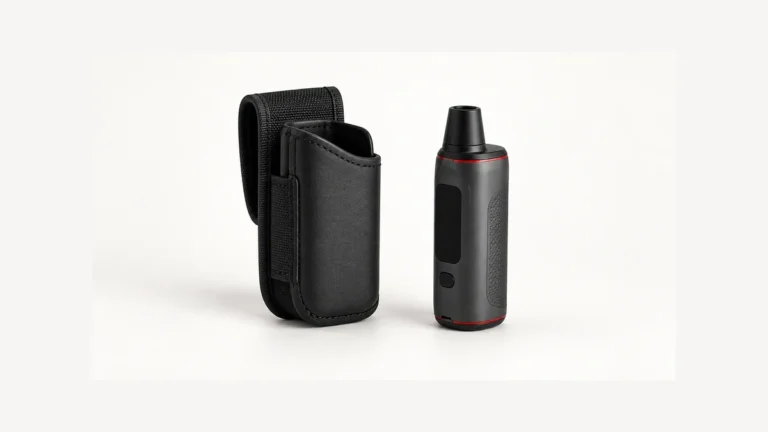
Search “ceramic cart” and you’ll find the word doing a lot of unpaid work. It shows up in product titles next to strain names, in battery marketing, in mouthpiece descriptions, and in the actual heating element buried inside the cartridge — sometimes all four on the same listing. That’s not automatically dishonest, but it does mean “ceramic” on its own tells you almost nothing about what you’re actually buying. A ceramic mouthpiece and a ceramic heating core have nothing in common except the word used to describe them, and a cartridge can be built with either, both, or neither, depending on what a brand decided was worth highlighting.
This gets asked online more than you’d expect — people want to know if all ceramic cartridges are built the same way and whether that sameness means they’re all equally safe or equally good. Neither question has a clean yes, and the honest answer starts by admitting the word “ceramic” is doing double duty as both an engineering term and a marketing one. Sorting out which one is in play for a given cartridge is the actual skill worth building here, not memorizing a rule that ceramic beats cotton or quartz beats ceramic.
🧱 1. “Ceramic” is a material family, not a single part
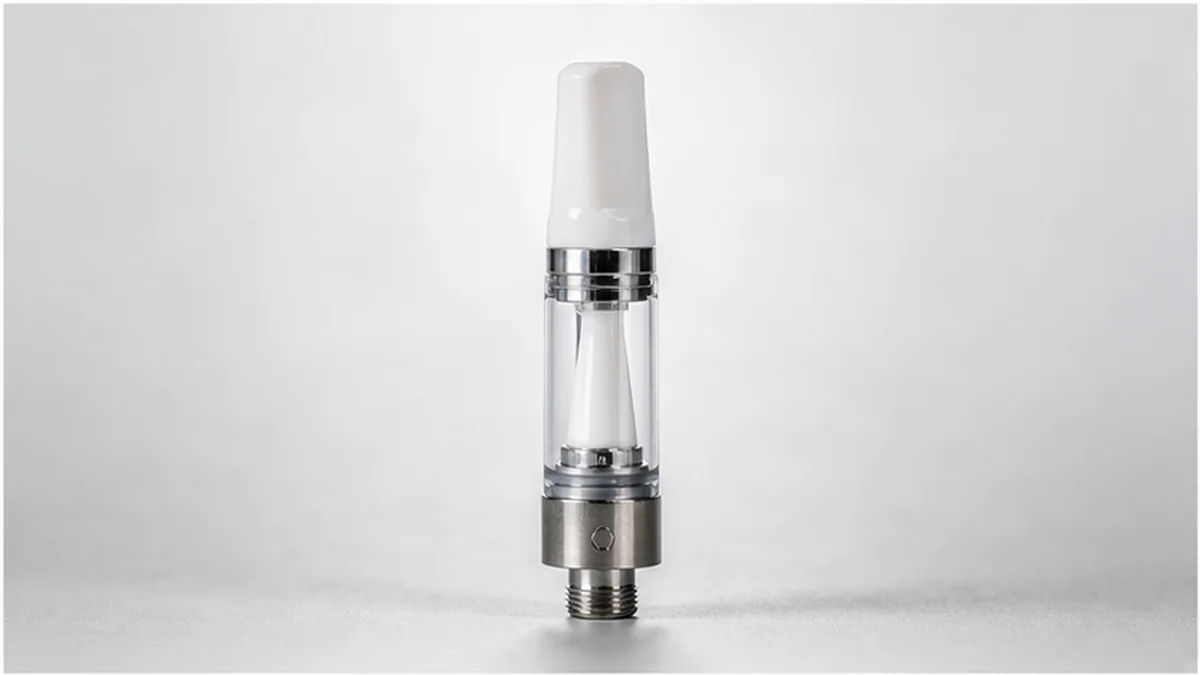
Ceramic in vape hardware covers a family of manufactured inorganic materials, not one fixed recipe or pore structure. Suppliers can use different formulations and processes for a porous core, an insulating part, or an exterior component. Two cartridges can therefore use the word accurately and still be built very differently.
🏷️ 1.1 Ceramic core versus ceramic mouthpiece or housing — the marketing gap
A porous ceramic core is functional: it participates in moving oil toward a nearby or embedded heating element. A ceramic mouthpiece or outer component mainly changes the user-facing construction; it does not prove that the internal heater uses ceramic. Packaging should identify which part the word describes. If it does not, the label answers a different question from the one most buyers are asking.
🔍 1.2 Why the word alone doesn’t tell you what you’re buying
The practical fix is to stop treating “ceramic” as an answer and start treating it as a prompt for the next question: ceramic where, specifically? If a listing or a budtender can’t say whether the ceramic is in the heating core, the mouthpiece, or somewhere else, that’s useful information on its own — it usually means nobody involved in selling the product looked past the label either. A cartridge that names its actual coil or core technology, even briefly, is telling you more than one that leans entirely on the word “ceramic” and stops there.
🔬 2. What a ceramic core actually does inside a cartridge
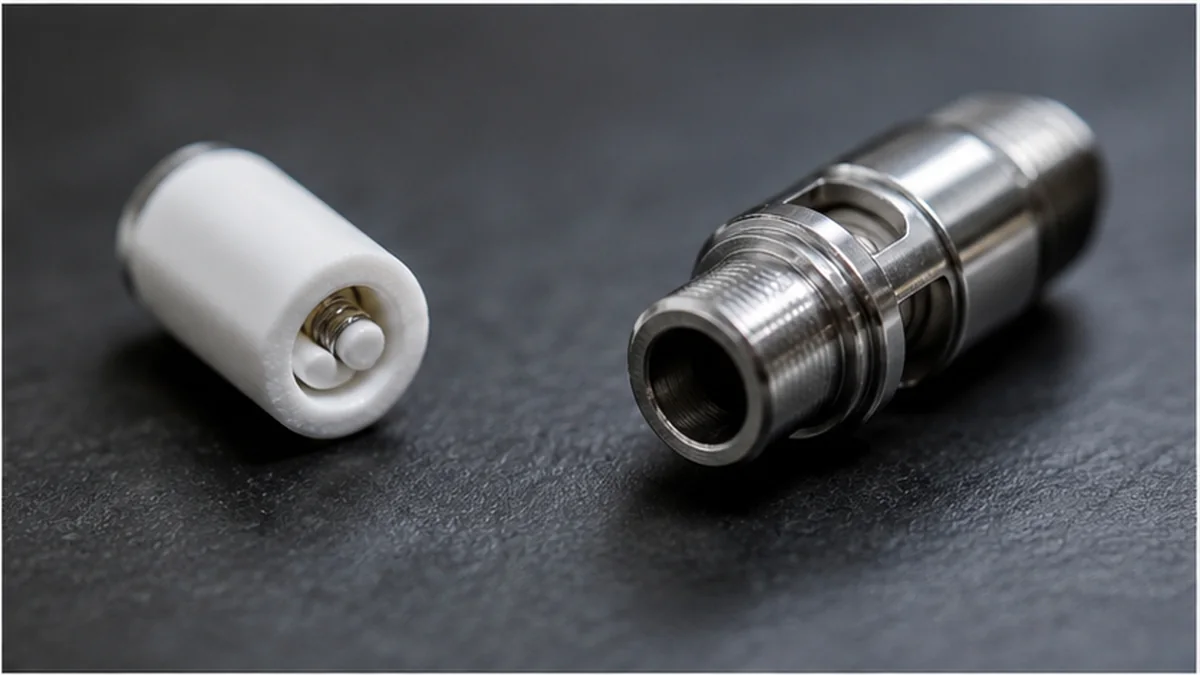
When ceramic is doing real work, it’s usually shaped into a small cylindrical or disc-shaped core that sits inside the coil, saturated with oil, with a heating coil wrapped around or embedded in it. Its job is identical to a cotton wick’s job — hold oil close to the heat source and keep feeding it there evenly — but the physical mechanism is different, and that difference is where the real tradeoffs live.
🕳️ 2.1 Porosity and wicking: how oil actually moves through the material
A porous core can draw oil through connected microscopic passages rather than woven fibers. Pore size, distribution, surface treatment, and the surrounding heater design all influence that transport. The direction and size of the effect cannot be predicted from a product photo or the word “ceramic,” which is why a buyer should ask what formulation and oil range the complete cartridge was designed around.
📐 2.2 Inlet geometry: the holes that meter how much oil reaches the coil
Oil also has to pass from the reservoir through inlet holes or slots before it reaches the wicking structure. Inlet size, number, and placement work together with the core and seals. A restricted liquid path can leave the heated zone under-supplied; an overly permissive path can contribute to flooding when the rest of the system cannot manage the flow. Similar-looking cartridges may hide very different internal geometry.
🧩 2.3 Why identical-looking cores can still behave differently
Porosity and inlet geometry make “ceramic core” a construction description, not a performance guarantee. Only the complete match among core, heater, oil, seals, and battery output determines whether liquid delivery keeps pace with heat. Material is a starting point for engineering, not a substitute for it.
🛢️ 3. Oil viscosity: why the same cart doesn’t hit the same for everyone
A cartridge is designed around a viscosity range. Formulation, composition, additives, and temperature can all affect how readily a particular oil moves, so broad labels such as distillate or live resin do not supply a reliable viscosity number by themselves.
🌡️ 3.1 Thin oil versus thick oil, and what “clogging” actually means
Oil that moves too slowly for the liquid path can leave the heated area under-supplied and produce weak or burnt output. Oil that moves too readily can contribute to flooding, gurgling, or seepage. Those symptoms are not proof of a ceramic defect: fill process, seals, airway geometry, storage, and power can produce similar results. A hardware buyer needs an actual viscosity window and validation with the intended formulation, not a universal “thick versus thin” rule.
❄️ 3.2 Temperature and storage change viscosity too
Temperature changes viscosity, so a cartridge can behave differently after cold or hot storage. Follow the product’s stated storage limits, avoid extreme environments such as a vehicle dashboard, and allow hardware to return naturally to an approved room-temperature range before evaluating performance. Do not use external flame or improvised heating to force oil movement.
🔋 4. Battery output and why voltage advice isn’t universal
How much power reaches the coil changes how fast the core has to keep up with heat, which is why voltage and wattage recommendations vary from one cartridge to the next rather than following one fixed number.
⚡ 4.1 Matching output to what the core can actually wick
Higher output makes the heater add energy faster, which increases the demand on liquid delivery. If the cartridge cannot replenish the heated area at that rate, raising output can worsen a dry or burnt result. Advice built around one cartridge does not automatically transfer to another because resistance, heater mass, oil, and geometry vary.
🎚️ 4.2 Why there’s no single correct number for “ceramic carts”
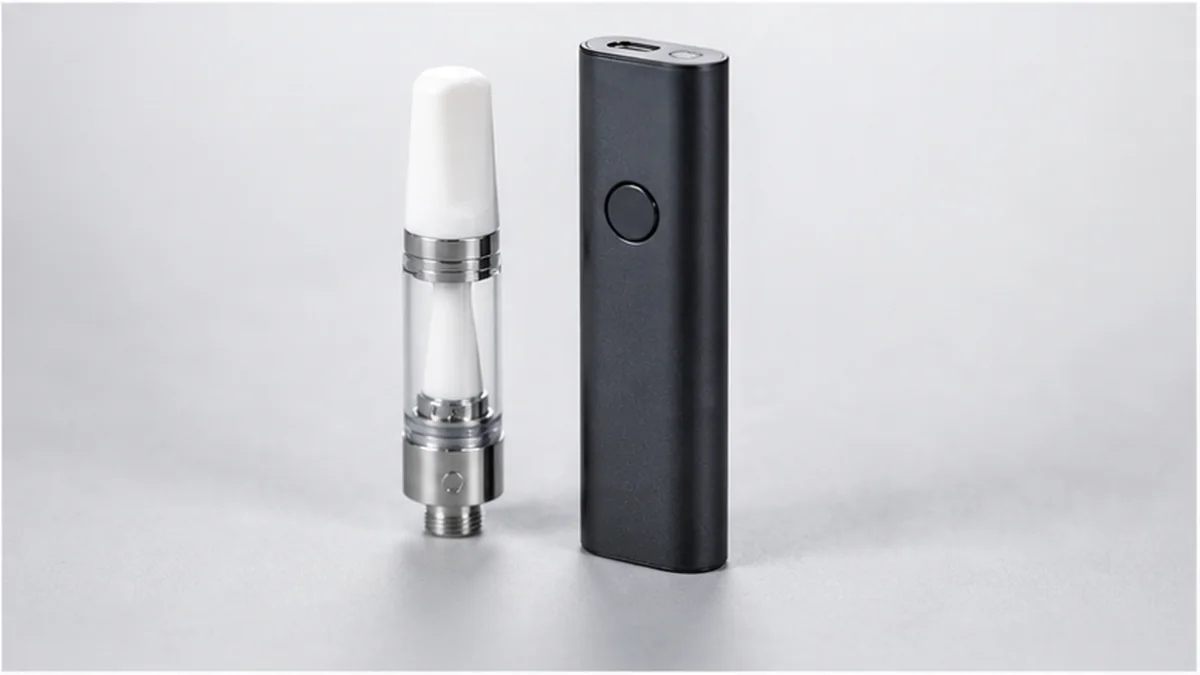
There is no universal voltage for every ceramic-core product. Use the cartridge maker’s stated range with a compatible battery; if a range permits adjustment, begin at its lower end rather than importing a number from an unrelated forum post. vape cartridge battery guide explains battery controls in more detail.
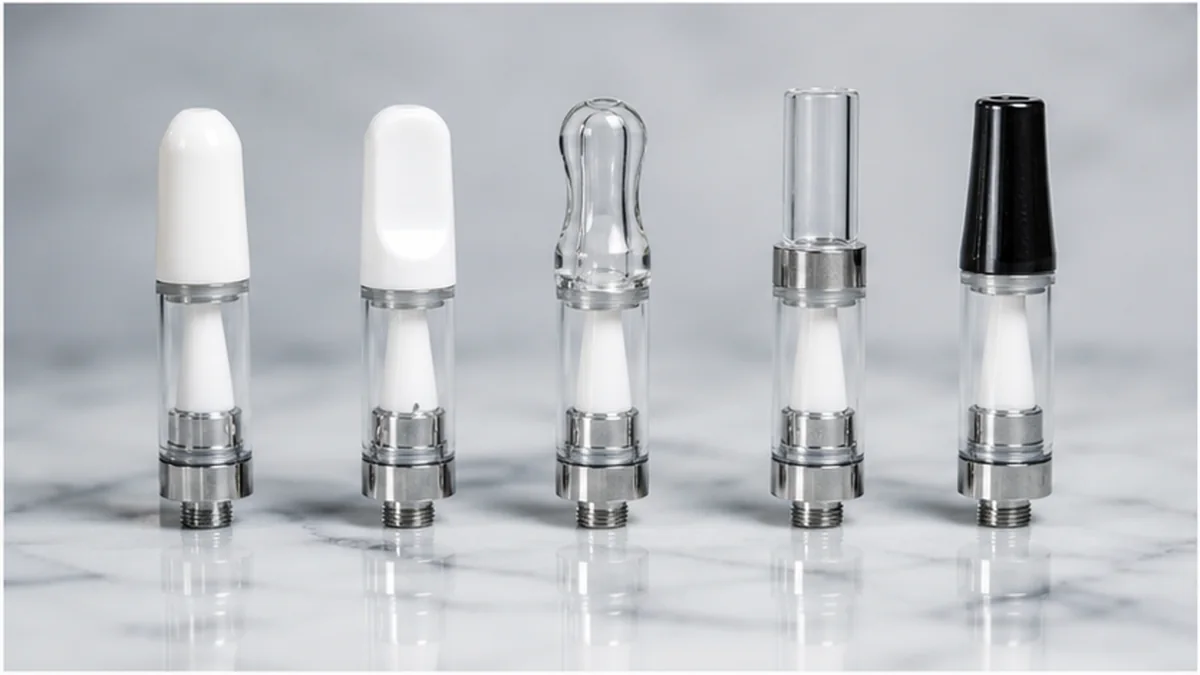
🔧 5. Seals and housing: the parts ceramic doesn’t cover
A cartridge is more than its wicking core, and a lot of what buyers actually experience as good or bad “ceramic” performance is really coming from parts that have nothing to do with the ceramic at all.
🛡️ 5.1 Seals and gaskets are a separate leak point
Seals around the mouthpiece, reservoir, and base are independent leak paths. Fit, compression, material compatibility, and assembly all matter. A sound ceramic core cannot compensate for a damaged or poorly seated seal, so leak diagnosis must inspect the whole cartridge.
🏺 5.2 Housing material does its own separate job
Reservoir and housing materials affect durability, weight, visibility, sealing interfaces, and chemical compatibility. They are separate from the core, but not irrelevant to the system. 510 cartridge guide breaks down housing and thread compatibility separately from the heating element.
⚖️ 6. Comparing cartridge types by decision criteria
Rather than ranking materials against each other, it’s more useful to line up what each wicking approach tends to ask of the buyer, since the right choice depends on the oil and battery you’re actually pairing it with.
| Decision factor | Cotton-wicked coil | Ceramic-core coil | Ceramic mouthpiece/housing only |
|---|---|---|---|
| What it tells you about the heating element | Fiber wick around the coil | Fired ceramic wicking material | Nothing — cosmetic part only |
| What actually varies performance | Fiber density, coil wraps | Pore structure, inlet size | Whatever core is inside, unrelated to the label |
| Variables to verify | Wick supply, heater design, intended liquid range | Pore structure, inlet geometry, intended oil range | N/A — check the internal core separately |
| What to ask before buying | What liquid and output range was validated? | What oil and output range was validated? | What is the heating core, specifically? |
None of these rows crown a winner. A well-matched cotton coil can outperform a poorly matched ceramic one, and the reverse is just as true. What the table is really doing is redirecting the question from “which material is better” to “which questions do I need answered before this cartridge and my oil and my battery are going to work well together” — because that’s the combination that actually determines the outcome, not the material name on its own.
🧭 7. What “ceramic” does and doesn’t guarantee
It’s worth being direct about the limits here, since a lot of marketing leans on the word to imply more than the material can actually back up.
🚫 7.1 It’s not a safety or quality certification
Ceramic is a material choice, not a testing standard, a purity claim, or a guarantee about what oil was used to fill the cartridge. A cartridge being ceramic-core says nothing about the oil’s sourcing, the seals holding it together, or whether the manufacturer tested it for anything at all. Questions about whether all ceramic cartridges are equally safe don’t really have a “ceramic” answer — safety depends on the manufacturer, the oil, the build quality, and testing behind a specific product, none of which the word “ceramic” certifies on its own. A cartridge branded around its oil type with “ceramic” tacked onto the name is describing two separate things, not vouching for one with the other.
📣 7.2 It’s not automatically better flavor or fewer clogs
Some buyers prefer the output of a well-matched ceramic system, but preference is not proof of universal flavor or clog resistance. Outcomes depend on core geometry, formulation, fill process, seals, storage, and battery output. If you’re comparing ceramic against quartz surfaces used in dab hardware rather than cartridges, quartz coil versus ceramic comparison covers that separate question.
📝 7.3 The short specification request that reveals more than the label
For a brand or hardware buyer, ask the supplier to identify the ceramic component, intended oil-viscosity window, inlet geometry, compatible output range, reservoir and seal materials, and the validation performed with the planned formulation. A useful answer ties those items together and states limits; a weak answer simply repeats “full ceramic” or “premium ceramic.” Keep the approved sample and written specification aligned so a later production change cannot hide behind the same marketing name.
Put together, none of this means ceramic is a bad choice or that buyers should go looking for something else. It means the word is a starting point for a couple of specific questions — ceramic where, engineered around what oil, paired with what battery output — rather than a finish line. A cartridge that answers those questions clearly, even briefly, is telling you more than one that just prints “ceramic” on the front and assumes that settles it.
AOVAPE pairs cartridge and battery hardware as a matched system rather than selling either side in isolation, so the core, the seals, and the output your device delivers are actually built to work together instead of left for you to guess at. If you’re narrowing down a cartridge and want to check it against the battery you’re already running, our 510 cartridge guide and vape cartridge battery guide are the right places to start before “ceramic” becomes the only thing you’re basing the decision on.