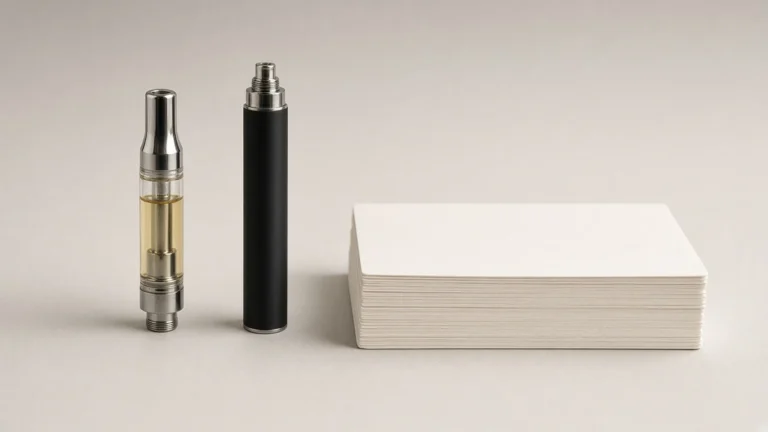
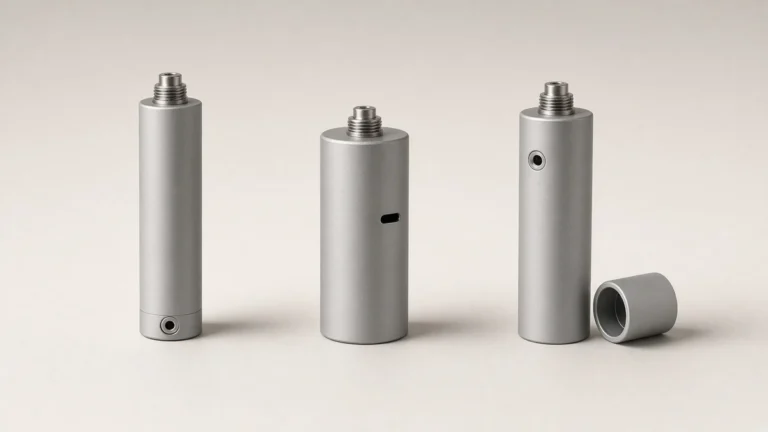
The words "child-resistant" on a 510 cartridge listing do not, by themselves, say what is being secured. The claim may describe an outer tube or box that takes two motions to open, a locking mouthpiece on the cartridge, or both. It may also be used loosely for a standard press-fit or screw-on top that has no lock at all. The package and the cartridge top are different parts. A buyer who treats the label as a single hardware fact is mixing those parts together.
A photograph cannot finish the identification. It can show that a tube, a box, or a mouthpiece is present. It cannot prove that a named standard was tested, or that a test was passed, on the exact version being offered. This guide separates the outer package from the mouthpiece, explains what a drawing should show if a lock is part of the hardware, and lists questions a licensed brand can put on a specification line. It does not recite a statutory mandate or treat a listing word as a certification.
🔎 1. "Child-Resistant" Is a Claim That Must Attach to a Specific Part
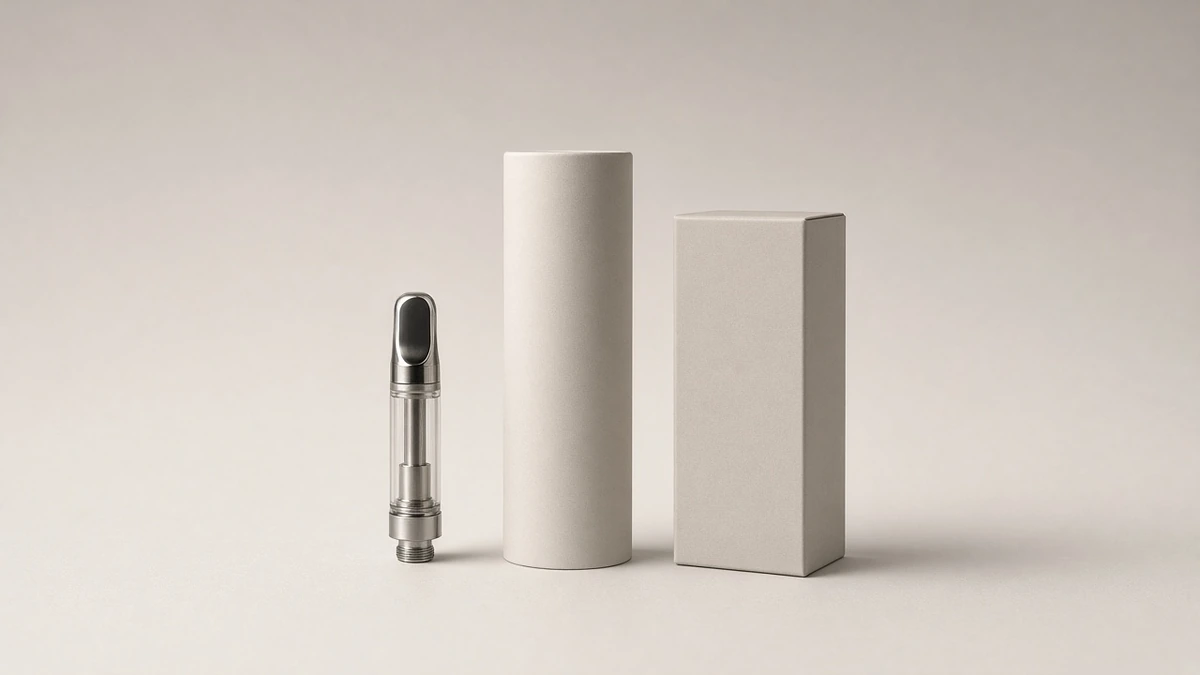
The useful first question is not whether a listing uses the words "child-resistant" or "CR." The useful first question is which component the claim is attached to. Until that component is named, the words do not tell a buyer what to inspect.
Three arrangements appear often enough that they should be written on separate lines:
- An outer package — a tube, a box, or a similar container — that is described as requiring two motions, such as a push-and-turn closure.
- A locking or otherwise non-standard mouthpiece on the cartridge itself, sometimes described as a two-motion top.
- A standard press-fit, snap, or screw-on mouthpiece that may have no lock at all, even if the listing still uses the same words.
Those arrangements can be combined. A cart can ship in a two-motion tube and still have an ordinary press-fit mouthpiece. A cart can have a locking top and ship in a simple sleeve. A listing that uses one label for the set does not identify the set. The rest of this guide treats the package and the mouthpiece as separate identifications, and treats any named standard as a third item that has to be documented, not inferred.
📦 2. An Outer Package Is Not the Cartridge
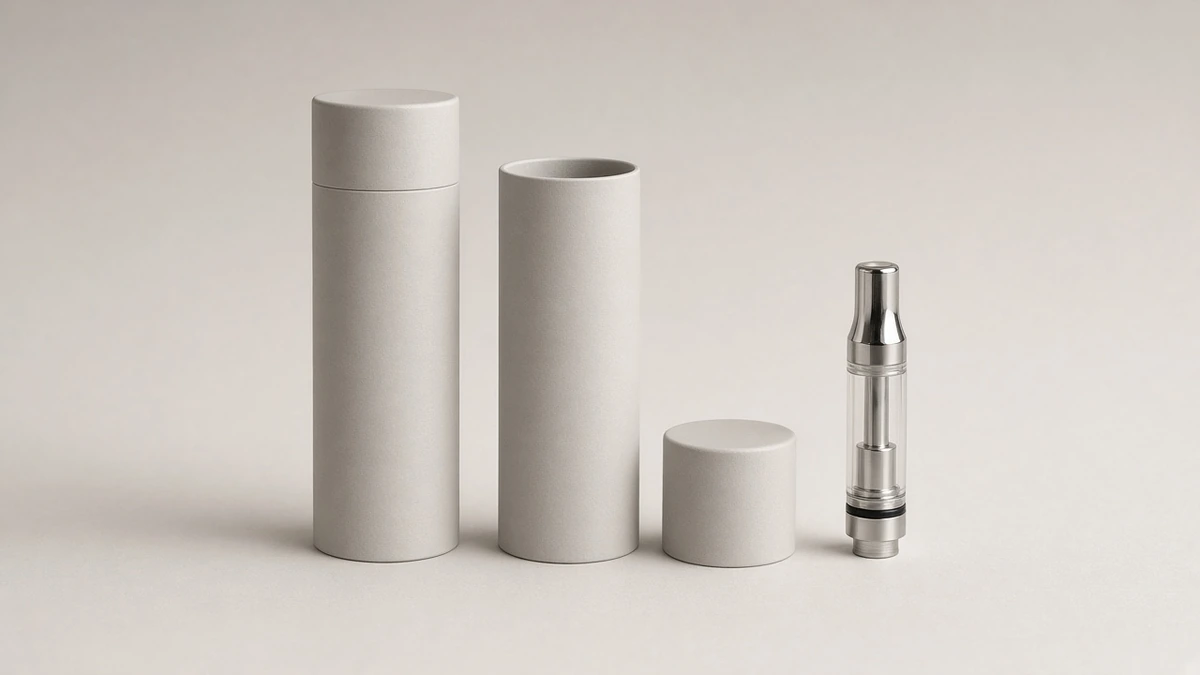
A child-resistant package, in the sense used here, is a container that holds the cartridge. Independent public pages opened for this research were, in the main, packaging vendors describing tubes or boxes, including push-and-turn 510 cartridge tubes. Those pages are not used here as certifications, as legal requirements, or as test results. They are useful only as a reminder that the package is a separate commercial object from the cart.
If the claim attaches to a tube or a box, a buyer should be able to say so in one sentence: the cart ships in a named package, and that package is the component described as child-resistant. Opening the package and removing the cart is then a packaging step. It does not, by itself, describe how the mouthpiece comes off, or whether the mouthpiece has a lock.
The inverse is also true. A cart that leaves the facility in a plain sleeve or a simple carton is not shown, by that fact alone, to have a locking mouthpiece — or to lack one. Package and hardware have to be named separately, even when they ship together.
🔒 3. A Locking Mouthpiece Is Not a Standard Top
A locking, two-motion, or otherwise non-standard mouthpiece is a hardware feature on the cartridge. The motion lives on the cart, not in the shipping tube. A standard press-fit, snap, or screw-on mouthpiece may open in one motion, or may simply pull or unscrew, and may have no lock at all.
That hardware distinction is close to, but not the same as, a drawings question already covered on this site. CBD Oil Vape Pen Design: What the Mouthpiece and Seal Drawings Should Show asks whether a mouthpiece is pressed, threaded, or snapped, from a drawings point of view. The present guide asks a further question: is there a lock or a required second motion, and is that feature being offered as the thing a listing calls child-resistant? A buyer should not collapse those questions into one word.
Mouthpiece closure also matters for storage and for keeping a filled cart closed in transit. That joint — how the top seats and seals — is a hardware and fill-path issue, treated in Empty 510 Thread Cartridges: Match the Oil Path Before Filling. A storage closure is not, by itself, a child-resistant certification. A tight press-fit can be a good seal and still not be a lock. A locking top can still need its seal path confirmed as a separate filling and leak question.
Nested glass-stem mouthpieces, loose stems, and top-assembly troubleshooting are a different subject and are not retold here. They are covered in Vape Mouthpiece: Loose Stems, Seals and Top Assemblies. A sealed cartridge top is already a different architecture from a stem assembly. The CR question, if it arises, still has to name the actual top on the version being bought.
📄 4. What a Drawing Should Show If a Lock Is Part of the Hardware
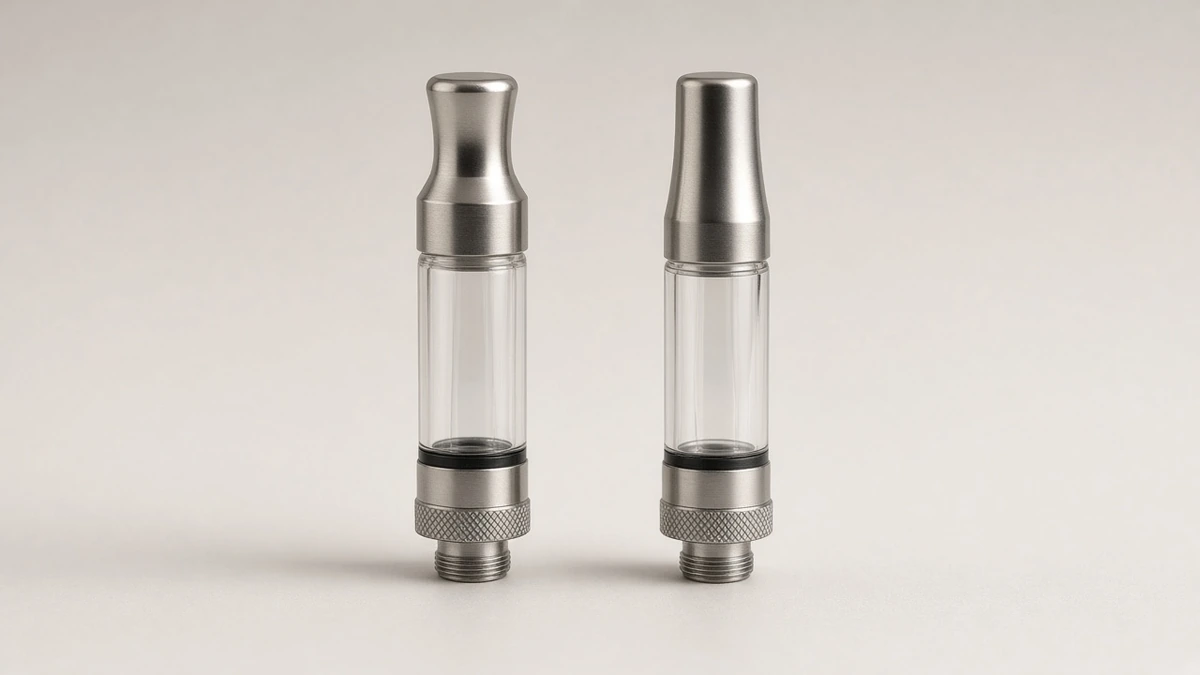
If a supplier is claiming a locking or two-motion mouthpiece, the drawing of that exact version should show the feature clearly enough that a buyer can tell how the top is meant to be opened. A silhouette of a mouthpiece is not enough. The drawing should indicate the moving part, the second motion if there is one, and how the top relates to the tank and the seal.
A physical sample can then confirm that the motion on the cart matches the drawing. The sample answers a mechanical question: what does a person have to do to open this top? It does not answer a standards question. Completing a two-motion opening on a sample does not name a test method, and it does not prove that a laboratory has tested this version.
If the claim attaches only to the outer package, the hardware drawing may correctly show a standard mouthpiece. That is not a contradiction. It is a reason to keep the package specification on its own line, with its own drawing or package specification sheet, rather than looking for a lock on the cart that the cart was never said to have.
📷 5. What a Photograph and a Listing Word Cannot Prove
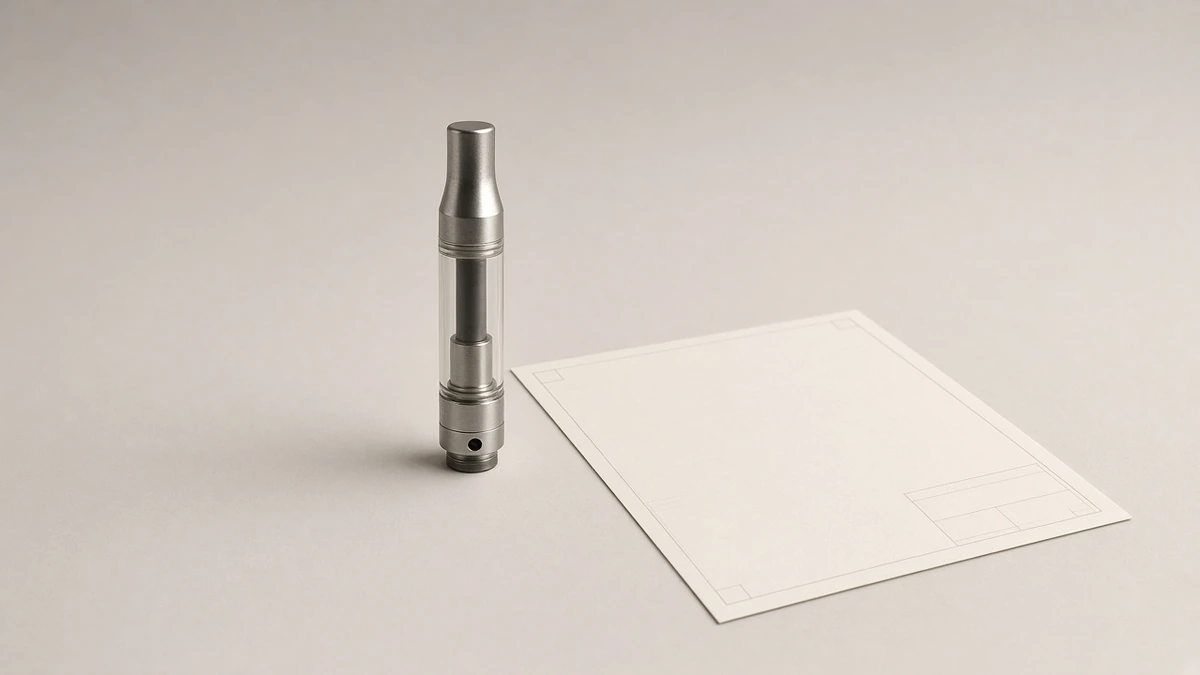
A photograph can document appearance. It can show that a tube has a cap, that a box has a lid, or that a mouthpiece does not look like a simple press-fit top. It cannot show that a named standard applies, that a particular test was run, or that the version in the photograph is the version that would be shipped. Marks, icons, or typography in a marketing image are not reviewed here as proof of a test, and this guide does not treat them as such.
The listing word has the same limit. "Child-resistant" and "CR" do not identify which component is claimed, and they do not identify a standard. Vendor marketing for tubes and boxes should not be copied into a brand specification as if it were a laboratory result or a legal finding. This research pack did not open ASTM, CPSC, or state-by-state cannabis packaging statutes. Those texts are therefore not recited, and no mandate is invented from memory or from vendor copy.
If a supplier names a standard, the name still has to be matched to a test report for the exact package or the exact mouthpiece version, and that file still has to be compared with whatever written requirement applies in the market where the finished product will be sold. A buyer who cannot see the named standard and the report does not yet have a verified claim. A buyer who has a report for a different tube, a different resin, or a previous mouthpiece revision does not yet have a report for this version.
📝 6. Questions a Brand Buyer Can Put on a Specification Line
The specification should keep the parts from collapsing into one cell. A practical set of lines looks like this:
- Package: Is there an outer tube, box, or other container? If yes, what is the opening motion, and is the child-resistant claim attached to that package?
- Mouthpiece: Is the top a standard press-fit, snap, or screw-on mouthpiece, or is there a lock or required second motion? Is any child-resistant claim attached to that hardware?
- Named standard: If a standard is claimed, what is its exact name and revision, and which component was tested?
- Test report: Is there a report for this exact package version or this exact mouthpiece version, and can that file be matched to the market's written requirement?
- What is not claimed: If the listing uses "CR" and the supplier cannot attach it to a component, the word should not be copied into the brand's own packaging description.
Those lines can be answered with a short phrase each. They should not be answered with a single checkbox. Two different suppliers can both write "child-resistant" and still be describing different objects.
✅ 7. What to Check Before Treating the Claim as Identified
A short sequence will usually keep the claim in the right place:
- Name the component. Ask whether the claim is about the outer package, the mouthpiece, or both.
- Inspect the package and the cart separately. Open the tube or box, if one is supplied, and then look at the mouthpiece as a hardware feature of the cartridge.
- Match the drawing. If a lock is claimed on the cart, the drawing of the exact version should show the motion. If the claim is only on the package, the package needs its own description.
- Ask for the standard and the report. A name without a report for this version is still an unverified claim. This guide does not invent the standard that should appear on that line.
- Match the file to the market's written requirement. A report is evidence about a test. It is not, by itself, a determination that a particular jurisdiction's rule has been met.
A one-sentence description a team can reuse should name the part and the documentation, not a preference. Example: "Cartridge ships in a two-motion tube; the child-resistant claim is attached to the tube; mouthpiece is a standard press-fit top with no lock; test report requested for this tube version." Or: "No outer CR package claimed; mouthpiece is a two-motion locking top as marked on the supplier drawing of this version; named standard and report requested for this mouthpiece revision."
Questions worth sending with a sample request:
- Which component, exactly, is described as child-resistant: the outer package, the mouthpiece, or both?
- If a package is claimed, what is the opening motion, and can you supply a specification sheet for this exact tube or box?
- If a locking mouthpiece is claimed, please mark the motion on a drawing of this exact version.
- If a named standard is claimed, please provide the exact name and a test report for this exact version.
- Which statements in the listing are component descriptions, and which would require a test report?
❓ 8. Short Answers a Brief Can Reuse
❓ 8.1 Identification Questions
Does "child-resistant" on a 510 cart listing say what is being secured? Not by itself. The words may describe a tube or box, a locking mouthpiece, both, or a standard top that has no lock. The component has to be named.
Is a two-motion tube the same thing as a locking mouthpiece? No. A tube is an outer package. A locking mouthpiece is a hardware feature on the cartridge. They can ship together or separately.
If the mouthpiece is a tight press-fit, is it child-resistant? A tight fit can be a storage or seal feature and still not be a lock. Closure for storage is a different check from a child-resistant claim.
Can a photograph prove that a named standard was met? No. A photograph can show a package or a mouthpiece shape. It cannot prove that a named standard was tested or passed on the exact version.
Which standard does this guide require a buyer to cite? None. This research did not open ASTM, CPSC, or state packaging statutes, and it does not invent a mandate. If a standard is claimed, the buyer should ask for the name and the test report and compare them with the market's own written requirement.
If a supplier cannot attach the claim to a part, what should the specification say? It should not copy "child-resistant" as if the component were already identified. The missing attachment is itself the finding.