🔎 1. What a 510 Battery Wholesale Quote Is Supposed to Describe
A wholesale quote for a custom 510 battery is not a price list. It is a description of exactly what will be produced, packed, and shipped against a specific sample, written in a way that lets a buyer compare two versions of the same request without guessing which details carried over. Because a quote is tied to a particular hardware configuration, finish, and pack content, the real comparison work happens before any numbers are discussed: confirming that the sellable unit named in version one is the same sellable unit named in version two, and that nothing was quietly substituted in between.
This matters more in custom work than in stock ordering because a single request can touch several variables at once — button style, connector, charging port, outer finish, and what rides inside the box next to the battery itself. A buyer reviewing a general wholesale vape supplier landscape will notice that most quoting friction does not come from the battery’s core function but from these surrounding details being described inconsistently between revisions. The rest of this piece sets out what a comparable quote line should state, using a single hypothetical example throughout and no specific prices, minimums, or delivery windows.
📦 2. The Retail Unit vs the Outer Pack
The first distinction a quote needs to make explicit is whether the quantity being described refers to the individual retail unit — the battery as a buyer would eventually hold it — or the outer pack that groups several units together for shipping and shelf handling. These are two different counting bases, and a quote that doesn’t name which one it is using invites a mismatch the moment a buyer tries to compare it against an earlier version.
📐 2.1 Defining the Sellable Unit
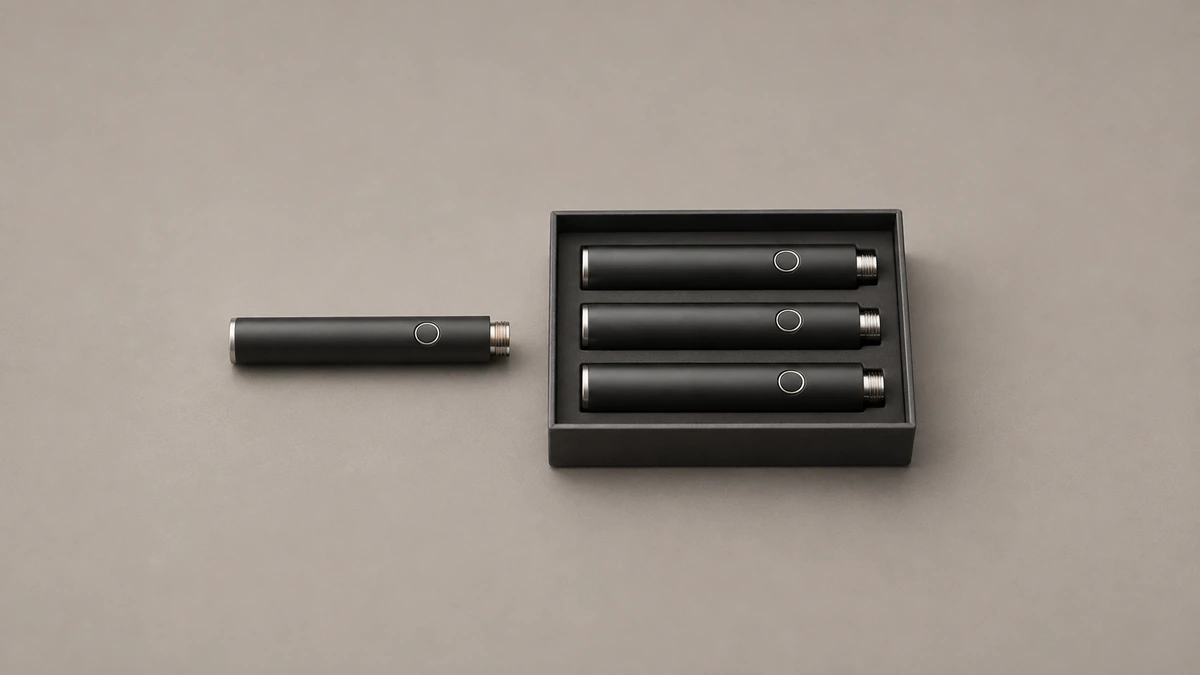
The sellable unit is whatever configuration a distributor would resell as one item: one battery body, in one finish, with whatever accessories are specified as included at that level. If a request covers a particular hardware configuration, such as the kind described for a push-button 510 battery configuration, the sellable unit should be recorded with enough detail that a second quote referencing “the same unit” is unambiguous — not just the general category of battery, but the specific button, port, and chamber or coil interface combination that was sampled and approved.
🧮 2.2 Counting the Outer Carton
The outer carton is a separate counting layer. It describes how many sellable units are grouped together, what internal dividers or trays (if any) are used, and how the carton itself is labeled. A quote revision can change the carton count or configuration without changing the sellable unit at all, which is why treating these as one combined figure causes confusion. When a buyer is comparing two quote versions, the carton-level detail should be checked independently of the unit-level detail, since a difference in one does not necessarily indicate a difference in the other.
🔌 3. Adapter and Cable: Included or Separately Counted
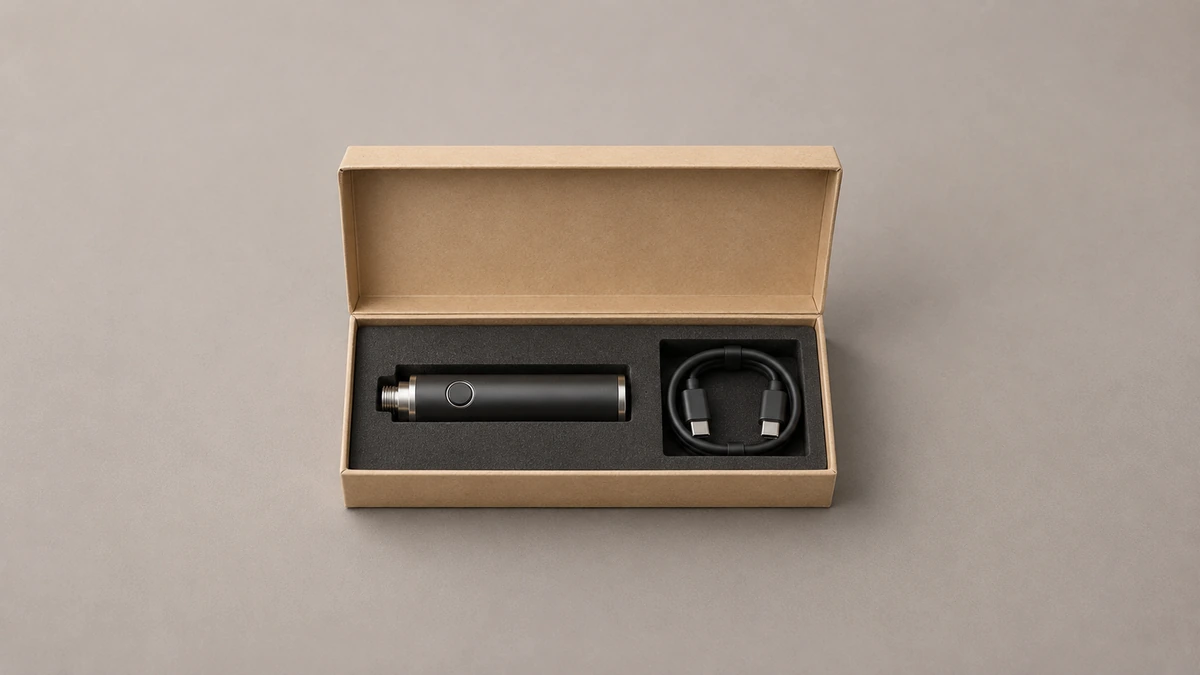
Charging accessories are one of the most frequently mismatched line items in a custom battery quote, largely because they can be described in several valid ways: bundled inside the retail unit’s box, bundled at the carton level only, or sold and counted as a fully separate line item with its own quantity. None of these approaches is inherently correct — the issue is only that a quote needs to state which one applies, and a revised quote needs to confirm whether that status has changed.
⚡ 3.1 Why This Line Item Gets Missed
Because the charging cable or adapter is often a stock component rather than a custom-tooled part, it’s easy for it to be treated as an assumed inclusion rather than a stated one. A buyer reviewing accessory scope in detail, for example through a resource like a 510 battery charger kit guide, will see how many variables sit inside what looks like a single accessory: cable length, connector type, and whether a wall adapter ships with the cable or is quoted separately. Any of these can shift between quote revisions without the headline description of “charger included” changing at all, which is exactly the kind of gap a side-by-side comparison is meant to catch.
🎨 4. Finish Variants and How They Appear on a Quote
A finish variant covers anything that changes the battery’s visible surface without changing its internal configuration — color, coating, or printed branding treatment, for instance. Finish variants are usually quoted as options within the same sellable unit rather than as separate products, but that only holds if the quote states clearly which finishes were sampled and approved versus which are hypothetical options still under discussion.
🖌️ 4.1 Matching Finish to Sample
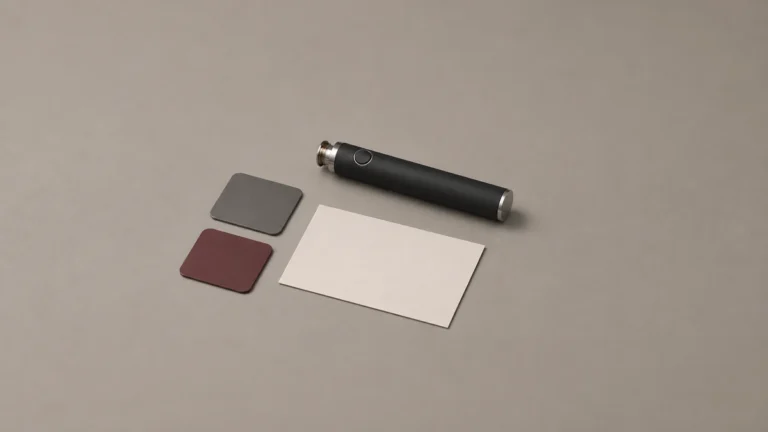
The safest way to compare finish across two quotes is to anchor every description to the physical sample that was approved, rather than to a written color name or finish term, since written descriptions of finish can drift in meaning between revisions even when no one intends them to. If a second quote introduces a finish that was not part of the original sample set, it should be flagged as a new variant requiring its own approval step, not treated as a direct substitute for an already-approved finish.

📊 5. Quantity Breaks Without Numbers
Quantity breaks are the points at which ordering a larger volume changes some term of the quote. Without naming any figures, it is still possible — and useful — to describe the structure a buyer should expect to see: a base quantity tier that establishes the sellable unit and its baseline terms, one or more higher tiers that may adjust packaging, lead-time expectations, or other terms tied to volume, and a clear statement of which specific terms change at each tier versus which stay fixed regardless of volume.
What a buyer should watch for when comparing two quote versions is whether the tier structure itself has changed shape — for example, whether a term that was previously fixed across all tiers in one version becomes tier-dependent in a revised version. That kind of structural change is often more significant than any single figure, because it can affect how a reorder is planned long after the original comparison was made.
🧾 6. Written Acceptance Evidence for the Sample
Every comparable quote should trace back to a sample that was formally accepted, and that acceptance should exist as a written record rather than an informal verbal confirmation. This record is what lets a buyer and supplier agree, months later, on exactly what “the approved configuration” refers to, independent of memory or assumption on either side.
📝 6.1 What the Sample Record Should State
A useful sample acceptance record names the sample by a unique reference, describes the hardware configuration and finish exactly as produced, lists what accessories were included in that specific sample package, and records the date and method of approval. Some manufacturer-facing pages describe this kind of specification freeze directly, treating the frozen specification sheet and the approved sample as the two reference documents that every subsequent quote should be checked against before any production step is authorized (https://www.ilevavape.com/custom-510-battery-specifications-oem-quote/). Without this kind of record, a second quote claiming to match “the same configuration” has nothing concrete to be measured against.

🔁 7. Repeat Orders and Quote Version References
When a buyer places a repeat order, the clearest way to avoid drift is for the new quote to explicitly reference the version number or date of the quote it is replacing, along with a statement of what has changed since that version — even if the stated change is “no change.” A repeat-order quote that is silent on this point forces the buyer to re-verify every line item from scratch, which defeats much of the purpose of having a prior approved record at all.
This version referencing becomes especially important when packaging scope has shifted between orders. Some providers state their packaging position directly — for instance, that a custom battery can be offered with or without retail packaging as separate options (https://swag-supply.com/custom-battery/) — which is a useful reminder that packaging inclusion is a line item that can change between a first order and a repeat order even when the battery configuration itself does not. A buyer reviewing pack contents in more detail, including how boxes, parts, and trays are typically organized, can see this illustrated in a resource such as a guide to dab pen boxes, parts, and tray contents, where the packaging layer is treated as its own distinct set of decisions separate from the device inside it.
🗂️ 8. Hypothetical Side-by-Side Quote Comparison Table
The table below is entirely hypothetical and contains no real figures, prices, or lead times. It illustrates the structure a buyer could use to line up two quote versions against each other, field by field, so that any difference is visible rather than buried inside a paragraph of prose.
| Quote field | Hypothetical version A | Hypothetical version B |
|---|---|---|
| Sellable unit definition | Single battery body, approved finish, no accessories bundled | Single battery body, approved finish, cable bundled at unit level |
| Outer carton basis | Carton count stated separately from unit count | Carton count stated separately from unit count, divider layout noted as revised |
| Adapter/cable status | Quoted as a separate accessory line item | Included inside the retail unit packaging |
| Finish variants referenced | One approved finish, tied to sample reference | Same approved finish, plus one additional finish marked as unsampled |
| Quantity break structure | Two tiers, packaging terms fixed across both | Three tiers, packaging terms stated as tier-dependent on the highest tier |
| Sample acceptance reference | Dated written approval cited by reference number | Same reference number cited, no new approval noted |
| Prior version reference | Not applicable (first version) | States it replaces version A, with changes listed |
Even in this hypothetical form, the pattern is visible: the differences that matter most are rarely the headline description of the battery itself. They sit in the surrounding fields — what’s bundled, how packaging is counted, and whether the new quote tells you what changed from the one before it.
📦 8.1 Follow the Adapter Through Both Quotes
Start with the adapter in the hypothetical table. Quote A lists it outside the retail unit. Quote B includes it in the retail unit. Both quote descriptions could still use the same name for the battery. Ask whether the adapter in B is the same part as the separately named adapter in A, and whether each retail box contains it. Add the confirmed answer to the quote line so receiving can check the right carton. If the quote uses a bundle name without listing the adapter, leave that field blank until the supplier identifies it.
The same problem comes up with cables. A photograph of a cable beside a battery can illustrate a connection or show a packed item. The contents list answers the inclusion question. A line saying that a cable is available gives a separate option, so it belongs in the exception column until the quote explicitly includes it.
🧾 8.2 Align the Count Before Comparing the Tiers
Suppose a buyer requests two finishes. One response gives a quantity tier for the total order and the other lists tiers separately by finish. Both replies can be internally consistent. Ask the suppliers to state whether the two finishes count together toward the tier and whether each finish uses the same outer carton quantity. An answer to those questions lets the buyer compare the same group of retail units in both replies.
A similar mismatch occurs when one response describes bare units and the other uses boxes as its counting unit. Write the expected contents of one retail box on the worksheet and ask each party to quote that exact pack. If one supplier proposes an alternate pack, keep that as a separate row so the proposed change is visible. Before using either number in an internal forecast, make sure the worksheet distinguishes a price per sellable unit from the number of units that share an outer carton.
Keep the confirmed quote, contents list and sample record together. If the next quote uses the same battery code with a different carton description, the buyer can locate the difference immediately and confirm whether the new quote applies to a different pack rather than a different hardware configuration.
❓ 9. Documentation to Gather Before Comparing Quotes
Before putting two quotes side by side, a buyer is better served gathering the underlying documentation than trying to compare prose descriptions alone: the dated sample acceptance record, the written specification sheet tied to that sample, and, if applicable, the prior quote version being referenced for a repeat order. With those three documents in hand, most of the comparison work described above becomes a matter of checking fields against each other rather than relying on memory of what was discussed in an earlier conversation.
What specification sheet or sample acceptance record do you currently have on file for the configuration you’re comparing, and does it name the accessory and packaging status explicitly, or only the battery body itself?