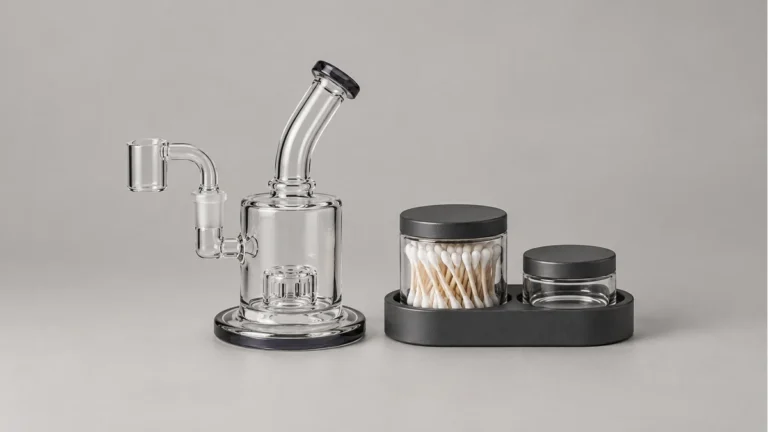
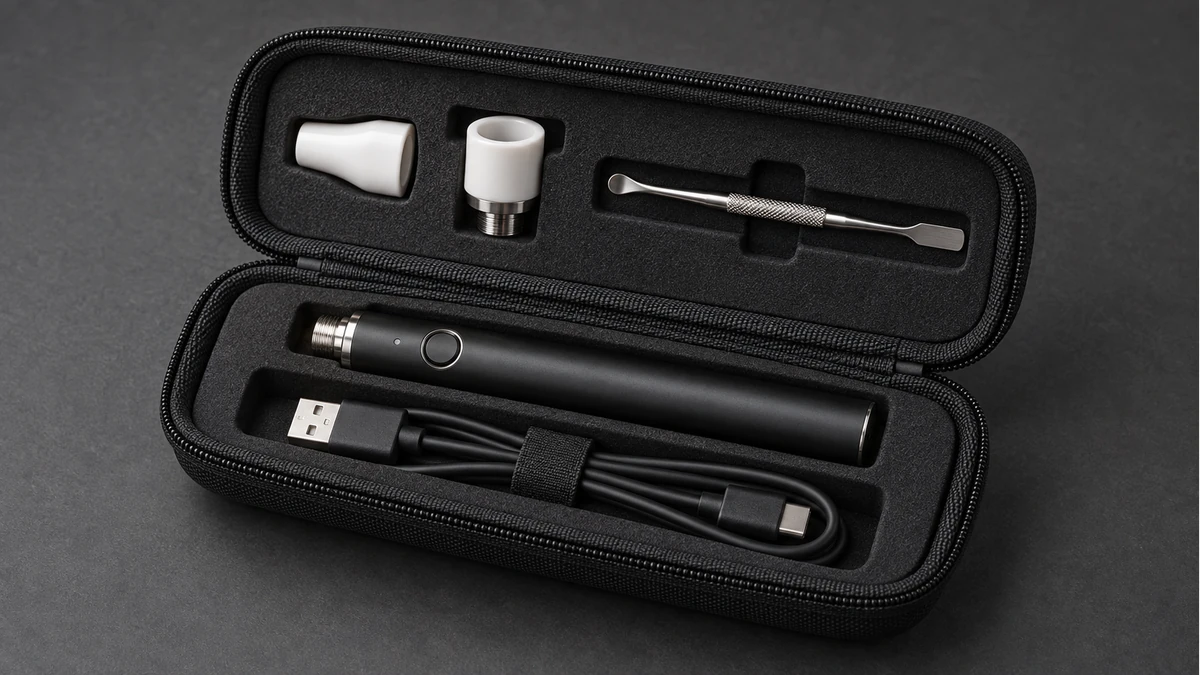
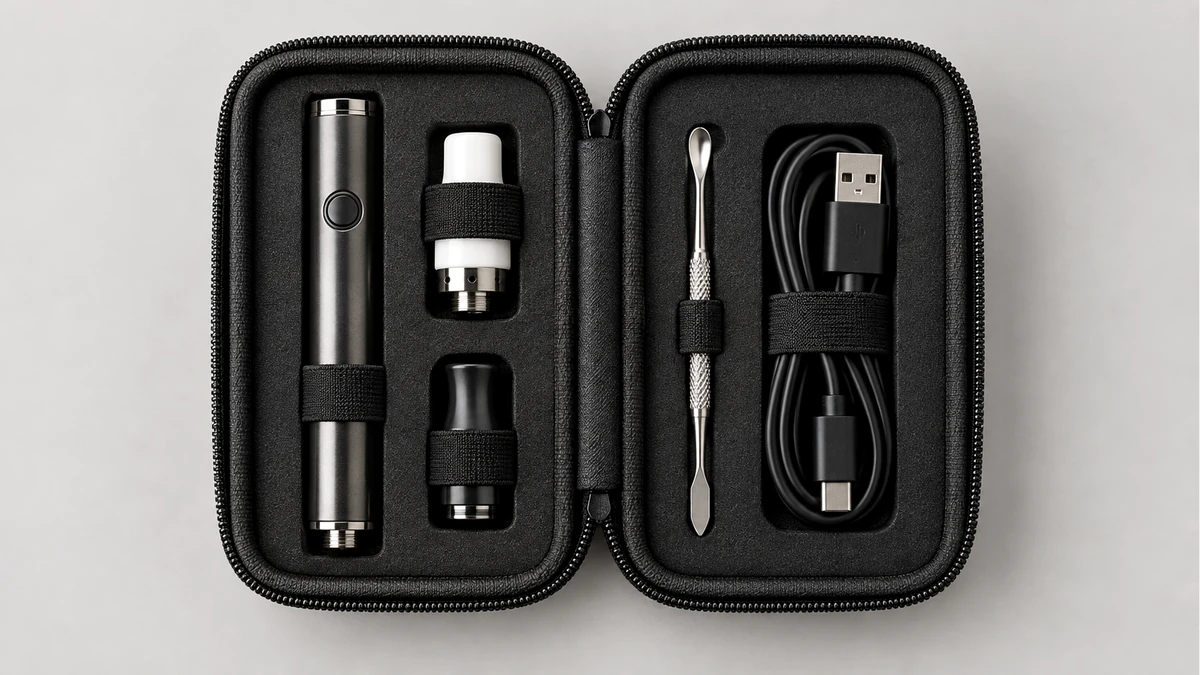
A dab pen case has to organize more than a battery-shaped tube. A wax pen may include a removable solid chamber, mouthpiece, loading tool, cap, and cable, and those parts should not be allowed to press or scrape against one another.
Dab pen owners tend to run into a very specific storage problem. A wax or concentrate pen is not one solid object — it is a battery, a chamber (often glass or ceramic), and a handful of small tools and accessories that all need to survive the same bag, backpack, or drawer without banging into each other. A generic pouch built for a phone charger or a pack of gum does not account for that.
Most of the complaints people share about dab pen storage are not really about the case brand. They are about mismatched expectations: a case that looks padded but has no actual separation between parts, or a “travel case” that holds the pen fine but lets a dab tool rattle against the mouthpiece for a week straight. This article breaks down what actually matters when choosing or building a storage setup for a wax pen — chamber protection, tool separation, residue control, and the small design details that keep glass and ceramic parts from taking pressure they were never meant to handle.
🧳 1. Why a Dab Pen Case Isn’t the Same as a Vape Case
A concentrate pen and a nicotine vape share a general shape, but the internal engineering is different enough that their storage needs diverge too. A refillable e-liquid tank is a sealed reservoir; a dab pen chamber is typically an open or semi-open cup, often glass or ceramic-lined, holding solid material directly against a heating surface. If you want the fuller breakdown of how these devices differ mechanically, this comparison of dab pens vs. vape pens covers it in more depth.
For storage purposes, the practical takeaway is this: a dab pen case has to protect a rigid, sometimes fragile chamber component, not just a plastic tank. That single difference shapes almost every design choice below — padding thickness, compartment separation, and how much cushioning sits around the chamber specifically.
🛡️ 2. Hard Shell vs Padded Sleeve
These are the two dominant case formats, and neither is universally “better” — they solve different problems.
🧱 2.1 Hard Shell Cases
Hard shell cases use a rigid outer structure, usually molded plastic or an aluminum-reinforced shell, sometimes with a foam or EVA insert cut to hold specific items in place. The rigid exterior resists crushing force if something heavy lands on top of the case in a bag. That matters most for anyone carrying a pen loose among books, tools, or other dense objects.
The tradeoff is bulk. Hard shells add volume and weight, and a poorly cut foam insert can still let a chamber shift and knock against the shell wall if the cutout is too loose.
🧵 2.2 Padded Sleeves and Zip Pouches
Soft sleeves rely on layered fabric, felt, or thin foam padding sewn into a zip pouch. They’re lighter, cheaper, and easier to fit into a smaller bag pocket. They do a reasonable job absorbing minor bumps and preventing surface scratches.
What they don’t do well is resist a direct compressive hit — if something is set down hard on top of a soft pouch, there’s less structure to distribute that force away from the chamber. Padded sleeves work best for pens that are already stored inside a larger bag with its own protection, rather than as the sole line of defense.
📏 3. Internal Dimensions That Actually Matter
A recurring frustration people describe is buying a case that technically fits the pen but leaves it loose enough to slide around, or one so tight that the zipper strains against the battery housing. Internal dimensions need to account for the assembled length of the pen — chamber attached, mouthpiece on — not just the battery body.
A good rule of thumb: measure your fully assembled pen at its longest and widest points, then look for interior case dimensions with roughly 5–8mm of clearance on each side. That’s enough room for a thin liner or foam layer without leaving so much slack that the pen can shift during movement.
🪢 4. Elastic Loops and Why They Matter for Tool Separation
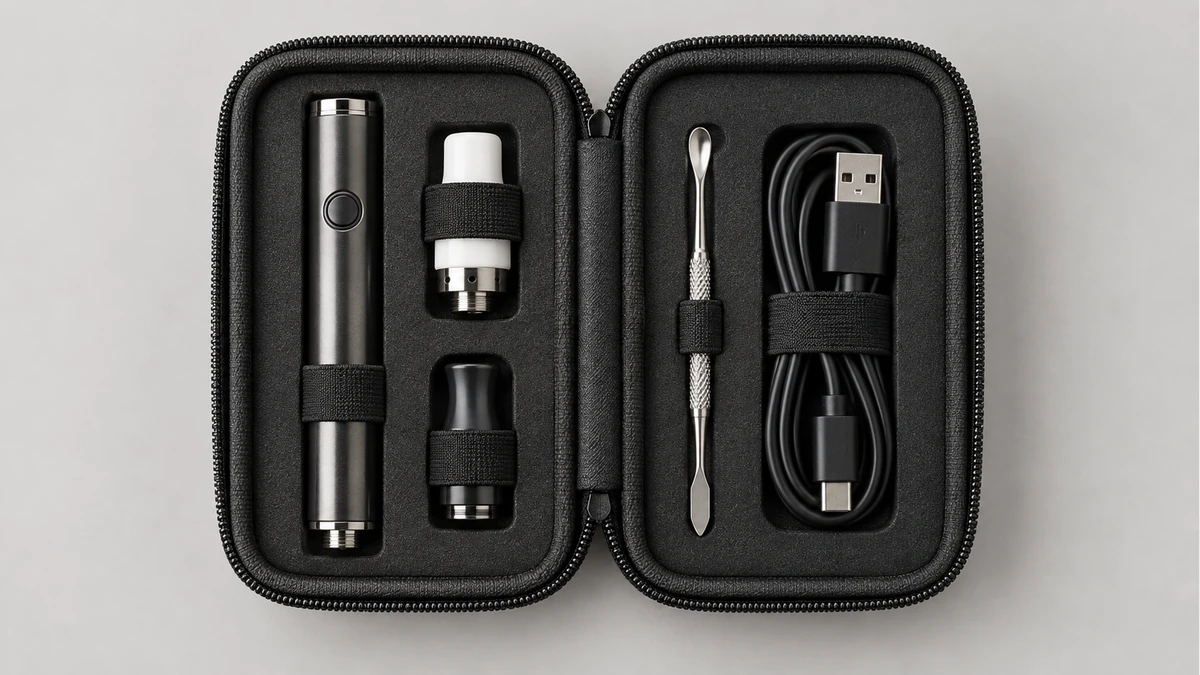
One of the most common complaints in dab pen discussions is loose tools — a dab tool, a small brush, an extra atomizer — rattling around in the same compartment as the pen itself and scratching the finish or, worse, chipping a ceramic chamber edge. Elastic loops or fabric straps sewn into the case interior solve this directly by pinning each item in a fixed position.
When evaluating a case, check whether the loops are sized for your specific tools rather than generic. A loop too wide still lets a metal dab tool swing and contact the pen body. A loop with a tight, snug fit holds the tool still even when the case is upside down.
🗂️ 5. Separate Compartments for Pen, Chamber, and Tools
The single biggest design factor separating a well-thought-out dab pen case from a generic pouch is internal compartmentalization. Ideally, the assembled pen sits in its own padded channel, any removable chamber gets its own lined pocket, and tools/cables are held in a third zone entirely — so nothing hard or gritty is ever in direct contact with the glass or ceramic surface.
Cases that lump everything into one open pocket save on manufacturing cost, but they push all the protective burden onto whatever padding lines the outer shell. That’s rarely enough once the case gets tossed into a bag with other objects.
🔥 6. Heat and Cooling Before Storage
A chamber that has recently been in use retains heat, and storing it immediately against padding, foam, or fabric liner traps that heat against the material. Beyond the obvious risk of degrading foam or liner material faster than normal, a warm chamber is also more prone to thermal shock if it then touches a cooler surface unevenly — a factor worth being mindful of with glass or ceramic components specifically.
Letting the pen and chamber return to room temperature before sealing them into a case is a simple habit that extends both the case’s liner life and the chamber’s structural integrity over repeated use.
🧴 7. Residue Liners and Containing the Sticky Mess
Concentrate residue is stickier and more persistent than typical e-liquid drips, and it tends to transfer onto whatever the chamber touches. A dedicated residue liner — a removable, wipeable insert made of silicone or a non-stick fabric — keeps that residue off the case’s main padding and off other stored items.
Liners that can be pulled out and rinsed separately are far more practical long-term than a case where the padding is fixed in place and absorbs residue directly. Once foam padding is saturated with sticky residue, it’s difficult to fully clean and starts attracting dust and lint, which then transfers back onto the pen.
For the pen and chamber themselves, a proper cleaning routine matters just as much as the case. This guide to choosing a vape cleaning kit explains how brushes, swabs, and small tools can be kept organized instead of being stored loose beside the chamber.
🤐 8. Zipper Clearance and Closure Pressure
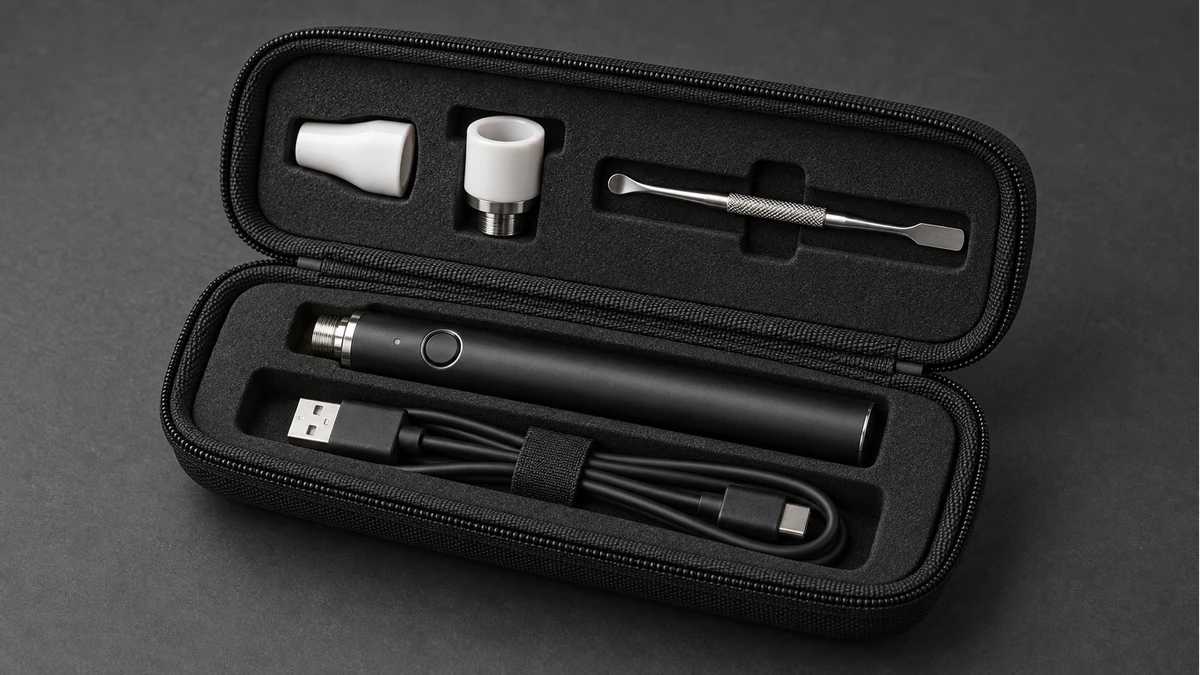
Zipper design is easy to overlook but directly affects chamber safety. If the padded compartment is slightly overstuffed or the zipper track runs too close to where the chamber sits, closing the case can apply direct pressure against a component that isn’t built to flex. Ceramic and glass chambers are rigid — they don’t absorb compressive force the way a soft-bodied item would, so the force has to go somewhere, usually into a stress point.
A well-designed case keeps at least a few millimeters of buffer between the zipper track and any rigid compartment wall, and uses a slightly recessed or padded compartment lip so the zipper doesn’t bear down directly on the chamber when closed.
🔋 9. Battery Contact Protection
The battery contact point — where the chamber threads onto or connects with the battery — is one of the more failure-prone areas if debris or moisture gets in. A case that lets tools, dust, or residue migrate toward the threading can cause connectivity issues over time, even if the battery itself is undamaged.
Some cases address this with a small cap or dedicated end pocket that isolates the threading area from the rest of the compartment. If your case doesn’t have that, keeping the chamber’s protective cap on (if it has one) before storage does the same job. For more on how battery contacts and connection points affect overall performance, this wax pen battery guide covers the mechanics in detail.
🧩 10. Removable Chamber Storage
Many wax pen setups use a removable chamber that detaches from the battery for cleaning or swapping. Storing it separately from the battery — even within the same case — reduces the risk of the threading rubbing against other parts and reduces pressure on the chamber walls when the case is jostled.
A case with a dedicated, snug chamber slot (rather than tossing it loose in the same pocket as the battery) is one of the more meaningful upgrades over a basic pouch, particularly for anyone who detaches the chamber regularly for cleaning.
🔌 11. Tool and Cable Placement
Charging cables are another item that tends to end up loose and tangled inside a general-purpose pouch, where the connector end can scratch surfaces or the cable itself can press against the chamber compartment. A dedicated cable loop or small zip pocket keeps the cable coiled and away from anything fragile.
The same logic applies to dab tools and cleaning brushes — items that are rigid, sometimes sharp-edged, and should never share open space with a glass or ceramic chamber. Keeping a consistent “everything has its own spot” layout also just makes it faster to grab what you need without digging through a single jumbled pocket.
🧽 12. Cleaning the Case Itself
Cases accumulate residue and dust over time regardless of how good the liner is. Fabric sleeves can usually be wiped down with a damp cloth and mild soap; hard shells with removable foam inserts are easier still, since the foam can be pulled out and the shell wiped separately.
Avoid soaking padded fabric liners or letting water sit in foam cutouts — trapped moisture near a chamber compartment isn’t ideal for glass or ceramic components stored there afterward. Letting the case fully air-dry before repacking the pen and chamber is worth the extra few minutes.
🌬️ 13. Odor Containment vs Impact Protection
These two things get conflated often, but they’re solved by different materials. Odor containment relies on airtight seals, smell-resistant liners, or activated carbon layers that trap scent inside the case. Impact protection relies on padding thickness, structural rigidity, and compartment separation that has nothing to do with how airtight the case is.
A case can be excellent at one and mediocre at the other. A fully sealed, odor-resistant pouch with thin fabric walls won’t do much if the case gets dropped or compressed. Conversely, a rigid foam-lined hard case might protect the chamber well but have seams or zippers that aren’t airtight. If both matter to you, check for each feature independently rather than assuming one implies the other.
📋 14. Case-Type Comparison Table
| Case Type | Impact Protection | Compartment Separation | Odor Control | Bulk / Portability |
|---|---|---|---|---|
| Hard shell with foam insert | High | High (custom-cut cutouts) | Low to moderate, depends on seal | Larger, heavier |
| Padded fabric sleeve | Moderate | Low to moderate | Low unless lined | Compact, lightweight |
| Zip pouch with sealed liner | Low to moderate | Moderate (multi-pocket designs) | High | Compact |
| Multi-compartment organizer case | Moderate to high | Very high | Moderate, varies by liner | Medium, depends on capacity |
No single option checks every box — the right choice depends on which risk you’re actually trying to reduce most: a drop, a scratch, a smell, or a tangled pocket of loose parts.
✅ 15. Measurement Checklist Before You Buy
- Measure your pen fully assembled — chamber and mouthpiece attached — at its longest point and widest point.
- Add 5–8mm of clearance to each dimension for a comfortable but secure fit inside the padded compartment.
- Check whether the chamber compartment is separate from the battery/tool compartment, not just one open pocket.
- Look for elastic loops or straps sized to your specific tools, not generic wide loops.
- Confirm the zipper track doesn’t run directly over a rigid compartment wall where the chamber sits.
- Check whether the interior liner is removable and washable, or fixed and absorbent.
- If odor containment matters, confirm the case has a sealed zipper or liner — this is separate from padding quality.
- Verify there’s a dedicated spot for a charging cable so it doesn’t press against the chamber compartment.
Working through this list before buying — or before building your own storage setup out of a multi-pocket organizer — tends to prevent most of the recurring issues people run into: scratched finishes, sticky padding, and tools knocking against a chamber that was never designed to absorb that kind of contact.