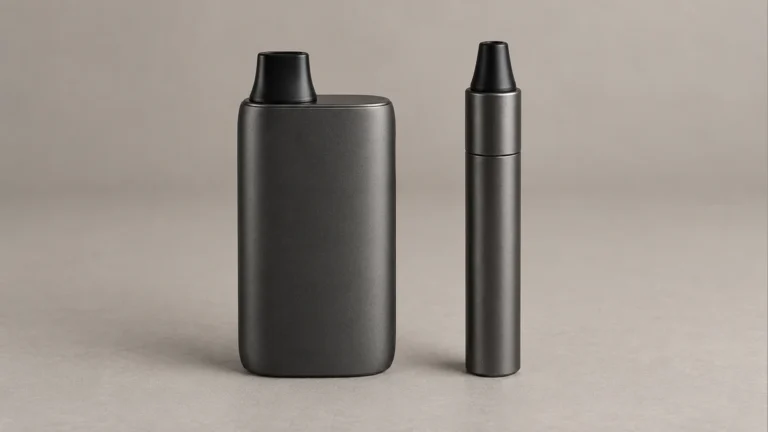
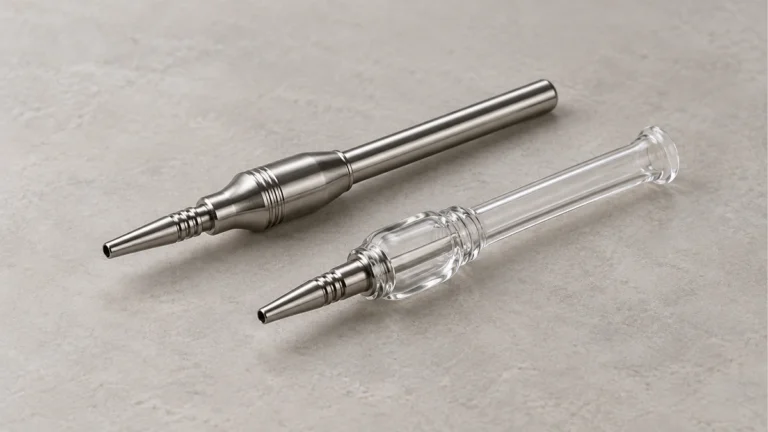
Two concentrate vaporizers can sit side by side, dialed to what looks like the same setting, and still deliver noticeably different results. One feels like it hits instantly and then fades; the other builds more slowly but holds a steadier cloud. The temperature display isn’t lying, but the number on a screen is only one variable in a chain that includes chamber shape, heater mass, airflow geometry, and where the material actually sits relative to the heat source. Reading discussions among concentrate users, a recurring theme is confusion about why “same temp, different device” produces such different sessions — and the honest answer is that the setting is just the starting instruction, not the whole story.
This guide walks through the mechanical reasons behind that variation: the two dominant chamber philosophies, how heater mass changes the pace of a session, why airflow path and load placement matter as much as wattage, where residue tends to build up, and how serviceability and controls shape the day-to-day experience. The goal isn’t to declare one layout universally “better,” but to help a buyer match a design to how they actually plan to use it.
🔍 1. Bucket Chambers vs Exposed-Coil Design
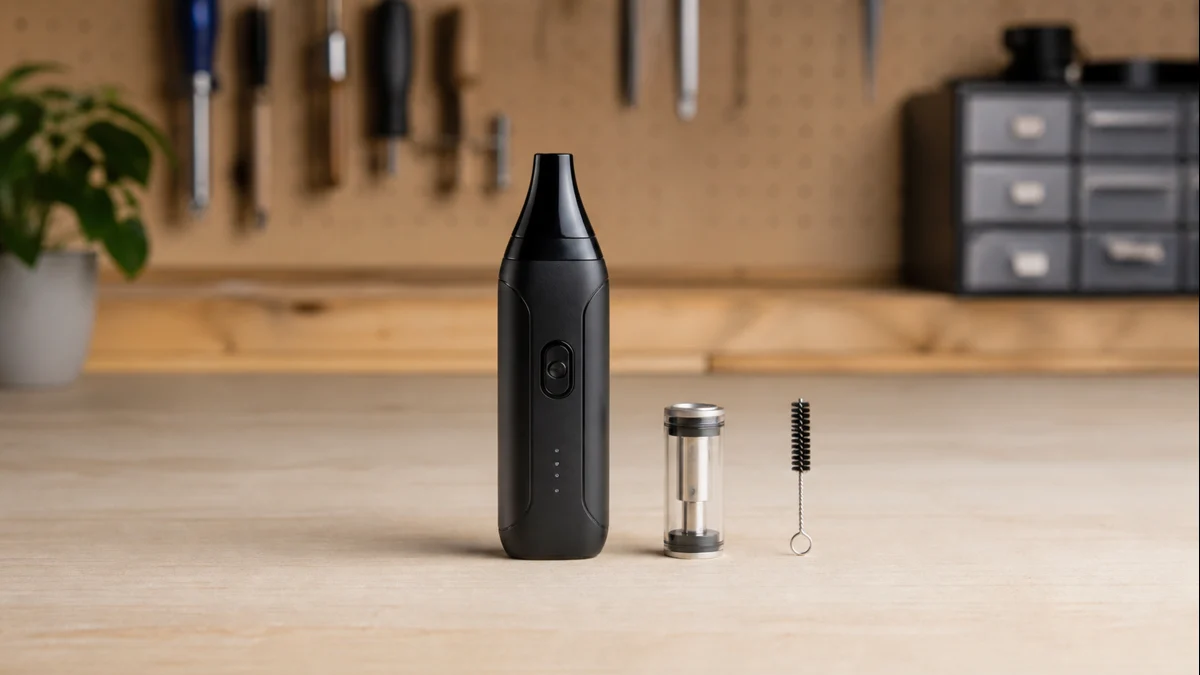
Most concentrate vaporizers fall into one of two broad chamber families. A bucket-style chamber surrounds the material with a cup or well, often made from a thermal ceramic or similar insulating material, so heat radiates inward from the walls rather than touching a bare coil directly. An exposed-coil design places a wire coil — sometimes wrapped in quartz or a ceramic sleeve — directly against or very near the concentrate, transferring heat more by direct contact and conduction. Neither layout is exclusive to one product category; you’ll find both approaches across dab pens, portable concentrate vapes, and desktop units, and the atomizer inside a wax pen is a good example of how compact these coil assemblies can get.
🧩 1.1 How Bucket Atomizers Hold and Insulate Concentrate
A bucket chamber acts partly as an oven. Because the walls retain heat and radiate it back toward the center, the material isn’t sitting directly on a hot wire — it’s suspended in a warmed pocket. That insulating buffer tends to smooth out temperature swings once the chamber reaches its target, which is part of why bucket-style devices are often associated with a steadier, more even draw across a longer session. The tradeoff is that reaching that steady state takes energy and time; the walls themselves need to heat up before they can do their job.
🧩 1.2 How Exposed Coils Trade Insulation for Speed
An exposed coil skips most of that warm-up lag because it’s transferring heat almost directly to the material. That’s a large part of why coil-based pens and cartridges feel responsive — press a button, and vapor starts almost immediately. The cost is less thermal buffering: because there’s no insulating chamber wall moderating the heat, output can vary more from the first pull to the last, and the coil itself is more exposed to the residue and buildup that come from direct contact. This is the same underlying principle that governs how a standard 510-thread cartridge atomizer behaves, just scaled and packaged differently for loose concentrate.
| Factor | Bucket / insulated chamber | Exposed coil |
|---|---|---|
| Warm-up feel | Slower to stabilize, steadier once heated | Faster initial response |
| Heat delivery | Radiant, buffered by chamber walls | Direct contact conduction |
| Session consistency | Tends to hold output over longer draws | Can taper as the coil cools between hits |
| Residue exposure | Buildup mostly on chamber walls | Buildup directly on coil surface |
Neither column is inherently the “correct” choice — it depends on whether a buyer values quick, on-demand hits or a more gradual, evenly paced draw. Coil material itself adds another layer to this comparison, which is covered in more depth in a breakdown of quartz versus ceramic coils.
⚡ 2. Heater Mass and Why Ramp Feels Different
Even within the same chamber family, heater mass — essentially how much physical material the heating element has to warm up — changes how a device behaves. A thicker heating element or a larger chamber wall holds more thermal energy once it’s up to temperature, which generally means it recovers faster between pulls because it isn’t relying entirely on the last burst of power to reheat. A lighter, thinner heater reaches its target temperature quickly on paper, but because it holds less reserve heat, consecutive draws in quick succession can pull the actual surface temperature down further before it recovers.
This is one reason a displayed setting doesn’t tell the full story. A device set to a moderate temperature with a heavier heater and good recovery can feel more consistent from first hit to fifth than a lighter unit set nominally hotter but starved of reserve heat by repeated draws. Reddit threads on concentrate hardware frequently circle around this exact confusion — users comparing dialed-in numbers across devices and getting different results — and the mechanical answer usually comes down to heater mass and how the internal power delivery is tuned, not just the number on the display. For a deeper look at how heating elements convert power into vapor in the first place, see this explanation of how an atomizer works.
Recovery time between draws is also shaped by the electronics behind the heater. How a battery and its charging circuit are built affects how much sustained current the heater can draw during back-to-back hits, which is part of why device-to-device comparisons benefit from understanding the basics covered in a general battery and charger guide.
🧩 3. Airflow Path and Load Placement
Where the air actually travels through the chamber, and where the concentrate sits relative to that path, matters just as much as heat. A straight, direct airflow path pulls vapor off the heated surface quickly, which can favor bigger, punchier draws but may also pull some material along before it’s fully vaporized if the pull is aggressive. A more indirect or diffused airflow path slows things down, giving vapor more time to form before it reaches the mouthpiece, generally at the cost of draw resistance feeling a bit tighter.
Load placement compounds this. Concentrate pooled directly against a hot coil vaporizes differently than concentrate resting slightly off the heat source in a bucket well, and how a user loads the chamber — a small dab centered on the coil versus spread along a bucket wall — can noticeably change how evenly a session burns through the material. This is a case where user technique and device design interact: two people with the same vaporizer, loading differently, will describe different experiences even though nothing about the hardware changed.
Airflow interacts with chamber type too. Bucket chambers often pair with airflow paths that circulate around the insulated walls before reaching the material, reinforcing that oven-like, radiant effect. Exposed-coil designs more often use a direct-line path that mirrors how a cartridge or standard vape draws air across a coil — which is also why comparing a concentrate vaporizer’s draw to a familiar vaporizer‘s draw is a reasonable mental shortcut for new buyers.
🧰 4. Where Residue Collects and Why It Matters
Concentrate leaves behind residue no matter how clean the chamber design is, but where that residue accumulates differs by layout. In a bucket chamber, buildup tends to coat the interior walls and pool near the base, since that’s where radiant heat concentrates the material as it liquefies. In an exposed-coil design, residue tends to bake directly onto the coil surface and any surrounding housing, since there’s no buffer between the heat source and the material.
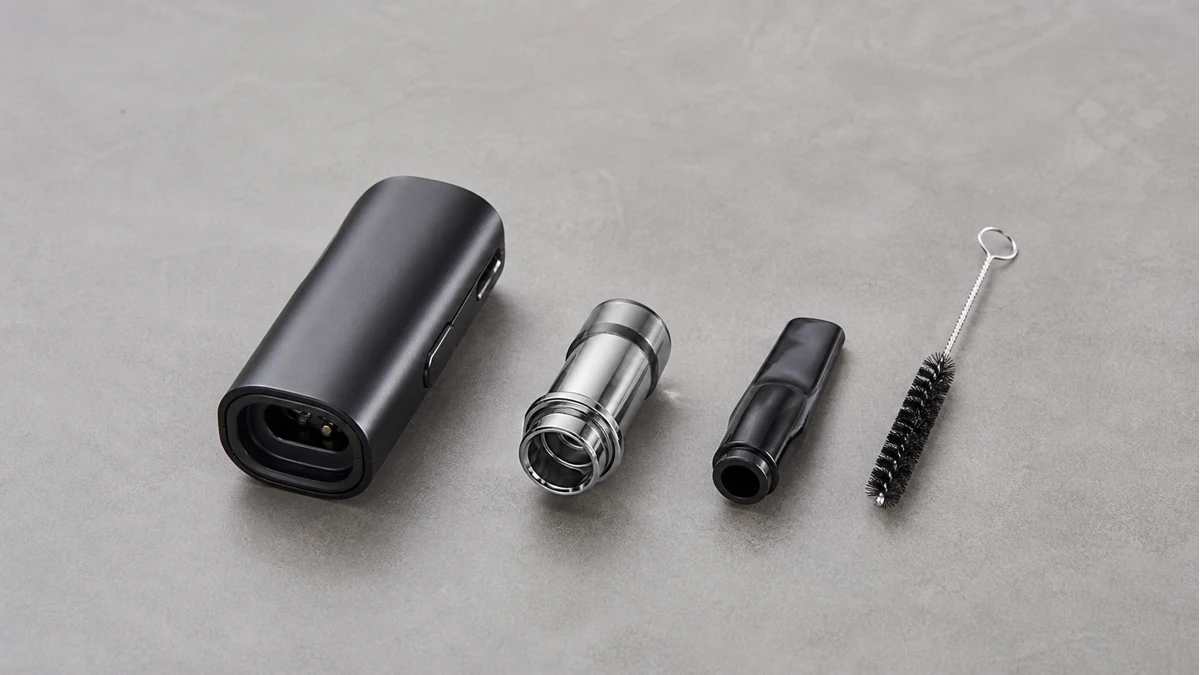
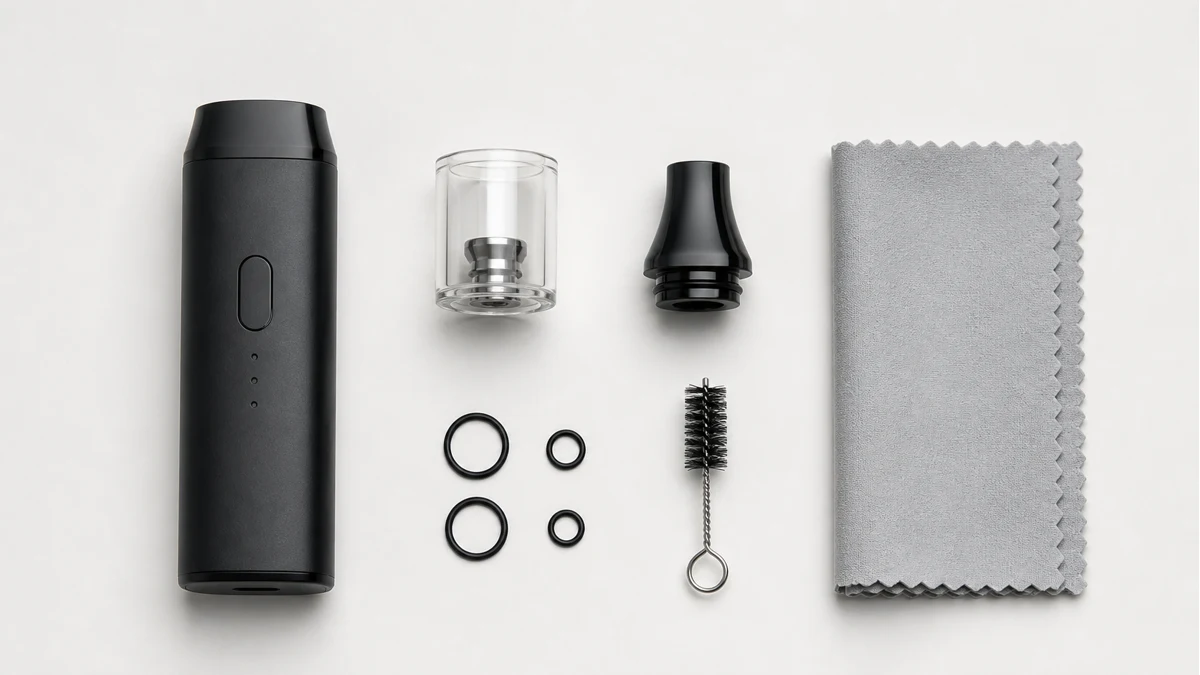
That distinction changes cleaning frequency and method. A bucket chamber can often be wiped or soaked as a unit since the walls are typically a separate, more accessible piece. A coil that’s caked with residue is harder to fully clean without either heating it to burn off buildup or physically working at it, since coils have more surface texture for material to cling to. Some brands market dedicated warm-up or cleaning tools for this exact problem — Puffco’s guidance on using its Hot Knife accessory is one documented example of a heat-based approach to clearing buildup rather than scraping it by hand. Whatever the tool, the general principle of drawing heat, dissolving residue, and wiping while warm rather than scraping cold material is consistent across most concentrate hardware, and it’s covered in more general terms in a guide to cleaning dab rig components. Related accessories that make this easier are rounded up in a look at common dab rig accessories.
Flavor complaints on forums often trace back to this residue path rather than a defective device — old buildup mixing with fresh material changes taste well before it changes vapor volume, which is why regular clearing matters more for taste-focused users than for those chasing output alone.
🛠️ 5. Serviceability and Controls Behind the Scenes
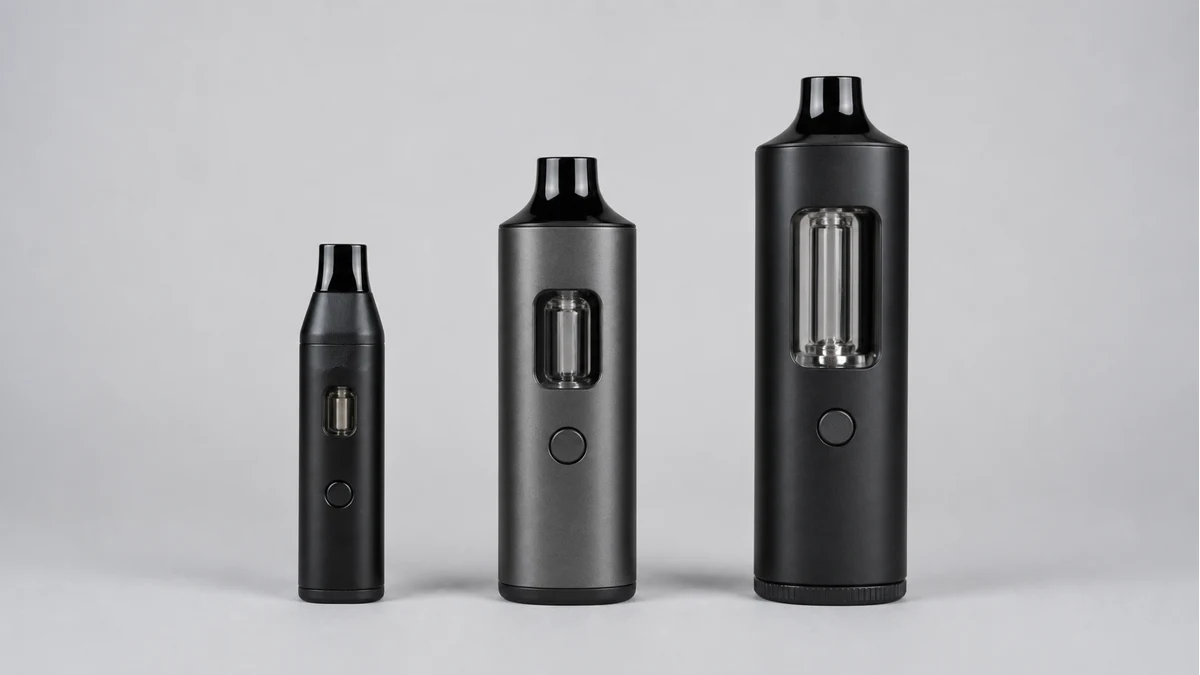
How easily a device comes apart affects how honestly it can be maintained. Devices with a separable, replaceable atomizer or coil assembly let a worn part be swapped without retiring the whole unit — a pattern familiar to anyone who’s replaced a coil in a standard vape rather than the whole device, and worth understanding through a broader look at how vape parts fit together. Devices with a sealed or fused chamber trade that flexibility for a simpler build, which can mean fewer points of failure but also means a fouled or worn heater is harder to address on its own.
Controls matter here too, though less obviously. A device with more granular temperature control — multiple presets or a dial rather than a single fixed setting — gives a user more room to compensate for a given chamber’s quirks, like nudging the setting up slightly on a device known to run cooler in practice than its display suggests. Desktop-style units with more developed control interfaces, such as the kind documented in Storz & Bickel’s operation guidance for its devices, illustrate how much a thoughtful control scheme can smooth over the underlying hardware’s natural inconsistencies. On the battery side, basic safety awareness around charging and battery handling — the sort outlined by the U.S. Consumer Product Safety Commission’s guidance on high-energy batteries — applies to any rechargeable concentrate device, portable or otherwise, and is worth keeping in mind regardless of which chamber style a device uses.
📌 6. Matching Chamber Design to Session Length
Short, quick sessions tend to favor exposed-coil designs simply because there’s less waiting involved — the coil responds fast, and a brief session doesn’t run long enough for its more variable output to become noticeable. Someone stepping out for a few minutes and back rarely cares that draw three feels slightly different from draw one.
Longer, more deliberate sessions tend to favor bucket-style, insulated chambers, where the slower warm-up pays off over time with steadier output draw after draw. A user settling in and taking several measured pulls over an extended period is more likely to notice — and appreciate — that consistency, and less bothered by the extra seconds it takes the chamber to get there in the first place.
Neither preference is fixed by product category alone; portable pens exist with both chamber philosophies, and desktop units aren’t automatically bucket-style either. The practical move is to think about the session pattern first — quick and occasional versus longer and unhurried — and then look at chamber type, heater mass, and airflow path as the mechanical reasons a given device will or won’t match that pattern.
❓ 7. Frequently Asked Questions
Does a bigger, heavier heater always mean faster ramp-up?
Not necessarily. Heater mass generally trades initial speed for better recovery between draws — a heavier heater may take a bit longer to reach its first target temperature but tends to hold up better across consecutive pulls, while a lighter heater often ramps quickly but can dip more under repeated use.
Can a single device switch between bucket and coil-style atomizers?
Some devices are built with interchangeable atomizer options, letting a user swap between styles on the same battery or base unit, but this depends entirely on the specific product’s design rather than being a universal feature across concentrate vaporizers.
How often should residue actually be cleared out?
There’s no fixed interval that applies to every device, but flavor and draw quality are usually the best indicators — a noticeable dulling of taste or a harsher pull is a practical signal that buildup has accumulated enough to affect the session, regardless of chamber type.
Do more advanced controls actually change the heat delivered, or just the display?
Good control systems influence real heat delivery, not just the readout — features like adjustable presets or more refined power regulation can change how a heater responds moment to moment, which is part of why two devices set to the same nominal number can still perform differently.
Choosing a concentrate vaporizer comes down to being honest about how a session actually unfolds. Someone who wants quick, on-demand hits with minimal wait time is better served by an exposed-coil layout and should prioritize easy access to the coil for cleaning, since that’s where buildup will concentrate fastest. Someone who prefers longer, steadier sessions and doesn’t mind a slower start should lean toward an insulated bucket chamber with enough heater mass to hold output across multiple draws, and should weigh serviceability — whether the chamber or atomizer can be replaced independently — as a real factor in long-term cost and convenience, not an afterthought. Reading a spec sheet’s temperature number in isolation won’t predict how a device actually feels; understanding the chamber type, heater mass, airflow path, and cleaning demands behind that number will.
📚 8. Sources
- U.S. Consumer Product Safety Commission — High-Energy Batteries safety guidance
- Puffco — How to Use the Puffco Hot Knife
- Storz & Bickel — Device Operation support documentation