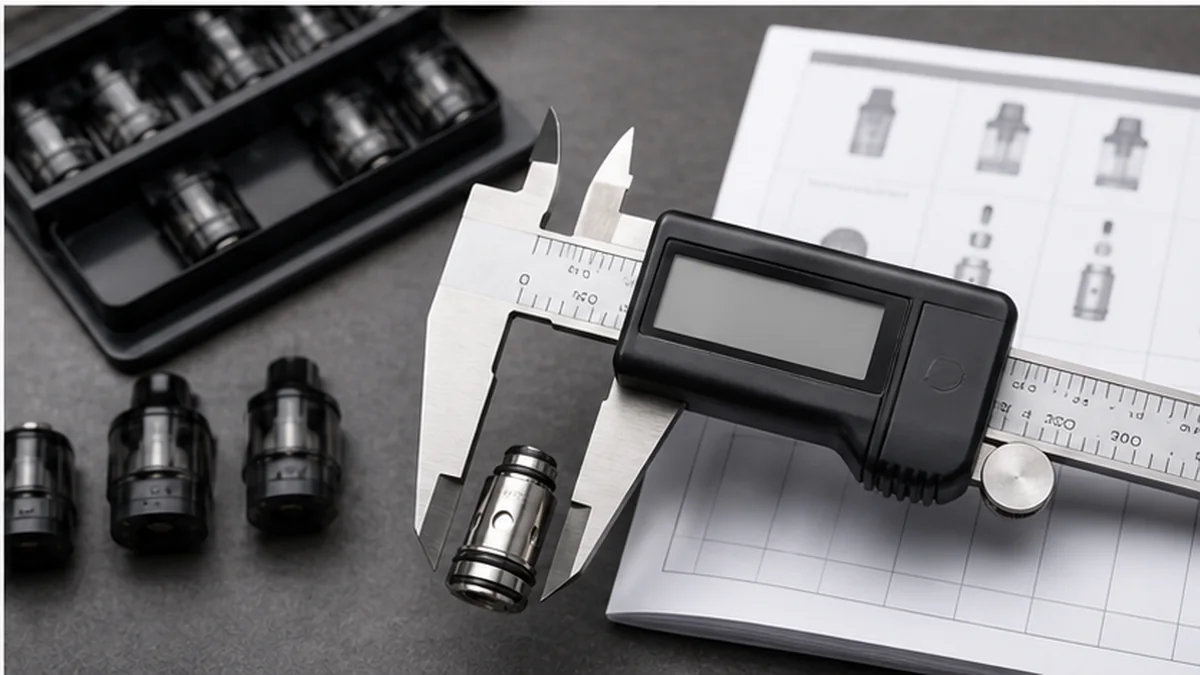
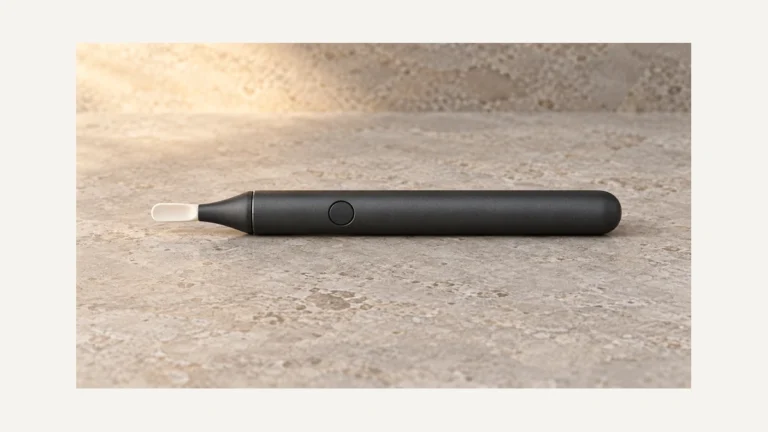
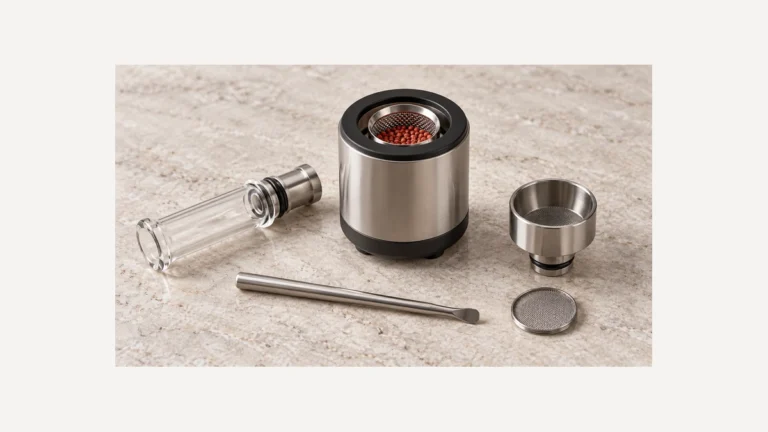
The battery still holds a charge. The shell isn’t cracked, the button still clicks, and the screen still lights up. But the coil that fits it went out of production a year and a half ago, the manufacturer’s site now redirects to a different product line, and the few listings still online are sold out or from sellers you’ve never heard of. This is one of the most common ways a perfectly functional vape ends up in a drawer instead of a pocket, not because anything broke, but because one small, inexpensive, consumable part became impossible to buy for a device that otherwise had years of life left. It’s also one of the least understood parts of owning a vape: which pieces are supposed to wear out, which should outlast the device itself, and which you should never force a swap on just because they look like they’d fit. Treating a vape as a system of parts, not one sealed object, is the difference between troubleshooting it well and guessing.
🧩 1. A Vape Is a System of Parts, Not One Object
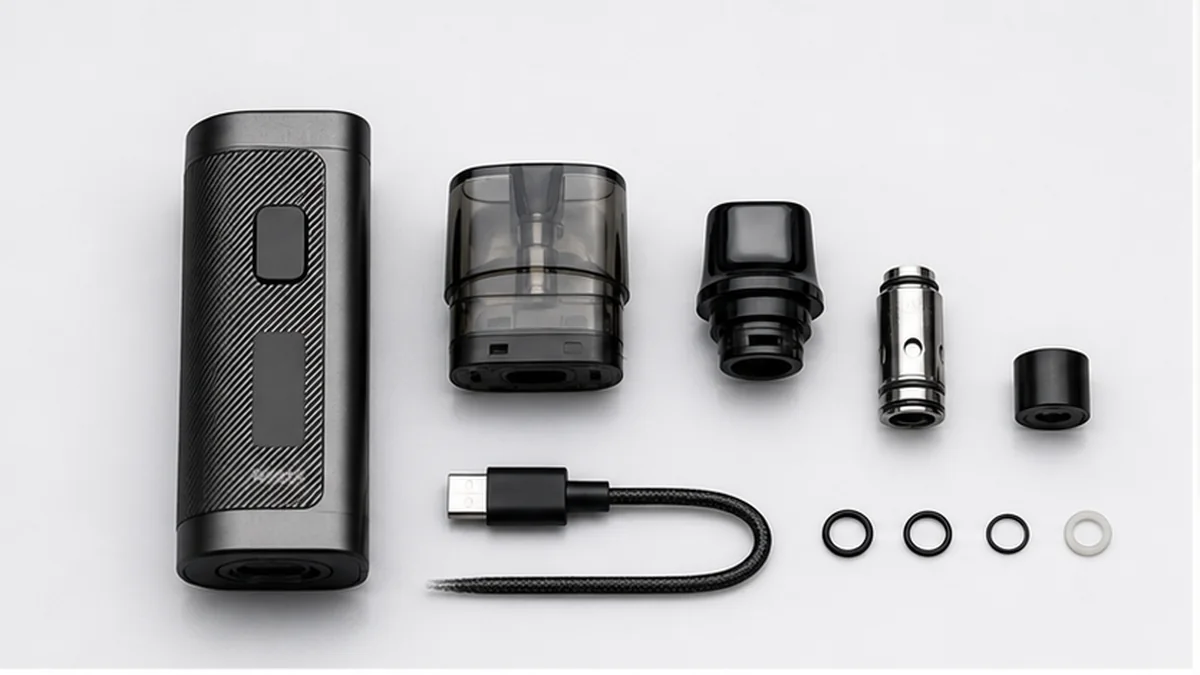
Every vape, regardless of format, breaks down into the same handful of functional pieces: a power source, the electrical contacts that connect it to everything else, an atomizer or heater that actually vaporizes material, a pod, cartridge, or tank that holds that atomizer and whatever it’s vaporizing, a set of seals that keep everything airtight and leak-free, and a mouthpiece and airflow path that shape the draw. Each of those pieces has a different expected lifespan, a different failure mode, and a different answer to the question “can this be replaced.” A battery is expected to last the life of the device. An atomizer is expected to wear out on a schedule measured in weeks, not years. A seal is invisible until it fails and then it’s the only thing you can think about. Knowing which category a symptom belongs to is most of the battle in figuring out what’s actually wrong.
🔋 2. The Power Source: Battery and Charging
The battery is the part of a vape that ages continuously, whether the device sees daily use or sits untouched in a drawer. Every rechargeable cell has a finite number of charge cycles before its usable capacity drops noticeably, and that decline is gradual — a device that used to last all day starts needing a midday top-up, then two. That’s normal wear, not a defect. What’s not normal, and never a DIY project, is a battery that swells, gets hot to the touch, won’t hold a charge at all, or sealed electronics that stop responding. Vape batteries and the circuitry around them aren’t designed to be opened, repaired, or modified by an end user, and there’s no safe home procedure for doing so. If a device’s power system is failing, the right move is manufacturer support or a battery and charger guide on what normal degradation looks like, not opening the case. For most people, a battery problem means the device has reached the end of its service life.
⚙️ 3. Contacts and Connectors: Threads, Pins, and Cables
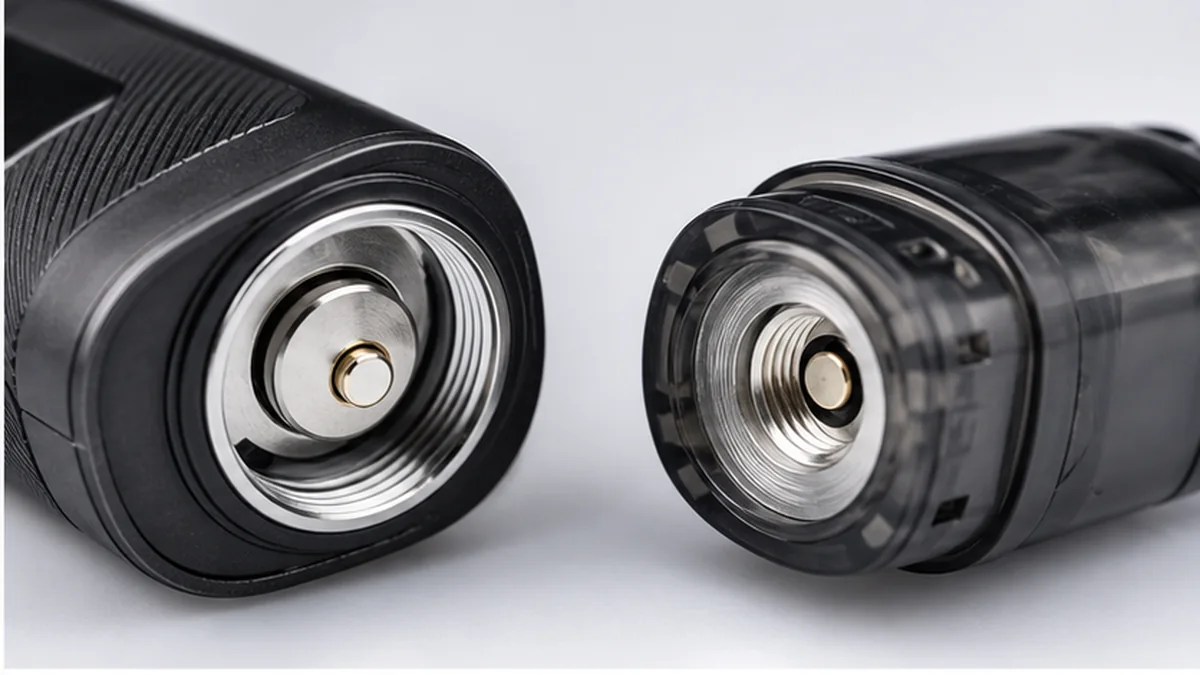
Between the battery and everything downstream of it sits a layer of physical contacts — most commonly a 510 cartridge guide-style threaded connection for tank and cartridge devices, or a proprietary pin or magnetic contact for pod systems, plus whatever port and cable the device uses to recharge. These parts see constant mechanical wear: threading gets loose or cross-threaded, spring-loaded pins lose tension, charging ports accumulate lint and residue, and cables fray at the connector end long before the wire itself gives out. A lot of “dead device” complaints actually trace back here rather than to the battery — a wiped-down contact or a different cable solves what looked like a much bigger problem. The complication is that charging cables and ports aren’t always standardized even within one brand’s lineup, and a proprietary cable going out of production can strand a device just as effectively as a discontinued coil, even though the battery underneath is perfectly fine.
🔗 4. The Atomizer or Heater: The Part Built to Wear Out
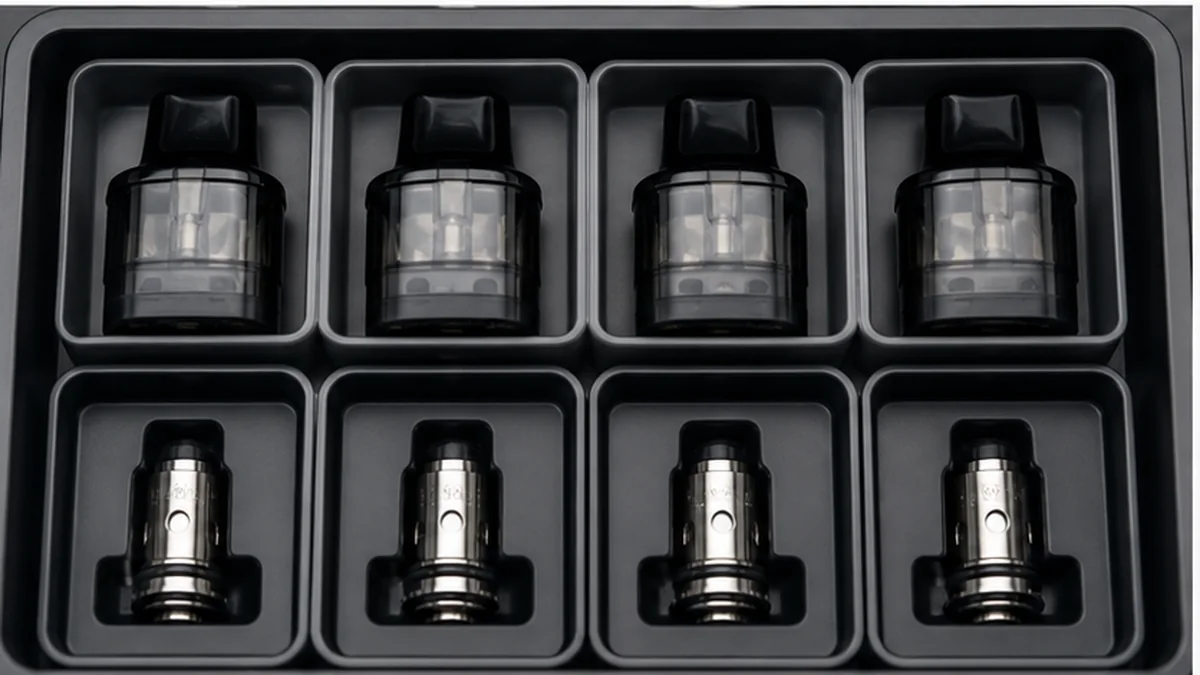
The atomizer — the coil or heating element that actually turns liquid or material into vapor — is the one part of a vape engineered to be consumed on a predictable schedule. Wicking material saturates, then chars; resistance wire degrades with repeated heat cycles; residue builds up faster than cleaning can remove it. A gradual drop in flavor, a slightly harsher pull, or a faint burnt edge on an otherwise normal hit is usually just the how an atomizer works reaching the end of its useful life, and replacing it is the routine maintenance step the whole system is designed around. Some devices don’t offer that option at all — no atomizer troubleshooting guide designs seal the heating element inside a pod or cartridge that gets replaced as a unit instead, trading a lower up-front repair cost for less flexibility once that specific pod is no longer sold. Neither approach is wrong; they’re just different bets on how a device should age.
📦 5. Pod, Cartridge, and Tank: Where the Atomizer Lives
The housing around the atomizer is where compatibility problems get personal. A refillable tank, a prefilled cartridge, and a sealed pod are all doing the same basic job — holding e-liquid or material next to the heater and sending vapor up toward the mouthpiece — but they’re built and sold in completely different ways. Tanks are typically the most modular, since the glass, drip tip, and coil are often separate purchases. Pods and cartridges are frequently tied to one specific device or one specific product line, which is exactly the setup that leaves people stuck when a manufacturer discontinues a pod style: the battery section still works fine, but the only part that actually holds and heats material is no longer being made. That scenario shows up often enough in device forums that it’s worth naming directly — a device isn’t broken, it’s just been cut off from its one consumable, and no amount of searching turns up an exact replacement once a manufacturer has moved on to a newer pod generation.
🔍 6. Seals, Gaskets, and O-Rings
Seals are the smallest parts on this list and the ones people think about least, right up until one fails. O-rings around the tank base, gaskets under the mouthpiece, and the seal where a pod meets its housing all exist to keep air moving through the intended path instead of leaking out through a gap. These seals are typically made to a specific thickness and material for a specific part number, and a seal that’s slightly the wrong diameter or a slightly different material can look fine sitting in place while still failing to hold pressure the way the original did. The usual symptom is leaking e-liquid around the threads or mouthpiece, or a device that gurgles instead of drawing cleanly. Because seals are cheap and easy to overlook, they’re also one of the first things worth checking before assuming a bigger part has failed.
🛑 7. Mouthpiece and Airflow Path
The mouthpiece and the airflow channel behind it determine how a device actually feels to draw on, and they’re more particular about fit than they look. A mouthpiece that seats correctly but doesn’t align its internal channel with the airflow path underneath it can noticeably change draw resistance, even though nothing about the connection looks wrong from the outside. This is a common outcome when a generic or third-party mouthpiece is used in place of the original — the physical fit is close enough to seat, but the air isn’t moving through the same geometry the device was tuned around, so the draw ends up tighter, looser, or noisier than expected. It’s a minor-sounding part with an outsized effect on whether a device feels right in daily use.
🧭 8. The Compatibility Hierarchy: Why “It Fits” Isn’t “It Works”
When an original part isn’t available, treat compatibility as a hierarchy, not a yes-or-no question. The safest bet is the exact model or part number the device shipped with. One step down is the same product family or generation — a manufacturer’s later pod or coil for the same line, which usually works but can shift internal resistance or airflow tuning enough to feel different. Below that is a shared connector standard, like two devices both using a 510 thread: the connection will seat, but a shared thread says nothing about whether electrical output, coil resistance, or the airflow channel underneath were designed for each other. At the bottom is a generic, unbranded “compatible” part with no documentation tying it to your device — this is where the inconsistent performance long-time users complain about tends to show up, since a part that threads on correctly can still ship with looser tolerances or coil resistance that drifts from unit to unit. A connection fitting is necessary for compatibility; it was never sufficient on its own, and authentic documentation — a manufacturer’s own compatibility list, not a marketplace listing’s claim — is the only reliable way to confirm the rest.
📚 9. From Symptom to Likely Part: A Diagnostic Sequence
Most vape problems can be narrowed down with a short sequence instead of replacing parts at random. This isn’t a repair procedure — it’s a way to identify which part is actually involved before shopping for a replacement.
- Confirm power and charging first. Does the device turn on and charge normally with a known-good cable? If not, check the charging port and contacts for debris before assuming the battery has failed.
- Check for a burnt, weak, or muted result. This points to the atomizer or heater — the part meant to be replaced on a routine schedule, and the single most common cause of a device that “used to work fine.”
- Check for leaking or a gurgling draw. This usually points to a seal, gasket, or O-ring, or occasionally overfilling.
- Check draw resistance and airflow. An unexpectedly tight, loose, or noisy pull after swapping in a non-original mouthpiece or pod points to an airflow-path mismatch, not a failing atomizer.
- If none of that resolves it and the issue is the device’s power behavior itself — won’t hold a charge, shuts off unexpectedly, feels warm when idle — that’s a sealed electronics issue. It calls for manufacturer support or professional service, not an at-home repair.
📚 10. FAQ
🧩 10.1 My atomizer or coil “fits” but tastes burnt right away — why?
A part that threads on correctly hasn’t necessarily been built to the same tolerances as the original. Wicking material, coil resistance, and internal fit can all vary between a generic replacement and the manufacturer’s own part, and any of those differences can produce an early burnt taste even when installation was correct.
🧩 10.2 Can I use a generic pod or cartridge if the connector looks identical?
A matching connector only confirms physical fit. It says nothing about whether electrical output, coil resistance, or airflow channel were designed to work with that connector on your specific device, which is why two parts that both “click in” can still perform very differently.
🧩 10.3 My device still works, but the pod or coil it uses has been discontinued — what now?
Start with the manufacturer’s own site or support channel to confirm it’s genuinely discontinued rather than temporarily out of stock, and check whether a later generation from the same product family is cross-compatible. If nothing from the original manufacturer is available, weigh a documented third-party option against retiring the device — an undocumented generic part is a gamble, not a guaranteed fix.
🧩 10.4 Is it safe to open or repair the battery myself?
No. Vape batteries and the sealed electronics around them aren’t designed to be opened or modified by an end user, and there’s no safe home procedure for doing so. A battery that’s swollen, won’t hold a charge, or behaves erratically should be handled through manufacturer support or professional service, not disassembly.