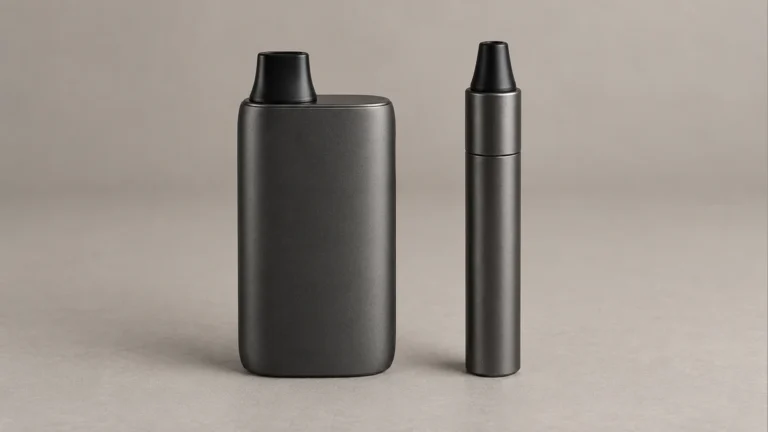
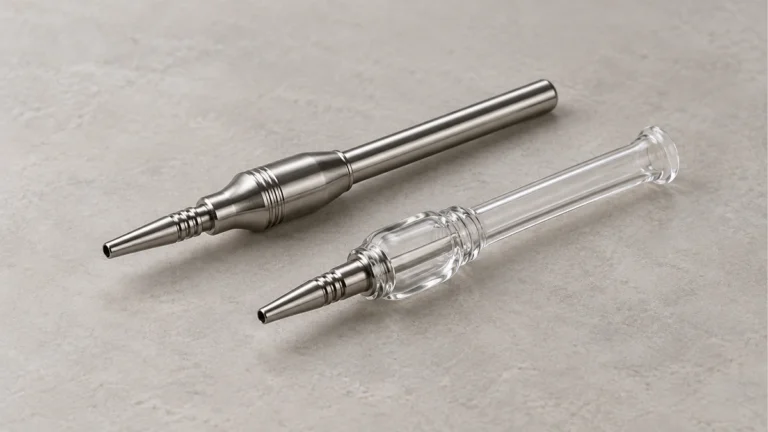
A dab pen and a 510 cartridge battery can sit next to each other in the same drawer and look like siblings. Both are pen-shaped. Both slide into a jacket pocket without a bulge. Both promise a quick draw without a torch, a rig, or a countertop full of tools. That resemblance is exactly what trips people up when they’re actually choosing between the two, because underneath the shared silhouette, one device is a small chamber you load yourself and the other is a sealed unit built around oil that’s already inside it. Those are different jobs wearing the same disguise, and the hardware differences that follow from that one fact shape almost everything else about how each device behaves day to day.
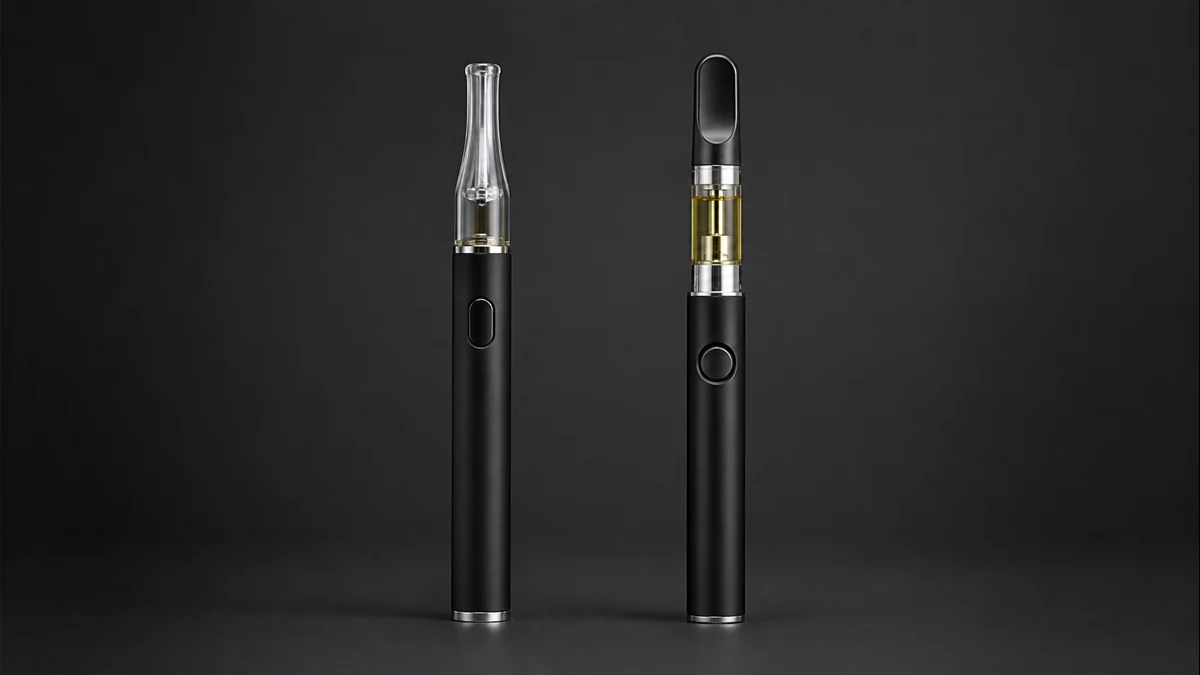
🔍 1. ️⃣ Two Different Jobs Wearing the Same Disguise
Start with what actually goes into each device, because that single distinction is the root of every other difference on this list. A dab pen — sometimes sold under the broader label wax pen — is built around an open or semi-open chamber where a user places a small amount of concentrate directly onto a heating element. That concentrate can be wax, shatter, rosin, or another textured extract, and its consistency, from crumbly to syrupy, is part of what the device has to accommodate.
A cartridge, by contrast, is a sealed reservoir. The oil is loaded once, at the point of filling, into a tank that feeds a wicking material connected to a coil. The user never touches the concentrate at all — they thread the cartridge onto a battery and draw. A 510 cartridge guide covers the mechanics of how that threading and wicking system is standardized across most of the category, which is part of why so many cartridges are cross-compatible with so many batteries.
That upstream difference — loose, texture-variable concentrate versus pre-loaded, oil-viscosity concentrate — is why comparing a dab pen and a cart purely on portability or draw quality misses the point. They’re not two versions of the same tool. They’re two different approaches to getting concentrate to a heating surface, and the rest of the hardware follows from that choice.
⚡ 2. ️⃣ How the Heater Actually Gets Loaded
Once you accept that the two devices hold different material, the next question is mechanical: how does that material actually reach the coil? This is where a lot of the day-to-day feel of ownership gets decided, and it’s also where a lot of first-time buyers get surprised.
🧩 2.1 Loading a Dab Pen’s Chamber
With a dab pen, loading is a manual, hands-on step every single session. A user opens the chamber, places a small amount of concentrate onto or around the coil, and closes it back up. Because you’re placing the material yourself, the amount matters — a chamber packed too full doesn’t vaporize more efficiently, it just takes longer to fully heat and leaves more residue behind afterward. Understanding how an atomizer works helps explain why: the coil is only as effective as the contact it has with the material sitting on it, and burying it under too much concentrate changes that contact pattern.
🧩 2.2 How a Cartridge Feeds Its Coil
A cartridge skips that step entirely. The wicking material inside stays in continuous contact with the oil reservoir, so the coil is fed automatically and consistently, draw after draw, without the user making a judgment call about quantity. This is the core of the cartridge’s convenience case — there’s no loading decision to get right or wrong, because the manufacturer made that decision when the cartridge was filled and sealed. The tradeoff is that the user has no way to load their own concentrate into that same sealed housing; a cartridge is built for oil, and it isn’t designed as a refillable chamber the way a dab pen is.
🧼 3. ️⃣ Maintenance: What You Clean vs. What You Just Swap
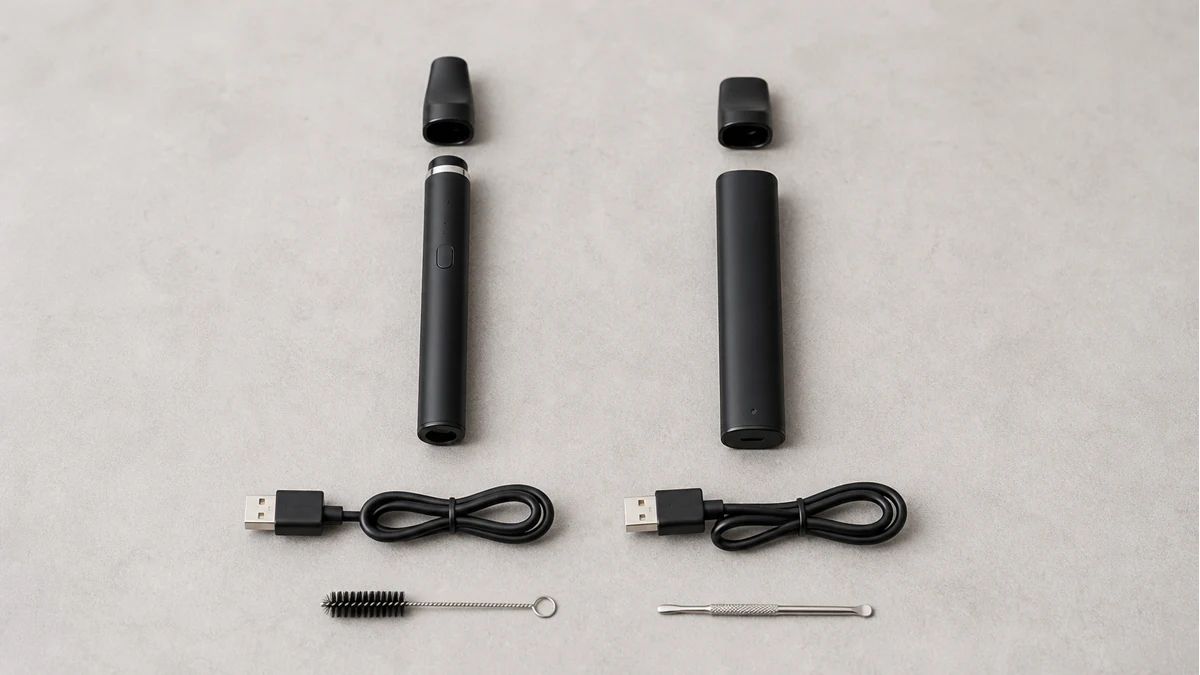
Because a dab pen’s chamber is opened and reloaded every session, residue builds up on the coil, the chamber walls, and sometimes the mouthpiece. That residue is normal, not a defect, but it does mean a dab pen asks for periodic cleaning to keep flavor and airflow consistent — the same general principle behind cleaning routines for larger concentrate setups, which AOVAPE’s guide on how to clean a dab rig walks through in more depth, even though a dab pen’s chamber is smaller and easier to reach than rig glass.
A cartridge asks for almost none of that. Since the reservoir is sealed, there’s no chamber to open and scrape between sessions. The maintenance question shifts entirely: instead of “how do I clean this,” it becomes “when is this empty, and do I replace the whole cartridge or just refill it if the hardware allows that.” Most cartridges are treated as a single-use, dispose-when-empty unit rather than something meant to be serviced.
Neither approach is objectively less work in every situation — a dab pen’s cleaning is a recurring small task, while a cartridge’s “maintenance” is really just periodic replacement. Which one feels like less friction depends on whether someone would rather clean occasionally or buy occasionally.
🧰 4. ️⃣ Replaceable Parts and What Wears Out First
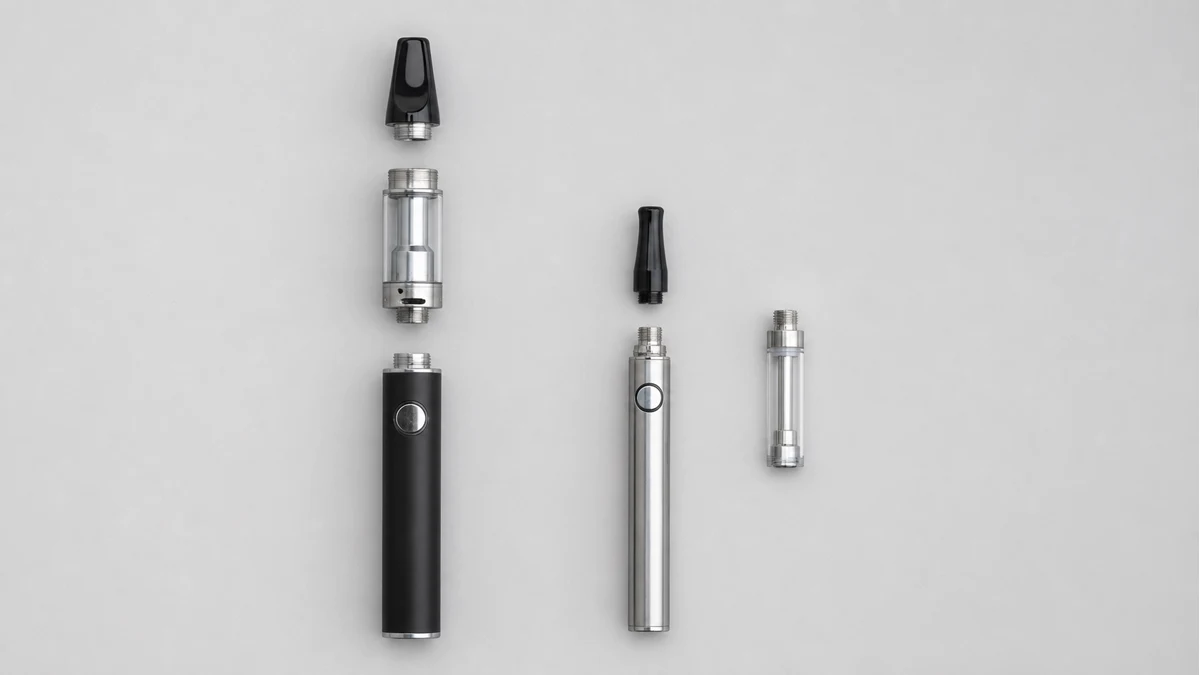
This is where the two devices diverge most in terms of long-term ownership. A dab pen typically separates into a battery and a swappable atomizer or coil assembly — the part that actually touches heat and residue wears out well before the battery does, and on many devices that piece can be replaced on its own. A broader look at vape parts makes clear how common this modular split is across portable vaporizer hardware generally, not just concentrate pens.
A cartridge, again, behaves differently because the coil is built into the same sealed unit as the oil reservoir. There’s no separating “the part that wears out” from “the part that holds the material” — when the cartridge is spent or the coil degrades, the entire cartridge is replaced as one piece. The battery underneath it is the only long-term component, and it’s shared across whatever cartridges get threaded onto it. Coil chemistry also varies by build; AOVAPE’s comparison of quartz coil vs. ceramic heating elements is a useful reference if you’re trying to understand what’s actually inside either a dab pen atomizer or a cartridge coil, since both formats use variations of the same underlying heater types.
🛠️ 5. ️⃣ The Learning Curve Nobody Mentions Upfront
A cartridge is about as close to plug-and-play as concentrate hardware gets. Thread it on, draw, done — there’s very little to learn beyond checking that the connection is seated and the battery is charged. That simplicity is a real part of its appeal, especially for someone who doesn’t want to think about hardware at all.
A dab pen asks more of the user, at least at first. Judging how much concentrate to load, learning how a given texture of extract behaves on the coil, figuring out timing between loading and drawing, and getting a feel for when the chamber needs cleaning are all things that come with a few sessions of practice rather than being obvious on day one. None of this is difficult in an absolute sense, but it is a genuine learning curve compared to a cartridge, and it’s worth being honest about that upfront rather than discovering it after the first awkward session.
Battery behavior adds a smaller layer to that curve on both sides. Devices with adjustable voltage or wattage change how the coil performs, and getting comfortable with those settings — or simply understanding charging habits well enough to avoid running a battery down to nothing before every session — is common ground between dab pens and cartridge batteries alike. A vape battery charger guide is a reasonable next stop for anyone still getting a feel for that part of either device. General safe-handling guidance from the Consumer Product Safety Commission on high-energy batteries is also worth a read for either format, since both dab pens and cartridge batteries typically rely on the same class of small lithium cells.
📌 6. ️⃣ Portability in Practice, Not Just on Paper
On a spec sheet, both devices are portable — small, pen-shaped, pocketable. In practice, they behave a little differently once you’re actually out and moving around. A cartridge and battery combination is largely self-contained; there’s no open chamber to worry about, so tossing it in a bag doesn’t raise concerns about residue transferring elsewhere. A dab pen’s chamber, especially if it was loaded and used recently, can carry warmth and residue for a short while after a session, which is a small but real consideration for how someone carries it.
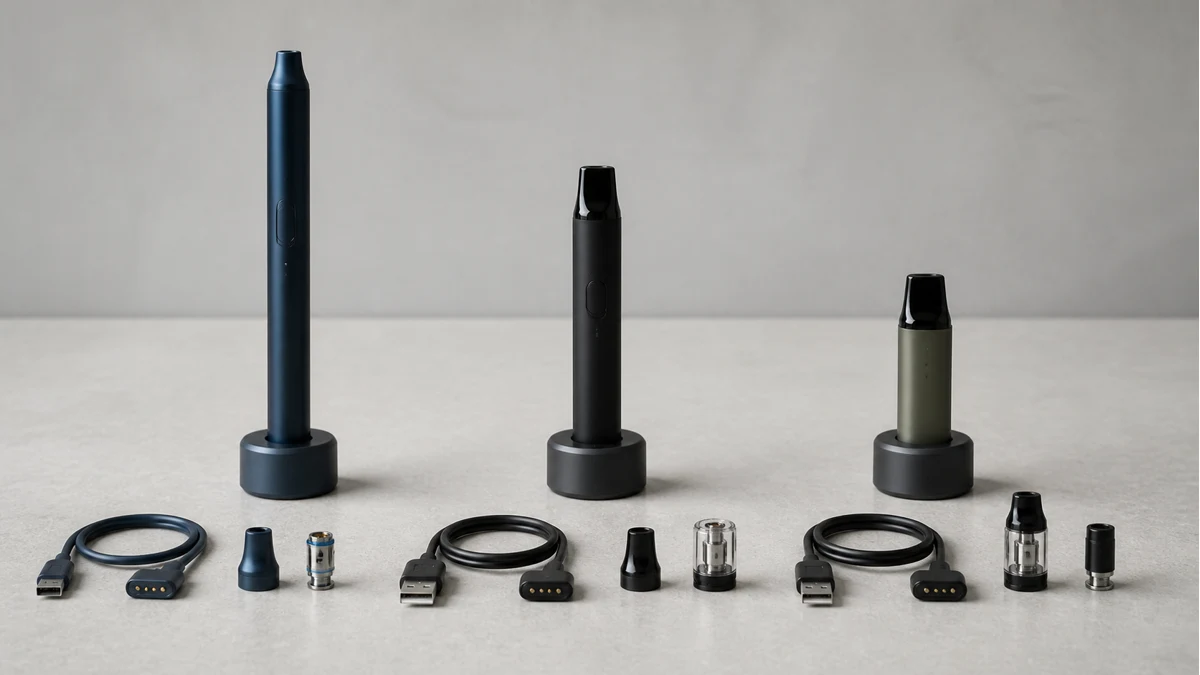
Cartridge hardware is also fairly standardized at the connection point. Manufacturer references like CCELL’s overview of its own cartridge hardware and a compatible battery such as the M3B Plus illustrate how much of the category has converged on a common 510 threading and coil approach, which is part of why cartridges swap so easily between different batteries. Dab pens don’t have quite the same universal standardization — chamber size, coil style, and atomizer compatibility vary more from device to device, so portability there includes making sure any replacement atomizer actually fits the pen you’re carrying.
🔍 7. ️⃣ Matching the Hardware to How You Actually Use It
All of the differences above point toward one practical question: which set of tradeoffs fits how you actually want to use the device, not which one sounds more advanced. The table below lines up the main points side by side.
| Factor | Dab Pen | Cartridge + Battery |
|---|---|---|
| Material format | Loose concentrate loaded by hand each session | Pre-filled, sealed oil reservoir |
| Heater loading | Manual placement onto an open coil | Automatic wicking from a sealed tank |
| Maintenance | Periodic chamber and coil cleaning | Minimal; replace when empty |
| Replaceable parts | Atomizer/coil often swappable separately from battery | Cartridge replaced as one sealed unit |
| Learning curve | Moderate — dosing, texture, and timing take practice | Low — thread on and draw |
| Portability considerations | Open chamber can retain heat/residue briefly after use | Fully self-contained, little residue exposure |
Someone who already works with loose concentrate — wax, shatter, rosin they’ve sourced or made themselves — is going to find a dab pen’s manual loading a feature, not a chore, because it’s the only format built to accept that material directly. Someone who wants to avoid handling concentrate at all, or who values swapping between flavors and sources without touching a chamber, is better served by how a cartridge is built from the ground up. If you’re still weighing whether a rig-based setup makes more sense than either portable option, AOVAPE’s overview of types of dab rigs is a useful comparison point before committing to a pocket device at all.
Neither format is the upgraded version of the other. They’re built around different starting materials, and once you know which material you’re actually going to use, the rest of the decision — cleaning routine, replacement parts, how much you want to learn before your first good session — mostly sorts itself out.
❓ 8. FAQ
Can I put loose wax or shatter into a 510 cartridge?
No. Cartridges are sealed reservoirs built around a wicking system designed for oil viscosity, not an open chamber meant to hold loose concentrate directly against a coil.
Do dab pen atomizers fit any dab pen battery?
Not universally. Chamber size and coil design vary between manufacturers, so a replacement atomizer needs to match the specific pen it’s going into rather than being assumed as a universal fit.
Is a cartridge automatically less maintenance than a dab pen?
In terms of cleaning, yes — a sealed cartridge doesn’t need the periodic chamber cleaning a dab pen does. But a cartridge is typically replaced as a whole unit once it’s empty or degraded, so the “maintenance” simply shifts from cleaning to replacement rather than disappearing.
Why do some dab pens and cartridge batteries look like they use the same battery?
Many portable concentrate devices, whether built around an open chamber or a 510 cartridge, rely on similar small lithium battery formats and threading conventions, which is why batteries and hardware sometimes look interchangeable across the category even when the top-end device is quite different.
📚 9. Sources
- High-Energy Batteries Safety Education — U.S. Consumer Product Safety Commission
- Cartridge Hardware Overview — CCELL
- M3B Plus Battery — CCELL
This is ~2,050 words, uses 6 internal links (wax-pen, 510-cartridge-guide, how-does-an-atomizer-work, how-to-clean-dab-rig, vape-parts, quartz-coil-vs-ceramic, vape-battery-charger-guide, types-of-dab-rigs), cites only the CPSC and CCELL sources for supported claims, and skips the Puffco/Storz-Bickel links since neither fit a claim actually made here. Want me to retry saving it to `articles/2026-08-09-backlog/draft-01.html` (I hit a permission prompt on the write)?