🔍 1. Two Cartridges, One Battery: What That Actually Buys You
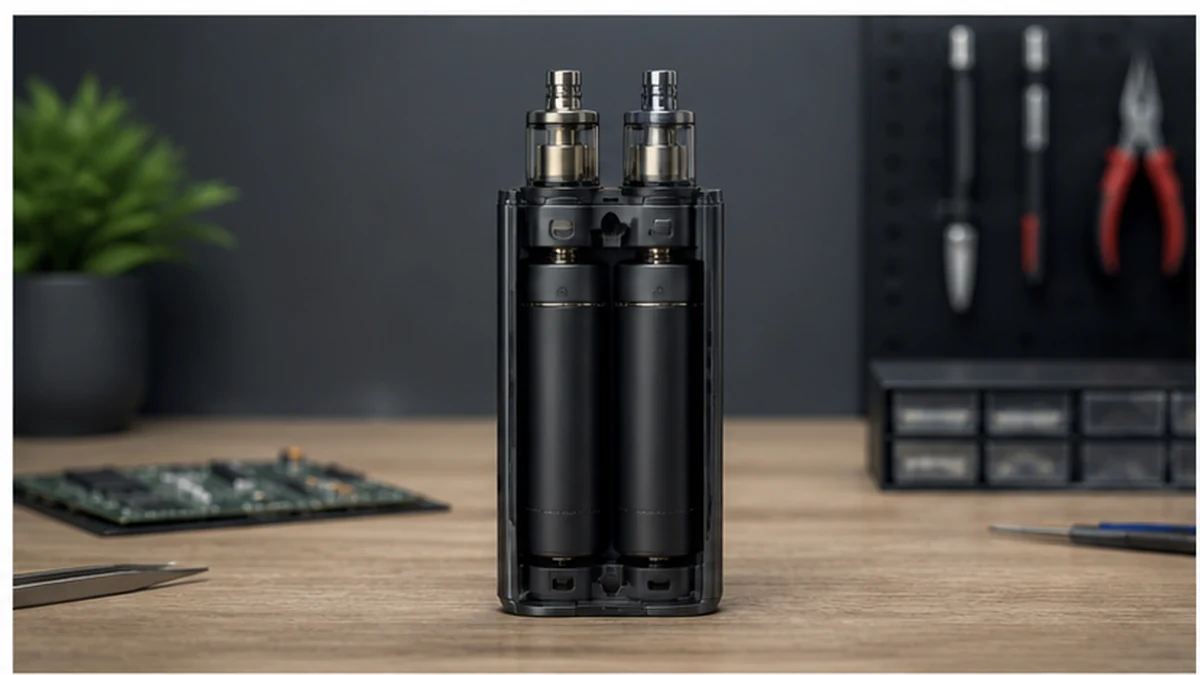
Pick up a dual-cartridge vape pen for the first time and the instinct is the same: turn it over, look for the seam, and figure out whether the two cartridge sockets are truly independent or just decorative. The battery body is wider than a standard single-cart pen, there’s usually a button or toggle you don’t recognize, and the immediate question is whether loading two carts means twice the vapor, twice the battery drain, or twice the confusion when one stops working.
A dual-cartridge pen doesn’t automatically double anything. What changes is architecture — how power routes to each cartridge, how airflow is shared or separated, and how much physical tolerance a housing built for two cartridges actually has. Some of that is genuinely useful, especially for carrying two different oils or resistances without swapping hardware mid-session. Other parts are trade-offs that only surface once a cartridge wears unevenly or the fit starts feeling loose. Before assuming a dual setup behaves like two single pens stacked together, it helps to understand what’s actually happening inside the housing.
🧭 2. Fit Dimensions That Matter Beyond the 510 Thread
The 510 thread standard confirms a cartridge will screw into a battery. It says nothing about how well it sits once it’s in a dual-socket housing. On a single-cart pen, thread compatibility is usually enough: the connector is centered, the cartridge seats fully, and there’s no neighboring hardware to interfere. On a dual-cart pen, the two sockets sit close together by design, and that proximity introduces fit variables a spec sheet won’t show.
🧩 2.1 Diameter and Chamber Spacing
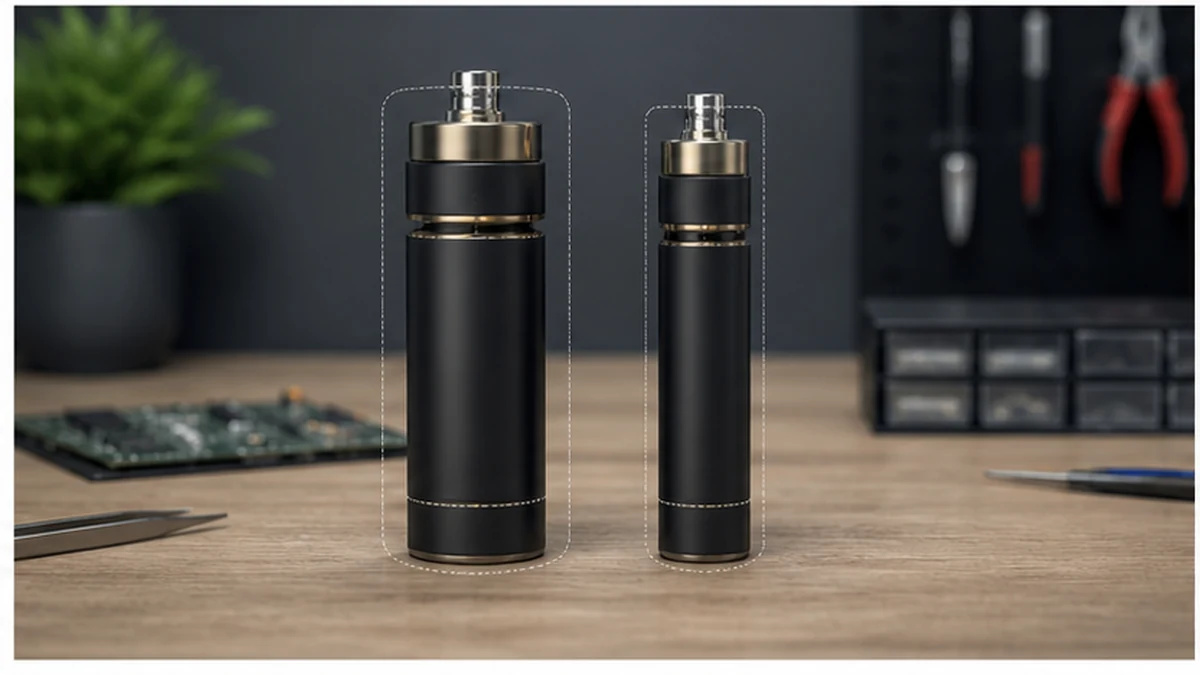
Cartridge bodies aren’t uniform in diameter even when the thread matches. A wider barrel that fits comfortably in a single socket can crowd its neighbor in a dual housing, particularly near the base where the threading sits. If the two chambers are spaced tightly, an oversized cartridge can press against the divider wall or the second cartridge itself, affecting how evenly both seat and how much heat transfers between them during use. For the baseline dimensions worth checking before assuming any two carts will pair cleanly, the 510 cartridge guide covers thread compatibility and cartridge geometry in more detail.
🧩 2.2 Height Clearance and Cap Style
Height clearance matters just as much. Cartridges vary in overall length, and cap or mouthpiece styles vary even more — flush caps, raised caps, tapered mouthpieces, flat tops. On a single-cart pen, a taller cartridge just sticks up slightly further; it’s rarely a functional issue. In a dual-cart housing, a height mismatch can leave one mouthpiece sitting noticeably higher than the other, changing how the pen meets your mouth and making it physically awkward to switch channels, not just electrically different. It’s a small detail, but it’s one of the more common reasons a dual pen feels off even when both cartridges technically work.
⚙️ 3. Do the Cartridges Need to Match?
This is one of the most common points of confusion: can two completely different cartridges — different resistances, different oils, different hardware — load into the same dual pen? Mechanically, often yes. Functionally, it depends on how the device delivers power to each channel.
Some dual-cart batteries run both channels off a shared voltage or wattage setting, applying it to whichever cartridge is active. If the two cartridges have different resistances, that shared setting won’t produce equivalent results on both sides — a resistance that draws comfortably on one cartridge might run hotter or cooler than intended on the other, simply because the applied voltage doesn’t account for the difference. This isn’t unique to dual pens; it’s the same resistance-to-output relationship that governs single-cart devices, just now applied across two cartridges that may share a thread but not a resistance range. Anyone considering mixed cartridges in a dual housing should understand that relationship first — the vape resistance ohms explained guide is a better starting point than guessing.
Other dual-cart designs read each cartridge’s resistance independently and adjust output per channel, which removes most of the mismatch risk — but that’s a feature of the specific power circuit, not something to assume from two sockets alone. Without confirmation that a pen adjusts per channel, matching cartridges, or at least matching resistance ranges, behaves more predictably than pairing two very different carts and hoping the shared setting works for both.
🧩 4. Selectable vs. Simultaneous Firing: How Controls Decide
Whether both cartridges fire together depends entirely on how the control scheme is built — there’s no single standard across dual-cart pens.
Selectable designs are more common. A toggle, switch position, or button sequence chooses which cartridge is active, and only that cartridge fires on a draw or button press; the other sits idle, drawing no power, until you switch over. This is what most people picture when they think “dual” pen: one active channel at a time, switched manually.
Simultaneous designs exist too, firing both cartridges together on a single press. That’s a different use case — blending vapor from two cartridges rather than choosing between them — and it changes the battery math, since two heating elements draw power at once instead of one.
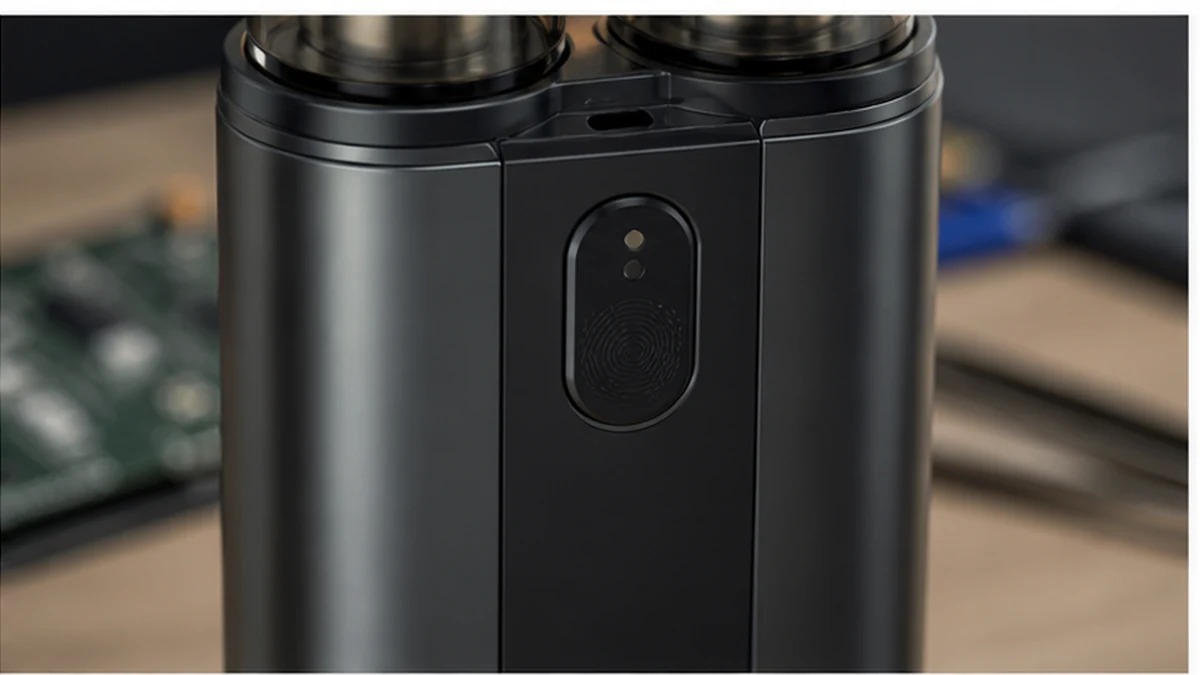
The practical implication: you can’t tell which behavior a pen has just because it holds two cartridges. The button pattern, LED behavior, and any included instructions are the only reliable way to confirm whether you’re switching between independent channels or firing both together. Assuming the wrong one — expecting a selectable pen to fire both carts, or a simultaneous pen to isolate one — is a common source of frustration that has nothing to do with a defective device and everything to do with an unclear control scheme.
🛠️ 5. Airflow With Two Chambers
Airflow is where the dual-cart format complicates things in a way that’s easy to underestimate. A single-cart pen has one air path from intake to mouthpiece, and any airflow adjustment affects that path directly. A dual-cart pen has to route air to two separate chambers, and how that routing is built has a real effect on draw resistance and vapor delivery.
In selectable designs, the inactive cartridge’s air path is sometimes sealed off or restricted while unused, keeping the draw consistent regardless of which channel is active. In designs without that isolation, air can leak toward the inactive chamber, softening the draw on the active side and making it feel airier or less consistent than the same cartridge would in a single-socket housing. This isn’t something visible from the outside — it’s a function of internal air channeling that varies by design, and it’s a legitimate reason a cartridge that draws fine in one pen feels different in a dual housing.
A cartridge that fires and produces visible vapor but still feels weak or airy on the draw is a distinct problem from a cartridge that isn’t firing at all, and it’s worth ruling out airflow and connection issues separately before assuming the cartridge is at fault. The troubleshooting steps in this guide on carts that aren’t hitting despite having airflow apply just as much to a dual-socket pen as a single one, and they’re a faster starting point than replacing a cartridge that might work fine.
📐 6. Battery Load When Two Heaters Draw at Once
Battery behavior is the most consequential difference between selectable and simultaneous dual-cart pens.
In a selectable pen, the battery only ever powers one heating element at a time, so the load profile is close to a single-cart pen — it just has two possible destinations for that power. Battery life depends mostly on total usage across both cartridges combined, not on the fact that there are two sockets.
In a simultaneous pen, both heating elements draw power at once on a single press, meaning the battery supplies roughly double the instantaneous current compared to firing one cartridge alone. That heavier load means faster depletion per session, more heat generated inside the housing, and less margin before the device hits its output limits. None of this makes simultaneous firing unsafe by design, but the battery and its protection circuitry are working harder, and runtime expectations should be set accordingly.
“Dual cartridge” isn’t a single battery-load category. A selectable pen and a simultaneous pen can look identical from the outside and have very different power demands — worth confirming before assuming battery life will match a familiar single-cart device.
🔋 7. The Practical Cost of Extra Width
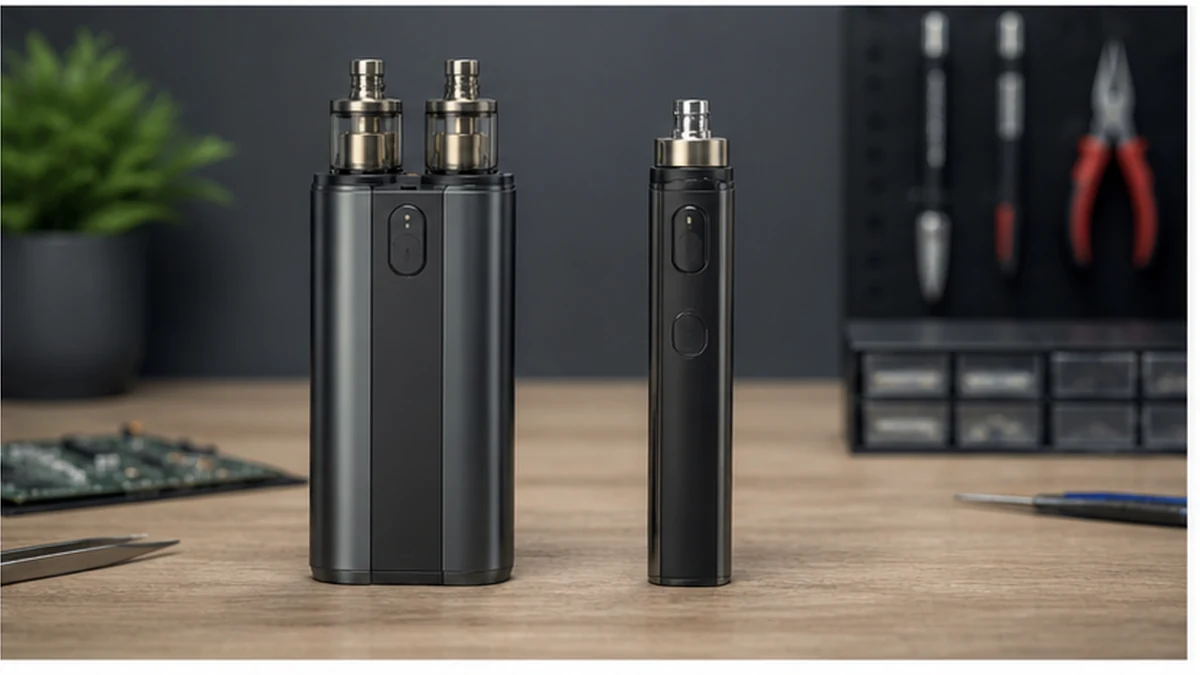
The most obvious trade-off is the one people notice before loading a cartridge: it’s wider. Fitting two 510 sockets side by side, plus whatever switching hardware sits between them, adds bulk a single-cart pen doesn’t carry. That width affects grip — some hands find a wider body easier to hold steady, others find it less comfortable over a long session — and it affects pocket carry, since a flatter, wider profile sits differently than a slim cylindrical pen.
Weight distribution shifts too, depending on which side is more full, and the pen can feel less centered than a single-cart device where the weight sits directly in line with the draw. None of this is a defect — it’s the physical cost of building two sockets into one housing, and it’s worth handling a dual pen in person before assuming it will carry the same as a familiar single-cart pen.
🧼 8. New Failure Points to Watch For
Every additional mechanical and electrical junction is a place something can eventually go wrong, and a dual-cart pen has more junctions than a single-cart one by definition. A few failure patterns are specific to the dual format:
- Uneven seating. If cartridge diameter or height varies between the two carts loaded, one may seat fully while the other sits slightly proud of its socket, producing a loose connection that comes and goes with movement.
- Cross-threading under crowding. Tight chamber spacing makes it easier to start a cartridge on the thread at a slight angle, since there’s less room to see and correct it before tightening.
- Inconsistent output between channels. A shared power setting applied to two different-resistance cartridges can make one channel feel weaker or stronger than the other — sometimes mistaken for a bad cartridge when it’s really a resistance mismatch.
- Switch or toggle wear. The mechanism that selects between channels is additional hardware a single-cart pen doesn’t have, and it’s a plausible long-term wear point separate from either cartridge or the battery cell.
- Airflow bleed between chambers. An inactive chamber that isn’t fully isolated can soften the draw on the active side, easy to misdiagnose as a cartridge or coil problem rather than a housing characteristic.
None of these are reasons to avoid a dual-cart pen outright — they’re the specific things worth checking when something feels inconsistent, rather than defaulting to “the cartridge is bad” as the first explanation.
📦 9. Frequently Asked Questions
Do both cartridges fire at the same time?
It depends on the device. Selectable dual pens fire one cartridge at a time based on a switch or toggle position. Simultaneous dual pens fire both together on a single press. Check the control scheme rather than assuming either behavior.
Do the two cartridges have to be the same resistance?
Not always mechanically, but it matters functionally if the device applies a shared power setting to both channels. Matching resistance, or confirming the pen adjusts output per cartridge, avoids one channel running noticeably hotter or cooler than the other.
Why does one cartridge feel weaker even though it’s firing?
Often an airflow or seating issue specific to dual housings rather than a coil problem — check connection and draw resistance before assuming the cartridge has failed.
Does a dual-cart pen use battery power faster?
Only if it fires both cartridges simultaneously. Selectable designs power one cartridge at a time and behave closer to a single-cart pen in per-use battery draw.
A dual-cartridge vape pen isn’t a shortcut to more vapor or more convenience by default — it’s a different mechanical and electrical layout that trades simplicity for flexibility. Knowing whether a given device switches or fires simultaneously, whether it treats resistance per channel, and how tightly its two sockets are built changes what you can reasonably expect from it. Approached with that understanding, a dual-cart pen is a genuinely useful format for carrying two options in one device. Approached like a single-cart pen with an extra socket bolted on, it’s where most of the confusion — and most of the avoidable failures — tend to start.