Every dab station reaches this point eventually. The tool is wherever it landed after the last session. The swab is loose somewhere near the tray, if it made it back at all. The carb cap rolled off the table twice and now lives on the floor behind a leg. Nothing is missing, exactly — it just doesn’t have a place, and that becomes obvious the moment your hands are full and something is hot.
A dab tool stand fixes that specific problem. Not the whole setup, not your technique, just the part where hot metal, glass, and small consumables need somewhere defined to rest between uses. The tricky part is that “dab tool stand” covers a wide range of products, from a single dowel rest to a full organizer with a lid. Picking the wrong style for your habits means you’re back to a cluttered table in a week.
🧰 1. Why a Dedicated Dab Tool Stand Solves a Real Workspace Problem
A dab tool doesn’t behave like most other objects on a table. It’s often warm right after use, it has a working tip that shouldn’t touch grimy surfaces, and it’s long and thin enough to roll. Set it flat on a tray and it becomes a hazard the next time someone reaches across the table. Lean it against something and it eventually slides down.
A stand gives the tool one job: hold it upright, tip clear of the surface, in a spot you’ll remember. That sounds minor until you compare it to the alternative, which is usually a folded paper towel or a random dish that wasn’t designed for the job. If you’ve read the AOVAPE dab tool kit guide, you already know that matching the tool to the task matters. A stand is the other half of that — it’s what keeps the tool usable and in good shape between sessions instead of picking up dust, lint, or bends from being stored badly.
🔍 2. The Four Main Types of Dab Tool Stands
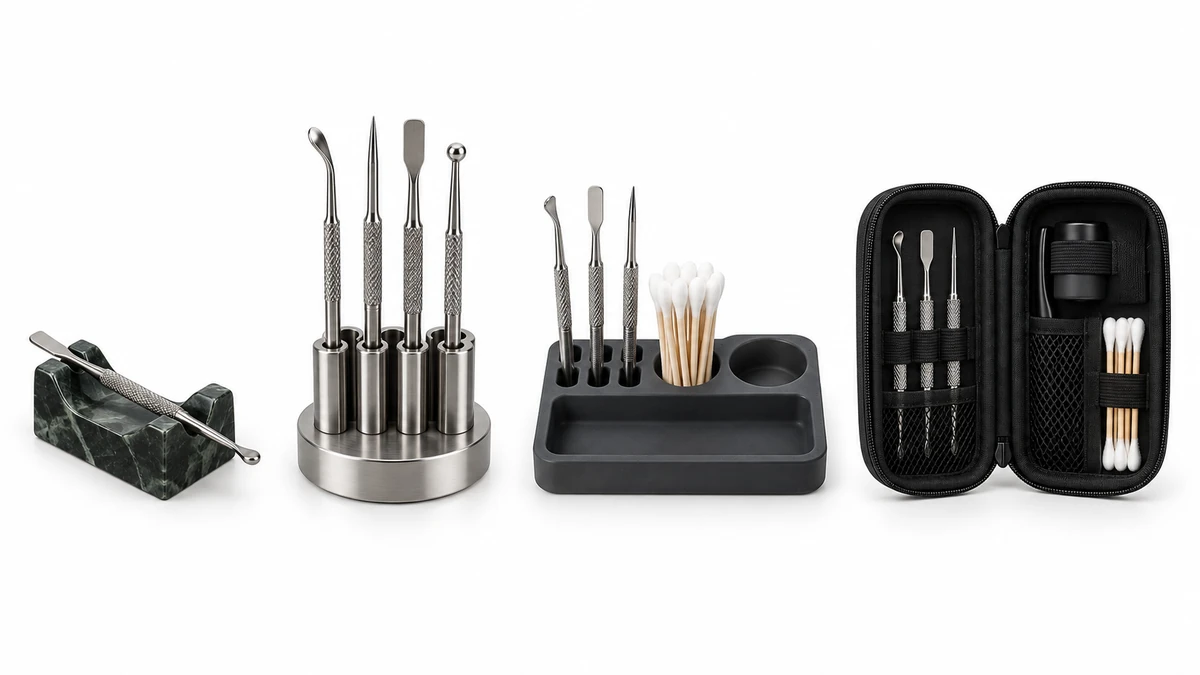
Most stands on the market fall into one of four categories. Knowing which one you’re looking at before you buy saves you from ending up with something that technically holds a tool but doesn’t fit your actual setup.
🧭 2.1 Single-Tool Rest
This is the simplest version: a small base with one slot or notch, sized for one dab tool. It’s compact, cheap, and easy to place anywhere on a table. The tradeoff is obvious — if you own more than one tool, or a swab, or a carb cap, you’re back to loose items scattered around the single rest.
🧭 2.2 Vertical Multi-Slot Rack
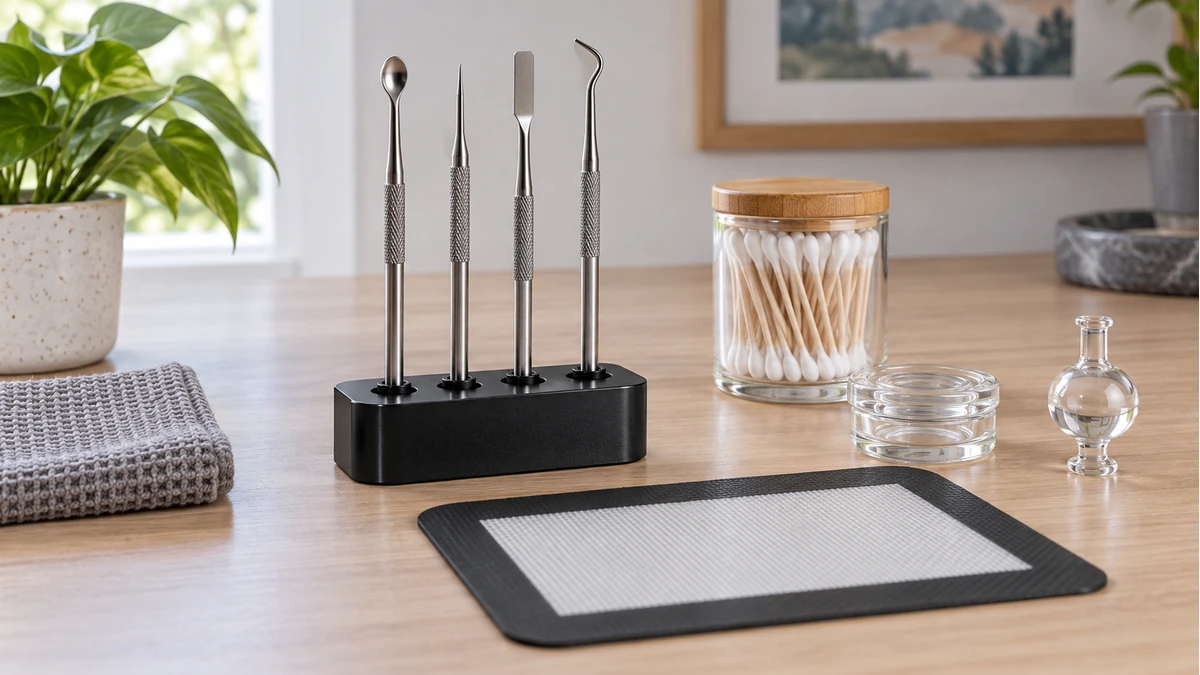
This style holds several tools upright at once, usually in a row of individual slots. It’s the natural next step up from a single rest once you own more than one dabber, or a set that includes different tip shapes. The rack format also makes it easy to see at a glance which tool is which, since they’re standing side by side rather than piled together.
🧭 2.3 Integrated Station/Tray
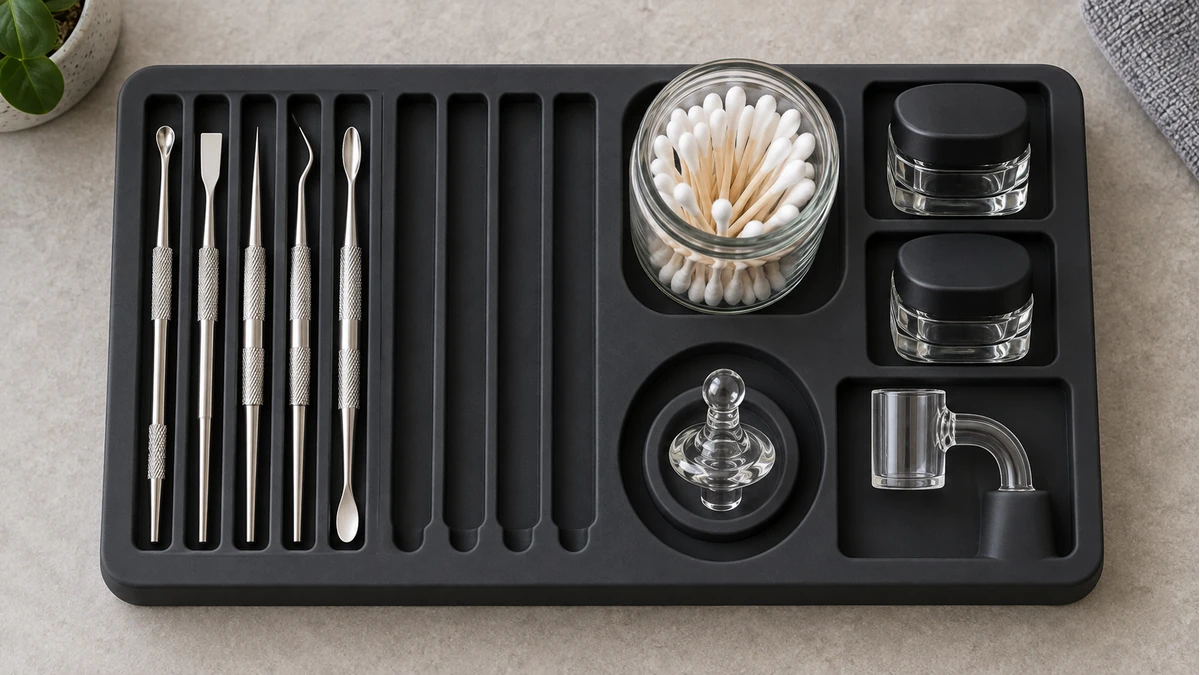
An integrated station combines tool slots with dedicated spots for other accessories — a banger holder, a carb cap dish, sometimes a small compartment for swabs or containers. This is the format a lot of dailydabbers threads gravitate toward, because the appeal isn’t really about the stand alone. It’s about not having five separate objects to track. One station, one location, everything has its spot.
🧭 2.4 Lidded Travel Organizer
This version adds an enclosure — a lid or case — around the tool slots and accessory compartments. It’s built for transport rather than a stationary desk, so tools stay contained and protected when the whole setup gets moved, packed, or stored away between uses.
| Stand Type | Best For | Main Limitation |
|---|---|---|
| Single-Tool Rest | One tool, minimal footprint | No room for extra tools or accessories |
| Vertical Multi-Slot Rack | Multiple tools, easy visual sorting | Accessories still stored separately |
| Integrated Station/Tray | Tools + banger + carb cap + swabs in one spot | Larger footprint, less portable |
| Lidded Travel Organizer | Transport and protected storage | Less convenient for quick desk access |
⚖️ 3. Base Stability: The Foundation of Any Stand
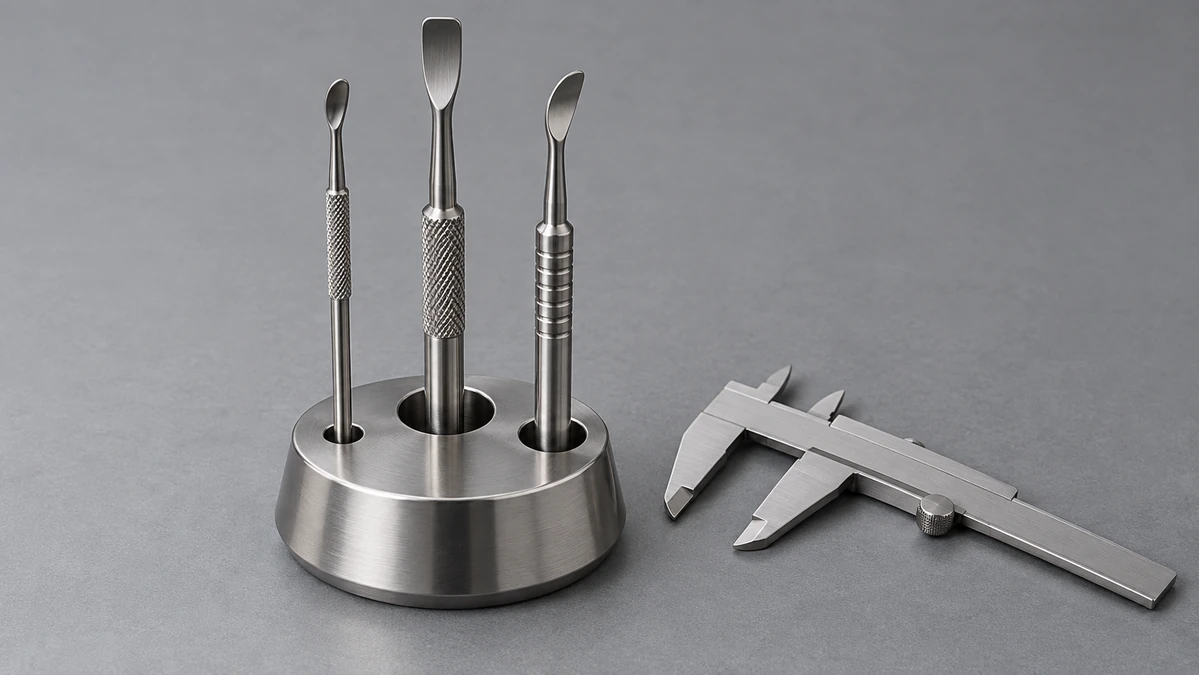
None of the slot design or accessory features matter if the base tips over. This is one of the recurring complaints in DIY stand builds shared online — a laser-cut acrylic piece that looked fine on paper but wobbled or tipped once a tool was actually resting in it. A narrow or lightweight base simply can’t counterbalance a tool leaning at an angle.
When you’re evaluating a stand, look at the footprint relative to the height of the slots. A wide, weighted base paired with shorter slots is inherently more stable than a tall, narrow one. If the listing shows the stand holding multiple tools at once, picture the weight distributed across all those slots, not just one. A stand that’s stable with a single tool in it can still tip once it’s fully loaded.
📏 4. Slot Diameter, Depth, and Tool Balance
This is the detail that separates a stand that works from one that constantly drops tools. Slots need to match the diameter of your tool’s handle, not just its overall length. Too wide, and the tool leans and eventually falls. Too narrow, and it won’t seat at all, or it gets stuck.
🧭 4.1 Depth Matters As Much As Diameter
A shallow slot only holds the very bottom of the handle, which means the tool’s center of gravity does most of the work of staying upright — not the slot. A deeper slot grips more of the handle and holds the tool more securely, especially for longer dabbers. If you own tools of different lengths, as most people building out a real dab tool kit do, check whether the stand’s slots can accommodate the range you actually have, not just your shortest piece.
🧭 4.2 Balance Point
Some dab tools are top-heavy, especially designs with a wider or shaped tip. A stand that only supports the very bottom of the handle won’t compensate for a tool that wants to tip forward. This is worth checking before buying if your tools have an unusual shape rather than a simple straight dowel design.
🔥 5. Tip Clearance and Heat-Resistant Surfaces (Only When Declared)
The entire point of a stand, for a lot of users, is keeping a warm tool tip off the surface below it. That means slot depth should be enough that the working end of the tool doesn’t touch the base of the stand, or the table underneath it, while it’s cooling.
Some stands are made from materials the manufacturer specifically states can handle contact with a warm tool tip. Others aren’t, and are meant purely for storing a tool once it’s already cooled. Don’t assume one from the other — check the product listing for what the maker actually states about heat contact, and don’t treat a stand as heat-safe just because it looks similar to one that is. If a maker doesn’t say anything about heat tolerance, treat the stand as designed for cooled tools only, and give tools time to cool before setting them down regardless of what the stand is rated for.
This is also where improvised setups fall short. A DIY stand cut from acrylic sheet, like the ones shared in maker communities, might solve the slot-fit problem, but the material itself may not be intended for repeated contact with a hot tip. Stick to stands where the manufacturer has made a direct, explicit statement about heat contact rather than guessing based on the material’s general reputation.
🧼 6. Clean vs. Used Tool Separation
If you own more than one tool, chances are you also have a mental (or literal) split between “clean and ready” and “used, needs attention before next session.” A single-slot rest doesn’t help with this distinction at all — everything just goes in whatever slot is open.
A multi-slot rack or integrated station makes this separation physical rather than mental. Designate one side or a specific row of slots for clean tools, and another for tools waiting on cleanup. It’s a small habit, but it means you’re never reaching for a tool and discovering mid-motion that it wasn’t the one you thought it was.
🧽 7. Swab and Small-Container Storage
A recurring theme in dab station discussions is wanting a single setup that also holds a swab and a small container, not just the tools themselves. It makes sense — swabs are exactly the kind of small item that gets lost in a drawer or left loose on a table where they pick up dust.
Look for a stand or station with a dedicated swab holder or a small compartment sized for one. If you’re building your swab habits around the AOVAPE dab Q-tip guide, having a fixed storage spot means you’re not hunting for a fresh swab every time you need one, and used ones aren’t just left wherever they land. Some integrated stations also include a small cup or well for tips, dishes, or other tiny accessories — worth checking for if your setup includes more than just tools and a swab.
🍶 8. Carb-Cap and Banger Holders
Carb caps are notorious for rolling off tables, largely because they’re often round or dome-shaped with no flat resting side. A stand or station with a dedicated cap holder — usually a small recessed dish or ring — solves this directly.
🧭 8.1 Banger Storage
Some integrated stations go a step further and include a holder sized for a banger itself, not just the tool and cap. This is closer to what users mean when they describe wanting “one setup” for everything, tools and glass included, rather than tools in one spot and glass elsewhere.
🧭 8.2 Fit Before Features
Before buying a station specifically for its cap or banger holder, check the dimensions against what you actually own. A holder sized for a standard cap won’t necessarily fit a larger or unusually shaped one, and the same goes for banger holders relative to joint size and overall shape. For adjacent hardware context, see AOVAPE’s dab tool kit guide.
🧹 9. Cleaning Access and Material Declarations
A stand that collects residue and can’t be cleaned easily just becomes another dirty surface near your tools. Before buying, check whether the stand can be wiped down or rinsed, and whether the manufacturer specifies what it’s made from — acrylic, silicone, metal, or something else. That material declaration matters for how you clean it, not just for heat questions. For adjacent hardware context, see AOVAPE’s hot knife guide.
🧭 9.1 Open Designs Are Easier to Wipe Down
Stands with open slots and simple geometry are generally easier to clean than ones with tight, enclosed compartments where residue can build up out of reach. If you’re also using a hot knife as part of your toolkit, as covered in the AOVAPE hot knife guide, keep in mind that any surface near that process is more likely to need frequent cleaning — so accessibility matters more than it might for a purely dry storage spot. For adjacent hardware context, see AOVAPE’s dab Q-tips guide.
🧭 9.2 Lidded Organizers Need Interior Access
If you’re considering a lidded travel organizer, check that the lid opens fully enough to reach every compartment for cleaning. A lid that only partially opens, or compartments that are deep and narrow, can make it hard to get residue out even if the exterior looks easy to wipe.
None of this needs to be complicated. A dab tool stand is a small, specific fix for a specific problem: hot, clean, and residue-prone parts that don’t have anywhere consistent to go. Match the slot sizes to your actual tools, confirm heat claims directly from the manufacturer rather than assuming them, and pick a format — single rest, rack, integrated station, or travel organizer — based on how many tools and accessories you’re actually trying to corral. Get those basics right, and the cluttered tabletop problem mostly takes care of itself.