A carb cap is not an accessory that simply “goes with” a dab rig — it is an airflow component, and its usefulness is decided entirely by the banger it sits on top of. The same cap that seals perfectly on one quartz bucket can rock, whistle, or leak on another, even if both bangers fit the exact same joint on the exact same rig. That mismatch is the root of most of the confusion people run into when they try to find “the cap that goes with this,” because a joint size tells you how the banger attaches to the rig, not how wide or how shaped its rim is.
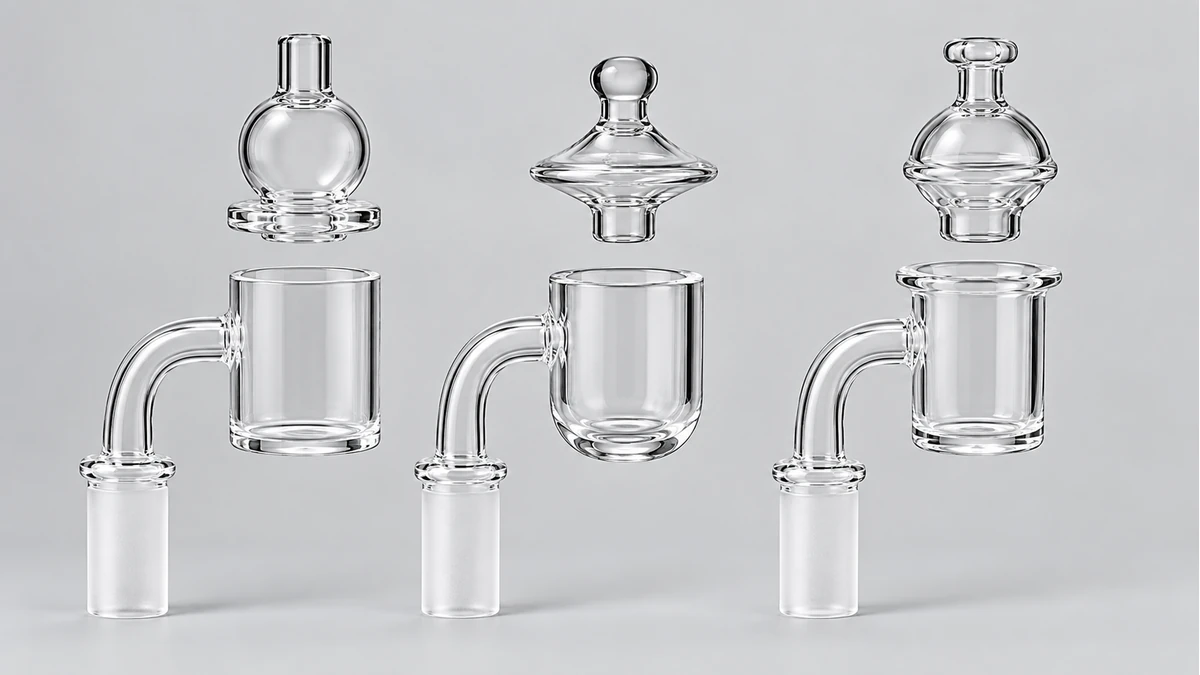
This guide breaks carb caps down by family — flat, directional, bubble, spinner, and slurper-specific — and explains what each one is actually doing to the air moving through the banger. None of these designs is a universal upgrade over the others. A cap that performs well on a flat-top quartz banger can be the wrong shape entirely for a terp slurper, and a spinner cap only spins concentrate if its base actually seats against the rim it’s resting on.
Along the way, this covers how to tell a mismatched cap from a properly seated one, why some caps wobble no matter how carefully they’re placed, and why “universal fit” caps rely on a different kind of engineering than caps built for one specific banger style.
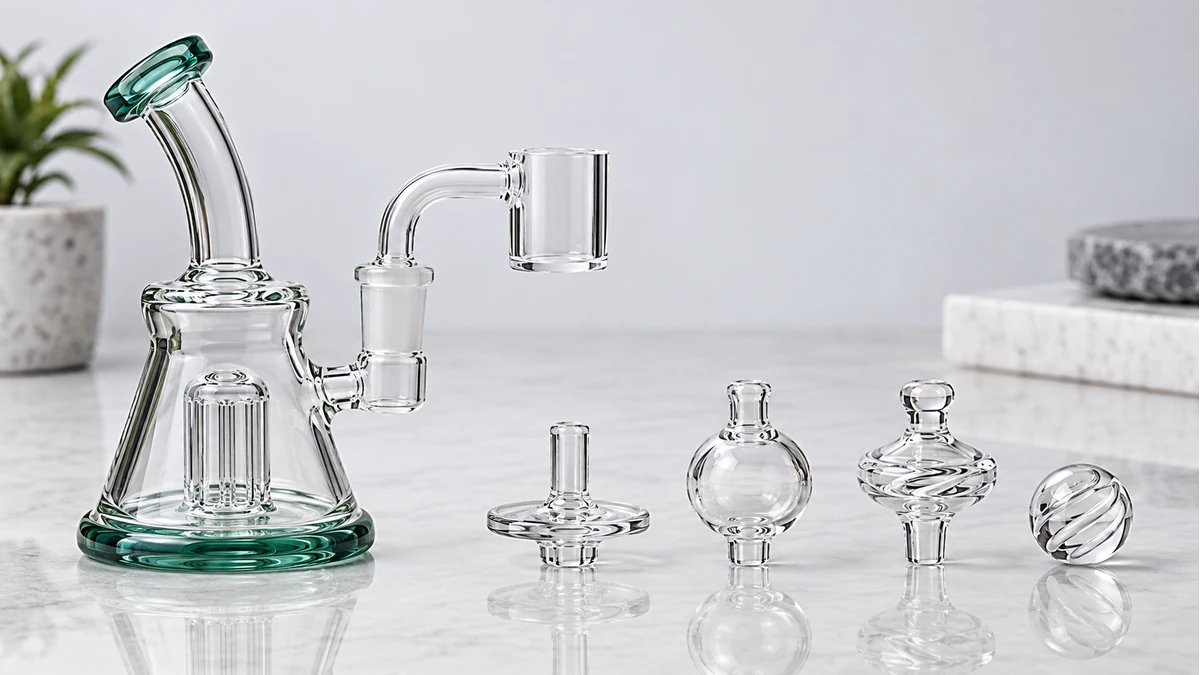
💨 1. What a Carb Cap Actually Does to Airflow
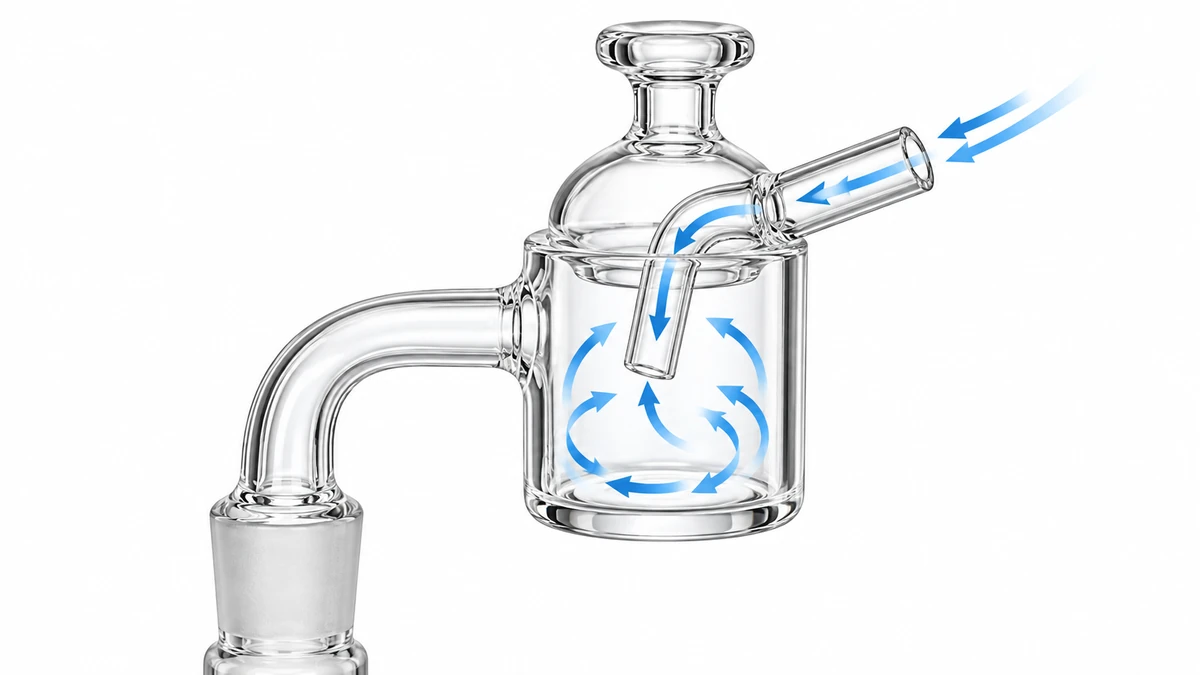
A banger’s bucket is an open cavity. Without anything covering it, air moves across the heated surface freely and vapor disperses upward and outward as soon as it’s produced, the way steam drifts off an uncovered pot. A carb cap changes that by partially closing the opening and replacing free airflow with a controlled inlet — usually a single small channel, a slotted vent, or an angled hole.
Restricting the opening this way does two things mechanically. First, it slows and redirects the air pulled into the bucket, so instead of drawing air uniformly from every direction, the airstream is funneled through one path and pushed across the concentrate at a specific angle. Second, it traps vapor above the dish for a moment instead of letting it escape immediately, similar to placing a domed lid over a skillet — the food underneath isn’t cooked differently by the lid itself, but the air directly above it behaves differently because it has fewer places to go.
That’s the entire job of a carb cap: change the geometry of the air path above the concentrate. Everything else — flat versus directional, bubble versus spinner — is a variation on how that single job gets done, and how forgiving the design is of an imperfect seal.
📏 2. Why Joint Size Isn’t Cap Size
Joint size (commonly 10mm, 14mm, or 18mm) describes the ground-glass connection between the banger and the rig — the tapered section that slides into the female joint on the rig itself. It says nothing about the diameter of the banger’s bucket or the width of its outer rim, which is the surface a carb cap actually has to seal against.
This is why two 14mm bangers from different manufacturers can need two different cap sizes. One might have a thick, flared rim; another might use a thinner-walled quartz tube with a narrower bucket opening. The joint fits the rig identically in both cases. The cap does not.
📐 2.1 Measuring the Banger’s Outer Rim
The dimension that matters for a carb cap is the outer diameter of the bucket’s rim — the ring of quartz or glass the cap will rest on or drop into. Calipers give the most reliable reading, but even a rough measurement across the outside edge of the rim will tell you more than the joint size ever will. If a banger’s listing only mentions joint size, that’s a gap in the information, not a sign that any cap in that joint category will fit.
🔀 2.2 Common Mismatches Between Rig and Cap
The most frequent mismatch happens when a banger is swapped out or replaced separately from the rig — a new quartz bucket goes on the same joint, but its rim is a different shape than the one the old cap was cut for. Beveled rims, rounded lips, and straight-cut rims all interact differently with a flat cap, which is one reason a cap that worked fine on a previous banger can suddenly rock or gap on a new one. Read more about bubble-cap geometry. covers how to read a banger’s rim profile before matching hardware to it.
◻️ 3. Flat and Directional Caps: Simple Seals, Direct Airflow
A flat cap is exactly what it sounds like — a disc of glass or quartz that rests on top of the rim. Its seal depends entirely on contact: the cap’s underside and the banger’s rim need to meet along a continuous flat plane. If the rim has any bevel, chip, or rounded edge, a flat cap will only touch at a few high points, leaving small gaps around the rest of the circumference, similar to setting a flat coaster on a slightly warped tabletop — it looks seated, but it’s only actually resting on the high spots.
A directional cap is a flat cap with a built-in airway set at an angle instead of straight down. Rotating the cap changes which direction the incoming air is aimed across the dish, letting a user push airflow toward one side of the bucket instead of the center. That control is genuinely useful for spreading concentrate across a hot surface, but it doesn’t fix a seal problem. If the base isn’t flush with the rim, rotating a directional cap changes where the air goes after it enters through the gap, not whether that gap exists in the first place.
🫧 4. Bubble Caps: Rounded Seats for Uneven Rims
A bubble cap replaces the flat disc with a rounded dome that curves downward, seating into or over the rim rather than resting on a flat plane. Because the contact surface is curved, it can settle against a slightly uneven or beveled rim more forgivingly than a flat disc — the way a rounded stopper conforms to a bottle mouth that isn’t perfectly true, where a flat cork would leave a gap on one side.
That tolerance has limits. A bubble cap compensates for minor rim irregularities, not for a rim that’s a genuinely different diameter than the cap was designed for. On a rim that’s too small, a bubble cap will drop too far down; on one that’s too large, it will perch on the very edge and rock. The rounded shape buys some margin, not a universal fit.
🌀 5. Spinner Caps: Movement as a Feature, Not a Gimmick
A spinner cap has small vanes or angled fins built into its airway. As air is pulled through, those vanes redirect the airstream into a rotational pattern instead of a straight line, which in turn spins the concentrate pooled in the dish. The point of this isn’t visual — spinning the concentrate keeps it moving across the heated surface instead of sitting in one spot, spreading exposure to the hot quartz more evenly, the same reason a pan is swirled rather than left still when melting something evenly.
It’s worth separating the spinning mechanism from the seal. “Spinner” describes what happens inside the airway once air is already flowing correctly; the base of the cap still has to seat against the rim the same way a flat, directional, or bubble cap would. A spinner cap that wobbles on the rim has a seal problem, not a spin problem — the vanes can’t do their job if air is leaking in around the edges instead of through the intended channel.
💧 6. Slurper-Specific Caps: Matching Geometry to the Quartz
Terp slurper bangers work differently from a standard flat-bottom bucket. They’re built around an internal channel and a recessed well, often with a marble or pearl resting inside, and the whole design depends on air moving through a specific path to pull concentrate up the sides and keep it circulating. A cap made for a traditional flat banger doesn’t share that internal geometry, so setting one on top of a slurper’s opening can direct air across the wrong section entirely, leaving the marble still and the concentrate pooling instead of moving.
Caps built for slurpers are shaped around that internal channel — matching the airway to the slurper’s hole pattern rather than just covering the opening. Slurper styles vary enough (single-hole, double-hole, and different internal channel shapes) that a cap suited to one slurper design won’t necessarily direct airflow correctly on another, even though both are labeled “slurper caps.” Read more about matching a quartz banger and cap. goes into how different slurper geometries change what a matching cap needs to do.
📊 7. Comparing Cap Families at a Glance
None of these designs is strictly better — each depends on the rim and internal geometry it’s paired with. The table below is a starting point for narrowing down a category, not a ranking.
| Cap type | Seal style | Movement | Cleaning access | Best-suited banger geometry |
|---|---|---|---|---|
| Flat | Flush contact along a flat plane | None | Simple to lift and wipe | Flat-rim, straight-cut buckets |
| Directional | Flush contact, rotates in place | Adjustable air direction | Simple, though angled airway needs occasional clearing | Flat-rim buckets where airflow direction matters |
| Bubble | Curved seat, tolerant of minor bevels | None | Slightly more surface to clean underneath the dome | Beveled or slightly uneven rims |
| Spinner | Depends on base shape (flat, directional, or bubble) | Rotational vapor movement in the dish | Vanes need periodic cleaning to keep airflow consistent | Standard buckets where even heat exposure is the goal |
| Slurper-specific | Matched to internal channel geometry | Circulates concentrate through the slurper’s recessed well | Channel shape can trap residue, needs more deliberate cleaning | Terp slurper and recycler-style buckets |
🔍 8. Signs Your Cap Doesn’t Fit
Fit problems usually show up the same way regardless of cap family, because they all trace back to the same issue: the seal isn’t continuous around the rim.
🎯 8.1 Wobble and Rocking
If a cap rocks side to side when nudged, it’s touching the rim at only a couple of points instead of all the way around — either the rim isn’t flat, the cap’s diameter doesn’t match the rim, or the two surfaces were never cut to the same profile. A cap that sits dead still when touched is one sign of a genuine seat, though it isn’t proof of a full seal on its own.
🔊 8.2 Whistling, Weak Draw, or Air Leaks
A properly seated cap directs air through its designed channel, not around its edges. A faint whistling sound while drawing through the rig is often air rushing through a narrow gap at the rim rather than through the intended airway — a side effect of a seal that isn’t complete. Vapor that seems to drift out around the base of the cap instead of moving through the airway is the same issue showing up visually instead of audibly.
A checklist worth running through before treating a cap as a permanent fit:
- Measure the banger’s outer rim diameter directly, not the joint size printed in a listing
- Set the cap in place and check for rocking before drawing any air through it
- Listen for whistling near the base, which usually points to a rim gap rather than the airway itself
- Check that the airway or vanes are unobstructed, since buildup can mimic a fit problem
Keeping the airway and rim clear also matters over time — residue that builds up along a rim or inside a spinner’s vanes changes the airflow path even when the cap’s fit hasn’t changed at all. Read more about what changes when a rig is used without a carb cap. covers cleaning approaches for quartz bangers and caps without disturbing the seal surfaces.
🧭 9. Choosing Based on What’s Already on the Rig
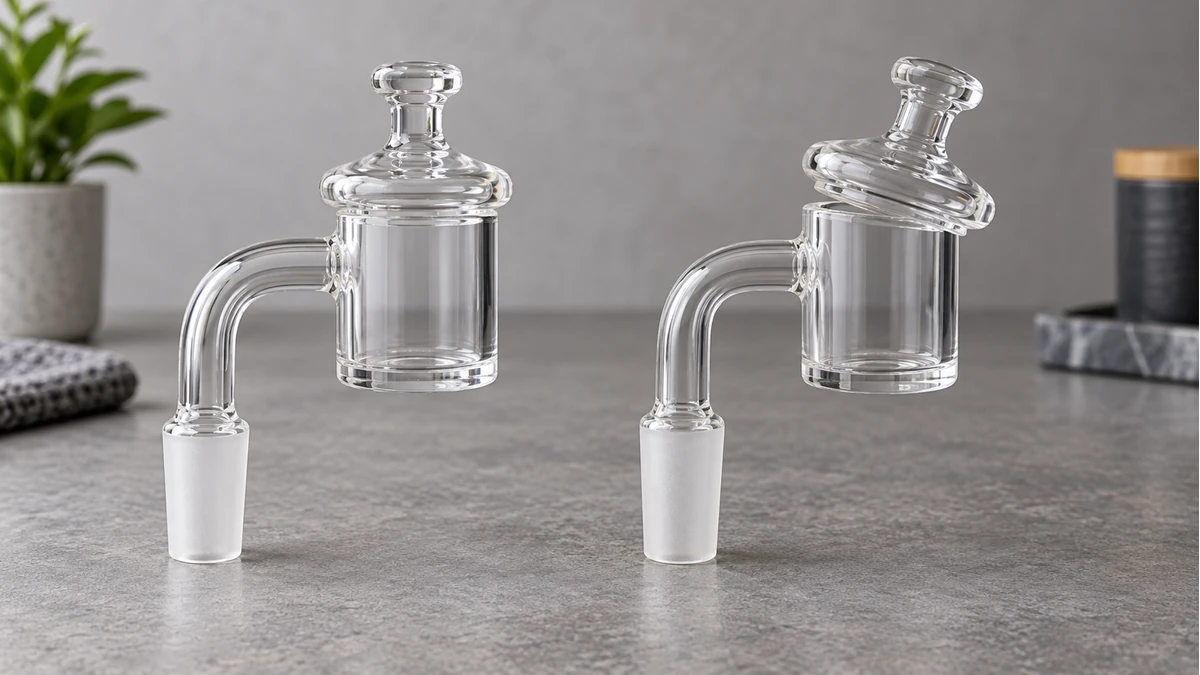
The practical starting point is the banger already in use, not the cap category that sounds most appealing. A flat-rim, standard bucket pairs naturally with a flat or directional cap, since both depend on the same continuous flat contact. A rim with a visible bevel or slight imperfection gives a bubble cap more room to seat properly than a flat disc would. A terp slurper needs a cap built around that specific internal channel — a flat or bubble cap sized correctly for the rim can still fail to move air the way the slurper’s design requires. Spinner mechanisms can be added to any of these base shapes, but only pay off once the base itself is confirmed to sit flush and still. Whatever category ends up fitting, the reliable way to confirm it — measuring the rim, checking for rocking, and listening for leaks — stays the same across every cap family.