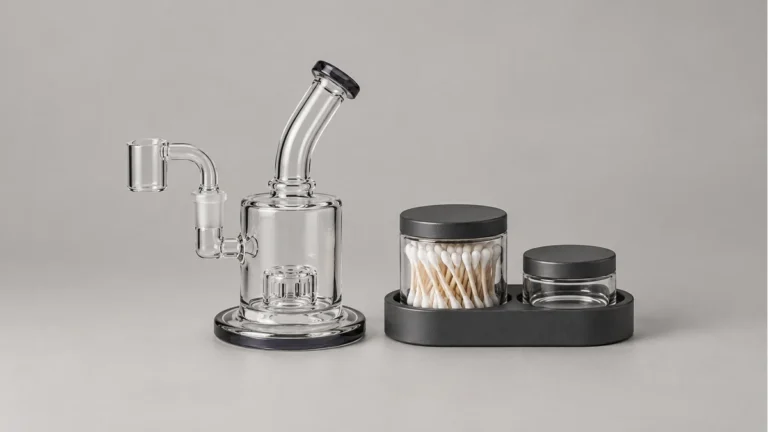
🔧 1. Two Functions, One Object
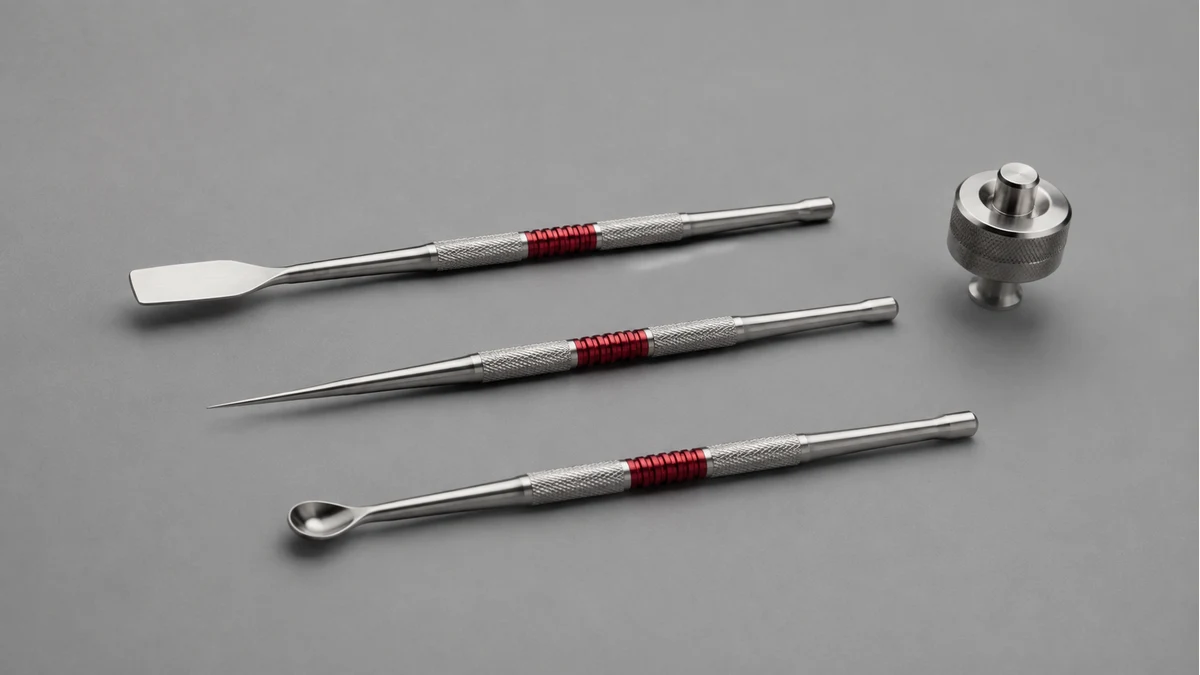
A dab tool with carb cap is really two separate pieces of hardware that happen to share a single handle. One end is built to move material — often a small metal tip shaped for scooping, spearing, or scraping. The other end is built to manage airflow, usually a cap-shaped piece designed to sit over the top of a banger or nail. Because both jobs live on one wand, it is easy to assume the design is a single unified tool rather than two distinct functions bolted together for convenience.
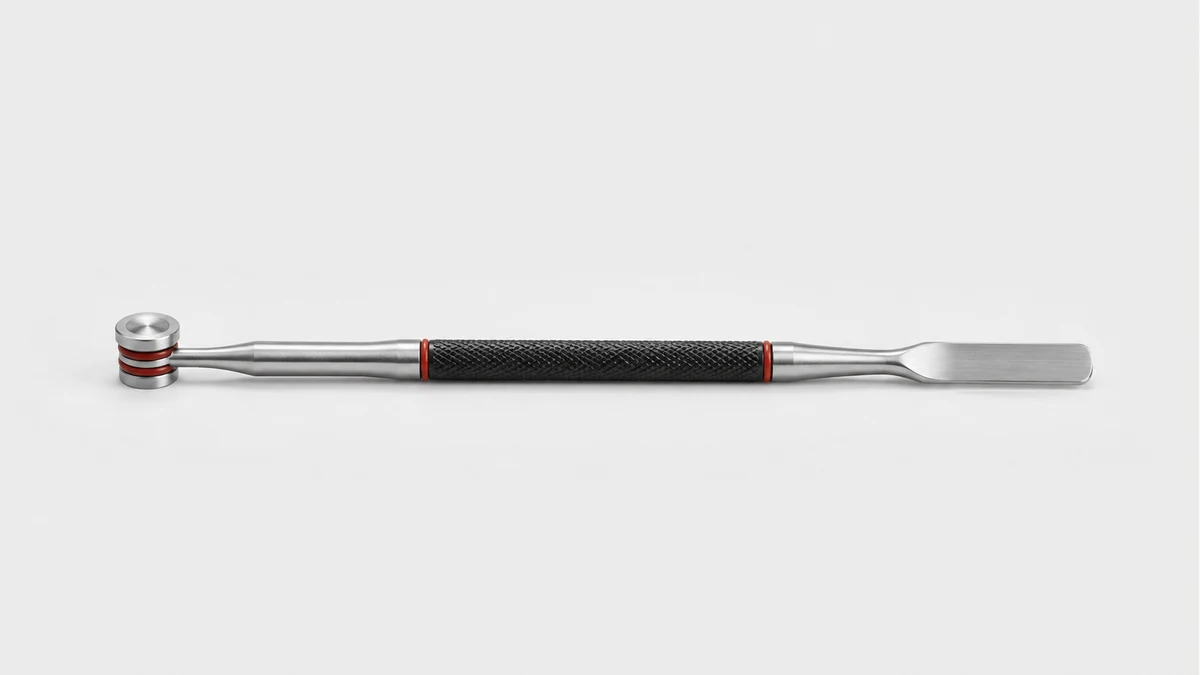
This matters because the two ends solve different problems. The transfer end is about material handling: precision, reach, and grip. The airflow-control end is about geometry: how a cap seats, where its openings sit, and whether it matches the rim it is meant to cover. Treating them as one function can lead to confusion when a buyer discovers that the loading tip works fine but the cap end does not fit their existing glass, or vice versa.
The broader dab tools guide explains common transfer profiles, while the carb-cap guide treats airflow hardware separately. Understanding a dab tool with carb cap as a combination product — rather than a single-purpose accessory — is the first step toward evaluating whether a specific piece of hardware will actually do what a given setup needs.
🌡️ 2. The Transfer End: Tip Profiles, Reach, and Grip
The transfer end exists to move small quantities of material from a container to a banger or nail without excess contact or waste. Its design details — tip shape, shaft length, and handle diameter — determine how controllable that transfer actually is.
🥄 2.1 Tip Profiles
Tip shapes vary widely, and the variation is functional, not decorative. A flat paddle tip spreads and presses. A pointed or spear tip pierces and lifts small amounts. A small spoon or scoop cradles material that would otherwise slide off a flat surface. A looped end — sometimes mistaken for an ornamental flourish — is usually there to corral granular or crumbly material that a straight tip would push around instead of capturing.
None of these shapes is universally “better.” Each is suited to a different material consistency and a different scale of quantity. A tip designed for a firm, cohesive substance will behave differently when used with a loose, granular one, which is one reason unfamiliar tool shapes generate more questions than the caps do.
📏 2.2 Reach and Balance
Shaft length affects how close a user’s hand needs to be to the heated surface of a banger or nail. A short tool places the hand nearer the joint; a longer one increases distance but can also make fine control harder, since more leverage is needed to keep a small tip steady over a small target.
Balance — where the tool’s weight sits relative to the hand — also shifts with tip material and cap material. A tool with a heavy cap end and a light transfer tip will handle differently than one balanced the other way, even if both are the same overall length.
✋ 2.3 Grip Diameter and Stability
Grip diameter is a frequently overlooked spec. A shaft that is too thin can be difficult to hold steady, particularly for anyone whose hands are not fully steady to begin with. Granular or crumbly material makes this worse: a wobbling tip has a harder time keeping loose material in place than it does with something that holds its shape. Textured or contoured grip sections exist specifically to address this stability problem, and their presence or absence is a meaningful design detail rather than a cosmetic one.
💨 3. The Airflow-Control End: Cap Geometry and Fit
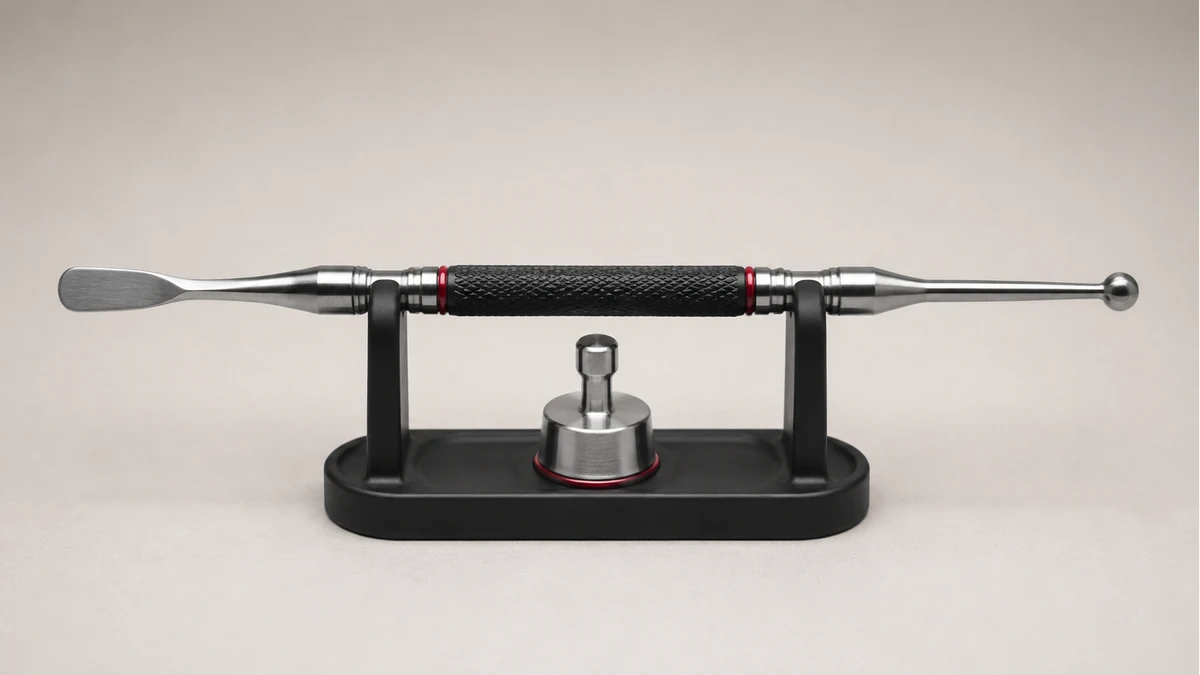
The second function on a combination tool is airflow management. This end is shaped to sit over or inside the top of a banger, and its geometry — not its label — determines whether it actually does that job on a given piece of glass.
🌀 3.1 Cap Geometry and Vent Placement
Caps are built around a handful of recurring shapes: a simple dome that rests over the opening, a bubble shape with a wider base, or a directional design with an angled or offset opening. Vent placement — where small holes or slots sit on the cap body — is part of the geometry, not an add-on. Vents positioned near the base behave differently from vents positioned near the top, and a cap with no vents at all relies entirely on the gap between its rim and the banger’s rim.
Because these variations are structural, two caps that look similar in a product photo can behave quite differently once placed on real glass.
⭕ 3.2 Fit Is Not Guaranteed by Name
A dab tool with carb cap being sold as a matched set does not mean the cap end is engineered for every banger it might be paired with. Banger openings vary in diameter, wall angle, and depth across manufacturers and even across product lines from the same maker. A cap sized for one joint diameter may sit loosely or fail to seat evenly on another.
The product name describes a category of combined hardware, not a certification of universal compatibility. Anyone assembling a setup from separate sources needs to compare actual measurements — cap diameter, banger rim diameter, and seating depth — rather than relying on matching terminology between listings.
🧩 4. Material Disclosure and Cleanable Seams
Combination tools are commonly made from titanium, stainless steel, quartz, or borosilicate glass, sometimes mixing materials between the two ends — a metal transfer tip paired with a glass or quartz cap, for example. Listings do not always specify which material is used at which end, and a generic label like “dab tool with carb cap” gives no guarantee about what the customer will receive at either function.
Material affects two practical things: how the tip interacts with heat near a hot surface, and how easy the piece is to clean. A one-piece metal tool has few seams and is straightforward to wipe down. A tool with a joint between the handle and a swappable tip, or a cap with a multi-part vent structure, introduces seams where residue can collect and where a quick wipe may not reach. Reading a listing’s material specification — not just its category name — is the only reliable way to know what is actually being purchased.
🧭 5. Read the Working Ends Before the Handle
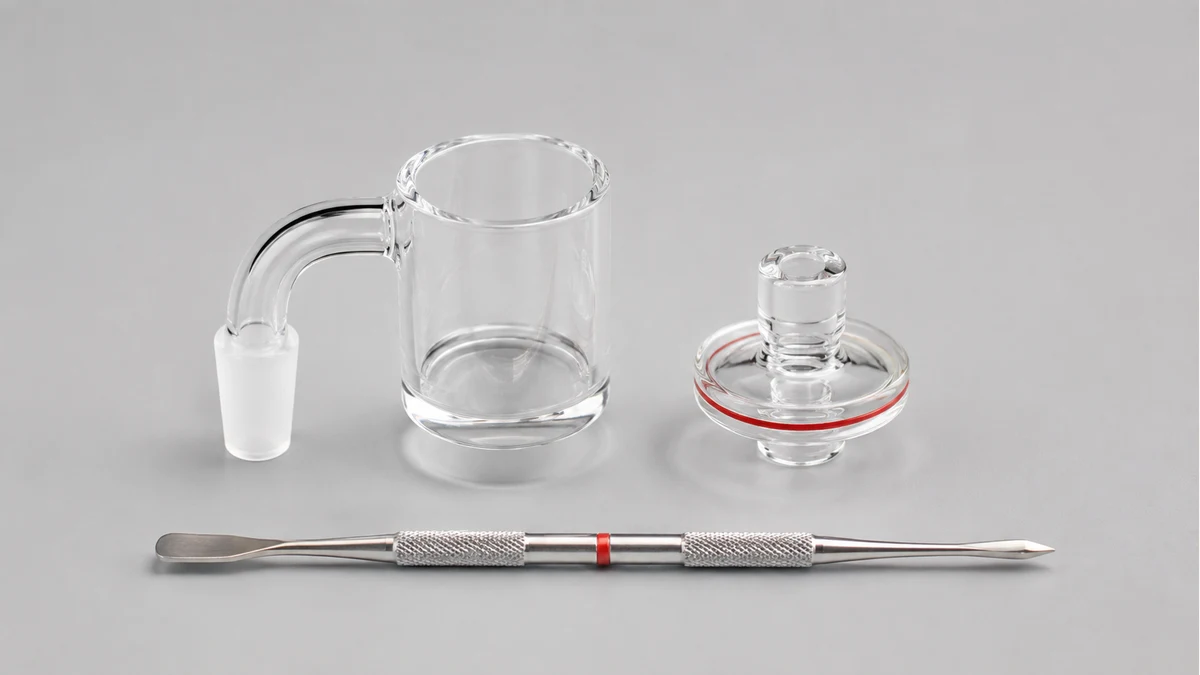
A listing often photographs the handle first because that is the visual center of the object. Function lives at the ends. A close view should show the transfer profile from the side, the cap contact surface from below, and the vent openings without reflections hiding their edges. If those views are absent, the most important geometry remains unknown even when the overall photograph looks detailed.
Dimensions also need labels that identify what was measured. Overall length does not reveal usable reach. Maximum cap width does not reveal the diameter of the surface that actually touches a rim. A product can publish both numbers and still leave fit unanswered. The useful specification names the location, not merely the unit.
This is where real discussion about unfamiliar loops and scoops is helpful: readers are not confused because they lack a list of shapes. They are confused because the image does not connect each shape to a job. Clear documentation should make that connection explicit rather than expecting the buyer to infer it from styling.
📐 6. Where Integration Creates Compromises
Combining two functions into one handle is convenient, but convenience comes with trade-offs. A shaft length chosen to make the transfer tip comfortable may leave the cap end proportioned for a joint size that does not match the user’s actual glass. A grip diameter optimized for one hand size may not suit another. A tip alloy selected to withstand contact with hot surfaces may not be the material a buyer would have chosen if the cap were sold separately.
Below is a general breakdown of the trade-offs that show up when the two functions are merged into a single piece of hardware, compared with sourcing them as separate accessories.
| Design Factor | Combined Tool | Separate Pieces |
|---|---|---|
| Fit to specific banger | Fixed at time of manufacture | Selectable independently |
| Tip shape options | Limited to what ships on the handle | Can be swapped or replaced |
| Material matching | Often mixed, not always disclosed | Chosen deliberately per piece |
| Cleaning seams | More joints if tip is removable | Fewer joints per individual piece |
| Overall convenience | Single object to store and carry | Two objects to track |
Neither column is inherently superior; the comparison simply illustrates that integration is a design choice with consequences on both ends, not a neutral simplification.
🧽 7. Seams Change the Maintenance Map
Combining two jobs can also combine two residue zones. The transfer tip meets material directly, while the underside and vents of the cap sit in a different part of the path. A single polished handle may make the object look seamless even when the working ends need different access. Product documentation should therefore identify whether either end detaches, which junctions are permanent, and which surfaces the manufacturer expects the owner to reach.
A removable end is not automatically easier to maintain. Threads, press fits and small vent holes add edges where material can collect, while a fixed one-piece form may trade access for fewer joints. The useful comparison is not “one piece versus two pieces” in the abstract. It is whether the actual contact surfaces remain visible and reachable without treating an electrical or bonded section as user-serviceable.
This distinction matters when a listing calls the accessory “easy to clean” without showing the underside of the cap or the base of the transfer tip. The claim describes an outcome; the photographs and part diagram should show the access that makes the outcome plausible.
📄 8. A Documented Example of Combined Design
Before treating an integrated design as convenient, look for one more practical detail: which end touches the storage surface when the tool is put down. A balanced rest point or dedicated stand can keep either working end from becoming the accidental foot of the tool. That is a geometry and housekeeping question, not a performance promise.
Patent documentation offers a useful, verifiable illustration of how designers approach combining these two functions in a single device. US Patent 10806179B2 describes a vaporizer device that includes a removable applicator component alongside a cap featuring apertures for airflow. The document demonstrates, at a technical level, that a transfer component and an airflow-control component can be engineered as distinct parts that are joined into a single device.
This single filing should not be read as representative of every product on the market, nor as evidence of any particular brand’s design, legal status, or manufacturing practice. It is cited here only to show that the two-function structure described throughout this article — a transfer end and an airflow-control end existing as separate engineering problems within one device — is a documented approach, not a hypothetical one.
📝 9. Reading the Dimensions and Roles Separately
The clearest way to evaluate any dab tool with carb cap is to stop treating it as one object with one set of specifications. Instead, read it as two components that happen to share a handle:
- For the transfer end: check tip shape, shaft reach, and grip diameter against the material consistency and hand stability the task requires.
- For the airflow-control end: check cap diameter, vent placement, and seating depth against the specific banger or nail it needs to cover.
- For the whole piece: check what material is disclosed at each end, and whether any joint between parts creates a seam that is harder to clean.
A dab tool holder can solve the storage side of the workflow, but it does not correct a mismatched cap or an awkward grip. Approaching the product this way turns a single ambiguous listing into two answerable questions — one about material handling, one about fit — which is a more reliable basis for comparison than the product name alone.