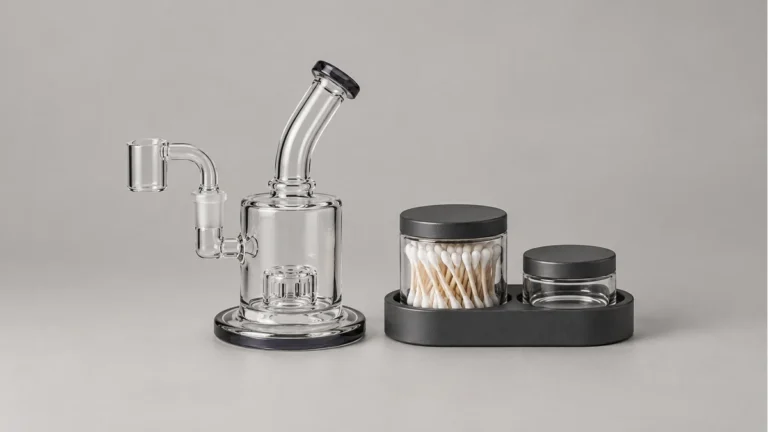
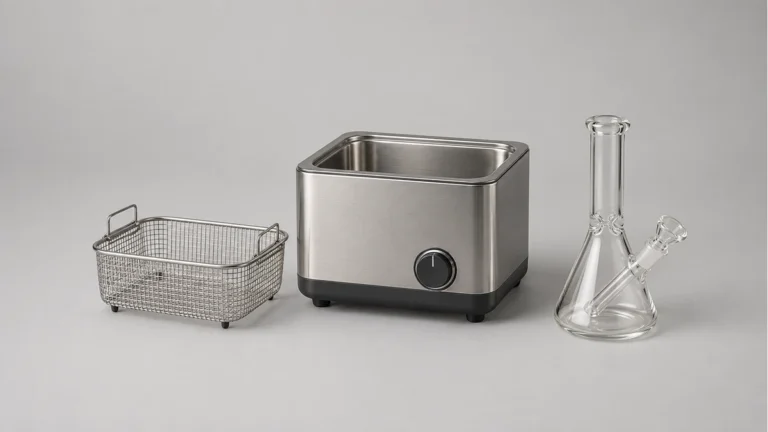
Search results and marketplace listings for a “nectar collector bubbler” often blur several ideas at once: a nectar collector, a dab straw, an electric collector, a glass mouthpiece, a bubbler, and a water-pipe adapter. Long discussion threads on hobbyist forums show people asking why a piece clogs, why it will not come apart for cleaning, or why one listing photo looks nothing like another despite using the same word. Much of that confusion comes from treating “bubbler” as a whole product category instead of what it actually is: one component added to an existing airflow path. This article walks through that airflow path piece by piece so the term becomes easier to evaluate on any product page, regardless of brand or price.
🧭 1. Why “Bubbler” Confuses More Than It Clarifies
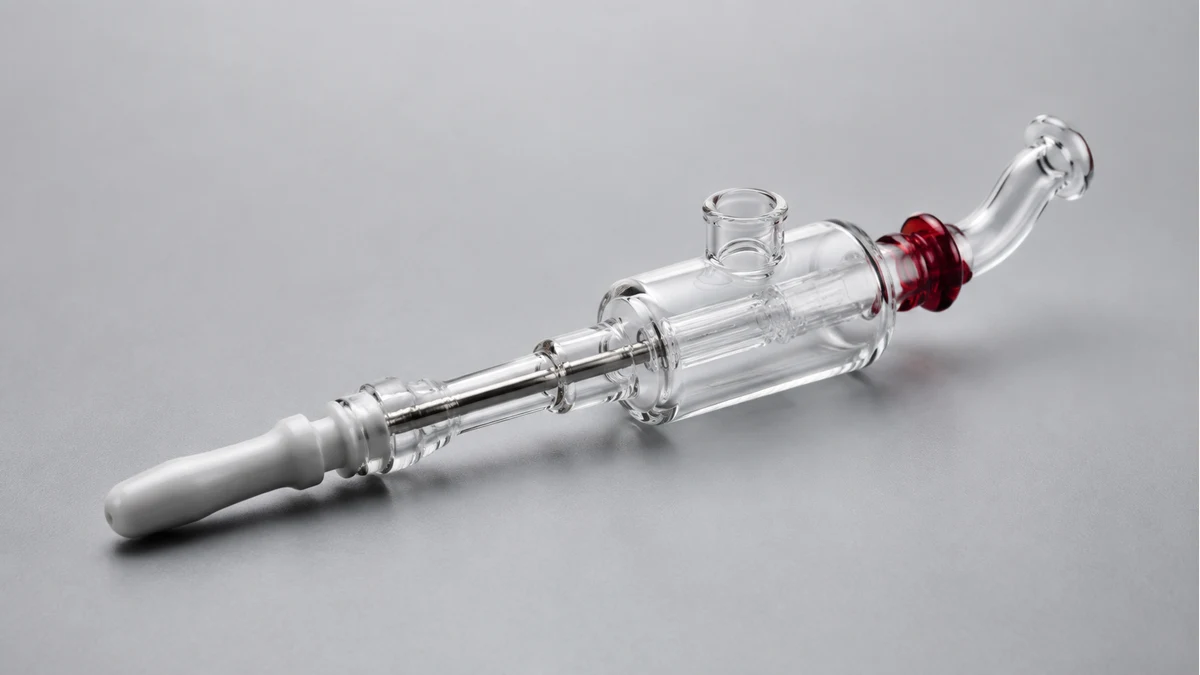
The site’s water nectar collector overview covers the broader category; here the narrower question is what the bubbler changes in the air path. A nectar collector is, at its core, a straw-shaped device with a heated or heatable tip at one end and a mouthpiece at the other. The word “bubbler” describes one specific modification to that straw: the insertion of a small water chamber somewhere along the internal passage. It says nothing about how the tip is heated, what material the tip is made from, how the pieces connect, how much liquid the chamber holds, or whether the unit can be taken apart for maintenance.
That gap between what the word technically means and what shoppers assume it means is where most confusion originates. When someone reads “bubbler” and pictures a fully described product, they are filling in blanks with assumptions rather than specifications. The rest of this article separates what the label guarantees from what it leaves open.
🌬️ 2. Tracing the Air Path Through a Nectar Collector
Understanding any nectar collector bubbler starts with following the same path air and vapor take through the device, from one end to the other. Each stage is a distinct engineering decision, and a bubbler only touches one of them.
🔥 2.1 Tip and Interface
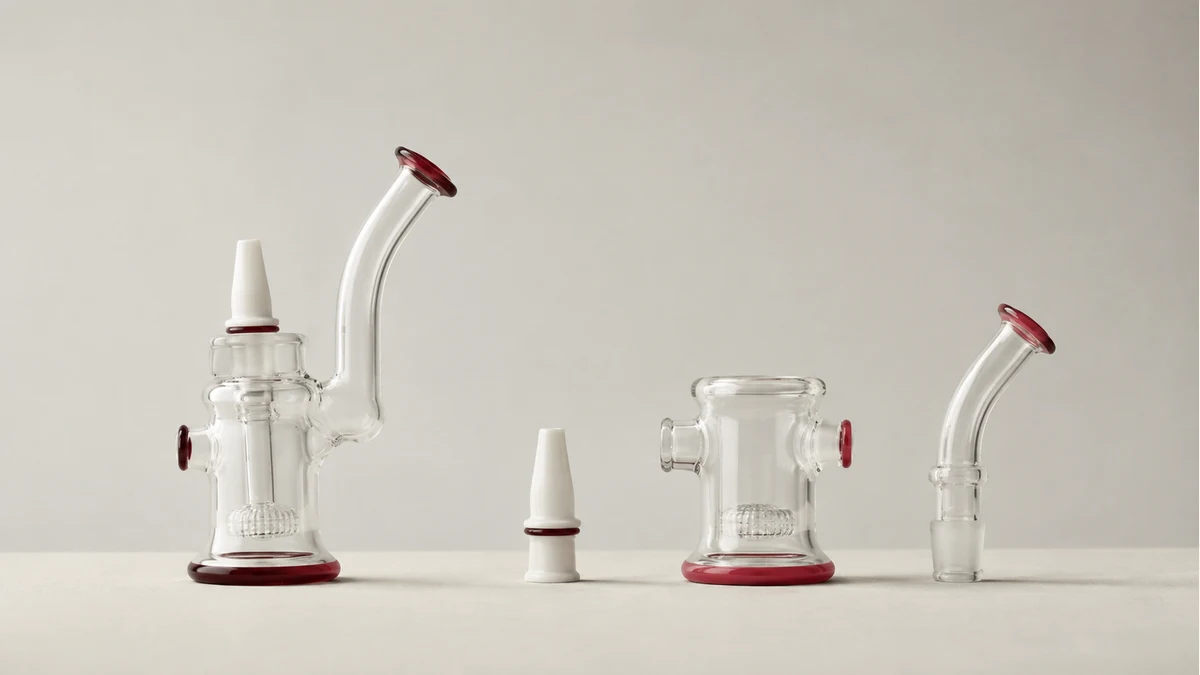
The tip is the point of contact where heat is applied. It may be a fixed component or a separate part that connects to the body through a joint, often a ground-glass fitting or a threaded connector. This interface determines whether the tip can be replaced or swapped independently of the rest of the device, which matters for maintenance and for matching parts across accessories.
🛤️ 2.2 Internal Passage
Between the tip and the mouthpiece runs an internal channel, typically glass, that carries airflow through the body of the device. The geometry of this passage — its diameter, the number of bends, and any narrowing points — shapes how easily material moves through it and how difficult the passage is to reach with a cleaning tool. The difference between a reachable passage and a sealed turn is also why the nectar collector cleaning guide starts with the manufacturer’s disassembly limits. This is the section most frequently blamed in complaint threads for buildup and restricted airflow, independent of whether a bubbler is present.
💧 2.3 Water Chamber
This is the component that earns the “bubbler” designation. Somewhere along the internal passage, the design routes airflow through a small reservoir intended to hold water. The chamber can be a simple bulge in the glass, a distinct sub-chamber with its own walls, or a removable attachment. Its size, shape, and position along the passage vary widely between products, even when every one of them is marketed with the same “bubbler” label.
🛡️ 2.4 Splash Management
Adding liquid to an airflow path introduces a new design problem: keeping that liquid from traveling further up the passage toward the mouthpiece. Manufacturers address this differently — through internal baffles, angled chamber walls, or a percolator-style diffuser at the base of the chamber. The presence or absence of effective splash management is often what separates a well-engineered bubbler chamber from one that produces an unpleasant surprise for the user, but it is not something the word “bubbler” alone specifies.
👄 2.5 Mouthpiece
The final stage is the mouthpiece, which may be fixed to the body or removable. A separate glass mouthpiece is sometimes sold or listed as an accessory, and its fit, angle, and wall thickness affect both comfort and how easily the whole assembly can be broken down for cleaning.
💧 3. What “Bubbler” Actually Adds — and What It Doesn’t
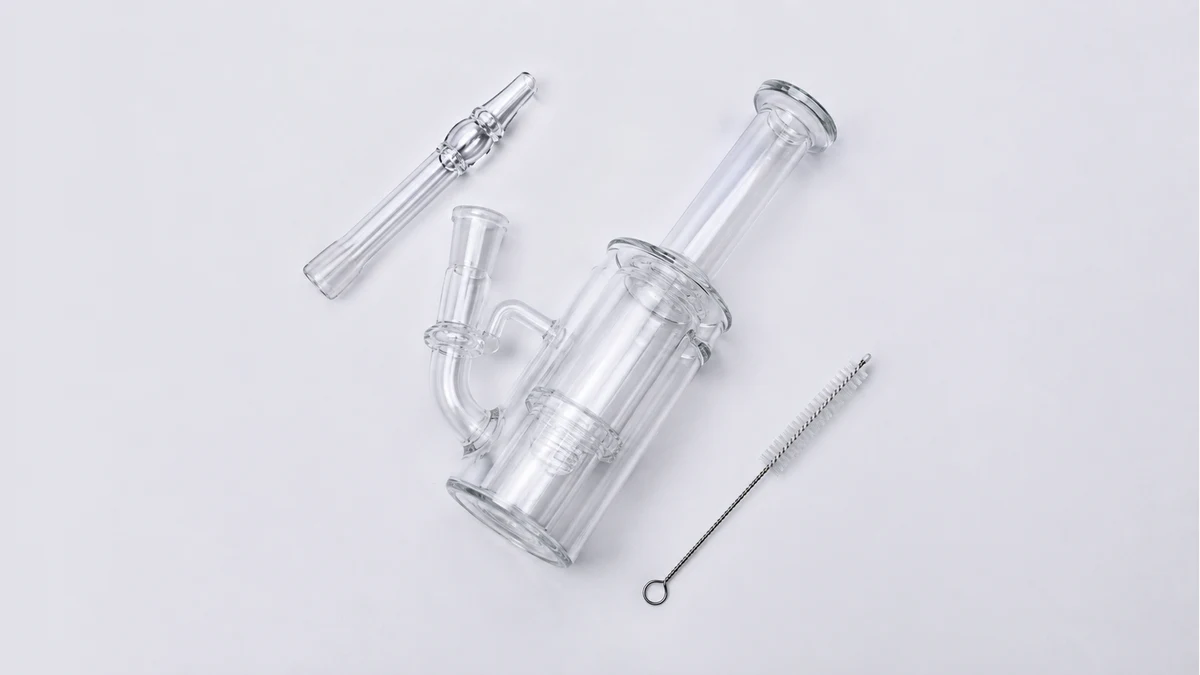
With the full path mapped out, the scope of the word “bubbler” becomes narrower than it first appears. It confirms only that a water chamber sits somewhere in the internal passage. Everything else about the device remains an open question that has to be answered by reading the rest of the product description, not by the presence of that single word.
Specifically, “bubbler” does not indicate:
- Heat source. The comparison between an electric nectar collector and a wax pen addresses the power-format question separately. Manual (torch-heated) and electric (battery- or plug-powered) collectors can both include a water chamber; the label does not distinguish between them.
- Tip material. Quartz, titanium, and ceramic tips can all be paired with a bubbler-equipped body.
- Connector type. The joint between tip and body, or body and mouthpiece, might be a ground-glass fitting, a threaded fitting, or a fixed, non-separable seam.
- Chamber volume. Some chambers hold a small amount of liquid; others are noticeably larger. Neither is implied by the word itself.
- Serviceability. Whether the chamber, tip, or mouthpiece can be removed independently for cleaning is a separate design choice entirely.
Recognizing this gap is the main value of understanding the architecture: it turns “does it have a bubbler?” into a more useful set of follow-up questions about the rest of the device.
🔍 4. Design Questions That Matter More Than the Label
Once a shopper accepts that “bubbler” only confirms one component, the more productive exercise is asking a consistent set of questions about the whole assembly. These questions map directly onto the frustrations that appear repeatedly in long-running discussion threads about narrow passages, clogging, and unclear disassembly.
🌀 4.1 Narrow Turns and Clogging
Any point where the internal passage narrows or changes direction sharply is a point where residue can accumulate over time. A bubbler chamber that sits at a sharp bend, rather than along a straighter run of tubing, is more likely to become a bottleneck. Diagrams and photos that show the passage’s shape — not just its exterior — help identify these points before a purchase.
🧩 4.2 Removable Joints
A device where the tip, chamber, and mouthpiece separate at clear joints is generally easier to maintain than one that is a single fused piece of glass. Removable joints allow each section to be cleaned or replaced on its own, which is a recurring point of frustration in complaint threads describing pieces that “won’t come apart.”
👁️ 4.3 Water-Line Visibility
Because the water chamber is meant to hold a specific amount of liquid, being able to see the fill line from the outside is a practical design feature. Clear or lightly tinted glass around the chamber allows a user to confirm the water level; fully opaque materials in that section make this harder to verify.
⚖️ 4.4 Stable Base and Clearance
Adding a water chamber changes the weight distribution of the device compared to a straw-style collector without one. A stable base and enough clearance around the chamber for it to sit upright without tipping are practical considerations that show up in reviews far more often than they show up in marketing copy.
🧼 4.5 Manufacturer-Approved Cleaning Access
Some manufacturers publish specific guidance about which parts of a bubbler-equipped device can be removed, soaked, or cleaned with particular tools, and which parts should not be. Because glass thickness, joint type, and chamber shape all vary, a cleaning method appropriate for one design can be inappropriate for another. Checking whether a product includes this kind of documented guidance is a more reliable way to judge long-term maintainability than assuming all “bubbler” products behave the same way.
📐 5. Flow Rate, Geometry, and Why Photos Don’t Predict Performance
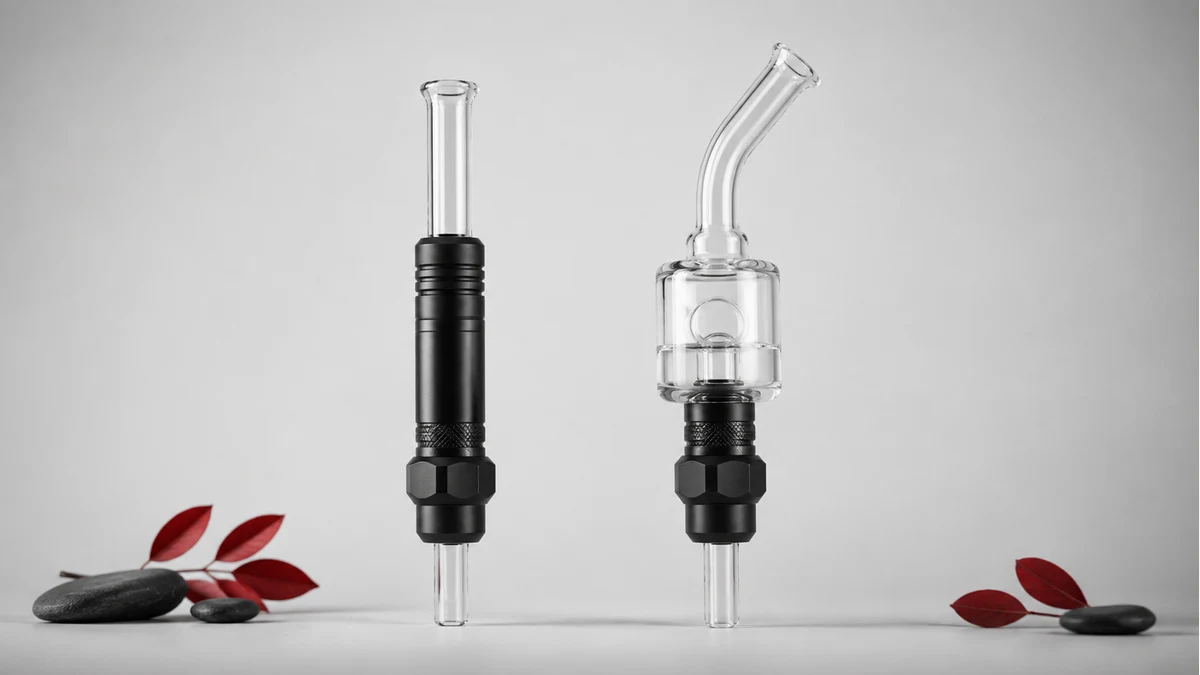
It is tempting to look at a product photo and estimate how easily air will move through a device, but flow behavior through a tube depends on the complete geometry of the passage — not on any single visible feature. As a general physics reference, flow rate through a tube relates to the cross-sectional area available to the fluid at each point along its path, a relationship covered in standard introductory treatments such as OpenStax’s College Physics chapter on flow rate and its relation to velocity. That principle is a general one about fluids and tubes; it is not a basis for predicting how any specific nectar collector bubbler will perform, and this article makes no such prediction.
What the principle does support is a more modest but useful conclusion: because a bubbler adds a chamber with its own internal shape, and because liquid level inside that chamber changes the effective space available for airflow, two devices that look similar from the outside can behave differently depending on details that are not visible in a single photo. This is a reason to read full specifications and any available diagrams rather than judging a listing by its main image alone.
🗂️ 6. Reading a Product Diagram Like an Engineer
Product listings for nectar collector bubblers vary widely in how much detail they provide. Some include only a single photo; others include labeled diagrams showing each section of the device. When a diagram is available, it is worth reading it methodically rather than skimming it.
Start at the tip and work toward the mouthpiece, checking each stage against the architecture described above: What is the tip made of, and how does it attach? Where does the passage narrow or bend before reaching the water chamber? How is the chamber shaped, and is there any labeled splash-guard or diffuser feature? Is the mouthpiece a separate labeled part, or is it fused to the body? Following the diagram in this order mirrors the actual path air takes through the device, which makes it easier to spot missing information — for example, a listing that shows the chamber clearly but never indicates whether the tip is removable.
Cleaning-access descriptions deserve the same methodical reading. A listing that says a device is “easy to clean” without specifying which parts detach, what cleaning method is recommended, or which materials should be avoided is giving a general reassurance rather than an actionable answer. A listing that names the specific joints that separate, and points to manufacturer instructions for the chamber and passage, is providing information that can actually be verified after purchase.
🧾 7. A Comparison Framework, Not a Ranking
The table below organizes the architecture into the questions a shopper can ask about any listing that uses the word “bubbler.” It is not a ranking of products or brands — it is a checklist for translating marketing language into specification questions.
| Component | What “bubbler” tells you | What to check separately |
|---|---|---|
| Tip | Nothing | Material, whether it detaches, connector type |
| Internal passage | Nothing | Number of bends, narrowest point, visibility for cleaning |
| Water chamber | Confirms one is present | Volume, shape, position along the passage |
| Splash management | Nothing | Presence of a baffle or diffuser, described or diagrammed |
| Mouthpiece | Nothing | Fixed vs. removable, fit with the body |
| Heat source | Nothing | Manual vs. electric, listed separately from the bubbler feature |
✅ 8. Putting It Together: A Checklist for Parsing Listings
The word “bubbler” is a useful but limited signal. It tells a shopper that a water chamber has been added somewhere in the airflow path of a nectar collector, and nothing more. Everything else — heat source, tip material, connector style, chamber size, and how the pieces come apart for maintenance — has to be confirmed independently, ideally from a labeled diagram or a written description that traces the device from tip to mouthpiece.
When evaluating a listing, it helps to move through the same sequence used throughout this article: identify the tip and its interface, follow the internal passage and note any narrow turns, locate the water chamber and any splash-management feature, and finish at the mouthpiece, checking whether each stage is described as removable or fixed. Then look specifically for cleaning-access information tied to the manufacturer rather than general claims of convenience. Approaching a product page this way turns a single ambiguous word into a structured set of answerable questions — which is a more reliable way to understand what a nectar collector bubbler actually offers than relying on a photo or a label alone.