Dabbing vs. Vaping: Compare the Material Path Before the Device Name
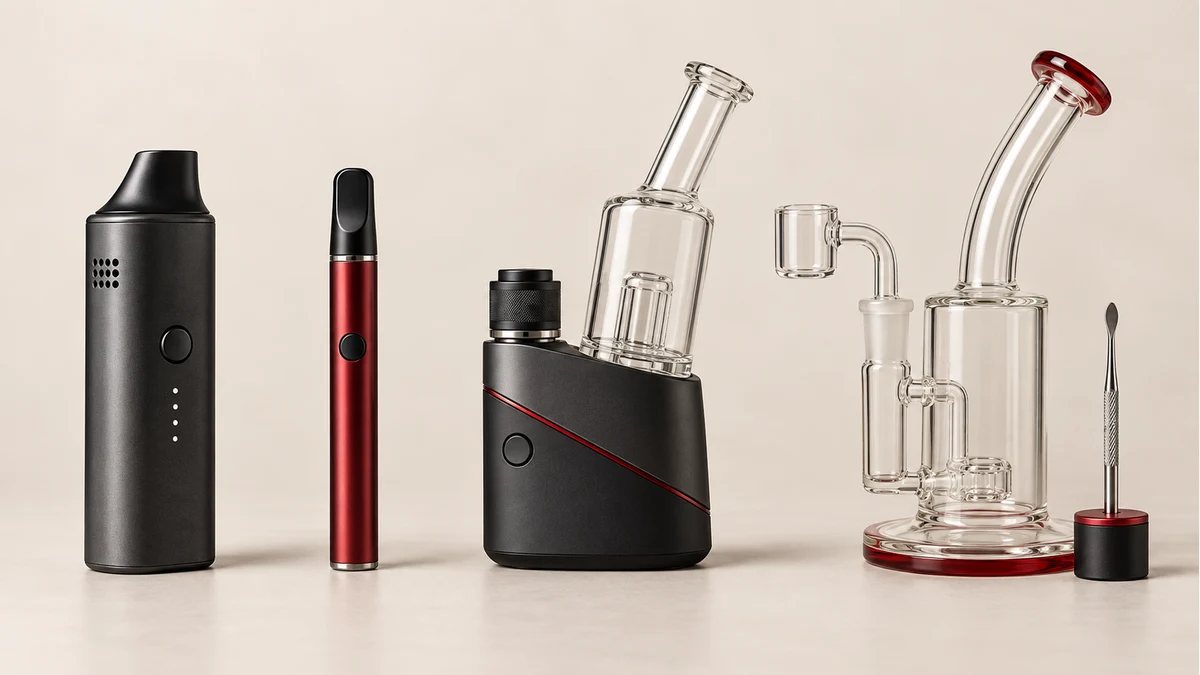
Ask five people to define “vaping” and you’ll likely get five different answers. Some picture a sleek pen pulling from a prefilled cartridge. Others think of a tabletop box with a digital display. Still others assume “vaping” and “dabbing” are opposites, when in practice they overlap more than they diverge. The confusion isn’t really about vocabulary — it’s about material. Before comparing device names, brand claims, or form factors, it helps to trace the actual path an input material takes: what goes into the chamber, how it’s heated, where the vapor travels, which parts wear out, and how much cleanup the whole process demands. Once you map that path, the difference between dabbing and vaping stops being a matter of opinion and becomes a matter of hardware category.
This piece walks through five distinct hardware families — dry-herb vaporizers, loadable concentrate pens, 510 cartridges, tabletop or e-rig systems, and conventional dab rigs — and compares them on the mechanical details that actually distinguish one from another. No device is “better” here; each is built around a different input material and a different session format, and understanding that structure is the real answer to the “dabbing vs vaping” question.
🌬️ 1. Why “Vape” Is an Umbrella Word, Not a Category
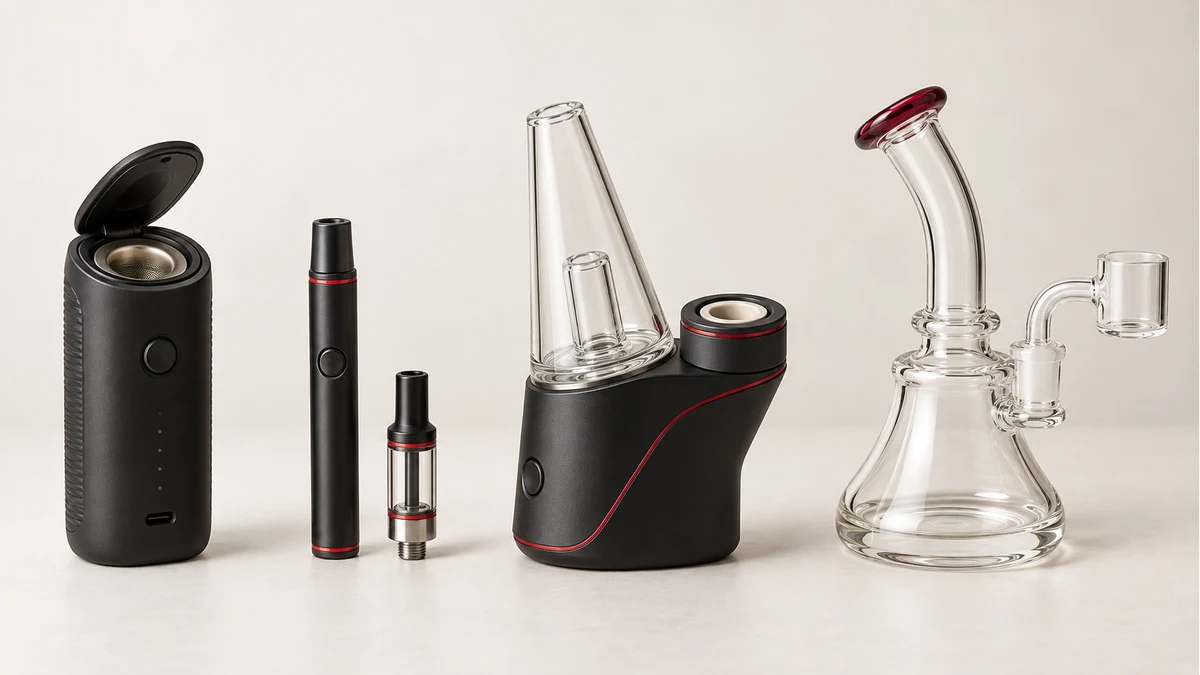
“Vape” describes an action — heating a substance below the point of combustion so it releases vapor — rather than a single piece of hardware. That’s precisely why the word gets applied to such a wide range of devices. A dry-herb vaporizer vapes ground plant material. A 510 cartridge vapes a viscous oil through a wicked coil. A tabletop e-rig vapes a small deposit of concentrate off a heated surface. All three get called “vapes” colloquially, even though their chambers, heating elements, and airflow paths have almost nothing in common with each other.
The practical takeaway: don’t let the word “vape” tell you what a device is designed to hold. Look at the chamber instead.
🌿 2. Dry-Herb Vaporizers: Whole Flower, Conduction or Convection
Dry-herb vaporizers are built around a single input material: ground plant material loaded directly into a chamber, with no wicking, no cartridge, and no liquid carrier. The chamber itself is usually a small oven made of ceramic, stainless steel, or glass-lined metal, sized to hold a modest, loosely packed amount of material. Because the material is solid and porous, the heat source has to either touch it directly or surround it with hot air, and that distinction defines the two major heating approaches used across this category.
🔥 2.1 Conduction and Convection as Two Different Airflow Paths
Conduction heating relies on direct contact between the herb and a heated chamber wall or plate, so the plant material closest to the heat source is affected first. Convection heating instead pulls air across or through a separate heating element and then routes that hot air through the herb chamber, so the material is warmed more evenly by air rather than direct contact. Some devices blend both approaches. The mechanical difference matters because it changes airflow resistance, how the chamber needs to be packed, and how quickly the device responds to adjustment. For a deeper technical walkthrough of how these two heating paths function inside the chamber, see this explainer on how dry-herb vaporizers work with conduction and convection.
Replaceable parts on dry-herb units typically include the chamber screen and sometimes the chamber itself, plus batteries on portable models. Cleaning burden is moderate and mechanical rather than solvent-based: spent material needs to be emptied after each session, and the chamber and airpath benefit from periodic brushing to prevent residue buildup, since resin from plant material can accumulate on screens and walls over time. Session format tends to be short and self-contained — pack, heat, draw, empty — with no torch, no liquid handling, and no separate atomizer to replace.
🍯 3. Loadable Concentrate Pens: Wax, Shatter, and Direct-Load Coils
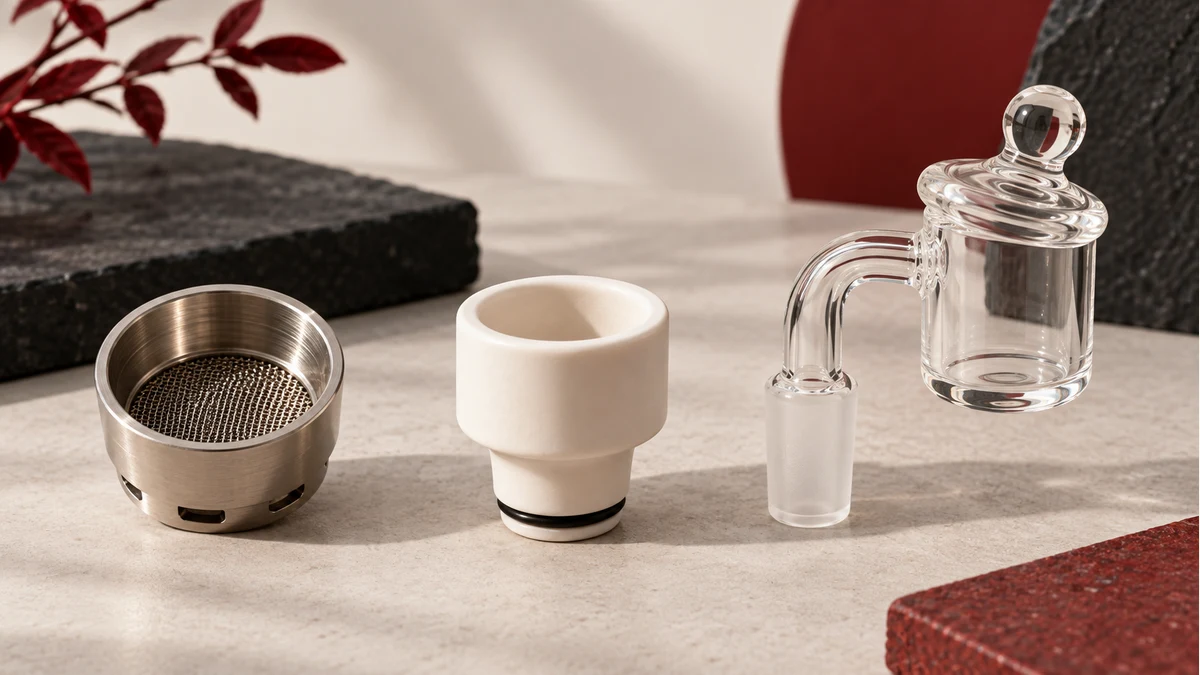
Loadable concentrate pens (often called wax pens) take a completely different input material: a small dab of concentrate — wax, shatter, budder, or similar textures — packed directly onto or around a coil inside a small chamber. Unlike dry herb, this material is sticky and semi-solid, so the chamber design has to account for material clinging to the coil and walls rather than simply sitting loosely inside an oven.
🧴 3.1 Coil and Chamber Construction
The heating element in these pens is almost always a coil — commonly quartz, ceramic, or a wrapped wire design — housed in a small atomizer chamber that screws or clicks onto a battery. Airflow in a loadable concentrate pen is short and direct: air is pulled in near the coil, passes immediately over the heated concentrate, and travels a short distance to the mouthpiece. Replaceable parts center on the atomizer/coil assembly itself, since coils accumulate carbon buildup and residue with repeated use and are designed to be swapped out periodically, along with the battery on modular models.
Cleaning burden here is higher than with dry herb, because sticky concentrate residue can gum up the coil, chamber walls, and mouthpiece, often requiring isopropyl alcohol and cotton swabs to keep the airpath clear. Session format is quick — a small dab loaded directly onto the coil, a short heat-up, a few draws — which is part of why these devices get compared so often to nectar collector–style hardware that also handles concentrate in small, direct doses but without an enclosed coil chamber at all. If you’re trying to sort out that distinction, this look at the electric nectar collector vs. wax pen lays out how the open-tip design of a nectar collector differs mechanically from the enclosed coil chamber of a standard wax pen.
💧 4. 510 Cartridges: Pre-Filled Oil and a Sealed Heating Path
A 510 cartridge represents a third input material entirely: a thinner, pre-filled oil housed inside a sealed or semi-sealed cartridge, threaded onto a battery using the standard 510 connection. Unlike loadable concentrate pens, there’s no manual loading step — the oil is already inside the cartridge, sitting in a small reservoir that surrounds a wicking element.
The chamber here is really a wick-and-coil system rather than an open atomizer. Cotton, ceramic, or another wicking material draws oil from the reservoir toward the coil, where it’s vaporized and pulled through a short internal airpath to the mouthpiece. Because the cartridge is a single sealed unit, the “replaceable part” is typically the entire cartridge itself rather than an individual coil — once the oil is gone or the wick degrades, the whole unit is swapped for a new one rather than serviced. This is a meaningful structural difference from loadable pens, where the coil is replaced but the surrounding pen body and battery stay in use indefinitely.
Cleaning burden is by far the lowest of any category discussed here, since there’s no open chamber to scrape or wick to manually reload — maintenance is largely limited to keeping the 510 threading and contact points free of residue. Session format mirrors the sealed design: thread the cartridge onto a battery, draw, and set it down, with no torch, no loading, and no chamber management required between uses.
🖥️ 5. Tabletop and E-Rig Systems: Electronic Heating Without a Torch
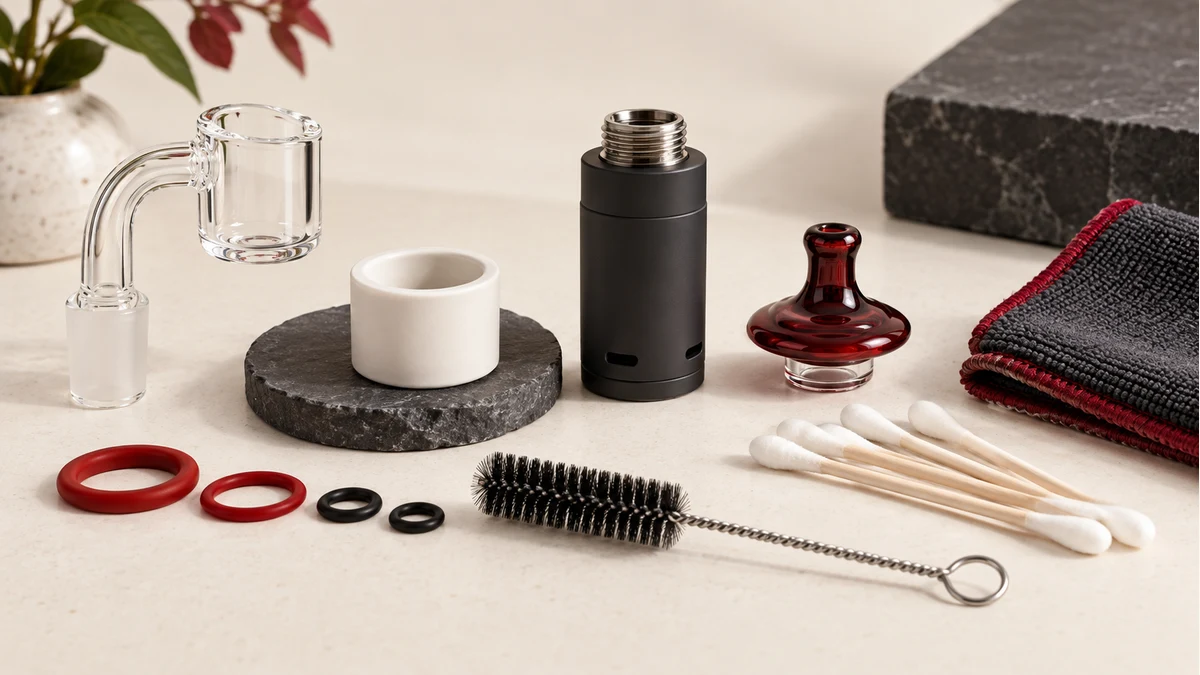
Tabletop and e-rig systems occupy a middle ground between portable pens and traditional dab rigs. The input material is concentrate, similar to a loadable pen or a dab rig, but the heating element is electronic rather than torch-based — typically an induction coil or a resistive heating element built into or around a banger-style attachment, controlled through a digital interface or preset buttons.
The chamber in this category is usually a quartz or ceramic banger or bucket, similar in shape to what’s used on a conventional rig, but it’s heated by the base unit rather than an open flame. Airflow travels from that heated chamber through a water-filled base (on rig-style units) or through a straight glass path (on simpler tabletop units) before reaching the mouthpiece, so percolation and diffusion often play a role in the airpath that pen-style devices simply don’t have room for. Replaceable parts include the banger or bucket insert, any carb caps used to control airflow over the heated surface, and occasionally the coil or heating core inside the base unit. Cleaning burden is moderate to high: the banger needs periodic scraping and alcohol cleaning to remove residue buildup, and any water chamber needs regular rinsing to stay clear.
Session format on these systems tends to be more deliberate than a pen — loading a measured amount of concentrate onto a heated surface, waiting for a readout or indicator to confirm the target state, then drawing through a water path — closer in rhythm to a traditional dab rig than to a quick pull from a 510 cartridge.
🔨 6. Conventional Dab Rigs: Glass, Torch, and Manual Heat Control
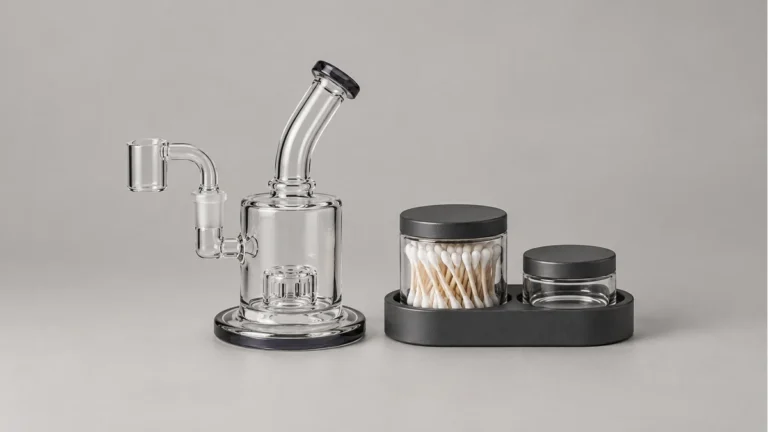
Conventional dab rigs are the most mechanically simple category on this list, and also the most manually intensive. The input material is concentrate, loaded directly onto a nail or banger — usually quartz, titanium, or glass — that sits atop a water pipe base. There’s no battery and no electronic heating element; heat comes from an external handheld torch applied directly to the banger until it reaches the desired state, then removed for a brief cooldown period before the concentrate is applied.
The airpath on a dab rig runs from the banger down through a water chamber, often through one or more percolators designed to diffuse the vapor before it reaches the mouthpiece — a longer and more elaborate route than any pen-based device offers. Replaceable parts are minimal and mostly glass-based: the banger or nail itself, a carb cap used to trap heat and control airflow over the concentrate, and occasionally a reclaim catcher or adapter piece. Because there’s no coil, wick, or cartridge to wear out, the core rig glass can last indefinitely with proper care, which is a structural distinction from every coil-based or cartridge-based category above.
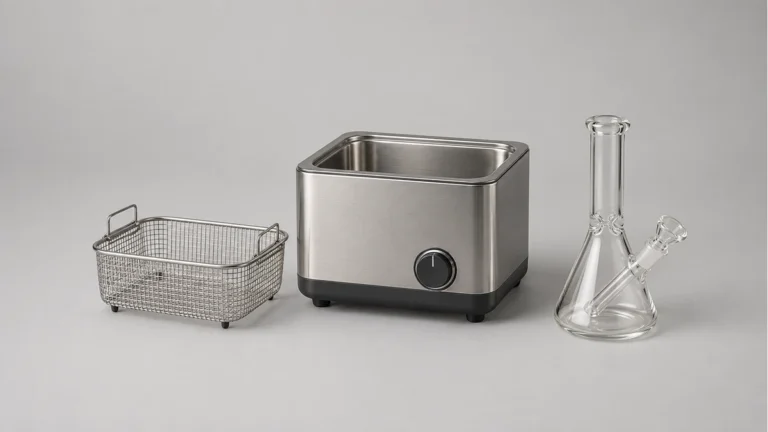
Cleaning burden is significant and recurring: the banger needs regular scraping and alcohol soaks to prevent residue buildup, and the water chamber needs to be emptied, rinsed, and refreshed regularly to keep percolators clear and water clean. Session format is the most hands-on of any category — igniting a torch, timing a heat-and-cooldown cycle, loading concentrate manually, and controlling airflow with a carb cap — a multi-step process compared to the load-and-draw simplicity of a pen or cartridge.
📊 7. Comparing the Material Path Across Categories
Laid out side by side, the mechanical differences between these five hardware families become much clearer than any effects-based or brand-based comparison could show:
| Hardware Type | Input Material | Chamber Type | Heat Source | Replaceable Parts | Cleaning Burden | Session Format |
|---|---|---|---|---|---|---|
| Dry-herb vaporizer | Ground plant material | Ceramic/metal oven chamber | Conduction and/or convection element | Screens, occasionally chamber | Low-moderate, mechanical brushing | Pack, heat, draw, empty |
| Loadable concentrate pen | Wax, shatter, budder | Open coil chamber | Quartz/ceramic/wire coil | Coil/atomizer, battery | Moderate-high, alcohol cleaning | Load dab, heat, quick draws |
| 510 cartridge | Pre-filled thin oil | Sealed wick-and-reservoir | Small internal coil | Entire cartridge | Very low, thread contacts only | Thread on, draw, set down |
| Tabletop/e-rig system | Concentrate | Banger or bucket insert | Electronic induction/resistive heater | Banger, carb cap, heating core | Moderate-high, banger and water care | Load, wait for readout, water draw |
| Conventional dab rig | Concentrate | Nail or banger on water pipe | External handheld torch | Banger/nail, carb cap | High, recurring scraping and rinsing | Torch, cooldown, load, draw |
🧭 8. Choosing by Material Path, Not Device Name
The fastest way to cut through “dabbing vs vaping” confusion is to stop starting with the device name and start with the material path. Ask what you’re loading — dry plant material, sticky concentrate, or pre-filled oil — and that answer immediately narrows the field to one or two chamber types. From there, ask how much hands-on cleaning and part-replacement you’re prepared to manage; the wax pen atomizer guide shows how those replaceable components fit together, since that varies enormously between a sealed cartridge and an open banger. Finally, consider session format: quick and self-contained, or a more deliberate multi-step process involving a torch or a digital heating cycle.
None of these categories is a stripped-down or upgraded version of another — they’re built around genuinely different materials and different mechanical assumptions about how that material should be heated and inhaled. Once the chamber, heat source, and airflow path are on the table, the label on the box matters a lot less than the hardware underneath it.