Search for “silicone bong bowl” and you’ll find at least three different products wearing the same label. Some listings mean a bowl piece that’s entirely silicone, from the base to the rim. Others mean a flexible sleeve or collar that holds a separate glass or metal insert in place. And a fair number of listings are just using “silicone bong bowl” as loose shorthand because the seller didn’t specify which part is actually made of what. Before buying a replacement or troubleshooting a fit problem, it’s worth slowing down and figuring out which of these three things you’re actually looking at.
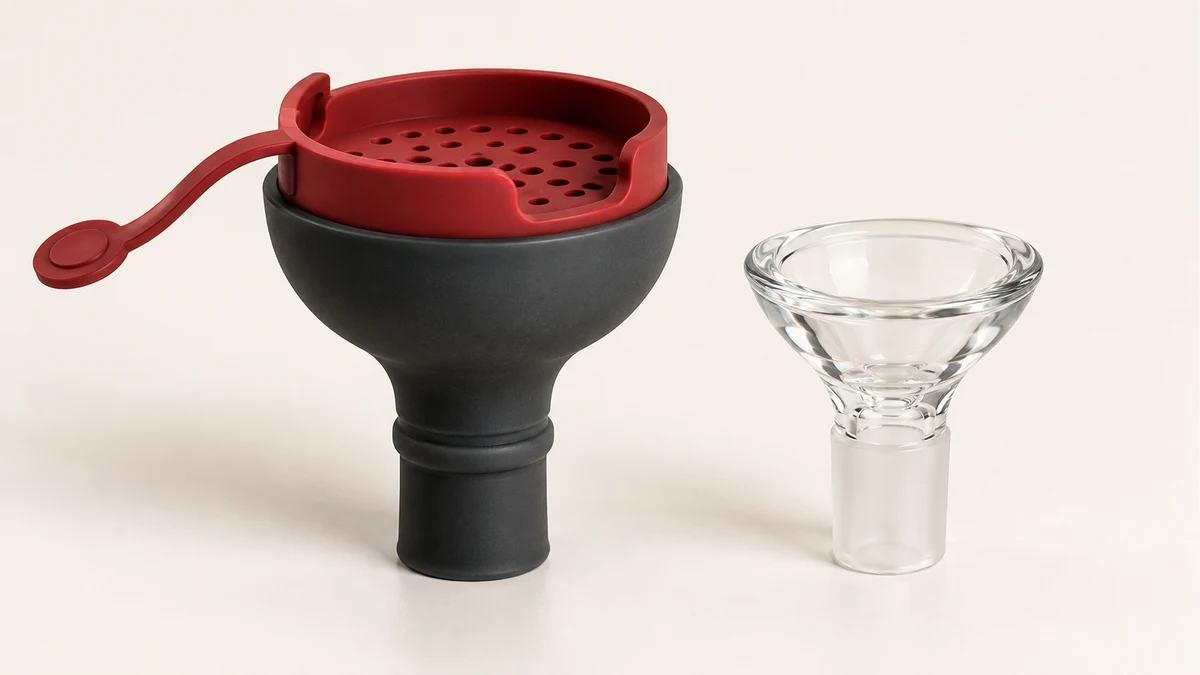
This matters more than it sounds like it should. A one-piece silicone bowl behaves differently from a silicone holder wrapped around a glass bowl head — different seal behavior, different retention mechanics, different failure points. Treating them as interchangeable is how people end up with the wrong joint size, a bowl that won’t seat, or a part that doesn’t do what they expected.
🔍 1. What “Silicone Bong Bowl” Actually Describes
🧩 1.1 Silicone-Bodied Bowl Assemblies
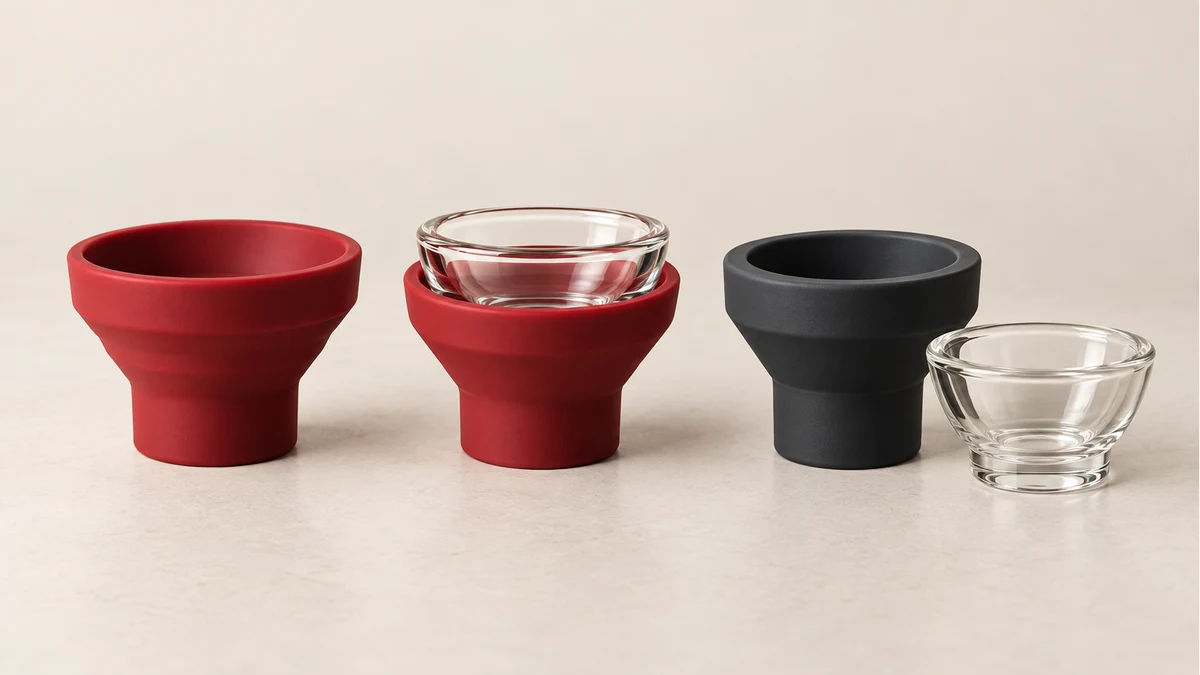
In the first case, the entire bowl piece — bowl, stem, and the section that inserts into the joint — is molded from silicone. There’s no glass or metal component at all. This is a single flexible unit, and it’s typically sold as a complete replacement part rather than something you’d disassemble.
🧵 1.2 Flexible Holders Around Glass or Metal Inserts
In the second case, “silicone bong bowl” is describing an assembly: a rigid glass or metal bowl head sits inside a silicone sleeve, collar, or cage. The silicone isn’t the working surface that touches material — it’s a structural wrapper that adds grip, some shock absorption, and sometimes a colored or textured exterior. If you’ve seen accessories described as a bowl “holder,” this is the category. Our guide to bong bowl pieces goes into more detail on how these two-part assemblies are typically built.
🏷️ 1.3 Imprecise Listings and Marketplace Shorthand
The third case is simpler and more common than either of the above: the listing is just imprecise. Sellers sometimes use “silicone bowl” to mean “bowl piece that comes with a silicone accessory” or “bowl sold alongside a silicone piece,” without clarifying which part is actually silicone. When a listing’s title and photos don’t match, or the description avoids naming the exact material of the insert, treat that as a signal to ask before buying — not to assume.
🧩 2. Component Boundaries: Where Flexible Meets Rigid
Once you know which of the three categories you’re dealing with, the next useful step is identifying where the flexible material ends and any rigid material begins. This boundary is the part most listings gloss over.
🧩 2.1 The Insert: Bowl Head, Screen, and Stem
If there’s an insert, it’s the piece that actually holds material and takes direct flame or heat contact during use. It might be glass, titanium, or another metal. The insert is usually the removable part — the one you’d pull out to clean separately or replace if it cracks or wears out.
🧷 2.2 The Holder: Silicone Collar, Grip, or Sleeve
The holder is the flexible component. Its jobs are mechanical: gripping the insert so it doesn’t rattle or slip, cushioning against drops, and sometimes providing the actual downstem-side connection that plugs into your piece’s joint. In a lot of two-part designs, the holder is what determines joint size and gender, even though the insert is what most people are focused on.
📐 2.3 Why the Line Matters When You Order Parts
If you only know “I need a silicone bong bowl,” a seller can’t tell whether you need a full one-piece silicone bowl, a replacement insert for an existing holder, or the holder itself with a new insert. Knowing the boundary lets you order the specific component that’s actually failed, instead of replacing the whole assembly by default.
🔧 3. Stiffness and Seal Surfaces
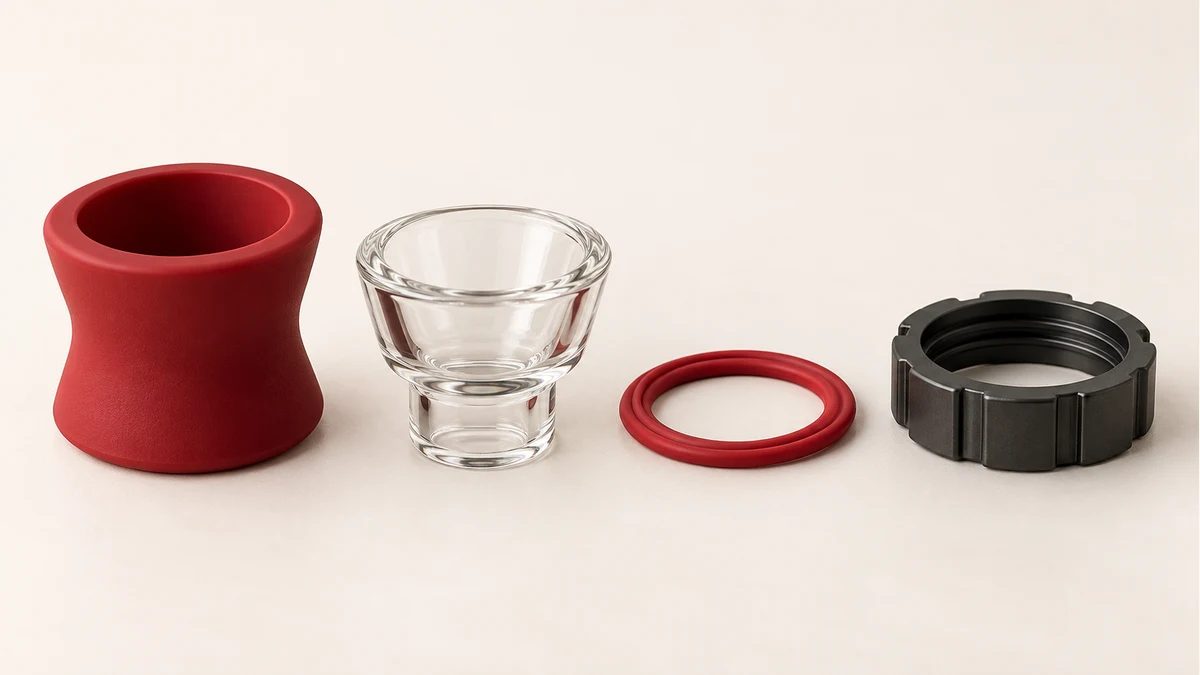
Seal quality — how well a bowl sits in a joint without wobbling or leaking air — depends heavily on whether the sealing surface is rigid or flexible, and that’s a direct consequence of which category you’re working with.
🧩 3.1 Rigid Seals vs Flexible Compression
A rigid glass-on-glass joint relies on close-tolerance grinding: two hard surfaces matched closely enough that they seal on contact, sometimes helped by a light coat of grease. A silicone joint, by contrast, seals through compression — the flexible material deforms slightly around the joint’s shape. This means silicone joints can be more forgiving of minor size mismatches, but they can also compress unevenly if the silicone has degraded, gotten stiff with age, or was manufactured with inconsistent wall thickness.
📏 3.2 Joint Fit Considerations (10mm/14mm/18mm)
Standard joint sizes (commonly 10mm, 14mm, and 18mm) apply to silicone components just as they do to glass, but a flexible joint has more tolerance for near-misses, which can be a hazard rather than a convenience — a bowl that “kind of fits” a slightly wrong size might seat but seal poorly. When measuring a silicone piece for replacement, measure the outer diameter of the male joint or inner diameter of the female joint as precisely as you can, since flex can make eyeballing the size less reliable than it is with glass.
🧷 4. Insert Retention: What Keeps the Bowl From Falling Out
🧩 4.1 Friction Fit
The simplest retention method is friction: the insert is sized just slightly larger than the holder’s opening, and the silicone’s elasticity keeps it clamped in place. This is easy to manufacture but retention strength depends entirely on how well-matched the two parts are and how much the silicone has relaxed over time.
🔩 4.2 Notched or Keyed Retention
Some holders use a lip, notch, or keyed shape that the insert clicks into, giving a more defined “seated” position rather than relying purely on squeeze. This tends to hold up better over repeated removal and reinsertion, since it doesn’t depend as much on the silicone staying tight.
⚠️ 4.3 Loose-Fit Tradeoffs
A holder that’s stretched out or an insert that’s slightly undersized for its holder will sit loose, which usually shows up as wobble or the insert twisting free unexpectedly. This is a mechanical fit problem, not necessarily a defect — it can also happen from mixing a holder and insert that weren’t sold as a matched pair.
🧼 5. Maintenance Observations: Odor and Cleaning Questions
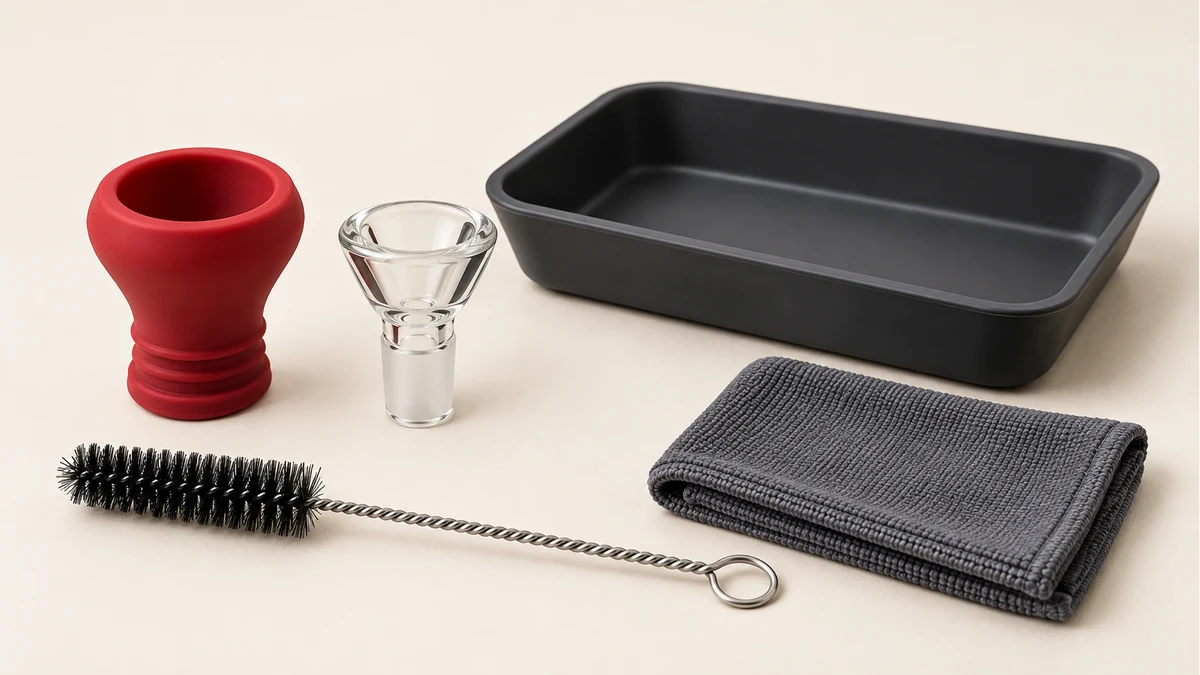
People frequently ask why silicone components seem to hold onto odor differently than glass. This is worth addressing as an observation about material properties, not a health claim.
🧩 5.1 Porosity and Residue Buildup
Glass is non-porous and smooth at a microscopic level, so residue tends to sit on the surface and wipe or rinse away relatively cleanly. Silicone, depending on its formulation and surface finish, can be more porous or textured, which gives residue more surface area to cling to. This is a purely physical/mechanical observation about how the two materials interact with buildup — it’s not a statement about whether either material is inherently more or less sanitary.
🧽 5.2 Separating Parts Before Cleaning
Whenever a bowl assembly has a removable insert, separating the insert from the holder before cleaning generally makes both parts easier to address — you can use appropriate methods for glass or metal on the insert without soaking the silicone longer than necessary, and vice versa. If you’re not sure whether a piece is meant to come apart, don’t force it; check with the manufacturer or seller rather than prying at a seam that may be permanently bonded.
⚖️ 6. Breakage Tradeoffs: Flexible Body, Rigid Insert
🧩 6.1 What the Silicone Protects
The main practical advantage of a silicone holder is drop protection. If a bowl assembly slips off a table or gets knocked over, a silicone exterior absorbs some of the impact that would otherwise transfer straight into a glass insert. This is a real, mechanical benefit and probably the most common reason people choose a holder-and-insert design over an all-glass bowl.
🔨 6.2 What Silicone Doesn’t Protect
That protection has limits. The insert can still chip or crack from impacts the silicone doesn’t fully absorb, from being dropped at the wrong angle, or from stress at the exact point where it meets the holder. A fully silicone one-piece bowl removes glass breakage risk entirely, but that’s a different tradeoff — you’re gaining shatter resistance across the whole piece, not just cushioning around a rigid core. If you’re comparing full-silicone construction against traditional builds more broadly, our silicone beaker bong guide walks through how that tradeoff plays out on a larger piece.
📄 7. Material Limits and Manufacturer Disclosure
🧩 7.1 Why Formulation Documentation Still Matters
It’s worth being direct about something this article won’t do: it won’t tell you that silicone is safe for direct flame or heat contact, because that depends entirely on the specific formulation, the manufacturer’s testing, and the intended use each product was designed for. Silicone products vary widely in composition, and “silicone” on a label doesn’t specify grade, heat rating, or intended contact type on its own.
📄 7.2 Reading the Actual Spec Sheet
If any part of a bowl assembly is going to sit near direct heat, the only reliable source of an answer is the manufacturer’s own documentation — a spec sheet, product page, or direct answer from their support team about the exact heat tolerance and intended contact zones for that specific part. Don’t extrapolate from a different product, a different brand, or general assumptions about silicone as a category. If that documentation isn’t available or doesn’t clearly address direct heat contact, treat that as missing information rather than filling in the gap yourself.
📋 8. Replacement Documentation: Recording What You Own
Because “silicone bong bowl” covers such different products, the single most useful thing you can do before ordering a replacement is document exactly what you currently have. This avoids guesswork later and gives you something concrete to compare against new listings.
📐 8.1 Measuring Joint Size and Gender
Note the joint diameter, whether the joint is male or female, and whether the piece is a full silicone bowl or a holder-plus-insert. If it’s the latter, measure the insert and the holder separately, since a replacement insert needs to match the holder’s opening, not just the piece’s overall joint size.
📸 8.2 Photographing the Insert Separately
Take a photo of the insert removed from the holder if it comes apart, along with a photo of the holder empty. This makes it much easier to identify a matching replacement part later, and it gives you a clear reference if you ever need to describe the piece to a seller or manufacturer. For a broader walkthrough of matching replacement parts to what you currently own, see our bong slide replacement guide, which covers similar documentation steps for slides and downstems.
| Component | What to Record | Why It Matters |
|---|---|---|
| Insert (if present) | Material, diameter at contact point, condition | Determines exact replacement fit and whether it’s glass, metal, or another material |
| Holder (if present) | Joint diameter, joint gender, retention style (friction vs keyed) | Confirms compatibility with your piece’s joint and with a new insert |
| Full silicone bowl | Joint diameter, gender, overall bowl depth | Only measurement needed if there’s no separate insert |
| Manufacturer documentation | Material formulation, intended contact zones, care instructions | Best source for product-specific material and care questions |
🧭 9. Putting the Categories Back Together
None of this requires memorizing a taxonomy — it just requires asking one question before you buy or troubleshoot anything labeled “silicone bong bowl”: is the silicone the whole bowl, or is it wrapped around something else? Once you know the answer, the rest of the decisions — what to measure, what to clean separately, what documentation to look for — follow naturally from which category you’re actually holding.
Listings that don’t make this distinction clear aren’t necessarily wrong, but they’re incomplete. Asking a seller to confirm whether the insert is glass, metal, or absent entirely takes one message and saves you from ordering the wrong part twice.