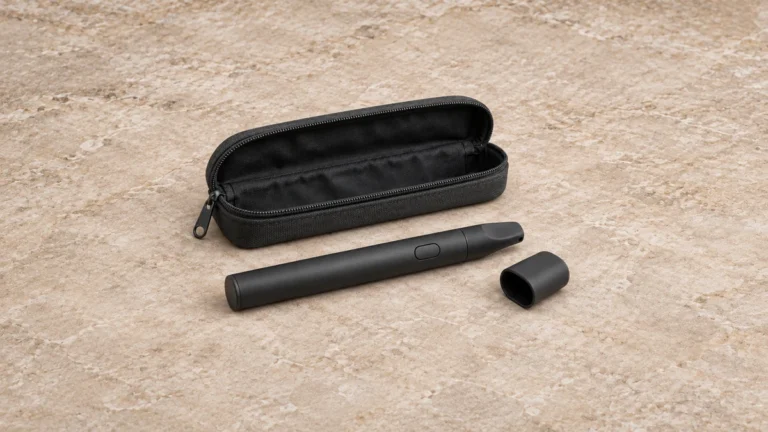
A discreet dab pen may have a compact outline, but carrying design involves more than making the tube shorter. The fitted mouthpiece, protective cover, side button and case all affect the space the complete device occupies. A pen can fit through a pocket opening while leaving its control under pressure or its top attachment unsupported.
For an adult checking equipment they already own, the useful questions are concrete: what does the cover protect, how is it retained and what does the manual call a lock or a power-off state? Those details help interpret the design without treating small size as a promise about unnoticed use, odor or performance. Start with a cool, empty, unpowered assembly and its documented parts.
📏 1. Start With the Complete Carrying Shape
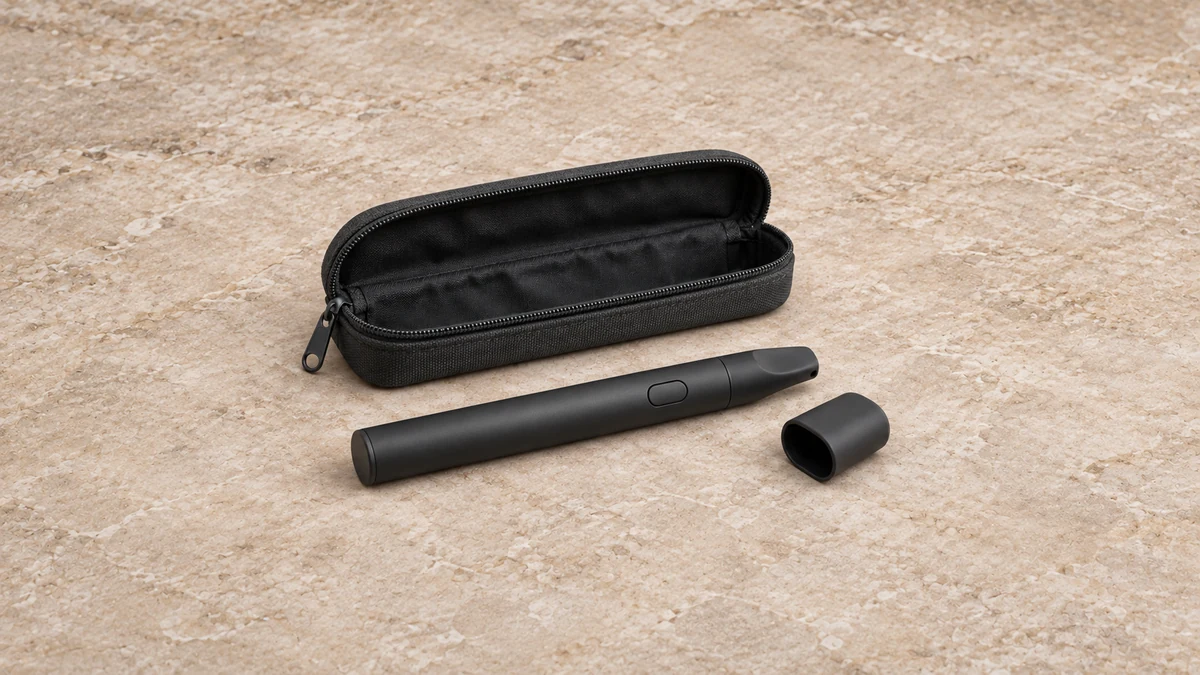
A listing’s overall length can describe the assembled pen, the battery body or a configuration without an optional attachment. Those are different outlines. Before comparing dimensions, find the photograph or drawing that corresponds to the stated measurement. If a separate cover is part of ordinary storage, its outside dimensions also belong in the carrying description. A body measurement alone leaves that additional component uncounted.
🧩 1.1 Keep the Chamber in the Measurement
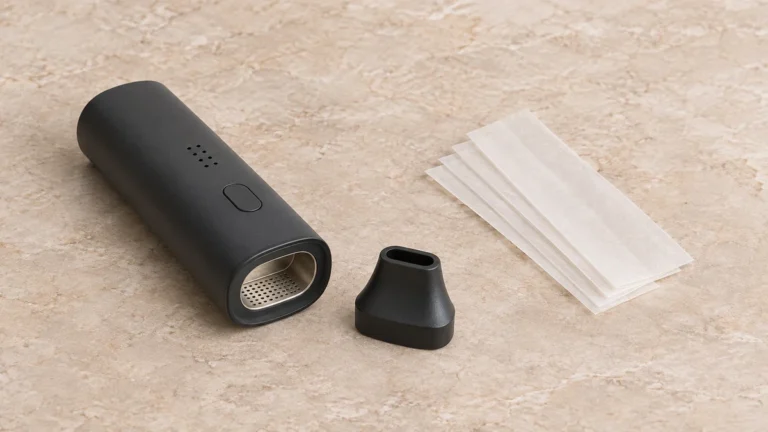
A wax pen includes a chamber assembly, rather than merely a battery waiting for an oil cartridge. Removing the chamber may shorten the object considerably, but it also changes what is being described. A reader looking for a compact complete pen can be misled by a photograph of a bare power body alongside an unstated accessory. Count the parts that normally remain fitted together.
The distinction is particularly useful with modular equipment. A small power unit can become a much taller assembly after its heater and mouthpiece are attached. It may remain perfectly understandable as a modular design, yet its packed outline should be assessed in that configuration. Our mini dab pen guide separates overall length, diameter and the parts included in a measurement.
📐 1.2 Width and Projections Matter at the Opening
Length does not describe every point that meets a pocket or pouch. A button can project from the side, a mouthpiece can widen at the top and a cap can have a retaining shoulder. Compare the widest fitted section and the projecting features, not just the main tube. A shorter device can still need more clearance at its top than a longer, narrower one.
There is also a difference between fitting through an opening and resting without pressure once inside. A seam, folded lining or another object can contact a feature farther down. An empty carrying space provides a clearer view of those contacts than one filled with cables and loose accessories. This is a mechanical fit observation; it does not establish that a control is locked or that the device has reached a suitable storage condition.
🛡️ 2. Find What the Cover Actually Protects
The word cap can refer to a mouthpiece cover, an internal chamber cover or a component that closes another part of the assembly. Their functions differ. A cover over the mouth end may help keep that opening separate from surrounding objects while leaving the side control fully exposed. An internal coil cap can sit underneath the mouthpiece and contribute nothing to external button protection.
🧢 2.1 A Mouthpiece Cover and a Coil Cap
Yocan’s Evolve Plus documentation identifies a coil cap separately from the wax atomizer. That model-specific example shows why the word cap should be tied to its position rather than treated as one universal accessory. A loose cover in a parts tray cannot be assigned a purpose from its color or approximate diameter alone. Look at the assembled drawing and the name used in the parts list.
A mouthpiece is also not automatically a protective cover. It can be the actual mouth end of the airpath, even if it slides off like a cap. Describe what remains underneath when the maker permits removing it. If removal exposes the chamber rather than an otherwise complete mouthpiece, the component has a different role from an outer storage cover. That difference matters when a spare is missing.
🧲 2.2 A Retained Cap Can Still Leave the Button Exposed
A magnetic, threaded or friction-held cap describes a retention method. It does not tell you whether the cap reaches over the control. An intact magnet can hold a mouthpiece while the firing button remains accessible lower on the body. A threaded cover can likewise protect one end without surrounding the button. Locate both features in the same assembled view before connecting their functions.
If a cover comes off easily, first establish which component is separating and whether the correct version is present. Adding an improvised spacer or wrapping the assembly cannot verify its intended fit. The magnetic dab pen parts guide distinguishes a retained mouthpiece, a chamber connection and a cap. Those names are useful when describing a loose component to the manufacturer.
🔘 3. A Recessed Button Is a Mechanical Feature
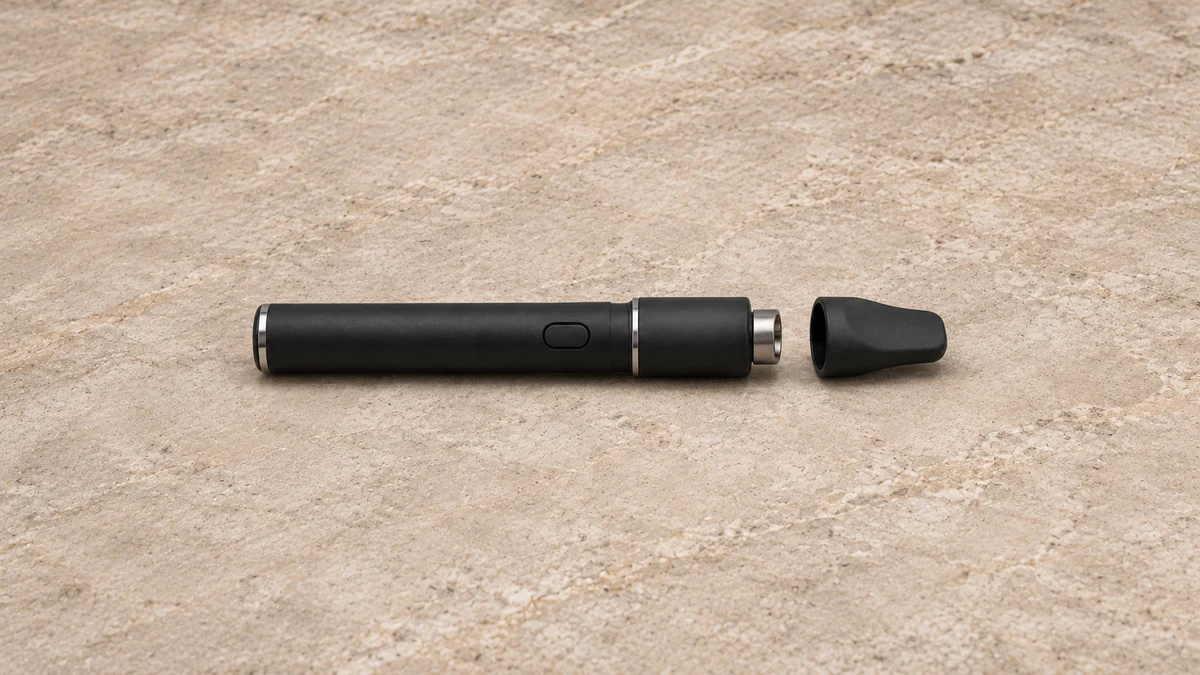
A recessed control sits below some part of the surrounding housing. A raised control extends beyond it. That geometry can affect which surrounding objects touch the button, but the photograph cannot establish the complete behavior of its switch or electronics. A shallow recess may still be reached by a narrow object or compressed lining. Treat the visible clearance as one part of the carrying design.
🔍 3.1 Look at Clearance Around the Control
The space beside and above a button matters as well as its depth. A ridge can shield a control from a broad flat surface while leaving access from another direction. Case foam, an elastic loop and a zipper seam have different shapes, so they can contact that same control differently. This is why the complete device and its intended case need to be considered together.
Use an empty, unpowered device for an ordinary storage-fit observation and follow its instructions. Do not activate the heater inside a pocket or closed case to test protection. If the housing or button is damaged, a fit exercise does not establish that the device is suitable for use. Record the condition and contact the maker rather than trying to press a sticking control back into a normal-looking position.
🔒 4. Read the Lock and Power-Off Instructions Separately
A product may describe a firing lock, setting lock, power-off sequence or some combination of them. The names need to be read in context. A setting lock can concern adjustment rather than every activation function. A firing lock is a different documented function. The term locked on a screen should therefore be interpreted through that device’s manual instead of through another model’s behavior.
FDA’s battery-safety infographic includes firing-button locks among protective device features. Its current battery-fire guidance also emphasizes understanding the manufacturer’s recommendations. These are useful reasons to look for documented protection rather than relying on appearance. They do not certify a particular device, establish that every lock works the same way or replace the care and storage instructions for the actual model.
⏱️ 4.1 A Cutoff Is Not a Storage State
A timed cutoff limits an activation according to the device’s documented behavior. A power-off or firing-lock state addresses a different control question. The presence of one feature does not identify the other. A specification mentioning a maximum activation duration should not be silently rewritten as a promise that carrying pressure cannot initiate a heating event. Confirm how the manufacturer describes both functions.
Likewise, an indicator going dark can have several documented meanings. It might follow a timeout, a selected state or another interface behavior. It is not a universal confirmation that every function is disabled. Use the exact state confirmation described in the instructions, without repeatedly pressing the control in a confined space to see what happens. If the expected confirmation is absent, that is a support question.
📄 4.2 Do Not Borrow Another Device’s Click Sequence
Different devices can use similar buttons for different commands. A remembered sequence from an oil-cartridge battery does not establish the command map of a wax pen. The same caution applies between revisions of a familiar product. Keep the model and version with the instructions, particularly when an accessory or replacement body was obtained separately and its packaging resembles the original.
A useful support description names the exact device, the command being attempted and the response observed. It should also identify whether the question concerns power, firing or setting adjustment. “It will not lock” leaves all three possibilities open. This level of detail helps resolve the interface question without substituting a generic sequence or an improvised mechanical modification for the manufacturer’s design.
🧳 5. Check the Empty Case Before Trusting Its Fit
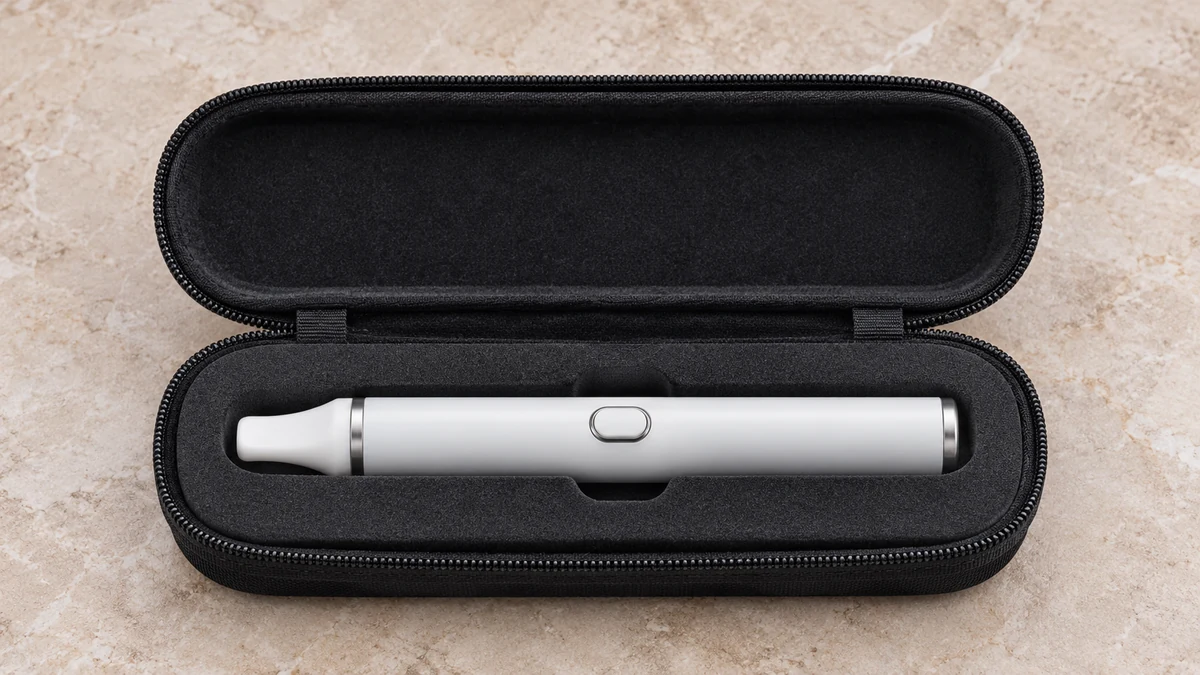
A fitted case can restrain a device while still contacting the wrong feature. A recess that supports the broad body may place its edge near the button, and a lid pocket can bring another accessory against the mouthpiece. Check the intended arrangement with cool, empty, unpowered hardware and no unrelated objects in the case. Being able to close the zipper is only one observation.
🪢 5.1 Elastic Loops and Zipper Pressure
An elastic loop should be assessed at the position where it actually rests. Sliding it along the body can change whether it crosses a control or a removable joint. A zipper follows its own path around the case, while lining can fold inward. These features deserve attention even when the outside case dimensions are comfortably larger than the pen’s published dimensions.
Do not use the lid to force the device into its recess. A different mouthpiece or newly fitted attachment can change the packed outline without changing the battery body. If an accessory no longer has a separate location, reorganizing the storage arrangement is a different job from applying more closing pressure. Our dab pen case guide covers separation of the chamber, pen and loose parts in more detail.
Keep the protective purpose of a case specific. An impact-resistant shell, a soft sleeve and an organizer pouch can serve different roles. Their names do not establish heat protection, liquid resistance, electrical isolation or odor containment. A carrying-design description should state what the case is intended to support and which features it leaves clear, rather than attaching every possible protective claim to the word fitted.
A useful case photograph shows the pen in its recess with the lid open, then shows where the lid lining would meet it. Include the button and mouthpiece in the same view. A close-up of a deep foam cutout may hide an elastic strap crossing the control, while an outside view of a closed case reveals neither contact. If the fitted cover changes the pen height, photograph that configuration too. These observations document the storage arrangement without requiring a powered pressure test or assuming that the case supplies an electronic lock.
❄️ 6. Store Only Cool Hardware
The storage outline is not the only condition that matters. A component can remain warm after the control has been switched off, so the power state and its temperature need separate consideration. Follow the manufacturer’s cooling and storage instructions before placing equipment against case lining, a cover or other accessories. A cap that fits mechanically does not establish that enclosing a warm component is permitted.
Cleaning adds a second condition: the equipment may need to dry before reassembly or storage. A cool surface can still have moisture in a recess. Keep the maker’s care instructions with the actual chamber and mouthpiece rather than borrowing a method from another pen. If a part has been damaged or a seal is missing, closing it in a case does not resolve the condition of the assembly.
FDA’s current vape-battery guidance recommends avoiding extreme temperatures and charging on a clean, flat, visible surface away from materials that readily catch fire. A carrying pouch should not be assumed to provide that charging environment. The place that conveniently stores a device and the place specified for charging are separate questions, even when the charging port remains accessible with the device inside.
🔋 7. Keep Loose Cells Separate From a Complete Pen
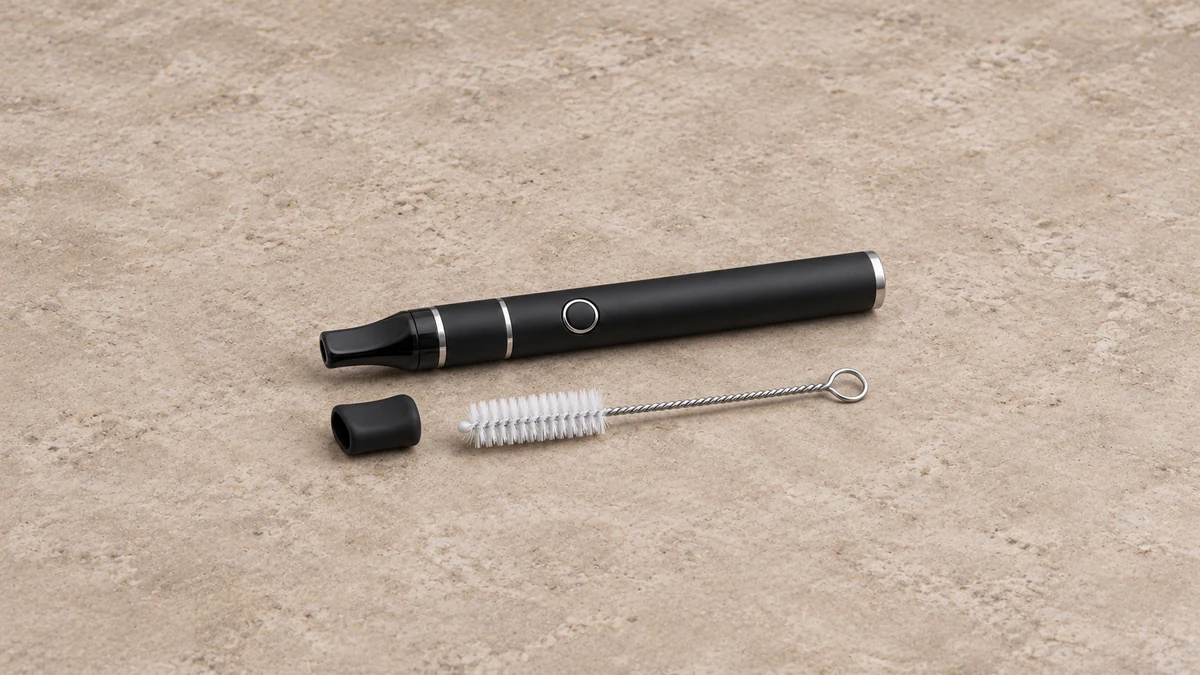
A complete device housing and a loose spare cell are different objects. FDA’s battery infographic advises keeping loose batteries in a case to prevent contact with metal objects such as keys or coins. This applies to exposed cells; it is not a claim that every pen has a removable battery. Identify whether cell removal is actually part of the manufacturer’s user instructions before treating a housing seam as an opening.
If the device has an integrated battery, do not turn a storage question into an attempt to open the powered body. If it has a documented removable cell, keep the specified protection and battery guidance with that configuration. A general accessory compartment can contain metal tools or cables that belong in different locations from a loose cell. The complete carrying list should make those distinctions visible.
✅ 8. A Useful Description of a Discreet Design
A useful description names the complete fitted dimensions, the cover’s purpose, the control’s location, the documented lock or power-off behavior and the case’s clearance. Add the cooling, drying and battery-storage conditions that actually apply. Together, these details explain how a compact pen is carried and protected without promising that small equipment is undetectable or that a short body alone provides reliable control protection.