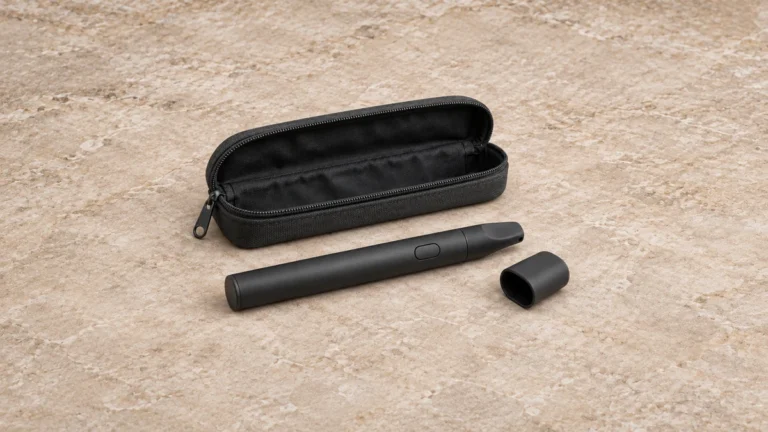
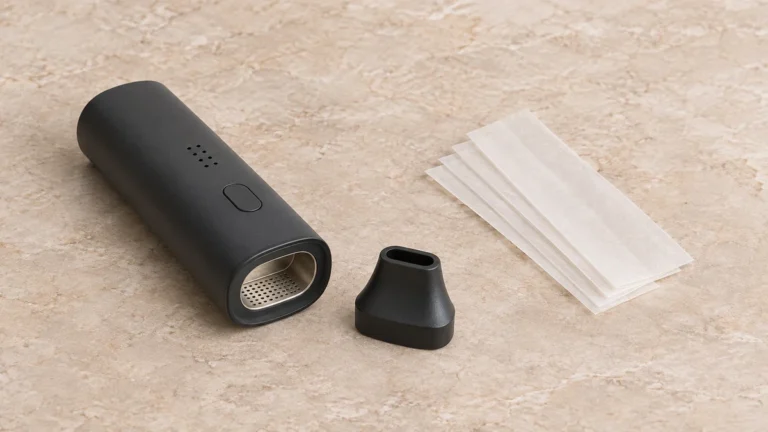
A dry-herb vape leaves a reusable chamber, mouthpiece and heating device to maintain. A joint uses a paper consumable rather than that reusable appliance. This is the equipment difference behind many questions about switching formats: what has to be cleaned, which pieces come apart and what remains to inspect before the equipment goes into storage?
Someone familiar with papers may recognize a portable vaporizer’s outline without knowing what is hidden beneath its mouthpiece. A screen can look like the floor of the chamber; a gasket can come away with a glass stem; a cap can conceal a separate cooling assembly. Understanding those components makes the ownership comparison more useful than treating every device as a pen with a different name.
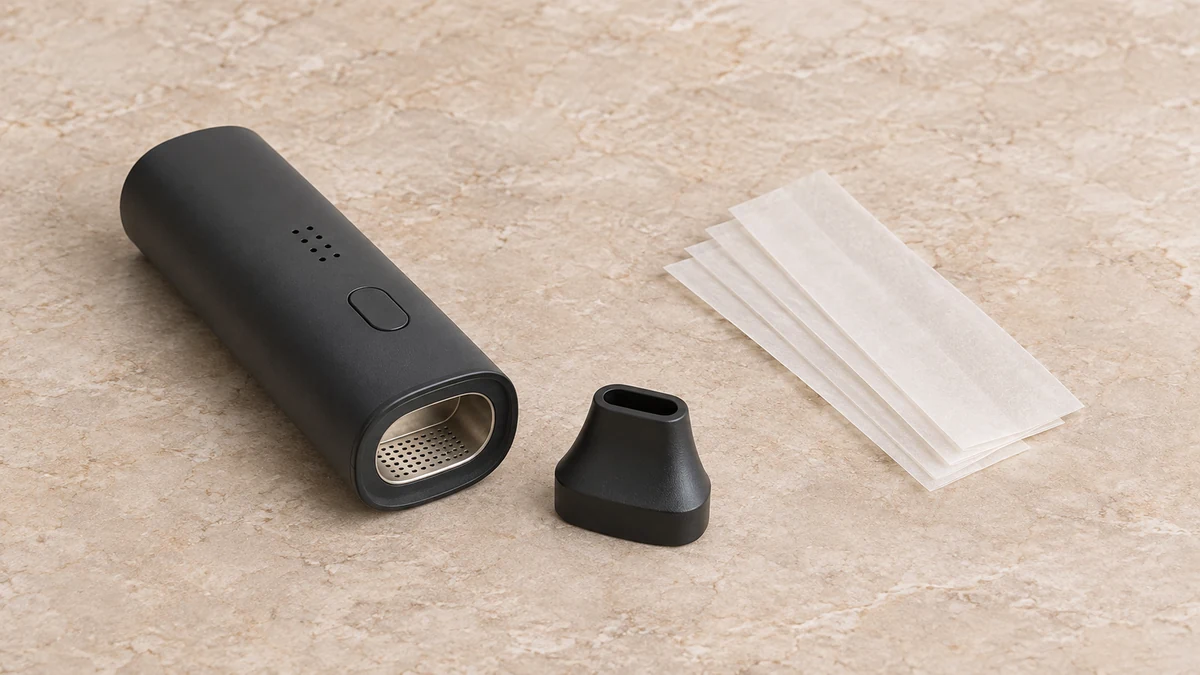
🧭 1. One Format Leaves a Reusable Appliance
The main change is the object that remains afterward. A dry-herb device has surfaces intended to stay with the owner through repeated care and inspection. Depending on its construction, those surfaces can include an oven, removable stem, screen, cooling section and seals. A paper consumable does not supply that same set of reusable components. Any separate holder, tray or storage accessory is an additional object with its own care requirements.
🧻 1.1 The Paper and the Device Have Different Lifecycles
Health Canada’s accessory resource describes joints in terms of dried cannabis and burnable rolling paper, while identifying vaporizers as a separate accessory category. For an equipment comparison, the useful distinction is between a consumable wrapper and an appliance containing a heating arrangement. That distinction does not establish a health outcome, a comparable dose or an effect. None of those conclusions follows from simply counting the physical components.
A reusable device also creates a service history. An original mouthpiece may remain in place while its screen or seal is replaced. A replacement accessory can change what comes off the top without changing the powered body. Keeping those changes identifiable matters later, when a cleaning instruction or replacement listing refers to the original configuration. A familiar exterior does not guarantee that every fitted component is still the original version.
🖊️ 1.2 A Dry-Herb Vape Is Not an Oil Cartridge
A cartridge typically presents a reservoir and its own heater assembly, whereas a dry-herb device has a chamber intended for its documented material category. The distinction is visible in the parts that require care and replacement. A mouthpiece attached to either format does not make their internal components interchangeable. An opening beneath a cap should be identified from the device documentation rather than assumed to be a refill port.
This confusion often appears when someone has used only cartridge batteries before looking at a dry-herb device. A removable stem, oven screen and cooling unit may all be unfamiliar. Start with the maker’s parts drawing and name the pieces that the owner is permitted to remove. Our dry-herb vaporizer heating overview explains the hardware categories without treating the device as an oil cartridge.
🌡️ 2. A Heater Adds Controls and Cooling Parts
A dry-herb vaporizer has a heating arrangement that belongs to the equipment. Its controls, thermal components and accessible airpath need to be distinguished from one another. A number on a display might identify a selected setting, while a button can manage power or another documented function. Neither the presence of a screen nor the shape of a chamber reveals every detail of the internal control system.
🔋 2.1 Battery Power Is Not the Only Arrangement
Portable electronic devices can carry a battery, while other vaporizer formats use a different power arrangement. Some desktop equipment uses a mains supply; manual devices may rely on an external heat source. Those distinctions affect the equipment kept with the device, such as a charging cable or a separate power accessory. They should be established for the actual model rather than inferred from the word vaporizer alone.
A charging task is also different from a cleaning task. A removable mouthpiece does not make the powered body suitable for immersion, and a cleaning accessory does not identify the correct charger. Keep each set of instructions with the component it describes. A bag containing a device, loose glass and a cable can look like a simple kit while still containing parts with several distinct care boundaries.
🪟 2.2 A Mouthpiece Can Contain Several Components
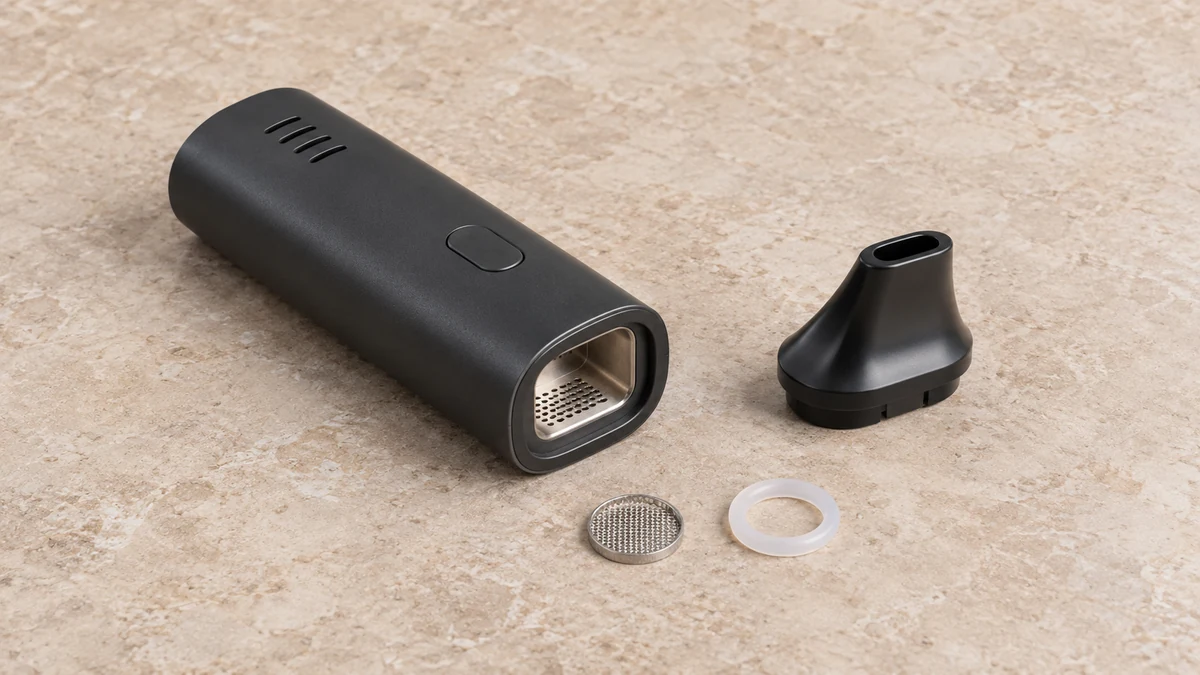
The part at the top may be a single stem or a small assembly. Under it there may be a screen, gasket or cooling section identified in the parts list. Some components stay attached during ordinary removal; others are separate service pieces. Lifting the mouthpiece and finding a loose ring is therefore an identification question before it is a cleaning question. The ring’s original location matters.
Compare that with a simple paper consumable: there is no reusable powered chamber underneath its mouth end. A separate reusable holder would add another object to the comparison, but it should be named separately rather than silently included. This keeps the equipment list honest. Otherwise one format is being compared as a complete collection of accessories while the other is represented only by its smallest visible item.
🧹 3. What Remains to Be Cleaned
With a vaporizer, separate the chamber from the path above it. The chamber can be accessible from the top while residue is located in a removable mouthpiece or stem farther along the route. Cleaning the opening that is easiest to see may leave another component untouched. The relevant question is which surface is affected and how the manufacturer allows the owner to reach it.
🕳️ 3.1 The Chamber and the Screen
A screen can retain particles at one part of the assembly without being the chamber floor itself. Location and retention determine how it is handled. A mesh held in a mouthpiece insert is not automatically removed in the same way as a screen at an oven opening. The oven-screen and mouthpiece-filter guide distinguishes those positions before discussing replacement.
It is useful to photograph the screen while it is still in its documented location, especially before obtaining a spare. A loose circular mesh reveals little about its seat or retention. Matching its outside diameter alone can leave thickness, shape and intended position unresolved. A replacement listing should identify the actual assembly it belongs to, not merely offer a visually similar piece of mesh.
🧩 3.2 The Mouthpiece and Its Seals
A mouthpiece can look clean while a seal beneath it is misplaced or damaged. Conversely, a correctly seated seal does not show that the entire passage is clear. These are separate observations. Keep seals and other loose parts identifiable during permitted disassembly, and use the exact assembly drawing when their position is uncertain. Stretching or substituting an unknown ring is not a way to confirm its intended fit.
Removable glass creates a different access route from a fixed internal passage. A straight stem may expose much of its length, while a cooling assembly can contain turns and several surfaces. Our desktop whip-parts guide illustrates how the stem, hose, mouthpiece and their connections remain separate components even when they form one continuous assembly on the desk.
🧴 4. Match Care to the Actual Part
There is no single cleaning method implied by the term dry-herb vape. The model’s accessible materials and removable parts determine the permitted procedure. Planet of the Vapes’ ONE cleaning guide, for example, separates removable glass and metal accessories from the silicone gasket around them. That is a useful model-specific parts boundary, rather than a general instruction to soak every mouthpiece assembly whole.
🚿 4.1 Removing a Component Does Not Make Every Material Soakable
A detached part may still contain multiple materials, a coating or a fixed connection. Permission to remove it and permission to immerse it answer different questions. Read the care instructions for the complete component, including any pieces that remain attached. Advice about a plain glass stem cannot automatically be transferred to a mouthpiece containing a bonded insert or a seal the owner has not removed.
The same discipline applies to cleaning tools. A brush can fit through an opening while being too stiff or too large for a passage farther inside. A metal pick can reach a visible deposit without being an approved tool for the surrounding surface. Greater access is not always permission for more force. If a procedure is unclear, describe the named part and its condition before experimenting with it.
🧼 4.2 Do Not Turn Maintenance Into a Reuse Recipe
Residue on a device is a care and inspection issue in this comparison. Its color does not identify its composition, and a cleaning discussion does not establish that it is suitable for another use. Online conversations often move from maintenance into consumption or extraction advice. Those are different questions and do not help establish whether a screen, stem or powered body has been cared for according to its instructions.
Keep cleaning supplies separate from consumable materials and let each component reach the condition required by its manufacturer before reassembly. A separate drying requirement still applies when a component looks clean. A clear outside surface also cannot confirm that a hidden recess is dry. These boundaries remain relevant even for a device that looks much simpler than a large desktop assembly.
🎒 5. Storage Includes the Device After It Cools
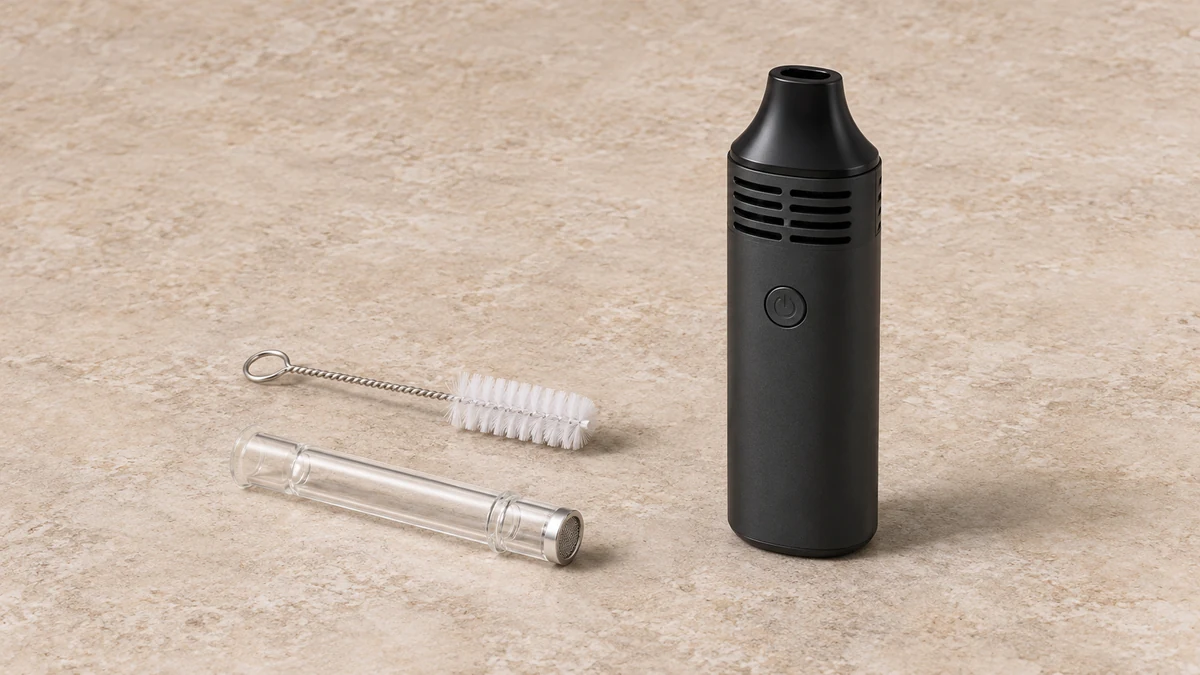
The reusable appliance has to be stored as equipment, including after its heater has been active. A compact body can still have a glass projection, an exposed control or a mouthpiece that comes loose under pressure. Compare the complete fitted outline with its actual storage space. A pocket or pouch that accepts the broad body may still press against a button or load an attachment sideways.
Cooling and drying are separate conditions. A surface that is no longer warm can still be damp after cleaning, and a dry component can still retain heat after operation. Follow the relevant instructions for both conditions. The case does not establish either one simply because its zipper closes. Fully cooled, appropriately dry equipment is the meaningful starting point for a fit and storage assessment.
For electronic equipment, keep the charging instructions distinct from storage convenience. FDA’s current battery-fire guidance recommends reading the manufacturer’s instructions, avoiding extreme temperatures and charging on a clean, flat, visible surface away from readily flammable materials. This is general vape-battery guidance, not a certification of any particular dry-herb model. A soft carrying pouch is not automatically the charging location described by its maker.
🔧 6. Screens and Seals Become Service Parts
A paper consumable and a reusable device create different replacement questions. For the device, the part that needs attention may be a small seal or screen rather than the entire body. Whether it is user-replaceable, and whether it is sold separately, depends on the model. A service list is useful because it identifies which assemblies can be maintained without guessing at the contents of a sealed housing.
📋 6.1 Describe a Replacement Before Ordering It
Keep the model, revision and original component name together. Add photographs of its installed location and the detached component where removal is permitted. “The upper mouthpiece screen” is more specific than “the metal circle,” particularly when a device has more than one screen. A clear description also prevents a retailer from treating a loose seal as evidence that the complete mouthpiece or powered body must be replaced.
Do not assign a universal lifespan to these parts. Condition, construction and the permitted care procedure differ. A screen that looks obstructed and a seal with a visible tear are different findings, and neither is resolved by a fixed calendar interval alone. Likewise, a cracked glass stem is a component-condition problem rather than an instruction to repeat a cleaning cycle more aggressively.
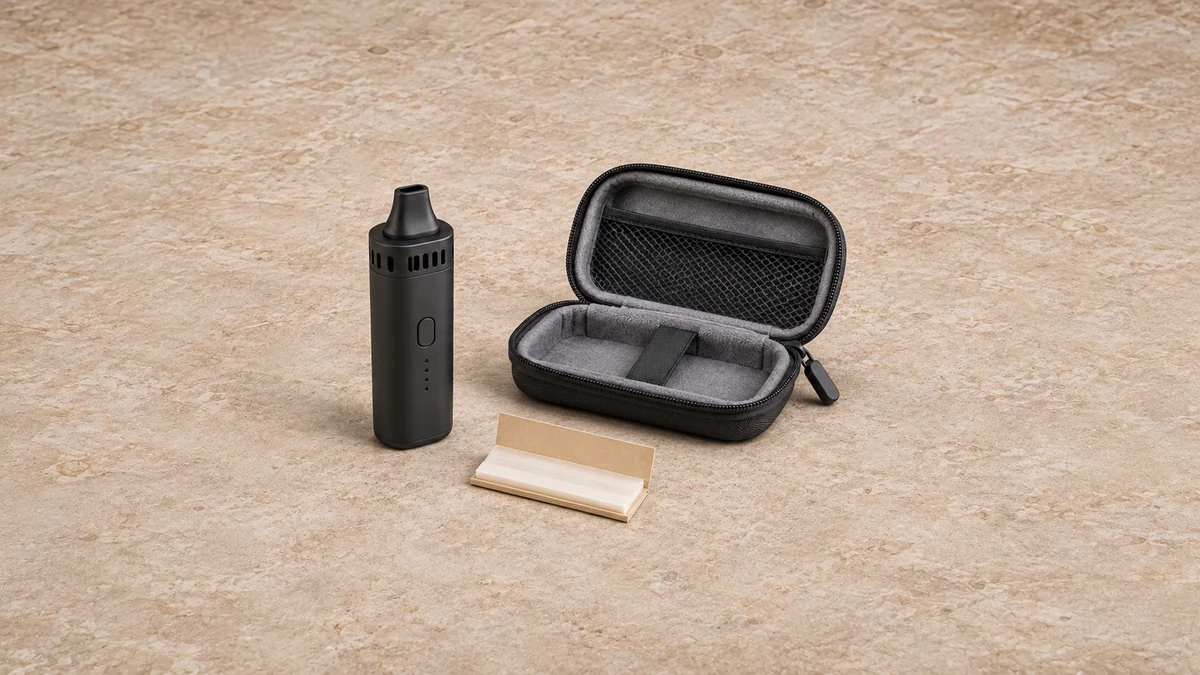
Consider a mouthpiece that comes away with its screen but leaves a gasket on the device. The pieces on the cleaning surface are not the entire mouthpiece assembly. Before applying its care procedure, compare that arrangement with the parts drawing: the gasket may have a separate location and separate instructions. Afterward, the same drawing helps account for every removable piece. This is a maintenance task introduced by the reusable appliance. It cannot be captured by comparing the price or outside size of the device with a packet of papers.
🗓️ 7. Compare the Work Without Inventing a Schedule
Readers often want a simple answer to how much maintenance a vaporizer adds. A useful answer names the tasks: checking accessible passages, caring for removable components, maintaining their identification and following the power instructions where applicable. Their frequency belongs to the exact device and its documented care guidance. Another owner’s schedule is an experience report, not a universal interval for every device in the category.
A more informative comparison might describe one device with a removable straight stem and another with a multi-part cooling unit. Both are dry-herb vaporizers, but their care access differs. The same distinction can matter more than the word portable or desktop. Compare what comes apart, what stays fixed and what the owner is allowed to clean, rather than assuming one format always creates less work.
✅ 8. Know What the Comparison Can Answer
Comparing a dry-herb vape with a joint can explain the equipment that remains: a heater, chamber, airpath, mouthpiece, service parts and possibly a charging arrangement. It cannot establish equivalent effects, personal health outcomes or a guaranteed saving from those component names. For an ownership question, the useful next step is a parts drawing and the model’s care instructions, with each removable piece identified before it is handled.