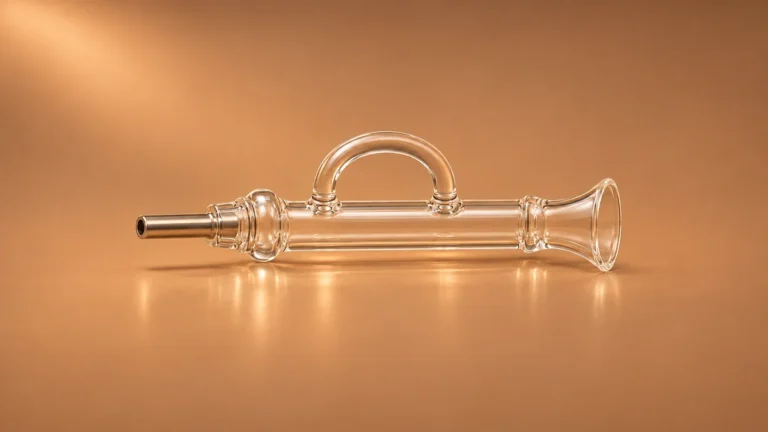
A mini dab pen can have a short housing and still take up extra space at the top. A wide mouthpiece, a projecting control or a separate cover may set the outer dimensions. Look at the whole assembly first, then check which pieces belong to it and which are listed separately.
📏 1. Assembled Length and Diameter: What Actually Shrinks
Measure the description against the picture. Overall length, widest point and thickness describe different axes. A shorter housing may retain the original width, or the maker may redesign the entire shell. Unless the specifications identify the parts or revision, the word mini cannot tell you which approach was taken.
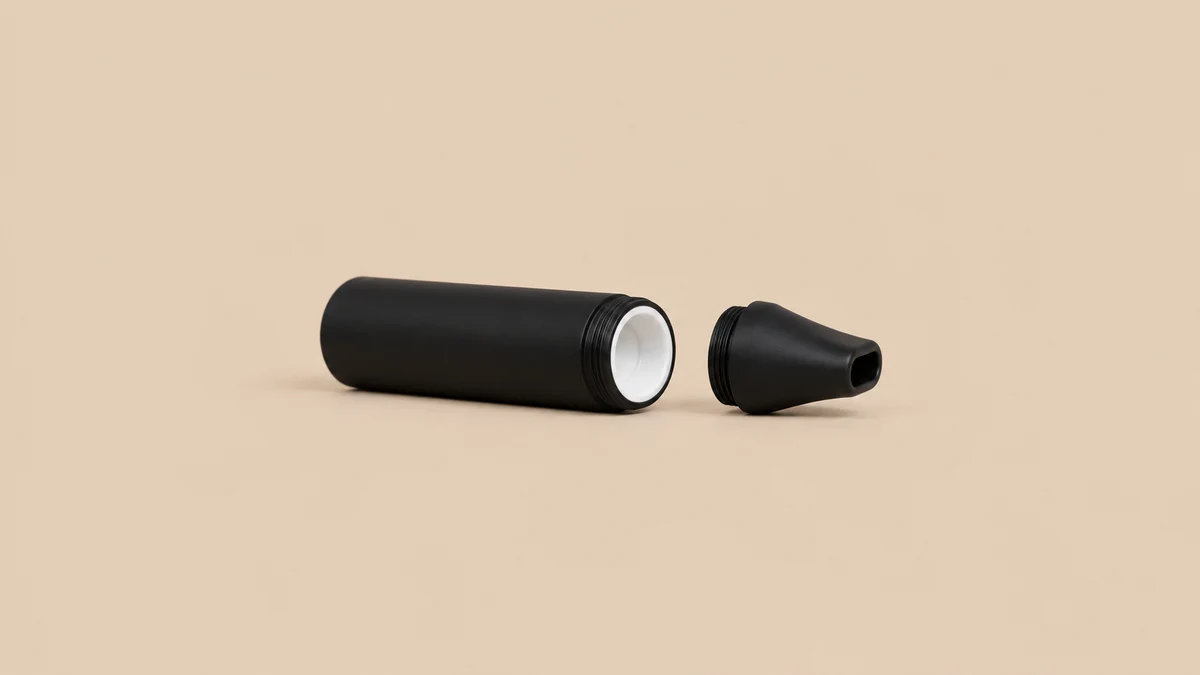
📐 1.1 Compare Length and Width Separately
Consider two hypothetical, empty housings set side by side on a bench: Housing A, a full-length tube with no battery or cartridge content installed, and Housing B, the same tube with a middle spacer section removed.
If the two share the same battery cell diameter and the same atomizer housing, their outer diameter at any cross-section away from the removed segment will typically measure the same, even though Housing B is shorter end to end. The length reduction is localized to wherever material was removed — commonly a tube segment between the battery compartment and the cap — rather than spread evenly across the whole body.
🖼️ 1.2 Check What the Published Length Includes
A separate point worth isolating here: a manufacturer’s stated “assembled length” figure can be reported inconsistently from one listing to another. Some figures include the cap in its seated position; others measure only the tube body and treat the cap as a separate accessory dimension; a few include any threading or lip that protrudes past the main housing wall when the cap is removed.
None of that reporting inconsistency implies anything about whether a shorter unit is more or less durable than a longer one — durability is a structural claim that would need to be sourced on its own, and it does not follow automatically from a smaller length figure.
🧲 2. Cap Retention in a Compact Housing
Reader discussion. A discussion of a loose glass insert illustrates the distinction between a cap coming off the body and an insert separating from the cap. Describe the two interfaces independently.
Related reading: glass mouthpiece.
Caps on this category of hardware are generally held in place by one of a small number of mechanical methods: a threaded cap that turns onto matching threads on the mouthpiece housing, a friction-fit cap that relies on an o-ring compressed against the inside wall of the cap, a magnetic cap that uses an embedded ring magnet to pull two housings together, or a snap-fit cap that engages a raised lip or detent. Each method behaves differently when the body it sits on is shortened.
🪛 2.1 Threaded Caps and Engagement Length
Threaded retention is the most directly affected by a length change, because thread engagement itself occupies physical length on the housing. Picture a hypothetical threaded cap that needs three full turns to seat fully on a standard-length housing.
If a mini revision of that same housing shortens the threaded section rather than removing length elsewhere, the same cap style might only have room for one and a half turns before reaching its seated position — still functional as a retention method, but with less thread engagement to resist side loading or cross-threading. Both housings in this comparison are empty, with no cap installed and no cartridge content inside, used here only to show how thread length and body length are connected.
🧩 2.2 Friction-Fit and Magnetic Caps
Friction-fit retention depends mainly on o-ring diameter and groove depth rather than on overall body length, so a shortened housing that keeps the same o-ring groove dimensions is less likely to show a difference in how firmly an empty cap seats compared with its longer counterpart.
Magnetic retention is set primarily by magnet grade and the air gap between the two magnets when the cap is seated; body length does not directly determine magnetic pull strength, though a shortened housing can move the magnet ring closer to other metal components inside the shell, which can change the effective gap even if the magnets themselves are unchanged.
🎛️ 3. Exposed Controls on a Shorter Chassis
Reader discussion. A reader described damage after sitting with a pen in a pocket. That anecdote cannot predict durability, but it helps explain why a dimensional fit does not answer a question about pressure on the assembled hardware.
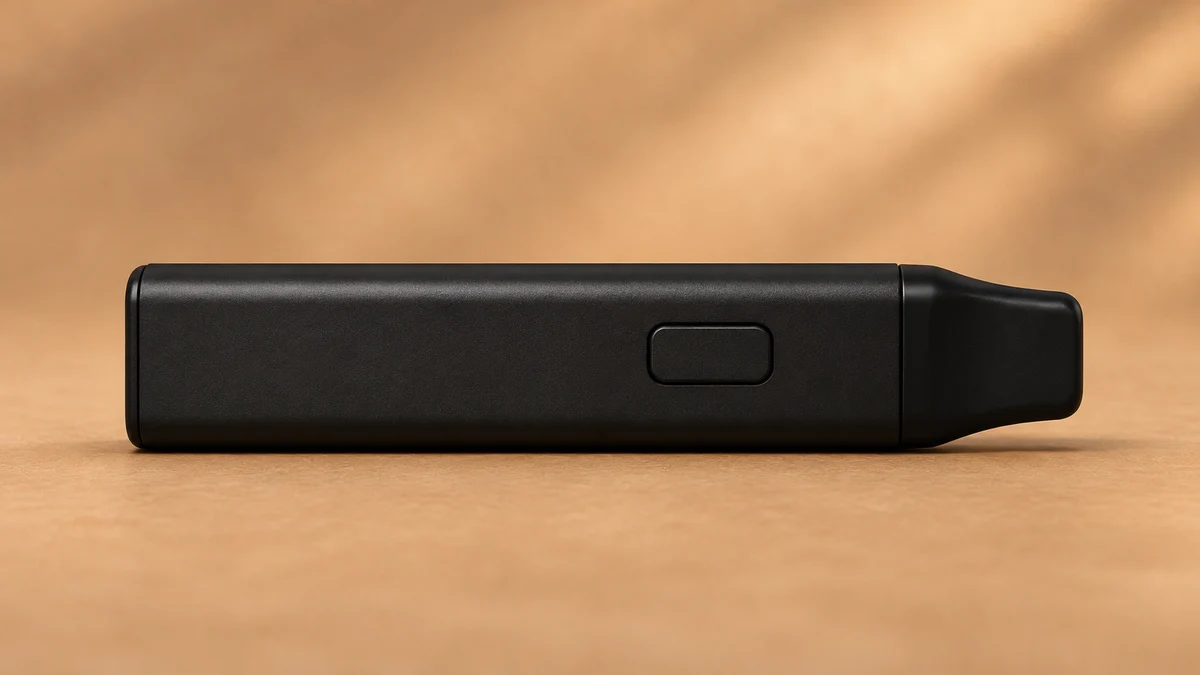
“Exposed” here refers strictly to what is visible or reachable on the outer housing — a button, a slider, an airflow slot, or an indicator window — not to whether the hardware is active. Every example in this section describes unpowered housings with no battery cell installed, used only to show where a control sits relative to the ends of the body.
📍 3.1 Locate the Button Relative to the Ends
On many battery-tube designs, a single button or switch is positioned a fixed distance from the base of the tube, near where internal contacts meet the battery cell. If a mini revision shortens the tube by removing a section between the button and the cap end, the button’s position relative to the base may stay the same while its position relative to the cap end moves closer.
If instead the shortening removes material between the base and the button, the button moves closer to the base and the internal contact length beneath it must be adjusted to match.
💡 3.2 Compare Indicator Windows and Raised Controls
Indicator windows — openings that allow a light source inside the housing to be seen from outside — and airflow slots follow a similar pattern: their placement is tied to whichever internal component they correspond to, so a length reduction taken from one section of the tube will shift that component’s exposed opening relative to the ends of the body, while a reduction taken from a different section may leave it unchanged.
Comparing two hypothetical empty units, Unit A at a longer body length and Unit B at a shortened length, side by side on a bench with no cells or cartridges installed, is the most direct way to see which exposed features moved and which stayed fixed relative to the base or the cap.
🔧 4. Service Parts Affected by a Reduced Body Length
Replaceable or serviceable parts on this hardware category commonly include the heating or atomizer housing, o-rings and seals, the cap itself, a battery door or end cap, internal spring contacts, and any chamber insert fitted inside the atomizer housing. Whether a shortened body changes compatibility for each of these parts depends on where the length reduction was taken from.
Related reading: pen maintenance.
🔎 4.1 Separate Diameter From Contact Travel
Parts sized to a cross-section rather than a length — o-rings fitted to a groove diameter, a battery door sized to the tube’s outer diameter, a chamber insert sized to the atomizer housing’s inner bore — are generally unaffected by a length change elsewhere in the body, and a manufacturer reusing the same atomizer housing across a standard and a mini revision would typically be able to reuse these parts as well.
Parts sized to a travel distance or a gap, most notably spring-loaded contacts that bridge the distance between a battery cell’s terminal and the circuit board, are the ones most likely to differ: a shortened battery compartment generally requires a shorter spring or a different standing height to maintain contact once the end cap is closed.
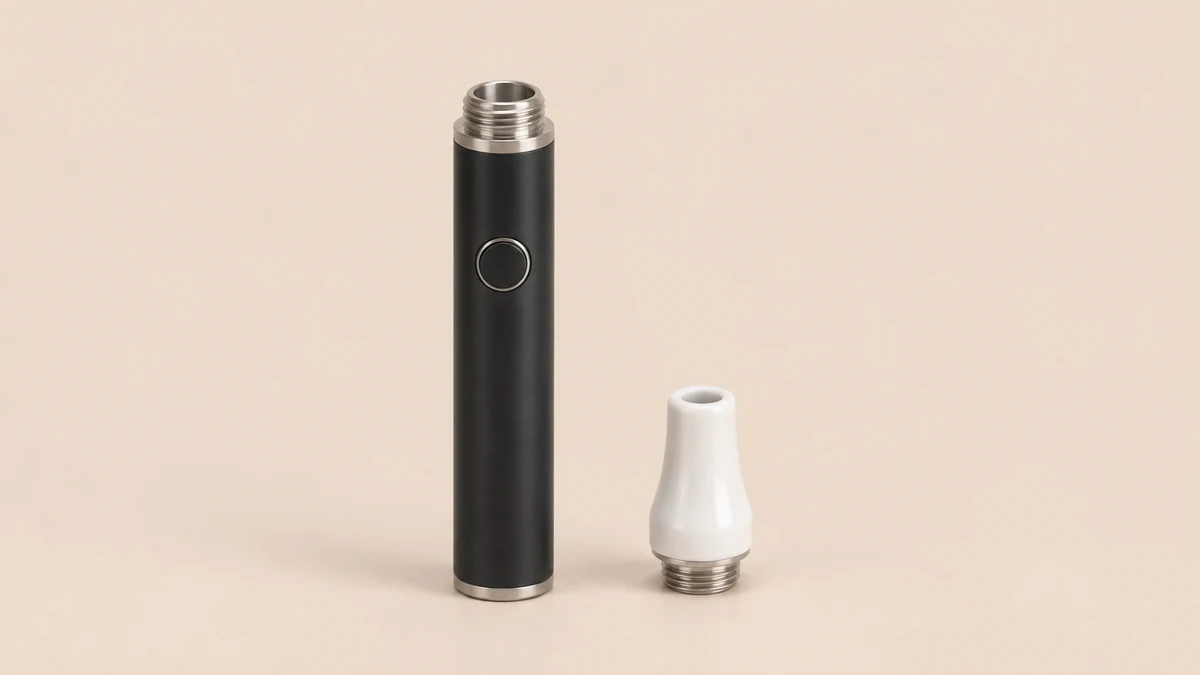
🧰 4.2 Compare the Two Parts in the Drawing
A hypothetical comparison makes this concrete. Unit A and Unit B share the same atomizer housing, o-ring, and cap design, but Unit B’s battery compartment has been shortened by the same amount as its overall body. Removing the battery door from each unit and inspecting the empty compartment shows that Unit A’s spring contact is longer than Unit B’s, because Unit B’s shorter compartment leaves less distance for the spring to travel before it reaches the battery terminal.
Swapping the spring contact from Unit A into Unit B, with no cell installed in either, shows that it does not seat correctly — a reminder that “mini” and “standard” variants within the same product family are not automatically parts-interchangeable even when several other components are shared.
🏷️ 5. Revision Differences Within the Same “Mini” Label
Reader discussion. One discussion about an updated mouthpiece shows why a shared product name leaves an open question about revision. Identify the exact part and revision from the maker before assuming interchangeability.
Related reading: vaporizer parts.
A single “mini” designation can cover more than one hardware revision over time, and the changes between revisions are not always listed anywhere a buyer or technician would see them. Thread pitch on a cap, the standing height of a button, the groove depth cut for an o-ring, and the length of an internal spring contact are all dimensions that can be adjusted between production runs without a name change on the outer packaging.
🗂️ 5.1 Compare Two Revisions Side by Side
To illustrate, picture two empty, unpowered housings both labeled only as “Revision 1” and “Revision 2” of the same mini body, disassembled on a bench with no batteries or cartridge contents present. Revision 1 might use a friction-fit cap with a given o-ring groove depth, while Revision 2, at the same overall body length, switches to a magnetic cap and removes the groove entirely.
A technician handling a sealed, unmarked unit from this family would have no way to know from the outer housing alone which retention method is inside until the cap is removed and inspected directly.
🏷️ 5.2 Match the Revision to the Service Part
This matters most for service parts: a replacement cap or spring contact sourced for one revision may not fit a differently dated unit carrying the same mini label, even though both came from the same product family and share the same stated length.
Where manufacturer literature does not specify revision-level changes — date codes, batch numbers, or an internal part number printed on the housing — physical measurement and disassembly of the specific unit in hand is the only reliable way to confirm which parts and retention method it actually uses, rather than relying on the mini label by itself.
Taken together, these four areas show that “mini” describes a relative reduction in overall assembled length and nothing more by default. Whether a shorter body keeps the same cap retention method, moves an exposed control closer to one end, accepts the same service parts as a longer counterpart, or matches a previous hardware revision are each separate questions, and each one depends on exactly where and how the length was removed.
Confirming any of them for a specific unit requires direct measurement or an explicit manufacturer specification rather than an assumption drawn from the mini label alone.
📎 6. Compare the drawing with the parts list
Suppose a listing shows a complete short pen in one photograph and a detached top in another. Look for a reference view that shows the top seated on the shell. A protrusion may belong to the removable top or to a separate cover on it. The two drawings can make the assembly boundaries clearer than either photo alone. If the drawing shows only the complete device, preserve that uncertainty when describing the component.
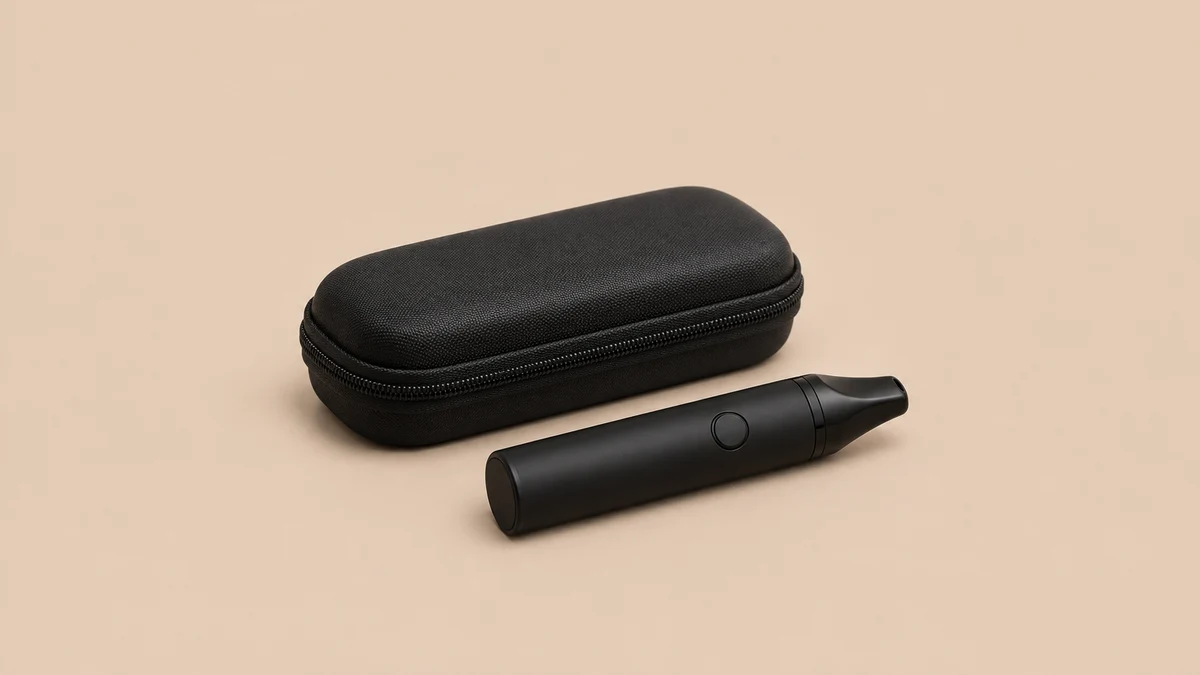
For a documented example, the TVape review of the APX Volt V3 discusses compact height and the glass top as separate observations. The editorial lesson is to keep those questions separate in any device description. Height tells you one dimension. The material and location of the exposed part describe what contacts the space around it. Neither fact establishes how much pressure a housing or top can withstand.
When a listing mentions revised parts, record the revision and exact component name together. A photo can suggest a difference in outline, but a parts list can say whether the change affects the whole top or only one piece. Where no revision is stated, describe the model as shown and leave interchangeability unconfirmed.
A side photograph can make this comparison easier if it uses the same scale as the exploded drawing. Pick a reference point that appears in both views, such as the lower edge of the housing, and compare where the button, top joint and mouthpiece sit relative to it. If the photographs are cropped differently or show the device from different distances, use the written dimensions to establish scale. For instance, a close-up can make a button look larger even when its listed dimensions are identical. The useful finding is whether the button occupies a different position on the housing or projects farther from its surface. When only the product name and a promotional image are available, keep that distinction open in your notes. A labeled drawing or a manufacturer reply identifying the revision can settle it without trying a part from another model.