🔎 1. Locate the Joint Before Naming the Problem
When a magnetic dab pen develops a loose top, first identify which piece moves. The outer mouthpiece may shift on the housing while a smaller cover beneath it stays in place. A tool attached to that cover may come away independently. The simple question is which two surfaces used to stay together and where the gap or movement appears now.
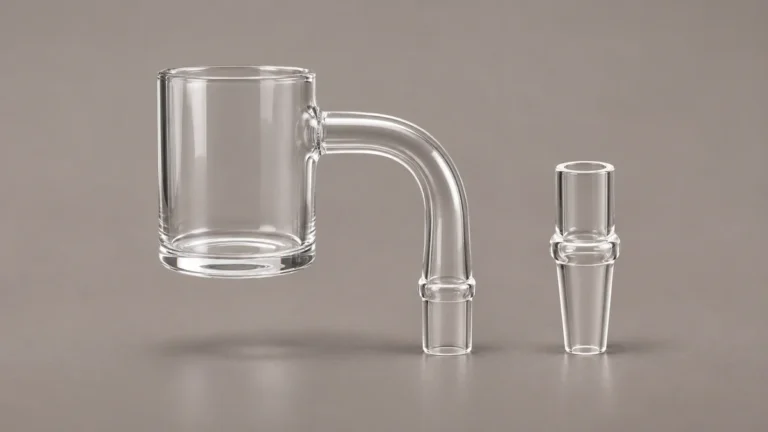
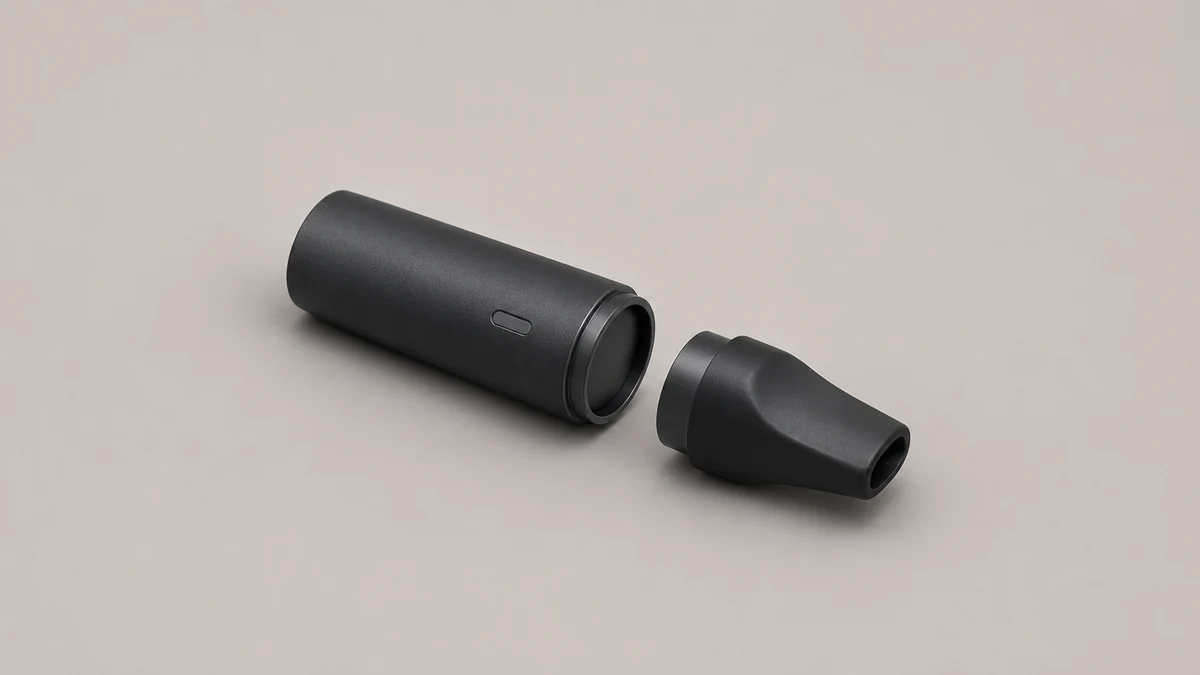
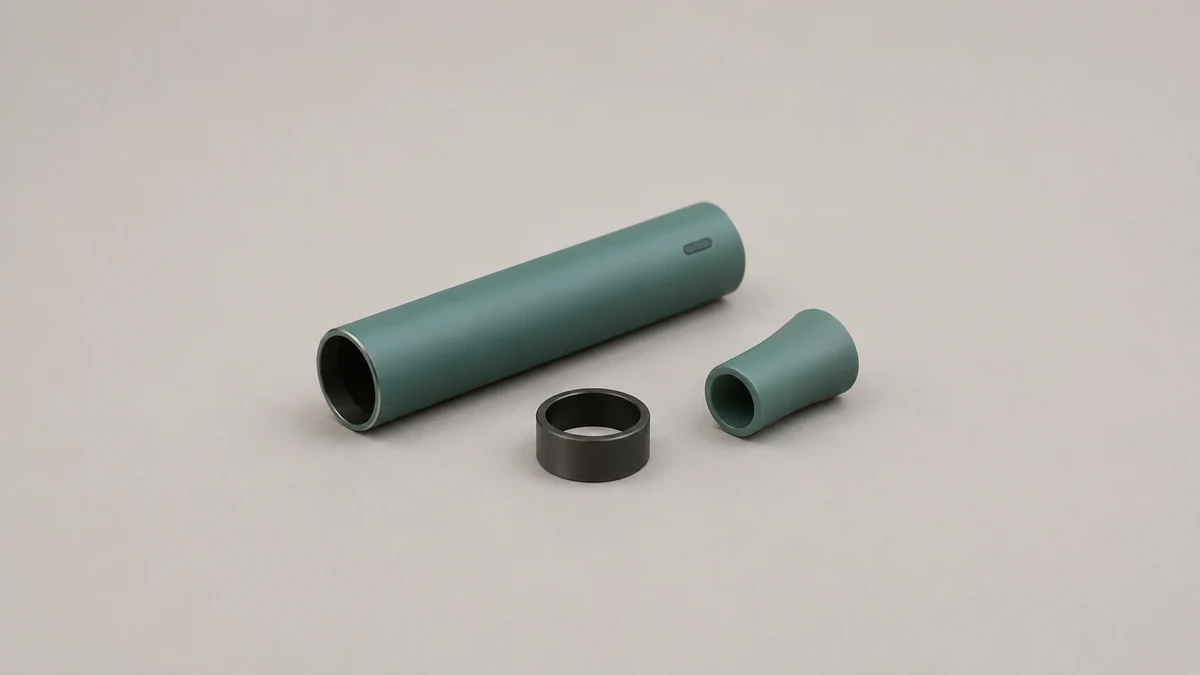
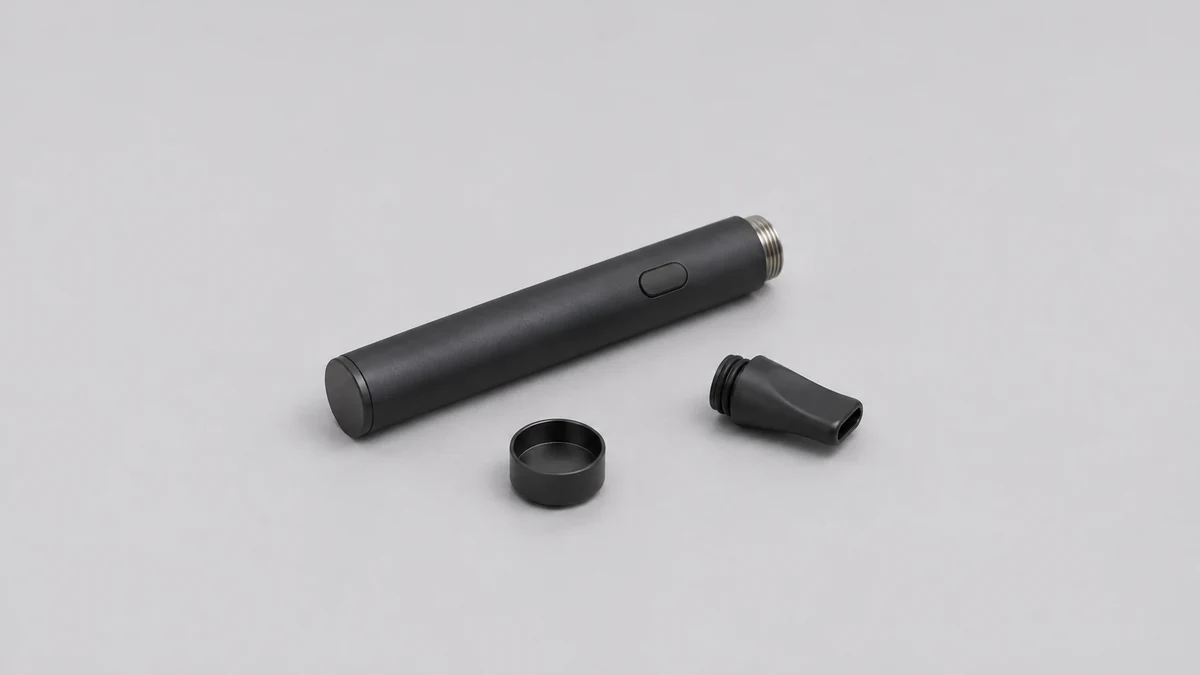
Imagine a pen on a workbench with its top off. A small disc is still on the device, while the outer piece lies next to it. Calling both a cap hides the important detail. A dab pen parts tray and its contents list can help identify which pieces the manufacturer counts separately, even if one of them is installed when the box is opened. The list may give the mouthpiece one name and the chamber cover another, while the tray itself only shows where they were packed.
🧲 2. The Mouthpiece and Chamber Cover Seat at Different Heights
The first distinction worth making is between a housing mouthpiece and a separate chamber cover, because both can be magnetic on the same device without being the same part. A mouthpiece sits at the end a user draws from, while a chamber cover sits lower on the body, closer to where material is loaded, and the two pieces can be seated with completely different magnet strengths depending on how the manufacturer engineered each joint.
🎯 2.1 The Housing Mouthpiece Interface
The housing mouthpiece is the outer piece where the passage exits. Yocan’s Magneto user manual names a removable magnetic mouthpiece and a magnetic coil cap separately. Those names apply to the version shown in that manual. An exploded photo of a different pen can look similar while using another retention method, so the model and revision matter more than an image match.
🔥 2.2 The Separate Chamber Cover Interface
A chamber cover, sometimes called a coil cap, sits closer to the chamber. On the documented example it has its own attachment. The visible seam around the outside of the pen therefore describes only the first interface. A small cover underneath can sit off-center while the outside seam looks normal, or the outside can shift while the smaller cover appears undisturbed. A useful parts drawing shows both pieces and their mating surfaces separately.
📷 2.3 Show Both Seams in the Same Reference
Suppose a manual shows the mouthpiece, chamber cover, and body in a single exploded drawing. A photograph taken from the mouthpiece end may hide the cover altogether because the two circles overlap. A side view of the documented removable pieces, kept in their original order, shows which opening belongs to which piece. Add a second image of the mating face if the location of the ring matters. The photos make a parts question easier to answer without requiring anyone to interpret a shadow as a crack or a bright edge as a magnet.
A photograph with a second device in the background can create a different mistake. If the loose cover came from one pen and the spare mouthpiece from another, their arrangement on the bench may suggest that they form a set. Keep the model label or the original parts diagram in the frame, or label the photographs separately. Someone reviewing the images can then distinguish a documented assembly from a collection of similar-looking parts.
🛠️ 3. A Magnetic Tool Holder Is a Third, Separate Feature
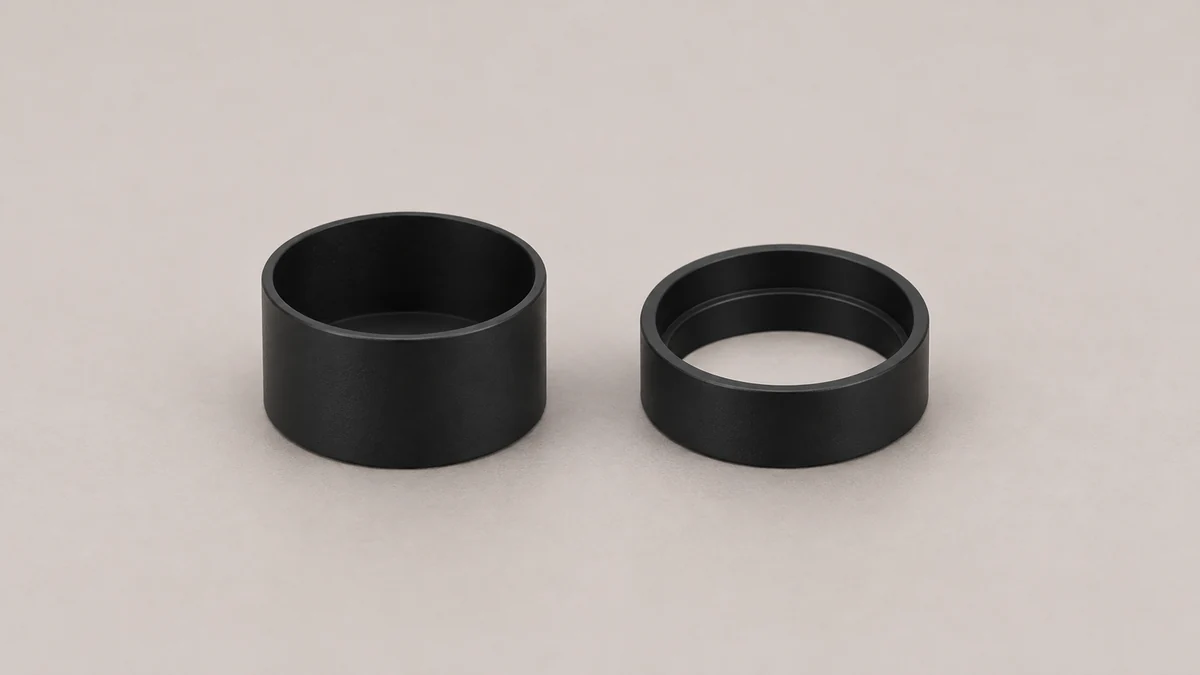
Some caps incorporate a separate tool holder. In that arrangement a retained tool is another component, even when it shares the same visible cap. Ask which piece is supposed to stay with which surface. If the tool detaches from the cap, the relevant view shows the tool recess. If the whole cap shifts relative to the device, the relevant view shows the cap and the surface where it seats.
A Reddit discussion about a cap with a magnetic tool shows how easily the terminology overlaps. The reader was describing the position of a retained tool, while replies discussed attaching additional magnets. Neither the orientation of that tool nor the replies establish how another cap works. The useful distinction is between a joint that holds a removable cover and a feature on that cover that holds a second item.
Keep the observations separate even when a single assembly appears to contain both features. The tool may no longer sit against its recess, or the whole cap may lift away from the body. A product diagram sometimes shows only the parts and leaves the number of magnets unstated. There is no need to infer how many magnets are inside to describe which part has moved.
🔌 4. A Drop-In Cartridge Adapter Belongs to a Different Architecture Entirely
A magnetic cartridge adapter belongs to a different assembly. In a drop-in cartridge housing, a ring or adapter can travel with the separate cartridge while the receiving bay stays in the body. That assembly can contain electrical contact surfaces as well as magnetic retention hardware. The location of a spring contact in a drawing tells the reader where that contact sits. The drawing needs a separate label or description to establish which feature retains the cartridge.
A chamber-style pen can also have a cylindrical body and a removable top, so a distant photograph leaves this distinction open. Ask whether the removable item contains the cartridge connection or sits above the device’s own chamber. AOVAPE’s dab pen accessories guide maps the surrounding parts by function. For this question, the useful test of an illustration is whether it identifies the component that actually comes away with the mouthpiece.
📐 5. Model Drawings, Stop Points, and the Part the Magnet Actually Retains
Once the different joints are named, the next question is what evidence actually shows which part a given magnet is meant to hold. Manufacturer drawings and parts photos, where they exist, are more reliable than a general description of magnetic parts because they show a stop point, the face that makes contact, and the exact piece that is retained rather than merely aligned.
🧷 5.1 What the Documentation Shows for This Model
The manufacturer’s documentation for the version above names the pieces individually. It does not need to give a tolerance or a force value to be useful for identification. Look for the same seam in the diagram and in the side view of the actual device, then see whether the parts list names the smaller cover separately. A drawing that skips this intermediate piece can still identify the mouthpiece, but it leaves the inner attachment open as a support question.
🔍 5.2 Contact Faces and Parts Photos
A mating face is a surface where two parts meet. It may be an outer rim, a recessed ring, or a shoulder inside the housing. A drawing can mark a magnet near that surface even when the magnet itself is enclosed. Describe a mark as a mark, with its position and shape. A dark ring around a mouthpiece could be a visible part of the housing or a change in its surface. The manufacturer’s parts photo supplies a reference if it shows the same side of the same revision.
A drawing and a spare-parts listing answer different questions. The drawing may show a ring between the cap and housing, while the listing may sell the outer cap as a complete assembly with that ring included. Record which item the catalog actually identifies. If the ring has no independent reference, use the complete cap name when asking about it. The drawing still helps the reader explain where the gap appears, even when it does not show whether the ring is serviced separately.
👀 6. A Visible Lip or Shoulder Can Align Parts Without Any Magnet at All
A raised lip or recessed shoulder can help a removable part center on a housing. A circular shoulder may constrain side-to-side movement while still allowing the cap to turn. A keyed shoulder can also control orientation. With a generic magnetic closure, the magnet can help retain the cap and the shoulder can help place it. Once the distinction is clear, a gap seen on one side of a seam can be described in terms of where the visible lip sits, without assigning a cause to the magnet.
⚖️ 6.1 Alignment Features Versus Magnetic Retention
A seam that looks different after reassembly is worth describing precisely. Is the gap visible around the whole circumference, or is one edge farther from the body? Does it appear on the outer cap while the chamber cover still sits level? A straight-on side photograph and a second view turned ninety degrees can make those observations easier to compare. They do not measure magnetic holding force, and a change in appearance alone leaves the mechanism unresolved.
❓ 7. What Readers Are Actually Asking About Loose Caps and Weak Magnets
Reader questions on forums tend to describe a symptom first and reach for an explanation second, and two threads on the r/Waxpen community illustrate that pattern well. In one 2019 discussion, a user reported that a mouthpiece felt weaker after a cleaning session, and replies described a separate case in which a loose magnetic component turned up at the opposite end of a different device, without either thread establishing a cause.
A later 2022 discussion shows the same pattern in a more direct form, with one reader describing a loose cap and a reduced magnet strength as though the two were necessarily connected, while the comments that followed disagreed with each other and offered competing, unverified explanations. Neither thread resolves into a reliable technical claim, and that is the honest state of publicly available reader discussion on this subject.
What these threads are useful for is showing how an ordinary reader experiences the ambiguity described earlier in this piece. A person who notices a looser cap after cleaning has made a real observation, but the step from that observation to concluding the magnet is weaker or the cap was damaged is an inference the available evidence does not support.
🧹 8. Read the Seam Before and After Routine Maintenance
Routine maintenance may be the first time someone sees the inside of a removable cap. AOVAPE’s dab pen maintenance guide discusses how to identify parts the manual permits the owner to remove. For the magnetic connection question, an inspection is most informative when limited to the accessible faces of cool, inactive hardware. A mark on the exposed rim, a new gap, and a piece already loose are different things to record.
If a reference photo exists from before the change, compare it from the same angle. An oblique image tends to make the far edge look narrower, and a hand partly covering the collar can make the cap appear to sit deeper. When there is no before image, record what is present now and identify any uncertainty about the angle or revision. A photograph taken after maintenance establishes what was visible at that point, and the timing alone does not establish a mechanism.
🗂️ 8.1 When There Are Two Similar Caps on the Bench
Suppose two pens are being checked on the same workbench. The loose mouthpieces are almost identical from above, and one closes with a slightly different seam. Keep each part with the model it came from and record the device label in the same photo. If both parts were already mixed, their outside diameter is only a description. The shape underneath, the depth of the visible lip, and an exact parts listing give a support team more to work with than an isolated shot of the cap.
The same question comes up when a replacement arrives as part of a kit. One part may have a clearly marked outer housing, while the smaller cover is described as an included component without its own label. A photo of all the pieces laid out and a copy of the exact contents list give the reader a way to refer to the piece consistently in later notes. If the manual uses two different names across revisions, quote the one printed for the revision in hand.
🧩 9. Write a Useful Description of the Loose Part
A useful message names the model and identifies the moving piece in ordinary language. For example, the outer mouthpiece rocks on the left side while the small chamber cover remains seated. That is a more testable description than saying the pen lost its magnet. If a loose piece is visible, include where it was found and show it next to the housing with the mating face visible. A parts diagram can then confirm whether that piece is part of the removable assembly.
When the device has an outer cap, a cover, and a retained tool, show the pair you mean in a single picture. Set out only the parts documented as removable and leave enclosed components to the manufacturer or service contact. If a drawing does not show the interface, a good next question is whether the visible ring is part of the cap or part of the body for this particular revision. The answer gives a name to the seam before anyone tries to explain what changed there.