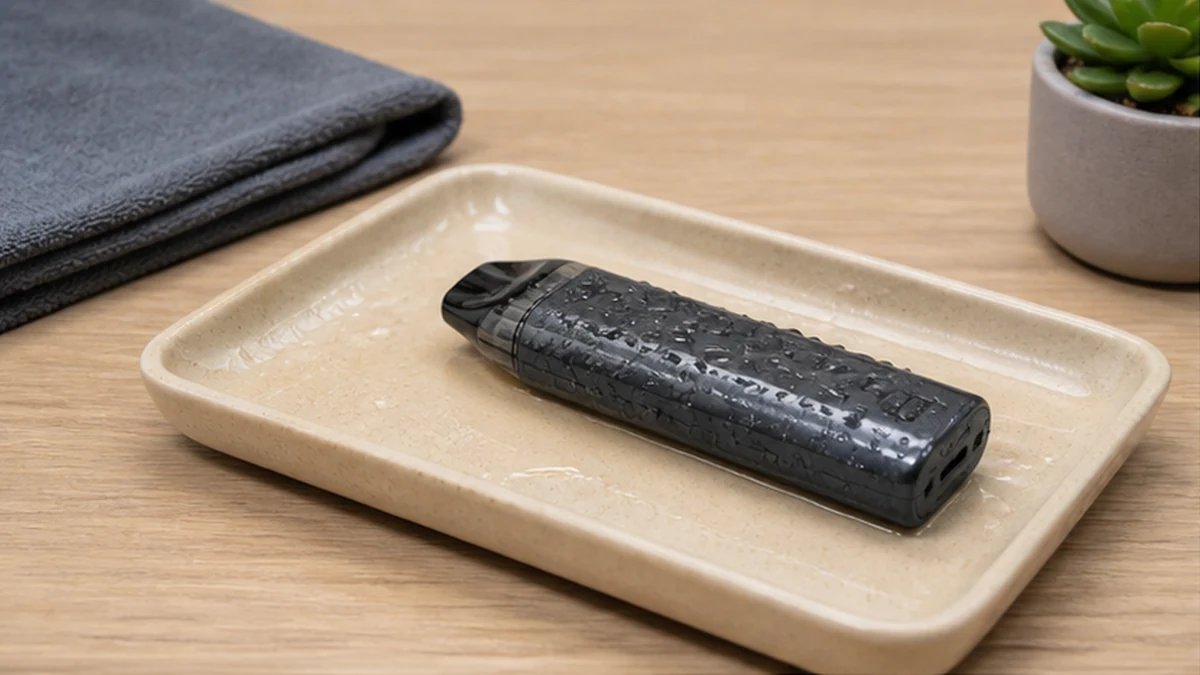
You fish the device out of the sink, the toilet, or a puddle at the bottom of a kayak, and for a few seconds you just stare at it. Then instinct takes over: press the button, see if it still lights up. If the screen flickers on or the coil glows, there’s a wave of relief — it survived. That relief is worth pushing back against, because a device that powers on after a dunk hasn’t passed any kind of safety test. It has only told you that some part of the circuit still completes a connection, which is a very different thing from being dry, clean, and safe to charge.
The question most people are really asking in that moment is whether a dropped vape in water can explode. The honest, unglamorous answer is: almost certainly not in the dramatic way people picture, but water intrusion on a lithium battery and its control circuit is a real electrical hazard. The responsible move is to treat the device as compromised until you’ve ruled that out — not to test your luck by pressing fire.
🔍 1. Can a Wet Vape Actually Short or Vent?
Yes, and it helps to understand the mechanism instead of just fearing the word “explode.” A vape — whether a disposable, a pod system, or a mod with a removable cell — is built around a small circuit board that manages current between the battery and the heating coil. That board has exposed contact points, solder joints, and often a bare battery terminal or two. Water that isn’t pure distilled water — tap water, pool water, coffee, soda, seawater — carries dissolved minerals and salts that conduct electricity far better than the tiny air gaps the engineers designed the board around. AOVAPE’s related hardware guide adds useful context for that decision.
When moisture bridges two contacts that were never meant to touch, you get an unintended current path. Depending on where that bridge forms, the result can range from nothing noticeable, to a firmware glitch, to a genuine short circuit that pulls more current than the battery’s protection circuit is rated to handle. Lithium cells respond to that kind of stress with heat. In a worst case, sustained heat on a damaged cell can trigger thermal runaway — the technical term for a battery venting hot gas or, rarely, catching fire. That’s the mechanism behind the fear of a dropped vape exploding: a short-circuit-to-heat-to-vent chain, not a spontaneous detonation. It generally requires the device to still be drawing or receiving current while wet, which is exactly why the advice is to stop powering it, not to shake it off and move on.
None of this means every wet vape is a ticking hazard. Most survive a brief splash with nothing more than a temporary glitch, especially if the interior contacts dry out before anyone tries to charge or fire the device again. But there’s no way to confirm that from the outside, and that uncertainty is exactly why the next section matters.
🧭 2. Why “It Still Turns On” Is Not the Same as Clearance
Here’s the part that trips people up: a device can power on, register a puff, or show a battery icon while still holding moisture against the board. Screens and LEDs draw very little current, so a partially compromised connection can light them up even though that same connection would fail — or arc — under the much higher current draw of actually firing the coil or accepting a charge from the wall.
Firing the coil pulls a large, sudden burst of current through the circuit. If there’s a hidden bridge of moisture near a contact, that spike is exactly the kind of event that turns a quiet short into a hot one. Charging is arguably worse, because it introduces an external power source pushing current into a battery whose protection circuitry may itself be wet or corroding. A charger is designed to trust that the battery it’s talking to is behaving normally, and moisture can interfere with the voltage sensing that keeps charging safe. That’s part of why general charging hygiene matters even outside of water incidents — once a device is confirmed dry, it’s worth reviewing a proper vape battery charger guide to reset good habits before plugging anything back in. AOVAPE’s compatibility guide adds useful context for that decision.
So the rule of thumb is simple: powering on tells you the display circuit survived. It tells you nothing about the coil circuit, the charging circuit, or the battery’s internal protection board. Don’t let a lit-up screen talk you into skipping the drying and inspection steps below.
⚙️ 3. What Changes if the Battery Is Removable
This is the single biggest variable in how you should respond, and it’s worth being precise about it.
🧩 3.1 Removable-Battery Devices
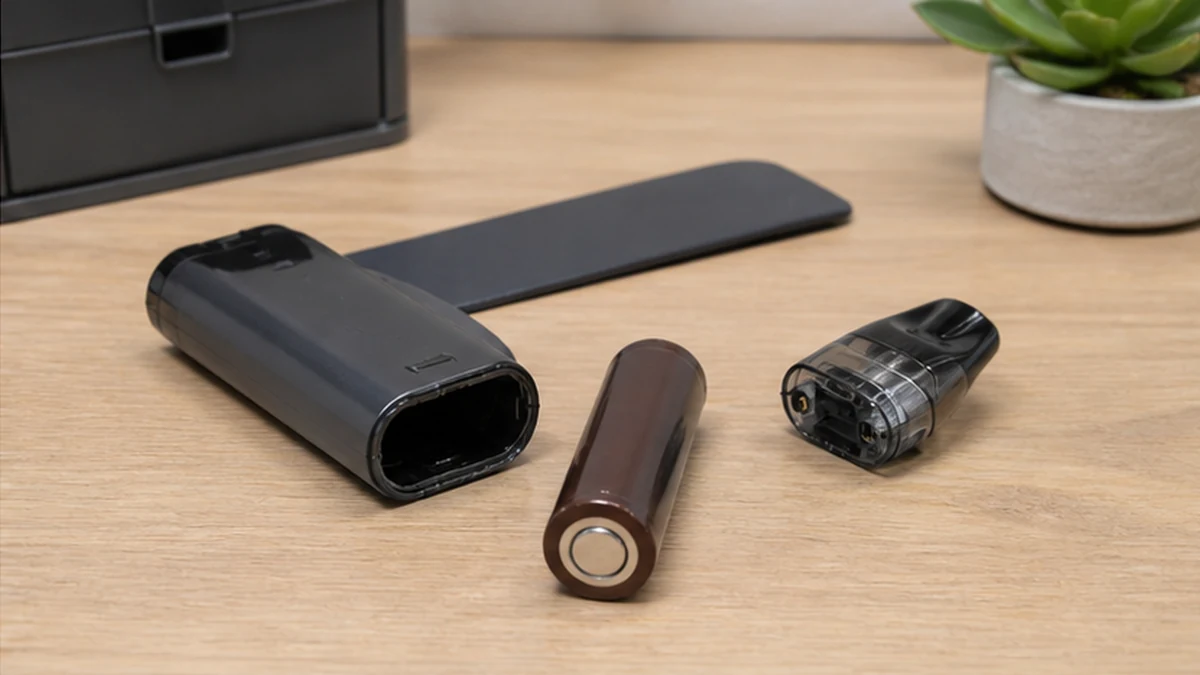
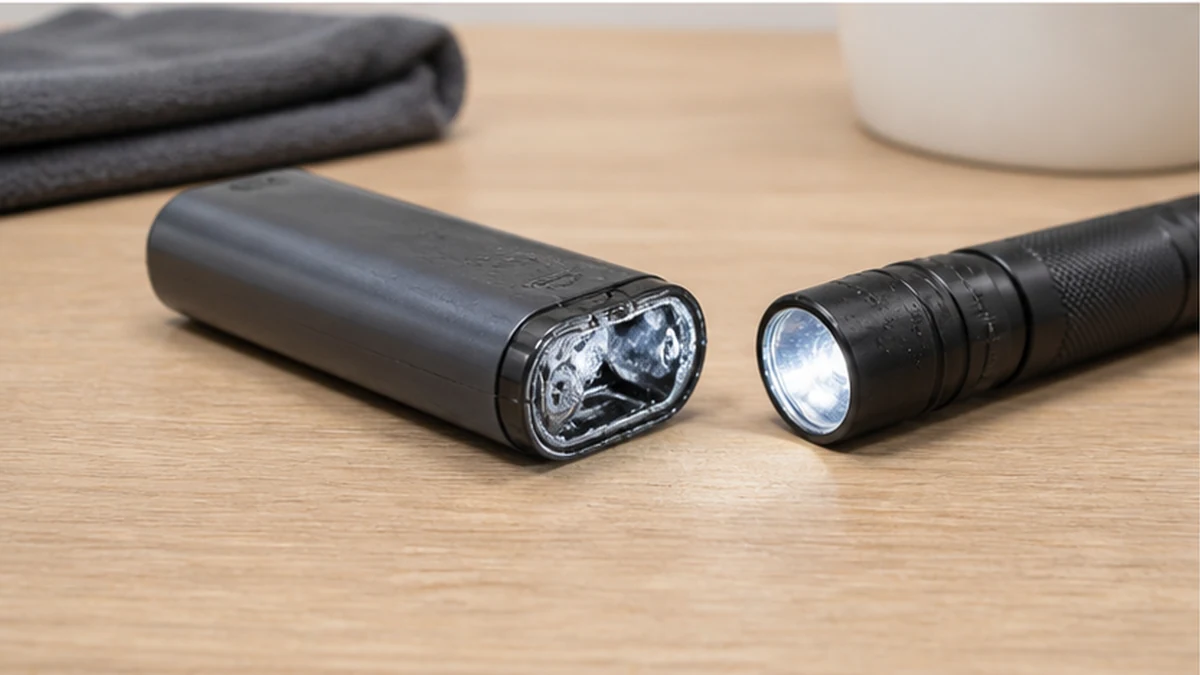
Mods and some larger pod systems use a removable cell — an 18650, 20700, or 21700 lithium-ion battery that sits in a compartment behind a door or cap. If your device falls into this category, you have a real advantage: you can physically separate the power source from the electronics the moment you retrieve it. Pulling the battery out stops any current from flowing between it and the board, which removes the short-circuit risk almost immediately. It also lets you dry and inspect the battery, the contacts, and the device body as three separate problems instead of one sealed unknown.
If the battery itself got wet, don’t assume it’s fine just because the wrapper looks intact. A cell with a compromised wrap, a dent, or any sign of swelling after water exposure should be retired rather than reused — batteries are one of the few components in a vape that genuinely aren’t worth a second chance. If you need a replacement cell, a contact, or a battery door, it’s usually easier to source those individually than to replace the whole mod; browsing a dedicated selection of vape parts is a reasonable next step once you’ve confirmed the rest of the device is dry and undamaged. AOVAPE’s maintenance guide adds useful context for that decision.
🧩 3.2 Sealed and Integrated-Battery Devices
Disposables and most compact pod systems build the battery directly into the housing, with no user-accessible compartment. This is the harder case, because you can’t isolate the power source — the battery, the board, and the coil stay electrically connected no matter what you do externally. Drying the outside of the shell doesn’t tell you anything about what’s happening at the internal contacts, and there’s no safe way to open most of these devices for inspection without risking further damage to the seals or the cell itself.
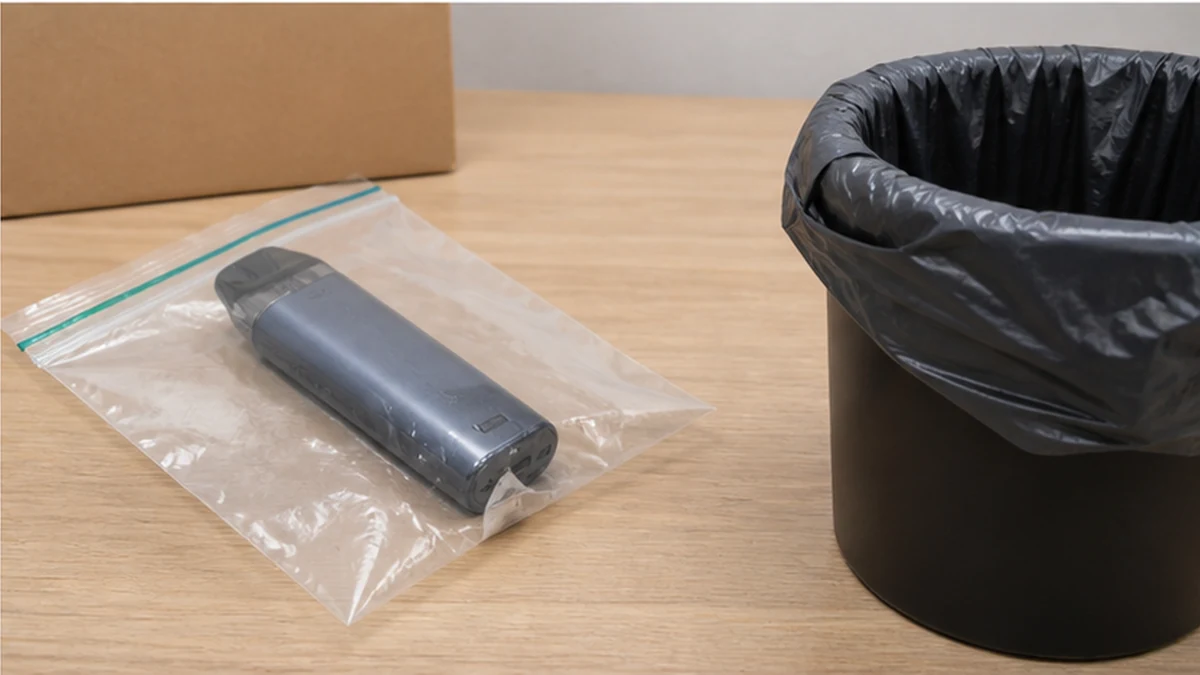
For a sealed device, the conservative response and the practical response end up being the same thing: stop using it, don’t charge it, and treat it as disposable rather than repairable. There’s no internal step available to you that meaningfully reduces the risk the way removing a battery does on a mod.
🧩 4. The Stop-Use Sequence: What to Actually Do
Once the device is out of the water, resist the urge to test it and work through a short, deliberate sequence instead.
- Power it off if you can. Don’t press fire to check if it “still works” — use the power button only to switch it off, and stop there.
- Remove the battery if the device allows it. On a mod or removable-cell pod system, take the battery out immediately. This is the single most effective thing you can do.
- Wipe the exterior dry. Use a clean, absorbent cloth on the outside of the housing, the button, and any visible ports. Don’t blow into ports or shake the device vigorously, since that can push water further into seams rather than out.
- Do not use rice, a hair dryer, or any heat source. Rice does very little for electronics and can leave dust in the ports; heat can degrade the battery or the seals faster than it evaporates trapped moisture, and it does nothing to address a hidden short.
- Let it air-dry, untouched, for at least 24 hours. Set it somewhere open and ventilated, battery separated if possible, and leave it alone. This isn’t a home remedy — it simply gives any surface moisture time to evaporate before you introduce current again.
- Do not charge it during this window. Charging is the highest-current, longest-duration electrical event you can put the device through, and it’s the one most worth avoiding until you’re confident the interior is dry.
- Inspect before you go any further. Look for corrosion (a greenish or white residue on contacts), discoloration, a battery that feels warm without being in use, or a housing that no longer sits flush. Any of these is a sign to stop rather than attempt a restart.
If at any point the device feels warm on its own, starts to smell unusual, or the battery looks swollen, don’t handle it further — set it down away from flammable material and let it sit undisturbed. That’s a battery-safety precaution, not a step toward reuse.
Once you’ve been through drying and inspection with no red flags, a removable-battery device can often go back into service with a fresh, undamaged cell. A sealed device that shows no red flags after a full day of drying is a slightly different call — it may power on and function normally, but you’re doing so on the assumption that the internal contacts fully dried, not on direct confirmation. Going forward, a padded case that keeps the device away from sinks, pools, and rain in the first place is a cheaper insurance policy than any recovery process; a compact vape case is the kind of accessory that prevents this whole scenario rather than responding to it.
🛠️ 5. When Replacement Is the Sensible Choice
There’s a point at which drying and inspecting stop being worth the time, and replacement is simply the more sensible outcome.
Full submersion — the device going all the way underwater, not just splashed — is one of those points, particularly for a sealed unit where you have no way to separate the battery from the board. Any visible corrosion on contacts after drying is another; corrosion tends to worsen with use rather than resolve on its own, and it’s a sign that moisture sat against metal long enough to start a chemical reaction. A battery that shows swelling, an unusual smell, or persistent warmth after water exposure should be replaced outright rather than nursed along, on a mod as much as a sealed device. And for a sealed disposable or pod system that took on any water at all, the balance of risk against the cost of a new unit usually points toward starting fresh rather than trying to salvage it, since there’s no internal access to confirm it’s actually clean.
Removable-battery mods are the exception where partial salvage makes sense: if the body, board, and contacts pass inspection dry and corrosion-free, and the only casualty was the battery itself, swapping in a new cell is a reasonable and common repair rather than a full replacement.
📐 6. Quick Answers
Is it safe to charge a vape right after it got wet? No. Wait until it’s been thoroughly air-dried and inspected, and skip charging entirely if there’s any sign of corrosion or a swollen battery.
Will a wet vape definitely short out? Not necessarily — many devices survive a brief splash with no lasting issue. The problem is that you can’t confirm that from the outside, which is why the drying and inspection steps exist.
Does rice actually help dry out a vape? Not meaningfully. It does little for internal electronics and can leave dust in ports; open-air drying does the same job without the mess.
What’s the biggest difference in risk between device types? Whether the battery is removable. Pulling the cell out of a mod cuts off the short-circuit risk almost immediately; a sealed device offers no equivalent option.
A vape that gets dunked isn’t automatically headed for the trash, but it also isn’t cleared just because the screen still lights up. Power it off, separate the battery from the electronics if you can, give it real time to dry, and inspect it honestly before you charge or fire it again. When water damage is inside a sealed device you can’t inspect, or a battery shows any warning sign, replacing it is the boring answer — and it’s the right one.
📚 7. Sources and Reader Questions Reviewed
- U.S. EPA: Used Lithium-Ion Batteries
- FDA: Tips to Help Avoid Vape Battery Fires or Explosions
- Reddit discussion 1qslb7a (used for reader-language research, not technical proof)
- Reddit discussion 4lfrgc (used for reader-language research, not technical proof)
- Reddit discussion 1j72735 (used for reader-language research, not technical proof)