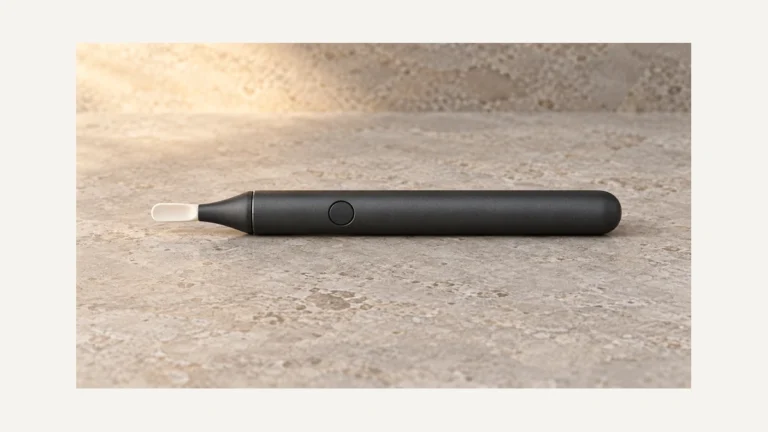
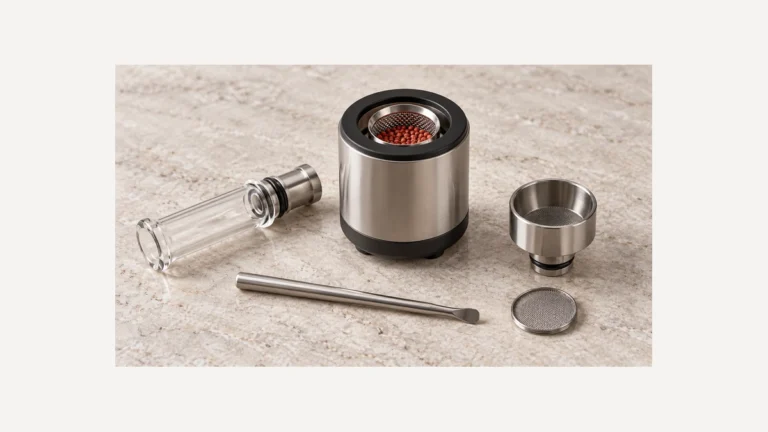
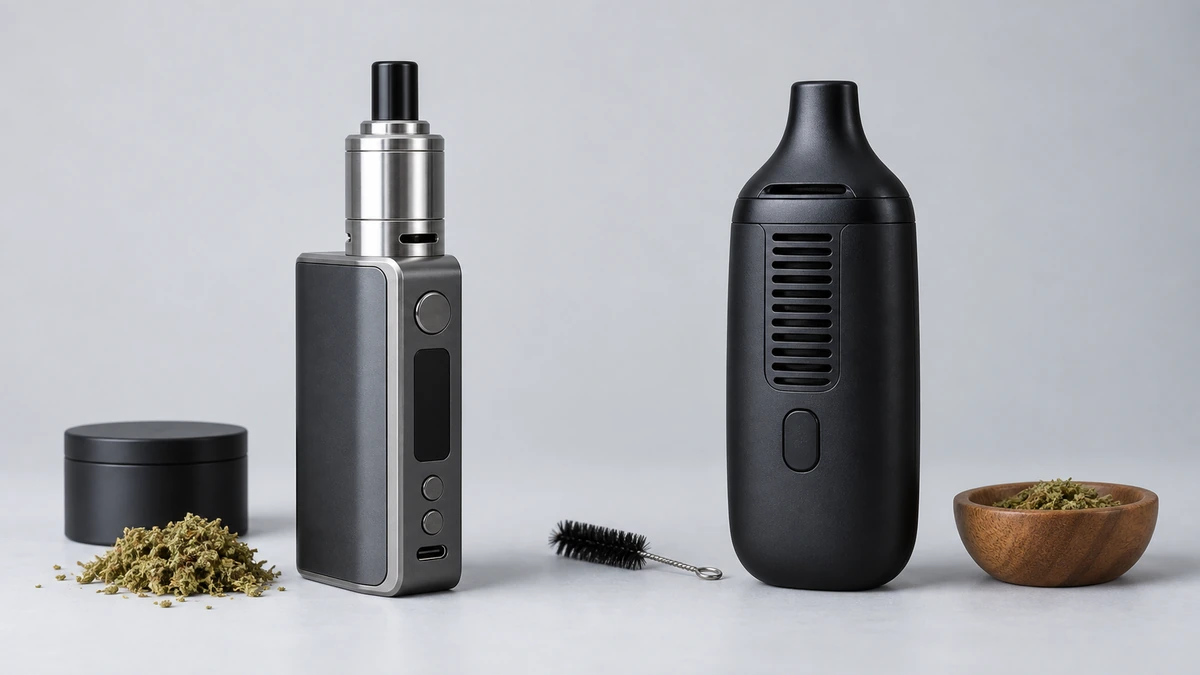
Search “dry herb atomizer” and you will land in a confusing overlap of two very different product categories: 510-thread attachments built for box mods, and dedicated dry herb vaporizers with their own batteries and firmware. Both get called “atomizers” in marketplace listings, but the thread connector is the least important thing about either device. What actually determines whether a dry herb atomizer works well is the chamber that holds the material, the way heat reaches that material, the airflow path around it, and how the electronics regulate temperature over time. This article breaks down each of those components so you can evaluate a dry herb atomizer on the parts that matter instead of on connector compatibility alone.
🧭 1. What “Dry Herb Atomizer” Actually Means Today
The term “atomizer” originally comes from e-liquid vaping, where a coil vaporizes a liquid held in a wick. When manufacturers started building herb attachments for 510-thread mods, the name carried over even though the mechanism is completely different. A dry herb atomizer does not atomize liquid at all — it heats ground plant material until cannabinoids and terpenes reach their vaporization point, without combustion. The shared name has caused a lot of buyer confusion, especially among people shopping by thread type rather than by heating method.
🔍 1.1 Mod-Mounted Attachments vs Dedicated Vaporizers
Mod-mounted dry herb atomizers thread onto an existing box mod and borrow that mod’s battery and firmware to run a heating coil inside a small herb chamber. Dedicated dry herb vaporizers, by contrast, are built as a single unit with their own battery, chip, and chamber engineered specifically for plant material. A community thread on repurposing old 510 hardware for herb use, discussed here on r/vaporents, shows why people keep trying to reuse mods this way: they already own the battery and want to avoid buying a whole new device. The catch is that mod-based setups inherit whatever voltage curve and safety limits the mod’s chip was designed for e-liquid coils, not herb chambers, which limits how precisely temperature can actually be held.
🔥 2. Chamber Construction: The Real Heater
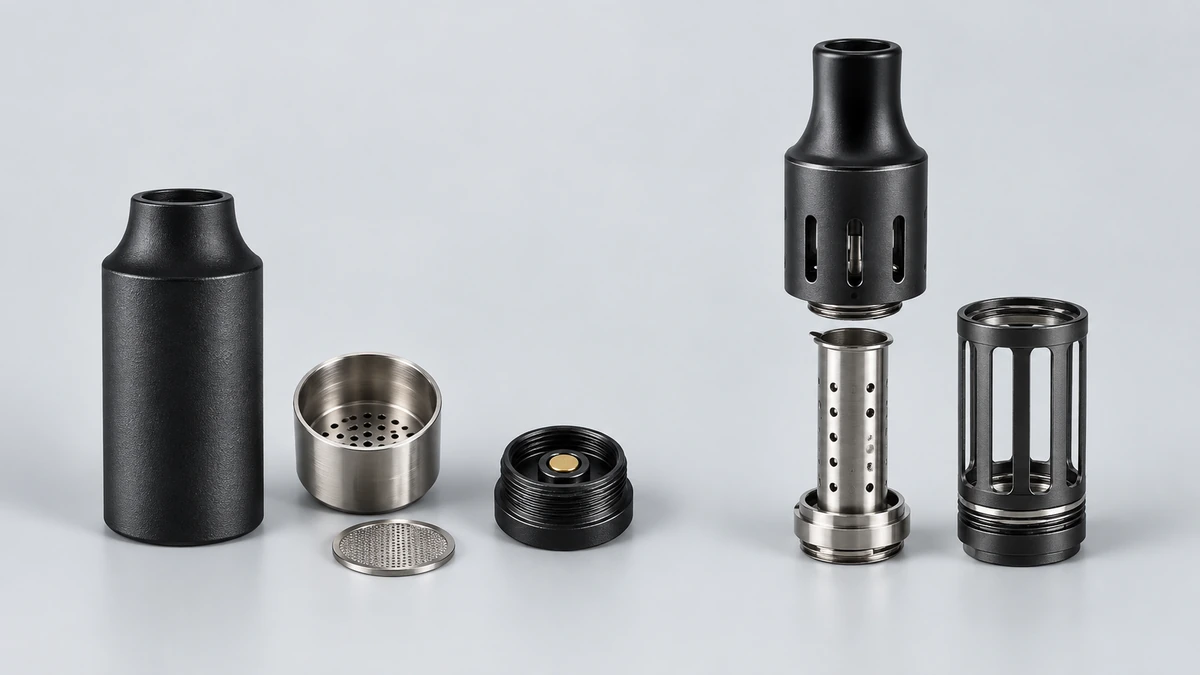
Regardless of thread type, the chamber is the functional core of a dry herb atomizer. Chambers are typically built from ceramic, stainless steel, quartz, or a combination of these, and the material choice affects heat retention, flavor purity, and how evenly the herb is exposed to heat. A poorly designed chamber creates hot spots that scorch material at the edges while leaving the center under-vaporized, regardless of how sophisticated the battery electronics are.
🧱 2.1 Conduction Heating
Conduction chambers place ground herb in direct contact with a heated surface — usually a ceramic bowl or coil-wrapped rod. Heat transfers straight into the material through touch, which produces fast heat-up times and strong initial vapor production. The tradeoff is that material touching the hottest surface can vaporize faster than material sitting slightly away from it, so stirring is often necessary for even extraction.
🌬️ 2.2 Convection Heating
Convection chambers heat air rather than the herb directly, then pass that hot air through the ground material. This produces more even heating across the whole chamber and generally smoother flavor, since there’s less contact scorching. The detailed mechanics of both approaches — including how airflow speed and chamber geometry affect vapor quality — are covered in depth in this conduction vs. convection breakdown, which is worth reading before comparing chamber specs on any dry herb atomizer.
⚙️ 2.3 Hybrid Designs
Many current chambers blend both methods, using a heated ceramic surface alongside airflow channels that pull warmed air through the material. Hybrid designs aim to combine the fast onset of conduction with the even extraction of convection, though the balance varies a lot between manufacturers and is rarely disclosed in marketing copy.
🧺 3. Screens and Airflow Design
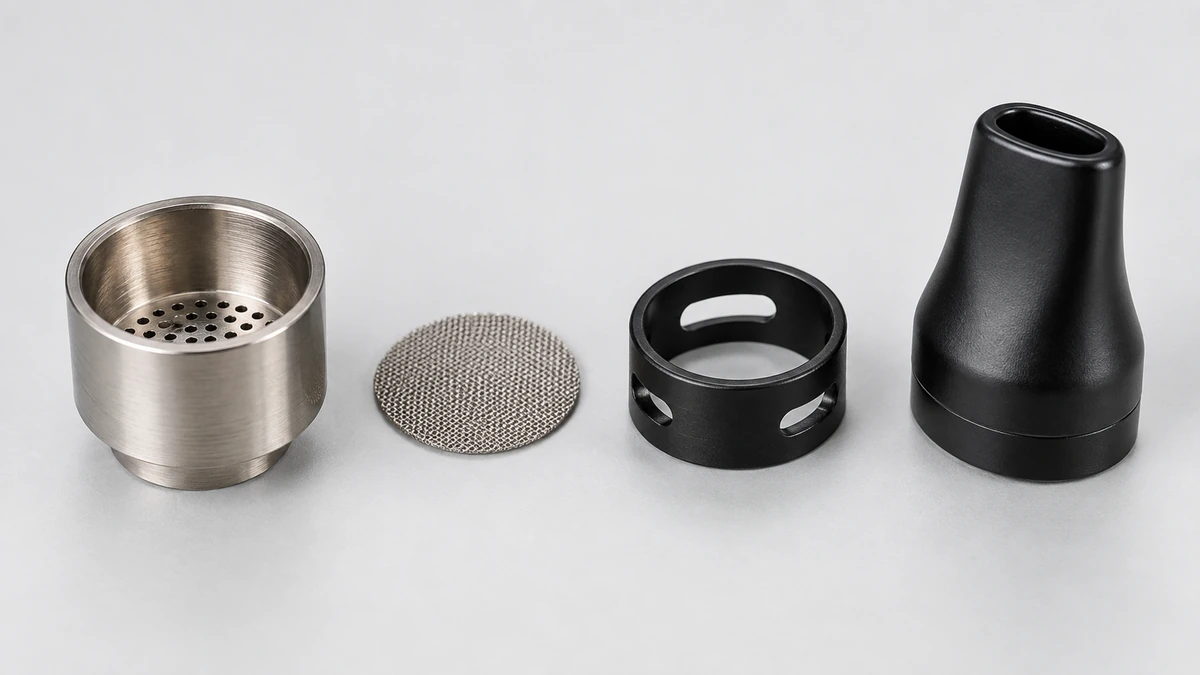
Every dry herb atomizer needs a screen or mesh at the base or mouth of the chamber to keep loose plant particles out of the airpath. Screen mesh size affects both draw resistance and how much fine debris makes it into the vapor stream — too coarse and you inhale plant matter, too fine and airflow chokes off. Airflow channels themselves are usually small drilled or milled paths that route air around or through the herb bed before it exits toward the mouthpiece.
Airflow design also determines how a dry herb atomizer behaves when paired with water filtration. Draw resistance, chamber venting, and adapter fit all change the vapor experience when moving from a straight mouthpiece to a bubbler or bong setup, which is explained in detail in this dry herb vaporizer and bong pairing guide. Chambers with tighter airflow tend to need looser water filtration to avoid an overly restrictive draw, while more open chambers tolerate denser diffusion.
⚡ 4. Electrical Control: Why 510 Threads Don’t Control Temperature
A 510 thread is a physical and electrical connector standard — it defines the size and pin layout of the connection point, nothing more. It does not specify voltage output, resistance handling, or temperature logic. That means two dry herb atomizers with identical 510 threads can behave completely differently depending on what chip is driving them, whether that chip lives in the attachment itself or in the mod it’s screwed into.
This is exactly the confusion behind attempts to reuse old 510 mod batteries for dry herb attachments, as seen in that r/vaporents discussion on repurposing older hardware. A mod built for e-liquid coils often ramps voltage in a way tuned for wicked coils in the 0.5–2.0 ohm range, not for the resistance profile of a herb-chamber heating element. Dedicated dry herb vaporizers instead run closed-loop temperature control, using a sensor inside or near the chamber to hold a set temperature rather than a fixed voltage or wattage, which produces far more consistent sessions than a repurposed liquid mod ever will.
🧩 5. Replaceable Parts and Long-Term Maintenance
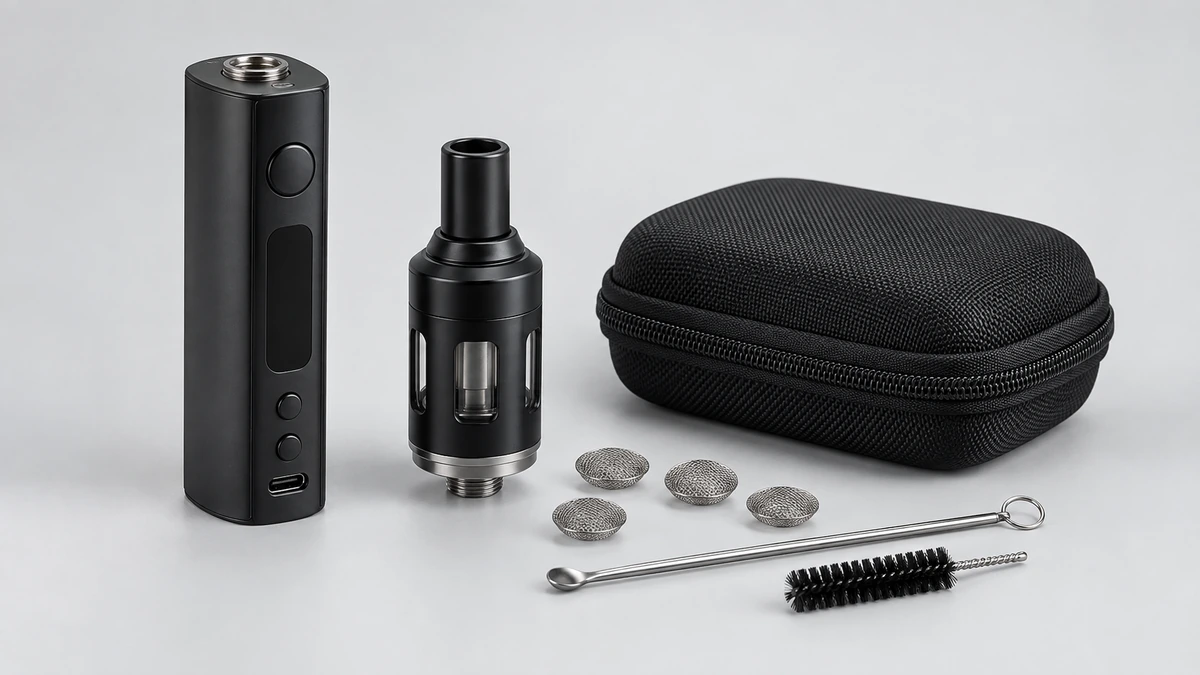
Screens, mouthpieces, chamber inserts, and sometimes the heating element itself are the parts most likely to wear out or clog with resin over time. Whether a dry herb atomizer is realistically maintainable long-term depends heavily on whether the manufacturer sells those specific replacement parts, since generic e-liquid coil replacements will not fit a herb chamber’s dimensions or resistance profile.
This is a recurring pain point in the vaping community — a thread on the general availability of replacement parts, discussed on r/vaporents here, highlights how often owners discover a device is essentially disposable the moment a screen clogs beyond cleaning or a chamber cracks, simply because no spare parts were ever manufactured or stocked. Before buying, it’s worth checking whether a brand sells standalone chambers, screens, and mouthpieces, since that availability is often a better predictor of a device’s real lifespan than any spec sheet number.
Residual buildup inside the chamber and airpath also affects how much odor a session produces, both during and after use. Chamber material, screen cleanliness, and airflow sealing all play into how much smell escapes a device, a topic covered in more detail in this guide on dry herb vaporizer smell.
🚫 6. Why Liquid Atomizer Coils Aren’t Interchangeable With Herb Chambers
E-liquid atomizer coils are built around a wick that draws liquid by capillary action to a resistance wire, which then vaporizes that liquid on contact. There is no wick, no liquid reservoir, and no capillary path in a herb chamber — ground plant material sits loose or lightly packed against a heated surface or in a hot airstream. Physically forcing a liquid coil into a role meant for herb, or vice versa, doesn’t just underperform, it can create burnt-plastic or metallic off-tastes and, in some cases, damage the heating element from a resistance mismatch it was never designed to handle.
Resistance values also diverge sharply between the two categories. Liquid coils are typically built low-resistance for fast, high-wattage vapor production, while herb chamber elements are tuned for steadier, lower-power heating held at a stable target temperature over several minutes rather than a quick vapor burst. A chip calibrated for one profile will misread or mishandle the other, which is the core reason threading compatibility never guarantees functional compatibility.
🌿 7. Choosing Between Dry Herb and Concentrate Setups
Buyers new to the category often assume a single mod-and-attachment system can handle both dry herb and concentrates equally well, since both are marketed under similar “atomizer” language. In practice, concentrate atomizers use entirely different chamber geometry — usually a small heated dish or coil built to sit directly against wax or resin rather than a chamber designed to hold and circulate air through ground plant material. A community discussion comparing the two use cases, found here on r/vaporents, reflects a common conclusion: dedicating one device to herb and a separate one to concentrates tends to outperform any hybrid attempt, because chamber shape, screen placement, and heat profile are optimized for one material state, not both.
If flower is the primary material, prioritizing chamber airflow and even heat distribution matters more than raw wattage numbers. If concentrates are the priority, a herb-specific chamber will underperform regardless of how strong the battery is, since there’s no surface designed to hold a viscous extract without it running into airflow channels or screens.
✅ 8. Practical Takeaways
- A 510 thread only guarantees a physical connection — it says nothing about temperature control, chamber design, or heating method.
- Conduction chambers heat fast but unevenly; convection chambers heat more evenly but usually take longer to reach full vapor production. Most modern devices blend the two to some degree.
- Screen mesh size and airflow channel design directly affect draw resistance and how much plant debris ends up in the vapor stream.
- Repurposing an old e-liquid mod for a dry herb atomizer usually means inheriting a voltage curve that was never tuned for herb-chamber resistance values.
- Replacement part availability — screens, chambers, mouthpieces — is one of the strongest indicators of how long a dry herb atomizer will remain usable.
- Liquid coils and herb chambers are not interchangeable in either direction; the wick-based design of one has no equivalent in the loose-material design of the other.
Shopping for a dry herb atomizer by thread type alone skips over every variable that actually determines vapor quality, session consistency, and long-term reliability. Chamber material, heating method, screen and airflow engineering, and the electronics behind temperature control are the real differentiators — and none of them are visible from the connector. Evaluating those components directly, rather than assuming thread compatibility implies functional compatibility, is the more reliable way to compare devices before buying.
🧭 9. A 510 Thread Does Not Specify the Thermal System
The connector describes a mechanical interface and electrical contact arrangement. It does not define chamber volume, heater resistance, airflow, control mode, or the temperature reached at the herb. Those details belong to the attachment and the power device as a paired system.
⚙️ 9.1 Chamber and Screen Geometry Matter
A screen keeps particles away from the downstream air path, while the chamber wall determines how closely material sits to the heater. Small changes in depth, perforation, and inlet position can alter restriction and heat distribution. Replacement screens must match the intended seating surface rather than merely fitting inside the opening.
🔌 9.2 Power Compatibility Needs Documentation
A mod-mounted attachment may require a supported resistance range or control method. Physical threading alone does not confirm that pairing. Dedicated vaporizers avoid that external interface question by integrating the heater, sensor, controls, and chamber into one designed system.
✅ 10. Identify the Category Before the Connector
First confirm that the device is designed for dry botanical material, then examine its chamber, airflow, heater type, screens, and replacement parts. Only after that should the 510 connection be treated as a compatibility detail. This order prevents a liquid cartridge, concentrate atomizer, and herb chamber from being grouped together because their bases look similar.