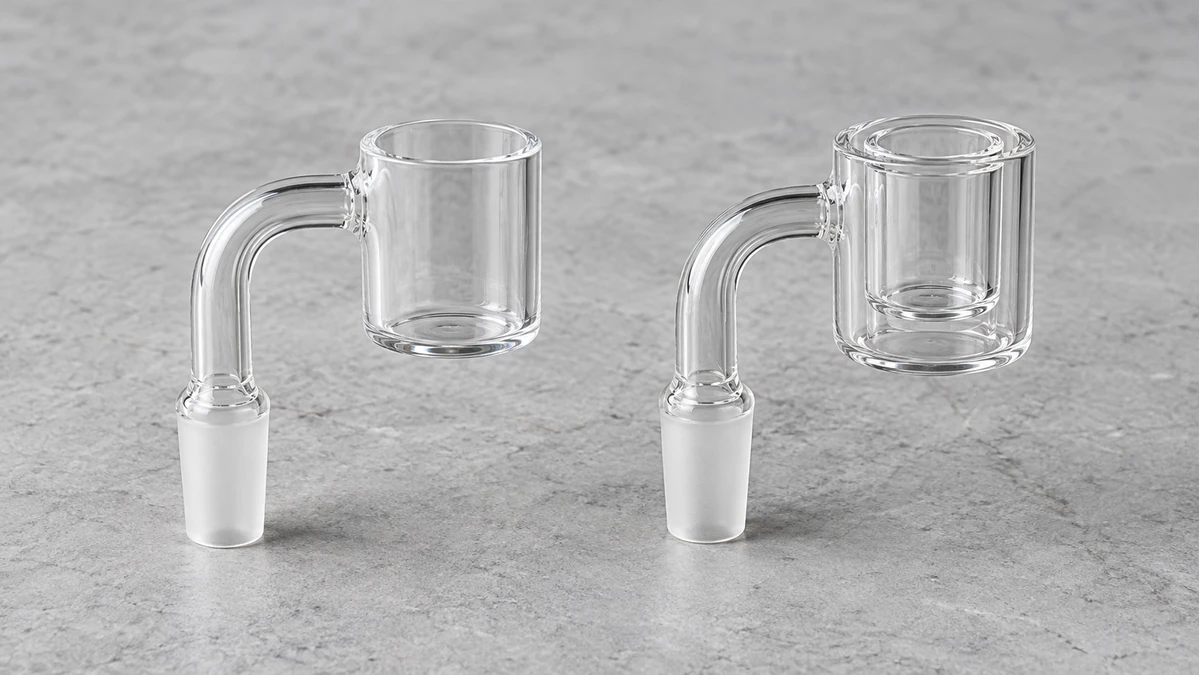
Set two quartz thermal bangers side by side and, from three feet away, they can look like twins. Same bucket shape, same joint angle, same handle-free bulb sitting at the end of the neck. Pick them up, though, and the resemblance mostly ends at the outline. One has a noticeably thick inner cup separated from the outer wall by a wide air gap. The other has a barely-there gap and a shallow cup that almost touches the outer glass. Both are sold under the same “thermal” label, and both are marketed to the same buyer.
That gap between marketing language and actual geometry is the reason this piece exists. “Thermal banger” is not one standardized design — it’s a category name for quartz pieces built with an inner wall (or cup) and a surrounding space, intended to change how heat distributes and how material moves inside the dish. Understanding the geometry, rather than the name printed on a listing, is what actually tells you what you’re buying.
🔹 1. 🔥 What “Thermal” Actually Means in a Banger Name
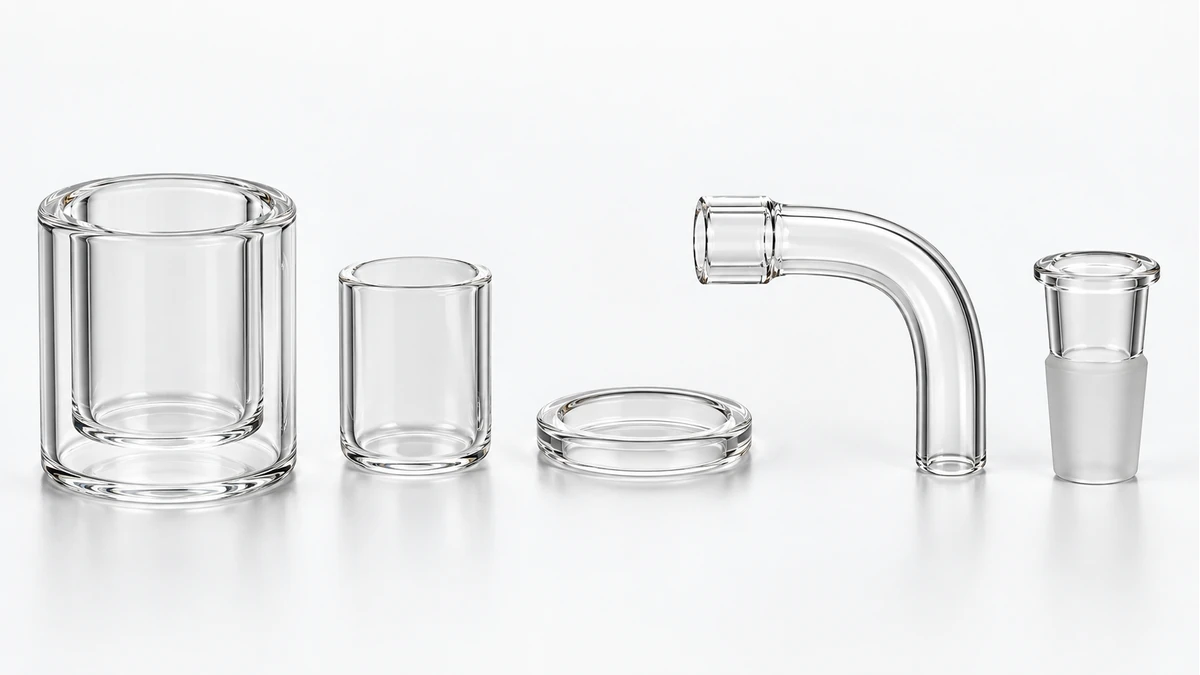
Strip away the branding and a thermal banger is a double-wall quartz piece: an inner cup that holds material, an outer wall that forms the visible bucket shape, and a pocket of air (sometimes sealed, sometimes open at the bottom) sitting between the two. The idea behind the design is straightforward — a layer of trapped air changes how heat is retained and released compared to a solid, single-wall piece of quartz of similar thickness. It’s a construction concept, not a performance guarantee.
Because “thermal” describes a category rather than a spec, two pieces can carry the same label while differing in cup depth, wall thickness, gap width, and how the inner and outer pieces are welded together. That variation is exactly why buyers comparing thermal bangers from different makers often find the internal builds barely resemble each other, even when the outside profile looks nearly identical on a product photo.
🧭 1.1 Single-Wall vs. Double-Wall, in Plain Terms
A conventional single-wall bucket is one continuous piece of quartz shaped into a dish. There’s no internal cup, no air gap, and no secondary wall to align. A thermal banger adds a second structural layer inside that bucket, which means more joints in the glass, more surface area to inspect, and more places where manufacturing quality can vary from one unit to the next.
🔹 2. 📏 Outer Diameter, Inner Cup, and Wall Spacing
Three measurements define the internal geometry of a thermal banger, and none of them are visible in a typical thumbnail photo: outer diameter, inner cup diameter, and the width of the gap between them. A wider gap generally means more air volume trapped between the walls. A narrower gap means the inner and outer walls sit closer together, which changes how the two layers interact.
Cup depth matters just as much as the gap. A shallow inner cup holds material closer to the rim and the open air above it. A deeper cup keeps material lower, further from the neck opening. Neither depth is universally “better” — they’re different geometries suited to different tool and cap combinations, and matching them correctly is worth more attention than most buyers give it.
🧭 2.1 Why Spacing Isn’t Standardized Across Brands
There’s no industry-wide dimension for gap width or cup depth on thermal bangers. Each glassblower or manufacturer sets their own proportions, often as a signature of their build style. That’s part of why two thermal bangers priced similarly and marketed similarly can have gaps that differ by several millimeters — a difference you can usually see if you hold the piece up to a light and look straight down through the neck.
🔹 3. 🌀 Rim Profile and Carb-Cap Fit
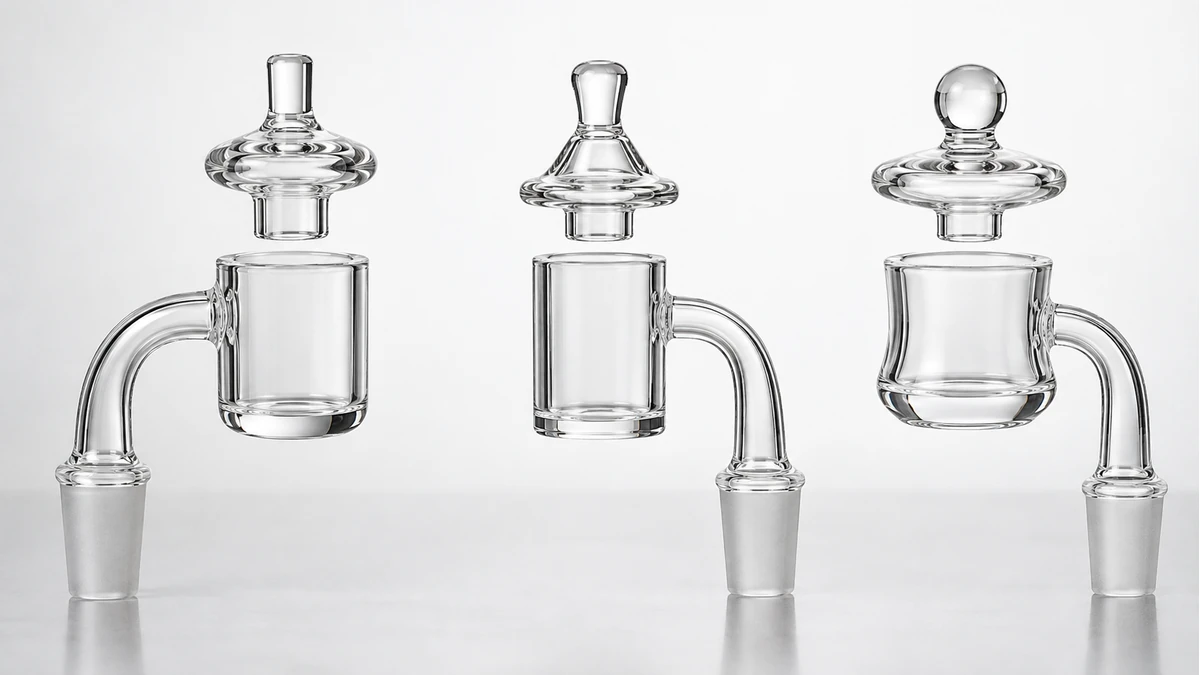
The rim is where the inner cup, outer wall, and open air all meet, and it’s the surface a carb cap needs to seat against. On a double-wall piece, the rim can be flat, slightly domed, or beveled — and the presence of an inner wall right beneath it changes how much surface area is actually available for a cap to rest on compared to a single-wall bucket.
This is where fit problems tend to show up. A cap that seals cleanly on a single-wall bucket might rock or sit unevenly on a thermal banger with a narrower rim ledge. If you’re pairing a piece with a bubble carb cap or any directional-airflow cap, checking the rim width and shape against the cap’s base diameter matters more here than it does on a standard bucket. Our guide to matching carb caps with quartz bangers covers how to read rim compatibility before buying either piece separately.
🔹 4. 🔩 Neck and Joint Alignment
The neck is the connector between the banger and the rig, and on a thermal piece it also has to align two separate internal walls without introducing a lean or a wobble. Because there’s more glass to fuse — inner cup, outer wall, and neck — there’s more opportunity for a slight misalignment to creep in during production.
A well-aligned thermal banger sits level in the joint with the bucket sitting centered, not tilted to one side. Hold the piece up and look down the neck from the joint end: the inner cup should appear centered inside the outer wall, not visibly offset. An off-center cup usually means the weld between the two layers happened slightly askew, which can affect how evenly the gap performs around the circumference of the piece.
🔹 5. 🧽 Cleaning Access in Double-Wall Designs
Single-wall buckets are easy to clean because there’s one open surface and nothing hiding behind it. Thermal bangers add a wrinkle: the gap between the inner and outer walls can trap residue, moisture, or cleaning solution if it isn’t fully sealed, and some designs leave a small opening at the base of the gap specifically so it can be flushed out.
Before buying, it’s worth checking whether the gap is sealed or vented, since that changes how you’d approach cleaning without any need for special tools beyond what you’d already use on a standard piece. A sealed gap means less maintenance but no way to rinse debris that finds its way in during manufacturing. A vented gap needs occasional attention but gives you a way to see and reach the space between walls.
🔹 6. 👀 Visual Inspection Before You Buy
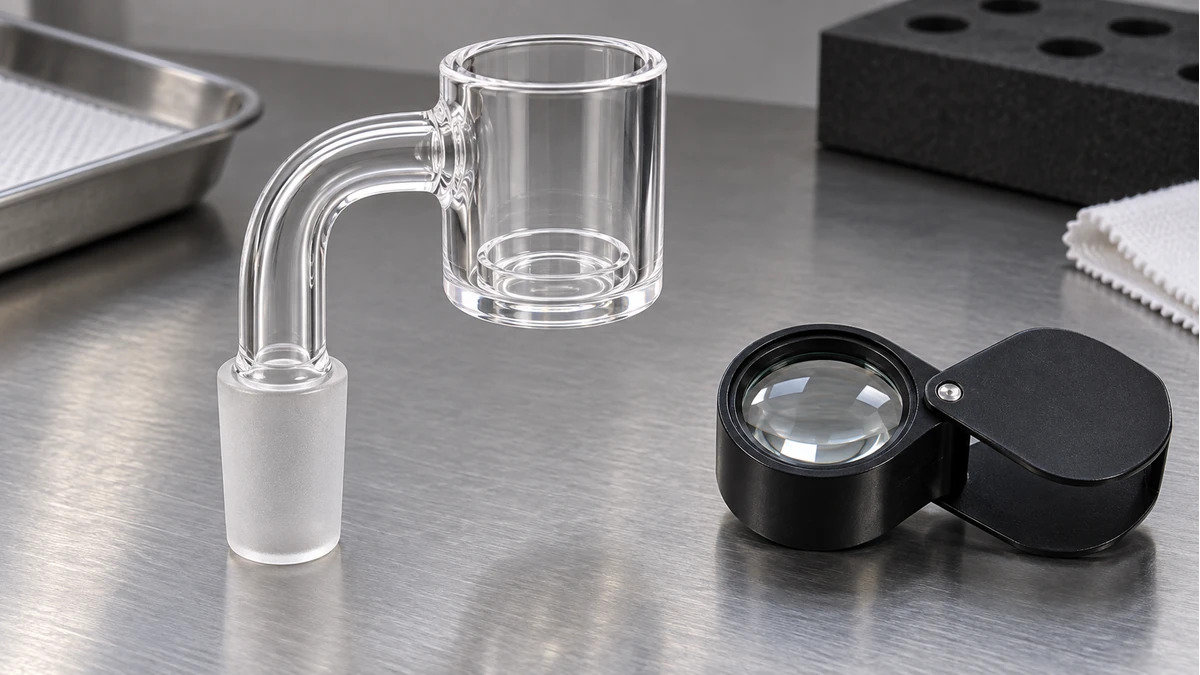
Because “thermal” doesn’t specify a fixed geometry, the only reliable way to compare two candidates is to look closely at the actual piece — or clear, well-lit photos of it — rather than trusting the product name. A few things are worth checking every time:
- Whether the inner cup sits centered inside the outer wall when viewed from directly above
- Whether the gap width looks consistent all the way around, rather than wider on one side
- Whether the rim is even and free of visible chips, thin spots, or asymmetry
- Whether the weld lines where the walls meet the neck look clean rather than clouded or uneven
🧭 6.1 Single-Wall vs. Thermal Banger, Side by Side
| Feature | Single-Wall Bucket | Quartz Thermal Banger |
|---|---|---|
| Internal structure | One continuous quartz wall | Inner cup + outer wall with a gap between them |
| Points to inspect | Rim, wall thickness, base | Rim, cup centering, gap consistency, weld joints, base |
| Cleaning | Single open surface, straightforward access | May include a sealed or vented gap requiring extra attention |
| Design variation across brands | Relatively consistent shape and proportions | Cup depth and gap width vary significantly by maker |
| Carb-cap fit considerations | Rim ledge is usually straightforward to match | Rim ledge width can be narrower or altered by the inner wall |
🔹 7. 🏷️ Why the Name Alone Doesn’t Prove Quartz Grade
A piece can carry a “thermal” label and still be made from quartz of noticeably different clarity, thickness, and consistency compared to another piece with the same label. The construction style — double-wall versus single-wall — describes geometry, not material grade. Buyers who compare pieces purely on the strength of the name often end up disappointed when two “thermal” bangers from different sellers feel completely different in the hand.
Clarity is one of the more visible indicators worth checking: cloudy, streaky, or bubble-filled quartz is easier to spot in the inner cup than in a thick outer wall, since light passes through less material there. Wall thickness is another — a thermal banger with a thin outer wall paired with a thick inner cup will handle very differently than one with even thickness throughout, even if both are labeled the same way by the seller.
🔹 8. 🛠️ Manufacturing Alignment and Consistency
Because a thermal banger requires fusing multiple pieces of quartz into one unit, alignment during manufacturing has an outsized effect on the final product. A shop with tight quality control will produce pieces where the cup, wall, gap, and neck all line up consistently from one unit to the next. A shop with looser tolerances will produce visible variation — slightly different gap widths, cups that sit a few degrees off-center, or rims that aren’t quite level — even within the same product line.
This is one reason it helps to buy from a seller who can show clear photos of the actual piece, or multiple angles of the same model, rather than a single stock image reused across every batch. Consistency between units is a reasonable proxy for how carefully a piece was made, even without lab equipment to test the material itself.
🔹 9. ❓ Common Questions Buyers Ask
🧭 9.1 Why do two thermal bangers from different brands look nothing alike inside?
Because “thermal” only describes the double-wall concept, not a fixed set of dimensions. Cup depth, gap width, and wall thickness are all choices each manufacturer makes independently, so pieces built to the same general idea can end up looking quite different once you look past the outer silhouette. For adjacent hardware context, see AOVAPE’s carb cap fit guide.
🧭 9.2 Does the extra glass mean a thermal banger has to be handled differently than a standard bucket?
The double-wall geometry does change how the piece is built and how heat moves through it, but there’s no single universal rule that applies to every thermal banger — the right approach depends on the specific piece’s cup depth and gap design rather than a one-size-fits-all standard. Reading the geometry of the individual piece, rather than assuming all thermal bangers behave identically, avoids most of the confusion newcomers run into. For adjacent hardware context, see AOVAPE’s bubble carb caps guide.
🧭 9.3 Can I tell quartz grade just by looking at a banger?
Not with certainty, but a close visual check gets you part of the way there. Clarity, evenness of wall thickness, clean weld lines, and a centered inner cup are all things you can assess without any special equipment, and they correlate reasonably well with overall build quality — even though they can’t substitute for lab-verified material testing. For adjacent hardware context, see AOVAPE’s dab tool materials guide.
None of this means a thermal banger is better or worse than a single-wall bucket — the two are different tools built around different internal geometries, and the right choice depends on how the piece pairs with your carb cap, your dab tool, and the rest of your setup. If you’re also comparing tool materials for handling and cleaning a double-wall piece, our guide to dab tool materials breaks down how different metals and coatings hold up over regular use. And if bubble carb caps are on your list alongside a new banger, it’s worth reading up on rim compatibility before buying either piece in isolation, since a mismatch between rim width and cap base is one of the most common — and most avoidable — fit issues buyers run into.
The takeaway is simple: read the geometry before you read the label. “Thermal” tells you a piece has an inner cup and a gap. It doesn’t tell you the cup depth, the gap width, the alignment quality, or the quartz grade — and those details are exactly what separate a well-built piece from one that just happens to share a name with it.