An e-nail dab kit swaps a butane torch for a controller, a coil, and a temperature display, but that convenience only works if every connection in the chain actually fits. The controller has to match the coil, the coil has to fit the banger or nail’s heater well, and the displayed number on the box has to correspond to something real happening at the surface where concentrate touches glass. Skip any one of those checks and you end up with a kit that heats unevenly, reads inaccurate temperatures, or simply won’t power on.
This guide walks through the compatibility chain piece by piece: connectors, coil fit, temperature display, cable and stand setup, and cleaning practices. None of this replaces the manual that ships with a specific kit — manufacturers vary enough in pinout, voltage, and coil sizing that model-specific instructions always take priority over general assumptions.
🧭 1. An e-nail kit is a chain of matched parts
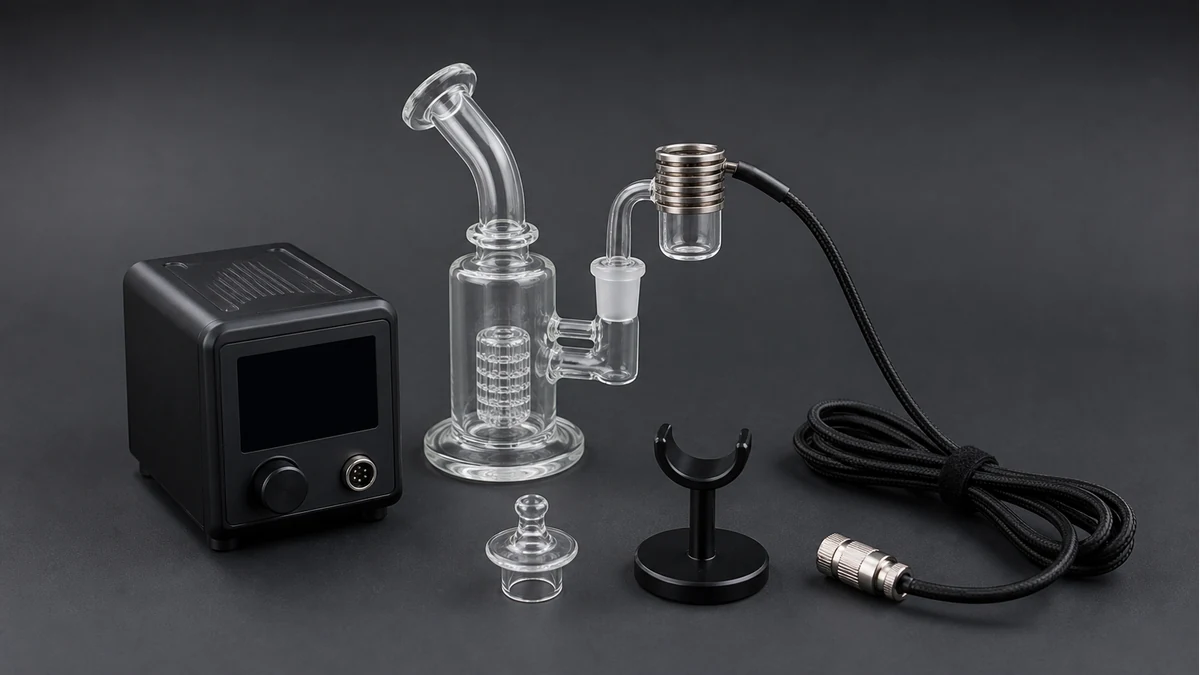
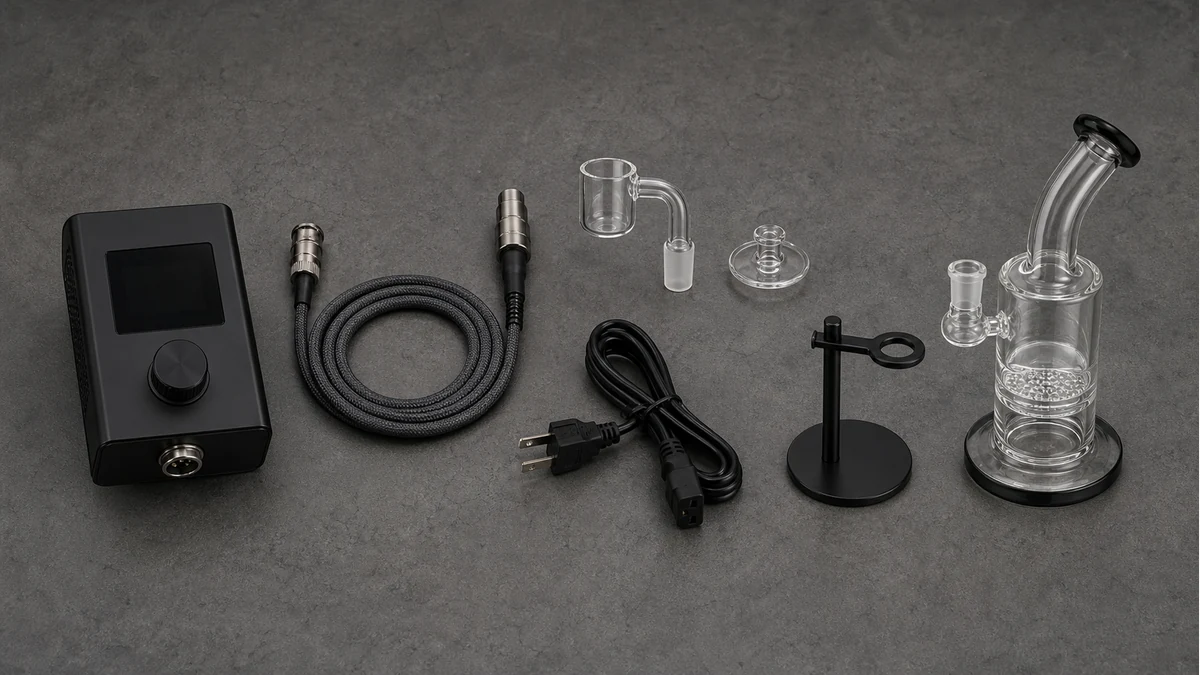
A dab rig built around a torch has exactly two things that need to match: the nail or banger and the joint size on the rig. An e-nail kit adds several more links to that chain. The controller box supplies power and a target temperature. A cord runs from the controller to a coil. The coil wraps around or sits inside a heater well built into a quartz or titanium nail. That nail or banger sits in the rig’s joint, sometimes under a carb cap, and the whole assembly usually rests on some kind of stand so the hot heater isn’t touching a table or a hand.
Each connection point is a place where “close enough” fails. A coil that’s a millimeter too wide for a heater well won’t seat flush, which changes how heat transfers into the quartz. A controller cord with the wrong connector shape won’t physically plug into a different brand’s coil, regardless of whether the voltage or wattage specs look similar on paper. Before buying any single component separately, it’s worth checking whether the kit is sold and tested as a matched set, since mixing parts from different manufacturers is where most fit problems start.
If you’re weighing an e-nail setup against an all-in-one electric rig, the tradeoffs are different enough to matter — a controller-and-coil kit generally lets you keep an existing rig and glass, while an integrated unit bundles everything into one enclosure. Our guide to electric dab rigs under $100 covers that comparison in more depth if you’re still deciding between the two formats.
🧩 2. Controller and coil connectors are not universal
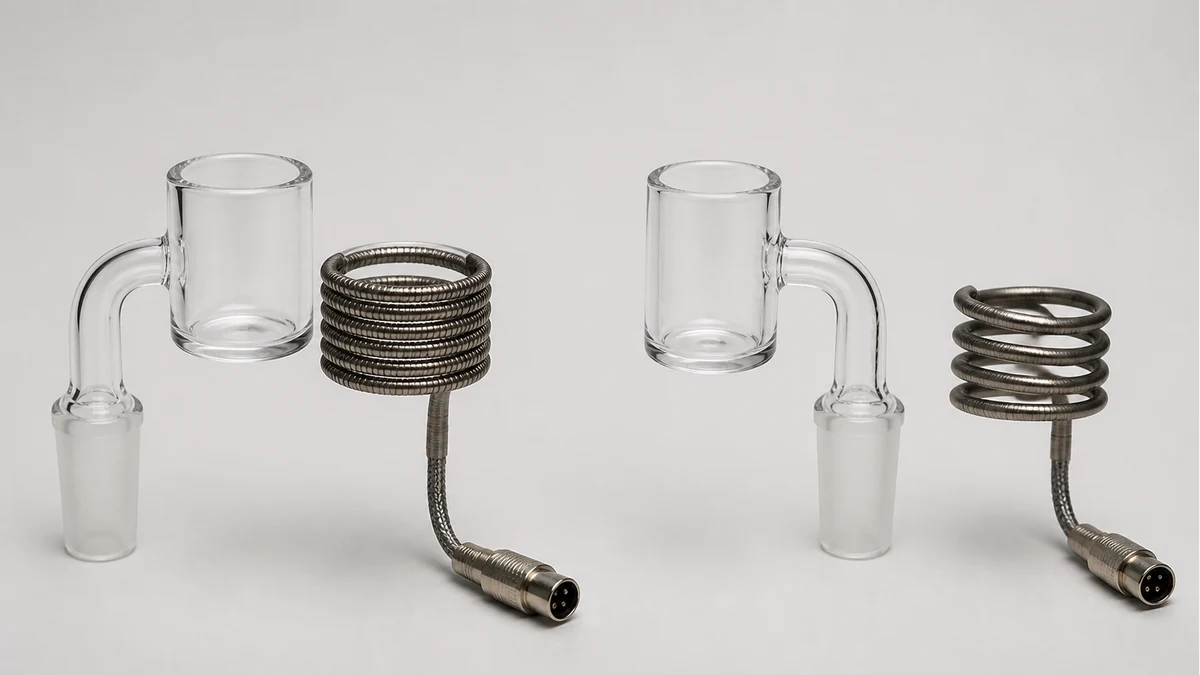
The cable that runs from an e-nail controller to its coil terminates in a connector, and connector shapes are not standardized across the industry the way, say, USB-C has become for phone chargers. Some kits use a locking pin connector, others use a simple barrel plug, and pin counts and spacing can differ even between connectors that look similar at a glance. A coil built for one controller’s connector will not necessarily seat into another controller’s port, even if both units are labeled with matching wattage or voltage numbers. This matters most when a coil fails and needs replacing, or when someone tries to upgrade a controller while keeping an older coil. The safe approach is to buy replacement coils directly from the kit’s manufacturer, or to confirm connector compatibility against the manual before ordering a third-party part. A pin that doesn’t seat fully can still make partial contact, which is a worse failure mode than an obvious non-fit, since it may work intermittently or generate heat at the connection point instead of at the coil.
Voltage and frequency compatibility matter too, particularly for anyone using a kit purchased in a different region than where they live. A controller built for one electrical standard may not be rated for another, and forcing the issue with an adapter that only changes the plug shape — without addressing voltage — is not a fix. If a kit was purchased overseas or through an import listing, checking the printed voltage rating against local household power is a step worth taking before the first use, not after something smells hot.
🔍 3. The heater must fit the banger or nail correctly
The coil itself needs to physically match the heater well machined or molded into the banger or nail. Heater wells come in different diameters and depths, and a coil sized for one well can sit loose in a larger one or fail to seat fully in a smaller one. A loose fit means the coil’s heat has to bridge an air gap before it reaches the quartz or titanium, which changes how quickly and how evenly the surface heats compared to a snug fit.
Nail and banger material also affects how heat behaves once it arrives. Quartz and titanium conduct and retain heat differently, and a kit’s controller may be calibrated with one material in mind. Swapping in a nail made from a different material than the one the kit shipped with — or than the one referenced in its manual — introduces a variable that the controller’s temperature display was not necessarily built to account for. This is a case where checking the manual’s stated compatible materials matters more than assuming any quartz banger will behave identically to any other.
Carb caps add one more fit consideration. A cap that doesn’t seal well against the banger’s opening changes airflow around the concentrate, which affects how vapor is produced regardless of how accurate the temperature reading is underneath. If a kit includes a cap, it’s generally been matched to the included banger’s rim and joint size — a cap swapped in from an unrelated rig may not seal the same way.
⚙️ 4. Displayed temperature is not automatically surface temperature
The number on an e-nail controller’s display represents a target the coil is working toward, not necessarily the exact temperature of the surface where concentrate makes contact. Where a controller’s sensor is positioned — inside the coil, embedded near the heater well, or elsewhere — affects how closely the displayed number tracks what’s actually happening at the nail’s surface. A sensor placed farther from the contact point can lag behind rapid temperature changes or read differently than a sensor embedded closer to the heater well. Material and thickness of the nail or banger also introduce a gap between displayed and actual surface temperature, since thicker quartz retains and releases heat more slowly than thinner quartz, and titanium behaves differently from either. This is why the same displayed number on two different kits, or even two different nails on the same controller, doesn’t guarantee the same experience at the surface.
None of this is a reason to distrust the display outright — it’s a reason to treat it as one input rather than a guarantee. If you’re trying to understand how temperature choice affects concentrate more broadly, independent of any specific controller’s accuracy, our guide to dab temperature covers the general relationship between heat and vapor production. For anyone newer to the process end to end, from heating through inhalation, how to use a dab rig walks through the full sequence.
🧼 5. Cable routing and a hot-part stand belong in the setup
An e-nail kit introduces a power cord and a coil cable into a space that a torch-based setup never had, and both need somewhere to go that isn’t across a walkway or under a hand reaching for glass. Routing the controller cord and coil cable so they run along a table edge or behind the rig, rather than draped across the front where a sleeve or a pet could catch them, reduces the chance of an accidental pull that stresses a connector or tips the rig over.
A stand matters for a different reason: the nail or banger stays hot for a stretch of time after use, and a coil-heated nail can retain heat longer than most people expect compared to a torch-heated one, since the coil may still be actively supplying heat right up until the controller is turned off. Setting a hot banger directly on a table, a rug, or anywhere it might get bumped by an elbow is a straightforward way to damage a surface or get burned. A stand — whether it’s one included with the kit or a separate glass or silicone stand — gives the hot assembly a stable place to sit that keeps it away from hands and away from anything flammable.
🛠️ 6. Cleaning and inspection happen with power disconnected
Cleaning a banger or nail on an e-nail kit involves the same general goal as cleaning any dab nail — removing residue buildup so it doesn’t affect flavor or airflow — but the coil and controller add a step that a torch setup doesn’t require: disconnecting power before touching anything. Wiping down a banger, checking a coil’s fit, or inspecting a cable for fraying should all happen with the controller unplugged or switched off, not just paused between sessions.
Inspection is worth doing on a regular basis, not just when something already seems wrong. A cable with a nick or exposed wire, a connector pin that looks bent or corroded, or a coil that no longer seats as snugly as it once did are all signs that a part has degraded and may need replacing rather than continued use. Cleaning solutions and methods vary by nail material, and the manufacturer’s manual is the right place to check whether a particular cleaning approach is recommended for the specific quartz or titanium nail included with a kit — some materials tolerate certain solvents or abrasive methods better than others.
✅ 6.1 Cold-fit the entire chain
Before connecting power, place the coil on its intended banger or nail, seat the assembly on the glass, position the cap, and route the cable to the stand. The heater should make the type of contact its manufacturer specifies without being stretched, pinched, or held in place by cable tension. If the coil must be forced over the heated surface, the nominal diameter is not telling the whole compatibility story.
Connector shells can look identical while their internal pin arrangement and controller logic differ. Buy a controller and coil documented as a matched pair. An adapter that merely lets two plugs meet does not establish electrical compatibility.
📦 6.2 Treat the display as a controller reading
The number on an e-nail controller reflects its sensor and calibration system; it is not automatically the exact temperature at every point on the concentrate surface. Coil contact, glass thickness, airflow, room conditions, and recovery after a draw all affect the surface. Use the maker’s starting procedure and make small adjustments based on consistent setup conditions rather than copying a universal number from another kit.
✅ 7. Buy the complete compatibility story, not a parts pile
The throughline across controller, coil, heater fit, temperature display, cable routing, stand, and cleaning is that an e-nail kit works as a system, not as a collection of interchangeable parts. Buying a matched kit from a single manufacturer — where the controller, coil, and nail are sold and tested together — removes most of the guesswork described above. Buying pieces separately, or mixing a coil from one brand with a nail from another, shifts the compatibility-checking work onto the buyer, and that work involves things like connector shape, pin count, heater well diameter, and sensor placement that aren’t always obvious from a product photo.
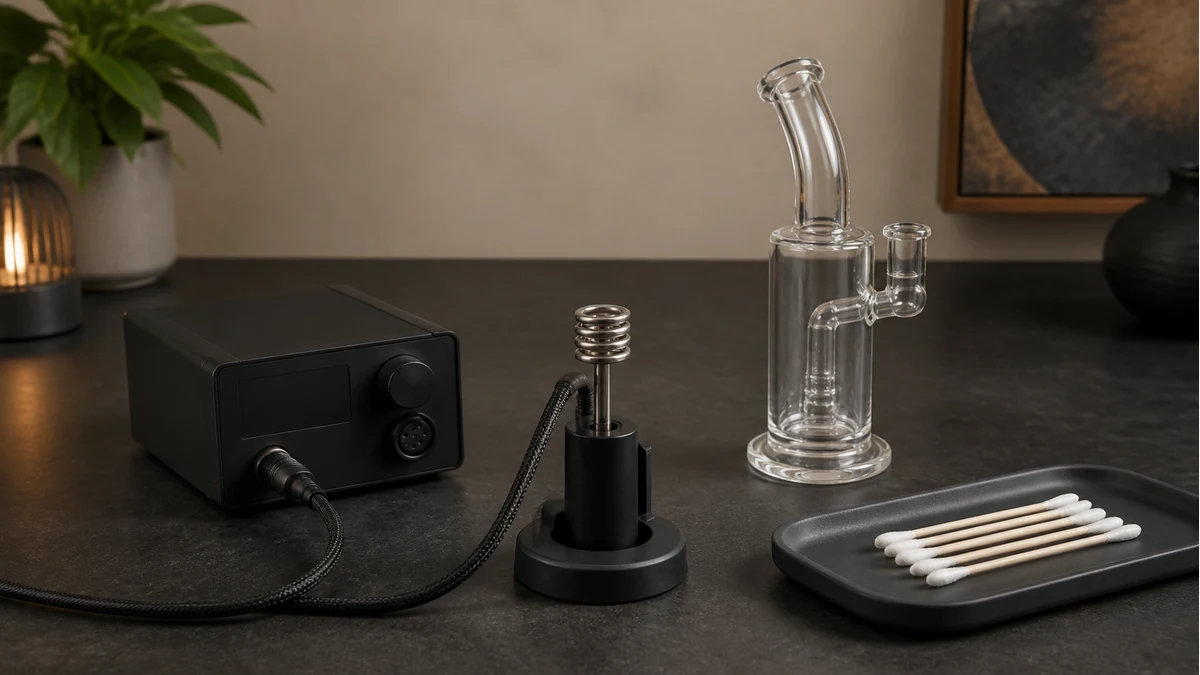
Before adding power to any e-nail setup, confirming that the controller’s connector matches the coil, the coil fits the heater well without gaps, the nail material matches what the manual specifies, and the cable and stand are positioned safely is a short checklist that addresses most of the failure points described here. When in doubt about any specific pairing — a replacement coil, a swapped-in nail, or a cap from a different set — the manufacturer’s manual and support documentation are more reliable than assuming similar specs mean guaranteed fit.