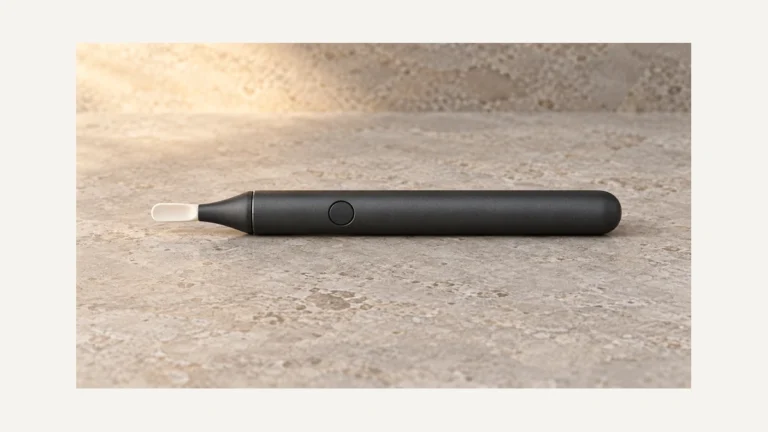
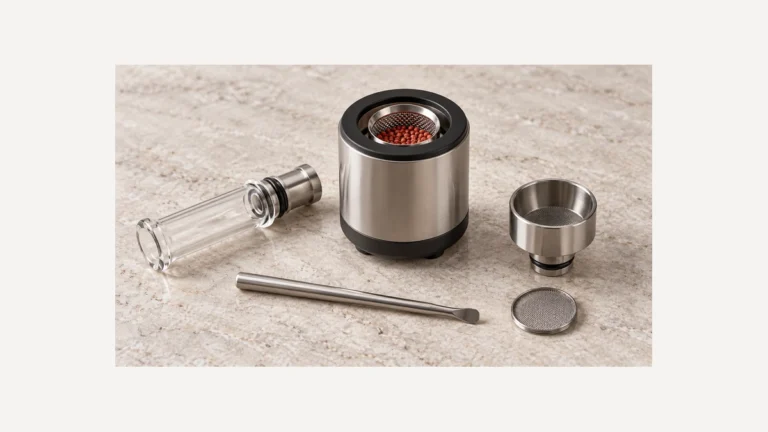
Look at any vape—a disposable pen, a refillable pod system, a cartridge screwed onto a battery, or a box mod feeding a sub-ohm tank—and you’ll find the same four jobs happening underneath different shells: something stores and delivers electrical power, something turns that power into heat, something holds material next to the heat, and something moves air through the whole path so vapor reaches your mouth. The part names change from device to device, but the functions don’t. Once you can sort a vape’s components by what they do rather than by which silhouette they came from, ordering the right replacement part or troubleshooting a weak hit gets a lot simpler.
This guide walks through those four functional paths—power, heat, material, and airflow—plus the connectors and seals that hold everything together. Along the way, it separates principles that apply to nearly any device from details that vary by model, because thread types, coil families, and pod shapes are things only the manufacturer’s manual can confirm for your specific unit.
🧭 1. Every vape coordinates power, material, heat, and airflow
Strip away the branding and every vaping device is an assembly line with four stations. A power source supplies current. An atomizer converts that current into heat. A reservoir or chamber presents e-liquid, concentrate, or dry material to the heated element. And an air path carries the resulting vapor from the heating chamber to your mouth. A fifth category—controls and seals—doesn’t produce vapor directly, but it regulates when the other four stations activate and keeps them from leaking into each other.
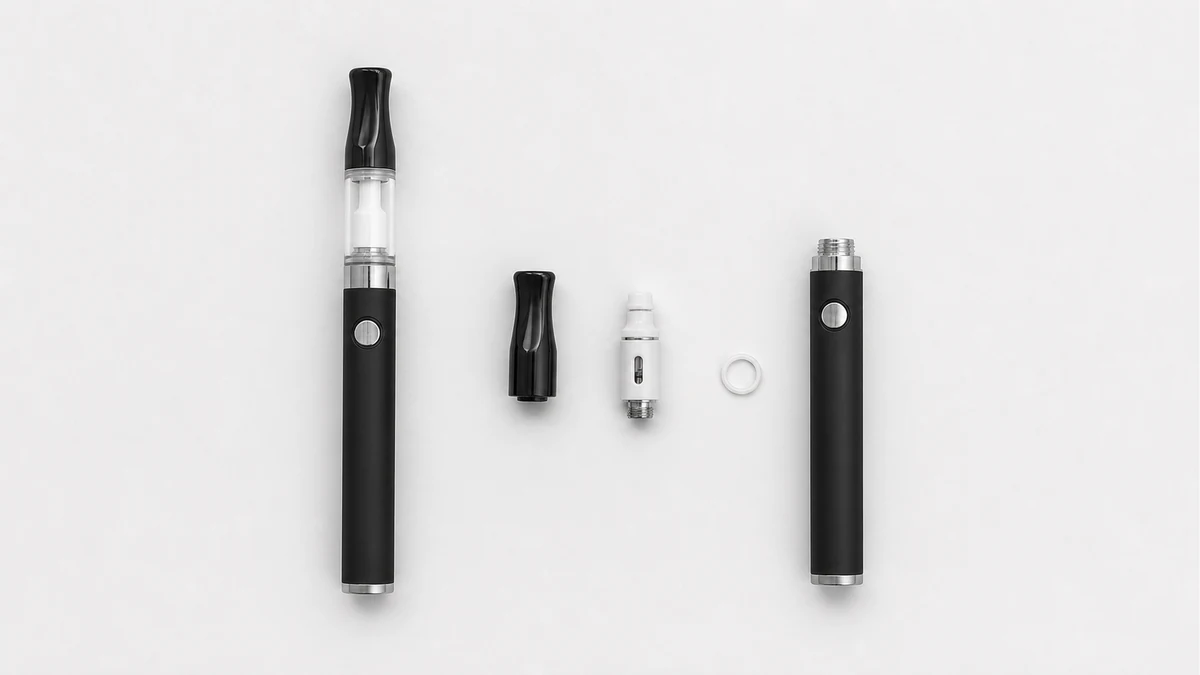
Where devices differ is how many of these stations are combined into a single disposable piece versus separated into replaceable parts. A disposable pen typically fuses the reservoir, atomizer, and mouthpiece into one sealed unit sitting on top of a battery. A refillable pod system separates the battery from a pod that still combines the reservoir and atomizer. A box mod with a rebuildable tank separates every station: battery, control board, atomizer coil, wicking material, and airflow ring can each be inspected or swapped on their own. None of this changes the underlying function map—it only changes how many parts you can see, remove, or replace. For a broader visual breakdown of how these categories map onto specific device types, the vape parts overview is a useful reference point before you start ordering anything.
🧩 2. The battery and control board manage the power path
The power path starts with a cell—built into the device on pens and pods, or a removable cylindrical cell on many mods—that stores electrical energy chemically and releases it as current on demand. From there, the current passes through a control board, sometimes called a chip or PCB, before it ever reaches the heating element.
The control board is doing more than passing electricity through. It reads either a button press or, on draw-activated devices, a pressure or airflow sensor, and uses that signal to decide when to open the circuit. On adjustable devices, the same board interprets wattage or voltage settings and regulates output accordingly. It also typically enforces basic operating limits—cutting power if a connection is missing, if the circuit senses an abnormal resistance, or if a puff runs unusually long—though the exact behavior and thresholds are set by the manufacturer’s firmware and documented in the device manual, not by any universal standard.
Contacts complete the power path physically: a spring-loaded pin or flat contact where the battery meets the atomizer, and a charging port or dock where the battery meets external power. Because these contacts carry all the current the atomizer draws, oxidation, debris, or a bent pin at this junction is a common source of a device that won’t fire or that fires inconsistently—separate from anything wrong with the coil itself.
🔍 3. The atomizer turns electrical power into heat
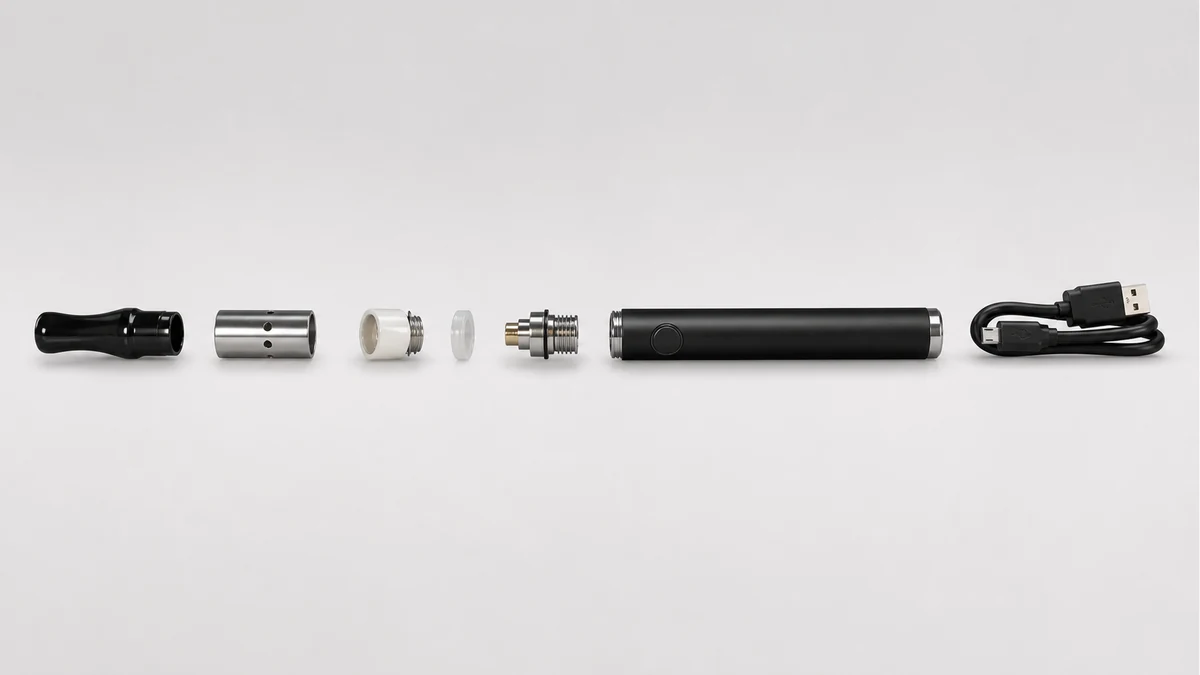
The atomizer is where electrical energy becomes thermal energy. At its core is a resistance wire, usually coiled, that heats up as current passes through it—the same basic principle used in any resistive heating element. That wire sits inside a coil head or, on rebuildable setups, is wound directly onto a deck by the user. Wrapped around or against the wire is a wicking material, most commonly cotton, that draws liquid or concentrate from the reservoir into direct contact with the heat.
How much heat a given coil produces at a given power setting is governed by its resistance, measured in ohms, and the relationship between resistance, voltage, and wattage is worth understanding before you start swapping coils across devices—the resistance and ohms explainer covers that relationship in more depth. A coil rated for one resistance range paired with a device or wattage setting meant for a different range can under-heat or overheat the wicking material, which shows up as weak vapor or a burnt taste well before the coil is actually worn out.
The step-by-step sequence of button press, current flow, wire heating, and liquid vaporizing is covered in detail in how an atomizer works, which is worth reading alongside this section if you want the mechanics rather than just the parts list. For part-identification purposes, the key takeaway is that “atomizer,” “coil,” and “coil head” often refer to the same replaceable unit, while “deck” refers to the base a coil sits on in rebuildable systems that don’t use a pre-made coil head at all.
⚙️ 4. The reservoir or chamber presents material to the heater
The reservoir is the middle step between “material you loaded” and “material being heated.” On e-liquid devices, this takes the form of a tank with a refillable window, a pod with a fill port, or a sealed cartridge, and its main job is to keep the coil’s wicking material saturated without flooding it. Internal wicking channels or juice ports control how much liquid reaches the cotton at any given moment, which is part of why a tank that’s overfilled or run nearly dry can both produce a poor hit for different reasons.
Concentrate and dry-material devices use a chamber instead of a liquid reservoir—a coil or ceramic surface positioned to contact wax, oil, or ground material directly rather than through a wicked liquid path. The heating principle is the same conversion of electrical power to heat described above, but the material-delivery mechanics differ enough that reservoir parts are rarely interchangeable across liquid and concentrate device types, even when the battery or connector looks similar.
This is also the category where “integrated” versus “replaceable” matters most for buying decisions. Some pods and cartridges combine the reservoir and atomizer into one disposable piece with no separate coil to swap; others use a reservoir shell that accepts a separately replaceable coil head. Whether a given model falls into one category or the other is a manufacturer-specific detail, so it’s worth confirming in the product listing or manual before assuming a coil is replaceable just because it looks similar to a device that has one.
🧼 5. Air inlets, chimney, and mouthpiece complete the flow path
Once vapor forms at the coil, it still needs a path to travel through before it reaches you, and that path starts with air coming in, not vapor going out. Air inlet holes or an adjustable airflow ring sit near the base of the atomizer, controlling how much outside air mixes with the vapor as it’s pulled through. More open airflow generally produces a looser draw and larger vapor volume; more restricted airflow produces a tighter draw. The right setting is a matter of device design and personal preference rather than a fixed specification.
From the coil, vapor rises through a chimney—a narrow tube that channels it up and away from the wicking material—before reaching the mouthpiece, often called a drip tip. The mouthpiece is one of the few parts on many devices that’s designed to be user-removable even on otherwise sealed systems, both for cleaning and for swapping to a different fit or bore width.
🛠️ 6. Seals and connectors are small parts with large consequences
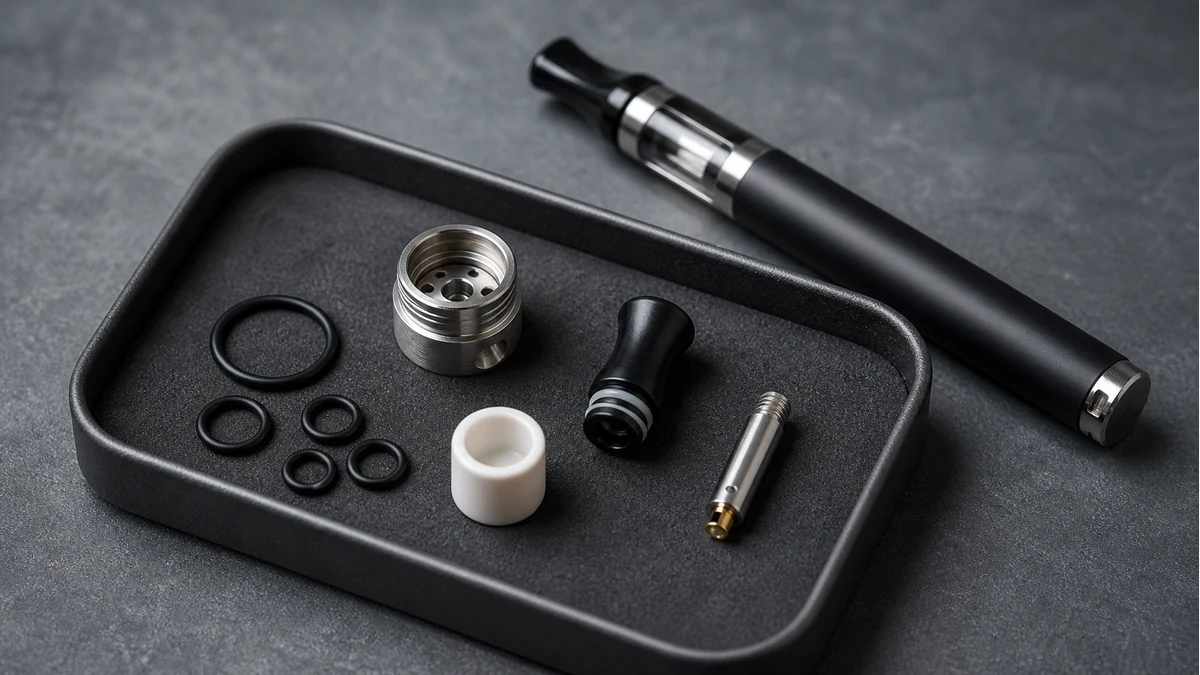
None of the parts described so far work in isolation—they’re held together and kept airtight by connectors and seals that rarely get attention until something goes wrong. Threaded connections, most commonly the 510 thread on cartridges and tanks or proprietary threads on some mods, join the atomizer assembly to the battery both electrically and physically. Pod systems typically use a friction-fit or magnetic connector instead of threads, which trades adjustability for a simpler insert-and-remove design.
Around those connections, o-rings and silicone gaskets prevent liquid from migrating into places it shouldn’t—along the outside of a tank, into the battery compartment, or around the airflow control ring. A missing, cracked, or improperly seated seal is one of the more common causes of a device that leaks from the base or around the mouthpiece, even when the coil and reservoir are both functioning normally. Because these parts are small, inexpensive, and specific to the device’s connector type, they’re worth checking before assuming a leak means the tank or pod itself has failed.
✅ 6.1 A wax pen shows the paths clearly
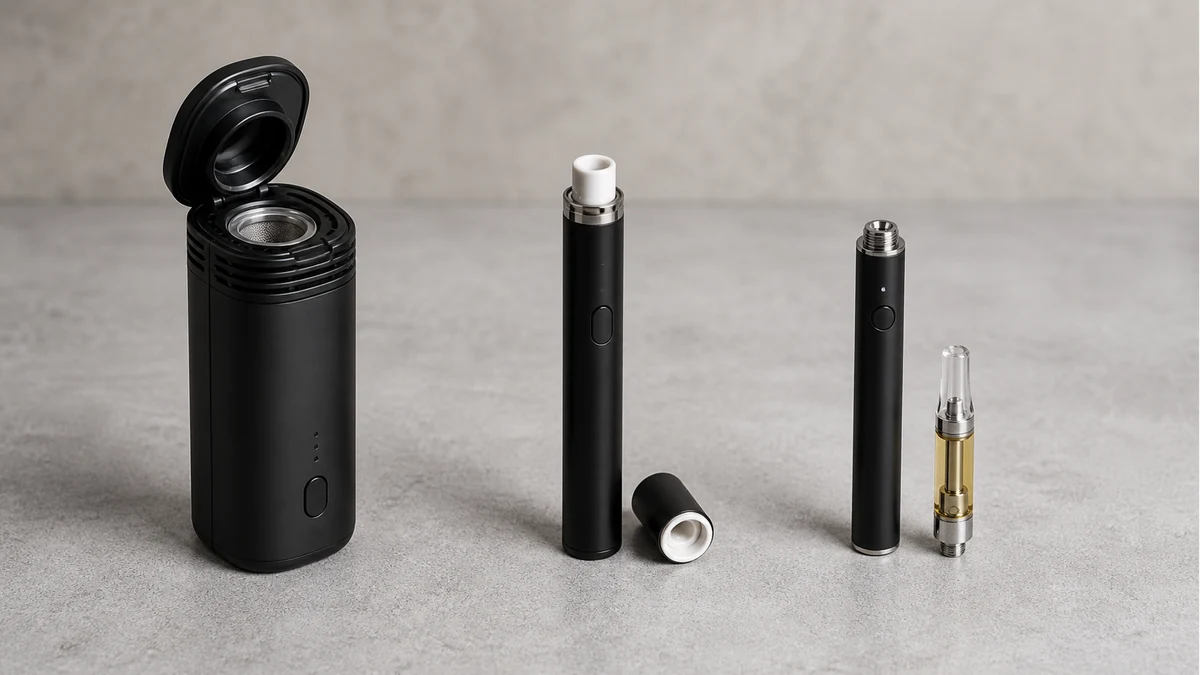
On a typical concentrate pen, the battery and control circuit form the power path; a removable ceramic atomizer converts that power to heat; the cup presents concentrate to the heated surface; air enters through small inlets and exits through the mouthpiece. Seals keep those paths separated. Looking at the device this way makes a weak draw, connection error, or leak easier to place than memorizing a list of part names.
A 510 cartridge battery rearranges the same jobs because the reservoir, heater, and mouthpiece may arrive as one cartridge. A dry-herb vaporizer changes them again by replacing the liquid reservoir with an oven or chamber. The category name does not tell you which pieces are user-replaceable; the exact manual and parts diagram do.
📦 6.2 Order replacements by interface and function
Photograph the original part beside the device, record the model and connector, and compare the maker’s part number before ordering. Diameter alone is not enough. Contact depth, resistance range, airflow openings, seals, and firmware expectations may differ even when two atomizers appear to screw into the same battery.
Small seals deserve the same attention as major components. A flattened O-ring can let material enter the airpath or let outside air bypass the chamber, while a missing insulating ring can turn a connection problem into an electrical one. Replace seals only with the specified size and material; a ring that looks close may swell, pinch, or block an inlet.
✅ 7. Identify function before ordering a replacement
The most common ordering mistake isn’t picking the wrong brand—it’s assuming that because two devices look similar, their parts are interchangeable. A pod-style device and a cartridge-style device can look nearly identical from across a table while using entirely different connector types, coil families, and reservoir capacities. Before buying a replacement coil, pod, or seal, it helps to confirm three things: which functional category the part belongs to (power, atomizer, reservoir, airflow, or seal), what connector or thread type your specific model uses, and whether that part is designed to be user-replaceable on your device at all, since some reservoirs and atomizers are sealed together by design.
The manufacturer’s manual or product listing is the authoritative source for those model-specific details—thread type, rated resistance range, and whether a coil is meant to be swapped or the whole pod discarded. The functional map in this guide is meant to help you understand what each part is doing and why it matters, so that when you do check the manual, the terminology and the reasoning behind it already make sense.