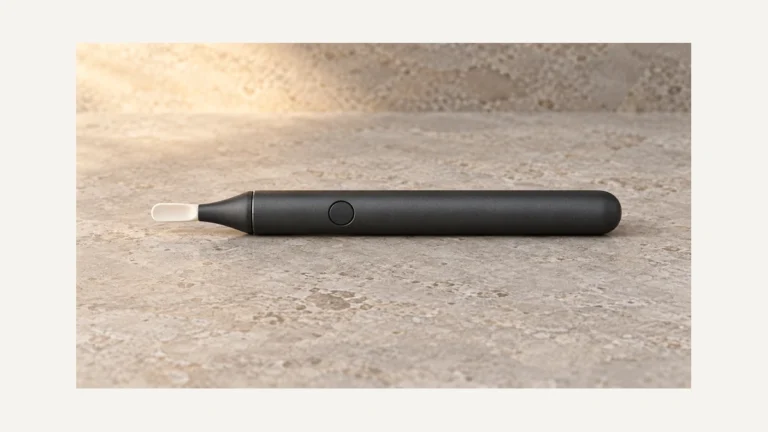
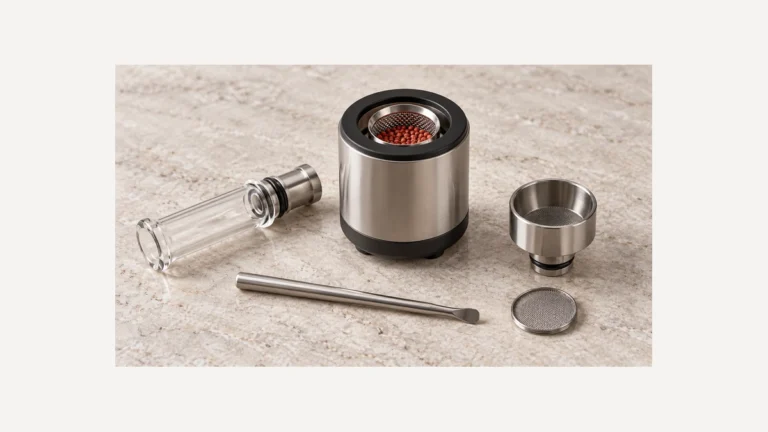
A ball vape works differently from a coil-and-wick portable because the heat doesn’t just touch the herb—it lives in the chamber around it. Glass or ceramic media inside a heated bowl acts as a thermal reservoir, so instead of a single hot surface cycling on and off, the airflow passes through a mass of preheated material on its way to the mouthpiece. That’s the mechanical reason ball vapes draw and recover differently than a pen or a handheld convection unit, and it’s why the parts list looks unfamiliar to anyone coming from a portable.
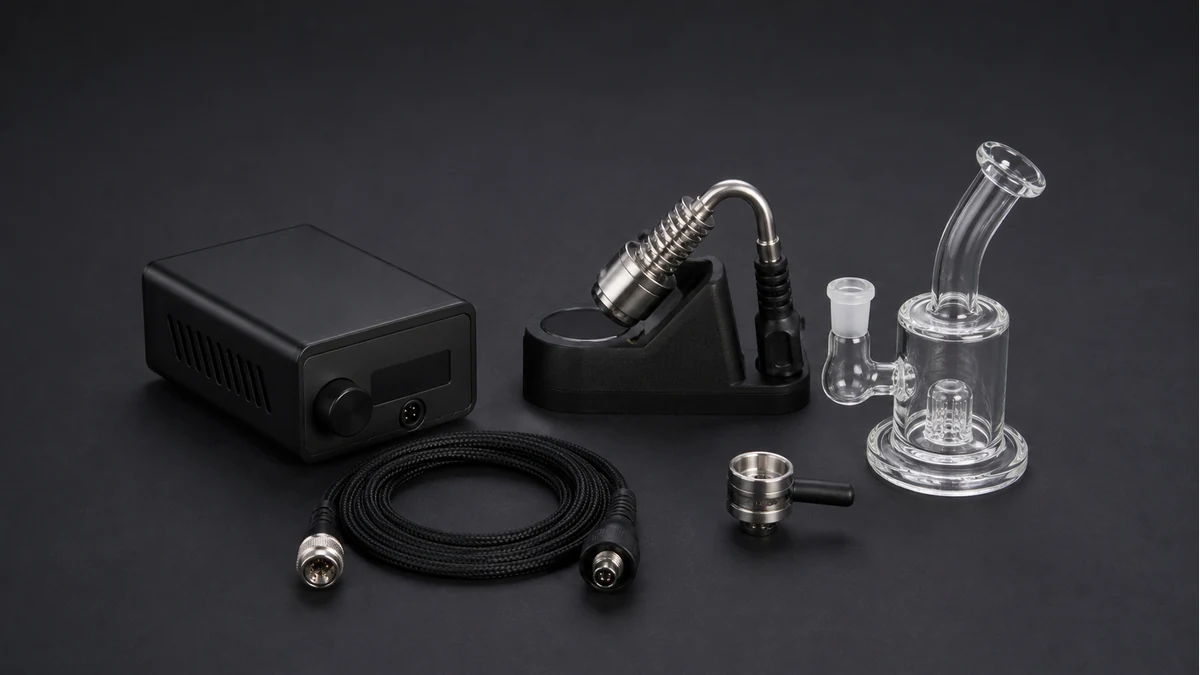
This guide treats the ball vape as a system rather than a single device: the heater head, the thermal media inside it, the coil and controller that drive the heat, the bowl that holds the herb, the stand that keeps the head off the desk, and the optional water piece that cools the vapor before it reaches you. Each part has a job, and understanding how they interact explains most of the setup questions new owners run into—airflow that feels tighter than expected, a bowl that doesn’t seat right, or a head that never seems to cool down.
🧭 1. A ball vape stores heat close to the airflow
Dry herb vaporizers generally rely on some mix of conduction, where the herb sits in direct contact with a hot surface, and convection, where heated air is pulled through the material. A ball vape is a convection-leaning design: air is drawn across heated glass or ceramic balls before it ever reaches the herb, so the herb is warmed primarily by the air moving through it rather than by touching a heating element directly. If you want the fuller mechanical breakdown of how those two heat-transfer methods differ across vaporizer types, our guide to conduction and convection heating covers it in more depth.
The practical effect of storing heat in a mass of media, rather than in a thin coil or plate, is inertia. The chamber doesn’t cool instantly the moment you stop drawing, and it doesn’t need to fully reheat from zero for the next hit. That inertia is the defining trait of the category, and it shapes almost every other design choice discussed below, from bowl geometry to why the head stays hot between sessions.
🧩 2. The heater head is only one part of the system
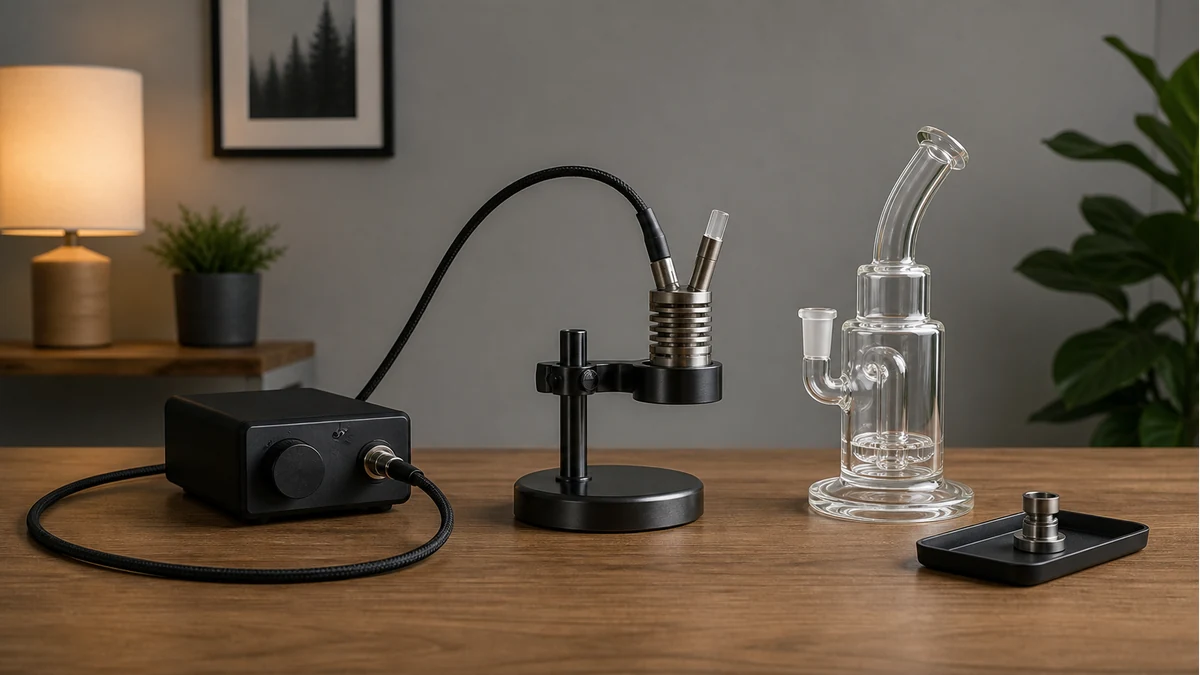
New buyers often assume the heater head is the vaporizer, the way a pen’s battery-and-coil unit is the whole device. On a ball vape, the head is just the heating stage. A separate power supply and controller regulate temperature, a stand or base holds the head at a fixed working height, and a bowl—removable, and often available in more than one style—is what actually holds the herb. Depending on the model, a water piece or glass adapter may sit between the mouthpiece and your mouth to cool and filter the vapor before you draw it in.
That’s a longer parts list than most portables, and it’s the source of a lot of first-time confusion: people expect to unbox one object and instead unbox a head, a cord, a controller box, a stand, and a bag of bowls and O-rings. None of those parts are optional accessories in the way a portable’s carrying case is optional—each one is load-bearing for how the vapor actually forms and reaches you. Our broader desktop vaporizer guide walks through how these stationary systems are typically assembled and why they trade portability for that extra hardware.
🔍 3. Thermal media changes recovery and restriction
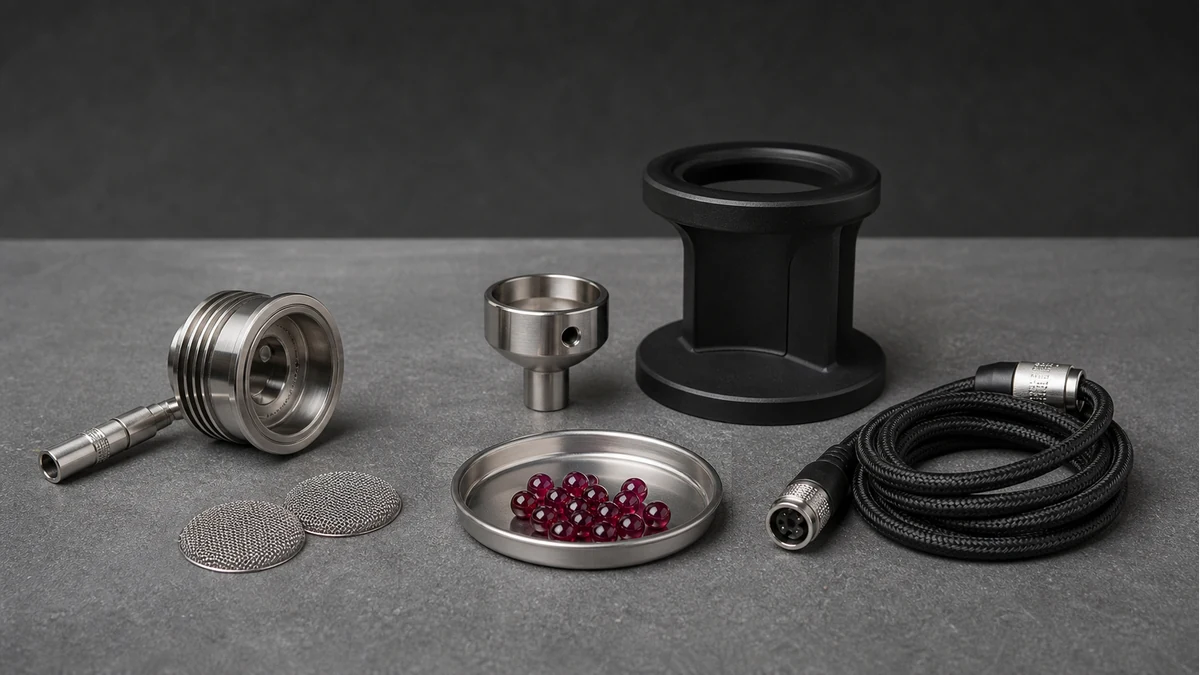
The balls themselves—usually glass or ceramic—are the thermal media that gives the category its name. Their job is to hold heat and release it steadily into the passing air, which is what lets a ball vape recover between draws faster than a bare metal chamber of the same size might. More media, or media packed more densely, generally holds more heat but can also restrict airflow more, which is one reason different bowl and media configurations draw noticeably differently even at the same temperature setting.
This is also where airflow complaints usually trace back to. If a draw feels unexpectedly tight, the cause is often the media arrangement or a bowl mismatch rather than a fault with the heater itself—loose or uneven media can create channels that either restrict flow or let air bypass the herb altogether. Because media wears and can chip or cloud over time, it’s worth understanding how its condition affects performance rather than assuming a tight draw means something is broken; our piece on ball vape ball lifespan goes into how that wear shows up and what it means for maintenance.
⚙️ 4. Injector and diffuser bowls place heat differently
Bowls generally come in a couple of families, most commonly described as injector or diffuser styles, and they route air through the herb differently. An injector-style bowl tends to direct air in from a specific point or angle, while a diffuser-style bowl spreads incoming air more broadly across the chamber before it reaches the herb. The result is a different balance of restriction, heat exposure, and how evenly the herb is worked over the course of a session, even when the underlying heater and media are identical.
What trips people up is assuming these bowls are interchangeable across brands or even across product lines from the same maker. Thread sizes, joint angles, and chamber depths vary, and a bowl that fits and seats correctly on one heater head may not seal properly on another. This is exactly the kind of compatibility question raised in community discussions, and it’s also exactly the kind of detail—thread specification, correct seating, recommended bowl pairing—that belongs to the specific product’s documentation rather than to general principles. If you’re mixing bowls across models, checking the maker’s manual before assuming compatibility avoids both a poor seal and unnecessary wear on the joint.
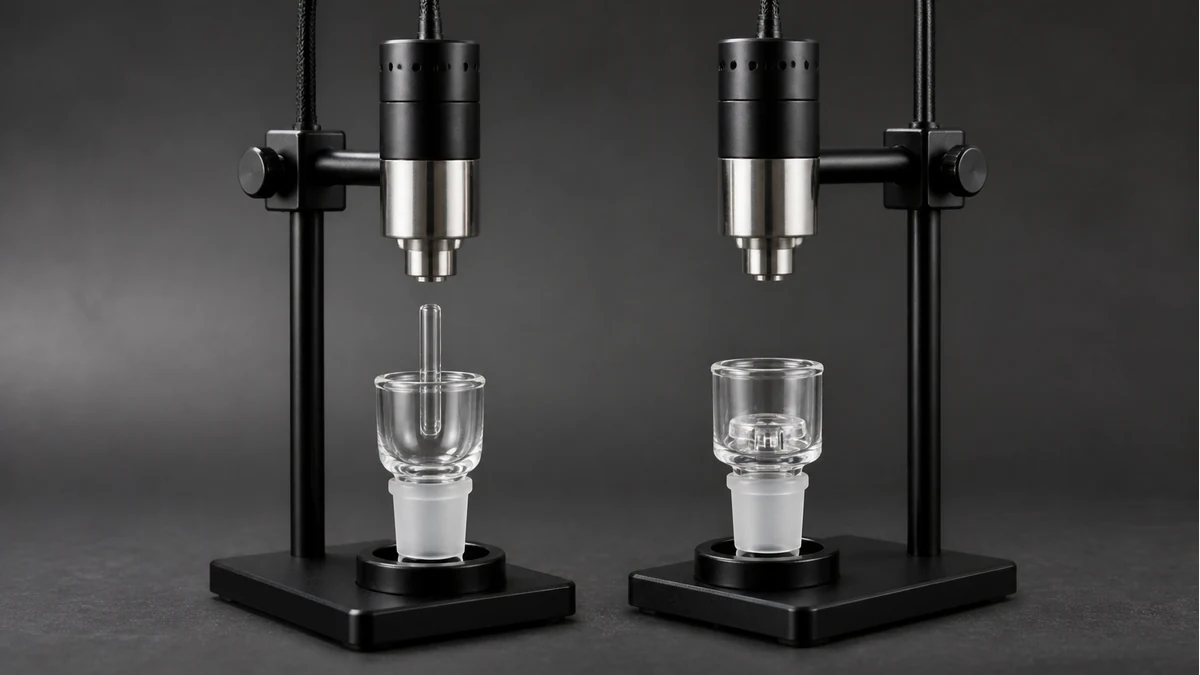
🧼 5. A stand and cable route are part of safe daily handling
Because the heater head in a ball vape draws power continuously rather than in short bursts like a portable’s battery, it’s designed to stay mounted and stationary, not carried around while active. That’s the tradeoff of desktop power: you get a heating system that can sustain higher, more stable output, but the head itself, its cord, and the surface it sits on all become part of a fixed setup rather than something you tuck into a pocket. The stand exists specifically to keep the hot head elevated off the desk and oriented so the cord and water piece hang or connect without strain.
In practice, that means thinking about where the unit lives the same way you’d think about any corded appliance that gets hot during use—clearing space around the stand, routing the cable so it isn’t pulled or pinched, and giving the head room to cool before it’s handled or packed away. These are basic placement and handling habits rather than device-specific instructions, and the same reasoning behind the “always-hot head” observations people raise about desktop units generally comes down to this: continuous power means continuous heat, and the stand and cable routing exist to manage that safely.
🛠️ 6. Cleaning stops at the electrical boundary
The bowl, water piece, and any removable glass are the parts meant to be cleaned regularly, since they’re what accumulates residue from the herb and vapor. The heater head, controller box, and cord are a different category entirely—they house the electrical components that heat the media, and that’s the line where general cleaning guidance has to stop. Submerging, spraying, or otherwise getting liquid into the head or controller risks the electronics, regardless of how effective that approach might be on the removable glass.
Because the correct cleaning method, frequency, and any safe solvents depend on the specific materials and construction of a given model, that level of detail belongs in the maker’s manual rather than in a general overview. What’s universal is the boundary itself: clean the removable glass and bowl components as you would any water pipe or glass accessory, and treat the head, cord, and controller as sealed electrical hardware that gets wiped down externally, not washed.
✅ 6.1 Map the hot zone before arranging the desk
The heater head, bowl, stand, controller, and cable should be placed as a working loop, not as separate purchases. The head needs a dedicated landing point that remains stable when the cable relaxes. The bowl and glass need clearance from that cable, and the controller should be reachable without passing a hand over a hot component. Dry-assemble the cold system first and move each part through its normal path.
Thermal mass gives a ball vape its recovery, but it also means the head remains hot after power changes. A display reading is not proof that every exposed surface has cooled. Treat the stand as part of the heater system and follow the maker’s shutdown and cooling instructions before disassembly or cleaning.
📦 6.2 Compatibility extends beyond joint diameter
An injector may physically enter a bowl while sitting too deep, too loose, or too close to material. A diffuser-style head may rest over a bowl designed around a different rim. Confirm the named bowl family, joint dimensions, coil fit, controller connector, and stand together. Do not assume a glass joint that seals is automatically a safe heater fit.
🧭 6.3 Airflow and thermal media must be evaluated together
More balls or denser media can add stored heat while also increasing resistance. Smaller media may create more contact area but can migrate toward screens if the head was not designed for it. Do not change ball material, diameter, quantity, or retaining screens based on a forum recipe. Those choices affect mass, airflow, electrical load on the surrounding coil, and containment of hot parts; use the configuration specified by the maker.
For routine diagnosis, return to a clean known configuration. Confirm the bowl is not overpacked, the screen is clear, the glass path is open, and the head is fully recovered before changing controller settings. One variable at a time makes a weak draw understandable.
Keep a cold-parts checklist for reassembly: retaining screen seated, thermal media contained, coil centered as specified, bowl undamaged, stand clear, and cable free of glass edges. The purpose is not to service the heater internally; it is to catch a missing or displaced removable part before power returns. Any loose hot media or damaged coil insulation requires the system to remain off.
✅ 7. Choose a ball vape for stationary power and modularity
A ball vape makes the most sense for someone who has a fixed place to vape—a desk, a shelf, a spot near an outlet—and who values the tradeoffs that come with that stationary setup: steadier heat delivery from a continuously powered head, thermal mass that smooths out recovery between draws, and a modular bowl and water piece system that can be swapped and cleaned in pieces rather than replaced as one unit. That modularity is also what makes the category feel more involved at first; you’re maintaining and occasionally replacing individual components—media, bowls, glass—rather than a single sealed device.
If portability is the priority, a handheld convection or hybrid vaporizer avoids the cord, the stand, and the always-on head entirely. But for a user who wants a stationary setup with more headroom in heat delivery and the ability to reconfigure bowls, media, and glass independently, the ball vape’s system of parts is the point, not a complication—provided the bowl, media, and cleaning choices for a specific model are confirmed against that model’s own manual rather than assumed from general principles.